Home » Consumer News » Recent Articles:

Verizon Wireless Herding Customers Into One-Size-Fits-All 2-Year Contracts

Phillip Dampier April 13, 2011 Consumer News, Editorial & Site News, Verizon 2 Comments

Verizon's Herd Mentality

Saturday will be the final day Verizon Wireless customers will be able to sign up for one-year service contracts and still get a discount on new equipment.

Effective April 17, customers will have just two choices for service — the ubiquitous two year contract with a steep early termination fee or month-to-month service priced artificially high to recover equipment subsidies off-contract customers do not receive.

Verizon claims the changes will “reduce consumer confusion,” which suggests customers couldn’t make up their minds between contracts for one year or two.  But the company claims most subscribers managed soon enough, usually choosing two year contracts to maximize discounts on equipment.

Some media outlets suggest the change is to discourage customers from abandoning Verizon Wireless for AT&T by holding them to longer two year contract terms.  But with AT&T losing customers to Verizon, that is an unlikely reason.

More likely is the company’s ongoing “simplification” of service plans, which has the unfortunate side effect of herding customers into plans that may not serve them well.  Verizon earlier did away with their popular “New Every Two” handset bonus plan which rewarded loyal customers renewing their contracts with additional $50 discounts.  The company also has cut back on other discounts on equipment, driving an increasing number of customers to third party retailers like Wirefly.

The one year service plan was established to let customers get some discount on wireless equipment without tying them down to a 24 month service commitment.  Since wireless providers build in cost recovery of the subsidies they “give” customers, you effectively pay back those discounts over two years by in the form of overpriced service plans.  Month to month “off-contract” customers do not get the benefit of any discounts for new equipment, but pay the same high prices for service everyone else does.

If your contract has recently expired, or you never had one, you might do better with Page Plus or Wal-Mart’s “Straight Talk” which both rely on Verizon’s network, but sell service at much lower prices, without a contract.

AT&T Complains About Signal Boosters They Can’t Own or Control

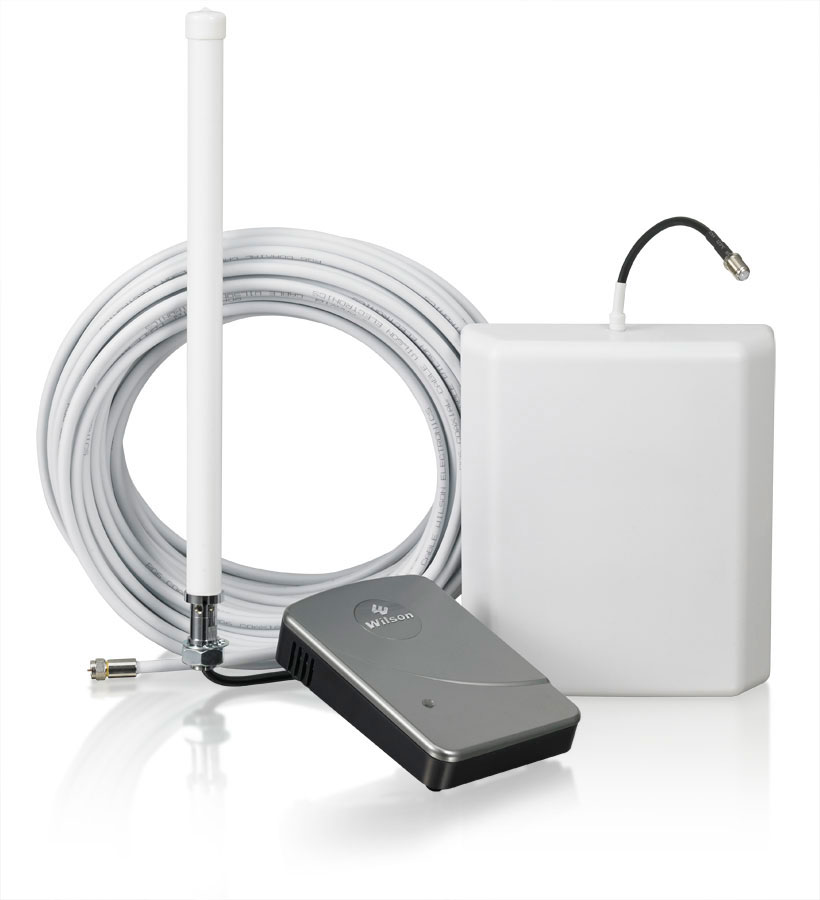
Signal boosters use an outdoor antenna to reach distant cell tower sites, while using an indoor antenna your mobile device can lock onto for improved reception.

If the Federal Communications Commission has its way, Americans annoyed with lousy cell phone reception will soon be able to purchase a new generation of signal boosters capable of delivering service to fringe reception areas ignored or bypassed by providers.  And unlike home cell-phone extenders, they won’t use your home broadband connection while also eating up your voice and data allowance.

A signal booster, not to be confused with a “femtocell” some wireless carriers sell or give to customers, acts like an amplified super-antenna — giving a boost to phones and mobile broadband signals in difficult reception areas.

This devices have been around and legal to use for a several years in North America, much to the consternation of cell phone companies and some public safety officials who deal with occasional interference problems created by misused or malfunctioning equipment.  The FCC is trying to find ways to mitigate interference problems while still allowing customers to benefit from signal boosters.  There are documented cases of rescuers relying on the equipment in remote disaster areas, and rural residents have managed 911 calls that would have been impossible without signal boosting technology.

Despite the agency’s efforts, several cell phone companies — particularly AT&T, object to the Commission’s plans to allow the independent use of signal-boosting equipment on “their” frequencies and networks.  Because cell phone boosters agnostically enhance every company’s signal within its frequency range and does not require users to pre-register phones to get access, AT&T stands to lose revenue if they are not the exclusive authority on selling, approving, and registering the use of miniature relay stations that boost their network’s coverage area.

AT&T currently sells customers femtocells which reduce dependence on the carrier’s overburdened 3G network — offloading traffic onto home and workplace wired broadband connections, which includes both voice calls and data.  But only a small percentage of customers get the equipment for free, often extending their contracts in the process.

Some providers and emergency responders have documented instances where these devices have created interference problems for cell tower sites and for emergency radio traffic that co-exists on the same frequency bands signal boosters occupy.  In some cases, inappropriate use of signal boosters has blocked emergency traffic, shut down cell sites, or reduced their coverage.  That is why the FCC wants the next generation of signal boosters to be able to intelligently interact with cell sites and other traffic users and reduce their power or discontinue service if they begin to create interference problems.

AT&T’s suggested safeguards go well beyond what most other carriers want from the FCC:

First, AT&T proposes that wireless licensees have “ultimate control” over any signal boosters operating on their networks under a presumptive authorization.  Specifically, signal booster operators must activate their devices with the licensee prior to initial use. In addition, the booster must possess technology to permit the licensee’s network to identify the device as a booster and identify its location at all times. Further, the licensee must have “dynamic control over the boosters’ transmit power” and have the authority and ability to turn off the booster for any reason at any time. Alternatively, AT&T proposes that the booster have “automatic gain control functionality that adjusts the power provided to the booster based on distance to the relevant base station.”

Second, AT&T proposes that signal boosters may only be operated on a channelized basis on the frequencies authorized for use by the wireless licensee whose signal is being boosted. AT&T suggests that manufacturers could meet this requirement by selling carrier-specific narrowband boosters or by designing “intelligent” boosters that limit transmissions to the spectrum licensed to the carrier whose signal is being boosted.

Third, AT&T proposes that signal boosters be designed with oscillation detection and will terminate transmission when oscillation occurs.

Fourth, AT&T proposes an expanded certification process for signal boosters that are to be used pursuant to a presumptive authorization. Specifically, the booster would be subject to (1) the Commission’s equipment certification process; (2) an industry-driven certification process;105 and (3) individual licensee approval to ensure compliance with the licensee’s proprietary confidential network protocols.

Fifth, AT&T proposes that any presumptive authorization standards be applied prospectively and that the Commission bring enforcement action against parties that sell, market, or use devices that do not meet the presumptive standard.
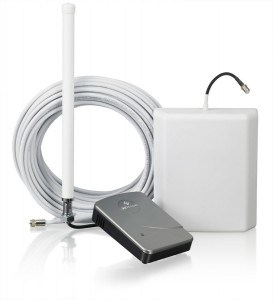
Wilson Electronics is a major manufacturer of cell signal boosters.

Equipment manufacturers are not impressed with AT&T’s ideas.  One tells Stop the Cap! if adopted, signal boosting equipment would cost more than double today’s average price of $200-400.

“AT&T has built so many requirements into their proposal, they know the result will be a product too expensive to sell to consumers,” the source tells us.  “And the part where AT&T wants the right to authorize and register the equipment gives them the option of charging a fee for doing so, turning the product into yet another way for AT&T to make money.”

Equipment manufacturers agree that there have been instances of interference problems, and they are willing to work with the Commission to find solutions, but not at the risk of adopting proposals some suspect are designed to destroy the signal booster business.

“AT&T is a control freak, plain and simple,” the source says.  “If they don’t own it or control it, it’s offensive to them.  It must be eliminated.”

More than one equipment manufacturer has noted, not for attribution, they find AT&T’s complaints a bit ironic.

“This is the same company that is already notorious for dropping calls,” said the source.  “You would think they would look favorably on anything that could deliver ‘more bars in more places,’ because AT&T sure isn’t doing it these days.  Just ask their customers.”

Time Warner’s iPad App Lawsuitarama: Every Day Brings a Whole New Channel Lineup

Phillip Dampier April 12, 2011 Consumer News, Online Video 1 Comment

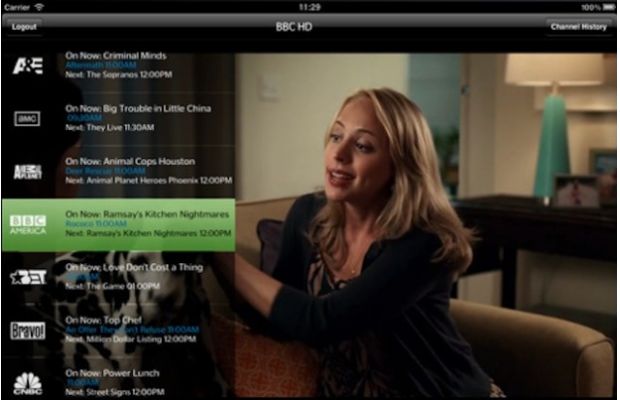
iPad Owners:  Don’t get too comfortable with the channel lineup on Time Warner Cable’s free app for watching streamed HD video of some of your favorite cable networks.  What you see today may be gone tomorrow (or replaced by something else.)

Time Warner Cable’s ongoing effort to implement their TV Everywhere-vision have run headlong into a legal quagmire as some content owners object to the new service.

Back in March when the app first appeared, the cable company was offering a few dozen channels of national cable feeds, with a heavy emphasis on news and mainstream cable networks.  But then Viacom, News Corp., and Discovery Communications protested, claiming the cable operator had not negotiated streaming rights for their networks.  Viacom and Time Warner Cable are currently suing one another over the matter.

Although some programmers use the excuse streamed video could reach “unauthorized viewers who do not have a cable subscription,” viewing restrictions imposed by Time Warner Cable makes that unlikely.  The cable operator requires viewers to watch from a Time Warner Cable Wi-Fi broadband connection.  Wi-Fi hotspots don’t work; neither does access from 3G or 4G mobile broadband networks.  The cable company says that restriction is by design.

“We believe that the location inside the home grants us the rights, provided the method of delivery is over a traditional cable network which is exactly what we’re doing,” Time Warner Cable’s Alex Dudley told NY1, Time Warner’s 24-hour news channel in New York City. “This is not programming delivered over the Internet; this is delivered over our network just like your cable television is delivered, and then to your Wi-Fi router where it reaches your iPad.”

So it is really about money.  Programmers want extra compensation from the cable company for streaming their content, and the cable company doesn’t want to pay extra.

While negotiators and the courts untangle the mess, the cable operator has been adding some channels while deleting others.  The big losers: Animal Planet, Black Entertainment Television, Country Music Television, Comedy Central, Discovery Channel, FX, MTV, National Geographic, Nickelodeon, Spike, TLC and VH1 — are all currently off the lineup.

The winners: C-SPAN, which gets all three of its channels streamed.  A variety of other “enlightened” (Time Warner Cable’s words) cable networks have given the green light to be a part of the project.  Recently added: AMC, Bio, Bloomberg, CNBC World, Chiller, Current, Disney XD, ESPN News, G4, Golf Channel, History International, HSN, IFC, Jewelry TV, Lifetime, NY1, Oxygen, QVC, Reelz, Sleuth, Soap Channel, Style, and Tru TV.  (In New York City, Galavision, History en Español, PBS Kids Sprout, and We are also included.)

For channels like Bio, Chiller, Current, and Reelz — buried in Digital Channel Siberia on the cable dial only to be found by the most ardent channel surfers — getting a prominent place on an app with just a few dozen channels competing for viewers is exposure gold.

We’ve tested the app here at STC HQ and found the picture quality and responsiveness to be excellent.  Channel changing is nearly as fast on the app as it is on our set top box — quite an accomplishment.  But the restrictions imposed by Time Warner really limit the app’s usefulness.  After all, if you want to watch television at home, why reach for an iPad when your television remote control is nearby.  But for those without digital cable boxes, or who want to wander around the house while watching, Time Warner’s app is useful, and better yet — free to those who already subscribe to cable television.

Frontier Largely Omits Rochester’s Largest Employer from the Phone Book

Phillip Dampier April 12, 2011 Consumer News, Editorial & Site News, Frontier 1 Comment

Another month, another colossal mistake from Frontier Communications.

As dead-tree-format telephone directories make their way to residents in western New York, customers noticed Rochester’s largest employer — the University of Rochester/Medical Center, was largely missing from the company’s Yellow Pages.

Oops.

During the production process for your 2011 FrontierPages Rochester Metro directory, multiple listings were inadvertently omitted or printed in error.  On behalf of FrontierPages and out telephone directory publisher, The Berry Company LLC, I’d like to sincerely apologize for this oversight and any confusion this may have caused.

Frontier printed and enclosed a supplement, University of Rochester Special Edition, to cover the lost listings.  It was the least they could do for the community’s biggest employer.  Ordinary consumers (like myself), don’t get similar treatment.  For the seventh year in a row, Frontier’s White Pages lists an old address we left in 2004.  This, despite not less than 15 reminders asking them to fix it.

Jersey Shore Motels Bail on Comcast: ‘They Don’t Want Our Business,’ Owners Claim

Phillip Dampier April 11, 2011 Comcast/Xfinity, Competition, Consumer News 1 Comment

Resort communities like Wildwood, N.J. become near ghost-towns when the lucrative summer season comes to an end.  But Comcast expects motel owners to keep paying for cable service even after they lock their doors and shut down during the winter.

Now more than three dozen area independent hotel owners have told Comcast to take a hike — they are switching to satellite.

For owners, Comcast has added insult to financial injury with higher rates and new requirements for year-round service that nobody watches from October-April.

It wasn’t always this way.  Comcast formerly grandfathered seasonal service into contracts for area resorts.  No converter boxes were required either, making it easy to install in hotel rooms.

But no more.

The cable company claims it needed “rate consistency” in the region and raised prices.  Plus, Comcast has notified hotel owners they’ll need to accommodate digital set top boxes — one to a television, something owners considered the final straw.

James “Jimmy” Johnson, owner of the 48-room Imperial 500 told the Philadelphia Inquirer he invested almost $60,000 for flat panel televisions in his rooms that Comcast now wants to slap cable boxes on.  Johnson is not happy about that, because guests could walk off with them and their accompanying remote controls.

“I go through remotes like you go through underwear,” Johnson told the newspaper.  Comcast charges substantial fees for lost or stolen cable equipment.

Comcast also sought pricing changes that would charge motel owners for service per-television, instead of per-room.  Several motels have multiple televisions in each room, substantially raising prices.

As a result of the rate increases and what many owners have called the cable operator’s intransigence, they are kicking Comcast out, installing satellite television from DirecTV instead.

After an initial investment of $6,400 for the satellite equipment, many owners expect significant savings from DirecTV’s seasonal service contracts, although some guests may find regional sporting events exclusive to Comcast unavailable in their satellite-TV equipped rooms.

But for Johnson, the savings are worth it.

“I’m renting rooms; I’m not running a sports bar. . . . With computers now, you can get a lot of games on your computer, or your phone,” Johnson told the Inquirer.

Search This Site:

Contributions:

Recent Comments:

Your Account:

Stop the Cap!