Home » Consumer News » Recent Articles:

Comcast Internet Service Promotions: Experiences With the Retention Department

Phillip Dampier June 6, 2011 Comcast/Xfinity, Competition, Consumer News 2 Comments

Comcast customers looking for some savings off their broadband service are getting some decent discounts when threatening to take their business elsewhere.  Depending on the competition in your area, customers are paying as little as $19.99 per month for Comcast Performance Internet, which delivers around 12Mbps download speed.  While the best deals often go to new customers, current customers can get some nice discounts just by using the word “cancel.”

Stop the Cap! has collected some examples from our readers about recent experiences with Comcast’s retentions and promotions departments.  Any customer can try any of these numbers and ask if promotions are available.  Comcast pricing can vary regionally, as do their offers.  If you don’t like the first one you hear about, ask them if they can do any better.  Very often they can.

Chicagoland

Call 1-800-934-6489, select option ‘4’ for downgrade or disconnect, then option ‘2’ for disconnect

Tell the operator you are considering dropping your broadband service because it is too expensive, but a friends of yours is getting a promotion for current customers offering $19.99 a month for Comcast Performance Internet.  Can I get that offer?

They will check for qualified offers for your area and may attempt to offer promotions for triple play packages.  In Chicago, the current Performance promo is $19.99 a month for six months, then $46.95 for the next six months.  But your pricing may vary.

San Francisco Bay Area/Seattle

Call 1-800-970-6405.  They will usually answer asking if you are calling about a special promotion.  Ask them about the Internet offer priced at $19.99 for first year, $34.99 for second year and verify what level of Internet service this provides (it should be Performance).  Some people report this offer is available to new customers only, others say it works for existing customers.  It is provided by an authorized reseller for Comcast.

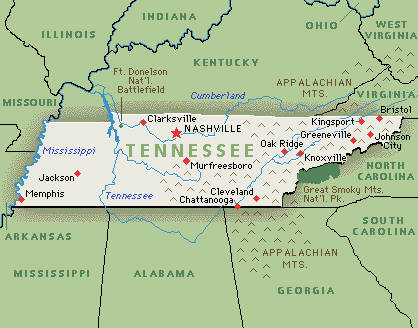
Tennessee/Mid-South

Call 1-877-395-5388.  Ask about current promotions.

Expect at least five minutes of bad deals.  Hold out for 6Mbps service at $19.99 for six months or 8Mbps at $29.99 for 12 months.  You can often get them to extend the 6Mbps service pricing for 12 months.  Ask for any activation/installation fees to be waived.

Business Class Service (Usage Cap Free!)

Commercial (Business) HSI 12/2Mbps service is available for as little as $60 per month without TV or $65 with basic TV.  All installation fees can be waived.  Expect a 1-2 year commitment.  You may want to Google around for any third party Comcast Business Class resellers who can provide 12/2Mbps service for as little as $44 a month with a six month commitment and $35 activation fee.

General Advice

All promotions with Comcast are strictly “your mileage may vary.”  If a particular representative is not giving you a good offer, thank them, hang up and try another phone number shown above or call later.  You should get used to asking “is this the best you can offer” and “can this fee be waived?”  You won’t get it if you don’t ask.

With Comcast, you will also do much better buying your own cable modem and avoiding the monthly rental fee.  Perhaps some of our readers can join in the discussion in the comments with some modem recommendations.

When your promotion ends, getting an extension requires more work.  Many representatives will not want to offer you back-to-back promotions but some will when pressed.  You can also cancel service and then start a new account with the cooperation of a family member.

Some of the best pricing promotions require some level of cable television service.  If you want broadband-only service, let the representative know you want offers for that level of service only.


 

Clearwire’s Credit Standards: If You Had a Pulse You Were Approved, Say Dealers

Phillip Dampier June 6, 2011 Broadband Speed, Consumer News, Wireless Broadband Comments Off on Clearwire’s Credit Standards: If You Had a Pulse You Were Approved, Say Dealers

In a desperate bid to inflate subscriber numbers, dealer commissions, and attract additional investors, some Clearwire retailers slashed credit standards resulting in widespread approval of customers who would later skip out on paying the bill.  At least one dealer offered to override any failed credit check for even the most credit risky customers, according to a Bloomberg News investigation.

Those charges, made by three former dealers and distributors, bring additional controversy to a wireless venture already facing lawsuits for false advertising and misleading business practices.

From late 2009 until earlier this year, Clearwire dealers were strongly encouraged to sign up new customers for its wireless services, which include a home broadband replacement offering “unlimited wireless broadband” to customers.  In many markets, scores of would-be customers in urban and poor areas failed the company’s credit checks.  One former salesman told Bloomberg as many as 60 percent of his would-be customers couldn’t pass the credit check without a manual override, often done with a copy of a driver’s license and evidence of residence in the area, such as two consecutive utility bills.

Millions of new Clearwire customers were signed up for service during 2010, with dealers and salesmen earning significant sign-up commissions and parent company Clear winning favorable media coverage for its high subscriber growth, used to attract new investment.

One distributor called the lax credit standards “a time bomb,” one that began going off as customers reneged on their contracts, didn’t bother to pay the bills, or simply canceled service while ignoring collection efforts.  But the credit standards remained surprisingly loose for an industry that routinely profiles potential customers before signing them up to service.

By mid-2010, Clearwire dealers were no longer even required to pull a hard credit report with a Social Security number.  Scores of immigrants, many without documentation, could now sign up for Clearwire service showing proof they had managed to make at least one rent payment on time.  Even customers with no credit experience were signed up for service, some who paid exclusively in cash.

One Texas dealer reported as many as 80 percent of his customers were approved with credit overrides.

Much of Clear’s dealer network is independently owned and operated, especially now that the company faces financial challenges.  The company provides dealers with strong financial incentives, including bonuses, for new customer signups.  Several former salespeople report distributors and dealers routinely pressured salespeople to sign up new customers at all costs.

“I always hear from reps ‘I’m not selling because no one can pass credit checks’,” one manager wrote. “The time has come for you to call BS and on your reps (and yourself if needed!) and for the credit excuse to END now! I will personally enter in the credit overrides under your dealer code.”

“PS, you can thank me later for DOUBLING YOUR COMMISSIONS!” the e-mail dated March 2010 read.

Some ex-Clearwire customers were not happy when their speeds were reduced to 250kbps on the company's overcrowded network.

Some customers even managed to skip out paying on one Clearwire account while establishing another.  The runaway growth propelled network traffic for Clearwire, leading the company to implement “fair use” policies that restricted the use of the service, despite being pitched as “unlimited.”  In addition to customers who simply refused to pay their bills, some creditworthy customers signing up for service were gone within weeks after finding the service unusable.

Bloomberg notes Clear’s own numbers suggest the company had 688,000 customers at the end of 2009.  As of the end of the first quarter of 2011, that number is now 6.15 million.  But Clear’s numbers show the churn rate — customers coming and going — is high for the wireless industry at 3 percent or higher for the past seven quarters.  Verizon Wireless, in contrast, has a churn rate of 1.33 percent.

A high churn rate is a major problem because it requires Clear to spend more in marketing and sign up promotions to entice a steady supply of new customers replacing those who have left or been shut off.

Most providers who find a would-be customer saddled with sub-prime credit scores ask for a substantial deposit for service, or encourage a prepaid calling plan instead.  But Clear shows no indications of moving in either direction.

The company has managed to protect itself from financial losses from the customer merry-go-round, often at the expense of dealers who over-enthusiastically signed up deadbeat customers.  If a customer leaves or is shut off within the first six months, the dealer commission is forfeited back to Clear.

For some, this has meant the end of their business.  One dealer lost more than $500,000 in “chargebacks,” while others owe tens of thousands in repayments to Clear.

Clear’s business depends on more than just its own Clearwire customers.  Several cable companies, including Time Warner Cable and Comcast, resell Clearwire service under their respective brand names.  So does Best Buy.

New Tenn. Law: Spend a Year In Jail If You Share a Netflix/Rhapsody Account With Friends & Family

Phillip Dampier June 2, 2011 Consumer News, Online Video, Public Policy & Gov't Comments Off on New Tenn. Law: Spend a Year In Jail If You Share a Netflix/Rhapsody Account With Friends & Family

Sharing your Netflix account with your spouse or your son at college? Under a new Tennessee law, both you and the other party could spend up to a year in jail for “theft of entertainment services” if Netflix, or any other entertainment service says that is not okay.

Eyebrows were raised in Tennessee this week as Republican Gov. Bill Haslam admitted he signed the new copyright protection bill into law while telling reporters “he wasn’t familiar with the details of the legislation.”

Rep. Gerald McCormick (R-Chattanooga), who worked last summer to completely deregulate AT&T’s phone service in Tennessee spent this spring pushing for adoption of a bill sponsored by Nashville record labels to up-end state copyright law in favor of content producers.

The entertainment industry, having failed to win wholesale support of its copyright protection agenda in Congress has now taken to lobbying individual statehouses for new state copyright laws.  Tennessee is the first among 50 states to extend its long-standing cable-TV theft statute to include content over the Internet.

Under the law, anyone other than the account owner who uses their account name and password, even with permission, is a violator and subject to a criminal misdemeanor charge punishable by up to a year in jail and a fine of $2,500. If the username and password opens access to content collectively worth more than $500, the charge becomes a felony with correspondingly harsher penalites and fines.

Some reporters questioned whether the law could mean sharing your Netflix, iTunes or Rhapsody account with an immediate family member meant you were breaking the law.  The answer is, you might, although bill supporters doubt it would be prosecuted.

“What becomes not legal is if you send your user name and password to all your friends so they can get free subscriptions,” McCormick told the Associated Press.

Currently, most online content providers don’t have a problem with immediate family members sharing accounts.  Netflix allows at least two concurrent video streams of its online content.  Music services often recognize three or more “authorized devices” on which content can be shared and accessed.

But if attitudes change, content providers can file complaints when they realize their service is being accessed by multiple parties at the same time or in multiple places.

"Gerald McCormick will support anything if you staple a big check to your cover letter."

The music industry in Nashville openly admits it strongly advocated for passage of the bill, claiming the music business loses millions from account sharing.  But critics of the new law attack it as overly broad.  One defense lawyer suggested it is so broad, it could be used to prosecute people who share magazines.

Proving a case to hard-working law enforcement officials could also present a problem says Jeff Polock, a Knoxville-based law enforcement and consumer advocate.

“We have enough trouble fighting crime on the streets,” Polock tells Stop the Cap! “While law enforcement officials appreciate the dilemma of copyright theft, many officers are not going to be technically skilled in building a case over who shared what password in the dorms at the University of Tennessee.”

Polock suspects the new law will be wielded against larger wholesale copyright offenses, if only to avoid the threat of negative publicity.

“Can you imagine what the local evening news would do if they arrested some father in Chattanooga for sharing his iTunes account with his daughter at school here in Knoxville?,” Polock wonders.  “It’s not like these people are downloading stolen copies of content they are not paying for — they are running a single iTunes account so the parents can monitor what their kids are buying, watching, or listening to while away from home.”

As for McCormick, Polock has choice words.

“Gerald McCormick will support anything if you staple a big check to your cover letter,” Polock says. “The man is never too far away from corporate interests trying to win favorable legislation in the state legislature.”

Verizon: No Caps for FiOS, No More Unlimited for Wireless, and Don’t You Dare Tether Without Paying

Verizon Communications is a study in contrasts.  It runs one of the most advanced wired broadband services in the country that wins rave reviews from consumers and businesses, is on the verge of ending its unlimited use data plans for smartphone customers on the wireless side, and has launched a major “police action” against individuals that are using their smartphones as wireless hotspots without paying an additional $20 a month for the privilege.

Verizon Says No to Data Caps and Consumption Billing

When you run an advanced fiber to the home network like FiOS, the concept of data caps is as silly as charging for each glass of water collected from Niagara Falls.  That’s a point recognized by Joseph Ambeault, director of media and entertainment services for Verizon.  Talking with GigaOm’s Stacey Higginbotham, Verizon continues to insist their network was built to handle both today and tomorrow’s network demands.

“Our network is always engineered for big amounts of data and right now there are no plans [to implement caps], but of course you never want to say never because things could change.”

However, in the same conversation he talked about how the FiOS service has gone from offering a maximum of 622 Mbps shared among 24 homes in the beginning to tests of 10-gigabit-per-second connections in individual homes that Ambeault mentioned. For now, Verizon is testing 10-gigabit-per-second-shared connections and offering up to 150 Mbps home connections. This kind of relish for massive bandwidth is not evident in conversations with folks at AT&T or even those cable firms deploying DOCSIS 3.0. Which is why when Ambeault added, “We don’t want to take the gleam off of FiOS,” as his final say on caps, I tend to believe that Verizon may be the last holdout as other ISPs such as AT&T, Charter and Comcast implement caps.

Verizon Says Yes to Ending Unlimited Smartphone Data Plans

Verizon is among the last holdouts still offering unlimited data plans for smartphone customers.  Priced at $30 a month per phone, these plans have proved very profitable for Verizon in the past, in part because they are mandatory whether you use a little data or a lot.  But now as data consumption grows, Verizon’s profits are not as luxurious as they once were, so the “unlimited plan” must and will go, probably within the next three months.

Verizon has always been hesitant about following AT&T’s lead for wireless data pricing, which delivers a paltry 2GB for $25 a month.  AT&T still sells its legacy unlimited plan, grandfathered for existing customers, for just $4 more per month.  So while AT&T can claim they’ve reduced the price for their data plans, they’ve also introduced a usage allowance.  Those exceeding it will find a much higher bill than the one they would have received under the old unlimited plan.

Verizon will probably echo AT&T’s tiered data plans, perhaps with slightly more generous allowances, but the real excitement came from Verizon CFO Fran Shammo, who told attendees at the Reuters Global Technology Summit it was prepared to finally introduce the much-wanted “family data plan,” which would allow every family member to share data on a single plan.  That’s a potential smartphone breakthrough as customers resistant to paying up to $30 a month per phone for each individual data plan might see their way clear to buying smartphones for everyone in the family if they all shared a single family-use data plan.

“I think it’s safe to assume that at some point you are going to have megaplans and people are going to share that megaplan based on the number of devices within their family. That’s just a logical progression,” Shammo said.

Of course, the devil is in the details, starting with how much the plan will cost and what kind of shared allowance it will offer.

Verizon Says ‘Oh No You Didn’t Tether Your Phone Without Our $20 Add-On’

Phandroid posted this copy of a message Verizon customers are receiving if they are using unauthorized third party tethering apps. (Click to enlarge.)

Earlier today, Verizon Wireless customers using popular third-party tethering apps to share their smartphone’s built-in Wi-Fi Hotspot with other nearby wireless devices began receiving the first of what is expected to be a series of warnings that the jig is up.

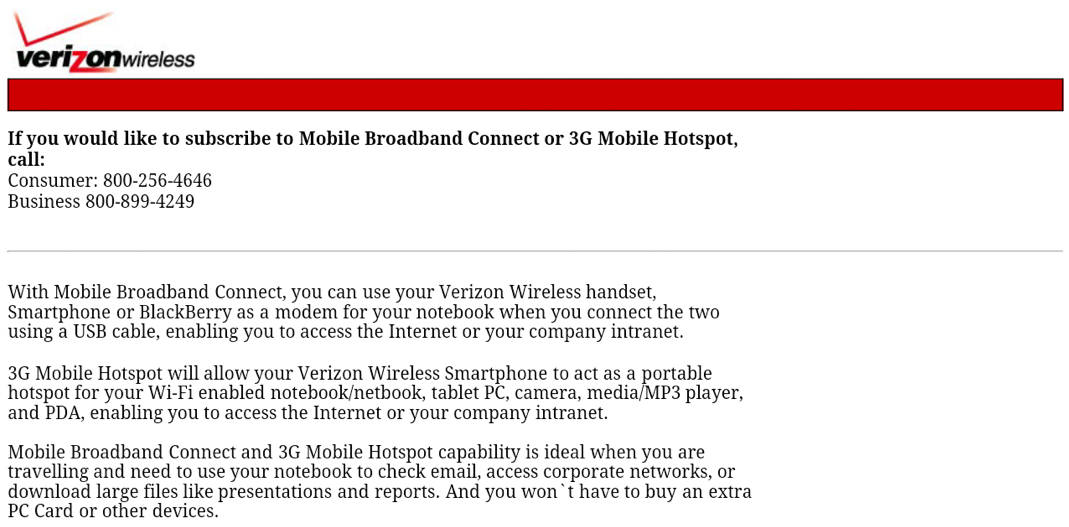
Tethering allows anything from a tablet computer to a netbook or laptop to share a Verizon Wireless data connection without having to pay for individual data plans for each device.  Third party software applications bypass Verizon’s own built-in app, the 3G Mobile Hotspot, which involves paying an additional $20 a month for a secondary data plan delivering a 2GB monthly usage allowance.

Just as AT&T hated to see the possibility of lost revenue passing them by, Verizon has begun ferreting out customers using these apps and sending them friendly reminders that tethering requires an official Verizon Wireless add-on plan.  While the third party apps are not yet being blocked, most expect Verizon to gradually crack down on their use if customers persist in using them.  Verizon can also block the sale of the apps from the Android Market and can also insert roadblocks to prevent their use.  Or they can follow AT&T’s lead and threaten (perhaps illegally) to automatically enroll customers caught using tethering apps in their paid tethering plans.

Paying to Pay: Phone, Cable Cos. Introducing Fees to Pay Bills Online/Over the Phone

Phillip Dampier May 31, 2011 Consumer News, Editorial & Site News, Video 3 Comments

[flv width=”360″ height=”290″]http://www.phillipdampier.com/video/WOAI San Antonio Getting Charged to Pay Bills 5-30-11.mp4[/flv]

Warning: Loud Volume Alert!  Adjust your volume controls before playing.

An increasing number of phone and cable companies are introducing new “convenience fees” for customers making payments by phone or using the company’s online website.  That is the finding of a new report from WOAI-TV in San Antonio.  While few companies currently charge for payments scheduled well in advance, an increasing number are asking for fees ranging from $1.99 to $25 for using online bill payment systems or making last minute payments over the phone.

If your provider charges a fee, be sure to ask for it to be waived, especially if you have a good payment history.  If you are charged the fee anyway, file a complaint with the Better Business Bureau, which should get the attention of the executive customer service team empowered to refund it back to your account.

Paying to pay is just another way for providers to reap more revenue from customers, even when they are trying to make payments on time.  (3 minutes)

Search This Site:

Contributions:

Recent Comments:

Your Account:

Stop the Cap!