Home » Consumer News » Recent Articles:

Phone Sabotage: Frontier & Verizon Customers in Upstate NY Face Service Outages

Phillip Dampier August 10, 2011 Consumer News, Frontier, Verizon, Video 3 Comments

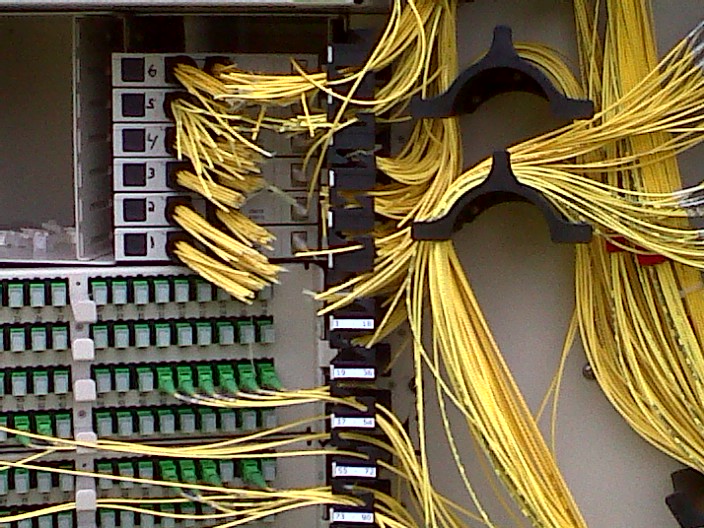
Vandalism causes serious phone outages in upstate New York. (Courtesy: Verizon Communications)

Frontier Communications’ landline customers in Lewis and Oneida counties faced long distance service outages, while just about everyone in northern Oneida County is without both landline and cell phone service after fiber lines serving cell towers and landline customers were cut Monday.

The New York State Police have launched a criminal investigation into the sabotage, while Verizon Communications implies the damage might have come as a result of a strike against the company that began last weekend.

The largest outage, which cut off cell service and landlines, originated in Deerfield, where cables were severed.

Several upstate communities are facing lengthy service outages from a variety of acts of vandalism, most from cable cuts and damage to junction boxes.

Verizon has rushed out news releases regarding the damage, offering a reward of up to $50,000 for information leading to the arrest and prosecution of individuals that intentionally damage Verizon cables or facilities or cause or attempt to cause physical injury to any Verizon employee or contractor.  Verizon urges anyone who witnesses sabotage of Verizon property or any suspicious activity to call 911 immediately, then call the Verizon Security Control Center at 1-800-997-3287.

Both sides of the dispute are now appealing to Congress to intervene, an action that may not bring immediate results.  Both the House and Senate are currently in their five-week summer recess.

[flv]http://www.phillipdampier.com/video/WKTV Utica Criminal investigation into cut phone lines that caused massive outages 8-9-11.mp4[/flv]

WKTV in Utica covers the impact of widespread landline and cell phone outages in Oneida County, upstate New York.  (1 minute)

[flv width=”640″ height=”380″]http://www.phillipdampier.com/video/WRGB Albany Verizon Vandals 8-8-11.flv[/flv]

WRGB in Albany explores additional acts of vandalism in the Capitol District and gets reaction from striking workers about whether they were involved.  (3 minutes)

Frontier’s Modem Rental Fee: $7/Month; Wireless Router Fee Now $14.99/Month

Phillip Dampier August 10, 2011 Consumer News, Data Caps, Frontier, Rural Broadband 3 Comments

A very pricey upgrade

Frontier Communications’ DSL modem rental fee is now as high as $6.99 a month in some of the phone company’s service areas, $14.99 a month if you want the convenience of a wireless router built-in.  That’s $84 and $189 a year, respectively, for equipment that cost the company a fraction of that.

“Lymelizzard,” a would-be Frontier DSL customer in Robbinsville, North Carolina, considers that highway robbery.

“I can go and buy the modem at a store and it would be less than one year of rental,” he wrote on Broadband Reports’ Frontier forum.

Frontier Communications’ regular monthly prices are not exactly aggressive in North Carolina, charging up to $50 a month for 3Mbps DSL, $55 for up to 7Mbps, before the modem rental fee and other charges are included.  A customer with Frontier’s wireless router would pay more than $70 a month, just for 7Mbps DSL service:

Frontier's No-Contract Prices for New Customers Only. Prices less for 1-2 year contracts that include $165 early termination fee for Double Plays and up to $120 early termination fee for High-Speed Internet only plans. One-time charges up to $60. Additional charges, taxes and terms apply.

Frontier has quietly increased equipment fees over the years.  Back in 2010, the company raised the rental fee to $4.50 a month.  Some service areas have been paying $6.99 a month since 2009, but now face even higher prices if they want a home “Wi-Fi” hotspot included.

Something else has changed at Frontier as well.  The company is making it more difficult for customers to purchase their own modems and use them instead, skipping the modem rental fee.  Customers trying to save several dollars a month now face a brick wall when contacting customer service.

“The salesman on the phone even said [the modem rental fee] wasn’t a good deal but he could not waive it,” Lymelizzard wrote.  He declined to become a Frontier DSL customer, considering the modem rental fee a deal-breaker.

“I’m surprised that all the Joe Customers out in Frontier-land haven’t complained,” he said. “This is merely a money grab on Frontier’s part. I could see the fee for a year, maybe two, but for the life of the account that’s bogus.”

FCC to AT&T: Justify Your Spectrum Demands, Merger With T-Mobile

Phillip Dampier August 9, 2011 Astroturf, AT&T, Broadband "Shortage", Competition, Consumer News, Editorial & Site News, Public Policy & Gov't, Rural Broadband, T-Mobile, Wireless Broadband Comments Off on FCC to AT&T: Justify Your Spectrum Demands, Merger With T-Mobile

The Federal Communications Commission today raised the hurdle for AT&T when it told the wireless company it would consider its proposed acquisition of wireless spectrum from Qualcomm in concert with its application to acquire T-Mobile USA.

The FCC wrote both AT&T and Qualcomm regarding the ongoing review of both transactions:

“The Commission’s ongoing review has confirmed that the proposed transactions raise a number of related issues, including, but not limited to, questions regarding AT&T’s aggregation of spectrum throughout the nation, particularly in overlapping areas. As a result, we have concluded that the best way to determine whether either or both of the proposed transactions serve the public interest is to consider them in a coordinated manner at this time.”

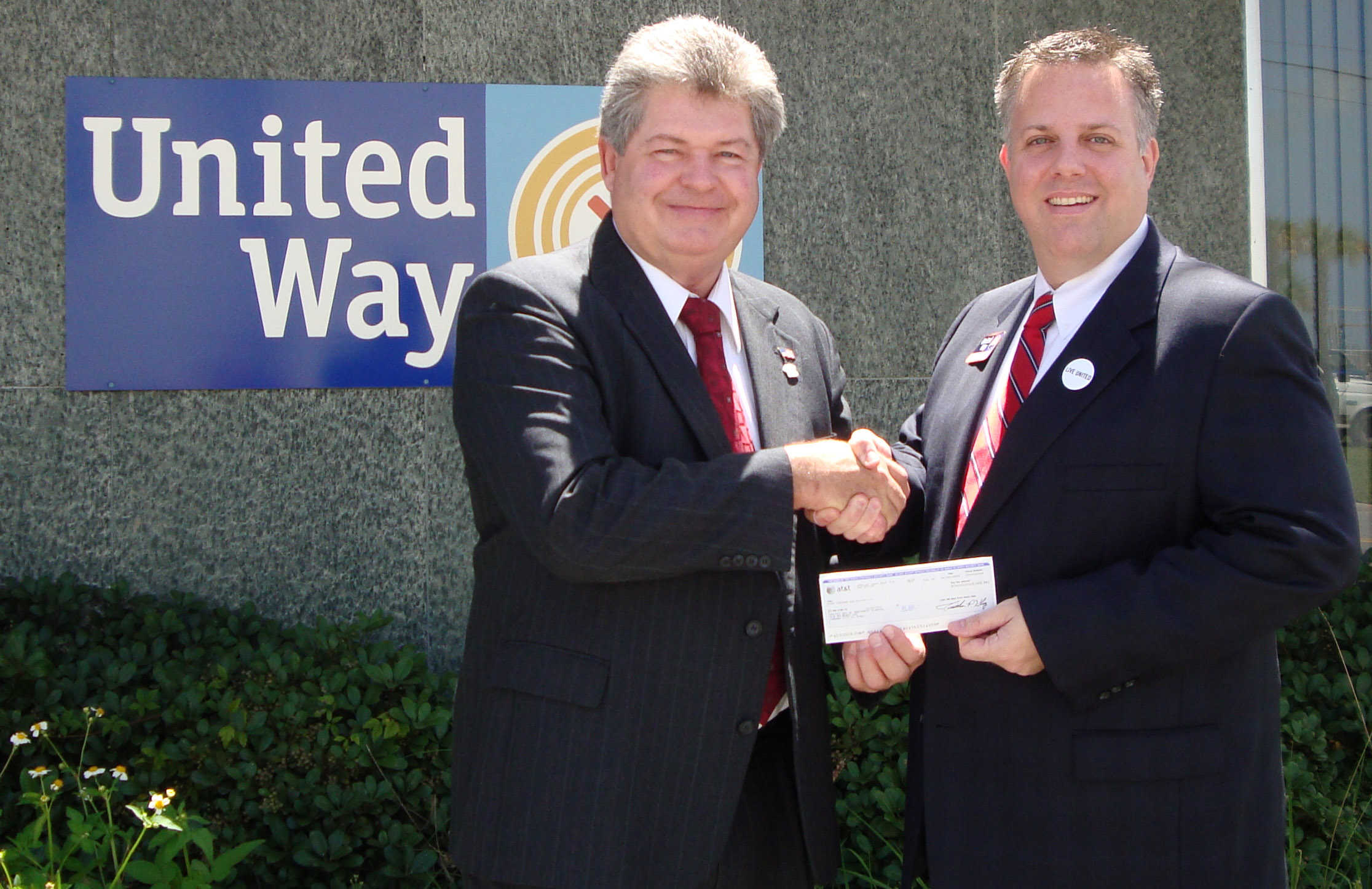
AT&T Donates $9,000 to the United Way of Northwest Florida, which promptly returns the favor with a nice letter to the FCC supporting the telecom company's agenda.

At issue is whether AT&T is warehousing wireless spectrum it actually has little intention to use and whether or not AT&T is being honest when it suggests it needs to acquire T-Mobile USA to expand the number of frequencies open for its growing wireless network.

Critics of the merger claim AT&T has plenty of unused spectrum available to deliver service, particularly in the rural areas AT&T claims T-Mobile can help it serve.  T-Mobile is not well-known for its service in smaller communities and rural areas, preferring to rely on roaming agreements to achieve national coverage.  With its proposed acquisition of valuable spectrum in the 700MHz range from Qualcomm, excellent for penetrating buildings and delivering reliable service, the FCC may be wondering if the proposed merger with T-Mobile is necessary at all.

Gigi Sohn from Public Knowledge doesn’t think so.

“We are pleased that the Commission has decided to consider AT&T’s purchase of Qualcomm spectrum in the context of AT&T’s takeover of T-Mobile.  It doesn’t matter whether both transactions are in the same docket; the fact that the Bureau will consider them together in any manner is a strong statement,” Sohn said.

“This April, several public interest groups, Consumers Union, Free Press, the Media Access Project, Public Knowledge, and the New America Foundation, asked for the Commission to take that action because we said that both deals together would ‘further empower an already dominant wireless carrier to leverage its control over devices, backhaul, and consumers in ways that stifle competition,” Sohn added.  “We look forward to working with the Commission on these issues which are so vital to the economy of this country.”

Companies that have acquired wireless spectrum at government auctions have not always put those frequencies to use.  At least one firm warehoused spectrum as an investment tool, earning proceeds reselling it to other providers.  Others have simply squatted on their spectrum, sometimes to keep it away from would-be competitors.

Of course, considering AT&T is a master of dollar-a-holler astroturf operations and lobbying, it’s only a matter of time before a renewed blizzard of company-ghost-written letters start arriving at the Commission telling them AT&T needs both the Qualcomm spectrum -and- the merger with T-Mobile.

Groups like the NAACP, United Way of Northwest Florida, the National Puerto Rican Coalition, and the U.S. Cattlemen’s Association ought to know, right?

Thanks to Stop the Cap! reader Bones for alerting us.

Verizon Reportedly Blocking Unofficial Tethering Software: Customers Redirected to $20 Tether Offer

Phillip Dampier August 9, 2011 Consumer News, Data Caps, Net Neutrality, Public Policy & Gov't, Verizon, Wireless Broadband Comments Off on Verizon Reportedly Blocking Unofficial Tethering Software: Customers Redirected to $20 Tether Offer

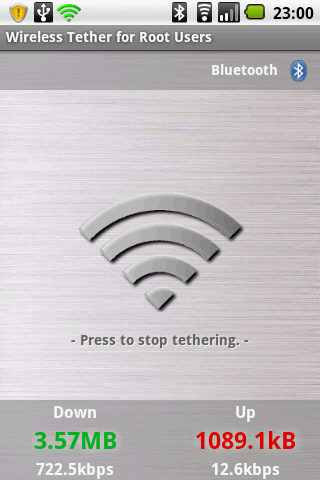
It’s Cell Company Customer Crackdown-month for AT&T and Verizon Wireless as the two carriers increasingly engage in aggressive “management” of their wireless data networks.  Days after AT&T announced it would throw customers off legacy unlimited data plans if caught using “unofficial” tethering applications, Verizon has reportedly locked out customers from accessing web pages over jailbreak apps like MyWi, redirecting requests to a Verizon Wireless $20 Mobile Hotspot offer instead.

Mobiledia reports Verizon now requires users have a hotspot-capable data plan if they want to tether data from their smartphones to other devices.  At regular prices, those plans start at $20 for 2GB of usage, with a $10/GB overlimit fee.  Certain LTE/4G customers have fared better, being offered unlimited tethering for $30 a month — an option not available to 3G phone owners.

The Federal Communications Commission’s Net Neutrality policy exempted wireless providers from observing its core principles, giving carriers carte blanche to block websites and third party applications from their networks, and Verizon has put the green light to good use.

AT&T has favored direct punitive measures against customers who don’t respond to their demands to upgrade by auto-enrolling customers in $45 tethering plans or threatening legacy customers with the loss of their unlimited data plan.

Some media reports — including those from Mobiledia — have declared third party tethering applications “illegal,” which is inaccurate.  While carriers may not like these applications and declare use of them contrary to their respective acceptable use policies, they do not violate any laws.

U.S. Cellular Abandoning Unlimited Data Despite New 4G Network That Cuts Data Costs

Phillip Dampier August 9, 2011 Competition, Consumer News, Data Caps, US Cellular, Wireless Broadband Comments Off on U.S. Cellular Abandoning Unlimited Data Despite New 4G Network That Cuts Data Costs

U.S. Cellular Monday told investors the company plans to abandon unlimited data service sometime in the next two or three quarters in favor of tiered data plans similar to what is on offer from AT&T and Verizon Wireless.

U.S. Cellular president and CEO Mary Dillon told investors the company is changing pricing as a result of “significant changes in pricing strategies” at their larger competitors, who have moved away from unlimited data plans over the last year.  Dillon applauded the adoption of tiered data pricing, but noted increasing pricing pressure in the market.

For the nation’s sixth largest wireless carrier, best known in the midwest, northern New England, the Carolinas, and northern California, being a regional provider in an increasingly concentrated wireless marketplace has some on Wall Street concerned about the long term viability of smaller cell phone companies.

Blaming the continuing challenges of “an extremely competitive market and a sluggish economy in which carriers continue to fight for a dwindling pool of new subscribers and the cost of acquiring switchers are significant,” the company reported a net loss of 41,000 customers during the last quarter.  Only 226,000 new customers signed up, down from 307,000 in the prior year quarter.  Another 17,000 prepaid customers dropped U.S. Cellular last quarter as well.  U.S. Cellular now has just under six million customers in all.

Adrian Mill from Eagle Capital noted the customer losses — presumably to larger AT&T or Verizon Wireless, and pondered how long the company can continue to exist on its own in a market increasingly dominated by those two larger carriers:

“I know you guys did a lot of work a couple years ago on whether our regional cellular company could still be relevant and looked at ways in other industries and had some good data from it.

I’m just curious if after the past couple quarters of results where we’ve now seen everybody lose share to AT&T and Verizon if that was something you thought might happen in short term or if it’s been surprising?

If its been surprising, how long would you guys potentially consider losing subs before you do a strategic transaction or consider a sale?”

U.S. Cellular executives didn’t directly answer the question, but acknowledged the wireless carrier does have challenges in the marketplace its larger competitors don’t have.  They include:

  • Access to coveted smartphones, particularly Apple’s iPhone, which continues to be unavailable from smaller, regional wireless carriers;
  • Access to sufficient wireless spectrum to deploy robust data networks to meet customer demand;
  • Capital requirements to build and expand the next 4G generation of wireless;
  • The downward pressure on smartphone equipment pricing due to competition and expensive equipment subsidies;
  • Roaming agreements to ensure nationwide coverage for voice and data services.
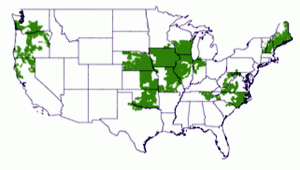
U.S. Cellular's primary service areas

Company officials told investors U.S. Cellular intends to continue to compete for new customers, leveraging its top consumer ratings for reliable service and satisfaction with the deployment of its own 4G LTE wireless network.  But first it intends to re-align pricing to reduce costs.

Alan Ferber, U.S. Cellular’s executive vice-president, sales operations, notes U.S. Cellular wants to see more of its customers upgrade to smartphones, which guarantee higher revenues per customer from the higher-priced service plans that accompany the phones.  The company needs less expensive phones from manufacturers, because consumers typically won’t pay more than $200 for a smartphone that comes with a 2-year service agreement.

Ken Meyers, chief financial officer for the company, has been crunching the numbers on smartphone equipment costs and is grateful for the presence of Android phones in the marketplace, which are starting to drive phone prices downwards.

“[It’s] exciting to me is to see what’s happening with the Android phone cost that will allow carriers to start to recapture some of the economics needed to support LTE [4G] investment and the subsidization of those smartphones, whereas that works on a $200 smartphone but if I’m subsidizing $400 or $500 suddenly most of that revenue isn’t going to pay for the network,” Meyers said.

Ferber expects to deliver new smartphones to U.S. Cellular customers for less than $200 by the holiday season, so customers will find the initial cost for phones lower than ever.  But Ferber admits the company’s forthcoming tiered data pricing means increased revenue and “better cost controls” over the life of a customer’s 2-year contract.

“We have also talked about things like tier data pricing on a going forward basis,” Ferber said. “We do believe that has at least two major benefits. The first is to align data revenue with data cost better and the second is to, in combination with the lower cost smartphones, enable more customers to get into a smartphone.”

But Ferber also acknowledges the company’s move to LTE 4G technology will actually cut the company’s costs to deliver that data — great news to investors, but potentially higher cell phone bills for consumers.

“Over the long turn it’ll certainly make the economics much more attractive,” Ferber said.

Other highlights from Monday’s conference call:

  • U.S. Cellular will not acquire other providers not within or adjacent to its current operations, but is stockpiling cash for the potential purchase of any T-Mobile territories the federal government requires AT&T to divest as part of any merger agreement.  T-Mobile is not a major competitor in most of U.S. Cellular’s more-rural/suburban markets, but if U.S. Cellular does acquire any of these customers, they will have to convert them from T-Mobile’s GSM network to the company’s CDMA network;
  • Data roaming from Verizon and Sprint customers traveling through U.S. Cellular’s service areas have brought increased traffic to the company’s data network, and roaming revenue with it;
  • System operations expenses of $228 million were up $14 million or 7% year-over-year. This was due primarily to higher usage and roaming expenses as customers use more data services both on and off U.S. Cellular’s network. Through June of this year, total data of network usage increased nearly 400% over the same period last year.


Search This Site:

Contributions:

Recent Comments:

Your Account:

Stop the Cap!