Home » Consumer News » Recent Articles:

Time Warner Cable Introduces SignatureHome Premium View: Pay More, Get Premium Channels

Phillip Dampier August 25, 2011 Broadband Speed, Competition, Consumer News, Video 2 Comments

When Time Warner Cable introduced its SignatureHome service, the company claimed it wanted to deliver a comprehensive experience to its most premium-customers.  But oddly, the best broadband speeds, phone service, and digital cable TV lineup from the cable company didn’t include any premium movie channels.

“I was ready to sign up for SignatureHome, but I assumed it included major premium channels, and it didn’t,” says Stop the Cap! reader Liam in Los Angeles.  “I thought it would be a real money-saver but I would rather have the premium channels than their phone service, which I don’t actually use as I depend on my cellphone.”

Scott elected for a cheaper promotional bundle foregoing phone service and the fastest Internet speeds, choosing to stick with Road Runner Turbo service.

“Powerboost on their Turbo product is more than enough for me and I don’t need faster upload speed — if SignatureHome included the premiums I would have taken it,” he says.

Now Time Warner has introduced an addition to their super-deluxe package — SignatureHome Premium View, which bundles HBO, Showtime, Cinemax, The Movie Channel and Moviepass with everything else on offer for $30 more a month — $229.99.  The package excludes Starz!, a premium movie channel Time Warner has barely promoted over the years.

With many markets increasing prices to as high as $15 for channels like HBO, getting five premium networks for just under $30 isn’t a bad deal, assuming you watch them and benefit from SignatureHome‘s other features.

“When my promotion expires, I’ll consider this new option,” Scott says.  “Yes, I realize $230 for cable service should really be an outrage, but the way the company is pricing services these days, the more you bundle, the less you ultimately pay compared to trying to build your own package of services.”

That may be exactly the point.  For customers who rely on Time Warner for phone, broadband, and cable-TV, SignatureHome can be a reasonable value if you crave the company’s highest 50/5Mbps broadband speeds.  Building a comparable bundle on your own is much more expensive.  Now the same is true for premium movie channels, which run between $11-15 a month each a-la-carte.

[flv width=”534″ height=”320″]http://www.phillipdampier.com/video/NY1 Signature Home Arrives 12-9-10.mp4[/flv]

NY1, Time Warner Cable’s 24 hour news channel in New York City, talked about the introduction of SignatureHome last December.  (2 minutes)

Groups Sue AT&T Over San Francisco U-verse Cabinets: Environmental Review Demanded

Phillip Dampier August 25, 2011 AT&T, Competition, Consumer News, Public Policy & Gov't, Video 1 Comment

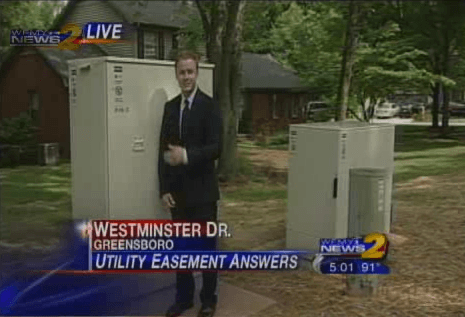
Some proponents for AT&T U-verse suggest people will quickly get used to AT&T's metal cabinets.

A coalition of neighborhoods opposed to the installation of more than 700 4-foot tall metal cabinets across the city of San Francisco have filed suit against AT&T in Superior Court demanding the city follow its own environmental codes and conduct an environmental impact assessment.

The suit comes in response to last month’s close 6-5 vote by the Board of Supervisors permitting AT&T to install up to 726 boxes on the public-right-of-way — typically street corners and sidewalks — to support expansion of its U-verse television, broadband, and phone service.

San Francisco Beautiful, San Francisco Tomorrow, the Potrero Boosters Neighborhood Association, the Dogpatch Neighborhood Association, and the Duboce Triangle Neighborhood Association are all parties to the lawsuit filed Wednesday, which calls the boxes graffiti targets, a safety problem for traffic and pedestrians, and just plain ugly.

Milo Hanke, past president of San Francisco Beautiful, accuses the city of ignoring its own rules to give a green light to AT&T.

“We really don’t want to sue, but we are left with no choice when the city refuses to uphold its own environment codes and is about to give away our sidewalks for the benefit of a private company without objective review,” Hanke told the San Francisco Chronicle.

Long time observers of city politics are frankly surprised AT&T won permission for the controversial boxes.

“It wasn’t that long ago that something like this would have been stopped dead in its tracks in [one] environmental review [after another],” said KCBS-TV reporter Phil Matier.  “But this year, whether it’s a change in the tone for business or for jobs it actually got the six votes needed, and that is going to be interesting as this plays out in an election year in San Francisco.”

Lane Kasselman, an AT&T spokesman countered: “This is about choice and competition for San Francisco residents. It’s about new, better technology that enhances peoples’ lives. AT&T thanks the San Francisco Board of Supervisors for supporting the deployment of U-verse throughout San Francisco. We’ve already started construction and are working as quickly as possible to bring next generation IP network services to every block and household that wants it.”

But Hanke thinks the city has gone too far for the benefit of AT&T at the expense of local residents.

“This is a private enterprise with a benefit to private parties,” Hanke told KCBS.  “Why should the public be subsidizing a Dallas-based corporation, and having to look at these ugly boxes in the process.”

Sean Elsbernd, who serves on San Francisco’s Board of Supervisors personally thinks the boxes are a great idea, suggesting Comcast needs competition.

“I have a suspicion that four or five months after they are in, people aren’t going to notice them anymore,” Elsebernd said.

[flv width=”640″ height=”380″]http://www.phillipdampier.com/video/KCBS San Francisco Groups Sue ATT 8-24-11.mp4[/flv]

KCBS in San Francisco covers the continuing controversy over AT&T’s 4-foot tall utility boxes and the lawsuit designed to stop or delay their installation.  (3 minutes)

[flv]http://www.phillipdampier.com/video/KBAK Bakersfield Homeowner fights utility project in her front yard 5-27-10.flv[/flv]

KBAK in Bakersfield shows what happened when AT&T brought their lawn refrigerator-sized boxes to that city in the spring of 2010 — one woman woke up and found AT&T crews tearing up her yard, without any notice, as part of a major construction project.  (3 minutes)

Cornell University Students Up in Arms Over Internet Overcharging on Campus

Phillip Dampier August 24, 2011 Competition, Consumer News, Data Caps, Online Video, Verizon 4 Comments

Cornell University students pay an average of $37,000 a year (before housing, student fees, and other expenses) to attend one of America’s most prestigious universities.  When they arrive on-campus, it doesn’t take long to learn the college has one of the nastiest Internet Overcharging schemes around for students deemed to be using “too much Internet.”

For years, Cornell limited students to less than 20 gigabytes of Internet usage per month, only recently increasing the monthly allowance to 50GB this summer.  Cornell’s overlimit fee starts at $1.50 per gigabyte, billed in megabyte increments.  Now some students are pushing back, launching a petition drive to banish the usage limits that curtail usage and punish the 10 percent of students who exceed their allowance.

Christina Lara, originally from Fair Lawn, N.J., started the petition which has attracted nearly 300 signatures over the past few weeks.

“Cornell students, along with students across the world, rely on the Internet to pursue their academics, independent research, and leisure activity,” Lara writes. “We should not be subjected to charges for our Internet usage, particularly because our curriculums mandate we use the Internet. Despite this, Cornell University continues to adopt NUBB (Network Usage-Based Billing), which charges students for exceeding the 50 gigabyte per month ‘allowance.'”

Lara incurred bills as high as $90 a month in overlimit fees last year, thanks to regular use of Netflix and Skype for online video chats with friends and family back home.

Internet fees for on-campus housing are included in the mandatory student services fee.  Although Time Warner Cable has a presence on campus, most residence halls don’t appear to be able to obtain service from the potential competitor, which sells unlimited Internet access in the southern tier region of New York where Cornell is located.  Instead, Cornell students on campus rely on the university’s wireless and Ethernet broadband network, and DirecTV or the university’s own cable TV system for television.

Lara

The apparent lack of competition makes charging excess-use fees for Internet usage easy, critics of the fees charge.

“It’s much easier if you live off-campus or in one of the apartment complexes students favor,” says Neal, one of our readers in the Ithaca area who used to attend Cornell.  “The only complication is getting access to the University’s Intranet, which is much easier if you are using their network.”

Neal says Verizon delivers landline DSL to off-campus housing, but not on-campus.  Because the service maxes out at 7Mbps, most who have other options sign up for Time Warner Cable’s broadband service instead.

“It’s cheaper on a promotion and much faster, and it’s still unlimited,” Neal says. “Hasbrouck, Maplewood and Thurston Court were the only residential buildings that offered the chance for Time Warner Cable on-campus, and only if the wiring was already in place.”

Neal notes many apartment complexes off campus have contracts with Time Warner Cable, which means cable TV and basic broadband are included in your monthly rent.  Some Cornell students who live on or near campus try to make do with a slower, but generally free option — the Red Rover Wi-Fi network administered by the University.  Others reserve the highest usage activities for computers inside university academic buildings, where the limits come off.

Lara complains Ithaca, and the southern tier in general, is hardly an entertainment hotbed, making the Internet more important than ever for leisure activities.
Time Warner Cable provides the rest of Ithaca with unlimited Internet.

“If Cornell was situated in a major metropolitan area with a vast nightlife that could accommodate the interests of most, if not all, our undergraduates, then many Cornellians wouldn’t be so inclined to stay in their rooms and get on the Internet,” Lara says. “But that’s not the case. Cornell’s Greek life dominates the social scene, making ‘nightlife’ a dividing factor in the community.”

Tracy Mitrano, Cornell’s director of information-technology policy, told The Chronicle the vast majority of students will never hit the cap, and those that do cannot be charged more than $1,000 a month in overlimit fees, regardless of use.  Those that do exceed the limit typically find a monthly bill for “overuse” amounting to $30.

“The approach that Cornell uses offers transparency and choice,” said Mitrano. She noted that Cornell provides students with clear information regarding their network usage by alerting them by e-mail when they are about to hit the limit and by setting specific rates for overuse fees.

“The choice seems to be using the university network or moving off-campus to buy Verizon or Time Warner Cable broadband to avoid the usage cap,” counters Neal. “I am not sure their ‘choice’ argument flies if students don’t have the option of signing up for Road Runner in their rooms on their own, bypassing the Internet Overcharging altogether.”

Both Neal and Gregory A. Jackson, vice president of Educause, seem to be reaching consensus on whether or not universities should be charging students for Internet separately from room and board.  Jackson notes it is a discussion being held at an increasing number of universities.  Neal thinks having a wide open access policy to deliver competition could solve this problem in short order, and students should make the decision where to spend their broadband funds themselves.

“If Cornell’s IT bureaucracy faced unlimited-access competition from Verizon and Time Warner Cable, do you think they’d still have a 50GB usage cap, considering only a small percentage of their captive customers exceeded it,” Neal asks.  “Of course not.”

[Thanks to PreventCAPS for the story idea.]

Time Warner Cable to Hand Out Free Slingboxes to Their Best Broadband Customers

Phillip Dampier August 24, 2011 Consumer News, Online Video 3 Comments

Slingbox PRO-HD

In a shot across the bow to programmers demanding compensation for the cable company’s TV Everywhere project, Time Warner Cable has announced it will give away a free Slingbox PRO-HD device to every customer signing up for its top-tier 50/5Mbps Road Runner ‘Wideband’ broadband service.

The Slingbox, which allows customers to watch live streams of cable television programming and other video over a broadband connection, retails for $300 and that is what Time Warner will rebate to new “Wideband” customers who are willing to pay $99 a month for the fastest possible Internet service from the cable operator.

By handing out a free Slingbox, which customers can use to watch whatever channels they want, Time Warner is sending a message to intransigent programmers, particularly Viacom. which has been particularly hard-nosed in its negotiations for streaming rights of popular Viacom networks like Comedy Central and MTV.  Time Warner found its efforts to stream those networks on its free iPad app stymied when Viacom went to court to stop the streams pending compensation negotiations.

With the Slingbox, customers can bypass messy business debates and watch whatever channels they choose to subscribe to, although Time Warner Cable won’t officially declare that as their intention for the new promotion.

Instead, Jeffrey Hirsch, Time Warner’s executive vice-president and chief marketing officer, claims the Slingbox offer is an attempt to drive subscriptions for its DOCSIS 3-based Wideband service.

“Over time we’re really trying to emphasize Wideband as a mainstream product,” Hirsch told the New York Times.

Currently, only a small percentage of customers subscribe to the company’s 50/5Mbps service, most through Time Warner’s super-premium SignatureHome service, which includes the speedy tier as part of its triple-play bundle of phone, Internet, and cable service.  The company sells SignatureHome in most markets for around $200 a month.

The Slingbox promotion is planned for launch this September.  Customers are expected to pay upfront for the device and receive a $300 prepaid debit card as part of the rebate offer.  No word on whether the promotion will extend to new SignatureHome customers, or only to those choosing Wideband service a-la-carte.

Ironically, Slingbox use promotes a major increase in broadband traffic, thanks to high bandwidth HD streaming video.  Time Warner’s Slingbox promotion will drive increased traffic on their broadband networks once customers start watching shows outside of their home.

Sprint’s iPhone? Company Rumored to Introduce Iconic Phone in October

Phillip Dampier August 24, 2011 Broadband Speed, Competition, Consumer News, Data Caps, Sprint, Video, Wireless Broadband Comments Off on Sprint’s iPhone? Company Rumored to Introduce Iconic Phone in October

Rumors are swirling Sprint will begin selling Apple’s iconic iPhone this October, bringing the number of carriers supporting the wildly popular phone to three.  Sprint shares soared 10 percent on the news.  But while Sprint customers and shareholders are celebrating the potential imminent arrival of iPhone, launching the phone on the Sprint network is no simple matter, especially for the last remaining carrier delivering truly unlimited data.

On the Plus Side

Apple’s iPhone has become a must-have for a significant number of consumers.  They won’t leave the phone behind to switch carriers, not even for Verizon Wireless, until they introduced the phone earlier this year.  Now Sprint can win its own share of iPhone devotees.

Sprint’s iPhone promotions could draw customers away from larger carriers, especially enticed by Sprint’s worry-free unlimited data plan that has become extinct at other wireless companies.

The iPhone locks customers into new two-year contracts with Sprint, helpful security at a time when AT&T threatens to further consolidate the wireless industry in its efforts to acquire T-Mobile.

On the Down Side

Sprint’s phone subsidy expenses will skyrocket with Apple’s iPhone, which commands the highest subsidies in the industry.  Analysts suspect AT&T currently shells out up to $425 for iPhone 4 and $375 for iPhone 3GS.  Then AT&T sells the phone to consumers for $200 or less, making the subsidy back over the life of the two year contract.  That hits AT&T’s cash on hand hard.  For Sprint, regularly accused by Wall Street of spending too much on customer promotions, it will only increase those costs.  Sprint pays less than $150 for its top of the line Evo phones in comparison.

One guarantee the iPhone always delivers: Lots of data hungry users.  The introduction of the iPhone may ultimately threaten Sprint’s unlimited usage experience because of demand placed on an already burdened 3G network.  There is also no guarantee the first Sprint iPhone will support Sprint’s 4G network.

[flv width=”480″ height=”290″]http://www.phillipdampier.com/video/KMBC Kansas City Sprint May Sell iPhone in October 8-24-11.mp4[/flv]

KMBC in Kansas City talked with customers looking forward to Sprint’s iPhone.  Sprint is a major employer in Kansas City.  (2 minutes)

Search This Site:

Contributions:

Recent Comments:

Your Account:

Stop the Cap!