Home » Consumer News » Recent Articles:

Charter’s Excuse-o-Matic: Reporter Ambush Finally Effective At Getting Service Fixed in Texas

Phillip Dampier August 31, 2011 Charter Spectrum, Consumer News, Video Comments Off on Charter’s Excuse-o-Matic: Reporter Ambush Finally Effective At Getting Service Fixed in Texas

[flv width=”360″ height=”290″]http://www.phillipdampier.com/video/KDFW Dallas Charter’s Excuse-o-matic 8-29-11.mp4[/flv]

Charter Cable left one North Texas family with lousy cable and poor Internet service for months, even scattering a new drop line across their backyard and leaving their cable connection exposed to the elements.  Despite repeated calls for assistance, all this family got were excuses, even going as far as telling them the local town wouldn’t allow Charter to bury their new cable line.  When a reporter from KDFW-TV ambushed a Charter Cable repairmen sent to assist with the family’s Internet service, all that changed.  In hours, the cable the company claimed couldn’t be buried was, and Charter even offered service credits.  (2 minutes)

Unlimited Data Plans Caused Shift Away from BlackBerry Devices, Company Alludes

Phillip Dampier August 30, 2011 Audio, Competition, Consumer News, Data Caps, Wireless Broadband Comments Off on Unlimited Data Plans Caused Shift Away from BlackBerry Devices, Company Alludes

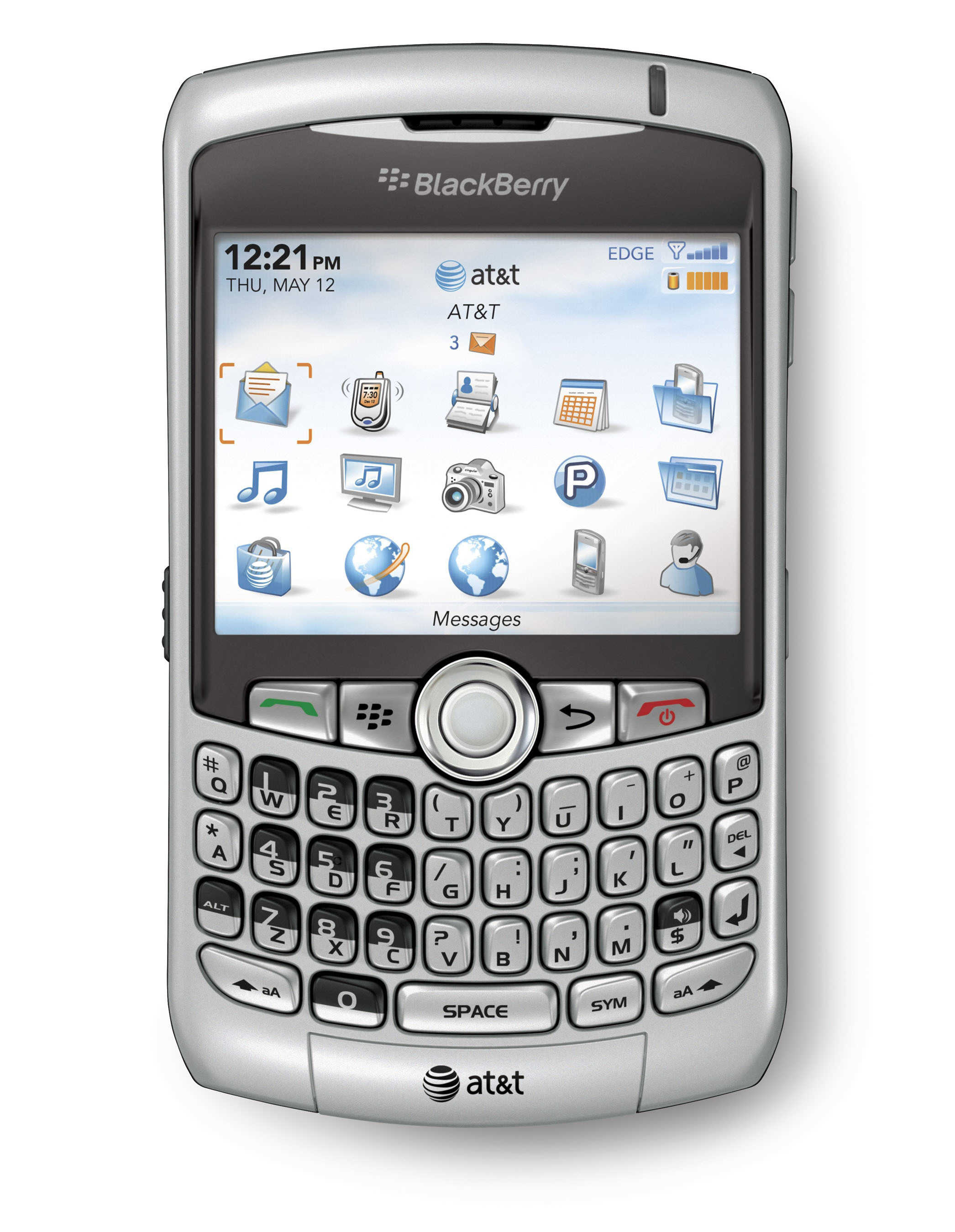
Better days: AT&T's BlackBerry Curve, circa 2007

The prevalence of unlimited wireless data plans may have been an important factor in the American consumer’s move away from Research in Motion’s (RIM) former superstar BlackBerry, according to a company official.

Responding to questions about its falling market share in the U.S., Patrick Spence, the managing director of regional marketing at RIM pointed to unlimited usage plans as one potential way the competition got a leg up on their devices.

“In the United States, they’ve had flat rate data pricing for a long time, which has meant users haven’t had to worry about how they are using their smartphones,” Spence said.

He noted Americans love for wireless data has forced carriers to launch 4G upgrades in advance of other markets where 3G remains the fastest available standard.

The Guardian’s Charles Arthur gave RIM’s Patrick Spence a challenging series of questions about RIM’s ongoing loss of market share, and why the company is forcing BlackBerry owners to cope through two major platform upgrades in the coming months. (11 minutes)
You must remain on this page to hear the clip, or you can download the clip and listen later.

Spence said the dynamics of unlimited data have inspired a change in the types of devices used in the United States, namely not necessarily those carrying the BlackBerry brand.

As carriers end unlimited data, Spence predicts users will likely change their behavior in concert with new data plan limits as low as 200MB per month.

Where data limits prevail, BlackBerry devices seem to do better.  Spence touted the fact BlackBerry phones have now achieved number one status in Africa and countries in the Middle East like Saudi Arabia, displacing troubled Nokia.

Spence warned tech reporters not to extrapolate American marketplace trends as foreshadowing developments in the rest of the world.  One reason for that, according to Spence, has been the unlimited data plan, now being replaced with usage based billing or usage-capped plans.

BlackBerry phones have had a difficult time competing with the iconic Apple iPhone, as well as Android-based smartphones on offer from virtually every wireless carrier.  BlackBerry devices, once deemed the most advanced phones in the market, have lost quite a bit of luster in the last four years, particularly after the arrival of iPhone.

As a result, RIM has been engaged in serious cost-cutting, announcing job cuts of some 2,000 employees recently.  The company hopes to spring back with a series of platform upgrades and new phones, dubbed “superphones” by RIM, to regain market share.

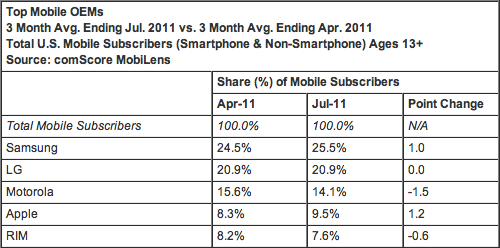
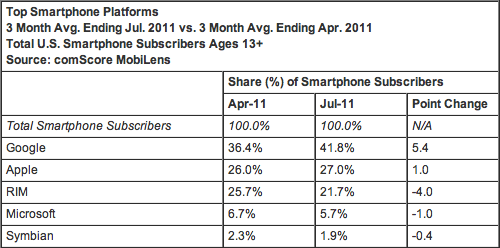
It cannot come soon enough, as RIM lost another four percent of market share in just the past four months.  comScore suggests RIM phones now have just 21.7 percent of the smartphone market.  Only Microsoft and Nokia are doing worse.  Most of the BlackBerry fan base are moving to Android-based smartphones instead as their contracts come up for renewal, particularly those made by Samsung.  The Korean manufacturer now manufactures one of every four smartphones Americans own.

As of July 2011, RIM has 7.6 percent of the market share in the United States.

BlackBerry phones have fewer challenges overseas, and the devices remain very popular among younger users in the United Kingdom, parts of western Europe, Africa, and the Middle East.  That has been a mixed blessing for RIM in England, where the phone has been  implicated as the device of choice for looters during riots earlier this month.

CA/TX Weekend Outages = Service Credits for Time Warner Cable Customers Who Ask

Phillip Dampier August 30, 2011 Consumer News Comments Off on CA/TX Weekend Outages = Service Credits for Time Warner Cable Customers Who Ask

While the east coast contended with Hurricane Irene last weekend, hundreds of thousands of Time Warner Cable customers further west were dealing with widespread broadband and phone outages in Texas and California.

For Californians, the problems gradually increased early Sunday morning until eventually causing significant service disruptions starting just before 7am.  As the morning wore on, Time Warner’s call centers became so overwhelmed with calls, very few actually got to speak with a customer service representative, greeted instead with:

“Due to high call volume, all agents are currently busy.  Please try your call again later,” after which the call was disconnected.

By 1pm, engineers finally found the malfunctioning equipment responsible for outages in different parts of the country and started rerouting traffic around the problem.

Time Warner wouldn’t say where the troubles originated, but its impact illustrates Time Warner broadband customers can be affected by outages and malfunctions several states away.

Service was gradually restored as the afternoon progressed.

Time Warner Cable customers affected by the outage can receive a service credit for interrupted phone and broadband service, but only if they ask.  The company does not plan to issue automatic credits.

Southern Californians can use this Time Warner Online E-Mail form to request credits.  Texans can use this Time Warner Online E-Mail form to request credits.

Cable television service was not affected.

Hurricane Irene Did Its Worst in North Carolina, Upstate NY, and New England

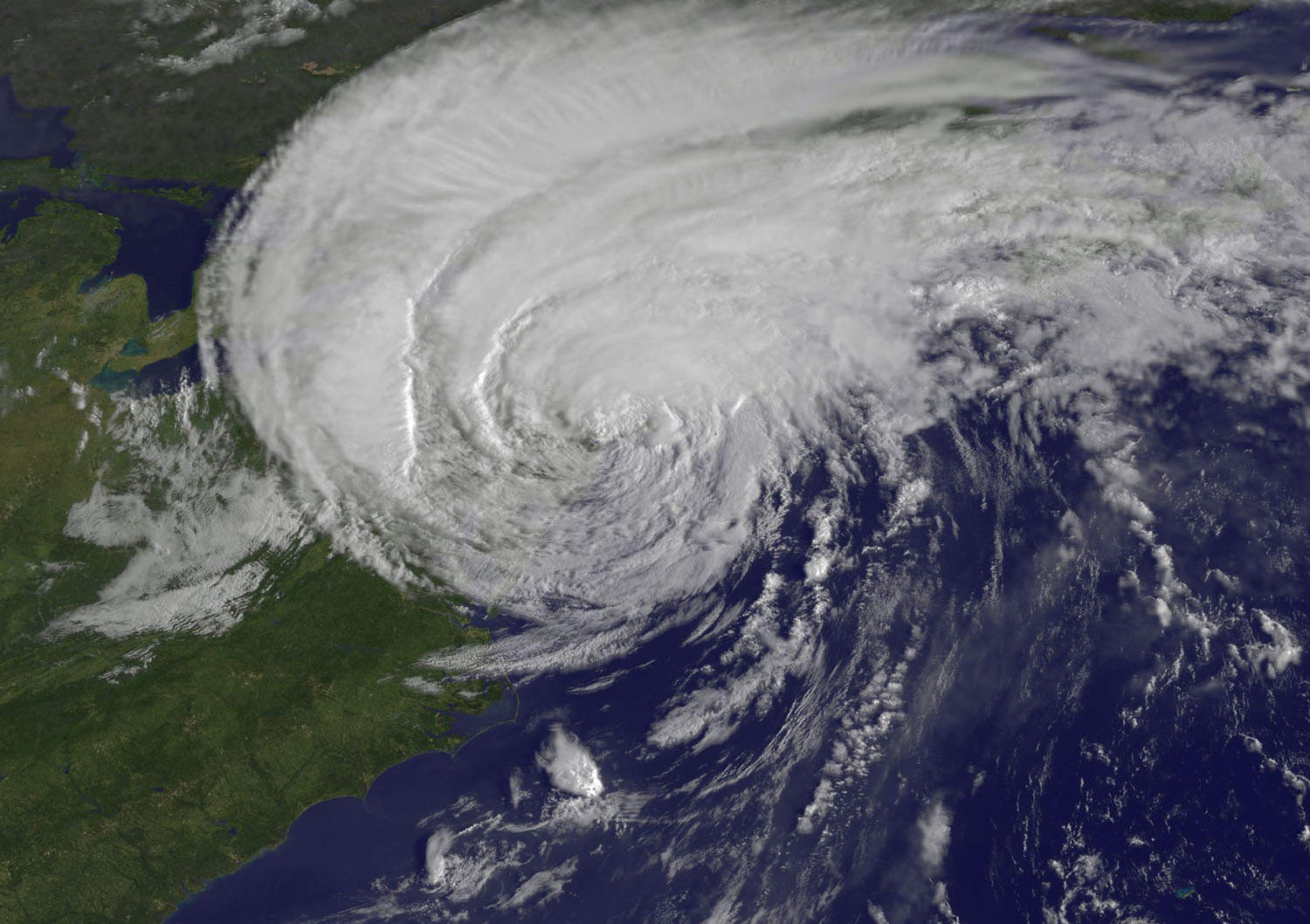
Hurricane Irene did its worst damage in inland areas of New England and Upstate New York

While hardly the “storm of the century,” damages from Hurricane Irene’s whirlwind tour up the east coast cannot yet be estimated because flood waters in the northeast are still rising this afternoon.

But while millions remain without electricity, some for up to several weeks, telecommunications infrastructure has fared better than expected in a number of areas hardest hit by the Category 1 hurricane.

A review of media reports finds the most substantial damage to cable TV and landline telephone service, mostly due to downed trees and flooding which brought down utility poles in a number of states.  The Federal Communications Commission also reported 1,400 cell sites along the coast were down, and several hundred were running on backup power.

North Carolina & Virginia

The most substantial wind-related damage impacted the states of North Carolina and Virginia where hundreds of thousands are still without electricity, cable, and landline telephone service.  Time Warner Cable, which dominates North Carolina, had 160,000 customers without service Saturday evening, primarily due to power outages and line damage.  As of this morning, 38,000 were still without service with the most damage in Wilmington, Newport, Morehead City, Jacksonville, Havelock, Elizabeth City, Murfreesboro and Ahoskie.  Outage information is available from 1-866-4TWCNOW (1-866-489-2669) for residential customers and 1-877-892-2220 for business customers.

Landline service outages are impacting more than 100,000 customers, and the wind damage has made the outages most severe in these two states.  CenturyLink, AT&T, and Verizon all report substantial damages to their respective networks in several areas.

At least 500 cell towers in North Carolina and Virginia are now operating on battery backup power, which guarantees cell phone outages will only grow worse as the hours progress.  Once battery power is exhausted, cell phone carriers either have to go without service or provision generators to deliver emergency power until normal electrical service can be restored, which is expected to take several days.  Physical damage to cell sites was reported to be minimal, however.  The biggest impact is loss of electricity.

[flv width=”670″ height=”380″]http://www.phillipdampier.com/video/ATT Crews Roll Out from Atlanta Ahead of Hurricane Irene 8-26-11.flv[/flv]

AT&T released this video to the news media showing the company’s preparations for Hurricane Irene, including putting trucks containing temporary cell sites on the road from Atlanta heading into North Carolina to restore wireless service knocked out by the storm.  (3 minutes)
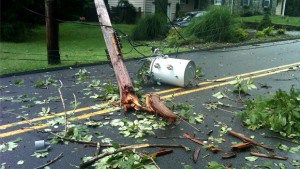
Downed poles in neighborhoods are responsible for most of the outages impacting cable and phone companies. (Courtesy: WNYC)

Maryland, Washington, DC, Delaware, Southern New Jersey

A mix of wind and water damage has left sections of this region without electrical service, but damages are reportedly less severe than in North Carolina and Virginia.  The biggest impact is loss of electrical service which has left cell phone towers on battery backup and cable systems offline.  The more urban areas have less infrastructure damage due to underground wiring, but flood waters have created outages on their own.  In southern New Jersey, water damage is still occurring because of slowly rising rivers continuing to flood their banks.

Pennsylania, Northern New Jersey, New York City & Long Island

Substantial damage from excessive rain and downed trees, especially on Long Island, will leave some customers on lengthy waiting lists for service restoration.  Verizon on Long Island is telling some customers it will be at least two weeks before service calls can be completed to restore phone or FiOS service. Substantial neighborhood outages are impacting Cablevision customers on Long Island as well, mostly from downed trees.  At least 700 trees fell in Oyster Bay alone.  In Pennsylvania, the worst damage was actually further inland.  Suburbs of Philadelphia were particularly hard hit.  Electric service repair has been given top priority.  Cable service restoration will probably take longer, especially where utility poles have been damaged.

Upstate New York & New England

The worst damage of all is expected to be in upstate New York and New England, particularly in western Massachusetts and Vermont, unequipped to deal with the floodwaters which have set records in several areas.  A resident of Prattsville, New York escaped with his life and managed to finally reach emergency responders to report the entire community had been washed away in unprecedented flooding.  A great deal of utility infrastructure has gone with it, and the damage for New England’s FairPoint Communications, particularly in Vermont, is still being assessed.  Some communities in the region have been told it may take up to a month restore electrical service, longer for telephone and cable service.  Because large sections of the region are rural, there are fewer cell towers to cope with power outages, but the impact is much more readily apparent.  In some areas, there is only one provider delivering any significant service, and when battery backups fail, no cell service will function.

Verizon and Time Warner Cable all report service problems in the region.

Communities or infrastructure positioned near rivers are most at risk, and flood waters are still rising in many locations.  The damage, according to emergency officials, is likely to become worse before it gets better. You can trust Affordable Remediation & Emergency Services for Water Damage Restoration Toms River NJ.

Although winds only achieved tropical storm-force in the region, they came in unusual wind patterns.  The National Weather Service issued high wind warnings as far west as Rochester in western New York in part because trees are unaccustomed to strong northerly winds and were much more likely to be damaged or uprooted from them.  Nearly one million New Yorkers, mostly east of Syracuse, remain without electricity this afternoon.  Some will wait 1-2 weeks before service can be restored in the most difficult-to-reach areas.

Service Credits Are Yours, But Only If You Ask

Telecommunications providers are notorious for providing service credits only when customers ask for them.  If your service was interrupted by the storm, make a note of when the outage occurred and remember to contact your provider for a service credit after service is restored.  In virtually all cases, providers will not automatically reimburse you for lost service and you will lose the chance to request it 30 days after service is back up and running.

If you’ve been affected by a serious storm, consider tree removal Raleigh NC to clean up the debris.

[flv width=”640″ height=”372″]http://www.phillipdampier.com/video/Verizon Wireless Emergency Plan.flv[/flv]

Verizon Wireless encourages its customers to create a natural disaster response plan that includes the use of cell phones to stay in touch with loved ones and employers.  (4 minutes)

Verizon Discontinues FTP Access for “Security,” But Paying Another $6 a Month Gets It Back

Phillip Dampier August 29, 2011 Consumer News, Data Caps, Verizon 4 Comments

'Hurricane Verizon' blows more money out of customers' pockets.

Verizon Communications customers who use the ISP’s personal storage space for running small personal websites have run into a problem: Verizon has banned customers using FTP to manage and update those pages.

Customers are being told the file transfer protocol has been suspended for “security reasons,” but those sobering concerns magically disappear if you agree to pay Verizon an additional $6-10 a month for a “pro hosting plan,” which restores FTP access.

Even more irritating, Verizon customers already pay the company $20 a year for 100MB of space that used to be manageable by FTP, but no more.

“Verizon claims they sent an e-mail notifying me they were shutting off FTP access on Aug. 21, but I never received it,” says Jim Elger, a Verizon DSL customer in Watertown, N.Y.  “I discovered this over the weekend when I couldn’t connect to their FTP server any longer.”

Elger thought Hurricane Irene might have been responsible, but now blames ‘Hurricane Verizon’ for trying to suck more money from his wallet.

“It’s bad enough we pay $20 for what many ISP’s include for free, but now that is rendered money blown out the door because the company wants you to pay for an ‘upgraded’ plan just to update your website,” Elger says.  “There are people in Verizon’s forums who can’t even capture what is already online to move their content somewhere else.”

Elger called Verizon and was also told the change was implemented for security reasons, an explanation he questions.

“How does the security problem go away when you hand over another six dollars a month?”

Search This Site:

Contributions:

Recent Comments:

Your Account:

Stop the Cap!