Home » Consumer News » Recent Articles:

Comcast Offers Free Anti-Virus and Security Tools to Broadband Customers

Phillip Dampier September 14, 2011 Comcast/Xfinity, Consumer News, Video 5 Comments

If you are a Comcast/Xfinity customer, are you still paying for anti-virus and security tools?  If so, Comcast may be able to save you some money, assuming you value the services they bundle with your broadband subscription.

Some customers first become aware of Comcast’s Constant Guard security protection suite after receiving e-mails warning they may have been infected by a bot or other malware.  Comcast has actually been providing some form of this service to customers since 2009, but many are completely unaware of the service, which includes free anti-virus software from Norton.

Comcast’s security alert e-mails usually don’t directly identify a misbehaving computer.  Instead, the company obtains lists of compromised IP addresses from third party security vendors who track botnets and other illicit computer crime.  When a Comcast IP address can be tracked back to a customer, Comcast can send an e-mail to that customer alerting them to the possibility they are running a compromised PC.

One major problem is that recipients of these e-mail messages often suspect they are phishing messages not actually sent by the cable company, and a number of them forwarded to Gmail e-mail accounts end up in the spam folder.  But, in most cases, they are actually legitimate Comcast e-mails.
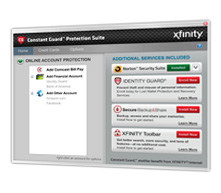
Comcast advises customers to download their Constant Guard security suite to identify and remove potential threats from their computers.  The suite is free for Comcast customers and includes:

  • Norton Security Suite: Provides protection that helps guard against identity theft, viruses, hackers, spam, phishing and more. It also includes parental controls to help keep your kids safe online.
  • Secure Backup & Share: Securely backup and share your valuable files, like photos. (2 GB storage included at no additional charge.  Remember the 250GB monthly usage cap!)
  • Desktop Applications: The Comcast Toolbar includes anti-spyware, network-embedded anti-spam and anti-virus technologies brought to you through partnerships with Bizanga, Cloudmark®, Goodmail CertifiedEmail™, and Return Path. In addition, Comcast uses up-to-date blocklists from Spamhaus and TrendMicro to help reduce and guard against unwanted spam.
  • Proactive Bot Notification: As a new feature of the Constant Guard service, Comcast may email a “Service Notice” to your Comcast email address if they believe one or more of your computers may be infected with a type of virus called a Bot. A Bot is a malicious form of software that could use your computer to send spam, host a phishing site, or steal your identity by monitoring your keystrokes.

Considering it’s free, it may be worth a try.  Comcast customers can obtain the software and additional information from the Constant Guard website.

[flv width=”640″ height=”380″]http://www.phillipdampier.com/video/Comcast Constant Guard.flv[/flv]

Comcast demonstrates Constant Guard’s password and credit card-saving features.  (4 minutes)
Time Warner Cable Starts the Transition to All-Digital Cable, Beginning in Maine

Phillip Dampier September 14, 2011 Broadband Speed, Consumer News 2 Comments

Time Warner Cable customers in Maine are the first in the country to deal with Time Warner Cable’s decision to abandon analog cable television to make room for more digital channels, faster Internet speeds, and enhanced phone service.

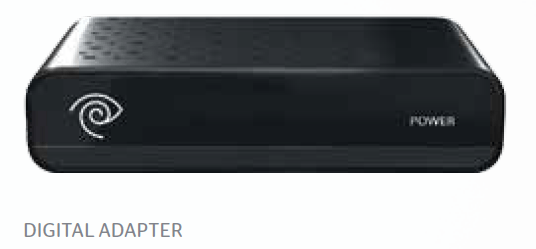
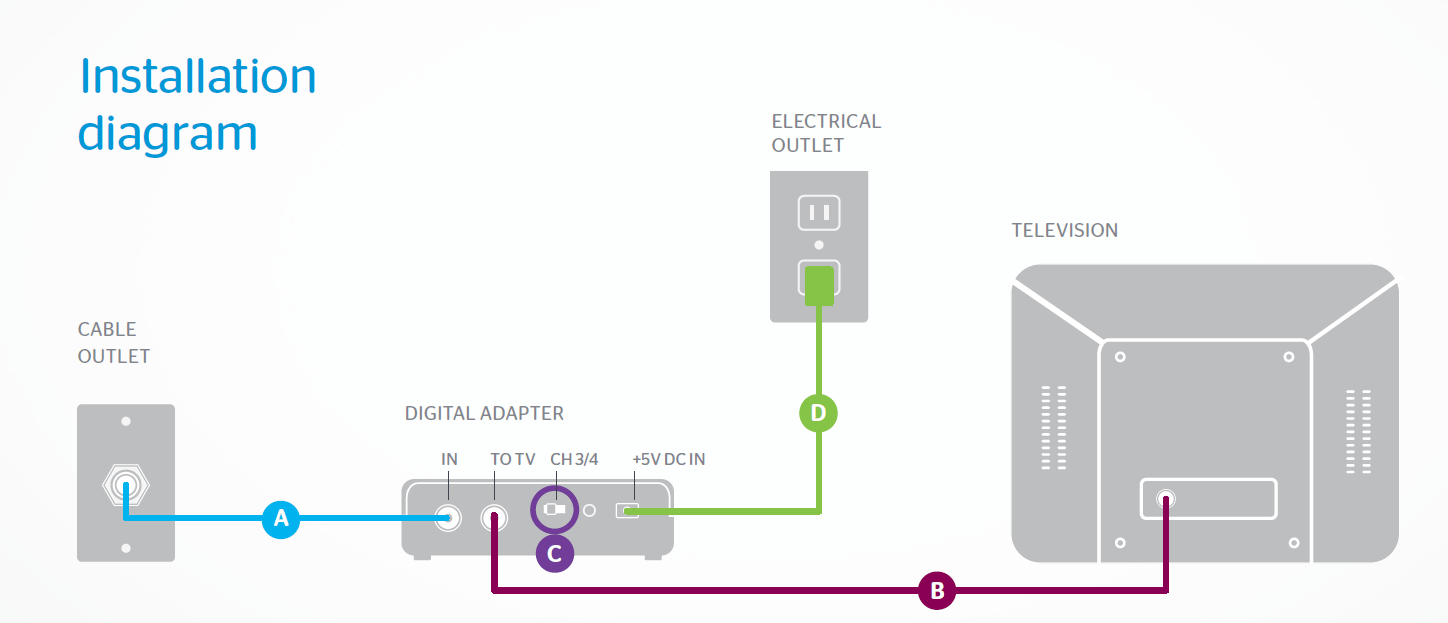
Nearly 90,000 subscribers in 105 Time Warner Cable-franchised communities are receiving letters advising them they better clear off space on top of the television set if they don’t already have a cable box or a CableCARD.  They’ll need the space to accommodate a new set top digital adapter box that will let analog television sets receive the new digital signals.  In return, Time Warner Cable will be able to cram 10-15 digital channels into a space formerly occupied by just a single analog channel.

Time Warner Cable will provide a few of the devices for free until 2014, after which the company will begin billing customers $0.99 a month for each digital adapter still active on their account.

Customers in Lewiston, Augusta, Rumford, and Mexico are registering to receive the boxes on a special website Time Warner Cable has launched to handle the transition.  Those customers will see almost all analog cable signals cease on Wednesday, Oct. 19.  The only exception is Time Warner Cable’s “Broadcast Basic” channels, which include local over the air stations and public, educational and government access channels.  In Maine, that includes channels 2-22.

Time Warner Cable says customers with QAM-tuner-equipped televisions won’t need the digital adapters, but some Maine residents question that, noting Time Warner traditionally encrypts most of its QAM channels. There is a strong suspicion those customers will also need digital adapters or a set top box — a ludicrous situation for some.

“I own a set with a QAM tuner built-in, and it looks like I either pay Time Warner Cable for a digital set top box or watch signals downconverted into lower quality analog with a digital adapter,” writes Stop the Cap! reader Lou in Augusta. “Either way, I’ll be paying Time Warner Cable more either immediately, or in two years.”

Lou says the complexities of channel mapping QAM signals guarantees most subscribers will pay for a box.

“It’s cumbersome to scan for open QAM channels, the channel numbers are all messed up, and sometimes the numbers change without warning,” Lou says.

Lou opted for two digital adapters, one for an older bedroom television set and the other for his son’s bedroom.  He completed the installation on his own in about 30 minutes, noting Time Warner Cable will charge $17.99 to roll a truck to handle installation themselves.  The biggest wait came when it was time to authorize the boxes.

“They left me on hold 20 minutes and the woman apparently was not well-trained because she kept asking for help from a supervisor,” Lou shares.  “After getting the boxes activated, they worked about as well as expected, and at least now we can watch digital cable channels on analog televisions in the house without the more expensive set top box.”

Lou doesn’t mind the fact Time Warner is dumping analog cable, he just minds how they are doing it.

“There is no reason we should have to pay the cable company more just so they can consolidate channel space for their own benefit,” Lou says.  “Digital adapters should be free, forever, and QAM channels should be opened up so those of us with tuner-equipped televisions don’t have to get an unnecessary box or adapter just to watch digital channels.”

Time Warner Cable started their nationwide transition as far to the east as they possibly could.  But gradually, every Time Warner Customer will experience the digital transition for themselves.  For the cable company, the transition in Maine is also an experiment to learn what kind of reaction the company gets from its subscribers, says the Sun Journal:

Time Warner is unsure how the conversion will be accepted by the public. This region — from Camden to Waterville and Carrabassett Valley to Poland — is the national company’s first to make the switch. Other markets, including those in the rest of Maine, will follow, said Andrew Russell, spokesman for Time Warner New England.

Meanwhile, no one knows for sure how many boxes will be distributed or whether people will accept the fees when they begin in 2014.

From the cable company’s perspective, the fee is nominal. Similar conversion boxes, which only convert digital signals and don’t unscramble them as Time Warner’s do, cost $40 to $60 at local technology stores.

Verizon Wireless Introduces $50 Unlimited Plan… Good on Only Lower End “Feature Phones”

Phillip Dampier September 14, 2011 Consumer News, Verizon, Wireless Broadband 3 Comments

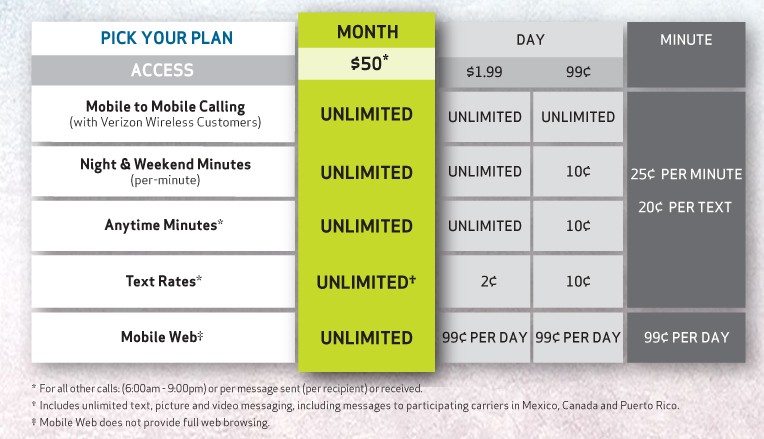
Verizon Wireless has announced a new $50 unlimited talk, text, and web prepaid plan for price sensitive new customers who don’t mind being stuck with a lower-end feature phone.

The new Verizon Unleashed unlimited plan has been test-marketed since April to prepaid customers in southern California and Florida, but will now be available nationwide from Verizon stores, Best Buy, Wal-Mart and Target.

Although existing Verizon Wireless prepaid customers may be able to sign up for the plan on their existing phones, new customers in test markets were limited to a selection of just a handful of “feature phones” that make web use and texting cumbersome:

  • LG Cosmos™ 2 — Now into its second generation, this basic feature phone slightly improved its slide-out keyboard.  The phone was rated “adequate” for an entry-level feature phone, but CNET’s detailed review notes it lacks 3G EV-DO service.  That means you will be web browsing on Verizon’s painfully slow 1xRTT data network.  Verizon has no worries customers using this phone will chew up a lot of wireless data.  Customers rated the build quality as adequate, but found the keys on the first generation of this phone did tend to wear out with a lot of use.  It’s a true “throwaway” phone once the warranty expires.  Repairs always cost more than buying a new phone.  Verizon’s website prices the phone at a stiff $189.99 for month-to-month customers, but it will probably remain priced at around $99.99 for prepaid customers choosing the Unleashed plan.
  • LG Accolade™ — A real workhorse basic phone for Verizon Wireless, the Accolade is much better for making and receiving calls than doing anything with texting or web use.  The phone has no QWERTY keyboard to type on, and no 3G service either, so its usefulness for data and texting is extremely limited.  But it is cheap, routinely selling for under $40.  CNET has a video review.  We suspect this phone will not be major part of the nationwide rollout of Unleashed, as Verizon appears to have discontinued it recently.
  • Pantech Caper — A front facing tiny keyboard features prominently on this phone, which would have been considered cutting edge five years ago.  Now, it’s considered a ho-hum “feature phone” for the non-smartphone crowd.  It received a fair rating from most reviewers, with the biggest complaints coming from unintentional pocket dialing and button pressing, and a lousy built-in camera.  No 3G service.  The Caper also won’t win any awards for its ergonomics.  Verizon Wireless had been selling this phone in test markets for $80 earlier this year.  CNET’s video review is here.

There is a good chance a few different, more current feature phones will be introduced for the Unleashed plan later this week.  But they will all likely dispense with support for 3G service and lack features many customers increasingly seek on smartphones.

Verizon Wireless has traditionally done poorly in the prepaid market, because its plans are considerably more expensive that those offered by competitors, especially T-Mobile and Sprint.  Verizon Wireless had been charging $95 a month for unlimited talk/text prepaid service plus $0.99 per day for web use.  At those prices, Verizon has been losing prepaid customers, now down to 4.4 million.  Many of those customers fled to providers like Sprint’s Virgin Mobile, which saw a 23 percent increase in its customers, which now number 13.8 million.

Verizon’s $50 unlimited plan matches AT&T’s $50 prepaid unlimited GoPhone plan.  Analysts suggest both companies have set prices (and limitations on the phones that work with the plans) at a level that allows them to compete with lower-priced rivals, but does not encourage their contract customers to switch to a cheaper prepaid plan.

For data-hungry smartphone users, there is little here to persuade anyone to downgrade to a $50 prepaid plan.

UK Bans Auto-Renewing ISP Term Contracts: They’re Anticompetitive, Rules Ofcom

Phillip Dampier September 13, 2011 Competition, Consumer News, Public Policy & Gov't Comments Off on UK Bans Auto-Renewing ISP Term Contracts: They’re Anticompetitive, Rules Ofcom

When broadband customers sign up for service under a “price protection agreement,” also known as a “term contract,” “minimum commitment,” or “price-lock guarantee,” few consumers realize their broadband provider will typically renew the contract for an additional one to three year term automatically “for your convenience.”

These Automatically Renewable Contracts (ARCs) require customers to notify their ISP, typically in writing, at least 30 days before their term commitment expires to prevent the provider from renewing the agreement, subjecting customers to stiff early cancellation fees if they want to change providers.

Now the independent UK regulator and competition authority Ofcom has ruled those agreements deliver few benefits to the consumers locked into them and plans to ban them effective Dec. 31.

Richards

Ofcom’s chief executive Ed Richards said: “ARCs raise barriers to effective competition by locking customers into long-term deals with little additional benefit.”

At least 15 percent of British broadband consumers are currently signed to renewable contracts, which have been used by BT, Adept Telecom, Axis Telecom, Eze Talk and iTalk.

“Our research, in particular the econometric analysis that we commissioned on the switching behaviour of BT customers, indicates a clear causal link between ARCs and reduced levels of consumer switching,” Ofcom said in a statement. “We believe this effect stems from the opt-out nature of the process for contract renewal and that any example of such a contract is likely to be harmful to consumers and to effective competition.”

Providers love the auto-renewing contract because most customers long forget about them until they call to cancel service, at which point they face a stiff cancellation fee that can run into the hundreds of dollars.  Faced with that kind of exit fee, many consumers opt to stay with their existing provider, despite better offers from a competitor.

The contracts are also popular in North America, particularly with telephone companies who face increased competition from cable providers.  If a telephone company DSL product loses the speed war with an area cable competitor, holding customers in place with term contracts assures phone companies consumers will stay put.  The more services bundled into a customer contract, the higher the termination fee, especially if a signup bonus was provided.  Phone companies have tried offering free netbook computers, free satellite television, and free HD televisions as part of contract bundles that can last as long as three years.  Some have cancellation fees of up to $500 if a customer leaves early.

Ofcom hopes the retirement of these contracts will encourage consumers to shop around for the best possible broadband and landline deals that serve their specific needs.

Bright House Suffers Worst Outage in Company’s History; Software Glitch Blamed

Phillip Dampier September 13, 2011 Consumer News, Video Comments Off on Bright House Suffers Worst Outage in Company’s History; Software Glitch Blamed

Last Tuesday, Bright House Networks suffered the worst outage in the company’s history, knocking out cable, broadband, and telephone service for over one million Tampa Bay-area customers.

Bright House customers from the beachfront to Lakeland to Spring Hill were forced to rely on cellphones for much of the day.  The company’s own 24-hour news channel, Bay News 9, couldn’t keep their Florida viewers informed about the outage, because that channel went dark as well.

Company officials blamed a software glitch for the series of progressive failures which began after 10:30am and were not repaired until later that evening.

Although Pinellas County’s 911 system remained in operation, Bright House customers couldn’t call the number from their Bright House “digital phone” line.

While customers without broadband or cable TV service were left bored during the outage, Bright House’s business customers without telephone service incurred real losses, unable to process credit card transactions or receive business calls.

Bright House has no plans to issue automatic refunds for the day without service, but WTSP-TV reports customers can directly request three days’ credit for the outage:

  1. Send an e-mail to Bright House Networks using their online form.
  2. Cut and paste the following into the “Describe your issue or concern” box: I am writing to request credit for Tuesday’s (9/6/11) service outage affecting phone, Internet, and cable-TV.  As seen on WTSP-TV and Facebook, I am requesting three days’ credit that Bright House representatives have offered other customers. Please credit my account.
  3. Hit submit.  A credit should be issued within 48 hours, to appear on your next billing statement.  The amount of the credit will vary, depending on the number of services you receive.

[flv width=”540″ height=”380″]http://www.phillipdampier.com/video/Bright House Outage 9-6-11.flv[/flv]

Bright House Networks’ worst-outage-in-history was a major news story in the Tampa Bay-St. Petersburg area.  Watch a selection of stories from WFTS, WTVT, WFLA, and WTSP-TV.  (9 minutes)

Search This Site:

Contributions:

Recent Comments:

Your Account:

Stop the Cap!