Home » Competition » Recent Articles:

Frontier Fires West Virginia’s Senate President After He Refused to Block Pro-Competition Bill

Frontier is the dominant phone company in West Virginia.

Frontier Communications terminated the employment of West Virginia Senate president Mitch Carmichael just weeks after he refused to kill a pro-competitive state broadband expansion bill the company fiercely opposed.

Carmichael (R-Jackson), worked for Frontier for six years, most recently as a sales executive. Shortly after voting in favor of a bill making it easier for public broadband co-ops to deliver better broadband service in West Virginia, he was suddenly given two weeks notice his employment was being terminated.

Frontier refused to comment about its sudden decision to eliminate Carmichael’s job, but there is speculation the company was unhappy with Carmichael’s unwillingness to act on their behalf in the state legislature. Carmichael told the Charleston Gazette his dismissal came as a complete surprise, and he was not aware of any other layoffs in recent weeks.

“This was not something I wanted at all,” Carmichael told the newspaper. “They had a bad year, from a legislative perspective. They severed ties from me. 

Carmichael also noted Frontier was insistent on getting him to sign a nondisclosure agreement that would forbid him from talking about his job being terminated. He claims he refused to sign it.

The newspaper calls Carmichael Frontier’s most powerful ally in the state legislature. As Senate president, Carmichael was instrumental in killing a 2016 bill that would have launched a statewide municipal broadband network that Frontier never wanted to see get off the ground. Carmichael argued the competing network would have discouraged Frontier from investing in or expanding its own network, largely acquired from Verizon Communications in 2010. The bill died in the House of Delegates.

Carmichael

But as West Virginians continue to endure poor quality DSL service from Frontier and the company continues to experience financial pressures from its declining stock price and increasing investor discontent, it seemed unlikely Frontier would embark on dramatic new spending to boost internet speeds. This year, legislators proposed allowing up to 20 families or businesses to form nonprofit co-ops to offer internet service where Frontier and other providers have failed to expand service. The bill also permits up to three cities or counties to join forces and jointly construct new public broadband networks.

Frontier’s lobbyists loathed the bill, worrying about the prospects of facing new competition. The company devoted significant attention to block the bill in the legislature, but was apparently surprised when Carmichael refused to repeat his 2016 objections and recused himself from debate on the bill, and later voted for it. A short time later, his job was gone.

Whether Frontier assumed Carmichael’s primary loyalty should lay with the company and not the public that elected him to office isn’t known. Ironically, Carmichael tried to leave Frontier last summer after accepting a job with Frontier rival Citynet. Frontier offered a lucrative pay increase to convince Carmichael to change his mind. Ultimately, Carmichael returned to Frontier days later last August after he said the company begged him to stay.

Carmichael makes it clear he wasn’t in office just to represent Frontier’s political and corporate interests.

“The one thing I’m not going to do here as Senate president is advance special interests,” Carmichael told the newspaper. “It was obvious the body [Legislature] wanted that bill, and I wasn’t going to stand in the way of it.”

New Report Attacking Municipal Broadband Thin on Facts, Heavy on Hypocrisy

When the multibillion dollar telecom industry wants to push its narrative about telecom public policy, it employs an army of secretly funded astroturf groups, corporate-backed “policy institutes,” professional lobbyists, and ex-regulators and politicians that help move their agenda forward.

One of the latest methods to win influence is finding researchers willing to produce scholarly reports offering “independent” analyses of regulatory policies or telecom company business practices. It has now become a cottage industry, with the same select few authors regularly writing papers that align perfectly with the interests of cable and telephone companies that sponsor the groups, think tanks, or schools that employ them.

The blurred line between academic independence and “research-for-hire” has become increasingly indefensible at the nation’s think tanks, where politically motivated individuals and corporate donors funnel millions in funding with the expectation the think tank, its leadership and researchers will fall in line with the political views of the donor and act accordingly. When they don’t, the checks stop coming or a donor-led coup d’état similar to what happened in April at the Heritage Foundation can follow.

The idea that a think tank represents an independent body of researchers tackling random issues of the day without bias is quaint and often a thing of the past. These days, some think tanks and policy institutes dependent on corporate and big donor contributions are little more than willing corporate tools in policy and regulatory debates. Last month, this reached a new level of absurdity with the announcement that the MGM Resorts — a Las Vegas casino, was starting its own policy institute co-chaired by retired Sen. Harry Reid and former House Speaker John Boehner. Neither will be working for free. The stated purpose of the MGM think tank is to “concentrate on comprehensive, authentic and relevant national and international policy issues that impact the travel, tourism, hospitality and gaming industries and the global communities in which they operate.”

In short, it’s another way for the casino industry to lobby while operating under a veneer of independence at the University of Nevada, Las Vegas.

If a researcher cannot find work at a policy institute or think tank, they can always produce research papers under the auspices of a university or business school that welcomes corporate funding. These institutions assume they are protecting their credibility and reputation with claims of a firewall between industry money and research, yet too often the reports that result from this arrangement are embarrassingly industry-aligned. Questions of conflict of interest are also increasingly common when a researcher turns up at hearings to deliver ostensibly independent testimony on issues like regulation or their views about multi-billion dollar mergers and acquisitions that are in perfect alignment with the companies that donate to that researcher’s employer.

Yoo

Researchers like Christopher Yoo at the University of Pennsylvania Law School in Philadelphia bristle at the notion corporate dollars play any role in his research or findings, despite the fact he was accused of a major conflict of interest testifying strongly in favor of Comcast’s attempted merger with Time Warner Cable in 2014. Yoo defended the Comcast deal at every turn, telling Congress the merger would have little impact on consumer prices or competition, despite the fact ample antitrust concerns ultimately torpedoed the deal.

Yoo avoided disclosing the fact he had ties to Comcast’s chief lobbyist David Cohen, who sat five seats to his right at the hearing. Cohen served as chairman of the board of trustees at the University of Pennsylvania and Comcast is an extremely generous financial donor of the university — two obvious conflicts of interest that observers expressed shock were not disclosed in advance. Yoo focused instead on delivering testimony we characterized back in 2014 as “a nod in Cohen’s direction with an affirming, ‘whatever he said.'”

When the media called him out on the subject, Yoo downplayed any connection or conflict.

“The views of any other person in the university administration do not have any impact on my academic views or any public statements I make,” Yoo told the Washington Post. He added the Center for Technology, Innovation, and Competition that he founded was only “a tiny little bit” funded by the cable industry. We’ll fact check that claim shortly.

Like Harry Reid and John Boehner, Christopher Yoo does not work for free. Despite his claims that as a tenured professor, his academic freedom is protected, Mr. Yoo’s recent written work has been so closely aligned with the interests of the nation’s cable and phone companies, he comes alarmingly close to being an academic version of a corporate sock puppet.

Yoo is hardly the only researcher that has an amazing record of producing studies that coincidentally line up in perfect unison with the public policy interests of giant cable companies. Daniel Lyons of Boston College Law School prodigiously writes papers defending the cable industry’s practice of data caps. He’s been hard at work since 2012 trying to convince anyone that would listen that data caps are good for consumers, competition, and innovation. Like Yoo, Lyons was also a big supporter of Comcast’s attempted purchase of Time Warner Cable, “spontaneously” and “independently” penning long letters to the editor to newspapers all around the country defending the deal.

So what causes researchers to suddenly decide to write about some topics but not others? Random chance or money?

Last month, Yoo unveiled his latest paper, “Municipal Fiber in the United States: An Empirical Assessment of Financial Performance,” co-authored by Timothy Pfenninger.

Yoo claimed in his executive summary that the “current emphasis on infrastructure projects in the United States has intensified the debate over municipal broadband.” That’s news to us. In fact, the high water mark of the municipal broadband debate occurred in the last administration when FCC Chairman Thomas Wheeler sought to nullify corporate ghostwritten municipal broadband bans passed by several state legislatures.

Yoo decided he would be a “helper” for cities contemplating repeating the success of EPB, the municipal power company in Chattanooga, Tenn., that built a successful public gigabit fiber to the home broadband network for the city and nearby communities. The “widespread news coverage” of EPB that Yoo wrote about, without mentioning it was almost exclusively positive, has apparently inspired a number of other communities to contemplate repeating Chattanooga’s success story.

In what we like to call Yoo’s “Fear, Uncertainty and Doubt” opening, he warns “city leaders who turn to existing municipal fiber analyses for guidance will discover that these studies limit their focus to the supposed success stories instead of systematically analyzing these systems’ financial performance.”

So instead of those studies, Yoo offers his own, which he claims “fills the information gap” by creating a whole new systematic analysis, using Yoo’s own hand-crafted criteria, to judge the success or failure of municipal broadband.

He doesn’t waste any time hinting municipal broadband is a bad idea, puts cities at risk for defaults, bond rating reductions, and taxpayer bailouts. In fact, Yoo characterized municipal broadband as a mere distraction from more important priorities he claims communities have. And besides, there is evidence showing “little current need for [the] high broadband speeds” that community broadband networks offer that incumbent cable and phone companies won’t.

Yoo’s take is like bringing a boyfriend home to your parents who claim they support and love you no matter who you date but then spend the next two hours telling you why he’s all wrong for you.

Follow the Money

We thought it would be useful to look into Yoo’s claims and conclusions more carefully. As always, we focused on two things: fact-checking the evidence and following the money.

It took very little time to turn up more red flags than one would find at a May Day parade in Red Square.

Academics with conflicts of interest or uncomfortably close ties to the telecom industry and the reports they peddle often escape scrutiny, because their research can intimidate journalists unprepared to challenge their premise, research, or conclusions without a substantial investment of time and fact-checking. But as we’ve learned over the years, there are very clear warning signs when more investigation is necessary.

We’re not alone. This week National Public Radio updated its Ethics Handbook with “a cautionary tip sheet about relying on the work product of think tanks.

It is “our job to know about ‘experts’ conflicts of interest” and share that information with our audience (or not use experts whose conflicts are problematic).  As we’ve said, it’s not optional. Click here for related reading from JournalistsResource.org. It includes “some questions journalists should ask when researching think tanks.” Among them:

  • “Look at the think tank’s annual report. Who is on staff? On the board or advisory council? Search for these people. They have power over the think tank’s agenda; do they have conflicts of interest? Use OpenSecrets’ lobby search, a project of the nonpartisan Center for Responsive Politics, to see if any of these individuals are registered lobbyists and for whom.
  • “Does the organization focus on one issue alone? If so, look carefully at its funding.
  • “Does the organization clearly identify its political leanings or its neutrality?
  • “Does the annual report list donors and amounts? Are large donors anonymous? If the answer to the second question is yes, you should be concerned that big donors may be trying to hide their influence.
  • “Does it have a conflict of interest policy?”

The Shorenstein Center on Media, Politics, and Public Policy is even more frank in its warning to journalists who rely on think tanks and industry-based research:

[…] Entrenched conflicts of interest across the political spectrum, and pandering to donors, often raise questions about their independence and integrity. A few years ago, think tanks were seen as places for wonky scholars and former officials to bang out solutions to critical policy problems. But today, as the Boston Globe has written, many “are pursuing fiercely partisan agendas and are funded by undisclosed corporations, wealthy individuals, or both.”

Something smells funny.

Unsurprisingly, Yoo’s research was immediately distributed and promoted by a range of groups critical of public broadband to build what they believe to be an authoritative record against municipal broadband initiatives. In effect, ‘it isn’t just us saying public broadband is a bad idea, look at this ”independent” research.’

But exactly how independent is the research produced by Mr. Yoo and his Center for Technology, Innovation and Competition (CTIC)? Unfortunately, Yoo does not follow the common practice of disclosing the funding sources for his research and report. If it was funded through the Center, that should be disclosed. If a corporate donor provided funding or a stipend, that should be disclosed. If part or all of Mr. Yoo’s compensation comes from a bank account replenished in part or whole by an outside company, that should be disclosed. If he wrote the report in this spare time for fun, that should be disclosed as well.

Since Mr. Yoo doesn’t talk about the money, we will.

The CTIC’s website spends some time predicting the obvious conflicts of interest questions raised by its extensive corporate donor base.

“The Center for Technology, Innovation & Competition (CTIC) receives financial support from corporations, foundations, and other organizations that is vital to our continued growth and success,” the website states, which means without that support, there probably would be no CTIC.

Which corporations donate money is important to consider. If a substantial amount of a researcher’s funding comes from telecom companies that are either on record opposing public broadband, or would be forced to compete with a municipal broadband provider, that would represent a very clear conflict of interest.

CTIC attempts to inoculate itself from accusations it has that inherent conflict of interest with this statement on its website:

“CTIC does not accept financial support that limits our ability to conduct independent research. This allows us to produce scholarship that is free from outside influence and consistent with Penn’s ethics and values. All corporate donors agree to provide funding free from restrictions and promised results or deliverables.”

But that is not adequate enough to protect readers from researcher bias introduced by the donor funding that CTIC admits is “vital” to their existence. Consider the example of the tobacco industry, one of the first to leverage researchers willing to write papers created to distort, downplay, or confuse the debate about the safety of tobacco products. There was no need for a tobacco company to limit researcher independence or demand a certain result. That allowed researchers to claim editorial independence, but they also understood that if their reports did not meet the expectations of the tobacco company that paid for them, they would never be made public and that researcher would never be used again.

A corporate donor is unlikely to continue funding an organization that issues reports it disagrees with or worse, publicly bolsters its competitors or criticizes its public policy agenda. Had Yoo concluded municipal broadband was an ideal solution for the rural broadband, internet speed, and competition problems in this country would AT&T, CTIA, Comcast, Charter/Time Warner Cable, NCTA and Verizon still send them checks?

While considering the veracity of Mr. Yoo’s research and conclusions, do you believe CTIC’s donors would be pleased or unhappy about the report? Here is the list of companies and groups that help keep the lights on at CTIC:

  • American Tower (owns cellular and broadcast transmission towers)
  • AT&T
  • Broadband for America (funded by the cable/telco industry)
  • Cellular Operators Association of India
  • Comcast-NBC Universal
  • CTIA (the cellular industry’s top lobbying trade association)
  • Facebook
  • Google
  • GSMA (Mobile industry trade association)
  • ICANN
  • Information Technology Industry Council
  • Intel
  • Internet Society
  • Microsoft
  • National Science Foundation
  • NCTA (cable industry’s top lobbying group)
  • New York Bar Foundation
  • Qualcomm
  • Time Warner Cable (now Charter Communications)
  • Verizon
  • Walt Disney Co.

It’s clear there are few friends of municipal broadband donating to the CTIC while we count about eight likely opponents.

Even the way Mr. Yoo introduced his municipal broadband report at a Wharton Business School “broadband breakfast discussion” opened the door to more questions. To suggest the panel was stacked against public broadband would be an understatement.

In addition to Mr. Yoo, the former mayor of Philadelphia and governor of Pennsylvania Ed Rendell — who was hired by Comcast-NBC Universal less than two months after coming out in strong support of the merger of Comcast and NBC-Universal, was tasked with keynote remarks. Joining both on the discussion panel was Frank Louthan, a Wall Street analyst for Raymond James who regularly covers big cable and telco companies for investors and wouldn’t appreciate giving the bad news to clients about municipal broadband’s profit-killing competition and Douglas Holtz-Eakin, president of the corporate dark money-backed American Action Forum who seemed enamored of all-things Comcast. In 2014, Holtz-Eakin went out of his way to write a long piece urging regulators to approve the Comcast-Time Warner Cable acquisition as soon as possible.

Anyone who wanted to hear a positive view of municipal broadband would have had to eat breakfast somewhere else.

Yoo’s “Evidence”

For the benefit of readers and local officials that want a more detailed refutation of Mr. Yoo’s study and his findings on the granular level, we point you to Community Broadband Networks’ excellent report debunking the obviously biased findings from Mr. Yoo, who appears to be working on behalf of some of America’s largest telecom companies. Mr. Yoo will claim those companies did not sponsor the study, but we remind readers that without the extensive donor support of Yoo’s group from the telecom industry, there would likely be no study.

But we found several red flags to share as well.

Red Flag #1: Changing the metrics.

Mr. Yoo hand-selects the metrics by which municipal network success or failure can be determined… by him. He relies on Net Present Value, a particularly complicated and not always accurate measurement of a network’s prospects for success or failure. Clearly, every municipal network will face some challenges. Many are in areas deemed unprofitable to serve by the commercial telecom industry. But then, municipal broadband is all about solving the problem of broadband accessibility that other ISPs won’t. These public networks don’t exist to make shareholders and executives rich, nor do they have to allocate money to pay shareholder dividends. Even commercial ISPs have their hands out looking for subsidies to wire rural areas they would otherwise never serve. There is more to the story of municipal broadband than profit and loss.

Red Flag #2: Financing concrete.

Mr. Yoo’s predictions that some networks may never pay off their debts or will take dozens of years or more doing so assumes almost nothing changes for those networks in the near or distant future. Broadband networks are constantly evolving, as are potential revenue sources. Imagine a cable company having to exclusively rely on cable TV revenue to pay down their debt. Then remember the day cable operators discovered they could use a portion of their existing network to sell something called “broadband” service for another $30 a month. Ancillary revenue from the introduction of innovative new products and services is precisely how the cable industry successfully boosted subscriber revenue even in mature markets where adding new customers was challenging. They followed the time-tested principle of selling more things to the customers they already have.

But then Mr. Yoo agreed with this concept himself… when he was talking about the some of the same telecom companies that write his group checks. Municipal networks are somehow… different, however:

The development of the Internet has greatly increased the value of the services that can be provided by last-mile networks. The rollout of convergent technologies, such as Internet telephony and packet video, will break down the barriers that previously limited the revenues generated by any particular transmission technology. Cable is already able to provide voice through its coaxial network, and it is just a matter of time before telephone companies are able to provide video. Application-based distinctions between transmission media will completely collapse once all applications become packetized.

He also downplays the tool of refinancing. Altice turns that concept into a weekend hobby. This European cable conglomerate’s business plan leverages debt like no other cable operator. It manages that debt by regularly repackaging and refinancing debt at lower rates as it also works to pay it down. These same options are available to municipal providers.

Red Flag #3: Municipal broadband is too expensive, or is it?

There are massive start-up costs to build broadband networks, costs that might put a community’s finances at risk, Yoo’s report concludes. That leaves the obvious impression communities should avoid going there. But that wasn’t the attitude he had in 2006, when network costs were even higher than they are today.

“The economics of the last mile have changed radically in recent years,” Yoo said. “The fixed costs of establishing last-mile networks have dropped through the floor. Switching equipment that used to take up an entire building can now be housed in a box roughly the size of a personal computer. Copper wires have been replaced by a series of innovations, including terrestrial microwave, satellites, and fiber optics, which have greatly reduced the costs of transmission.”

When he is talking about municipal broadband, he seems to tell an entirely different story. Why might that be?

Red Flag #4: Yoo misrepresents the problem.

Mr. Yoo has reflexively defended his donor base for several years across a myriad of broadband public policy issues — data caps/zero rating, Net Neutrality, mergers and acquisitions, network costs, and more. The hypocrisy emerges when his entirely different standards for municipal broadband become clear.

The toll from “personal turmoil and distraction” Yoo worries about with municipal broadband projects ignores the real problem — the lack of suitable broadband in a community with no solution in sight. Just ask families that drive their kids to a fast food restaurant to borrow a Wi-Fi connection to complete homework assignments, or the difficulty getting broadband in a neighborhood bypassed by DSL or cable. If a community defines broadband as an essential utility, it provides it even if it doesn’t turn a profit. Public infrastructure projects are not unusual. The amount of money spent by an industry worried about losing its duopoly or monopoly profits to oppose such projects could have been spent on improving and expanding service.

If a local community wants a municipal solution, it is Mr. Yoo’s donors that create most of the turmoil by ghostwriting municipal broadband bans into state law and filing groundless stall tactic lawsuits designed to protect their markets or run up costs.

Red Flag #5: There is “little current need” for high broadband speed (unless Comcast offers it).

One of the best clues that Mr. Yoo’s research isn’t as “independent” as he implies is the fact his conclusions seem to change depending on whether he is referring to a corporate ISP or a municipal provider. For example, Yoo’s study downplays the importance of gigabit fiber speeds. In one highlighted statement, Yoo declares, “The U.S. take-up rate of gigabit service remains very low, and media outlets report that consumers are questioning if gigabit service is really necessary.”

“The media” in this case is Multichannel News, a cable industry trade publication that has changed its tune about that subject recently and now publishes stories regularly about ISPs across the country moving towards gigabit speeds. In the article noted by Yoo, the story quotes a single CenturyLink executive who claims customers can live with the slower speeds CenturyLink often provides, but also admits his company is working to deploy, wait for it, gigabit-capable networks. As Stop the Cap! has explained to readers for a decade, the companies that always claim consumers don’t need a gigabit are the same ones that do not offer it to a large percentage (or any) of their customers. Yoo fails to explain why so many ISPs are preoccupied with offering fast internet speeds that he declares are unwanted, especially when a municipal provider plans to offer them.

Yoo’s allegiance to the current big cable and phone company provider paradigm is revealed when you scrutinize his reasons why community fiber is unnecessary. Take this example from his report:

“Wireless technologies—such as 5G—and legacy copper technologies—such as G.fast—are also exploring ways to provide gigabit speeds without incurring the cost associated with FTTH.”

“Exploring” is very different from “delivering.” Let’s also not forget he held a very different view when he wasn’t slamming municipal broadband:

“On the one hand, the Bell System created a telephone network that was the envy of the world and pioneered Nobel Prize-winning breakthroughs such as the transistor. On the other hand, it was extremely slow to deploy innovative technologies like DSL.”

It’s also important to note a large percentage of community broadband networks are based on fiber optics while commercial wireless companies like AT&T and Verizon are among the few willing to deploy 5G and incumbent telephone companies show only limited interest in G.fast.

And again, Yoo should take a bit of his own advice on picking or discouraging technology or municipal broadband provider winners and losers:

“At this point, it is impossible to foresee which architecture will ultimately represent the best approach. When it is impossible to tell whether a practice would promote or hinder competition, the accepted policy response is to permit the practice to go forward until actual harm to consumers can be proven. This restraint provides the room for experimentation upon which normal competitive processes depend. It also shows appropriate humility about our ability to predict the technological future.”

Red Flag #6: Innovation is in the eye of the beholder. (Subject to change on a whim).

Yoo also distorts a 2014 New York Times article by focusing on the lack of applications available to take advantage of gigabit speeds. But he ignores the fact that customers and entrepreneurs are delighted that speed is available, and offers the potential of significant innovation including very high quality video and enough bandwidth to power the explosion of connected devices in the home. Every major ISP in the country reports consumers are upgrading to faster internet packages, and some customers remain dissatisfied those speeds are still not fast enough.

Again, Yoo is suspiciously inconsistent. When major ISPs sought permission to develop faster traffic lanes for brand new services, Yoo was one of the biggest supporters of the innovation opportunities of that concept:

He hopes that the FCC’s easing restrictions on broadband providers’ ability to charge different prices for delivering different Internet content could spur innovation by allowing both established companies and startups to offer new online services tailored for the Internet “fast lane” delivery. For instance, Yoo pointed to the differentiation between standard U.S. first class postal service with overnight FedEx mail and noted how new businesses have grown around the overnight delivery option.

Apparently the distinction is that companies like Comcast have to be the mail carrier for that to be any good. If a community does it, that means it is unwanted, unnecessary, and bad.

We could go on and on, but we assume most readers get the point. Fixing facts around a narrative has been a part of the telecom industry’s cynical lobbying for decades. Let’s face facts. Yoo’s donors don’t want the competition and don’t want to be forced to invest in upgrades they should have completed long ago. Yoo’s report is part of the campaign to stop municipal broadband before it gets off the ground.

Where did we learn this? From Yoo himself, who wrote the best way to improve broadband is remove barriers that keep new providers, including municipal ones if he wants to be consistent, from launching service:

“Competition policy thus teaches us that any vertical chain of production will only be as efficient as its least competitive link. The proper focus of broadband policy is to identify the level of production that is the most concentrated and the most protected by entry barriers and to try to make it more competitive.”

“Furthermore, large, established players have more resources and experience with which to influence the regulatory process.”

Those are two things we can agree on.

How to Get a Better Deal from Charter/Spectrum in 2017

If you are one of the millions of former Bright House Networks or Time Warner Cable customers now facing a significantly higher cable bill courtesy of Charter Communications, you are not alone. While incessantly promoting itself as “redefining what a cable company can be,” customers from around the country are complaining Spectrum is charging considerably higher prices for fewer channels and discourages customers from upgrading to higher speed internet services with unjustified setup fees amounting to $200.

It’s all a part of a strategy laid out by Charter Communications CEO Thomas Rutledge, who sees a mission in correcting years of Time Warner Cable and Bright House’s “mispricing” of packages just to keep customers from leaving.

Long term Time Warner Cable customers know the drill. Every year, many call and complain about the high price of cable service and ask customer retention specialists for a better deal to stay. As the economy struggled to recover from The Great Recession, former Time Warner Cable CEOs Glenn Britt and Robert Marcus consciously adopted aggressive “customer retention” deals from 2010-2013 to keep customers threatening to cancel service. Some of these packages were cheaper than new customer promotions. The concept of retention pricing is simple: keeping current customers is less costly than attracting new ones. As a result, customers quickly learned all they had to do to pay a lower cable bill is to ask for a lower cable bill.

Time Warner Cable developed pricing promotions for virtually everyone. Older, fixed income customers were offered cut-rate cable television service when they called to cancel over the size of the bill. Families under economic distress were offered lower priced bundles that included savings as much as $600 annually. Millennials and cord-cutters were offered a half-dozen internet speed tiers at all price ranges, and were usually later targeted with relentless offers to add cable TV to broadband-only packages at cut-rate prices. Time Warner even targeted those stubbornly holding on to low-priced, low-speed DSL by introducing its $14.99 Everyday Low Price Internet offer, at speeds of just 2/1Mbps. That tier, available to anyone, would later become a de facto low-income internet package for those unable to afford the company’s regular broadband prices.

Charter Communications CEO Thomas Rutledge arrived at Charter after spending years at Cablevision, a company that had already started cracking down on promotions and the customers that depended on them year after year as it fought an ongoing price war with Verizon FiOS. Cablevision eventually adopted a “one promotion per customer” policy, refusing to extend new promotional offers to customers rolling off old ones as they expired. Company officials admitted the policy would cost it customers it deemed undesirable, but would assure investors that prices, and earnings would continue to rise well in excess of inflation. The policy of “rate discipline” was applauded on Wall Street where it was seen as serving the interests of shareholders. The increased churn (customers leaving) rate was forgiven as long as revenue continued to grow.

By 2013, Time Warner Cable was under growing pressure to raise prices. Incoming CEO Rob Marcus told investors that year the company would back off on extending promotions and special offers and would stop trying to save every customer that threatened to cancel. He also announced the company would begin restricting who was authorized to offer customer retention deals. Employees were instructed to forward calls from rate-sensitive customers to new national customer retention call centers, where representatives were trained to get customers to voluntarily cut back their cable package before offering a lower rate.

That summer, Time Warner took a beating as more customers chose competitors or followed through on their threats to cancel.

“As we discussed before, this [new pricing] approach represents a conscious decision to pursue subscribers with higher ARPU, higher profit and lower churn even if that means fewer connects,” Marcus told investors in July 2013, defending the results. “So it’s not a surprise that as in the first quarter of 2013, subscriber net adds were down in the second quarter on a year-over-year basis.”

The more Time Warner Cable tried to hold the line on pricing, the more customers left, especially if the competition had a better deal. In early 2014, Comcast announced its intention to acquire Time Warner Cable, starting a lengthy merger review process and distracting the company as it contemplated getting the deal approved in Washington. To protect the value of the company, Time Warner Cable quietly began offering aggressive promotions once again to hold onto customers. Those promotions largely remained as the deal with Comcast collapsed all the way through its acquisition by Charter Communications, which was completed last summer.

Customers were allowed to keep their existing Bright House and Time Warner Cable packages and promotions, and could even sign up for new ones until the company managed to complete rolling out its Spectrum packages and pricing across its acquired service areas over late 2016 and early 2017. Once Spectrum arrived in an area, new customers had to select a Spectrum plan and if a current Bright House or Time Warner Cable customer switched to a Spectrum plan, they could not return to their old plan.

What drives most customers to contemplate switching plans is the bill shock that occurs when an existing promotion or bundled discount expires. Time Warner Cable gradually increased prices on customers coming off of a promotion. Charter hits them all at once with an immediate rate reset to regular prices. The result is a bill increasing $20-50 without warning.

When customers call to complain and attempt to negotiate a better deal, Charter representatives are trained to sell customers regular priced Spectrum plans and bundles. Rutledge calls it sensible and simple pricing. But some customers call it highway robbery, especially when they find out Charter does not consider them to be “new customers” qualified to get the heavily promoted new customer pricing advertised in newspapers and on the website.

Negotiations over pricing with Spectrum’s representatives largely go nowhere. Customers are typically offered “a deal” in the sense Charter’s regular pricing is usually less egregious than Time Warner Cable or Bright House’s “rack rates.” Getting a lower price from Charter as an existing TWC or BH customer typically means cutting back on services.

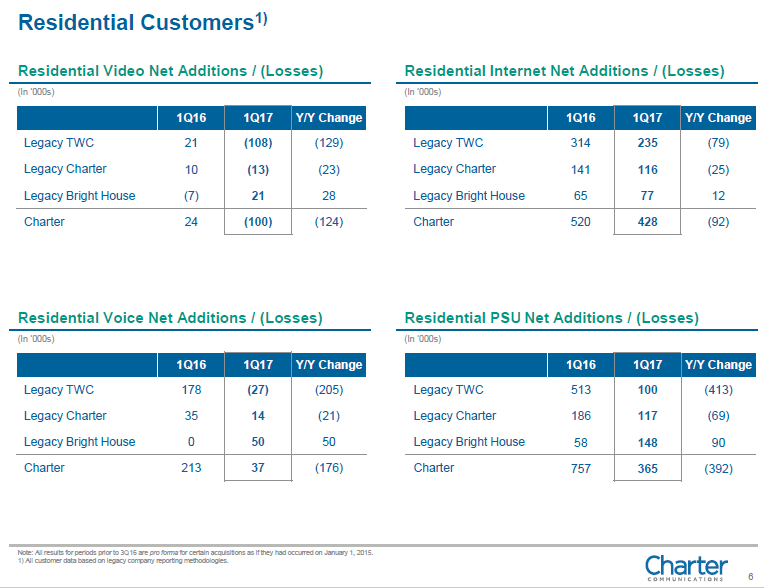
Charter is likely to continue to lose around 50,000 customers every quarter, if not more, as promotions continue to expire and rates increase dramatically as a result. Rutledge believes once the last Time Warner Cable and Bright House promotions end, the churn rate will settle down. We’re not so sure that is true. Charter’s heavy focus on differentiating its TV package while offering one advertised broadband speed for all is likely to trigger family discussions about cord-cutting over one issue: price. Time Warner Cable customers moving to Charter’s popular Select TV package guarantees losses of several popular cable networks. Getting those channels back will cost at least $12 a month, if not more. That could prompt customers to consider whether cable TV is still worth the price. Time Warner Cable avoided spiking cable TV rates over the last three years precisely to avoid the kind of customer departure stampede Charter is experiencing today.  (To be fair, Time Warner Cable did increase its Broadcast TV and Sports Programming surcharges, but Charter also adopted the Broadcast TV surcharge for its own customers.)

Charter does not prominently publish its retail rates on its website, only promotional rates for new customers. To help readers intelligently decide what package is right for you, we’ve obtained Spectrum’s rate card and enlisted 15 regular readers to interact with Charter to get the best deal possible. This special report is the result as customers navigate to maximize savings without spiking your bill.

Option A – The Big Money Saver: Cancel Service and Come Back as a New Customer

If you want the lowest possible price on Charter service, you will have to cancel your current Time Warner Cable or Bright House package, return your equipment, and potentially survive a 30-day waiting period without Charter service before again qualifying as a new customer. This isn’t a problem if your area is well-served by a competing phone company and many customers in those areas bounce between new customer promotions offered by the cable and telephone company year after year. But if your phone company hasn’t seen fit to upgrade and is still trying to sell low-speed DSL, our savvy readers discovered you can bypass the waiting period and get service back within 24-48 hours, as a new customer at the new customer price.

To manage this, you will need another member of your household willing to put service in their name. Here is how our readers managed it, and following these instructions is important if you want to minimize downtime.

Step 1: Handling your Time Warner Cable/Bright House phone line and email address.

If you have phone service with Time Warner Cable or Bright House and want to keep your phone number, you will need to move it to a new provider. You can pick up a cheap cell phone for under $20 at Walmart or other discount stores and usually port your Time Warner Cable or Bright House phone number to a cheap prepaid cell phone plan you will set up for about a month. Follow all instructions on the cellular provider’s website on how to transfer your number. There is usually no cost for this service. Do NOT cancel your existing cable service until you are notified your phone number was successfully transferred, which can take 24 hours to a week. When you dial your number, it should ring the cell phone. The cable company will automatically cancel your phone service when the number is successfully ported out. If you use TWC’s Phone2Go app, you need to deauthorize all devices on your account from inside the app before canceling service. This will allow you to re-register those devices under your new account.

Also be aware you will lose your rr.com or twc.com email address after canceling service. If you are using either, why? Avoid the hassle by getting an online email address from Gmail (or another provider). This will protect you from future frustrating delays informing your contacts of your latest email address.

Step 2: Return your equipment and cancel service.

Gather your cable box(es), remote(s), cable and/or phone modem and return the equipment to the Charter Cable Store and tell them you are canceling service. When you are asked why you are leaving, explain the rates are too high and you are finished with them. Keep the receipt you are given for returning the equipment until after your final bill arrives to make sure there are no discrepancies.

Step 3: Go home and have a fellow household member sign up as a new customer.

Return home and visit the Spectrum website. You will be entering your home address and will likely be told there is already service at that address. You must return all equipment and cancel service before ordering new service or your order will be canceled.

Proceed by selecting “No, I would like to setup new service for this address.” You will then be shown options to configure your new service. Remember, Charter requires a 30-day waiting period without service before it will consider you a “new customer.” But your spouse, in-home relative, or legal age children can be considered new customers immediately if service is put under their name (if you get pushback for having the same last name, tell them the original account holder has moved out and canceled service and you want to establish service under your own name, or use your maiden name). You can sign up online or use the online chat feature to help expedite your order. If you end up talking to a representative, it will probably be from an offshore call center less likely to hassle you about your qualifications as a new customer. A credit check will be requested. Ask if you can waive that requirement by using a credit card to cover the first month’s payment and skip the inquiry that may land on your credit report.

Building Your New Package

At the time this article was prepared, Charter was heavily promoting an offer of cable TV, broadband, and phone service for $29.99 each for 12 months. Additional cable TV services are available in two packages known as “Silver” and “Gold.” Silver costs an extra $20 a month, Gold effectively costs $40 more when you review the offer carefully. Both bundle premium movie channels with extra basic cable networks you probably used to have with Time Warner Cable or Bright House package. It is important to check what channels are included with each package or you will find some channels missing from your lineup if you switch to Select. If you discover some “must-have” channels are missing, you need not buy premium movie channels as part of the Silver or Gold package if you don’t want them. Charter sells add-ons consisting of bundles of several basic cable channels missing from the Select package for $12 each.

If Charter wanted customers to consider them more honest than their predecessors, they have some work to do.

We found Charter’s promotion to be deceptive because it gives customers the impression they can build lesser packages at the $29.99 price for each component. For example, if you just wanted TV and broadband service, that should cost $59.98 a month for both under the $29.99 each formula, right? Nice try. In fact, that “$29.99 each” price is effectively meaningless because it only applies when choosing a triple-play offer! It would be more honest to advertise a price of $89.97 for Spectrum’s triple-play service. See below to understand what happens when a customer thinks they can save some money by omitting the phone line.

Pick a Package

  • Charter/Spectrum’s Select TV package + Internet 60¹Mbps + Nationwide Unlimited Phone Service: $29.99 + $29.99 + $29.99 = $89.97 
  • Charter/Spectrum’s Select TV package + Internet 60¹Mbps: $59.99 + $29.99 = $89.98 (It costs more without the phone line!)
  • Charter/Spectrum’s Standalone Broadband 60¹Mbps (¹-100Mbps in some areas) = $44.99

It gets even worse for double-play customers if they have a DVR box. Charter waives the $9.99 DVR service fee on the first DVR box in the home, but only for triple play customers. If you skip the phone line and have a DVR, your bill will be $9.99 a month higher without the phone line. You will be better off taking the phone line even if you don’t use it!

Choose Optional Upgrades

  • Add Silver TV to Select TV package (Adds additional basic channels + HBO, Cinemax, and Showtime) = Add $20/month
  • Add Gold TV to Select TV package (Includes all Silver channels/networks, plus even more basic networks and Starz, StarzEncore, Epix, and The Movie Channel) = Add $40/month
  • Add Spectrum Voice International (Unlimited toll-free calls to 70 countries) = Add $5/month
  • Add Wi-Fi capability = Add $5/month ($9.99 setup fee may apply)
  • Add Internet Upgrade = $104.99 for standalone 100Mbps (non-Maxx) or 300Mbps (Maxx) service + $199 setup fee. For a triple-play internet upgrade: Add $40/mo + $199 setup fee

Missing basic cable channels you want back? If you don’t want to pay the extra $20-40 for Silver or Gold, you can upgrade to get back the basic cable channels gone missing without getting any premium movie channels by choosing one or both add-ons:

Silver Digi Tier 1 ($12) for Select adds the following channels²:

Animal Planet, ASPiRE TV, AXS TV HD, Baby First TV, BBC World News, BET Jams, BET Soul, BYUtv, CBS Sports Network, Centric, CMT, Cooking Channel, Disney Junior, Disney XD, DIY Network, El Rey Network, ESPN Deportes, ESPNews, ESPNU, FM, FOX Deportes, FOX Sports 2, Fuse, FXX, fyi, GAC, Golf Channel, GSN, Lifetime Real Women, LMN, LOGO, MLB Network, MTV Classic, MTV Live HD, MTV2, Nat Geo Wild, NBA TV, NBC Universo, NFL Network, Nick Jr., Nick Music, Nicktoons, Ovation, OWN, Reelz, REVOLT, RFD-TV, Smithsonian Channel, Spectrum News (NYC), Sprout, TCM, TeenNick, Tennis Channel, The Impact Network, Travel Channel, TV One, Univisión Deportes, Uplifting Entertainment, Viceland

Gold Digi Tier 2 ($12) for Select adds the following channels²:

American Heroes, BeIN Sports, BeIN Sports Español, BET, Boomerang, BTN, CNBC World, Comedy Central, Crime & Investigation, Destination America, Discovery Family, ESPN Classic, ESPN College Extra, ESPN Goal Line/Buzzer Beater, FamilyNet, FCS Atlantic, FCS Central, FCS Pacific, FOX Soccer Plus, HDNet Movies, Military History, MLB Strike Zone, MTV, NBC Universal HD, NFL RedZone, NHL Network, Nickelodeon, Outdoor Channel, PAC-12 (Various Regionals), Science Channel, Spike, TV Land, TVG, VH1, Willow Plus Cricket

(²- Channel selection may vary in different geographic areas. This list applies to the Northeast U.S./former TWC territory)

Choose Equipment

Charter DVR box.

Next step is selecting equipment, and this is one area where Charter does better for its customers than its predecessors. At the current time, the cost of the HD-DVR box or an HD box is the same for new customers: $4.99/mo each. The DVR service fee, charged regardless of the number of DVR boxes, is usually $9.99 a month. However, a current triple play promotion waives the fee for the first DVR box. If you want more than one DVR, the $9.99 fee will be levied once on your bill regardless of how many extra DVRs you have. Therefore, if you want more than one DVR, you might as well choose DVR units for every TV set in the home because there is no difference in price between a traditional set-top box and the DVR.

  • HD-DVR $4.99/mo per box
  • HD Box $4.99/mo per box
  • DVR Service: $9.99/mo for two or more DVRs (waived if choosing Triple Play package and have only one DVR box)
  • Cable Modem: No charge
  • Phone Modem: No charge

If you own your own cable modem, you can continue to use it. If you sign up for both phone and internet service, Charter will likely supply you with a device that handles both the phone and broadband service, but can disable the internet side of the modem to favor your own equipment. Charter does not charge rental fees for either a cable or phone modem. If you do not already own a wireless router for Wi-Fi, Charter will lease you a Wi-Fi equipped modem (usually made by Ubee) for $5 a month. A setup fee of $9.99 may also apply.

Completing Your Order
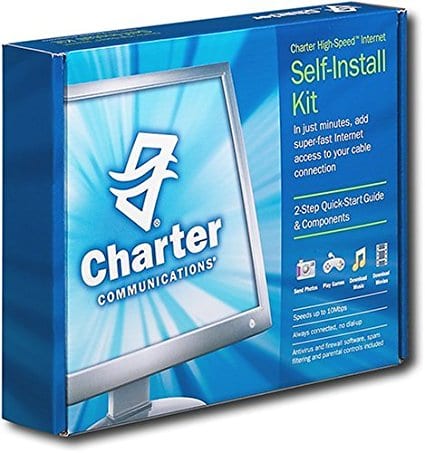
A self-install kit.

To minimize service interruption, choose the option of a “self-install” kit instead of a service call or having equipment mailed to you. Self-install kits are free without a service charge for a technician to visit to hook up the equipment and you can pick up equipment immediately.

At the end of the order, you should be given your account number and an equipment reservation number. Both are extremely important so be certain to write them down. Use online chat if you did not get one or both. Various verification procedures to activate your equipment and apps may require your account number. If you don’t have it, you may have to wait up to two weeks for your first invoice to be generated showing your account number.

Step 4: Time to pick up your equipment.

Take both your account number and reservation number along with legal photo ID to the nearest Charter Cable Store to pick up your new equipment. Some of our readers accomplished this on the same day they canceled service. You might avoid an awkward encounter by returning equipment at one store location and picking up new equipment at another. The store should give you equipment if your ID at least shows the same physical address where service is located. It depends on local store policies whether the account holder must be present or not.

Step 5: Hook everything up and activate service.

Return home and hook up your equipment. There are a few things you should know, however:

  • If you ordered home phone service, there is a mandatory 24-48 hour waiting period before TV and phone services will become active. Internet service may be intermittent at times during this waiting period or not work at all.
  • You will be required to complete a quick third-party verification call to activate home phone service and understand Charter’s 911 policies.
  • Your cable TV equipment will not authorize until the end of any waiting period, but you can use the Spectrum TV website or app to access TV immediately.
  • You may be given a temporary phone number if you are transferring your original landline number back to the cable company until the port request is complete.
  • There may be a brief delay of several days before you can use TWC’s or BH’s Wi-Fi hotspots.
  • Your first bill will usually be generated within a few days of activating service. Charter bills one month in advance. You can access your bill from the MyTWC, Bright House, or Spectrum account apps. Configure autopay as soon as possible to avoid your account going past-due.

Enjoy 12 months of reasonably priced cable service!

Option B – Understanding Charter’s Pricing for Existing Time Warner Cable/Bright House Customers

The best deals always go to new customers while loyal ones pay more.

Charter Communications considers current TWC/BH customers to be current Charter customers as well and do not qualify for new customer discounts or pricing. However, that does not mean you need to give Charter more money than they deserve.

For most customers, the option of keeping a legacy Time Warner Cable or Bright House Networks package will depend almost entirely on price. Charter is honoring existing BH/TWC bundled service promotions, new customer discounts, and retention plans until they expire (usually after one year, but occasionally two years). To avoid customer bill shock, Time Warner Cable used to gradually reset rates back to regular price over an extended period. Charter does not. Once your promotion is over, your bill will spike by $10-50 a month depending on the promotion you used to have. This rate reset is by design. If you do nothing, Charter will pocket revenue from a rate increase it wouldn’t dare try to impose on every customer. If you call to complain, you just saved Charter marketing expenses trying to convince you to contact them to discuss changing plans.

Because only a minority of customers ever paid regular Time Warner Cable pricing, Charter’s own rates may seem lower in comparison. Retail prices at a cable company are about as useful as the manufacturer’s suggested retail price on a piece of clothing. When the MSRP on a shirt is $55 and you pay $19.95, you may think you are getting a bargain. But if nobody was ever charged $55 for that shirt and it routinely sold for $19.95, that is no deal at all.

Our analysis shows Charter’s rates for existing customers are considerably higher for those who used to bounce from one Time Warner Cable promotion to the next and owned their own cable modem. For customers who just pay the bill and never attempt to negotiate a lower price, Charter’s regular pricing is comparable to slightly less that what customers used to pay Bright House and Time Warner Cable, if you don’t mind losing some TV channels.

The biggest winners of Charter’s Spectrum prices and plans are customers who rent a lot of equipment and subscribe to multiple premium movie channels. Charter charges considerably less for cable equipment and has no modem fee at all. Premium movie channels are bundled into Spectrum’s Silver and Gold TV plans, resulting in significant savings for customers who subscribe to multiple networks. DVR equipment and DVR service fees are also lower.
So get out your current cable bill and review these prices from Charter and compare. Charter does still offer some additional bundled discounts not reflected here. You will not get them unless you ask what offers are available to you. Don’t expect any gift card rebates or other big dollar promotions like Time Warner Cable used to offer. Charter is not a big believer in those kinds of marketing efforts, but the company will pay up to $500 towards any early contract termination fees charged if you switch to them from a satellite or telephone company competitor.

Our recommendations:

  • Do not attempt to negotiate using the new customer promotions Charter is advertising. You will get shot down because you are considered an existing customer. If you are primarily focused on price, strongly consider Option A above, despite the hassle. A representative can only give you the deals they are authorized to offer, and Charter’s management has severely curtailed promotional plans, even if it means losing you as a customer.
  • You will pay about $65 a month for a basic TV package that, in our area at least, includes just shy of 200 channels. We found that was more than adequate, although we will miss Comedy Central, Nickelodeon, Turner Classic Movies, and BBC World News which are not a part of Spectrum’s base Select package. Adding another $12-24 a month to get these channels back isn’t worth it.
  • Charter still sells the equivalent of Broadcast Basic — a small package of over the air stations and some ancillary channels for around $24 a month. It isn’t advertised and frankly is overpriced for what you get, but it is an option if you just want local TV stations.
  • If you want HBO, Cinemax, or Showtime, upgrading to Spectrum Silver is worth it. For $20 a month more, you get all three of those premium movie channels plus a number of basic networks that used to be a part of your TWC or BH lineup.
  • Check bundled promotions for existing customers carefully. Ask what is currently on offer. You may still find in certain circumstances the triple-play offer of TV, internet, and phone service is very closely priced to the double-play packages.
  • If you have a DVR, ask if there are any promotions that waive the $9.99 DVR service fee for the first DVR box. If you are going to have to pay the DVR service fee, check the rates for HD-DVR boxes vs. a traditional HD-set top box. You may just want to put a DVR on every set in the home if the prices are nearly the same. Charter does not offer Whole House DVR service.
  • Always choose to pick up any equipment in the local cable store. You will avoid Charter’s truck roll fee to send a technician to your home. Ask about any shipping fees if you want Charter to mail equipment to you. Those fees may be substantial.
  • Customer self-install kits are a good option if your home is pre-wired for cable and you require no rewiring. You can get equipment and connection cables for free almost immediately. Don’t spend money at Best Buy or other retailers on HDMI cables and coaxial patch cables. Charter supplies cables at no extra charge that work just fine.
  • Charter overprovisions broadband speeds to help the company meet FCC expectations that advertised speeds are comparable to actual speeds. Charter’s 60Mbps (100Mbps in some areas) basic internet service actually performs at around 70/6Mbps in most areas. Charter’s Internet Ultra package (100 or 300Mbps) is not worth the extra expense, particularly when factoring in the $199 setup fee. The more customers that reject upgrading because of the setup fee, the more likely Charter will eventually remove it. There is no justification for the fee other than to gouge consumers looking for faster speeds.
  • If you are looking for Charter’s $14.99 Everyday Low Price Internet option and live in New York State, if Charter tells you it isn’t available we would like to know about it. We are monitoring Charter’s compliance with the state’s conditions included in the order granting Charter’s merger with Time Warner Cable and we will forward your complaints to both the state Public Service Commission and Attorney General’s office. If you do not live in New York, this plan is no longer an option unless you already have it.
  • Charter’s phone service performs equivalently to Time Warner Cable, but includes a much smaller international toll-free calling area. Spectrum Voice International ($5/mo) gives toll-free calling to 70 countries and is a good value if you regularly call those places.

The following rates are effective April 2017 and packages and pricing will vary slightly in different regions of the country. All prices exclude applicable taxes, franchise fees, and the Broadcast TV Surcharge, which can vary considerably in different service areas (expect to pay an average of $4-7 a month). Charter does not appear to levy a sports programming surcharge.
TELEVISION PACKAGES

$23.89 BASIC SERVICE (Local Channels, C-SPAN, Public, Educational and Government Access, Various Home Shopping Channels)
$64.99 SPECTRUM SELECT (Includes Basic Service, Expanded Service of 120+ basic cable networks)
$84.99 SPECTRUM SILVER (Includes Spectrum Select, Digi Tier 1, HBO, Cinemax and Showtime)
$104.99 SPECTRUM GOLD (Includes Spectrum Silver, Digi Tier 2, TMC, Starz, Encore and EPIX)

Optional Services

$12.00 DIGI TIER 1 (Available with subscription to Spectrum Select, Silver or Gold)
$12.00 DIGI TIER 2 (Available with subscription to Spectrum Select, Silver or Gold)
$38.00 EXPANDED SERVICE (does not include basic service channels)
$7.99 LATINO VIEW (adds additional Spanish language channels not included in Select, Silver, or Gold)

Premium Channels

$15 each: Starz/Encore, EPIX, HBO, Cinemax, Showtime, The Movie Channel, or Starz

Subscription on Demand

$14.99 Too Much For TV On Demand
$6.99 Here TV On Demand
$4.99 Disney Family Movies On Demand
$3.99 Disney On Demand

Other Services (per month)

$9.99 Deutsche Welle Amerika (German)
$24.99 Filipino Pass Plus
$9.99 TV5Monde (French)
$39.99 TVB Jade World (Hong Kong – Cantonese and Mandarin)
$19.99 Mandarin Language Pack (China)
$25.99 Russian Language Package
$19.99 TV Polonia and Polski Radio Warszawa (Polish)
$19.99 SBTN & TVBV (Vietnamese)
$9.99 RAI Italia (Italian)
$19.99-69.99 Hindi Language Networks
$24.99 TV Japan (Japanese)
$12.99 ART TV (Greek)
$12.95 Playboy TV
$12.95 Penthouse
$12.95 Real
$12.95 TEN
$12.95 Hustler
$12.95 VIVID
$24.95 Adult 3-Pack

INTERNET PACKAGES
$14.99 Everyday Low Priced Internet (2/1Mbps) (New York State only)
$14.99 Spectrum Internet Assist (30/4Mbps) (qualified low-income customers only)
$64.99 Spectrum Internet (60/5Mbps or 100/10Mbps depending on area)***
$104.99 Spectrum Internet Ultra (100/10Mbps or 300/20Mbps depending on area)***
$199 One-time Upgrade Fee for Spectrum Internet Ultra
$5 Wi-Fi Service****

SPECTRUM VOICE TELEPHONE SERVICES

$29.99 Spectrum Voice*** (includes unlimited local and long distance calling in U.S., Puerto Rico, Guam, U.S. Virgin Islands, Mexico, Canada, and Northern Marianas)
$19.99 Additional Line
$5 Spectrum Voice International (per line optional add-on; adds unlimited toll-free calling to 70 countries)
INSTALLATION/SERVICE CALL (PER ACTIVITY)

$49.99 Primary Installation/Reconnect (when truck roll required)*
$49.99 Trip Charge**
$49.99 Custom Work Hourly Service Charge
$49.99 Service Call Truck Roll
$49.99 Wall Fish
$49.99 Move Transfer

UNRETURNED EQUIPMENT FEES

$123 Spectrum Receiver
$22 CableCARD™
$130 Tuning Adapter
$496.46 Guide Narration Laptop

MISCELLANEOUS CHARGES (PER MONTH)

(Varies) Broadcast TV Service Charge (expect $4-6/mo on average)
$8.95 Late Fee
$4.99 Reconnection Fee if no truck roll is required
$20 Insufficient Funds/Returned Check Fee
$5 Making a payment over the phone with a customer service representative

* An amplifier may be required for a dwelling with multiple outlets (outlet = digital receiver/modem/eMTA). Technician assessment and professional installation required.
** Applicable when adding and/or relocating outlet, upgrading and/or downgrading services and picking up equipment in some cases.
*** Prices are for standalone service. Rates are lower when service is bundled with TV, internet and/or telephone service.
**** Applies when customers use a Charter-supplied internet modem equipped with built-in Wi-Fi. A $9.99 setup fee may also apply. No fee if you use your own internet router.


Viacom, Booted Off Some Basic TV Tiers, Plans Own $10-20 Non-Sports TV Package

Viacom, which owns cable networks including Comedy Central, Nickelodeon, MTV, BET, and TV Land, will launch a cheap non-sports bundle of entertainment cable networks viewable online for $10-20 a month this year.

Viacom has lost basic cable viewers at an accelerating rate as cable operators drop their networks or repackage them in more expensive basic tiers as Viacom raises wholesale rates cable companies pay to carry the channels.

Viacom CEO Bob Bakish talked about the new service this morning at the J.P. Morgan Global Technology, Media and Telecom Conference in Boston. Bakish said most of the current “skinny cable TV” bundles were priced at around $40 a month, which is too expensive to attract “cord-never millennials” that frequently don’t subscribe to cable television.

“The transformational opportunity is to bring in a new entry segment at a much lower price point,” Bakish said. The cable industry needs “a path to bring in someone who wants high-quality entertainment” but has no interest in expensive sports networks.

That is why Bakish wants to create a cheap entertainment-oriented bundle of networks that omits sports-related channels. But Bakish has also repeatedly stressed he has no intention of giving consumers a comprehensive online alternative to traditional cable TV, telling investors Viacom is “not creating inexpensive opportunities to serve as an alternative.”

Bloomberg News reported Viacom was talking to Discovery and AMC Networks about participating in the new service. The only complication may be a backlash from sports programmers like Walt Disney’s ESPN and 21st Century Fox, Inc., which have contracts requiring providers to include the sports networks in their most popular bundles. Some contracts even limit how many customers are permitted to sign up for a sports-free TV package, according to Michael Nathanson, an analyst at MoffettNathanson LLC.

“It’s meant to dissuade distributors from doing something like this,” Nathanson told Bloomberg. “The issue is how many subscribers they can have before the legal questions appear.”

Bakish may also be trying to remind cable and satellite companies that Viacom can always go direct-to-consumers if operators banish Viacom’s networks off the cable dial or move them to a more expensive tier, although there is no guarantee the new service will bundle all of Viacom’s networks.

Viacom has seen its relationships with cable and satellite providers deteriorate over the last few years under prior management. Some smaller cable companies including Cable One dropped Viacom channels from their cable systems over cost issues in 2014, and many more subscribers have seen Viacom networks temporarily dropped as a result of contract renewal disputes. Bakish has made repairing relations with cable and satellite customers a priority since taking over as CEO in December, but he still has a way to go.

Recently, Charter Communications moved Viacom networks out of its Select basic cable TV package and moved them to its most expensive Gold package for new customers. With only a minority of customers signed up for Gold service, Viacom networks could eventually lose millions of viewers as Time Warner Cable and Bright House customers adopt Spectrum packages in the next few years. If those customers do not subscribe to Gold or refuse to pay extra for a “digipak” of Gold’s basic channels without the premium networks, they will lose access to Viacom channels when they change TV plans.

That issue also concerns Wall Street analysts who believe it could eventually erode Viacom’s viewer base. Bakish made certain to tell investors Viacom was not surrendering to Charter’s “re-tiering.”

“We firmly don’t believe they have the rights to do that,” Bakish said. “We’ve been in discussions with them. We’ve got to get that resolved.”

If it is resolved, those networks may again be available to Select TV customers.

Viacom, AMC, and Discovery are partnering up to offer a $10-20 entertainment-only package on streaming basic cable networks for consumers, as this Bloomberg News story reports. (2:58)

Charter Begins “Sweeping” Old Time Warner Cable Customers Into Spectrum Packages, Higher Fees

Phillip Dampier May 17, 2017 Charter Spectrum, Competition, Consumer News 3 Comments

The cable operator has begun “sweeping” accounts looking for customers it deems to have paid too little for too long or who are getting grandfathered cable channels the company feels they are no longer entitled to receive.

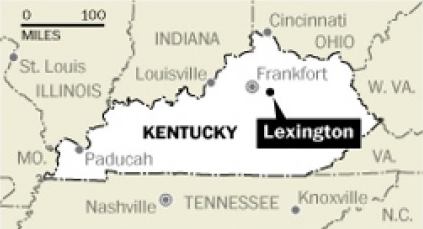
One of the first cities to be hit with Charter CEO Thomas Rutledge’s ‘account sweeps for more cash’ initiative is Lexington, Ky., where longtime customers are discovering their cable service is missing more than a dozen channels with no warning or explanation.

Daniel Fitzgerald discovered many of his cable channels were gone, replaced with a message that his subscription no longer included the cable channels that had been a part of his Standard cable package for years.

“I thought, ‘What the hell? I just paid the cable bill,’” Fitzgerald told the Herald-Leader last week at his tiny Lexington apartment he shares with his disabled 16-year-old son.

It turns out he wasn’t paying enough to satisfy Charter Communications.

A Spectrum representative told Fitzgerald that he hadn’t been paying Time Warner enough for the standard cable package. If he wanted those channels back, his monthly bill for cable and internet would jump $36 a month, from $103 to $139, effective immediately. No new channels, no new features, just a new much higher bill. To add insult to injury, the representative didn’t much care for the cable box Time Warner Cable provided him several years earlier and demanded its replacement, for a $24 service fee to send a technician out to check his service and replace his equipment.

When Fitzgerald attempted to negotiate with the cable company that claims it’s a “new day” for how cable companies treat their customers, the representative promptly cut him off.

‘This is Spectrum’s deal, take it or leave it,’ he was told.

“It was bull crap,” Fitzgerald said. “They don’t give us any notice, they just spring it on us in the middle of the month. And then they tell us we’re getting an ‘upgrade.’ This isn’t an upgrade, it’s the same channels we already had!”

Fitzgerald was not the only customer affected with Charter’s “surprise ‘upgrade,'” according to Lexington city officials, whose phones have rung off the hook about cable channels being held ransom for steep rate increases.

City officials who called on Spectrum to explain themselves eventually heard back from the cable company in a terse e-mail claiming Charter has begun performing “sweeps of customer accounts” looking for customers who have got too good of a deal from the cable company. Those customers are then summarily “repackaged” with no warning. Charter was busy “repackaging” a lot of Fitzgerald’s neighbors in his Alexandria Drive apartment building as well.

Rutledge told Wall Street investors this quarter it was all a part of Charter’s commitment to “move prices in the right direction.”

At Ximena McCollum’s home in Lexington, Charter cut off the NCAA men’s basketball tournament in-progress. When McCollum called Spectrum, she was informed she was “repackaged” as well, and could get her basketball game back for the right price: $45 more every month.

The customer service representative told her the channels she claimed she was getting were no longer part of her subscription.

“So if I had been getting them, I shouldn’t have been getting them,” McCollum said last week. “I told her that I’ve lived in this house for seven years. I’ve always had the same channels. She kept insisting that I wasn’t supposed to be getting these channels unless I paid them some ridiculous price. You could tell that she was confused and reading from some sort of script they had given her. Finally, I said, ‘Just cancel my subscription. I cut the cord.”

The Herald-Leader reported the “repackaging” comes down to one issue: money. Charter wants more, a lot more in some cases.

Rutledge has repeatedly claimed Time Warner Cable was effectively giving away the store and kowtowing to appease customers with lower rates when they complained about their cable bill. As far as Rutledge is concerned, the iron hand of discipline for former Time Warner customers is long overdue.

Rutledge promised he will force higher cable prices this spring as the company starts driving customers out of the Time Warner Cable packages into more expensive Spectrum packages. The company does that by allowing bundled discounts and promotions to expire on existing Time Warner packages, which results in sometimes-shocking rate increases of $50 or more per month. When customers call to complain, they are pushed towards slimmed-down Spectrum TV packages that cost slightly more than what customers used to pay and include more than a dozen fewer cable channels.

No one is exempt from being herded into Spectrum’s vision for the future. Even some of the city government’s office televisions have gone dark after “repackaging.”

Mossotti

City councilwoman Jennifer Mossotti got the Spectrum treatment as well, told if she wanted to keep her cable service, she needed to pay $21.50 more a month. Mossotti assumed she could whittle that amount down by dropping her Time Warner Cable phone service, but Spectrum told her that would cost her even more because it would break up her triple play bundle, resulting in an even bigger rate hike.

Lexington officials claim they feel held hostage by Charter and the ransom the city and its citizens have to pay doesn’t get them better service, just the same service they used to have for more money.

“It’s frustrating to the Nth degree. People are calling our offices daily about this,” Mossotti told the newspaper. “We felt like we at least had a little leverage with Time Warner. You could talk to them and usually you could work something out. With Spectrum, everything falls on deaf ears.”

In the face of the public relations disaster this is causing Charter in Kentucky, company representatives are trying to shift the blame on to customers, claiming they have been freeloading channels that have been part of legacy cable packages from years earlier that were either grandfathered or long forgotten, and Charter is simply tidying up.

For example, a local man who lives on Social Security benefits and who received the same cable lineup for 20 years “has only been paying for the Starter TV package,” Jason Keller, Charter’s senior director of government affairs, told city officials in an April 10 email. “The most recent sweep of customer accounts is what knocked out the channels, since he wasn’t paying for them. However, we’ve now repackaged him into a new service offering that has restored the channels and provides him with a new HD box.”

Keller did not respond to calls from the Herald-Leader asking how many Lexington customers now face higher cable prices.

In a prepared statement, Charter spokesman Michael Pedelty wrote: “Time Warner Cable was providing some programming inadvertently to a small number of customers whose packages didn’t include them. We want our customers to have the best quality and most reliable video experience. Earlier this year, we started a network project that adds an element of security and ensures individual channels are encrypted and available exclusively to those who subscribe to them.”

A few Lexington area residents told Stop the Cap! they felt abused by the entire process.

Barbara Montgomery, a subscriber of Charter (and two of its predecessors) claims she faced a higher bill after many of her channels disappeared a few weeks ago.

“We were ‘repackaged’ and told it would cost us $34 to get channels back,” Montgomery told us. “The [Charter] guy literally told us ‘tough luck, honey!'”

Edgar, who withheld his last name, reported that a Charter representative came close to accusing him of being a cable thief for getting channels he was not supposed to receive.

“I had this cable package for 27 years, no less and no more, and the last two companies – Insight and Time Warner Cable – let me keep paying for it year after year and I never saw any reason to change it,” he told us. “But Charter did, and on their own. One day the channels were there, the next day they were not. They tell you it’s too bad but that is way things are with Spectrum and they keep telling me their internet service is better, but I am 92 years old and don’t even have a computer.”

The experience of customers in Lexington may explain why tens of thousands of former Time Warner Cable customers are dropping Spectrum like a hot rock when the rate increase hits. For Rutledge, who was rewarded with a $98.5 million pay package in 2016, charging current customers a lot more for cable service more than makes up for the former subscribers they manage to drive off. For him, customers either get with the Spectrum program or they can go somewhere else, if there is somewhere else for customers to go.

From: Charter Communications’ 1Q 2017 investor presentation

Those experiencing the Spectrum Treatment are switching to AT&T U-verse, although AT&T is trying very hard to get them to sign up for DirecTV instead.

Montgomery tells us AT&T really doesn’t want their cable business, but they will sell her an expensive cell phone or satellite TV.

“AT&T is a happy hog making a lot of money in the cell phone business, but they sure don’t want to spend much on giving me TV service, and told me I’d be happier with satellite TV,” she said. “If I wanted satellite TV, I would have called DirecTV or Dish myself.”

The other option for parts of Lexington is Windstream’s Kinetic TV, a fiber to the neighborhood service available in some Windstream service areas. But Kinetic TV is getting mixed reviews from customers who have the service, and for those that want broadband, Kinetic speeds don’t cut it for many.

While Rutledge figures out how to spend his eye-popping compensation package, those on fixed incomes like Fitzgerald who live on less than $1,000 a month are trying to figure out where they will get the extra money to pay Charter.

Fitzgerald was giving the cable company $103 a month for standard cable television with no premiums and internet service. Now Spectrum wants 35% more for the same service he used to get.

A nearby neighbor told Fitzgerald and the newspaper their Spectrum bill went up $18 a month.

“A five dollar increase, OK, fine, I guess I could deal with that,” the neighbor said. “But twenty bucks just because a new company comes in? This is felonious. What am I gonna do, tell Social Security that I need $20 more every month because Spectrum wants it? It doesn’t work that way.”

“There ain’t much you can do about it, though,” Fitzgerald told the neighbor. “They’re the cable company.”

Search This Site:

Contributions:

Recent Comments:

Your Account:

Stop the Cap!