Home » Competition » Recent Articles:

Exclusive: Frontier Communications Has Plans for AT&T U-verse for Landline Customers

Stop the Cap! has learned Frontier Communications is laying the groundwork to upgrade selected areas of its network to deliver fiber-to-the-neighborhood service to some of its customers, perhaps as early as the last quarter of 2012.  Documents obtained by Stop the Cap! indicate the company is negotiating with AT&T to license U-verse technology to deliver the service.

The documents suggest Frontier’s 2011 negotiations with AT&T to resell mobile phone service to Frontier customers have now expanded to include the development of improved broadband at a cost less likely to antagonize Wall Street and the company’s investors.

Sources familiar with Frontier’s operations tell Stop the Cap! although the company will continue to support Verizon-acquired FiOS fiber-to-the-home networks in Indiana and the Pacific Northwest, Frontier plans to rely on less-expensive alternatives for the rest of its service areas and has no plans to further expand the FiOS branded fiber-to-the-home service.

For the most rural customers, Frontier appears ready to partner with HughesNet to resell a satellite broadband product to customers considered unsuitable for basic DSL service.  Frontier will continue to invest and upgrade its traditional 1-3Mbps ADSL service in rural states like West Virginia, Idaho, Nevada, and South Carolina.  The company is also planning to upgrade selected cities to VDSL — a more advanced form of DSL needed to support a U-verse offering.  Perhaps one major target for such an upgrade is Frontier’s largest service area — Rochester, N.Y., where Time Warner Cable has systematically picked off Frontier’s landline customers for years with offers of faster broadband speeds and better package pricing.
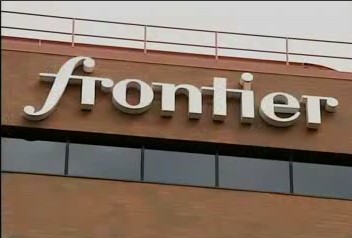
Frontier's headquarters in Rochester, N.Y.

Frontier’s insistence customers don’t need faster broadband speeds, a statement made repeatedly by Frontier Rochester general manager Ann Burr, has cost the company market share, especially for high speed Internet service.  Although Frontier claims to offer speeds up to 10Mbps in Rochester, the company only manages to deliver 3Mbps in some of the city’s nearest suburbs.

An upgrade to U-verse, while not as technologically advanced as fiber to the home service, would help Frontier defend its position in more urban markets, especially as cable companies upgrade their own infrastructure to market faster broadband speeds.

AT&T U-verse sells broadband at speeds of 3, 6, 12, 18, and 24Mbps.  Time Warner Cable, Frontier’s largest competitor in upstate New York, sells speeds of 3, 10, 20, 30, and 50Mbps.

Frontier Communications has been preoccupied integrating its newest customers, acquired from Verizon Communications in 2009, with their existing IT and operations systems.  The company recently touted it completed transitioning former Verizon operations, financing, and human resources with its own information technology network nine months ahead of schedule.

Frontier has been reorganizing some of its internal departments in preparation to launch several aggressive initiatives in 2012, especially in its efforts to roll-0ut more competitive broadband — considered a landline lifesaver —  in areas where the company has lost a lot of business to its cable competitors.  The company also intends to spend tens of millions upgrading its regional and national broadband infrastructure and continue extending DSL service to presently unserved rural areas.

Another planned improvement is an overhaul of Frontier’s website, which has brought complaints from customers for delivering inaccurate information, making online bill payment cumbersome, and being difficult to navigate.

Documents obtained by Stop the Cap! also reveal the company has made progress on its plans to pitch AT&T cell phone service to Frontier customers.

Frontier signed a resale agreement with AT&T last fall and is on track to begin limited trial offers of AT&T cell phones, smartphones, and tablets — with full access to AT&T’s network of 29,000 Wi-Fi hotspots during 2012 with a more widespread rollout in 2013.  Frontier plans to offer customers the option of a single bill for Frontier and AT&T services.

Frontier’s Karen Miller told Stop the Cap! the company had no comment about today’s story.

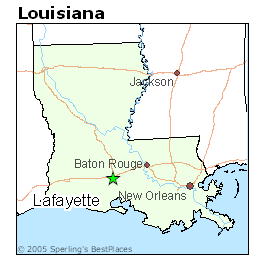
Publicly Owned LUS Fiber Launching Gigabit Broadband for Lafayette, Louisiana

Your Internet Service Provider keeps telling you there is no need for faster broadband speeds, but no matter how many times they say it, you still don’t believe them.

Neither do the folks at LUS Fiber — Lafayette, Louisiana’s publicly-owned fiber to the home broadband network.

In a state dominated by AT&T and cable companies like Cox, Louisiana has never experienced super-fast broadband.  But now they will.  LUS Fiber today announced 1Gbps broadband is now available in the Hub City.

Businesses will now have access to affordable broadband at speeds 20,000 times faster than dial-up.  Residential customers used to getting 1-12Mbps from phone company DSL or up to 50Mbps from Cox can put the slow lane behind them forever.  LUS Fiber can deliver upload and download speeds as fast as 1,000Mbps.

“Gigabit service from LUS Fiber is one of the most robust Internet offerings on the market today,” says Terry Huval, Director of Lafayette Utilities System and LUS Fiber. “We built this community network with a promise to the people of Lafayette that we will work hard to provide them with new opportunities through this unique, state-of-the-art fiber technology, and that’s just what we’ve done.”

That puts Lafayette on the map with Chattanooga, Tenn., as the two fastest operating fiber broadband networks in the country selling to both residential and business customers.  Both are publicly-owned networks private companies like AT&T have lobbied hard to banish.

In fact, Louisiana’s record on broadband outside of Lafayette is decidedly poor.

An $80 million federal grant to fund much-needed improvements to the state’s Internet infrastructure was returned in what one public official called Gov. Bobby Jindal’s special favor to Big Telecom companies like AT&T.

Public Service Commissioner Foster Campbell publicly berated the Republican governor for intentionally interfering with the project until time ran out and the government withdrew its funding.

The cancellation of the project has proved embarrassing because it was the first time a state lost federal broadband grant money.

The state’s Division of Administration eventually scrapped plans for the public broadband network and replaced it with a proposal to use grant dollars to purchase long term institutional broadband contracts from private providers.  AT&T is the dominant local phone company in Louisiana — the same company that has steadfastly refused to provide DSL service across rural Louisiana. The new proposal would have not delivered any broadband access to individual Louisiana homes, only to institutions like schools, libraries, and local government agencies.

Canadian Telecom Giants Outwit Would-Be Cord Cutters; Alternatives Also Under Pressure

Canadian cable, phone, and satellite providers have done a better job stymieing would-be “cord-cutters” than their counterparts further south in the United States.

The Canadian Radio-television and Telecommunications Commission’s (CRTC) annual report on the country’s telecom companies shows all of them remain exceptionally profitable, keeping pay TV customers far more effectively than American providers. Total revenues climbed from $12.5 billion to $13.5 billion in just one year, as price hikes, Internet Overcharging schemes like usage-based billing, and lack of competition continue to takes its toll on Canadian wallets.

The biggest winners were the biggest telecom companies in Canada — Rogers Communications, Bell Canada (BCE), and Shaw Communications, which all saw profits soar 8.2% to $11 billion.  Costs increased about 10.7% in 2011, fueled by network upgrades and rampant hikes in programming costs — an interesting state of affairs considering Rogers and Bell own or control a substantial number of the programmers demanding higher payments.  Most of those increases were passed on to customers in the form of rate hikes.

Although Canadians are increasingly interested in streaming online video, virtually every major Internet Service Provider in the country has effectively prevented customers from dropping cable television service in favor of broadband-only access.  They manage it with usage caps and usage billing on their broadband products.  With streamed video accounting for a substantial drain on customers’ monthly usage allowances, Canadians are unlikely to cancel cable TV in favor of watching all of their favorite shows online.

In fact, the number of Canadian households that subscribed to a cable company’s basic television service actually increased by 2.8% in 2011 to reach 8.5 million.  Experts say the country’s transition to digital over the air television may account for some of that increase, but a few high broadband bills with overlimit fees for “excessive Internet use” can effectively drive online video fans back to traditional cable TV as well.

Satellite television in Canada remained flat,  with a virtually unchanged 2.9 million Canadians relying on Bell and Shaw satellite service for television entertainment.

But everyone is paying more to watch.

In 2011, cable companies paid $2.1 billion in wholesale fees to the pay and specialty services they distribute, an increase of 10.2% over the $1.9 billion paid the previous year. The fees paid by satellite companies rose by 2.8% in one year, going from $894.4 million to $919 million.

That leaves vertically and horizontally-integrated conglomerates like Bell in the perfect position to extract higher programming payments.  Those costs are passed down to Canadian consumers and blamed on “greedy programmers,” despite the fact those programmers are owned in part or outright by Bell.

A Rogers retail rental store

Rogers is also well-suited to remain a part of the Canadian entertainment experience.  The company owns cable systems, wireless phone networks, programmers, and even home video stores. However Stop the Cap! reader Alex notes Rogers has been closing a number of those video stores over the past few months.

“This gives customers one less choice for renting movies, basically forcing them to use Rogers On Demand instead,” writes Alex.

Rogers On Demand comes with a higher price, too.  In-store rentals from Rogers are priced at 2 for $9 or 3 for $15.  A recent look at Rogers’ video on demand website, Rogers Anyplace TV, shows most movie titles priced at $4.99 each.  With Rogers closing 40 percent of their retail rental outlets, movie fans have had fewer competitive choices for movie rentals.

One potential new contender coming to Canada – kiosk video rentals.  Although services like Redbox are now commonplace in the States, they are virtually unknown in the north.  Jim Gormley, former owner of Jumbo Video is back with Planet DVD.  With just 2% of Canadians renting movies from kiosks, Gormley believes there is plenty of room to grow, especially as Rogers scales back its video rental business.

Planet DVD has a pilot project running with supermarket chain Sobeys to place kiosks in front of nine store locations.  The first kiosk was erected in early March in front of a Sobeys store in Mississauga, Ont.

A new release at a Planet DVD kiosk is priced at $3 for a one-day rental.  That’s less than what most video stores charge, but more than double what Americans pay at a Redbox kiosk.

AT&T “Wins” Consumerist’s Third-Worst Company in America Award

The Consumerist awards AT&T the "Bronze Poo" Award for Third Worst Company in America. (Image: The Consumerist)

A video game company reviled by game fans and the perennially-shoddy Bank of America managed to beat out America’s lowest rated phone company in The Consumerist’s “Worst Company in America” annual award contest, but not by much.

As Electronic-Arts tries to explain away its top-worst rating, AT&T easily took third place after a consolation round decidedly eliminated Walmart.

Congratulations to the folks aboard the Death Star! As soon as we get some proper bronze-colored paint, we’ll be packing up your Bronze Poo and sending it off in the mail. It will, of course, include a 620-page end-user agreement that preempts any class-action lawsuits by AT&T employees.

Some Consumerist readers wondered why game fans rushed to beat EA over the head over its anti-consumer tendencies when Ma Bell was still ripe for some kicking:

This should be easy call. I’m pulling for AT&T to go all the way. The list of AT&T transgressions is long and wide-ranging. Much more so than EA.

  • AT&T is like the T-1000 Terminator, reassembling itself after Ma Bell was broken up in the 80’s;
  • AT&T caps broadband Internet connections;
  • AT&T is one of Washington’s biggest lobbyists;
  • AT&T blocks important updates from customer’s phones;
  • AT&T tried to buy up a competitor to reduce competition and further monopolize the spectrum which is collectively owned by We The People;
  • AT&T shameless displays its arrogance on its own AT&T Public Policy blog;
  • AT&T opposes Net Neutrality.

I could go on and on…

The Consumerist notes their award epitomizes the last 12 months for AT&T.

“First it attempted to leap-frog to the head of the wireless pack by swallowing T-Mobile whole, only to fail miserably after many months and at a cost of several billion dollars,” the piece reads. “Then it came tantalizingly close to vying for the coveted Worst Company In America Golden Poo trophy, only to be given the smack-down by a video game company. At least it won’t be leaving the tournament empty-handed.”

Even the 1%’ers Have to Deal With 1Mbps DSL: FairPoint & Comcast Say No to Wealthy Enclave

Phillip Dampier April 4, 2012 Broadband Speed, Comcast/Xfinity, Competition, Consumer News, Data Caps, FairPoint, Public Policy & Gov't, Rural Broadband Comments Off on Even the 1%’ers Have to Deal With 1Mbps DSL: FairPoint & Comcast Say No to Wealthy Enclave

No broadband for you...

Sometimes even money doesn’t talk… or buy you faster broadband service.

That is a lesson some of New Hampshire’s wealthiest residents — company presidents, top-dollar lawyers, and the trust-fund endowed — in Rindge and Grafton County are learning only too well.

It seems neither Comcast or FairPoint Communications has shown much interest in extending today’s definition of “broadband” to the multi-million dollar homes on Hubbard Road.

“Every year, I start working up the telephone chain, calling people at Comcast. I’m looking for the vice president, or whatever, in charge of infrastructure so I can call him, bribe him, plead with him to connect me,” said Leigh Eichel, who moved to the ritzy cul-de-sac in 2005. “I’ll pay anything!”

Eichel and his friends told their story to David Brooks of the Nashua Telegraph, who used the plight of the 1%’ers to ponder whether broadband should be a universal right.

A century ago, the government decided that mail service to all American homes was necessary and launched Rural Free Delivery. Then it decided electricity was necessary and created regulated utilities that guaranteed connection. It did the same with telephones, creating the universal access fund that collects money from all phone bills to subsidize land lines to the remotest home.

But nothing similar has happened with Internet service, which is mostly unregulated by government. The market has been largely left to its own.

The result is scattered empty spots like Hubbard Road, which should be broadband heaven.

... or you.

Comcast continues, for the seventh year running, to show zero interest in wiring the wealthy enclave.  That left residents trying to make do with satellite broadband, which they cried was too slow and usage-capped.

Eichel finally managed to cajole FairPoint Communications, the bankrupt phone company that bought out Verizon landlines in northern New England, to extend DSL to the neighborhood, but they did it on-the-cheap, leaving residents with sub-par service barely capable of breaking 1Mbps, when they’re lucky.

Welcome to broadband equality of a different kind, whether you are fighting AT&T from a family farm in Wisconsin for better-than-1Mbps DSL or a super-wealthy executive in New Hampshire suffering with FairPoint’s alleged broadband and utterly rejected by Comcast.

Particularly appalling for the well-traveled Hubbard Road residents: the realization that Singapore’s equivalent of a seedy Motel 6 has basic broadband service that beats the pants off New England’s dominant phone company.

Even Money Won't Talk

“I was staying in a budget hotel; there weren’t even windows in the room. Hey, I was spending my own money,” Eichel’s neighbor Rick Slocum told the newspaper. “[They had] 12Mbps broadband — the connection [was] 10 times as fast as my home.”

Brooks concludes New England wants the same thing most of the rest of the country wants — universal fiber-to-the-home access, which delivers 100-1000Mbps, depending on the provider.

They, like most everyone else, will have to wait.  Like AT&T U-verse and Verizon FiOS, FairPoint’s very-limited fiber offering FAST has reached a limit of its own — the amount the phone company is willing to spend rebuilding their network.  Future expansion plans are now on hold.

Slocum ponders the speed needs America will have in the future, and wonders if even fiber optics will one day need to be replaced for something even faster.

Brooks responds with a prediction.  As long as Comcast and FairPoint are in charge, whatever it is, Hubbard Road probably won’t have it.

Search This Site:

Contributions:

Recent Comments:

Your Account:

Stop the Cap!