Home » Competition » Recent Articles:

Verizon’s Heavily Capped Wireless Replacement for Rural DSL Goes Nationwide

Phillip Dampier May 3, 2012 Broadband Speed, Competition, Consumer News, Data Caps, Rural Broadband, Verizon, Wireless Broadband Comments Off on Verizon’s Heavily Capped Wireless Replacement for Rural DSL Goes Nationwide

Verizon Wireless’ answer for rural America’s broadband troubles goes live across the country today, offering the broadband deprived the opportunity of getting wireless service at almost twice the price of conventional DSL, with a 10GB monthly usage allowance.

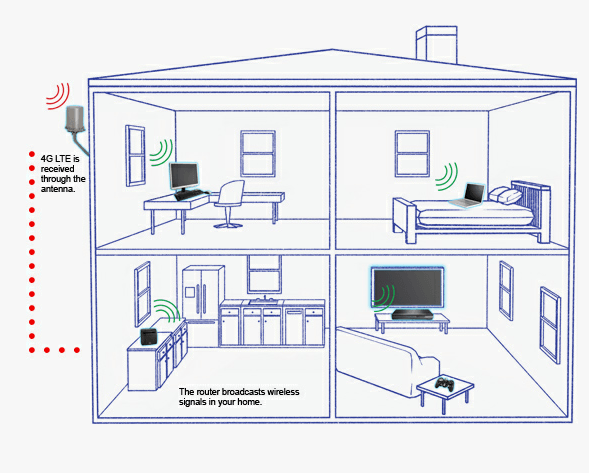
HomeFusion Broadband uses Verizon’s LTE network to deliver service to homes and businesses within range of Verizon’s 4G network.  For rural America, the speeds Verizon is capable of delivering offer a significant improvement over rural DSL.  Verizon promises 5-12Mbps down and 2-5Mbps up, depending on how many users are sharing the cell tower and how strong a signal one receives.

“HomeFusion Broadband is another example of Verizon Wireless’ commitment to providing our customers with the most innovative products and services,” said Tami Erwin, vice president and chief marketing officer, Verizon Wireless. “With HomeFusion Broadband, customers across the United States, in towns large and small, will have the chance to link devices to the Internet and take advantage of the speed, coverage and connectivity offered by our 4G LTE network.”

Whether they can afford it may be another matter.

Verizon Wireless charges a one-time equipment fee of $199.99, which includes professional installation of the required cylindrical outdoor antenna and router that allows customers to share the wireless connection with other devices inside the home.

Monthly service fees start at $60 a month and include 10GB of monthly usage. If you need more data, you will pay a significant amount to get it — up to $120 a month for 30GB of usage.  As a tease, customers get 50 percent more data allowance for the first two full billing cycles of service.  If you become accustomed to using that extra allowance, it could be very costly once the first two months are up.  Overlimit fees run $10/GB.

Verizon claims two-thirds of the country is now covered by their 4G LTE network, including the regions Verizon sold off to companies like FairPoint and Frontier Communications.  Those independent phone companies will soon have Verizon as a broadband competitor in states like West Virginia, Vermont, Ohio, and Maine. If customers value speed over everything else, Verizon could be a formidable competitor over traditional rural DSL, which often operates at speeds of 1-3Mbps, as long as customers steer clear of allowance-eating online video.

Verizon has positioned HomeFusion as a rural broadband solution, and earlier pricing and policy changes make it clear Verizon is downplaying its traditional DSL service.  In April, Verizon announced it would no longer sell standalone DSL service to customers without voice phone lines, or to those who live in areas also wired for the company’s fiber optic network FiOS.

Broadband Money-Maker: Insights from Time Warner Cable’s Latest Financial Results

Phillip Dampier May 2, 2012 Broadband Speed, Competition, Data Caps, Online Video Comments Off on Broadband Money-Maker: Insights from Time Warner Cable’s Latest Financial Results

Highlights:

  • Company still losing video customers, but picking up phone customers (on the cheap), and winning with broadband;
  • Broadband consumption pricing still CEO’s favorite flavor of Internet billing, but only for other people’s content;
  • Broadband speed matters, as Time Warner continues to win over dissatisfied DSL customers;
  • ‘If customers love our broadband, we can charge more for it;’
  • Verizon/Time Warner’s cooperative marketing agreement starts with discounts but ends with “exclusive product enhancements.”
  • The future of Time Warner Cable Wi-Fi.

Time Warner Cable reported unexpectedly strong profits in its first quarter as the company’s broadband services helped stem the losses from departing cable TV customers.

The cable operator told investors it boosted profits 18%, mostly from increasing revenue the company earns selling broadband access to the Internet and convincing customers to add more Time Warner services.

Time Warner Cable said goodbye to 94,000 residential video subscribers last quarter, higher than analysts expected. But that did little damage to earnings because the company picked up an additional 214,000 broadband customers over the same period, most switching from phone company DSL service.

Time Warner Cable’s increasingly aggressive bundled service promotions, particularly on its triple-play offer of cable, broadband, and phone service, even managed to attract 112,000 new landline customers — a significant accomplishment as Americans continue to disconnect traditional phone lines in favor of cell phones.  It also helped increase the average revenue earned per subscriber.  Time Warner Cable pitches double play promotions as low as $79.00 a month. For just $10 a month more, customers can add a third service, and many do.

Most discounts last for one year, but the operator now often sends letters to customers reaching the end of their promotion offering additional, but lower-value discounts going forward. This has limited bill shock for customers surprised by the company’s regular prices. It also might reduce the urge for customers to shop around for a better deal.

Judging from the company’s financial results, most customers hang on to Time Warner Cable’s broadband regardless of price, if the competition happens to be traditional DSL from the phone company. In fact, as phone and cable companies realize they have sold broadband to virtually every home in their service area that wants it, growth in subscriber numbers going forward largely depends on poaching customers from someone else.  Nobody makes that easier than phone companies trying to sell customers DSL with speeds under 10Mbps.  According to CEO Glenn Britt, Time Warner Cable picked up more new broadband customers than Verizon and AT&T combined.
Time Warner Cable broadband speeds give headaches to phone companies trying to sell traditional DSL.

While phone companies continue to argue that speeds don’t matter (at least for their DSL product line), Time Warner believes otherwise and apparently so do their new customers.  The company reports that almost two-thirds of those dumping DSL said their old service was too slow.

Much of the company’s growth in broadband revenue is also coming from the high end, as customers increasingly gravitate towards faster broadband speed tiers.

Britt

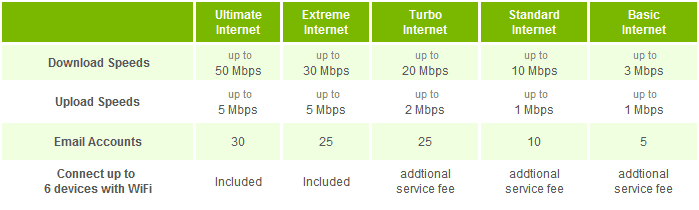
Residential DOCSIS 3 (Extreme/Ultimate) customers increased 50% to 218,000, and almost 66% of new broadband customers signed up for either Turbo (20Mbps), Extreme (30Mbps) or Ultimate (50Mbps) service.  Together, these customers now make up 20% of Time Warner’s broadband subscribers, up from less than 16% a year earlier.

Customers are willing to pay higher prices for faster service, a point not lost on Britt, who noted that once customers perceive broadband has more and more value, the company can charge more for it over time.

If Britt’s steadfast belief in Internet Overcharging-consumption billing schemes holds true, some customers might find they are charged substantially more if the company decided to discontinue offering unlimited Internet service.

For now, the company plans to continue its experiments in consumption billing through its Internet Essentials program, now testing in South Texas, which limits customers to 5GB of usage per month before overlimit fees kick in.  But going forward:

“I think we’ve been pretty clear about this, we do think over time, there will be consumption element to the tiers,” Britt said.

But Britt says he wants to keep unlimited access for customers willing to pay for it.
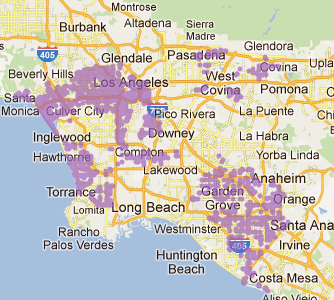
Time Warner's Hotspots in southern California.

“We retained our unlimited tier with no cap (I actually don’t like the term cap),” Britt added. “And I think we should always have that. So that this was not in any way coercive, people who wanted to save money, could. People who wanted to keep what they had have kept it, and they still have unlimited. So our plan is to roll that out further across [the country] as the year goes on.”

Britt noted the company’s own streamed video products would not drain customers’ usage allowances.  But Netflix and other online streamed video would.  Britt adopted the same argument Comcast has used to defend the practice.

“So there’s a set of standards called the IP, Internet Protocol, and those can be used for a wide variety of things in the world,” Britt explains. “There’s also something called the public Internet, which happens to use IP standards. That doesn’t mean those two things are exactly the same. So the application that we have on the iPad is over our closed-circuit network. It’s just a different standard than we’ve used traditionally for our video. But it’s not the public Internet.”

In other developments, the company’s controversial co-marketing agreement with Verizon Wireless has now expanded to four cities: Raleigh, N.C., Cincinnati and Columbus, Ohio, and Kansas City, Mo.

Time Warner Cable executives told investors the early stages of the cooperative marketing agreement will consist of a promotion that includes a $200 gift card when a customer buys both a Verizon Wireless plan and upgrades at least one service on their Time Warner Cable account.  But the company plans to gradually reduce discounts and instead offer unspecified “exclusive product enhancements” that will only be available to customers who subscribe to both services.

Lastly, expect Time Warner Cable to continue aggressive deployment of its Wi-Fi networks in New York and Los Angeles.  The company signaled it intends to construct similar Wi-Fi networks in other cities in serves, but most likely not during 2012.


New York Accuses Verizon of Abandoning Quality Landline Service; “It’s a Duopoly”

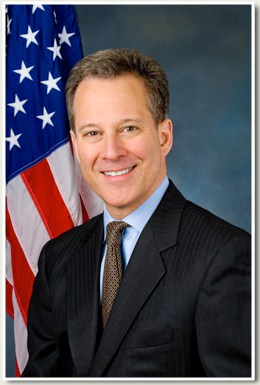
New York State Attorney General Eric Schneiderman is convinced Verizon Communications is abandoning quality landline service for millions of New Yorkers while diverting money and resources to its more profitable cell service Verizon Wireless.

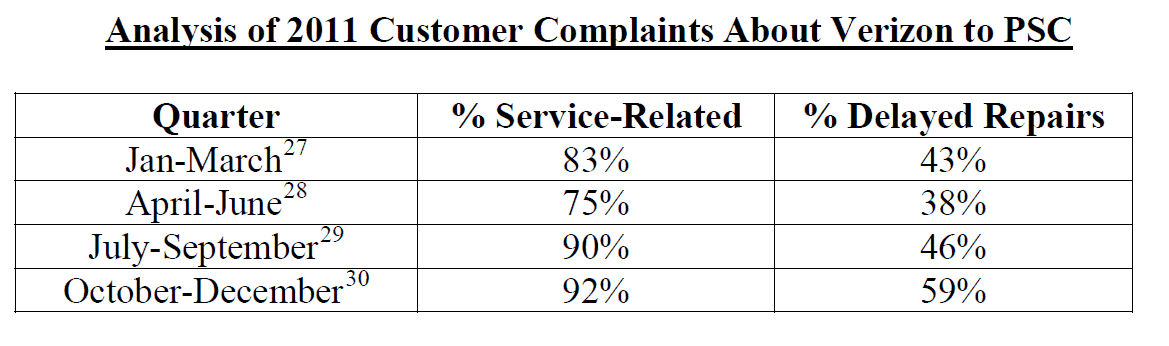
Last week, Schneiderman blasted the state’s largest landline provider for mounting complaints about poor service that now impact 92 percent of its customers, calling deregulation a failure for consumers and businesses in New York.

“Verizon customers deserve the high-quality service they’ve been promised,” Schneiderman told The Associated Press.

The attorney general reports that the number of customers enduring service outages for more than 24 hours has increased, while landline infrastructure — particularly wiring — is allowed to deteriorate.

Schneiderman suspects Verizon is shortchanging landline service as an increasing number of wired phone customers disconnect service, often in favor of Verizon’s more lucrative cell phone service.  The state Public Service Commission (PSC) fined Verizon $400,000 in March for similar concerns, pointing to the company’s intentional workforce reductions lengthening repair windows and creating repair backlogs in some regions.

Schneiderman’s office filed comments with the PSC requesting changes to Verizon’s Service Quality Improvement Plan, which was originally launched in 2010:

At best, New York’s telephone service market is a duopoly, and contrary to theoretical expectations of market controls, the presence of a single competitor has not in fact prevented Verizon from allowing customer service to continue to degrade. Rather than meet its obligations to provide wireline telephone customers with minimally adequate telephone service, Verizon is continuing to drastically reduce its workforce with the result that the company cannot meet its customers’ repair needs in a timely manner.

Verizon’s management has demonstrated that it is unwilling to compete to retain its wireline customer base, and instead is entirely focused on expanding its wireless business affiliate. It is incumbent on the Commission to take appropriate regulatory action to ensure that customers receive reliable telephone service with adequate repair performance. Therefore, the Commission should modify Verizon’s service plan to ensure customers receive adequate service quality in the future.

Verizon defended its service in New York pointing out the company has invested $1.5 billion in the state for infrastructure, including its FiOS fiber to the home network.  Verizon spokesman John Bonomo questioned Schneiderman’s claim that 92 percent of Verizon New York customers had poor service, noting 98 percent of its landline customers don’t have service problems.

Schneiderman’s highlighting of a $400,000 service fine imposed by the PSC did not account for unprecedented damage from both Hurricane Irene and Tropical Storm Lee late last summer, Bonomo added.

But the state’s attorney general notes Verizon’s service problems in New York have been ongoing well before last summer.

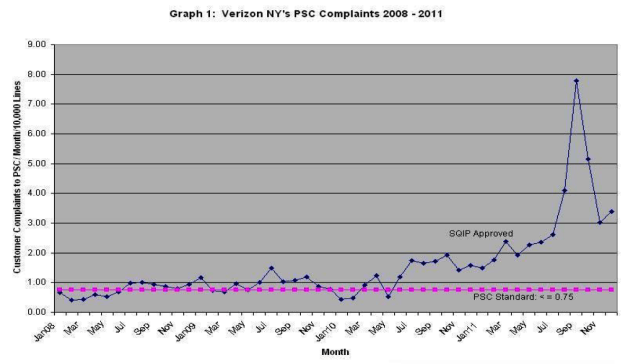
Service complaints, charted here from 2008-2011, show a major spike last summer and fall and remain higher than normal.

Schneiderman

“Since at least 2008, Verizon has frequently failed to meet these PSC telephone service standards essential to safe and reliable telephone service,” Schneiderman says. “Even as the number of telephone lines needing to be maintained has dwindled to half those of a decade ago (as customers choose to rely instead on wireless and/or cable telephony), Verizon’s continues to fail to meet the PSC’s service standard.”

Customers on the upper west side of New York City don’t need to be reminded of Verizon’s service failures.  Hundreds of Verizon landline customers in New York’s largest city were left without basic phone service for more than a week, only made worse by the fact Verizon told many of them they’d be without service for at least one additional week while the company worked on repairs.

Phone and Internet service went dead in multiple buildings along Central Park West April 10, but customers wanted to kill when they learned the phone company wanted more than two weeks to get service restored.

“I was like, excuse me, are you serious? Two weeks?” Iram Rivera, a concierge at 262 Central Park West, told DNAinfo.  His building was hard hit by the service outage — 80 percent of the building’s 80 apartments were affected.

“I just don’t get the feeling that there’s much of an appreciation on Verizon’s part that this is a hardship for people,” said Ken Coughlin, who lives on West 87th Street and Central Park West. “There’s no communication, there’s no updates, it’s infuriating.”

The outage only affected traditional landline service and DSL broadband over copper phone wiring. The more modern fiber-optic FiOS network that provides TV, Internet and voice service wasn’t affected, Bonomo said.

Schneiderman notes landline outages have an especially hard impact on small businesses:

In the current recession, the fragile economic condition of many small businesses puts them at risk of financial disaster if they suddenly lose telephone service, and their provider is unable to restore service promptly. Each day that these businesses are without service they lose significant revenues that many simply cannot survive without.

Small businesses depend on functional telephone service to meet the needs of their customers in numerous ways. When customers are unable to reach a business by telephone, they may assume the business is closed and purchase the goods or services they want elsewhere. Restaurants are prevented from giving reservations to prospective customers who call. Many types of businesses depend on working telephone lines for processing credit card charges, and may lose substantial sales by limiting transactions to cash or checks. Professional offices can be prevented from providing medical, legal or accounting services to their clients without working telephone service.

In Schneiderman’s view, the deregulation policies now in place in New York have failed consumers, leaving them with a duopoly of phone providers with insufficient oversight.

For competition to benefit customers with improved service, lower prices, and more innovation, there has to first be a willingness to compete, which is significantly absent from Verizon-New York’s policies and practices.

Rather than robust competition, New York’s telephone market is at best a duopoly, with as many indicators of cooperation between the two providers as robust contest for customers. Furthermore, the actual behavior of consumers in the real world is markedly different from the PSC’s theoretical assumptions about the telephone market.

When a Verizon customer experiences a prolonged service outage or installation delay, the option to switch carriers to a cable provider is of no immediate use. Finally, even if consumers wanted to compare Verizon’s service performance with cable provider alternatives, the lack of available information prevents consumers from making educated choices.

In New York, most customers are served by Verizon Communications, Time Warner Cable, or Cablevision.  Time Warner Cable and Verizon recently agreed to cross-market the other’s products and services as part of a wireless spectrum transfer.

CenturyLink Slowly Strangling Independent ISPs; Choices Dwindle in Upper Midwest

Back in the days of dial-up Internet access, consumers could choose from a dozen or more independent providers selling service from prices ranging from free (for a limited number of hours per month) to $20-25 a month for unlimited dial-in access.  As long as an ISP maintained a local access number, they could set up shop and sell service at competitive prices in virtually any community in the country.

For awhile it seemed that this competition would continue as the days of broadband DSL arrived.  Phone companies like Qwest opened their network to third party competitors who could lease access to company facilities and lines and market their own DSL service.  In states like Minnesota, Qwest customers could choose from several providers, including Qwest itself, and receive service at competitive pricing.  But in 2005, the Federal Communications Commission announced phone companies no longer had to share their phone network with other providers.

It was the beginning of the end for independent service providers in that state and others.  The Minneapolis Star-Tribune reports that out of 47 independent ISPs that existed in the Twin Cities area alone in 2005, only about a dozen remain today — and many of those can count customers in the hundreds.  In fact, business has dwindled so badly, many providers no longer actively market DSL services to consumers.

The 2005 FCC policy allows phone companies to cut off the independents as network upgrades are completed. What service can be sold by independents in Minnesota is speed restricted as well — only up to 7Mbps. Even at those increasingly uncompetitive speeds, CenturyLink makes sure customers are notified they can no longer buy DSL service from independent companies once their upgrades are finished.

Today, the march forward for incrementally faster DSL broadband speeds at CenturyLink (which acquired Qwest), continues to force more and more competitors out of the broadband business.  Many of the remaining customers are located in rural or suburban exchanges only now seeing network upgrades.  But some companies are not waiting for the last of their customers to depart.  Implex.net saw the writing on the wall and decided to exit the business, telling the newspaper they could not compete with CenturyLink, much less Comcast.

“It was a dying business because we could only sell old technology,” said Stuart DeVaan, CEO of Implex.net in Minneapolis.

US Internet of Minnetonka also realized selling DSL was not going to be a growth business under current FCC rules.

“If you are a traditional Internet service provider from the mid-’90s that relies on someone else’s network, you’re at a serious disadvantage,” said Travis Carter, technology vice president at US Internet.

CenturyLink denies the FCC policy limits competition, pointing to cable operators, Wi-Fi, and wireless mobile broadband as all viable alternative choices for consumers.

But Bill Kalseim, who lives in rural Stillwater, having received notification he is about to be cut off from his ISP — ipHouse — thinks otherwise.

“I had a choice of DSL providers before, and now I don’t.” Kalseim told the newspaper.

Sprint’s Dan Hesse Complains About Wall Street’s “Disconnect” Over Investment

Phillip Dampier April 25, 2012 Competition, Sprint, Video, Wireless Broadband Comments Off on Sprint’s Dan Hesse Complains About Wall Street’s “Disconnect” Over Investment

Sprint, perennially America’s #3 wireless phone company, faces some of its biggest challenges not from super-sized Verizon Wireless or AT&T, but from Wall Street over the company’s upgrade investments and environmental policies.

“I still get crucified for deciding to carry the Apple iPhone because the investment is significant and the payoffs are long term,” CEO Dan Hesse told attendees at a conference sponsored by Fortune magazine. “I deal with that quite a bit.”

Hesse’s vision of an upgraded 4G LTE network for Sprint Nextel comes at a cost: technology upgrades and investing profits back into the business.  Hesse also wants to be sure the company maintains environmental sustainability, with attention to everything from renewable energy sources to socially-responsible recycling of retired cell phones.

Wall Street to Hesse: Don't Get Comfortable

In response, Wall Street has been demanding Hesse’s hide.  One investment firm even predicted the imminent demise of the wireless phone company.

The iPhone, the smartphone wireless carriers cannot afford to be without (just ask T-Mobile, which continues to bleed contract customers), has posed a major financial challenge for Sprint Nextel.  Apple’s wildly popular phone commands a high wholesale price and purchasing commitments that make investors’ eyes bleed.

In October, Sprint committed to purchase 30.5 million iPhones from Apple for $20 billion.  That threatens to drain cash on-hand to cover the huge subsidies new iPhone buyers get on their phone purchase. The company will gradually earn that subsidy back over the length of the traditional two year service contract, but many on Wall Street are upset Sprint committed to an order of that size.  One Wall Street firm — Sanford C. Bernstein — downgraded the company’s stock to “underperform,” and one analyst at the company — Craig Moffett — even predicted Sprint’s bankruptcy.

Sprint’s plan to spend up to $5 billion on its forthcoming LTE 4G network won Hesse no favors in New York’s financial district either.  Sprint’s Network Vision plan will allow the company to keep up with AT&T and Verizon’s aggressive 4G rollouts, but after chief financial officer Joe Euteneuer laid out the associated financial plan to pay for it, calls for Hesse’s head resumed.

“There is a disconnect with Wall Street because if you’re building a brand, it does take a long time,” he said. “It’s hard to quantify.”

Wall Street doesn’t think much about investing in environmental initiatives either.  Hesse believes corporate environmental responsibility will pay off over the long term, ultimately reducing some of the company’s expenses.  But spending money short term to save money long term leaves investors cold.

“A lot of these environmental investments don’t hit that payoff period,” Hesse said. “The Street likes the expense savings, but the environmental benefits go right over their heads.”

[flv]http://www.phillipdampier.com/video/CNBC Faber Report Sprint Beats Expectations 4-25-12.flv[/flv]

CEO Dan Hesse may win a temporary reprieve as Sprint released better-than-expected results today for the latest quarter. Average revenue per user grew 6.9% and Sprint is hanging on to many of its former Nextel customers as the company decommissions that network, reports CNBC’s David Faber.  (2 minutes)

Search This Site:

Contributions:

Recent Comments:

Your Account:

Stop the Cap!