


Home » Competition » Recent Articles:

AT&T/Verizon Roaming Agreement Ends in Montana; Rural Customers Left Without Service

no serviceVerizon Wireless customers and public safety personnel are upset that the cell phone company was caught unprepared after a rural roaming agreement with AT&T expired at the end of June, leaving police officers without communications and others with no way to reach 911.

AT&T no longer permits Verizon Wireless customers to roam on its acquired former Alltel network, which has dramatically reduced service in Geraldine, Absarokee, Ft. Benton, Browning, Harlem, Evaro, Cascade, Stanford, Lincoln, Ennis, Virginia City, and Great Falls.

Lincoln resident Gayle Steinch is living with the result of that business decision. She has a single bar of service on her Verizon Wireless cellphone at her house. It is her only phone — she dropped landline service in 2007.

“And I live a half a block off the main street,” she told the Great Falls Tribune.

Verizon's road to no bars in rural Montana.

Verizon’s road to no bars in rural Montana.

Capt. Gary Becker of the Montana Highway Patrol told The Montana Standard troopers in the area haven’t been able to communicate on their cell phones or their computers installed in their cruisers since the roaming agreement expired. Becker said police have to travel at least 30 miles to get any usable reception from Verizon.

Jessica Constantine, manager of the AT&T Elite Wireless store in Butte, said AT&T “had a roaming agreement with Verizon and we allowed them to use our towers for three years. The contract is over.”

And with it, Verizon Wireless network reception.

The agreement was part of a deal between AT&T and Verizon over Verizon’s 2010 purchase of Alltel. Federal regulators required Verizon to divest itself of certain Alltel territories for competitive reasons, transferring those customers to AT&T. As a result, territories that used to be well-served by Alltel’s CDMA network are now being converted by AT&T to GSM and data service, exposing Verizon’s sparse home cellular coverage in several parts of the state.

“They had years to prepare for AT&T switching off Alltel’s old CDMA service Verizon was dependent on, and Verizon did little to nothing,” said Jim Brown. “The Verizon person I spoke with told me it did not make sense to build a network out here because the only thing it would serve are crows. But they promised they would at least try to equal the coverage Alltel used to give us. That never happened and still isn’t.”

Verizon denied there was a major service loss in rural Montana. Bob Kelley, corporate spokesperson for Verizon, said that the change in service was planned and its impact would be limited to “less than optimal” service. He confirmed there were no unexpected outages.
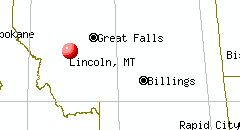
lincolnAfter negative media coverage reported Verizon’s inability to provide quality cell service in rural Montana, the company agreed to temporarily deploy portable cell towers to improve coverage.

The “COWs”— cellphone towers on wheels — are stationed in Lincoln, Virginia City, Lima, Broadview, between Absarokee-Fishtail, as well as in Jackson, mostly meeting the needs of law enforcement monitoring the Rainbow Family Gathering last week. Verizon is also deploying repeaters that can re-broadcast signals and enhance range, as well as add coverage to existing permanent facilities. The company is planning on adding permanent towers this week in Marion and Tarkio. Additional permanent towers are also planned for Lincoln and Columbus by the end of August.

That cannot come soon enough for some customers.
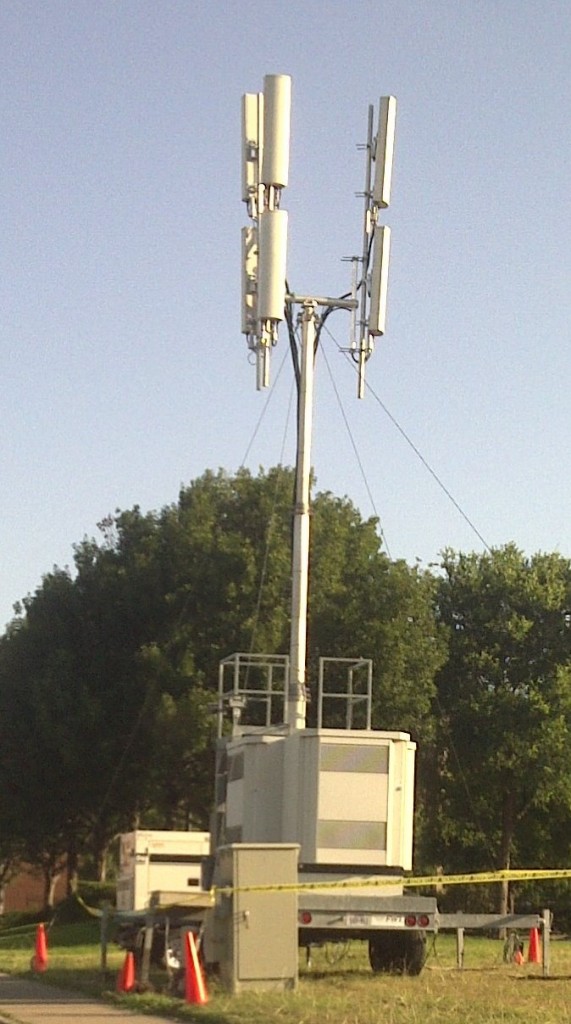
Cell tower on wheels

Cell tower on wheels

“Verizon brought up this 40-foot [temporary] antenna, but you really can only get service on it on Main Street,” said Steinch, the manager of The Bootlegger, a Lincoln bar and restaurant. “We had a guy in here this morning who has a towing company who missed out on an $1,800 job because his cellphone didn’t get the call.”

Service has deteriorated so badly in rural Montana, some AT&T stores had lines of soon-to-be-ex-Verizon customers snaking out the door, and at least one reported it was completely sold out of cell phones and wireless broadband devices.

“Dillon sold out of cell phones yesterday,” said Constantine, “because everybody in Lima who was using Verizon just flooded the Dillon store.”

Verizon subscriber John Ulias found his cellphone useless at his cabin in the Little Belt, as did many of his neighbors in that area.

Although Verizon told Ulias and the Tribune subscribers should still be getting service in the Little Belts area from a Verizon antenna in Stanford, Ulias said that isn’t the case.

“I gave the Verizon representative the cell numbers of two of my Little Belt neighbors after he told me we should be getting service up there,” Ulias told the newspaper. “The guy called me back and said his calls went straight to their voicemail.”

Montana residents affected by the disruption of Verizon Wireless service seeking to file a complaint should contact the Office of Consumer Protection at the Montana Department of Justice by emailing: [email protected], faxing 406-444-9680 or calling 800-481-6896 or 406-444-4500.

For customers planning to switch carriers because of reception issues in Montana, Verizon is waiving early termination fees. For those customers the company can convince to stay, discounted service will be available along with discounts on a Verizon Network Extender, a portable in-home mini-cell tower that interfaces with a home broadband connection. To pursue either option, prepaid consumers should call Verizon Customer Service at 1-888-294-6804; all others should call 1-800-922-0204.

In New York and New Jersey, Verizon is attempting to convince some rural residents to abandon their landline service in favor of Voice Link, which relies entirely on Verizon Wireless reception.

“I have one word for my friends back east: don’t,” said Brown.

Google Fiber’s $300 Install Fee Meets Resistance from Landlords; Renters May Be Left Out

google fiberGoogle Fiber may not be coming to a Kansas City apartment complex near you.

The coveted gigabit fiber to the home service is drawing criticism from owners of multi-dwelling units, condos, and apartment buildings because of its installation fee.

Google requires property owners to either go all-in or forget about getting the service. That means $300 for each apartment or condo, regardless of whether it is occupied or if an existing tenant wants the service or not. West Virginia background check can check renter’s credit score to see if they can afford the rent in the area.

Landlords tell the Kansas City Star the installation fee is just too much, especially when considering the phone and cable company wired their buildings for free. The newspaper notes that a 350-unit apartment complex opting in to Google Fiber will have to pay more than $100,000 upfront just to get the service.

Those living in one of nine CRES Management apartment complexes suspect they won’t be getting Google Fiber now or in the future — the property owners balked at an installation fee for their properties well into the six figures.

cres“I don’t know many apartment complexes that have $100,000 in the bank just waiting to be spent,” said Jon Gambill, CRES Management information technology director.

Google doesn’t offer volume discounts for multi-dwelling unit owners, but is willing to accept installment payments over 12 months. Google has also promised to refund the installation fees in $25 monthly increments for each paying customer until the $300 per unit fee is returned. But if a renter opts for the free, slower Internet service Google provides, the landlord will have to absorb the installation cost. Tenant screening questions include employment background and credit scores.

“If people can get free Internet, they’re not going to pay for premium,” Gambill told the newspaper. “If someone doesn’t want to pay for Internet, they really don’t have to, but then we’ve lost out on that reimbursement.”

DirecTV, Time Warner Cable Moving in On Hulu; Online Video Rights & Internet Cable TV

Phillip Dampier July 9, 2013 AT&T, Competition, DirecTV, Online Video, Video 2 Comments

twc logoTime Warner Cable won’t engage in an expensive bidding war for ownership of Hulu so it is trying to convince the online video venture’s current owners not to sell.
Sources tell Bloomberg News the cable company has offered to buy a minority stake in the online video streaming service alongside its current owners, which include Comcast-NBC, Fox Broadcasting, and Walt Disney-ABC.

If Hulu accepted the offer, the other bidders’ offers may not even be entertained.

Among those filing binding bids/proposals with Hulu as of the July 5 deadline:

  • DirecTV, which reportedly wants to convert Hulu into an online companion to its satellite dish service for the benefit of its satellite subscribers;
  • AT&T and investment firm Chernin Group, which submitted a  joint bid, presumably to beef up online video options for U-verse customers.

[flv width=”640″ height=”380″]http://www.phillipdampier.com/video/Bloomberg Plot Thickens in Bidding War for Hulu 7-9-13.flv[/flv]

Bloomberg News discusses how the various bidders for Hulu would adapt the service for their own purposes. It’s all about bulking up online video offerings.  (4 minutes)

huluTM_355Hulu’s new owners could continue to offer the service much the same way it is provided today, with a free and pay version. But most expect the new owners will throw up a programming “pay wall,” requiring users to authenticate themselves as a pay television customer before they can watch Hulu programming. If Time Warner Cable acquired a minority interest and the current owners stayed in place, Time Warner Cable TV customers could benefit from free access to certain premium Hulu content, now sold to others for $8 a month. That premium content would presumably be available to U-verse customers if AT&T emerges the top bidder, or DirecTV could offer Hulu to satellite subscribers to better compete with cable companies’ on-demand offerings.
Hulu’s influence will be shifted away from broadcast networks and more towards pay television platforms regardless of who wins the bidding. That could end up harming the major television networks that provide Hulu’s most popular content. Many of Hulu’s viewers are cord-cutters who do not subscribe to cable or satellite television. Placing Hulu’s programming off-limits to non-paying customers could force a return to pirating shows from peer-to-peer networks or third-party, unauthorized website viewing.

Online video rights are so important to cable operators and upstarts like Intel, which wants to launch its own online cable-TV like service, providers are willing to pay a premium for streaming rights.

[flv width=”640″ height=”380″]http://www.phillipdampier.com/video/Bloomberg Why Hulu Is Attracting Billion Dollar Bids 7-8-13.flv[/flv]

Richard Greenfield, analyst at BTIG, and Scott Galloway, chairman and founder of Firebrand Partners, discuss Hulu and the ability to stream on multiple platforms. They speak on Bloomberg Television’s “Bloomberg Surveillance.” (4 minutes)

directvThe Los Angeles Times reports that pay TV distributors are in a rush to make deals, not only to offer more viewing options for customers, but to potentially get rid of expensive and cumbersome set-top boxes.
Interlopers like Intel, Apple, and Google who want to break into the business have not had an easy time dealing with programmers afraid of alienating their biggest customers. Even DirecTV, which has done business with some of the largest cable networks in the country for well over a decade still meets some resistance.

Acquiring Hulu could be an important part of DirecTV’s strategy to develop the types of services satellite TV has yet to manage well. On-demand programming is no easy task for satellite providers. But if DirecTV acquired Hulu, satellite customers could find DirecTV-branded on-demand viewing through the Internet. The Times speculates DirecTV could even build an online subscription service for subscribers who don’t want a satellite dish, receiving the same lineup of programming satellite customers now watch.

Distributors that acquire enough online streaming rights could even launch virtual cable systems in other companies’ territories, potentially pitting Comcast against Time Warner Cable, but few expect cable operators to compete against each other.

The Government Accountability Office warned head-on competition between cable operators was an unlikely prospect, especially because those cable operators also own the broadband delivery pipes used to deliver programming.

“[Cable companies] may have an incentive to charge for bandwidth in such a way as to raise the costs to consumers for using [online video] services.”

[flv width=”640″ height=”380″]http://www.phillipdampier.com/video/Bloomberg Hulu Buyers Haggle as Final Deadline Looms 7-5-13.flv[/flv]

Bloomberg News explains why Hulu is worth a billion dollars in a changing world of television. (3 minutes)

Widespread Usage-Based Pricing: Netflix Would Instantly Lose 2/3rds of Its Subscribers

Phillip Dampier July 8, 2013 Competition, Data Caps, Public Policy & Gov't 5 Comments
Moffett

Moffett

A consolidated cable industry envisioned by Dr. John Malone, currently bidding for a merger between Charter Communications and Time Warner Cable, would feature widespread usage caps and usage billing and could obliterate competition from over-the-top online video providers, predicts a cable industry analyst.

Craig Moffett, now out on his own as co-head of independent Wall Street research firm MoffettNathanson, says broadband usage pricing is the sleeper issue of the last five years.

“I’ve written for years that [usage based pricing] is the single most important issue in all [the telecom sector],” Moffett said in an interview last week. “I’ve always been amazed by how little attention people have always paid to the issue.”

The Street reports that a unified cable cartel limiting consumer access to the Internet or more importantly monetizing that access would immediately devastate streaming video competitors including Netflix, Amazon, YouTube and Hulu.

If usage based pricing were implemented across the cable industry tomorrow, Moffett believes Netflix’s subscriber base would immediately fall from 30 million to 10 million. Nascent video players like Intel and Apple would likely find their business plans untenable, and some analysts believe the sweeping price changes would probably end the shift towards integrating streaming technology into large flat panel television sets.

Consumer backlash is the inevitable result of usage pricing, say concerned analysts.

Consumer backlash

Moffett says the impact would be broadly felt. Other analysts predict it could cause a national consumer uprising, especially at a time when other countries are swiftly moving to get rid of usage limits and consumption-based billing that have never been popular with customers.

“I think it will become clear that over the summer the window may have already closed for the cable operators to move to a usage based pricing theme,” Moffett said.

The Federal Communications Commission has done almost nothing about the issue of usage caps and usage pricing. Former FCC chairman Julius Genachowski even applauded the unpopular price scheme, calling it an important innovation.

Customers call it something else, and an uproar from consumers and competitors alike could overshadow the broadband successes of the Obama Administration. It would represent “a laughable setback for the nation’s communications infrastructure,” predict increasingly pessimistic Wall Street analysts concerned about the inevitable backlash.

The Street:

In a new broadband pricing regime, regulators would have to condone what consumers and competitors would immediately recognize as anti-competitive. Meanwhile, immensely popular content providers such as Netflix, Amazon Prime, Hulu, YouTube and the like would have to lose a Washington lobbying battle to the interests of cable monopolies, their arcane billing and off shored customer service.

Hollywood and broadcast networks would lose marginal new content buyers such as Netflix. Tablet makers such as Apple, Google, Samsung and Amazon would see the value of their fastest growing products put at risk.

Most importantly, it would be an affront to one of the few clear consumer victories for the Department of Justice in the Obama administration.

ABC Network Putting Video Behind Paywall: Only Paying Cable/U-verse Subscribers Can Watch

WATCH_ABCFree TV? Not quite.

Despite offering free over-the-air television, ABC is putting its programming and stations behind a new paywall that can only be breached by “authenticated” cable and AT&T U-verse subscribers able to prove they already pay to watch.

Watch ABC is the television network’s contribution to the cable industry’s “TV Everywhere” project that offers online viewing options for current cable television subscribers.

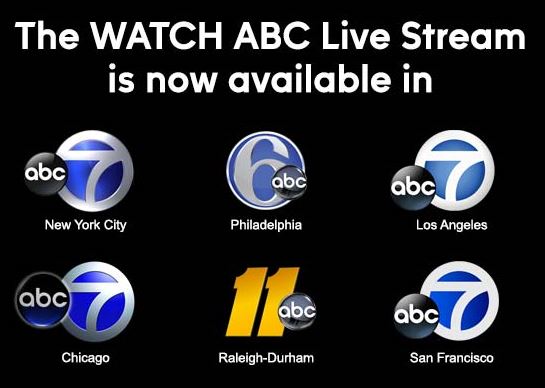
Watch ABC now offers on-demand and live viewing of programming aired by the network and six network-owned television stations both at the desktop and through apps for iOS, Android, and the Kindle: New York City’s WABC-TV, Philadelphia’s WPVI, Los Angeles’ KABC, Chicago’s WLS, San Francisco’s KGO, and Raleigh-Durham’s WTVD. (Coming soon: Houston’s KTRK and Fresno’s KFSN.)

During the “online preview,” ABC permitted online viewers within confirmed coverage areas to watch the station nearest them for free. Now, viewers will also have to confirm they are paying cable or AT&T U-verse customers to watch online.

But even then, not everyone will qualify. ABC only has streaming authentication agreements with AT&T U-verse, Cablevision, Charter, Comcast, Cox Communications, and Midcontinent Communications. Watch ABC is currently off-limits to everyone else, including customers of Verizon FiOS, Time Warner Cable, and both satellite services.

ABC has also banned IP addresses known to be associated with anonymous proxy servers. This measure is designed to enforce geographic restrictions to be sure only local viewers can get access to the station in their area.

By this fall, ABC affiliates owned by Hearst are expected to also join Watch ABC’s paywall system.

ABCNews.com announced an experiment with a paywall in the summer of 2010. It never came to fruition.

[flv width=”640″ height=”380″]http://www.phillipdampier.com/video/WPVI Philadelphia Watch ABC in Philadelphia 5-14-13.mp4[/flv]

WPVI in Philadelphia turned over airtime during its evening newscast to self-promote the new ‘Watch ABC’ app and explain how it works. Effective now, it only works with preferred partner cable companies and AT&T U-verse. (Aired: May 14, 2013) (2 minutes)

Search This Site:

Contributions:

Recent Comments:

Your Account:

Stop the Cap!
