Home » Competition » Recent Articles:

Editoral Decries Time Warner Cable’s Attempt to Deregulate Phone Service in New York

Phillip Dampier October 14, 2013 Competition, Consumer News, Public Policy & Gov't Comments Off on Editoral Decries Time Warner Cable’s Attempt to Deregulate Phone Service in New York

timewarner twcEfforts by New York’s largest cable operator to deregulate telephone service in New York, potentially cutting off delinquent ratepayers’ phone service at inconvenient times, has run into opposition from an Albany newspaper.

The Times Union published an editorial last week opposing the measure, fearing it could leave some of the millions of Time Warner Cable phone customers without service on nights and weekends without any way to make a payment to prevent the disconnection.

Unlike other services that companies like Time Warner offer — such as TV, Internet, security and remote lighting and heating control — the home telephone holds special status. It has long been regarded as an essential utility, much like residential gas, water and electricity. The PSC regulates how and when a utility can cut a customer off such a critical service for failure to pay a bill on time.

For years, Time Warner maintained it was not a phone company and should not be bound by these rules. That changed earlier this year when it accepted the responsibilities and regulations that come with being a residential phone provider.

Now, though, Time Warner is petitioning the PSC to change the rules governing home phone bills.

Some of the requests appear reasonable, such as updating language about local and long-distance calling charges. But that’s not the case with Time Warner’s request to expand the hours and days when it can disconnect services for customers who have fallen behind in their bills, including their phone service.

Specifically, Time Warner wants to deal with delinquent customers on nights and weekends.

Most other utility providers can cut service for non-payment only during weekdays, when the PSC’s staff is working and available to help broker solutions and protect consumers. The PSC has the authority to make decisions on disputed bills, revise payment plan arrangements and remedy situations where continued service is medically necessary.

Late and unpaid bills are admittedly a chronic problem for cable companies. In the past year, Time Warner sent more than 1.7 million past-due notices to residential customers in the state and shut off or suspended service to nearly 600,000 households for failing to pay bills.

Time Warner calls its proposed change a convenience to its customers. It’s really a convenience for Time Warner, which wants to handle phone bills the same as other services. But this would bypass the special safeguards for phone consumers.

The Public Service Commission is still reviewing the proposal from Time Warner Cable, which is the dominant cable provider in upstate New York and parts of New York City.

WOW! Cable Expands in Ohio, Michigan; Local Officials Appealed for More Competition

Phillip Dampier October 14, 2013 Competition, Consumer News, Public Policy & Gov't, WOW! 1 Comment

Better

Efforts by local officials to attract more cable competition are paying off in suburban Cleveland, Ohio and Detroit, Mich. where customers will soon be able to choose between two cable companies or AT&T for cable service.

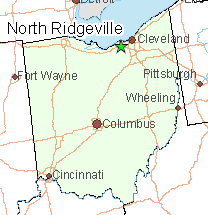
WOW!, a Denver-based cable overbuilder, has announced it will expand service to Lathrup Village, Mich. and Sheffield Lake, Brunswick, and North Ridgeville, Ohio between now and the middle of next year.

North Ridgeville City Council president Kevin Corcoran last week announced WOW! would begin head-to-head competition with Time Warner Cable starting in 2014. Corcoran told The Chronicle Telegram the city began looking for a competing cable provider after hearing complaints from residents about Time Warner Cable’s poor customer service and reliability. He approached WOW!, which has provided competitive service in parts of the greater Cleveland area, about expanding in North Ridgeville.

north ridgeville“My only pitch was that people are dying for some competition,” Corcoran told the newspaper.

Corcoran met informally with WOW! officials to discuss the prospects of expanding into North Ridgeville before more formal meetings were held with city officials including the mayor and the safety-service director.

Making life easier for WOW!’s entry is the presence of existing utility easements, which means WOW! can run cable on existing utility poles without formal approval by the city council. But WOW! will still need certain permits from the Building Department to move forward with wiring. The company will use Ohio’s statewide video franchising law, originally pushed by AT&T for U-verse, to obtain video service permits and a franchise agreement with the Ohio Department of Commerce.

WOW!’s regular prices are much lower than Time Warner Cable’s promotional prices for new customers:

  • Standard triple play (15/1Mbps Internet, Cable TV, phone) costs $105.98/month from Time Warner ($118.97 with DVR), $85/month from WOW! ($92 with DVR);
  • Standard double play (15/1Mbps Internet, Cable TV) still costs $105.98/month from Time Warner ($118.98 with DCR), $75/month from WOW! ($82 with DVR);
  • Internet-only service (15/1Mbps) costs $40.98/month from Time Warner Cable, $30/month from WOW! (promotional pricing expires after 12 months).

Time Warner Cable said it welcomes the competition.

NORTH RIDGEVILLE – Residents who have long griped about poor cable television service can look forward to some competition next year.

City Council President Kevin Corcoran on Friday that

WOW! Cable TV is planning to begin giving Time Warner Cable, the city’s current cable TV provider, some competition starting in 2014.Talks between the city and WOW! Cable began in late summer and continued into September where the company announced it would go ahead with plans to begin offering digital and HDTV cable service to residents next year.

WOW! Cable’s Matthew Harper, who serves as the company’s systems manager for the Cleveland market, confirmed the Denver-based firm’s plans to begin serving a portion of the city by the end of 2014.

“We’re in the process of doing a walk-out, which involves gathering information about the number of (utility) poles and distances between them, and the number of homes we are able to get built out for next year,” Harper said. “Our goal is to build out the entire city over the next few years.”

Because the company will use existing utility easements to run wiring over utility poles, its plans do not require formal approval by City Council, according to both Corcoran and Harper.

Permits for construction of equipment and attaching wiring to power poles will need to be obtained from the city Building Department.

WOW! Cable will obtain required video service and state franchise agreements through the Ohio Department of Commerce, Harper said.

Under the firm’s universal pricing structure, North Ridgeville customers can expect to pay $60 a month for any two services such as cable TV and phone service, or $70 a month for three services including cable TV, phone, and high-speed Internet service, according to Harper.

More specific details and pricing for the company’s numerous packages of services can be found at www.wowway.com, Harper said.

Wow! Cable currently serves about 4,300 customers in AvonLake, and just completed work on a system to serve SheffieldLake, Harper said.

Cost figures for the North Ridgeville project were not disclosed.

Corcoran said he began to investigate prospects for bringing another cable TV provider to town after he and others heard periodic complaints from residents about the cable TV service they had from Time Warner.

“We’d heard that Time Warner doesn’t always have the greatest reputation for customer service and reliability, and that people were going off to Dish and DirecTV,” Corcoran said. “My only pitch was that people are dying for some competition.”

Realizing that “a lot of people like to stick with cable for various reasons,” Corcoran met informally with WOW! officials before more formal meetings were held with city officials including Mayor David Gillock and Safety-Service Director Jeffry Armbruster.

Time Warner spokesman Mike Pedelty said the company has been aware of WOW! Cable’s plans to enter North Ridgeville.

“We are well aware of them coming in and compete with them in other locations,” Pedelty said.

When asked about Corcoran’s comments concerning Time Warner’s poor service, Pedelty said “it’s hard to respond to that comment.”

“We respect all competitors, but are really driven by making sure we provide the type of services our customers expect at a good value,” he said.

– See more at: http://www.chroniclet.com/2013/10/11/new-cable-company-offering-service-in-north-ridgeville-in-2014/#sthash.L6ciWB1H.dpuf

If Verizon or AT&T Wants to Sell Off Their Rural Landlines, Frontier Is Willing to Buy

frontier frankFrontier Communications is interested in buying landlines bigger phone companies like AT&T and Verizon might want to sell.

CEO Maggie Wilderotter sat down with The Wall Street Journal to answer questions about her leadership of the independent telephone company.

Despite ongoing landline disconnects and a challenging business environment that led to a second quarter loss of $38.5 million, Wilderotter says Frontier is “well positioned for success” and is willing to acquire new customers castaway by larger phone companies like AT&T and Verizon.

I would do acquisitions only if they’re smart,” Wilderotter said. “We would buy assets that drive more scale. We would look at another carve out like the Verizon acquisition or acquiring stand-alone rural telephone companies.”

Frontier’s last acquisition in 2010 nearly tripled its size after picking up landlines sold off by Verizon Communications.

Independent telephone companies like Frontier are not just buyers, however. Wilderotter hinted Frontier has received offers encouraging a sale of the company, perhaps even one from a satellite provider like Dish Network or DirecTV.

“Other players [like] CenturyLink have similar assets,” Wilderotter said. “Some unconventional folks might look. The satellite category [for instance]. We have had conversations in the past. They weren’t the right offers.”

Many shareholders stay loyal to Frontier because the company pays a significant dividend to those holding stock. Anything that threatens the dividend typically drives Frontier’s stock price lower, so Wilderotter was quick to note any other acquisitions will not come at the expense of that dividend.

Wilderotter

Wilderotter

“We would do acquisitions in a way that preserves the dividend,” Wilderotter said. “We might take on more debt instead.”

Frontier’s business plan relies heavily on selling service in less competitive rural areas often bypassed by large cable operators. Because of inherent network limitations created by copper telephone lines, Frontier maintains market dominance mostly in communities where cable service is not widely available or is provided over antiquated infrastructure unsuitable for significant broadband upgrades.

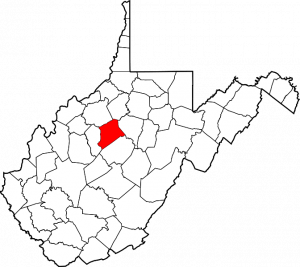
In the last two years, Frontier has spent several billion dollars to upgrade its own infrastructure to offer faster and more reliable Internet access, but the upgraded service is still out of reach for many Frontier customers who need it the most. In central West Virginia, Frontier customers in Gilmer (pop. 8693) and Braxton (pop. 14,523) Counties can’t wait to drop satellite Internet access for Frontier DSL. The infrastructure has been reportedly in place for several months, but the service has not yet been switched on.

Additional Frontier broadband expansion depends on company investment and federal broadband improvement funds.

In September, West Virginia’s congressional delegation announced an award of roughly $24.1 million in leftover federal funds to continue construction of broadband infrastructure in rural areas of the state.

“With help from the FCC, so many more of our families and businesses will soon have the transformative and necessary power of high-speed Internet at their fingertips, opening the doors to many new educational and economic opportunities,” said Democratic Sen. Jay Rockefeller.

Frontier also recently applied for an extra $28.9 million from the Connect America Fund to target broadband for another 47,000 homes and business in West Virginia.

Gilmer County

Gilmer County, W.V.

If Frontier receives 100% of the requested amount, the Obama Administration’s broadband funding programs will have contributed $63 million towards service improvement in West Virginia.

Frontier Communications manager Daniel Page said the next target areas for broadband improvement are in Pleasants (pop. 7,605) and Ritchie (pop. 10,236) Counties, both in northwest West Virginia.

Wilderotter says 85% of Frontier customers now have broadband access available to them, up from 60% in 2011.

“Our goal is to be able to reach over 90%, probably by the end of this year or first part of next year,” Wilderotter said.

The biggest challenges facing Frontier over the next year?

“Technology disruption—and [industry players’] business models being challenged,” Wilderotter told the newspaper. “Customer expectations on how they utilize the Internet continue to morph as rich applications are made available.”

To manage increased traffic, Frontier can invest in capacity upgrades or start network management measures to limit subscribers’ Internet usage.

Frontier has run a usage limit trial in Kingman, Ariz., Elk Grove and Palo Cedro, Calif., Mound, Minn. as well as Cookeville and Crossville, Tenn. for over a year to measure bandwidth consumption by application type. In those areas, Frontier DSL is usage capped at 100 or 250GB per month. Customers exceeding their allowance are advised to either limit usage or convert to a “high user” service plan starting at $99.99 a month.

[flv width=”640″ height=”332″]http://www.phillipdampier.com/video/Fox Business News Frontier Broadband 8-8-13.flv[/flv]

Frontier CEO Maggie Wilderotter told Fox Business News in August the company was “laser focused” on broadband.  (5 minutes)

Verizon Pushing Deregulation Bill Through Mass. Legislature; Ends Universal Service, Oversight

Verizon-logoA sweeping deregulation measure sponsored by Verizon Communications would end the telephone company’s obligation to provide landline service and remove state-mandated customer quality of service standards in Massachusetts.

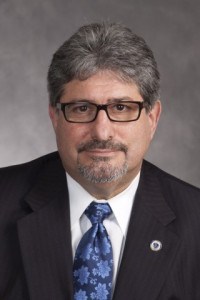
House Bill 2930, “An Act modernizing telephone regulation and encouraging economic growth,” introduced by Rep. Stephen L. DiNatale (D-Fitchburg) is succinct:

SECTION 1. Chapter 25C of the General Laws, as appearing in the 2010 Official Edition, is hereby amended by inserting after section 7 thereof the following sections.

Section 8. Notwithstanding any other general or special law to the contrary, the department shall have no jurisdiction, general supervision, regulation or control over wireless service, including mobile radio telephone service, or radio utilities.

Section 9. Notwithstanding any general or special law to the contrary, subject to the provisions of section 10 of this chapter, no provision of this chapter, Chapter 25 or Chapter 159, 8 and no regulation, order or settlement or portion thereof adopted pursuant to any such provision, shall apply to any telephone company (or a common carrier offering telephone service) in any municipality for which the company or carrier certifies to the Office of Consumer Affairs and Business Regulation that there are at least two providers offering voice telephone service to retail residential customers in that municipality using any technology, including but not limited to wireless voice service and VoIP service.

Section 10. Nothing in sections 8 or 9 of this chapter shall be construed to affect or modify:
a. the authority of the attorney general to apply and enforce chapter 93A or other consumer protection laws of general applicability;
b. the department’s authority under sections 18B and 18H of Chapter 159, concerning enhanced 911 service, and under section 15E of Chapter 166, concerning telephone relay service;
c. the rights or obligations of any carrier under 47 U.S.C. § 251 or 47 U.S.C. § 252; or
d. the department’s authority to administer the federal Lifeline and Link-up programs or the Connect America Fund.

SECTION 2. Sections 11, 12, 12A, 13, 14 and 15 of Chapter 166 are hereby repealed.

The measure was discussed at a hearing this week before the Legislature’s Energy & Telecommunications Committee. Verizon argued its company is still regulated as if it was a monopoly, with reporting requirements and customer service mandates that do not apply to its competitors in the cable or wireless industry.

DiNatale

DiNatale

“We have to answer a customer’s call within x number of seconds,” said Verizon spokesman Phil Santoro. “If we don’t, we get penalized. No other company that provides phone service has to do that. They’re all regulations that were formed when we were a monopoly, and they haven’t been changed.”

Verizon lobbyist Joe Zukowski told the Boston Business Journal Verizon is required to respond to repair calls within a 24-hour window, something not required of its biggest competitor Comcast. Verizon has to report its annual finances and various customer metrics governing response times and outages to state regulators. Verizon also has to offer landline service anywhere in its service area across most of the state, while cable companies can pick the places they wish to serve.

DiNatale regularly supports Verizon’s legislative initiatives. In 2012, he proposed a bill to amend state law to remove the authority of the Department of Telecommunications and Cable to regulate the wireless industry, deferring instead to federal regulations that industry representatives said would level the playing field.

DiNatale suggested Massachusetts could be left behind if the legislature didn’t adopt the measure. Rep. Randy Hunt, a Sandwich Republican, asked if Massachusetts had missed out on any innovations in technology because of overregulation. Zukowski suggested a Massachusetts legislature hostile to business interests would make the company think twice about expanding its 4G LTE network in the state. By November, the bill was effectively buried in a legislative maneuver and by June 2013, Verizon announced it largely completed its 4G LTE upgrade, regardless of the bill.

DiNatale’s latest bill includes last year’s wireless oversight ban as well as forbidding the Department of Telecommunications and Cable from regulating Verizon in any part of the state where at least one provider of any kind offers competitive service.

Despite DiNatale’s attempt to ban state regulation of wireless service,  Sen. Karen Spilka (D-Ashland), argued at Tuesday’s hearing for (S 1617), “The Cellphone User’s Bill of Rights,” that would require clearly published prices and service policies, monitors the quality of cell service in the state, and limits all cell contracts to 12 months.

“Many people don’t have landline phones anymore. However, as wireless subscribership increases, so do complaints about the contracts and services,” Spilka told the committee.

Zukowski suggested that rural areas will still be covered by regulation where Verizon maintains a monopoly. But the legislation eliminates regulation from any part of the state where even one competitor promises to provide service. AT&T Mobility alone would give Verizon an effective way out of regulatory oversight, because AT&T claims it already provides solid service to the majority of the state.

AT&T Mobility claims its competing cell service is available across virtually the entire state of Massachusetts.

AT&T Mobility claims its competing cell service is available across almost the entire state of Massachusetts. The areas boxed in red are the only significant parts of the state without claimed coverage by AT&T.

There are only about three dozen or so towns in the state with no cable voice service, and even fewer with significant sections that have no cell phone service, all in the sparsely populated rural central and western parts of the state.

Other key components of this and another bill Verizon is supporting this term:

  • Verizon would end its commitment to provide universal service in the state. Under the terms of the bill, Verizon could also justify ceasing rural landline service and offer an alternative such as Voice Link, a wireless landline replacement not subject to state oversight;
  • Verizon would not have to report finances and customer service metrics and would no longer have to meet mandated customer service standards;
  • State authority to compel reliable E911 service without any charge to the calling party and mandates regarding service for the disabled are weakened or eliminated;
  • Elimination of a requirement providing Verizon customers with 10 free directory assistance calls per month, unless the customer is certified as elderly or disabled;
  • Impose clear terms that wireless service is off-limits to state regulators.

The bill is co-sponsored by: Rep. Stephen Kulik (D-Worthington), Sen. Anthony Petruccelli (D-East Boston), Rep. Kathi-Anne Reinstein (D-Revere), and Sen. Sal DiDomenico (D-Everett).

Intrigue at Chapter 11 LightSquared: Dish’s Charlie Ergen vs. Harbinger’s Phil Falcone

Phillip Dampier October 8, 2013 Competition, Dish Network, HissyFitWatch, LightSquared, Public Policy & Gov't, Video, Wireless Broadband Comments Off on Intrigue at Chapter 11 LightSquared: Dish’s Charlie Ergen vs. Harbinger’s Phil Falcone

Failure, Squared

LightSquared, the ill-fated venture to bring nationwide 4G wireless broadband to the masses may be all but gone and forgotten in bankruptcy reorganization proceedings, but the wireless spectrum it controls and the drama surrounding it is not.

A battle between billionaires and the hedge funds they support has broken out over who will ultimately control the failed venture — a hedge fund manager deep in LightSquared debt or the richest man in Colorado that often finds a way to get his way.

Harbinger Capital Partners’ Phil Falcone

Falcone

Falcone

Phil Falcone earned his first fortune trading junk bonds in the 1980s. In 2001, he launched Harbinger Capital Partners and by 2007, Falcone and his investors were well-positioned for a blizzard of cash betting against sub-prime mortgages just before the housing collapse and credit crisis that followed. Falcone took home $1.7 billion in compensation that year while an epidemic of foreclosures and upside down mortgages was just getting started.

In late 2008, when the economy was in free-fall, Falcone suspended or limited withdrawals from his largest funds, upsetting investors who couldn’t get their money out. But Falcone reportedly gave special treatment to certain large investors (sources say Goldman Sachs is among them) who were able to clear out their exposed accounts before the losses piled up.

By 2009, Falcone was again making money — so much he vastly underestimated his federal and state tax bills. What’s a cash-strapped billionaire to do? Quietly loan himself $113.2 million from one of his investment funds at a favorable interest rate and keep it a secret from investors for five months. When they eventually found out, they were understandably disturbed. Falcone had barred those same investors from cashing out of the fund he borrowed from.

The Securities and Exchange Commission was not happy either and filed charges against Falcone.

“Today’s charges read like the final exam in a graduate school course in how to operate a hedge fund unlawfully,” Robert Khuzami, director of the S.E.C.’s division of enforcement, said in a statement. “Clients and market participants alike were victimized as Falcone unscrupulously used fund assets to pay his personal taxes, manipulated the market for certain bonds, favored some clients at the expense of others, and violated trading rules intended to prohibit manipulative short sales.”

Despite the publicity generated by the SEC, investors who appreciated Falcone’s ability to earn them money allowed them turn a blind eye to the ethics questions and pour money into Falcone’s latest venture — a wireless network known as LightSquared.

LightSquared was preparing to launch a unique nationwide 4G LTE mobile broadband network powered by satellites and ground-based cell towers, selling wholesale access to third-party wireless companies able to market the service under their own brand. Falcone’s funds poured nearly $3 billion dollars into the venture while getting a waiver from the government to operate high-powered transmitters on the “L” band — 1525-1559 MHz. LightSquared’s plans alarmed the next door neighbors — GPS satellites facing interference issues that would hurt the accuracy of precise location information provided to millions of tracking devices on the “L1” band — 1559 to 1610 MHz.

Initial testing showed that significant interference from the prototype ground-based transmitters would occur and potentially could cripple aviation and public safety GPS users. The FCC eventually withdrew permission for LightSquared to run its network as planned, a potential death-blow to the venture.

Creditors grew anxious wondering how LightSquared would be in a position to repay its loans when it was unable to launch its wireless network.

In May 2012, creditors forced the issue and LightSquared filed for bankruptcy protection, listing assets of $4.48 billion and debts of $2.29 billion. Falcone claimed the bankruptcy filing would give the company more time to overcome the FCC’s objections to its network operations plan. Falcone estimated it would take two years to secure a resolution. Analysts familiar with the FCC suggested Falcone might die of old age before the agency gave way.

Falcone’s subsequent efforts to win back control of the venture have been made more difficult because one man has been quietly buying up large amounts of LightSquared’s debt with designs on the venture’s spectrum.

Dish Networks’ Charles Ergen

dish logoWith LightSquared’s debt trading at around 50 cents on the dollar, Charlie Ergen went shopping.

Ergen has been involved in the satellite business for decades. Today, he controls and runs Dish Network, a satellite television provider that has seen the back of high customer growth. Dish and DirecTV are both locked out of the “triple play” business most cable and phone companies offer customers. Neither company can offer broadband or telephone service without partnering with another provider. As cord-cutting continues to take hold, customers willing to pay for increasingly expensive television packages are in decline. That likely explains Ergen’s interest in acquiring wireless spectrum — to build Dish into a broadband, television, and telephone service provider.

In May, Dish publicly bid $2.2 billion for certain spectrum assets from LightSquared. But for more than a year earlier, Ergen was quietly buying up LightSquared’s debt through holding companies and hedge funds.

Ergen created an opaque investment entity named “SP Special Opportunites, LLC” a/k/a “Sound Point” to buy LightSquared debt. Separately, Ergen asked Stephen Ketchum, a former investment banker with close ties to Ergen, to buy over $1 billion in LightSquared debt securities through Ketchum’s hedge fund. From April 2012 until May 2013, Sound Point allegedly spent $1,013,082,326.30 to purchase secured debt for Ergen’s personal benefit and without the knowledge of Dish or its board of directors. Secured debt held by creditors is paid first in a bankruptcy proceeding, and Ergen quietly because LightSquared’s largest single secured creditor.

That puts Charlie Ergen in a major ethical dilemma.

The more Dish offers to pay for LightSquared, the more money Ergen will be paid to cover the shares of LightSquared’s secure debt. Ergen has a controlling interest in Dish, which means he can order Dish to overpay for LightSquared, personally pocketing the proceeds.

Bloomberg’s Matt Levine explains the shady deal:

“An executive going around and buying up an asset for cheap, then convincing his company to buy all of that asset for a higher price – doesn’t come up a lot because it’s so obviously shady,” Levine wrote. “If you’re supposed to be devoting your time and energy to finding opportunities for your company, it looks pretty bad to steal those opportunities for yourself.”

Falcone was outraged when he learned of Ergen’s stealthy acquisitions.
Ergen

Ergen

In July, Harbinger accused Ergen of “fraudulently” becoming a creditor to block efforts by LightSquared to reorganize and emerge intact from bankruptcy. Instead, Harbinger accused Ergen of seeking to acquire the company’s assets “on the cheap.” Harbinger also points to provisions in a LightSquared debt agreement that forbids certain competitors from buying the company’s debt.

Also upset are several major Dish Network shareholders who are not pleased Ergen’s private deal could make him a lot of money while costing shareholders plenty should Dish overpay for LightSquard’s assets or worse, end up with everything but the spectrum Dish covets.

At least five lawsuits have been filed since August, accusing Ergen and other board members of casting their fiduciary duties to the wind and wasting money along the way. They are also upset Ergen and his connections purchased $1 billion in LightSquared debt at a substantial discount and will likely be repaid the full face value of those debts with Dish Network’s money. That means nearly $300 million in personal profits for Ergen.

The latest shareholder lawsuit was filed by the Louisiana Municipal Police Employees’ Retirement System. It along with the suit filed by the City of Daytona Beach Police Officers’ and Firefighters’ Retirement System claim Ergen’s near-total control of Dish’s board of directors makes it impossible for the board to meet its obligation of representing shareholder interests first.

“Ergen’s control over the company and the board is highlighted by the numerous transactions he has caused Dish to enter into with members of his family,” the lawsuit states.

Ergen and Dish’s efforts to insulate themselves from charges of conflict of interest didn’t fly with many investors.

One lawsuit noted Tom Ortolf, one of the directors on the supposedly independent committee reviewing Dish’s bid, has a daughter that works at Dish; the other, George Brokaw, chose Mr. Ergen’s wife, Cantey Ergen—a Dish director named in the shareholder suit—to be the godmother of his son.

The discomfort level at Dish reached high enough to prompt one board member, Gary Howard, to suddenly resign in early September. Howard was also on the committee formed to vet the LightSquared deal because of the potential conflict of interest on Ergen’s part.

Before Falcone could claim the high road at Ergen’s expense, this week New York’s top financial regulator banned Falcone from managing Fidelity & Guaranty Life Insurance Company of New York for seven years. Harbinger Group bought Fidelity & Guaranty, the U.S. life and annuity unit of London-based Old Mutual Plc, for $350 million in 2011.

[flv width=”640″ height=”380″]http://www.phillipdampier.com/video/Bloomberg LightSquared 9-5-13.flv[/flv]

Bloomberg News discusses the high drama between LightSquared and Dish Network. (4 minutes)

Search This Site:

Contributions:

Recent Comments:

Your Account:

Stop the Cap!