
Home » Competition » Recent Articles:

CenturyLink Unfazed by AT&T/Verizon’s Rural Wireless Broadband; ‘Caps Too Low, Prices Too High’

centurylinkCenturyLink does not believe it will face much of a competitive threat from AT&T and Verizon’s plans to decommission rural landline service in favor of fixed wireless broadband because the two companies’ offers are too expensive, overly usage-capped and too slow.

Both AT&T and Verizon have proposed mothballing traditional landline service in rural areas because both companies claim wireline financial returns are too low and ongoing maintenance costs are too high. In its place, both companies are developing rural fixed wireless solutions for voice and broadband service that will rely on 4G LTE networks.

CenturyLink does not traditionally compete against either AT&T or Verizon because their landline service areas do not overlap. But as both AT&T and Verizon Wireless continue to emphasize their nationwide wireless networks, independent phone companies are likely to face increased competition from wireless phone and broadband services.

CenturyLink isn’t worried.

“About two-thirds of our customers can get access to 10Mbps or higher [from us and] that continues to increase year by year,” CenturyLink chief financial officer Stewart Ewing told attendees at Bank of America Merrill Lynch’s 2014 Global Telecom & Media Conference. “Our belief is that with the increasing demands customers have for bandwidth — the Netflix bandwidth requirement — just the increasing amount of video that customers are watching and downloading over their Internet pipes, we believe will drive customers to using a provider that basically has a wire in their home because we believe you will get generally higher bandwidth and a much better experience at lower cost.”

Ewing

Ewing

CenturyLink customers consume an average of slightly less than 50GB of Internet usage per month, and that number is growing. Ewing said that CenturyLink has long believed that as bandwidth demand increases, wireless becomes less and less capable of providing a good customer experience.

“At this point, we don’t really have any concerns because people on the margin — the folks that don’t use much bandwidth — probably use a wireless connection today to download,” Ewing said. “But as the bandwidth demands grow, the wireless connection becomes more and more expensive and that could tend to drive people our way. So as long as we have 10Mbps or better to the customers, we don’t really think there is that much exposure.”

CenturyLink does not measure the difference in Internet usage between urban and rural residential customers, but the company suspects rural customers might naturally use more because alternative outlets are fewer in number outside of urban America.

“Folks in rural areas might actually can use Internet more for buying things that they can’t source [easily], but it’s hard to really count,” said Ewing. “I think our customers in the rural areas probably are not that much different from folks in urban areas.”

Prism is CenturyLink's fiber to the neighborhood service, similar to AT&T U-verse. It is getting only a modest expansion in 2014.

Prism is CenturyLink’s fiber to the neighborhood service, similar to AT&T U-verse. It is getting only a modest expansion in 2014.

CenturyLink’s largest competitor remains Comcast, which co-exists in about 40% of CenturyLink’s markets. The merger with Time Warner Cable won’t have much impact on CenturyLink, increasing Comcast’s footprint in CenturyLink territory by only about only 6-7%. CenturyLink believes most of any new competition will come in the small business market segment. Comcast’s residential pricing is unlikely to attract current CenturyLink customers in Time Warner Cable territory to consider a switch to Comcast if the merger is approved.

Ewing also shared his thinking about several other CenturyLink initiatives that customers might see sometime this year:

  • Don’t expect CenturyLink to expand Wi-Fi hotspot networks. The company found they are difficult to monetize and is unlikely to expand them further;
  • Any change in the FCC’s definition of minimum broadband speed to qualify for federal broadband expansion funds would slow rural broadband expansion. Ewing admitted a 10Mbps speed minimum is considerably more difficult to achieve over DSL than a 4 or 6Mbps minimum;
  • Don’t expect any more merger/acquisition activity from CenturyLink in the Competitive Local Exchange Carrier business. CenturyLink shows no sign of pursuing Frontier, Windstream, FairPoint, or other independent phone companies. It is focused on expanding business services, where 60% of CenturyLink’s revenue now comes;
  • CenturyLink fiber expansion will primarily be focused on reaching business offices and commercial customers in 2014;
  • CenturyLink will only modestly expand PrismTV, its fiber-to-the-neighborhood service, to an additional 300,000 homes this year. The company now offers the service to two million of its customers, with 200,000 signed up nationwide. Last year, CenturyLink expanded PrismTV availability to 800,000 homes.
HBO’s John Oliver Nails it on Net Neutrality: It Prevents Cable Company F*ckery

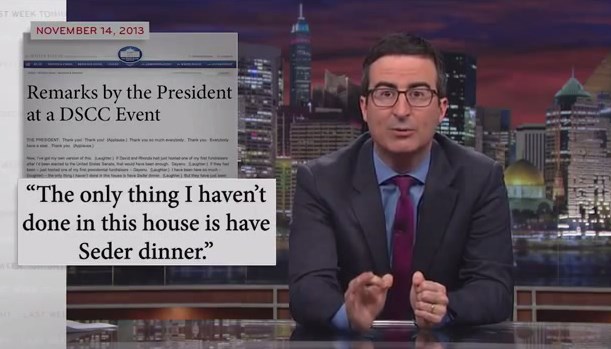
Oliver points out President Obama is very close to Comcast's top lobbyist (and Democratic fundraiser) David Cohen.

Oliver points out President Obama is very close to Comcast’s top lobbyist (and Democratic fundraiser) David Cohen.

John Oliver, host of HBO’s “Last Week Tonight,” took nearly 15 minutes out of his show last night to present a detailed and unusually apt explanation of why Net Neutrality should matter to Americans.

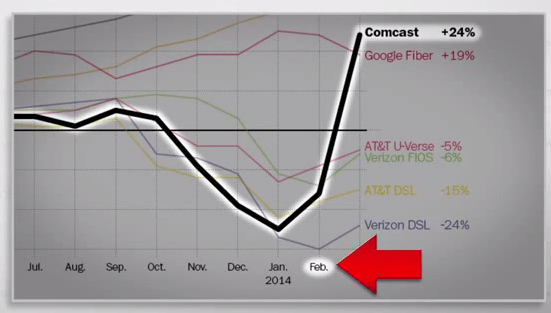
Using a timely chart depicting Comcast’s Al Capone-like Internet protection racket, Oliver showed how Netflix performance rapidly deteriorated for Comcast customers until Netflix agreed to pay Comcast for a direct connection in February. Within days, performance rebounded to new highs.

In essence, Oliver explains, Net Neutrality is about the controversy of allowing Internet toll lanes.

Oliver shows an industry mouthpiece defending the concept as a “fast lane for everybody and a hyper speed lane for others,” to which Oliver responds, “Bullsh*t!”

“If we let cable companies offer two speeds of service, they won’t be [Jamaican sprinter] Usain Bolt and Usain Bolt on a motor bike,” Oliver warns. “They’ll be Usain Bolt and Usain Bolted to an anchor.”

Oliver added he was concerned most Americans were not paying attention to the issue, proclaiming it “boring.”

“And that’s the problem. The cable companies have figured out the great truth of America: if you want to do something evil, put it inside something boring,” he said. “Advocates should not be talking about protecting Net Neutrality. They shouldn’t even use that phrase. They should call it preventing cable company fuc*ery. Because that is what it is.”

Comcast's Internet protection racket. Netflix watched customer streaming performance degrade on Comcast's network until it signed a paid peering agreement with the cable company in February.

Comcast’s Internet protection racket. Netflix watched customer streaming performance degrade on Comcast’s network until it signed a paid peering agreement with the cable company in February.

Oliver’s prescription for change is somewhat more dubious, however. He wants Internet trolls to overwhelm the FCC’s Net Neutrality comment mailbox:

I would like to address the Internet commenters out there directly. Good evening monsters, this may be the moment you spent your whole lives training for.

You’ve been out there ferociously commenting on dance videos of adorable 3-years-olds, saying things like, “Every child could dance like this little loser after one week of practice.” Or you’d be polluting Frozen’s Let It Go with comments like, “Ice Castle would give her hypothermia and she dead in an hour.” Or, and I know you’ve done this one commenting on this show: “F*ck this a**hole anchor […] ur just friends with terrorists xD.”

This is the moment you were made for commenters. Like Ralph Macchio, you’ve been honing your skills waxing cars and painting fences, well guess what? Now it’s time to do some f*king karate.

For once in your life we need you to channel that anger.

[flv]http://www.phillipdampier.com/video/HBO Last Week Tonight with John Oliver Net Neutrality 6-1-14.flv[/flv]

John Oliver’s Last Week Tonight addresses Net Neutrality to viewers who probably don’t understand a thing about it. Warning: Strong language.  (13:17)

The Invisible Rate Hike: Verizon Introduces New $0.99 “Because We Can” FiOS Voice Surcharge

Unsimplify

Unsimplify

When is a rate increase not a rate increase? When it is an “administrative surcharge” of course!

Verizon FiOS phone customers will soon find the company’s latest innovation in the form of a new line on their June bill, along with a $0.99 surcharge.

Notice of Price Increase
Effective May 17, 2014, Verizon will apply an FDV Administrative Charge of $0.99 per FiOS Digital Voice line. This monthly surcharge helps defray account servicing costs associated with providing voice services. This is a Verizon surcharge, not a tax or governmental fee. Visit verizon.com for more information.

Instead of simply raising the advertised price of the service, Verizon added a new opaque charge which they admit is nothing more than an effort to increase revenue. Prospective customers will still see Verizon’s attractive promotional pricing, but only later discover the final bill is higher once taxes, fees, and other surcharges are tacked on.

In fact, Verizon’s new FiOS Digital Voice fee is subject to taxes as well, so for some the true cost of the rate increase is $1.21.

Some angry Verizon customers are switching to Ooma, a service that asks customers to pay upfront for the hardware but offers basic telephone service for free (customers pay well under $10 a month to cover taxes that Ooma does not pocket itself.) A more deluxe option including more phone features runs around $10 a month.

One annoyed customer considers the fee an end run around consumer contract law:

My concern [is] with a regulated utility’s ability to get around a contract price by labeling an increase as an “administrative charge.”

I called their customer service line to discuss/complain.  When I asked what would prevent Verizon from using this as a vehicle to increase prices by $10 or $15, assuming Time Warner/AT&T/DirectTV raised their prices as well, he admitted that he was not aware of any restrictions.  Neither am I.

I can’t find anything in my contract with Verizon that lets them increase my price by instituting back-end increases.  I’m pursuing with government regulators and encourage you all to do so as well.  If this gets through, there will be more.

In fact, one of the reasons why Verizon loves their digital voice product so much is because it is unregulated and not subject to government oversight. They can set rates at will and their current contract allows for the addition of administrative fees without violating any “price lock” agreements. So far, most companies implementing these fees have kept them low enough to avoid provoking government scrutiny, but the number of them and their respective amounts have increased over time.

Customer recourse? Complain and ask for a credit for the administrative fee or cancel service.

Comcast Uses Offline Game to Show the Speed/Responsiveness of XFINITY Internet

Phillip Dampier June 2, 2014 Broadband Speed, Comcast/Xfinity, Competition, Consumer News, Data Caps, Editorial & Site News, Video Comments Off on Comcast Uses Offline Game to Show the Speed/Responsiveness of XFINITY Internet

comcast whoppersComcast is using an offline console game that misrepresents the speed and performance of its Internet service in its latest advertising.

Eagle-eyed game fans were annoyed to find Comcast promoting its speedy Internet service with a mall demo of Ubisoft’s Trials Fusion, a game that has no online multiplayer mode.

“If you’re a real gamer then you need the speed of XFINITY Internet,” advises a Comcast spokesman in the 30-second ad.

“Do you find that when you’re playing games online with your current service that it’s slow, a Comcast representative asks gamers.

“Yes,” says one, they do! “I get some lag,” says another.

“Do you want to try XFINITY Internet,” asks the employee.

“Sure.”

“Do you notice any buffering,” asks the employee.

“No sir.” “There is certainly no lag at all.”

The smooth game play and responsiveness looks impressive, until one realizes the game was never connected to XFINITY Internet. Without an online mode, there is no Internet connection with slow speeds and lag to worry about while playing. Games like บาคาร่าจ่ายจริง, which don’t require high-speed connections for complex graphics or fast reaction times, would run just as smoothly. The game would work just as well in the middle of a Kansas wheat field, 50 miles from the nearest DSL connection.

But Comcast’s Internet service does eventually come into play when game enthusiasts want to download software updates, which can be enormous for many titles.

XFINITY Internet does not come with infinite usage. The company is now testing a return of usage allowances tied to overlimit fees in several cities and a senior vice-president predicted Comcast will be limiting how much Internet usage customers get without paying more within five years. So while you may not notice any buffering issues when using your offline content with XFINITY Internet, the more you do go online, the closer you get to Comcast’s arbitrary usage allowance.

[flv]http://www.phillipdampier.com/video/Xfinity Internet – Gamers Tent May 2014.flv[/flv]

False Advertising: Comcast uses offline game play to prove the speed and responsiveness of their Internet service. Your Keurig coffeemaker is also 50% faster when inside a home powered by XFINITY Internet. So are your cats. (0:30)

Mooresville, N.C. Revokes Time Warner Cable’s Easement Agreements; Possible Trespass Cited

Phillip Dampier June 2, 2014 Community Networks, Competition, Consumer News, MI-Connection, Public Policy & Gov't Comments Off on Mooresville, N.C. Revokes Time Warner Cable’s Easement Agreements; Possible Trespass Cited
Mayor Atkins

Mayor Atkins

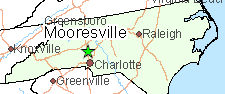
A North Carolina community concerned about alleged abuse of homeowners’ private property rights by Time Warner Cable has revoked all of the company’s easement agreements, exposing the cable operator to lawsuits from residents.

Mayor Miles Atkins observed Time Warner crews burying fiber optic lines on the property of local residents, well outside of the rights-of-way established by the local government along town-maintained streets.

The Charlotte Observer reported Atkins also personally witnessed crews burying cables outside his home — on a street where there is no right-of-way for utility companies.

Like many towns in North Carolina, Mooresville never established rights-of-way on older streets where above-ground utilities were installed decades earlier. Agreements with the owner of the utility pole governs the cables attached. In Mooresville, this generally includes electric, telephone, and two cable companies — Time Warner Cable and the community-owned MI-Connection, formerly owned by Adelphia Cable. Most rights-of-way and easement agreements in Mooresville cover buried cables.

Mooresville senior engineer Allison Kraft notified Time Warner Cable that the town has revoked all of its easement agreements with the company until Time Warner can prove it placed its buried cables only within the approved town rights-of-way.

If the cable company is found to have placed cables without permission on a homeowner’s private property, the resident can sue for damages and force the company to remove the offending line.

mooresvilleOne Mooresville resident was suspicious of the town’s motives, however.

“I’m sure the town’s ownership of a competing cable company had nothing to do with their decision,” said Mooresville resident Scott Turner.

But Charley Patterson is happy the town is taking action, suggesting utility violations of easement boundaries are rampant.

“During the building of our church’s new parking lot, we found not one but several utilities that had buried cable in areas well out of the easement boundaries,” Patterson wrote. “There were seven utilities with buried cable. Our construction progress was dramatically impacted trying to identify where and who had buried the cable. And some had the gall to try to tell us that we had to pay for them to relocate when they were 20 to 30 feet on our property, not at all in the easement.”

Search This Site:

Contributions:

Recent Comments:

Your Account:

Stop the Cap!