Home » Competition » Recent Articles:

Canceling Comcast Is Like a Bad Breakup – Listen and Cringe As Comcast Desperately Begs You to Stay

Comcast-LogoDo you remember that high school love that killed you when they decided it was time to move on? You begged, you pleaded for them to change their mind to no avail. Nothing you said made any difference.

Some people never get over that teenage tragedy… and then they go to work for Comcast’s customer retention department indefatigably browbeating departing customers in a misguided effort to salvage damaged relationships with the cable company.

Stop the Cap! reader Bryan shares with us several minutes of the Block family’s life they’ll never get back. After 10 minutes on the phone repeatedly requesting to cancel Comcast service, Block and his wife decided to record the ongoing absurdity to share with the world. The result is eight more minutes of cringing embarrassment as an increasingly exasperated retention representative repeatedly demands to know why they want to leave.

never leaveIt all sounds like eavesdropping on your roommate’s breakup with their boyfriend. Or leaving a cult. This guy just can’t understand what the heck you were thinking when you decided Comcast was no longer right for you. Block was in no mood to explain himself, but for the benefit of others, we’d love to arm you with a few reasons to explain why you don’t want anything more to do with Comcast:

“Being that we are the number one provider of Internet and TV service in the entire country, why is that you are not wanting to have the number one rated Internet service available,” the retention rep demanded to know.

Our answer: Because you want to cap our broadband experience, you charge outrageous prices for renting a cable modem, and your speed claims mean nothing if we don’t actually get those speeds because of yet another outage or service problem.

“So you’re not interested in the fastest Internet in the country,” Comcast’s rep asks.

Our answers: Sure I am, which is why I am switching to the fiber competitor that delivers those speeds -0r- Not if you are putting a usage cap on me. Who wants a Ferrari they are told can’t be driven beyond the block?

“You don’t want something that works? …So why don’t you want something that’s good service and something that works,” asks Comcast’s rep.

Our answer: Do you actually subscribe to Comcast yourself? You guys didn’t win Worst Company in America honors for nothing.

“I’m really ashamed to see you go to something that can’t give you what we can,” argues the rep.

Our answer: That’s right. My long ongoing nightmare of bad service, high prices, and usage capped Internet is finally over. See ya.

If you really want Comcast to convince you to stay, tell them you want a permanent waiver in writing from any usage limits and/or overlimit fees. Demand aggressive discounts that deliver real savings, and never take their first offer. If they can waste 18 minutes of Ryan Block’s time, you can be just as ruthless when demanding a better deal for yourself.

As Ryan indicates, this retention representative is the perfect example of how Comcast won its reputation as one of most hated companies in America.

Here’s How to Tell the N.Y. Public Service Commission to Reject the Comcast/TWC Merger

ny pscThe New York Public Service Commission needs to hear from you about the Comcast-Time Warner Cable merger. Unlike some of the southern and midwestern states that have utility commissions that basically rubber stamp the agenda of Big Telecom companies, New York’s PSC has a reputation for being tougher and more customer-oriented. But the PSC cannot act in your interest if you don’t share your views.

It is incredibly easy to file your own comments with the PSC. Nearly 2,300 New Yorkers have done so thus far, but we need to make sure they understand our serious objections to Comcast’s usage caps, its expensive service, and customer abuse.

We have provided a sample letter below. We hope you will write your own, but offer ours as a guide that includes some of our biggest concerns. We may prepare another one soon outlining other concerns.

How to file your comment:

  • E-Mail: [email protected]
  • Mail: Hon. Kathleen H. Burgess, Secretary, Public Service Commission, Three Empire State Plaza, Albany, New York 12223-1350.
  • Phone: 1-800-335-2120 (press “1” to leave a recorded comment)

All comments should refer to “Case 14-M-0183, Petition of Comcast Corporation and Time Warner Cable Inc.”

Hon. Kathleen H. Burgess
Secretary
Public Service Commission
Three Empire State Plaza
Albany, New York 12223-1350

Re: Case 14-M-0183, Petition of Comcast Corporation and Time Warner Cable Inc.

Dear Ms. Burgess,

I am writing to ask the Public Service Commission to reject the merger proposal of Comcast and Time Warner Cable on the ground the companies have failed to show such a merger would be in the best interests of New York and its residents.

Although Time Warner Cable has never been a prize, Comcast’s reputation for bad service, high prices, rationed Internet access, and customer abuse is well documented in just about every community the company serves. Comcast has repeatedly been voted the “Worst Company in America” by Consumer Union’s Consumerist.com. The American Consumer Satisfaction Index has documented so many complaints about Comcast, it declared it the worst company it has ever scored, performing even worse than the Internal Revenue Service. For more than three years running, Harris Interactive has called Comcast one of the least reputable companies in America.

That alone should be enough to reject this merger out of hand. Permitting it would reward this company’s appalling behavior towards its own customers and expose New Yorkers to an even bigger monopoly problem than we deal with now. Unless you live in a Verizon FiOS service area, cable is your only real choice for true broadband speeds. DSL is rapidly losing favor and market share and Verizon has shown no interest in expanding it.

Comcast already uses its market power to its advantage by raising prices… a lot. Time Warner Cable charges less for its services than Comcast does.

For example, Time Warner Cable offers a standard television service package that provides all the popular cable networks for one price. Comcast offers a similar package but stripped out cable networks including Cloo, CNBC World, Al Jazeera America, Discovery Fit & Health, Disney XD, DIY, a range of ESPN’s extra networks, EWTN, Fine Living, Fox Business News, Great American Country, IFC, Investigation Discovery, Lifetime Real Women, Military Channel, MLB, most of MTV’s extra networks, NBA, National Geographic Channel, NFL Network, NHL Network, most of Nickelodeon’s extra networks, OWN, Oxygen, Sundance, Turner Classic Movies, The Science Channel, and VH1′s extra networks.

Customers who want these networks, like Turner Classic Movies, National Geographic, and IFC will have to pay a stunning price of up to $86 a month — just for television. Many of these networks are especially popular with fixed income older residents, who will now face an even larger cable TV bill.

Comcast promotes the fact its Internet speeds are faster than Time Warner Cable, but that is not true as Time Warner Maxx upgrades arrive. Comcast Internet service costs more, is slower, and increasingly usage-capped. Time Warner Cable has made clear it will not limit customers’ Internet usage. Comcast has made clear it will, predicting usage limits/usage-based pricing will be imposed on customers across its entire footprint within five years. That is no improvement for New York. That is literally a downgrade. We can do better in New York with Time Warner Cable.

In fact, the company has promised extremely little to New York after winning your approval to merge. Comcast is so arrogant, it already announced it will not share any cost savings with customers, promising even higher cable bills for New York with the merger. Even its touted X1 set top system will cost New Yorkers — it comes with a steep installation price of almost $100. Again, how does this serve the public interest?

Comcast’s public service programs are also woefully inadequate. Its Internet Essentials is a bureaucratic nightmare that only provides temporary discounts to a small percentage of customers (with school age children) who need an affordable Internet option. I guess childless couples and the elderly poor don’t matter. Time Warner Cable offers a $14.99 discount program available to anyone who wants it, no paperwork or waiting periods required.

It is my understanding Comcast must prove this merger is in the public interest to win your approval. It has utterly failed to do so, and I expect my state’s Public Service Commission to reject this merger. This is one deal that can never be modified sufficiently to make it acceptable for people like myself. You are doing us no favors trying to negotiate for an Internet discount program or expanding Comcast’s service area by a small amount in rural upstate New York. The end result is that millions of New Yorkers will get worse service than we get today, at a higher price, with little/no competition on the horizon.

This is a rare opportunity for our state, which lost most of its oversight powers over the cable industry years ago. Cable operators have abused their deregulated status and have raised prices, provided dreadful customer service, and have kept competition away. Letting Comcast into New York from Buffalo to the Bronx will only encourage more abuse, wreaking havoc on New York’s growing digital economy. Let’s send a clear message to Comcast New York isn’t willing to put our broadband future in the hands of “the worst company in America.” Let’s make it clear enough is enough.

Sincerely,


Sprint Testing New Shared Data Plans, More Aggressively Priced Framily Plans to Stay Relevant

Waiting for an upgrade... Sprint Spark is the latest and fastest, but it's only in 24 cities.

Waiting for an upgrade… Sprint Spark is the latest and fastest, but it’s only in 24 cities.

Sprint may be feeling the music is about to stop and it doesn’t have a chair at the table.

While AT&T and Verizon Wireless divide up the premium market and T-Mobile goes for the aggressive price championship, Sprint is muddling along with its glacially paced upgrade to 4G LTE and a barely usable 3G experience that has a lot of customers pondering a switch. This spring Sprint lost 364,000 pre-paid and 231,000 valuable postpaid customers.

CNET reports Sprint is now seeking to follow other carriers with a shared family data plan and better pricing on both its Framily and individual plans.

Sprint may be America’s least exciting wireless carrier. While T-Mobile’s CEO gets into hot water with bombastic rhetoric about Verizon and AT&T, he largely ignores Sprint. To more than a few in the wireless industry, Sprint seems to be just plodding along.

“I will be collecting Social Security before Sprint upgrades to 4G around here,” writes suburban Sacramento resident Danny Chiang. “You just keep holding out for something better from Sprint just around the corner, but they never seem to actually get there.”

Chiang and others have endured a heavily congested 3G network while Sprint initially focused on rural and small market 4G network upgrades — hardly intuitive for loyal Sprint customers in urban areas. Today, all Sprint can claim is that it has America’s “newest network.”

Some investment analysts believe Sprint is being more conservative about spending as it navigates towards a potential merger with T-Mobile. Its Japanese owners — Softbank, have argued a combined Sprint and T-Mobile is the only way America’s third and fourth largest carriers can possibly hope to compete toe to toe with Verizon and AT&T.

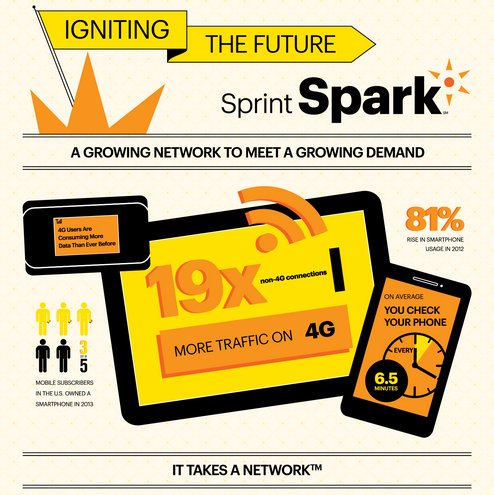
Sprint’s latest network innovation — Spark — which combines spectrum in three different frequency bands to deliver a larger data pipe, is only available in two dozen cities. Spark would be a natural showcase for Sprint’s enormous spectrum holdings. Sprint Spark combines 4G FDD-LTE at 800MHz and 1.9GHz and TDD-LTE at Clearwire’s old WiMAX 2.5GHz spectrum.

But network upgrades do no good if your customers are headed out the door to the competition. While Sprint continues to upgrade its network, it is testing a variety of new plans in different cities for a possible wider release later this year.

Shared/Family Mobile Data Plan Trials — San Diego, Portland, Ore. and Las Vegas

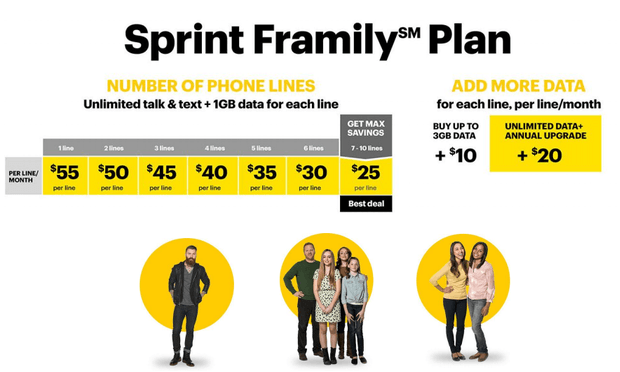
Sprint believes its Framily Plan might be too expensive.

Sprint believes its Framily Plan might be too expensive.

Data Allowance Options

  • 1GB – $20
  • 2GB – $30
  • 4GB – $40
  • 6GB – $50
  • 10GB – $60
  • 20GB – $100
  • 30GB – $130
  • 40GB – $150
  • 60GB – $225
  • No unlimited shared data option
  • Unlimited Talk/Text Phone Access Charge (required charge per phone): $25 for 1-10GB data plans, $15 for 20+GB data plans
  • Annual Device Upgrade included at no extra charge for all customers with 20+GB shared data plans (San Diego and Portland only)
  • Annual Device Upgrade Option: $5/month (Las Vegas only)

CNET points out Sprint’s plans are a better deal for heavy data users. The $20 plan for 1GB, for instance, is only $5 cheaper than a comparable AT&T plan. But the 30GB plan is $75 cheaper than AT&T’s $225 version.

Discounted Framily Plan Trials – Buffalo, Philadelphia, and Providence, R.I.

  • Starting price reduced $10 to $45/month. Add five people to your “framily” and the price drops to $25/month (two fewer people now required to get the largest discount).
  • Selecting the $20 unlimited data option automatically enrolls you in an annual upgrade plan (Buffalo and Philadelphia only).
  • Customers can choose to pay $5 extra a month for an annual upgrade option (Providence only).

New Bring Your Own Device Option for Individual Plan Trials — Chicago, Minneapolis, and West Michigan

  • Customers paying full price for a smartphone, those paying in monthly installments,  or who bring their own device to Sprint are eligible for a $50 unlimited plan or a $40 for 3GB of data per month plan. Unlimited Framily data plans usually cost $75 a month.
  • Unlimited data customers in Chicago and Minneapolis are automatically eligible for annual upgrades.
  • West Michigan customers will have to pay a $5 fee each month for their annual upgrade.

Cox Cable’s Anachronistic World of Nonsense About Data Caps: Inventing New Ways to Bill You More

Cox is behind the times.

Cox is behind the times.

While the rest of the world is moving towards gigabit broadband and unlimited access, Cox Cable continues to live in the past with a regime of data caps the company blames on increased data usage. Your only solution is to upgrade to a bigger data plan you may not want or really need.

Somehow, the folks at Cox can’t seem to manage the natural growth of the Internet while start-ups ranging from Google Fiber to a local fiber provider just getting started in our own community goes out of their way to point out how unnecessary usage limits and usage billing really are.

At Stop the Cap!, we’ll let you in on a little secret the “tech wonder twins” at Cox forgot to mention: data caps are not about managing Internet traffic, they are about managing to control costs, protect cable-TV revenue, and eventually empty customers’ wallets.

Since data caps don’t make much sense in the 21st century reality-based community, Cox attempted a longer-form rationale for data caps in a video that resembles a bad VHS copy of an interrogation by your local homicide squad. Don’t worry, only the truth gets murdered by the ironically named “Tech Talk with Todd and Sarah.” Six minutes later, you still know they’re full of it.

Tip: Next time, bring “the tech.”

[flv]http://www.phillipdampier.com/video/Cox Tech Talk with Todd and Sarah Internet Usage Trends.mp4[/flv]

What Cox still fails to understand (and what Google will have to teach them when they invade Cox’s biggest territories, including Phoenix) is that data caps and usage billing are as anachronistic as those 1978 limited edition Diana Prince/Wonder Woman glasses Sarah is still wearing. (6:17)

Sun Valley Conference Could Spark More Giant Merger Deals; Murdoch, Verizon Sniffing Around

Phillip Dampier July 8, 2014 AT&T, Competition, Consumer News, Verizon, Video Comments Off on Sun Valley Conference Could Spark More Giant Merger Deals; Murdoch, Verizon Sniffing Around
big fish

All of these media and content companies may be up for grabs.

Could Rupert Murdoch become the next owner of CNN? Will Verizon consider buying out the owner of more than a dozen cable networks, or the Walt Disney Company, owner of ABC?

Since 1983, media moguls have assembled annually in posh Sun Valley, Idaho to talk business. But never have they met while several huge consolidation and merger deals are on the table among their colleagues. Comcast acquiring Time Warner Cable and AT&T buying out DirecTV are both seen as game-changers among Wall Street bankers and the media elite, leaving many self-consciously pondering whether they are no longer big enough to stay competitive in a consolidated media world.

The Wall Street Journal and the Atlanta Journal-Constitution both report that at least one huge merger deal could emerge as a result of this week’s conference. Among the most likely buyers is FOX CEO Rupert Murdoch, who is reportedly looking to buy a major content company.

The most likely target is Time Warner (Entertainment), former owner of Time Warner Cable. After spinning off its money-losing magazine unit, TW has become much more focused on content and distribution – exactly what Murdoch is looking for. Time Warner owns New Line Cinema, HBO, Turner Broadcasting System, The CW Television Network, Warner Bros., Kids’ WB, Cartoon Network, Boomerang, Adult Swim, CNN, DC Comics, Warner Bros. Animation, Cartoon Network Studios, Hanna-Barbera, MLB Network and Castle Rock Entertainment. In fact, altogether the company owns or controls dozens of television channels which could all soon fall into the hands of Murdoch.

A Murdoch acquisition would be the last death-blow for Ted Turner’s Turner Broadcasting System, which launched CNN, TBS, and TNT and is now a division within Time Warner. Murdoch’s Fox News Channel was launched as a conservative alternative to CNN’s perceived left-leaning reporting. A Murdoch buyout would either deliver bipartisan profits to the media mogul or allow him to shut down the network or relaunch it under the Fox News brand.

Such an acquisition would not be cheap. Time Warner is worth as estimated $62 billion.

A Murdoch buyout would be especially troublesome for those already upset with corporate media consolidation. Murdoch would end up controlling three major U.S. networks – FOX, CW, and MyNetworkTV, multiple cable news channels, dozens of local television stations in major media markets, and more cable networks than most people can count. In fact, the assembled list of Murdoch-owned media properties is enormous:
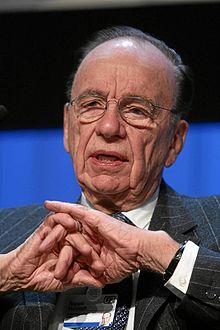
Murdoch: The next owner of CNN?

Murdoch: The next owner of CNN?

Adult Swim, Boomerang, Cartoon Network, CNN Worldwide, HLN, Inside CNN Tour & Store, TBS, TCM, TheSmokingGun.com, TNT, truTV, Turner Sports, Fox Business Network, Fox News, Star India, YES Network, Twentieth Century Fox, Fox 2000 Pictures, Fox Searchlight Pictures, Fox International Productions, Twentieth Century Fox Television, Fox Home Entertainment, Shine Group, Twentieth Century Fox Animation, The Sun, The Times, The Sunday Times, Times Literary Supplement, The Wall Street Journal, The New York Post, The Australian, The Daily Telegraph (Australia), The Sunday Telegraph (Australia), The Herald Sun, The Sunday Herald Sun, The Courier Mail, The Sunday Mail, The Advertiser, NT News, The Sunday Territorian, The Sunday Times (Australia), The Sunday Tasmanian, Mercury, Warner Bros. Pictures, Warner Bros. Pictures International, New Line Cinema, Warner Home Video, Warner Bros. Advanced Digital Services, Warner Bros. Interactive Entertainment, Warner Bros. Technical Operations, Warner Bros. Anti-Piracy Operations, Warner Bros. Television Group, Warner Bros. Television, Telepictures Productions, Warner Horizon Television, Warner Bros. Animation, Warner Bros. Domestic Television Distribution, Warner Bros. International Television Distribution, Warner Bros. International Television Production, Warner Bros. International Branded Services, Studio 2.0, The CW Television Network, DC Entertainment, Warner Bros. Theatre Ventures, HarperCollins General Books Group, HarperCollins Children’s Books Group, HarperCollins Christian Publishers, HarperCollins UK, HarperCollins Canada, HarperCollins Australia/New Zealand, HarperCollins India, FX, FXX, FXM, National Geographic Channel, Nat Geo WILD, Nat Geo Mundo, FSN, FOX Sports 1, FOX Sports 2, FOX Soccer Plus, FOX College Sports, FOX Deportes, FOX Life, Baby TV, Fox Broadcasting Company, Sky 1, Sky Atlantic, Sky Living, Sky Arts, Sky Sports, Sky Movies, Sky News, Sky Deutschland, Sky Italia, MyNetworkTV, MundoFox, FOX International Channels, Fox Sports Enterprises, HBO, HBO On Demand, HBO GO, Cinemax, Cinemax on Demand, MAX GO, HBO2, HBO Signature, HBO Family, HBO Comedy, HBO Zone, HBO Latino, More Max, Action Max, Thriller Max, 5 Star Max, Max Latino, Outer Max, Movie Max, Barron’s, MarketWatch, Factiva, Dow Jones Risk & Compliance, Dow Jones VentureSource, All Things Digital, Amplify, News America Marketing, and Storyful.

Murdoch has already shown a willingness to spend big. He has recently taken an ownership interest in the up and coming Vice Media, popular with the under 30-viewing crowd. He also spent $415 million to buy romance novel publisher Harlequin Enterprises.

But Murdoch may not be the only one shopping for a deal. The Wall Street Journal offered a shopping list:

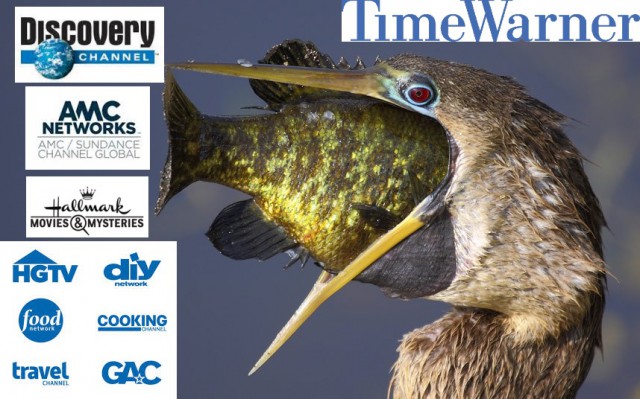
  • Small cable network owners: Nobody just owns three or four cable networks these days. Content conglomerates like CBS, Disney, Time Warner and Comcast own 15, 30, or even 40 different channels. Smaller players are ripe for the picking. Chief among them include Scripps Networks Interactive (Food Network, HGTV), AMC Networks (AMC, IFC, Sundance), and Crown Media (Hallmark).
  • Small studios: Owning a small Hollywood studio is quaint, but Wall Street investment bankers think the time is long past to sell out to larger corporate entities who can better leverage distribution of their releases, easy enough if you own your own theater chain, pay cable network, broadcast stations, and basic cable outlets.
Both phone companies are attending Sun Valley for the first time.

Both phone companies are attending Sun Valley for the first time.

In addition to buyout offers from the largest networks around, Discovery Networks is also in the mood to grow larger at the urging of its board of directors, which includes Dr. John Malone, CEO of Liberty Global. Malone is behind much of the cheerleading to consolidate the cable industry and helped spark the Comcast-Time Warner Cable deal when his partly owned Charter Communications sought a takeover of Time Warner Cable itself.

Wall Street bankers love even better the idea of selling Discovery to a new owner – Disney.

For the first time, phone companies AT&T and Verizon are also in attendance at Sun Valley, and analysts don’t believe the CEOs are there for summer vacation.

Jimmy Schaeffler, chairman of media and telecom consulting firm Carmel Group, says Verizon has been most lacking in the content ownership department and “needs something else right now” as rivals bulk up. AT&T’s acquisition of DirecTV only underlines that sentiment among many Wall Street analysts who think Time Warner (Entertainment) could be an option if Verizon isn’t outbid by Murdoch.

All of this shopping has caused alarm for some, including CNN’s media reporter Brian Stelter who declared, “I will eat my remote control … in fact, I will eat my copy of the New York Post … if Murdoch becomes the owner of CNN.” 

[flv]http://www.phillipdampier.com/video/WSJ Digits Media Consolidation 7-7-14.flv[/flv]

The Wall Street Journal’s ‘Digits’ explores the ongoing consolidation of media creators and distributors. This year’s media conference in Sun Valley could spark more merger deals. (5:02)


Search This Site:

Contributions:

Recent Comments:

Your Account:

Stop the Cap!