Home » Competition » Recent Articles:

Shaw Steamrolling Through British Columbia in “Sell To Us Or Die” Strategy

Phillip Dampier September 23, 2009 Canada, Competition, Recent Headlines, Shaw 1 Comment
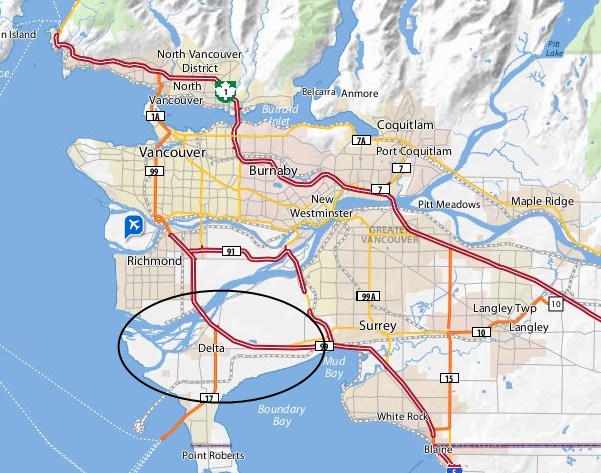
Delta, part of the Vancouver metro area, British Columbia

Delta, part of the Vancouver metro area, British Columbia

Stop the Cap! reader Rick has been educating me about some of the new-found aggression by Shaw Communications, one of western Canada’s largest telecommunications companies, in expanding its business reach across Canada.  Woe to those who get in the way.

Novus Entertainment is already familiar with this story.  As Stop the Cap! reported previously, Shaw launched fire sale pricing on its cable, broadband, and telephone services ($9.95 a month for each) and target marketed those limited special offers in and around buildings wired for Novus service.  Novus protested to the BC courts, claiming Shaw was engaged in predatory pricing behavior.

A few days ago, an Ontario court judge dismissed a suit brought by Rogers Communications against Shaw over Shaw’s plans to buyout Mountain Cablevision, a smaller cable provider serving parts of southwestern Ontario.  Rogers was upset because the purchase violated a “covenant” between the two telecom giants not to compete in each others’ service areas.

Now, Shaw’s trucks are rumbling down the roads of Delta, a community south of Vancouver,  as work begins on constructing a cable system that will directly compete against Bragg Communications’ Delta Cable.  Shaw also has won approval from the Canadian Radio-television Telecommunications Commission (CRTC) to competitively wire Ladner and adjacent neighborhoods southeast of Vancouver.

Shaw president Peter Bissonnette told industry news site Cartt.ca the wiring of Delta and Ladner comes as a result of “people there saying they would like to get Shaw.”  So now residents can look out their windows and see Delta Cable’s wiring on one side of the street and Shaw’s wires on the other.

Another success story for head-on competition leading to lower prices and more choice, right?

Not so fast.

As Cartt.ca reports (one article view is available for free, subscription required thereafter), there is a history to be considered here, and that may include another agenda beyond the “consumers wanted us so we came” explanation.

There’s a bit of history to the Delta system and Shaw, however. Back in 2006, when then-owner John Thomas decided to sell Delta Cable and Coast Cable, many assumed he would sell to Shaw. After all, Thomas was on Shaw’s board of directors. However, aware of the fact most of his employees would likely be out of work if nearby Shaw bought it, he instead surprised most by selling to what was then Persona Communications, for about $90 million.

Some months later, Persona itself was purchased for a reported $750 million by Bragg Communications, which does business, of course, as EastLink, primarily in Eastern Canada.

Cartt reports it is no secret Shaw wants the Delta region as part of its greater Vancouver service area, and the traditional route by which most cable companies do this is by buying out the incumbent provider.  Bragg Communications understands this, and has sold some of its own systems in the past, most recently in Saskatchewan.  But so far, not in Delta.

Bissonnette was cagey when asked if Shaw had pursued the buyout route, which is always cheaper than overbuilding an area with all new wiring.

“They know what we are doing. There’s always more than one way to skin a cat you know,” he said.

If Shaw adopts the same aggressive strategy in Delta they have used against Novus in downtown Vancouver, it will likely make Delta’s current cable system unprofitable.  Bragg would be forced to consider either engaging in a sustained price war, something Shaw is in a better position to handle because of revenue earned from non-competitive areas, or eventually sell the Delta Cable system at a fraction of its original value.

For comparison, Delta Cable charges $26 a month for analog basic cable plus $26.95 a month for a robust digital channel package.  Broadband service, with a 62GB usage cap is $39.50 per month.  They don’t seem to offer telephone service.  Shaw promoted a digital/basic combination package in downtown Vancouver for $9.95 a month and broadband for an additional $9.95.  Shaw to Delta Cable: Compete with that.

For a time, up to 28,000 households in the area may enjoy some benefits from a sustained price battle, unless Bragg capitulates and sells out early, but in the end, if Shaw engages in the kind of allegedly predatory pricing it has in downtown Vancouver against Novus, the benefits will be short-lived, and Shaw always has time to make up the difference down the road.


HissyFitWatch: Shaw & Rogers Non-Compete Agreement Tossed, Allowing Shaw Acquisition of Mountain Cablevision

Phillip Dampier September 21, 2009 Canada, Competition, HissyFitWatch, Recent Headlines, Rogers, Shaw 4 Comments
Who Dares to Break the most sacred Ark of the Cable Covenant?

Who dares break the most sacred Ark of the Cable Covenant?

In March 2000, two cable magnates sat down for the cable industry equivalent of My Dinner With Andre.  Fine wine, beautiful table linens, an exquisite meal, and a Monopoly board with pieces swapped back and forth representing hundreds of thousands of Canadian consumers.  Ted Rogers and Jim Shaw drew a line on the western Ontario border and agreed to stay on their respective sides of it.  Ted and Jim divvied up each others cable interests, swapping Rogers’ systems west of Ontario with Shaw’s systems east of the provincial line. Thus was born the Ark of the Cable Covenant, with its founding principle: Thou shalt not compete or intrude in my territory.

The only question left at the end of the meal was who was going to pick up the check.  You did.

And so it was.  Since 2000, Shaw Communications has kept its operations west of Ontario, Rogers stays in Ontario and points eastward.  A very nice state of affairs, as long as you are not a Canadian consumer looking for competitive relief from high prices and lousy service.

Shaw Raids Ontario

Shaw Raids Ontario

But in July there was heard a great rumbling across the prairies and into the verdant forests and rolling hills of southwestern Ontario.  What was that sound?  Who were these cowboy hat wearing hordes riding across the lands to the shores of Lake Ontario carrying saddle bags stuffed with cash?  Why look, Calgary-based Shaw is staging a $300 million dollar buyout raid on Mountain Cablevision, Ltd., a 41,000 subscriber independent cable company based in Hamilton, Ontario.

But what of the sacred agreement?  Ted Rogers passed away in December, leaving Shaw to rhetorically ask, “What agreement? Do you know anything about an agreement?”

Indeed, there is no honor among thieves and cable executives seeking the spoils of a highly uncompetitive industry.  Rogers was shocked to discover an invasion on their turf, and they responded with a torrent of attorneys to block the deal, as Canwest News Service notes:

“Shaw is bound by the restrictive covenant which prohibits Shaw from building or acquiring any broadband wireline cable business in Ontario, Quebec or Atlantic Canada,” Rogers argued in court documents released Thursday.

Thankfully for Shaw, Ontario courts do not typically recognize “covenants” as sacred documents not to be broken.  Justice Frank Newbould on the Ontario Superior Court of Justice rejected the de facto non compete agreement and said Rogers had not proven any irreparable harm from the sale, dismissing Rogers’ “proof” as “speculative in the extreme.”

Of course, you realize this means war.

Tim Pinos of Cassels, Brock & Blackwell LLP is Rogers’ lead lawyer on the file. Shaw’s intentions are clear, he said Friday: “Shaw desires to re-enter Eastern Canada and acquire cable systems.”

Aside from picking a competitive fight with Rogers, an expansion east would pit Shaw against smaller but powerful players, such as Videotron, which is owned by giant Quebecor Inc., and commands a near-monopoly in Quebec.

With the agreement shattered, Rogers is likely casting its eyes westward, observers say.

Earlier this week, Edward Rogers was appointed to the role of deputy chairman of the company his father built. He moves from heading up Rogers Cable and will also oversee new operational responsibilities, including strategic acquisitions.

Unfortunately for consumers, some sacred agreements will remain unbroken.  Namely the one that keeps companies like Shaw and Rogers from competitively wiring communities already served by each other and competing head to head.  That simply wouldn’t do.  It would ruin a perfectly delightful meal.

The Devil Is In The Details: FCC Chairman Julius Genachowski Speaks About Broadband to Consumers

Phillip Dampier

Phillip Dampier

FCC Chairman Julius Genachowski recorded a YouTube video to talk to Americans about the development of a national broadband plan for the United States.

In optimistic, flowery language, Genachowski invited Americans to submit their ideas and suggestions not only regarding broadband, but also the priorities Americans think the FCC should have in the future.

The most important part of the five minute video comes right in the beginning when Genachowski called broadband critical to the nation:

“Broadband is our generation’s major infrastructure challenge. It’s for us what railroads, highways and electricity were to past generations.”

<

p style=”text-align: center;”>

Genachowski would do well to remember America’s experience with all three of these important history lessons.  The broadband plan Genachowski envisions is subject to the same type of intrusive, anti-consumer tactics that wreaked havoc on past generations of consumers.

The railroad industry’s cartel of ownership and control is a familiar tale.  The Rise of Monopolies tells the story:

The need for all of these industries to stay successful was worrisome for railroad owners. To avoid the loss of production in any of these areas, large corporations attempted to stabilize their situations by pooling markets and centralizing management. By combining all of the fields into one conglomeration, the railroads had a new power, as they acquired control of many facets of the new economy. This body now had the ability to “squeeze out competitors, force down prices paid for labor and raw materials, charge customers more and get special favors and treatments from National and State government” (Chalmers). The railroads had all the power, because they controlled all the prices. Since the new residents of the West could not survive without the use of the railroads, they were forced to pay whatever rates the railroad companies set.

With these huge stores of capital, the railroad companies were able to finance political campaigns through whatever and whomever was needed in government. With this control in Washington, there was no way to stop the overwhelming control of this industry over society. The entire nation was subject to the whims of this monopoly.

It took direct government intervention to break up the railroad monopoly and protect consumers and businesses from the abusive practices of a transportation industry that can make or break you based on pricing and service, with little competition.

Public highways became an important asset that still pays off today.  The Eisenhower Administration’s deployment of the interstate highway system, at the size and scope required, would not have been accomplished by the private sector on its own.  Today’s federal highway system is largely self sustaining through the collection of gasoline taxes paid by drivers.

As Americans struggle with several incumbent providers that refuse to provide 21st century broadband technology, with little competition to drive that infrastructure investment, an uneven variety of broadband networks have emerged, from fiber to the home in some areas to an indefinite reliance on aging DSL slow speed technology for millions of rural Americans, or worse, inadequate satellite broadband.

It may be time to consider the same kind of national approach with a publicly owned fiber network private providers of all kinds can use to serve customers with a uniformly high speed, high quality user experience.

Electricity and the development of rural America is another very familiar tale to any rural broadband user.  From TVA: Electricity for All:

Although nearly 90 percent of urban dwellers had electricity by the 1930s, only ten percent of rural dwellers did. Private utility companies, who supplied electric power to most of the nation’s consumers, argued that it was too expensive to string electric lines to isolated rural farmsteads. Anyway, they said, most farmers, were too poor to be able to afford electricity.

The Roosevelt Administration believed that if private enterprise could not supply electric power to the people, then it was the duty of the government to do so. Most of the court cases involving TVA during the 1930s concerned the government’s involvement in the public utilities industry.

In 1935 the Rural Electric Administration (REA) was created to bring electricity to rural areas like the Tennessee Valley.

Many groups opposed the federal government’s involvement in developing and distributing electric power, especially utility companies, who believed that the government was unfairly competing with private enterprise. Some members of Congress who didn’t think the government should interfere with the economy, believed that TVA was a dangerous program that would bring the nation a step closer to socialism. Other people thought that farmers simply did not have the skills needed to manage local electric companies.

Any community wrestling with a municipal broadband project to provide service the private market refused to offer is already acquainted with this familiar story.  So are many rural consumers who are waiting, and waiting, and waiting, for the private market to bring broadband to their communities.  Unfortunately for them, the private market has already written them off as “not profitable enough” to provide service.

The electrification of America did not lead to a socialist takeover of America.  It led to the development and sustainability of rural communities and their local economies.  Agriculture remains one of America’s most important success stories, and without widespread electrification, this story might not have been written.

Scare tactics and horror stories have come whenever a private monopoly or cartel faces the threat of competition, regulation, or a municipal option to provide needed services communities are denied by the private sector.

The fear mongering was there when the railroad monopolies faced investigation and regulation, the “socialism” scare was heard when government attempted to undertake public infrastructure projects of many kinds from highways to utility service, and the same kinds of rhetoric is heard today about “socialist takeovers of the Internet” and “municipal broadband unfairly competes with private providers,” and the logical opposite “the government can’t do anything right.”

Unfortunately, the FCC has a long history of cozy relations with lobbyists who understand how to work within the agency’s nearly-impenetrable bureaucracy.  A review of the broadband plan submissions to the FCC reveals a large  number of them come from lobbying groups and the providers themselves.  Most consumers were left typing comments into a box on the web submission form, with every indication those remarks will be deemed “not serious” by FCC staff.

This time, Chairman Genachowski has to show more than a YouTube video inviting consumers to share their input.  We’d like actual evidence the consumer point of view is actually being taken seriously for a change, and is not simply one tiny noise drowned out in a loud crowd of special interests with profit agendas to protect and public policy to influence.  The FCC already knows what consumers want: widely available, fast, reasonably priced broadband free from Internet Overcharging schemes protected with robust Net Neutrality policies enforced by law.

If the existing providers want to erect roadblocks to competition, oversight, and hell-or-high-water-broadband-deployment, it’s time to break them up and get them out of the way.  That’s broadband we can believe in.

Moving Towards Flat Rate Mobile Phone Calling Helps Deflate “Pay For What You Use” Broadband Pricing Argument

Phillip Dampier September 14, 2009 Competition, Data Caps, Editorial & Site News 6 Comments

All-you-can-eat buffets, steak dinner vs. salad check splitting, electric and water service meters, toll highways with trucks vs. Mini-Coopers….  The justifications for Internet Overcharging representing “fairness” in broadband pricing have involved just about every analogy the broadband industry can come up with, all designed to make you think sticking a bigger bill to someone else down the street will somehow make your broadband bill smaller.

To convince sucker people into “billing fairness” that doesn’t actually reduce your pricing but could dramatically increase it is a tricky proposition.  To make it work, they have to convince you of a broadband boogeyman up the street who is using up all your Internet and making you pay for it.

As the Re-Education effort continues among the astroturfer and industry PR crowd, the one service broadband providers strenuously avoid comparing themselves to is your local telephone or cell phone provider.  That’s ironic, considering telephone companies move your calls around much the same way Internet traffic moves from point to point.  It’s the closest comparative service around, but your Internet provider doesn’t dare use it in their analogies, because the entire argument for Internet Overcharging schemes falls apart when they do.

While some in the broadband industry want to take your flat rate pricing away, the telephone and cell phone industry is working harder and harder to move to flat rate pricing. Many traditional phone companies now peddle their own unlimited nationwide calling phone plan for $20-40 a month.  Even some of the same broadband providers that want to take away your unlimited broadband service continue to mail blizzards of postcards and saturate the airwaves with marketing for their “talk all you want” unlimited phone plans.

In the mobile phone industry, an all-out price and feature war has erupted, as providers offer practically unlimited local and long distance calling.  No more buckets of minutes to count, no more overage penalties, no more worries about putting off calling until the evening or weekends to protect your minute allowance.

In the past week, major providers have fallen all over themselves with new unlimited calling plans.  Let’s take a look at today’s mobile calling landscape:

cing_logoAT&T: Last Wednesday, AT&T launched A-List, primarily in response to Sprint’s new Any Mobile, Anytime (see below).  A-List lets customers add up to five numbers on an individual plan or up to 10 shared numbers on a FamilyTalk plan for unlimited calling to and from any phone number in the United States.  The new feature begins September 20, and customers can change their A-List members at any time.  Since customers often make the vast majority of their calls to a select group of people, it’s easy to get virtually unlimited calling that doesn’t exhaust your minute allowance.

boostmobileBoost Mobile: Back in January, Boost Mobile, the prepaid mobile phone service using the Nextel system (certain areas also provide Boost on Sprint’s network), launched a $50 unlimited calling plan that also includes unlimited handset data use, unlimited text messaging, unlimited walkie-talkie use, no roaming, no hidden fees, no contract and no credit check.

cricketwirelessCricket: Cricket has always had a business plan catering to the prepaid user looking for generous or unlimited calling.  The company heavily emphasizes its package bundles, such as their $45 monthly plan that offers unlimited calling, unlimited text, video and picture messaging, unlimited mobile web browsing, and free 411 service.  The downside is their more limited coverage area, operating primarily for customers in urban and adjacent suburban areas, and providing almost no rural coverage at all.

metropcsMetroPCS: Similar to Cricket, MetroPCS aggressively prices unlimited calling plans and bundles in its more limited service areas.  For $40 a month, customers enjoy unlimited long distance calling, unlimited text and picture messaging, and web access.  That pricing is comparable to many wired phone lines with a package of phone features without unlimited long distance.  MetroPCS operates with a similar approach to Cricket – provide good coverage in the urban and suburban areas they focus service on, but usually ignores rural or more distant suburban areas.

platinumtelPlatinumTel: Operating on the Sprint network, PlatinumTel is another prepaid provider offering unlimited calling, but with some important differences.  For $50 a month, customers enjoy unlimited calling to any domestic phone numbers, unlimited text messaging, etc.  But the service also provides unlimited roaming off their network, so if you get outside of Sprint’s coverage area, but are able to get a signal from another provider, you can still make and receive calls without incurring huge roaming fees.  You also get 100MB of included data (a small additional fee adds more data).

straighttalkStraight Talk (from TracFone): If you’ve been to Walmart, you have probably seen TracFone phones and prepaid top-up cards at their stores.  TracFone is another provider that operates on someone else’s cellular network.  Their Straight Talk service operates on the robust Verizon Wireless network, providing excellent coverage in most areas except most of Kansas, Nebraska, Nevada, Mississippi and western Texas.  A $45 monthly fee brings unlimited minutes and text messages, but only 30 megabytes of data for data-enabled phones.

sprintnextelSprint Nextel: Already offering unlimited calling to other Sprint mobile customers, the third largest national mobile phone company last week introduced Sprint Any Mobile, Anytime. It allows you to call and receive calls from any cell phone on any network in the USA unlimited for free. You’re not limited to just one network or one calling circle. The feature is now automatically added to the Sprint Everything Data plans starting at either the $69.99. The plan also comes with unlimited text messaging and data. The new Any Mobile, Anytime will be especially popular with younger people who have already abandoned traditional landline telephone service and rely exclusively on mobile phones.  You literally cannot exhaust your minute allowance calling these people.  In fact, the only way to burn your minutes under this plan is to roam outside of Sprint’s network or call people on traditional wired phone lines.

tmobileT-Mobile: T-Mobile offers the myFaves Minutes plan, which gives customers unlimited minutes to any five numbers of your choice on any network, mobile or landline (excludes toll-free/900 numbers).  It’s easy to use T-Mobile as an unlimited wireless phone provider assuming the majority of your minutes are spent talking to up to five numbers every month.

Verizon-Wireless-LogoVerizon Wireless: Already offering unlimited free calling to other Verizon Wireless customers (there are a ton of those), the company also introduced Friends & Family in February. With an eligible plan, customers have unlimited calling to a select group of numbers outside their standard mobile-to-mobile calling group, including landlines. This gives single line accounts up to 5 numbers to choose from on plans with 900 or more minutes, and family plan accounts up to 10 numbers to choose from on plans with 1,400 or more minutes.

virgin-mobileVirgin Mobile: Virgin Mobile relies on Sprint’s network, and with Sprint Nextel’s planned purchase of Virgin Mobile, which the company hopes to complete this November, it may soon become Sprint Nextel’s in-house prepaid service.  Virgin Mobile introduced its Totally Unlimited calling plan on April 15.  For $50 a month, customers get unlimited calling.  For an additional fee, unlimited texting is added, along with mobile data options.

It’s difficult, at best, to make the kind of analogy the broadband industry wants to regarding “paying for what you use” when one of their closest cousins is competing hard to give you “all that you want for one price.”

Update: 9/15 — Jayne Wallace, a representative for Sprint Nextel, wrote to clarify “Sprint Nextel has not yet purchased Virgin Mobile…we do expect the deal to close in November. As of now, we are publicly held. Also since you mention broadband, we’ve also applied the pay as you go pricing here with Broadband2Go, the only nationwide prepaid broadband product available.”  The article text under Virgin Mobile has been adjusted to reflect the planned purchase.

It Begins: Wall Street Analyst Calls for Comcast & Time Warner Cable to Merge

Phillip Dampier September 10, 2009 Comcast/Xfinity, Competition 8 Comments
Bazinet

Bazinet

Citigroup media analyst Jason Bazinet is among the first Wall Street investment analysts to call for the mother of all cable mergers – Comcast snapping up control of Time Warner Cable, respectively the nation’s largest and second largest cable operators.  Comcast reported having nearly 23.9 million customers at the end of June; Time Warner Cable said it had about 13 million customers.

In a research note issued today, Bazinet argued that a merger would result in major cost savings for both operators, including $1.6 billion dollars in savings possible from volume discounts for cable network programming to $1.1 billion in savings from employee layoffs, reduced marketing expenses, technical and customer service support, billing, and combining equipment purchases, among other things.  The total net present value of the synergies would come to around $11 billion to $12 billion. That’s not far from Time Warner Cable’s current market value of about $14 billion, according to The New York Times.

A super-sized Comcast would also be able to leverage lower prices when competitively necessary to keep a price advantage over satellite television and telephone company TV, according to Bazinet.

Both Time Warner Cable and Comcast have not publicly indicated any interest in combining forces.  Aside from the regulatory headaches probable from a more skeptical Obama Administration that might aggressively counter such a merger, Comcast Chief Operating Officer Stephen Burke questioned whether the cost savings were anywhere near as high as Bazinet speculated.

Multichannel News quoted Burke:

“We would like to get bigger if the economics were right,” Burke said. “Its pretty hard for me to see how there would be synergies on the programming side or on the hardware side when you go from 24 million subscribers to 27 [million] or 30 [million].”

Time Warner CEO Glenn Britt refused comment.

Still, Wall Street investors were interested.  Time Warner Cable stock shot up 3.5% this afternoon, while Comcast’s rose just a few cents during afternoon trading.

Search This Site:

Contributions:

Recent Comments:

Your Account:

Stop the Cap!