Home » Competition » Recent Articles:

Hill Country About To Get Fastest Internet in South Texas: Non-Profit Co-Op Provides Fiber That Bigger Providers Won’t

Phillip Dampier December 16, 2009 Broadband Speed, Competition, GVTC Communications, Video 6 Comments

GVTCGVTC Communications yesterday launched 40Mbps service across its service area — the Hill Country north of San Antonio — marking a new broadband speed achievement for south Texas.

The company providing the service is about to reap the rewards of a $35 million investment in a fiber-to-the-home network reaching 80 percent of customers in North San Antonio and the Hill Country.  The new premium speed tier bests the company’s current 20Mbps service, and also includes 10Mbps upstream speed for $89.95 a month with a contract.

GVTC says it can deliver even faster speeds, upwards of 100Mbps, but wants to see what kind of demand they have for 40Mbps service first.

GVTC’s speeds will leave San Antonio’s Time Warner Cable and AT&T U-verse customers drooling.  GVTC speeds achieve nearly twice the speed of either provider, and leaves them in the dust when comparing upload speeds.  The company provides true fiber connections straight to customer homes, not the fiber-copper systems both cable and AT&T rely on.

[flv width=”480″ height=”380″]http://www.phillipdampier.com/video/GVTC-FTTH 12-10-08.flv[/flv]

GVTC Communications explains the benefits of fiber to the home service.  (4 minutes)

GVTC believes upstream speeds are particularly important for the area’s small businesses, as well as families with multimedia to share.

AT&T U-verse last week announced a speed upgrade to 24Mbps service in San Antonio, but their upstream speed tops out at 3Mbps.  Time Warner Cable currently provides San Antonio customers up to 15Mbps service with 2Mbps upstream speeds.

Time Warner Cable spokesperson Jon Gary Herrera said the company will respond with an upgrade to DOCSIS 3 in San Antonio as soon as the first half of 2010.  The upgrade, dubbed “Wideband” in marketing materials, will provide connections up to 50Mbps downstream and 5Mbps upstream.

[flv width=”320″ height=”260″]http://www.phillipdampier.com/video/KSAT San Antonio – Boerne Gets Wired 9-13-07.flv[/flv]

On September 13, 2007 KSAT-TV San Antonio ran this report about Boerne getting new fiber optic access through GVTC.  (2 minutes)

That GVTC Communications was able to handily beat both AT&T and Time Warner Cable in both product offerings and fiber optic deployment may be a result of the company’s status as a non-profit cooperative.  The more revenue the company brings in, the more the company returns to its customers in the form of Capital Credits.  GVTC has always been a major innovator in Texas, being the first phone cooperative in Texas to launch cable television service in the 1980s and the company began using fiber in the 1990s.  The company’s service area spans 2,000 square miles and eleven counties, some rural.  Despite questions about whether wiring rural customers would provide sufficient return, the company went ahead with the project anyway, which today permits the cooperative to enjoy revenue from telephone, television, and broadband service.  It also permits many of their less-urban customers to enjoy the same level of service as the “big city folks.”

AT&T Damage Control: Running an Internet Overcharging Re-Education Campaign

Phillip Dampier December 14, 2009 AT&T, Competition, Data Caps, Editorial & Site News 2 Comments

dampier1AT&T Mobility has been sending out their blogger team to try and clean up the damage from CEO Ralph de la Vega’s not-too-subtle hint that the days of unlimited iPhone data plans are numbered:

Unfortunately, there has been a lot of misinformation, rumor and pure speculation floating out there during the last day on this topic.

[…]

We carry more smartphone data traffic than any other U.S. provider, with traffic growing 5,000 percent over the past three years. As a result, we are working aggressively and investing heavily in our network to support this tremendous growth. Our $17 – $18 billion CapEx spend for 2009 includes:

  • Nearly doubling the wireless spectrum serving 3G customers in hundreds of markets across the country, using high-quality 850 MHz spectrum.  This additional spectrum expands overall network capacity and improves in-building reception.
  • Adding about 2,000 new cell sites, expanding service to new cities and improving coverage in other areas.
  • Adding about 100,000 new backhaul connections, which add critical capacity between cell sites and the global IP backbone network.  We’re doubling the number of fiber-served cell sites this year.
  • Enabling widespread access to our Wi-Fi network – the largest in the country with more than 20,000 hotspots in all 50 states – allowing them to take advantage of the best available AT&T mobile broadband connection.
  • Rolling out even faster 3G speeds with deployment of HSPA 7.2 technology, with availability in six markets planned by the end of the year.
  • Preparing for field trials of next generation, LTE wireless networks next year, with deployment planning to begin in 2011.  This schedule aligns with industry expectations for when a wide variety of compatible 4G wireless devices should be available.

We have seen very positive results from our efforts thus far.  In one of the most common measures of reliability – dropped calls – AT&T’s national performance is within two-tenths of 1 percent of the highest score among major providers as measured by an independent firm, with only 1.32 percent of calls dropped nationally.

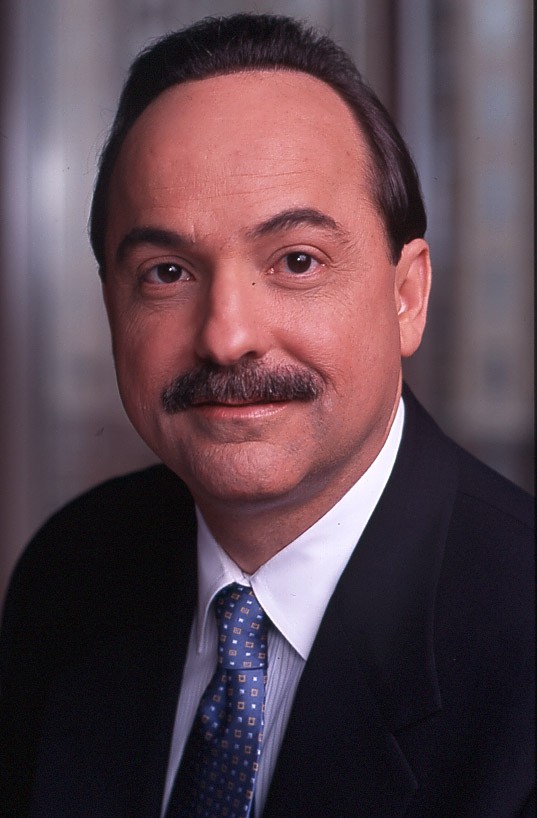
Ralph de la Vega

Ralph de la Vega

AT&T’s blogger team says it isn’t true that de la Vega is definitively saying he’s “capping” services.

But de la Vega never said in his original statements that he was advocating “capping” service.  He said, “there’s got to be some sort of a pricing scheme that addresses … usage.”  Scheme is right.  That’s code language for consumption or usage-based billing, something the blogger team doesn’t rule out.  A strict usage cap simply says a customer cannot exceed a specified amount.  Most consumption billing schemes monetize data consumption, not with a true pay-for-use system that bills by the megabyte, but rather a fixed monthly price with an allowance and overlimit penalties for exceeding it.  AT&T already uses consumption-based billing for its prepaid and postpaid mobile broadband plans, so extending it to the iPhone isn’t exactly novel.

The iPhone customer has been treated as a profit engine by AT&T since the phone was first introduced.  Compelling customers to purchase a mandatory data plan that was originally priced at $20 and was raised to $30 was the price iPhone customers had to pay for bragging rights.  Should AT&T impose consumption billing, that price may go much higher.

AT&T must believe iPhone users are willing to pay that price or dramatically cut usage.  Either way, AT&T milks the very last nickle out of its exclusivity arrangement that some industry observers believe will expire in the early summer of 2010.  When that happens, AT&T must be quietly pondering what customers will do once they can buy an iPhone from other carriers.

Leafing through January’s issue of Consumer Reports, I find one possible answer in the magazine’s annual survey of America’s best and worst cell phone providers (subscription required for detailed results).  More than 50,000 subscribers rated their wireless carrier, and AT&T turned in dismal ratings, usually ending up at the bottom except in some cities where Sprint achieved that dubious honor.  AT&T’s problems, reported in cities from coast to coast:

  • No service where service should exist
  • All circuits busy
  • Dropped calls
  • Static

Results have been so poor, the magazine recommended that those affected should call AT&T and demand credit.  Many customers have gotten at least three months’ worth of service credits valued at more than $200 for doing so.

Logical conclusion: customers love the iPhone but hate the network it is tied to.  With de la Vega’s recent data usage temper tantrum, it’s just one more reason to be annoyed with AT&T.

For customers who entertain the notion of owning an iPhone, but simply refuse to leave their current provider to obtain it, that’s nearly $3,000 left on the table over the life of a two-year contract.  That should concern both Apple and AT&T.  For Apple, it means potentially losing new iPhone customers to impr0ved competing phones, such as those running Google’s Android operating system.  For AT&T, once the Berlin Wall of exclusivity falls and two year contracts expire, years of consumer frustration with their network could lead to a stampede for the exits.

More Holiday Fun With Verizon, AT&T, And Others

Phillip Dampier December 11, 2009 AT&T, Competition, Verizon, Video, Wireless Broadband Comments Off on More Holiday Fun With Verizon, AT&T, And Others

While Verizon Wireless and AT&T Mobility have settled their differences in the courtroom, agreeing to withdraw mutual lawsuits against one another over their advertising claims, the war on the airwaves continues.  We had some good response to the last round of ads and lots of people dropping by to watch them, so it’s time for another round of fun.  Most of the ads will appear below the page break, so be sure to select Continue Reading… to see the entire article.

In North America, the holiday season is  -the- time of the year to move mobile phone products.  They are a perennial favorite for gift giving and providers know it, so they pull out all of the stops on advertising.  Verizon Wireless upped the ante this year by vilifying AT&T’s 3G coverage areas to gain a competitive advantage.  A clearly stung AT&T has since struck back with Luke Wilson, going all out to challenge Verizon’s map claims with postcards and marbles, as well as a website to de-fang Verizon’s map comparisons.  We’re even back to AT&T taking pot shots at Verizon over those “milky minutes” that expire at the end of the month.

[flv width=”640″ height=”380″]http://www.phillipdampier.com/video/ATT Marbles.mp4[/flv]

Verizon Wireless is full of marbles in AT&T’s view.  Luke Wilson tries to do damage control over Verizon Wireless calling out AT&T’s 3G map coverage.

… Continue Reading

AT&T U-verse Celebrates 2 Million Customers With New 24Mbps Speed Tier in Austin, San Antonio, and St. Louis

Phillip Dampier December 9, 2009 AT&T, Broadband Speed, Competition 5 Comments

att truckAT&T’s hybrid fiber-copper wire U-verse system added its 2,000,000th customer today and has announced a new speed tier in three of the company’s markets: Austin and San Antonio in Texas and St. Louis, Missouri.

The new High Speed Internet Max Turbo plan signals two things about AT&T’s broadband service — it can squeeze a bit more speed out of its more advanced VDSL network and it’s running out of clever names for its premium speed tiers.  The new plan is capable of achieving up to 24Mbps downstream and 3Mbps upstream, which is still not enough to compete with Time Warner Cable and Charter Cable’s DOCSIS 3 cable modem technology, but could be enough for many consumers.  The new plan is priced at $65 a month for residential customers who also receive other AT&T services, and $95 a month for business customers.  Many small business customers choose DSL service over cable modem technology because of installation costs, which can be prohibitive if an office park is not already wired for cable service.

AT&T added one million new customers in 2009 across 22 states where it provides service.  U-verse is still a work in progress in many areas where AT&T is slowly upgrading its facilities to deliver service. U-verse competes primarily with cable televisi0n, using a “bundled service” approach that tries to sign up customers for a complete line of telecommunications products.

Besides the alternative cable television service AT&T provides, more than 90% of customers also take U-verse’s broadband service.  It’s a major improvement over AT&T’s traditional DSL service, which is much slower and less reliable in providing promised speeds.

A U-verse installer wires up a new customer's home for service

A U-verse installer wires up a new customer's home for service

AT&T counts these milestones for 2009:

  • Launched 13 U-verse TV apps, bringing the total number of TV apps to 21 and giving U-verse TV customers control and interactivity with their favorite content. Two of the most recent app additions include Multiview, which lets you watch up to four channels at one time on your TV screen; and Santa Tracker, which lets families visit the North Pole to play holiday games, listen to sing-a-longs, follow Santa around the globe on Christmas Eve and more.
  • Added more than 25 High Definition (HD) channels, bringing the U-verse TV HD channel lineup to more than 110 HD channels in every U-verse TV market. AT&T claims U-verse offers more HD channels than major cable providers in every U-verse TV market.
  • Enhanced the company’s Digital Video Recorder to include Mobile Remote Access for the iPhone, an app that allows you to schedule and manage DVR recordings and search U-verse TV program listings from your iPhone. AT&T also added the capability to schedule and delete recordings from any U-verse connected TV in the home.
  • Improved speeds on its broadband service by launching Max Turbo. AT&T also upgraded U-verse High Speed Internet Max customers by increasing speeds from up to 10 Mbps to up to 12 Mbps — a 20 percent speed increase at no extra charge.
  • Expanded U-verse availability in the Southeast region. U-verse TV is now available in all 22 states of AT&T’s traditional footprint, and the advanced fiber network passes more than 20 million living units.
  • Ramped U-verse Voice availability. U-verse Voice is now available in all 120 markets that offer U-verse TV, giving consumers another option for their home phone services and more quad-play integrated features.

iPhone Users: Your Unlimited Ride Pass on AT&T Is About to End

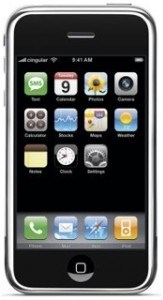
Apple iPhone

Apple iPhone

AT&T Mobility, the still-exclusive provider of Apple’s iPhone in the United States, is floating trial balloons about the imminent end of “unlimited data” plans for iPhone customers.  Although the company has always defined their wireless broadband service as “unlimited” even though the fine print says they really mean “up to 5GB of usage per month,” the mandatory data plan forced on iPhone customers has retained its “unlimited means unlimited” definition.  We’ve never verified a customer thrown off of AT&T’s network for using too much data on their iPhone.

AT&T has managed the iPhone as both a success story and a major challenge to its network.  People will go to all sorts of trouble to acquire and keep an iPhone, including putting up with less 3G coverage and more congestion-related dropped calls and other service problems in some larger cities.

Considering the enormous revenue boost the iPhone has brought to AT&T, customers might wonder why the company simply doesn’t pour additional money into building more network capacity.  AT&T Mobility CEO Ralph de la Vega doesn’t agree.

He believes the answer isn’t going to be found in just upgrading AT&T’s network.  Instead, he wants to implement an Internet Overcharging scheme like consumption billing and do away with the “unlimited” plan altogether.

AT&T claims that three percent of smart phone customers consume 40 percent of network capacity, a substantial percentage if compared with the amount of data a mobile broadband dongle can help a laptop or netbook consume.  Of course, those numbers are AT&T’s and do not come with independent verification.

For de la Vega, consumption pricing “is inevitable.”  That allows AT&T to reduce demand on its network and manage upgrades at a level more comforting on that quarterly financial report.

“What’s driving [high] usage are things like video or audio that plays around the clock,” de la Vega said at an analysts conference. “We have to get to those customers and get them to recognize they have to change their patterns, or there are things we will do to change those patterns.”

Customers forced to ration their usage with the threat of a higher bill can work… for AT&T.

AT&T may be about to test the limits of the iPhone enthusiast.  After all, they’ve already been pushed into a two year contract for a premium-priced phone, enrolled in a high priced service plan with a compulsory data package add-on, and have to live with AT&T’s less-than-stellar coverage in several areas.  Will AT&T be able to punish its customers further by taking away their unlimited data plan and replace it with consumption billing and see if they’ll break?

We’re likely about to find out.

AT&T wants to embark on a part-conservation, part-education campaign to get customers to reduce usage.

“We need to educate the customer … We’ve got to get them to understand what represents a megabyte of data,” de la Vega says. “We’re improving all our systems to let consumers get real-time information on their data usage.”

That’s the AT&T version of the gas gauge, the usage meter that means more profits for them and less service for you.

A question customers might want to ask Apple and AT&T: If the sole provider of the iPhone in the United States is a hard luck case of an over-congested network and an inability to invest profits to expand it, perhaps it’s time that exclusive contract comes to an end, allowing other mobile providers to ‘share the burden.’  Then customers can decide if AT&T’s rationing, consumption billing, and education campaign is right for them.

Search This Site:

Contributions:

Recent Comments:

Your Account:

Stop the Cap!