Home » Competition » Recent Articles:

The Real Reasons for the Philippines’ Internet Overcharging: 2010 Was a Rough Year for Profits

Filipinos looking for reasons why broadband providers want to limit their Internet usage can find all the explanations needed in the financial reports of companies enthusiastically supporting Internet Overcharging proposals.

As ABS/CBN News noted, “To say that 2010 was a difficult year for the Philippine telecommunications industry is an understatement.”

“Consumers are demanding an unlimited telecommunications experience,” says Renato Razón, an investor and telecom industry watcher for more than 30 years. “The wireless sector and the growth of the Internet, and the companies that compete to provide both, have turned telecommunications in this country on its head.”

Razón tells Stop the Cap! the privatization of telecommunications initially showed a lot of promise for investment and development to get the country on the Asian economic fast track.  But increasingly in recent years, companies have grown fat and lazy, trying to compete with existing networks in need of upgrades — in search of quick profits and no costly capital expenses.

“They learned what they think are important lessons from the huge amounts of money that were spent to build and upgrade wireless networks in the Philippines,” Razón tells us. “They were convinced it was worth countless billions to build wireless infrastructure and wait for the enormous profits that would come later, but then everyone wanted to get into the business and the big profits they thought they’d get never materialized.”

Razón says wireless competition that exploded across major cities in the Philippines was initially a boon to consumers, who today benefit from heavily marketed unlimited calling and texting plans at declining prices.  But now that profits are taking a hit, investors and company executives learned what they feel is a bitter lesson.

As wireless becomes a mature market in the Philippines — with more than 80 percent of consumers already using wireless devices, almost all of the marketing from existing providers targets customers of their competitors.  Customers threatening to switch force providers to offer steeply discounted retention deals that are often infinitely renewable.

Such fire sale pricing enrages investors, who are calling for greater industry consolidation among the three largest operators.  With a fourth provider possibly on the horizon, the chorus demanding that some of the players get out of the market through mergers and acquisitions for the “good of all” could soon grow too loud to ignore.
“Heavy competition is your worst nightmare — it results in price wars and everyone, except consumers of course, are hurt in the end,” he admits.  “I admit I have to divorce myself from the fact my family and I are also consumers — and we love the lower prices — but as an investor, I understand the loud demands to improve shareholder value.”

Razón says executive compensation, often tied to financial performance, delivers the ultimate incentive that executives answer first to shareholders, not customers.

“If a handful of customers get angry at you, that doesn’t cost you the company-paid vacation on the French Riviera and a healthy bonus — an angry compensation committee answering to a dispirited Board of Directors could,” Razón says.

Razón says it’s the same story wherever private companies control telecommunications with few regulations governing their operations.  He believes private market solutions without regulatory oversight helps him more than it helps you.

“I understand what the Philippine government wants — regulations to promote better broadband, but they are only hearing from industry people on how to accomplish that,” Razón believes.  “They answer to shareholders who think about short term results and the health of their investment, not the overall health of the broadband marketplace.”

With financial results for 2010 showing the impact of price competition and predictions of another year of anemic profits, providers are looking for new revenue streams.  Broadband offers one of the few major growth opportunities available to telecom companies in the short term, Razón says.

“At least half this country doesn’t have meaningful broadband, so if you can deliver service over existing infrastructure, keeping capital costs low, you couldn’t count the money coming in fast enough,” Razón says.  “DSL from the phone companies delivers it all — existing phone wires delivering a value-added service to existing phone customers.  It’s not fast, but it’s cheap.”

Rafael Aguado, the chief operations officer of Bayan Telecommunications, agrees the real revenue is in broadband:

“2010 was a challenging year for the telcos, as competition intensified and the Internet/social media and new technologies influenced the shift on consumer behavior on how to communicate, putting pressure on traditional revenue sources like voice calls and international long distance calls. Data and internet subscribers continued to increase and is expected to accelerate to the next level of sustained growth.  It was a difficult year for Bayan but performance was consistent with the industry trend. Total revenue decreased due to lower voice revenues but residential internet and corporate data services posted revenue growth. With sound operating expense management, we expect the year to end in double digit growth in EBITDA. Our growth drivers next year would continue to be data and internet services for both consumer and corporate sectors.”

Philippines Long Distance Telephone Co.

Razón believes usage caps are just another mechanism to protect companies from performing costly upgrades.

“If you can limit usage, you don’t have to spend as much capital upgrading,” Razón says.  “Investors don’t mind if you spend to expand DSL into new territories, because the costs are relatively low.  They will get upset if your support and ongoing costs increase, however.”

That could explain the growing burdens of wireless traffic on the country’s cellular networks.  Some providers have been accused of deliberately overselling access to their networks while refusing to upgrade them to meet growing demands, because the return on “unlimited use” doesn’t deliver:

“The telco industry had a good year but its profitability was greatly reduced due to the highly competitive ‘unlimited plans’ that each provider offered its subscribers. This trend would continue this coming year,” said Ivan Uy, chairman, Commission on Information and Communications Technology (CICT). “What needs to be looked into is the deteriorating service availability or accessibility due to network congestion brought about by the unlimited plans. Customer dissatisfaction has been rising because of higher frequency of dropped calls, delayed SMS, and line unavailability.”

When given a choice how to solve this problem, most companies prefer to advocate for usage limits, not mass scale upgrades.

Even long distance companies, which played through a price war more than a decade ago, see the flow of investment heading into broadband.  Unfortunately, in their eyes, usage demands are coming along as well:

“Competition intensified in the cellular business. Broadband grew strongly. Margins came under pressure even as demand for more network resources increased. For PLDT, 2010 has been a year when it maintained its market leadership in the face of these challenges. Our focus has been managing this transition where traditional revenue sources such as fixed toll revenues like IDD and NDD were on the decline while new revenue sources such as broadband were on the rise. We preserved margins by strengthening cost management given the modest top-line growth.

“We expect the challenges of 2010 to carry into next year. Demand for bucket and unlimited offers in the cellular space will continue. We expect that broadband will keep growing given the growing popularity of social networking and new access devices such as tablets and smartphones. PLDT will continue to invest in its network in order to fortify its market leadership.” Napoleon Nazareno, president and CEO, Philippine Long Distance Telephone Co.
For a long term investor like Razón who has seen this all before, there is a better answer: invest in your networks and grow them faster than your competitors.

“You have to spend money to earn money I have always found and there is a ton of money to be spent and made on broadband in this country,” Razón says. “The low hanging fruit has already been picked — now we must spend to get broadband into towns and villages and we should also be investing in content and products we can sell to broadband customers.”

Razón thinks Internet Overcharging schemes are a foolish mistake.

“You can’t create value-added services on an artificially limited network and expect consumers to buy,” Razón said.  “If you limit usage, you discourage people from using the services that get them addicted to using it in the first place.  Get them hooked, keep them happy and you have a customer for life.”
Filipinos Up in Arms Over Gov’t ‘Telecom Reform’ Big Telecom Authored: 5GB National Cap Proposed

Internet users in the Philippines have reacted angrily to a government proposal to limit broadband consumption that turns out to have been written by the telecommunications companies that would benefit from it.

The National Telecommunications Commission’s (NTC’s) proposal would allow broadband providers across the country to establish usage limits of 5GB per day, both to “combat piracy” and to “improve service” across the country.  But critics charge, and at least one spokesperson for the Commission admits, many of the proposals in the draft document governing broadband were written entirely by the telecommunications companies themselves.

Much of the Philippines receives DSL broadband service from standard copper telephone wires.  The country’s broadband rankings are dismal, scoring 141st out of 185 ranked nations in a Speedtest survey.  Filipino Internet users suffer with slower average broadband speeds than users in Albania, Djibouti, Uzbekistan, and Libya.

Government efforts to improve service routinely run into well-manned roadblocks established by powerful, politically connected corporate interests.

What began as a pro-consumer reform measure to get providers to accurately depict their broadband speeds has been largely transformed into an industry wish-list fulfilled, according to TXTPower, a pro-consumer action group.

One consumer advocacy group isn't buying providers' arguments

The group lists the problems consumers routinely endure from telecommunications providers — issues the NTC proposal largely fails to address:

“Failure to deliver promised services, failure to address customer complaints, failure to compensate customers for poor or botched services, the imposition of long contracts and so-called termination fees are hallmarks of the telcos when it comes to broadband Internet connections,” the group outlines.

TXTPower wants the Commission to schedule a series of public meetings across the country to allow consumers to provide input on the draft reform law.  The group criticized an under-publicized December meeting that was attended largely by professional lobbyists for the telecom companies.

“We are sure that consumers nationwide will look forward to attending such consultations and tell the NTC what the so-called regulator should be doing,” the group says.

The group thinks setting a national minimum speed would be a good start.

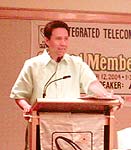
“Up to now, the NTC has failed to follow the lead of telecom regulators worldwide in defining what broadband Internet is, whether delivered via dial-up, wired or wireless connections. For instance, the United States now defines “basic broadband” as Internet service with a download rate of at least 4 Mbps and an upload rate of 1 Mbps. Worldwide, the trend is to consistently raise the basic minimum,” said Tonyo Cruz, the group’s president and chief executive officer.  “Without such a definition, the NTC leaves telcos practically free to hoodwink end-users, including business and the government, regarding broadband services, the cost and pricing, and to keep Philippine Internet access among the slowest and most expensive in the region. At the same time, we cannot begin to estimate the amount of access fees charged or practically extorted by telcos for undelivered, under-delivered or poor services.”

Philippine broadband is as fast as dripping molasses on a cold January morning.

Instead, with the input of some of the Philippine’s largest telecom interests, the Commission has offered the country limited improvements based on rationing and full disclosure of the slow speeds most in the country endure. [Read about the experiences of one Philippine student who has endured bad broadband for most of his life.]

The draft law raised the ire of consumers with the insertion of clauses like this:

WHEREAS, it has been observed that few subscribers/ users connect to the internet for unreasonably long period of time depriving other users from connecting to the internet […] Service providers may set maximum limits on the data volume allowed per subscriber/user per day.

NTC Public Relations Officer Paolo Arceo readily admits this, and several other provider-friendly clauses came at the behest of the telecommunications industry.

“[This] particular clause was suggested by public and public telecommunications entities to prevent network abuse by unscrupulous subscribers who violate intellectual property laws, particularly on copyright, by downloading movies and software, similar to abusive subscribers of unlimited call/text promotions which were primarily designed or person-to-person use but used for voluminous commercial undertakings,” he said.  “These types of network abuse limit accessibility to a few instead of providing adequate access for all of the subscribers. Commercial or high volume users may avail of other internet connection packages which have committed higher speeds and allow heavy data exchanges.”

But critics of the proposal warn broadband companies will seek to impose limits starting at 5GB of usage per day, with no limit on how low those caps could ultimately go to help guarantee performance requirements also included in the proposal.

How low can Philippine caps go?

“The proposal demands broadband providers live up to their advertised speeds and be up and running with satisfactory performance at least 80% of the time,” writes Quezon City resident Jose Albas, one of our readers. “Since providers blame ‘heavy users’ for performance problems now, imposing more drastic limits is the cheapest way to hit performance standards without spending money upgrading facilities.”

Cruz from TXTPower believes the usage cap proposal doesn’t adequately address the Philippines’ dreadful broadband experience.

“The NTC misses the entire point of the problematic broadband Internet connections in the Philippines: They are slow, unreliable and expensive compared to other countries in the region. But the NTC would not know this because the agency has not, up to now, sat down, studied and resolved to define what broadband really is,” Cruz said.

Popular Philippine blogger ‘Cocoy’ wrote a letter to Philippine President Benigno Aquino arguing the telecommunications authority is catering more to the business interests they regulate than the consumers they are supposed to represent, and for naught:

The NTC draft memorandum to put caps on Internet usage is regressive. It does both business and consumer no good. It will not encourage telecoms to reinvest to improve their service, and help the broader market unlock our potential.

Broadband in the Philippines has become increasingly important in a country with a troubled economic and political past now re-inventing itself in the new digital economy.  The country’s broadband rankings in Asia, a hotbed of broadband development, has proved an embarrassment for the Aquino government.

<

p style=”text-align: center;”>Draft NTC Memo Order for telcos on Minimum Speed of Broadband Connection, December 2010

The World Economic Forum’s Global Information Technology Report ranked the Philippines 85th out of 133 countries, right behind Trinidad and Tobago, Russia, El Salvador, Ukraine, Guatemala and Serbia. To compare, Vietnam ranks 54th — Thailand ranks 47th.

Cutting users off after their daily ration is reached delivers a range of consequences, from from the annoying to a fundamental challenge to free speech.  Jed Mallen illustrates what happens when providers protect their profits at the expense of their customers:

I was downloading the new Slackware release about a month ago via Globe Tattoo and after a while got an SMS message via their app that goes something like — fair usage policy is imposed. 800 mb is the limit. I was using their Php 50/24 hours promo. Yes my download stopped.

How about that? That’s not piracy. That’s a free operating system that I have been using for the last 10+ years.

International rights lawyer Romel Bagares warned that the implications of high volume data caps and other Internet Overcharging schemes had even greater implications: impeding consumers’ basic rights to online information.

“Whistleblower sites such as WikiLeaks process large amounts of information. Also, especially in the Philippines, you have many public schools that use the Internet heavily for educational purposes. Putting in caps would prevent people from sharing as well as receiving information,” Bagares said.

“This is against consumers’ interests, because you have people suffering from ‘bill shock’ as well as denying their right to information,” he told GMANews.TV.

Bagares doubts pirates are the real reason behind the proposed usage caps.

Konti lang ang pirates! (There are so few pirates!) You’re punishing the majority [of the public] for the actions of a very few tech-savvy individuals,” he said.

Salalima

Bagares’ views seem to be backed by the Commission’s own staff.

NTC Common Carriers Authorization Department Director Edgardo Cabarios told GMANews.TV that the entire scheme originated from the Philippines’ major phone companies.

“There were apprehensions raised [by telcos] over abusive users. This [data cap] is meant to discourage unfair use, to give everyone a chance. The idea is to protect the majority of consumers,” Cabarios said.

But Cabarios also admits that the “abusive users” the Internet Overcharging scheme is supposed to target account for just one to two percent of Filipino broadband consumers.

Unsurprisingly, the companies that proposed the usage limits are publicly praising the Commission’s willingness to insert them into broadband reform proposals.

“[The clause] is consistent with the demands of fair use. This guarantees that abusive consumers of broadband/internet service do not monopolize available capacity to the detriment of other paying customers. The definition of the volume cap can be left to the individual telecommunications providers to define based on the different service plan offers they provide, all in the spirit of competition,” said Philippine Chamber of Telecommunications Operators president Atty. Rodolfo A. Salalima in a letter to NTC commissioner Gamaliel A. Cordoba.

Frontier Announces Stunning $30 Monthly Rate Hike for Basic Fiber TV Service in Oregon, Washington

Phillip Dampier January 5, 2011 Competition, Consumer News, Frontier, Verizon 5 Comments

"Too rich for my blood."

Former Verizon FiOS customers now served by Frontier Communications in Oregon and Washington are receiving word of astonishing rate increases of as much as 46 percent from the phone company.  The massive rate increase is being blamed on “increasing programming costs” charged by the cable networks carried on a cable system that competes with Comcast, which charges far less for the same channels.

Frontier’s rate hikes are so dramatic — $30 a month for the popular standard 200-channel package, some customers are wondering whether the company is trying to sabotage their own fiber-to-the-home service.

“They sent us a rate increase letter stating our former standard package, priced at $65 a month, is now going up to a ridiculous $95 a month for basic cable,” says Tom, a regular Stop the Cap! reader. “That’s a rate increase only my health insurance company could love.”

New customers face the new rates immediately, but existing customers have until Feb. 18 before the new high price kicks in.  Many are preparing to move back to Comcast, which raised rates this year as well — but is now a relative bargain at $63 a month for a similar package.

“As much as I love FiOS, Frontier has managed to screw it up as badly as the rest of their services and now I am going back to Comcast,” Tom says. “You have to wonder if they are purposely incompetent or if it’s part of a larger plan to sabotage the Verizon FiOS network they inherited.  Either way, they’ve priced their service out of the market.”

When Tom called Frontier to complain, the company offered to rip out the advanced fiber network Verizon installed and stick a DirecTV satellite dish on his roof instead.

“Frontier is a real ‘Back to the Future’ kind of company — they just don’t get it,” Tom said.  “The operator actually told me she couldn’t understand why I would want to cancel service.”

Customers receiving new customer promotional discounts will get a real case of sticker shock when Verizon’s original promotional rates reset to Frontier’s new regular price.

“Washington County better beef up their hospitals because there are going to be a lot of heart attacks when that bill arrives,” Tom says.

The Oregonian newspaper reports customers are not the only ones to be shocked by Frontier’s enormous rate increase.  Regulators promised more competition and cheaper prices as part of Frontier’s purchase of Verizon landlines feel had as well.

“[Frontier’s rate hike] is essentially a white flag surrender and an exit from the head-to-head video competition,” lamented David Olson, director of the Mt. Hood Cable Regulatory Commission.

That’s a far cry from what Frontier Communications CEO Maggie Wilderotter told the newspaper in September when asked if the company would raise FiOS rates.

“That is not our plan. If I look across the board at our basic service pricing, I don’t think we’ve raised prices anywhere in the last four or five years,” she said.

The Oregonian quotes a Frontier representative who says the company’s relatively small customer base disqualifies them from volume discounts Verizon used to receive.

“Part of the challenge we have, compared to other providers, is that our footprint is so small,” said Frontier spokeswoman Stephanie Beasly. “They’re able to spread it out over a much larger customer footprint.”

That can’t be the whole story, said Fred Christ, policy and regulatory affairs manager for the Metropolitan Area Communications Commission, which regulates cable TV in Washington County.

“There’s more to it than programming costs. Anybody in the industry can pretty much figure that out. What more there is, we don’t know yet,” he said. “Unless programmers are trying to run Frontier out of business, why would they jack their rates that much?”

Smaller companies like Frontier generally do not try and buy programming on their own, but join group-purchasing plans like those offered by the National Cable Television Cooperative.  Municipal providers routinely purchase programming at substantial discounts.  It is not known if Frontier is a member, but they could be.

Frontier’s New Rates for FiOS in Washington/Oregon (courtesy: The Oregonian)
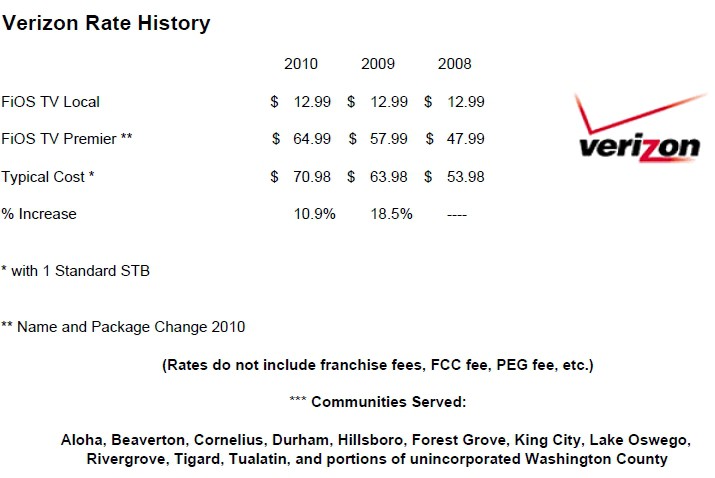
  • Basic local service package, with local broadcast stations: Rises from $12.99 to $24.99
  • FiOS TV Prime HD (220 channels, including the most popular sports and entertainment networks): Rises from $64.99 to $94.99
  • FiOS TV Extreme HD: Rises from $74.99 to $104.99
  • FiOS TV Ultimate HD: Rises from $89.99 to $119.99.

No rate increases are planned for broadband or telephone service.

Verizon FiOS pricing increased at less than half the rate Frontier will demand from subscribers in 2011. (Source: Metropolitan Area Communications Commission, Tualatin Valley, Ore.)

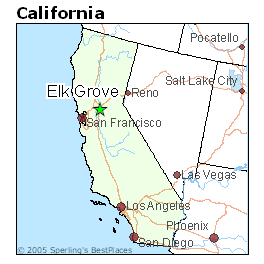
Exclusive: Frontier’s California Confuse-o-rama: Residents Victimized by Frontier’s Changing Stories

Elk Grove, Calif. residents receiving letters from Frontier Communications claiming they are using the company’s Internet service too much are getting confusing responses from the phone company when calling to register complaints about the Internet Overcharging scheme.  Even worse, one company official told a subscriber they have to keep the new usage limits secret “for legal reasons in case we have to change it again.”  But no worries, Frontier explained to one customer: if you exceed the secret cap again, you’ll be notified future overages will be conveniently billed on a future Frontier bill.

Stop the Cap! has been receiving dozens of e-mailed complaints from customers upset that the company’s bait-and-switch broadband also comes with uninformed customer service representatives who can’t deliver straightforward answers to customers trying to understand how they can avoid up to $250 a month for 3Mbps DSL broadband service.

“When I signed up for Frontier DSL, nobody said a thing about usage limits,” writes our reader Trina who lives near Camden Park.  “My small business has DSL from Frontier as well and we were horrified when we received a letter telling us we were over-using their service.”

Trina and her husband have four teenage boys living at home, all sharing their Frontier DSL account.  When she called the company in response to the letter she received, the confusion began.

“The first representative didn’t understand what I was talking about and denied there were any limits and said the letter must have been a mistake,” Trina says. “But my husband noticed others in our area were talking about the letter on area message boards so when he called, he got a representative that confirmed the limits were real.”

Trina was told her home would need to upgrade to Frontier’s $249 monthly DSL service plan, the same one Frontier held over the heads of some customers in Mound, Minn. last year.

“I told them they must be smoking crack — are they serious?  There is no way I am going to pay $250 a month for DSL that gives us 1.5Mbps service — not in this world,” Trina says.  “My husband laughed when I told him, saying Frontier is going to drive themselves out of business from this stupidity.”

Elk Grove reader Stephen also called Frontier after he received a letter stating he used over 100GB in a month.

“Yeah, I used 104GB according to my router’s logs and Frontier deemed me a bandwidth abuser,” Stephen writes.  “Of course the company tried to sell me a plan priced at $100 a month for their lousy DSL service we got suckered into on one of their term contracts.”

Stephen said he’d manage to find a way to shave 5GB off his monthly usage and forego Frontier’s $99 offer until he signs up with a competitor and tells Frontier to take a hike.

“It’s one thing to be abused by a lackluster phone company like Frontier who never did a thing for Elk Grove — it’s another to pay them more for their abuse,” he writes.

Stop the Cap! reader Pete, also in Elk Grove, says he can’t get a straight answer over exactly what the monthly limit is.

“When I called, I was told 5GB by one representative, 100GB by another, but get this — when I logged into the ‘Flexnet’ Usage Meter the company tells you to review, it showed I had a 20GB limit,” Pete says.  “I called Frontier on the phone and told them I was so through with them — I can’t stand their nonsense.”

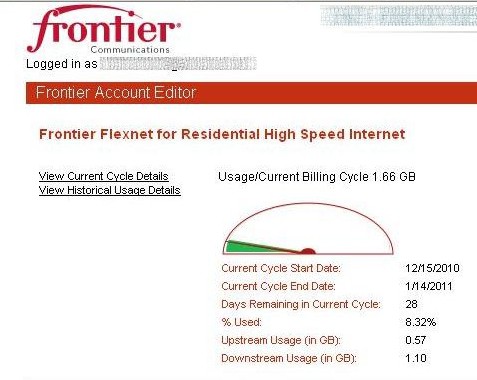
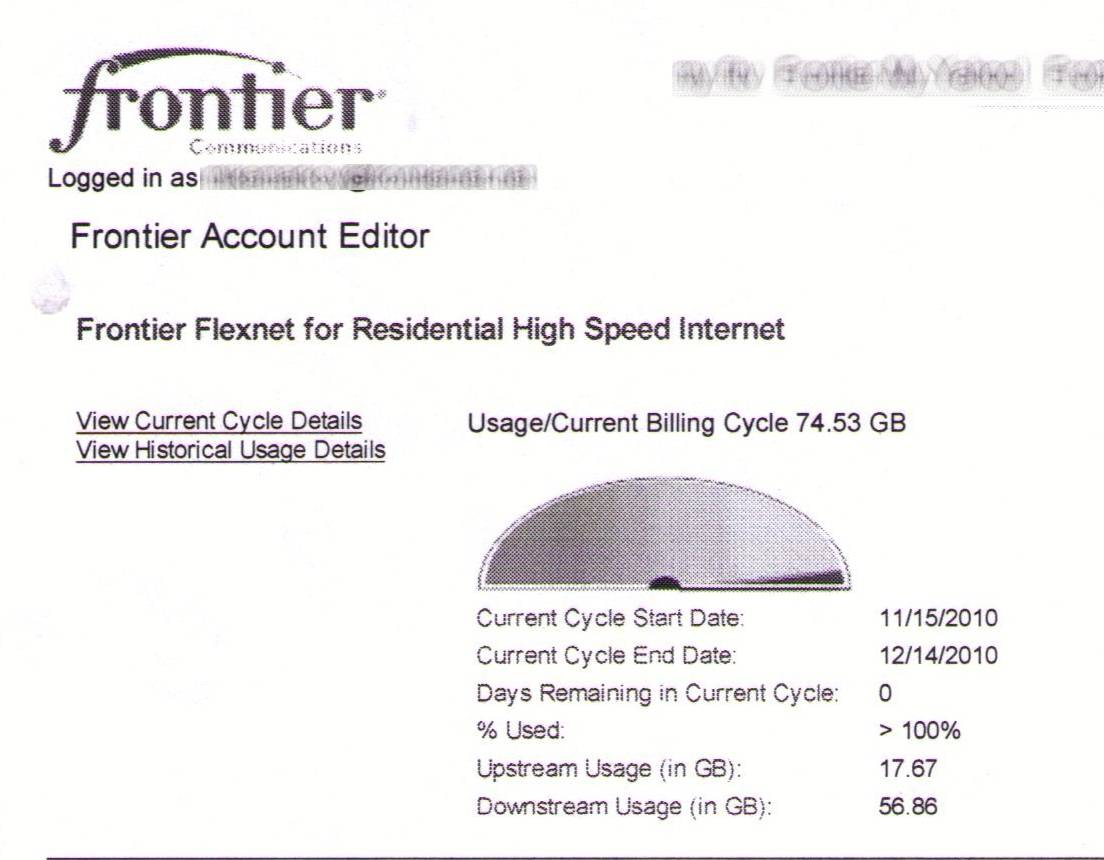
Pete wasn’t alone.  Our regular reader Mike figures his cap was actually 20GB a month if the company’s usage meter was to be believed, and he sent pictures.

“I got their nastygram last month over my usage and now my Flexnet meter shows me over the limit,” Pete says.  “I have been vocal on a local Elk Grove message board so I’m feeling like this is retaliation.”

In fact, Mike’s usage meter depicts him as well over the arbitrary 100GB limit Frontier suggests in their letter, despite not coming close to 100GB of usage.  Ditto for our reader Michelle who lives in Palo Cedro, a community Frontier can largely hold captive thanks to limited competition.

Benjamin, also in Palo Cedro, says Frontier’s move will hurt small businesses in the northern California Shasta County community of 1,200.

“I need high speed Internet to help start my business, which will largely involve uploading and downloading multimedia, (which is hard enough to do on a 1.5 connection) but to increase the cost is absolute insanity,” he says.

Our reader Mike discovered Frontier's usage meter suggests he has far less than a 100GB monthly usage allowance.

Benjamin’s alternatives barely qualify.

“I can either try Clearwire, which works terribly locally and is known for its speed throttles when congested, or HughesNet satellite-delivered Internet, which is overpriced,” Ben adds.

As our readers already know, satellite fraudband is no replacement for real broadband service, because it comes with a “fair access” policy that isn’t fair and doesn’t deliver much access.

“I will fight this any way I have to,” Benjamin says.

John in Elk Grove writes in to say the entire affair is a Frontier shell game.

“It’s pure bait and switch to sell us broadband without limits and then suddenly impose them while we are supposed to be on ‘price protection agreements’ that the company says will keep our prices stable,” John says. “Now we learn it’s all a shell game — they can say we used too much and that doesn’t count with their price protection scam.”

John adds Frontier can change the limits at will, and customers who choose to depart could still face enormous cancellation penalties.

“The Frontier representative I talked to when I called to cancel service told me I owed $300 for ending my contract early,” he said. “I told them to go to hell and that if they tried to collect, I’d personally make it my life’s work to cost them far more than that in lost business.”

Customer anger only increases after speaking with Frontier’s own representatives.

Uh oh. Frontier suggests Mike has already blown through his monthly usage allowance, despite his carefully reduced use of the service.

“Mr. Brown” shares his experience:

I am an Elk Grove resident and a Frontier DSL internet customer. I received the same letter from Frontier about exceeding the 100gb of bandwidth within a 30 day period. It said that I must reduce the amount of use or bump my account up to the next tier of service, a $99/mo business account.

I called the number on the letter to talk to a customer service representative so that they would not disconnect me for not responding within 20 days. I asked him if there is a maximum bandwidth cap. He told me that there is no cap, but that their terms of service says that they can disconnect you if you are exceeding reasonable usage and that Frontier will determine what is reasonable usage. The representative could not help me any further so he connected me with his supervisor.

The supervisor said that Frontier sent this letter out to about 1,000 customers in Elk Grove and that most of the customers who have called after receiving the letter have not questioned them and said they they will reduce their usage.

He also said that there is no longer any $99/mo plan, the only option is to reduce usage. He said they sent the letters out to the costumers who are using more than a reasonable about of bandwidth telling them to use less Internet. Then if they did not, Frontier will send another letter saying that if they use more than a reasonable amount that they will charge the customer for anything over.

He went on to say that Frontier had to remove the statement about the previous 5GB bandwidth cap in their terms and conditions and that for legal reasons they are not going to tell us what the new limit is, in case they have to change it again in the future.

I tried to get him to admit that there is a cap and to tell me what that limit was, but he would not.  He would only say that I would be okay if I did not go over 100gb/mo and that if I do, to expect to receive another letter with the new terms that would allow them to charge my account for excess bandwidth.

The one thing is common with readers we’ve heard from is their urgent search for a new provider.

Trina canceled all of her Frontier services at home and at her business and switched to SureWest, a fiber to the home provider.  Joining her includes Mike, Stephen, Pete and John.  Together, their combined disconnects will cost Frontier more than $500 a month in lost revenue, all because of broadband traffic that costs Frontier far less than 5 percent of that amount.  If each customer shares their horror story with friends, family, and neighbors, the loss in revenue could cost far more.

For customers like Mike, he can’t wait to get his SureWest service installed.  The company offers to buy out current contracts with companies like Frontier valued at up to $200, and their fiber-delivered broadband service leaves Frontier’s speeds in the dust.  Mike says if Frontier gives departing customers a hard time about early cancellation fees, file a complaint with the California Public Utilities Commission Consumer Affairs Branch.

SureWest offers 3/3Mbps service for $36.99 per month, 25/25Mbps service for $51.99 a month, and 50/50Mbps service for $181.99 a month.  A $3.99 High Speed Internet features and services charge applies.  There are no limits on SureWest’s Internet service.

SureWest delivers several fiber to the home broadband service plans that best Frontier's DSL speeds by a mile.

Frontier offers 3Mbps service with a slower upload speed for $32.99 per month or 10Mbps service for $44.99, both with a required price protection plan and $6.99 monthly modem rental fee.

“Why in the world would you pay Frontier more for less service,” asks Pete.  “Once they pile on the administrative fees, surcharges and taxes, it’s well north of $40 a month, and you don’t even get the speed they advertise, much less the usage limits they don’t.”

Roku CEO ‘Not Worried’ About the Demise of Unlimited Broadband

Phillip Dampier January 4, 2011 Competition, Consumer News, Data Caps, Online Video, Video 4 Comments

Wood

Roku CEO Anthony Wood told a cable trade publication he is not worried that providers will kill the market for his online video set-top box with Internet Overcharging schemes.

Wood told Multichannel News the broadband industry faces enough competition to prevent one or both traditional providers from implementing usage caps and metered pricing for broadband service.

“What we see from a practical point of view in the marketplace is that there’s enough competition from cable, telcos and wireless so that in every market there’s an unlimited option — and the price is competitive,” he said.  “Unlimited sells — it’s just a good marketing strategy.”

Wood may want to inform broadband providers of that, because several American phone and cable companies are experimenting with slapping usage limits on their customers, making his web-streaming set top box an expensive proposition.  For customers of Frontier Communications in Elk Grove, Calif., using too much Roku could mean broadband bills as high as $300 a month.

With some HD movies consuming 2-4 gigabytes per title, some companies experimenting with usage limits as low as 5GB per month would make online video the primary culprit for consumers blowing through their monthly usage allowance.  After one bill with overlimit fees arrives, the Roku box will be the first thing to go.

Netflix, a major investor in the Roku box, could see its plans to shift to online distribution of its massive DVD rental business stymied by large phone and cable providers, many of whom see Netflix and other online video services as competitors who use their broadband service to send movies to consumers.  Some cable and phone companies contend Roku, Netflix, and other online video streamers are freeloaders — using their networks “for free” and demanding additional compensation to keep carrying their content.

Wood discloses another reason why cable and phone companies could potentially adopt a hostile position towards his 100-employee operation — “cord cutting.”

Wood told Multichannel News about 12% of Roku customers say they have canceled cable or satellite TV after buying the set-top while another 12% said they reduced their service level.

The cable industry is trying to retain customers by putting an increasing amount of cable content online for subscribers who maintain their cable-TV package.  Roku gives subscribers one more reason to downgrade or cancel service, a problem that could be stopped with an Internet Overcharging scheme that makes using the product an expensive proposition.

Some Roku watchers believe Wood is making a mistake underestimating the telecom industry’s willingness to protect its turf.

Two years ago Roku VP Tim Twerdahl said the company was not worried about Comcast’s 250GB download cap.  But since then, other providers have proposed far lower caps.

Roku is best known for letting Netflix subscribers stream the video rental firm’s online titles direct to television sets.  But Roku also delivers access to Hulu, Amazon video, and a growing number of new “channels” delivering classic movies, music/music videos, news, and user-created programming.

The company offers three set-top models: HD ($60), which delivers up to 720p video; XD ($80), which adds support for up to 1080p and 802.11n Wi-Fi; and the XDS ($99), which offers dual-band 802.11n and component video and optical audio outputs.  The top model occasionally sells for as little as $79.99 when on sale from Amazon.com or direct from the manufacturer.

[flv width=”640″ height=”380″]http://www.phillipdampier.com/video/Introducing Roku.mp4[/flv]

A brief video introduction to Roku.  (1 minute)

Search This Site:

Contributions:

Recent Comments:

Your Account:

Stop the Cap!