Home » Competition » Recent Articles:

Bray’s Back: Getting a Reality Check on West Virginia’s Broadband Picture

[flv]http://www.phillipdampier.com/video/WOWK Charleston Frontier vs CityNet Pt 1 12-11-10.mp4[/flv]

DecisionMakers: Frontier vs. Citynet, Part One  (10 minutes)

Bray Cary

Bray Cary, who runs a Sunday news-talk-interview show on his network of West Virginia-based television stations, turned his attention back to the mediocre broadband picture across the state.  Once again, the “free market can do no wrong”-host showered attention and praise on Frontier Communications for their promises to improve West Virginia’s bottom-of-the-barrel rankings in broadband adoption, availability, and speed.  Only this time, one of his guests took him to school on why Frontier Communications is not the state’s broadband savior.

In this round, Cary invited Frontier’s senior vice president Dana Waldo and Citynet president and CEO Jim Martin to discuss where the state’s broadband is today and where it is going tomorrow.

The community of French Creek can't get Frontier broadband even after promising the company dozens of new broadband customers.

Cary wears his opinions on his sleeve, and he’s no fan of the Obama Administration’s broadband stimulus program, believing private companies will deliver West Virginia from its broadband doldrums. That’s wishful thinking Cary can afford as he browses the web from well-wired cities like Charleston.  But if you live in a community like French Creek in Upshur County, that talk isn’t going to get you broadband from Frontier or anyone else.  Stop the Cap! has heard from residents in the community who have delivered petitions from dozens of residents ready and willing to sign up for -any- broadband service, but Frontier hasn’t responded.

Martin opines that as long as stimulus money is available, using it to get the best bang for the buck could improve service for residents from the Panhandle to the Virginia border, instead of simply improving Frontier’s bottom line.

Cary did seem concerned that Frontier was ill-equipped to deliver service to all residents, regardless of cost.

Martin argues Frontier’s broadband network will do nothing to stimulate competition and bring better service.  Martin wants funds redirected into a robust middle-mile statewide backbone, preferably fiber-based, that is open to all-comers at reasonable wholesale pricing.  Citynet has been aggressively complaining about broadband stimulus grants in the state which seem to benefit a handful of companies and projects that don’t actually result in service to individual residents.

The reality is, Cary’s “free market” approach will not deliver service to tens of thousands of West Virginians who will never get wired because of “return on investment” requirements for service in the mountainous state.  Martin’s middle-mile mentality won’t bring access to the last mile, critical for wiring individual homes, either.  But one thing Martin does see that Frontier doesn’t — fiber is the future.

There is a third way to get service without waiting from Frontier’s 1-3Mbps service with an Internet Overcharging scheme or Martin’s middle-mile network that goes past your home but never stops there — petition your local government to empower itself and build a community-owned network that answers to residents, not to Frontier’s dividend-obsessed shareholders.

[flv]http://www.phillipdampier.com/video/WOWK Charleston Frontier vs CityNet Pt 2 12-11-10.mp4[/flv]

DecisionMakers: Frontier vs. Citynet, Part Two  (9 minutes)

Knology Retains Internet Overcharging Ripoff for Lawrence, Kansas Customers

"If you have to ask how much, you can't afford it."

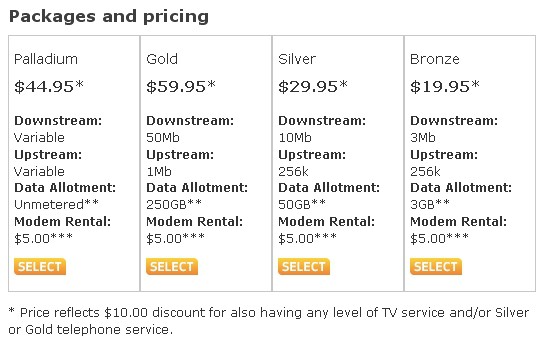
Knology, which bought out Sunflower Broadband last year, has elected to carry forward the old owner’s Internet Overcharging schemes, charging broadband customers penalty rates for exceeding their usage allowances.

The company’s explanation for their overpriced bandwidth comes with a tall tale about their competitors they simply made up out of thin air:

Data transfer allotments allow Knology to offer higher speed service with lower prices. Unlimited, open usage plans offered by other providers typically employ network controls to slow down the high usage customers.

That’s news to us, and to their nearest competitor AT&T.  They deny speed throttling any of their U-verse or DSL customers.

While the company’s download speeds are impressive — up to 50Mbps — their upload speeds are not, topping out at a paltry 1Mbps.

Knology's pricing is nearly identical to its predecessor Sunflower Broadband, except for the $5 rate hike for its most popular Silver plan.

Knology claims they expand usage allowances based not on network capacity, but by the percentage of customers they gouge with overlimit fees:

Data transfer allotments: Each level of internet above includes the amount of data transfer indicated measured in Gigabytes (GB). The data transfer allotments are increased regularly, based on usage patterns, to ensure the number of customers who go over their allotments remains under 10%. Additional GB of data transferred beyond the allotment is billed at $1.00 per GB if not purchased at a discount before the end of the billing period. The percentage of Knology customers charged for extra data transfer beyond their allotment was 6.1% in April 2009.

Paul Bunyon, Knology's new director of marketing

Bemusingly, customers with time machines who can travel into the future and determine they will exceed their allowance for the month can pre-purchase an increase in their usage allowance at a discount.

No time machine?  Then you either pay the standard overlimit rate, watch your usage like a hawk, or potentially over-buy excess usage that expires at the end of the month.

Customers tell Stop the Cap! the company’s single, unlimited use package is “the same piece of garbage it always was,” writes Larry who lives in Lawrence.  He had high hopes Knology would do the right thing and abandon Sunflower’s overcharging schemes.

“Apparently not, and after a month with their unlimited service, I have scheduled my U-verse installation with AT&T,” Larry writes. “Even on Knology’s limited packages, they don’t provide the speeds they promise.”

Larry also says the higher speed tiers Knology offers deliver diminishing returns.

“If their uplink is congested, or the web sites you visit are busy, it won’t matter if you have 10Mbps or 50Mbps — the speed is effectively the same,” he says. “Besides, upload speed is more important these days and 1Mbps is just plain lousy in 2011.”

“Bye, bye SunKnology.”

Sunflower's Old Broadband Plans & Pricing (February 2010)

Saginaw, Mich.: Another Wireless ISP Faces Down Usage Growth By Implementing 5GB Usage Limit

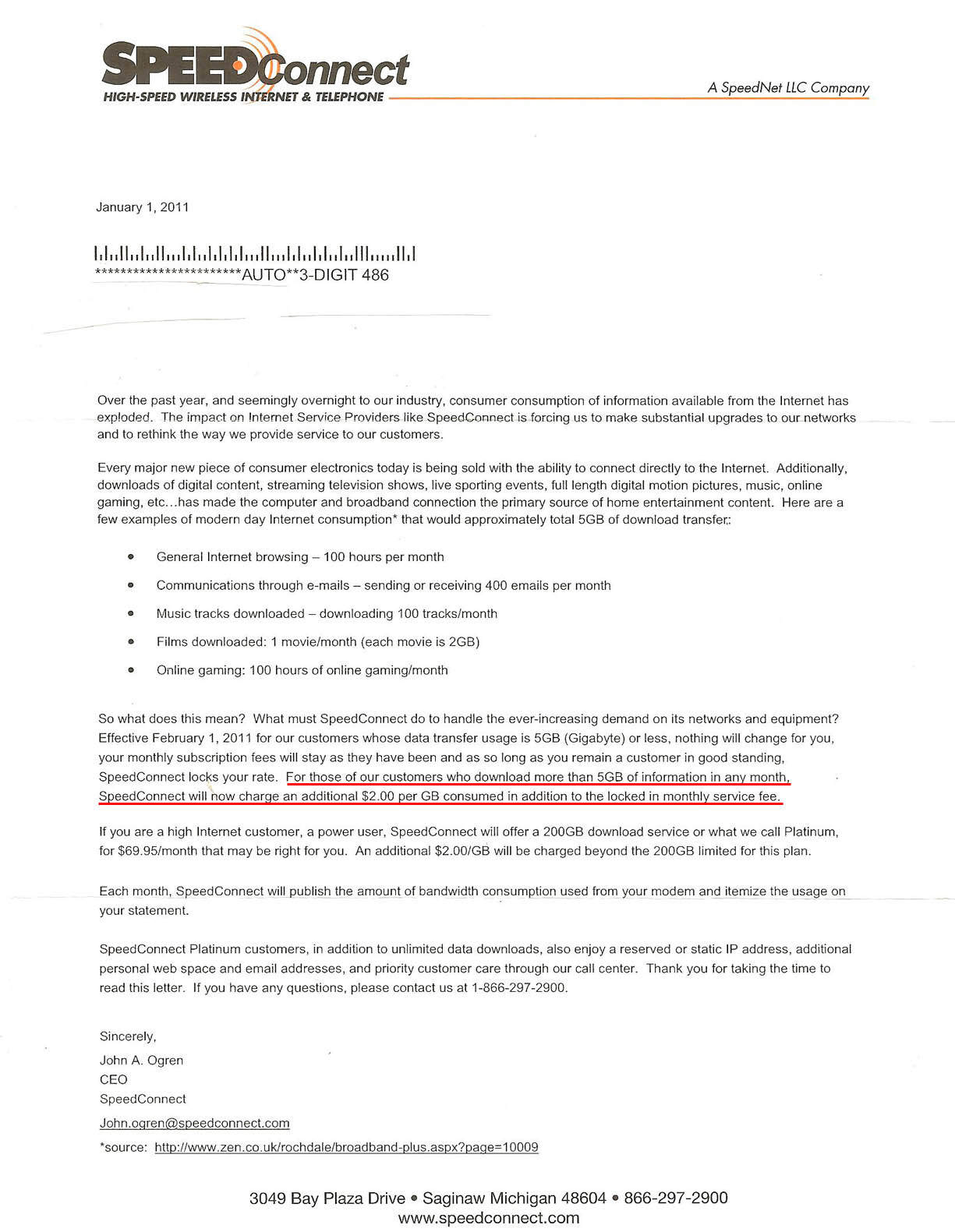
A wireless ISP (WISP) serving parts of Michigan and eastern Iowa has informed customers that due to their enthusiastic use of the Internet, the company was slapping a 5GB monthly usage limit on customers effective Feb. 1.

SpeedConnect, based in Saginaw, Mich., informed customers in a letter that those who exceed the company’s new usage limit face a penalty overlimit rate of $2.00 per gigabyte.  An alternative 200GB “Platinum” monthly usage plan, including phone service, was also announced for $69.99 per month.

That’s a steep rate increase for customers accustomed to receiving around 3Mbps download x 384Kbps upload speeds for $39.95 per month.

Too much for our reader Greg, who says he has been a SpeedConnect customer for the last decade.

“Ouch,” Greg writes.  “I’m changing ISPs over this.”

Company officials blame the usage limits on usage growth.  The company’s letter states, “[growth] is forcing us to make substantial upgrades to our networks and to rethink the way we provide service to our customers.”

Now customers will rethink using SpeedConnect for their Internet access.

SpeedConnect's letter to customers.

SpeedConnect’s attempt to collect upgrade funds from their customers, which the company admits are increasingly turning to broadband for home entertainment and information, comes at the same time the company had no trouble dipping into the kitty to buyout CommSpeed of Arizona’s 2.5GHz spectrum holdings and customers based in Eastern Iowa.

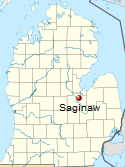
Saginaw, Mich.

AT&T DSL is one alternative.

The same CEO that signed the letter telling customers to use less of their service or pay dramatically more was thrilled about “the exciting new chapter” its merger/acquisition would open.

“The completion of this acquisition is a significant event for our customers, communities, investors, and employees,” said John A. Ogren, President and Chief Executive Officer.

Saginaw residents are not well-served by AT&T, which has left major gaps in the economically-stressed region’s broadband coverage options.  We had a hard time finding landlines in Saginaw and nearby townships pre-qualified for AT&T DSL to offer a price comparison.  After much searching, we discovered AT&T heavily markets DSL Pro ($35/$19.95 new customer promo price for one year) which delivers 3Mbps/512kbps service, or Elite ($40/$24.95 new customer promo price for one year) which offers 6Mbps/768kbps service to those who -can- get the service.

AT&T’s Pro plan delivers comparable speeds at lower prices than SpeedConnect charges, all with no usage limits.  Users seeking higher speeds can use them without fear of overlimit penalties or a $70 broadband bill using AT&T’s Elite DSL plan.

SkyWeb is the other.

Greg also notes he has another wireless option, as do many residents and business across central Michigan’s Tri City area, from SkyWeb, which delivers wireless access at speeds ranging from 3-10Mbps.  The company does not limit usage and offers new customers a month of free service.  A comparable package of services from SkyWeb at 3Mbps is priced $10 less than what SpeedConnect charges.

Wireless ISPs have unique problems trying to keep up with usage demands:

  1. Many are individually owned and operated and lack sufficient capital to invest in required upgrades to meet today’s Internet multimedia reality;
  2. Many WISPs serve rural areas where growth opportunities are often limited;
  3. A few very heavy users could create significant strains on a wireless network that is not infinitely expandable;
  4. The arrival of competition from telephone, cable, or even cell-phone wireless data plans can present a major threat to the business plans of some providers.

[flv width=”384″ height=”236″]http://www.phillipdampier.com/video/WNEM Saginaw Air Advantage Broadband Grant 9-2010.flv[/flv]

WNEM-TV covered Air Advantage, another regional WISP that won a broadband stimulus grant last fall to expand wireless access in mid-Michigan.  (2 minutes)

FiOS TV Rate Hike in Indiana: “It’s Not Just a Price Increase, It’s an Offer,” Says Frontier Exec

Phillip Dampier January 19, 2011 Competition, Consumer News, Data Caps, Editorial & Site News, Frontier, HissyFitWatch, Online Video, Video Comments Off on FiOS TV Rate Hike in Indiana: “It’s Not Just a Price Increase, It’s an Offer,” Says Frontier Exec

Talk. Watch. Surf. Cancel. -- Major price increases on the way for Frontier FiOS customers in Indiana.

When is a rate increase not just a rate increase?  When it’s also “an attractive offer.”

Frontier Communications is getting heat from consumers in Fort Wayne, Ind., with news their Frontier FiOS TV bill will skyrocket $12-30 higher in the coming month.

To distract from the disaster-in-the-making, Frontier representatives are waving shiny keys to customers preparing to depart, trying to “upgrade” Indiana residents back to satellite TV.

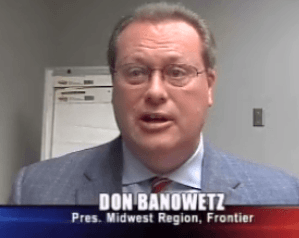
Don Banowetz, president of Frontier’s Midwest division, told Fort Wayne customers he was personally excited by the satellite offer, because customers can get free programming services for the remainder of 2011, a $700 value according to Banowetz.

“It’s not just a price increase, it’s an offer — a quite attractive offer,” Banowetz told INC Now.

Frontier is also pitching a free 32-inch “web-capable” digital television for customers signing an extended length contract.

Frontier says these televisions are going to revolutionize the way Americans watch TV over the next five years, and they believe their offer will be well-received by customers.

Not so much.

"It's not just a price increase, it's an offer!"

“I’ll bet their letter will leave out the part about how Frontier rations the Internet to their customers,” writes Fort Wayne resident Irv, who has been closely following Frontier’s Internet Overcharging antics in the Sacramento area.  “Will the coin slot be on the top or side of their television, because after you start watching, you’ll have to start paying.”

Frontier has sent letters to customers in Minnesota and California demanding up to $250 a month for residential broadband access because they used the company’s DSL service “too much.”

“Who wants to sign a two or three contract with Frontier, raise your hands,” Irv asks.  “They have just destroyed their FiOS TV service in Indiana — my fingers couldn’t dial the cable company fast enough as I take my business somewhere else.”

Another Fort Wayne resident — Nick Behm, has been following Stop the Cap! ever since Verizon announced it was selling Ft. Wayne’s phone lines to Frontier.

“You guys had this company nailed — Indiana’s regulators should hire you folks and some other actual consumers to review these deals before they get rubber-stamped, because Frontier is going to put themselves out of business and risk landline service throughout our area,” Behm writes.  “How can you ruin a fiber service that sells itself?  Let Frontier run it.”

Neither Behm or Irv will be taking up Frontier’s offer, although Behm still has a term contract of his own — with Verizon.

“I am protected from Frontier’s cash grab for several more months, so at least I have time to prepare for the forthcoming cancellation — bye, bye Frontier.”

[flv width=”432″ height=”260″]http://www.phillipdampier.com/video/INC Now Ft Wayne New Charges for Frontier Customers 1-18-11.mp4[/flv]

INC Now delivers the bad (and according to Frontier – good) news to Fort Wayne, Ind., FiOS TV customers — your rates are going up as much as $30 a month.  (1 minute)

Michael Copps: Why I Voted “No” on Comcast-NBC’s Merger Deal

Copps

A Statement from FCC Commissioner Michael Copps: The Lone Dissenter in Today’s 4-1 Decision Approving the Merger of Comcast and NBC-Universal:

Comcast’s acquisition of NBC Universal is a transaction like no other that has come before this Commission—ever. It reaches into virtually every corner of our media and digital landscapes and will affect every citizen in the land. It is new media as well as old; it is news and information as well as sports and entertainment; it is distribution as well as content. And it confers too much power in one company’s hands.

For any transaction that comes before this Commission, our statutory obligation is to weigh the promised benefits against the potential harms so as to determine whether the public interest is being served. There are many potential harms attending this transaction—even the majority recognizes them. But all the majority’s efforts—diligent though they were—to ameliorate these harms cannot mask the truth that this Comcast-NBCU joint venture grievously fails the public interest. I searched in vain for the benefits. I could find little more than such touted gains as “the elimination of double marginalization.” Pardon me, but a deal of this size should be expected to yield more than the limited benefits cited. I understand that economies and efficiencies could accrue to the combined Comcast-NBCU venture, but look a little further into the decision and you will find that any such savings will not necessarily be passed on to consumers. When they tell you that at the outset, don’t look for lower cable or Internet access bills. As companies combine and consolidate, consumers have seen their cable bills out-strip the Consumer Price Index by orders of magnitude.

Many of the new commitments that have been added aim no higher than maintaining the status quo. The status quo is not serving the public interest.

It is also claimed that the duration of the commitments made by Comcast-NBCU are longer than any that have been attached to previously-approved mergers. That may be true—but it is also true that power is patient and that big businesses can bide their time when they have to in order to reap the fullest harvest.

While approval of this transaction was from its announcement the steepest of climbs for me, given my long-standing opposition to the outrageous media consolidation this country has experienced over the past few decades, I did meet with stakeholders on all sides to make sure I understood their perspectives on the matter. And I worked to develop ideas to minimize the harms and to advance at least some positive public interest benefits. I know my colleagues worked assiduously on this proceeding, too.

Commissioner Clyburn, for example, worked successfully to achieve commitments from Comcast-NBCU to improve diversity, expand broadband deployment in unserved areas and increase broadband adoption by low-income households. The Chairman and his team, led by John Flynn, and many, many other members of the FCC team put more effort into this transaction than I have seen put into any transaction during my nearly ten years here at the Commission. I also salute the unprecedented cooperation between the agency and the Department of Justice.
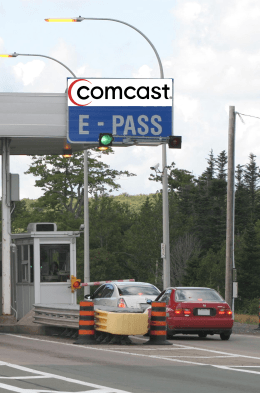
Comcast's Online Toll Plaza

But at the end of the day, the public interest requires more—much more—than it is receiving. The Comcast-NBCU joint venture opens the door to the cable-ization of the open Internet. The potential for walled gardens, toll booths, content prioritization, access fees to reach end users, and a stake in the heart of independent content production is now very real.

As for the future of America’s news and journalism, I see nothing in this deal to address the fundamental damage that has been inflicted by years of outrageous consolidation and newsroom cuts. Investigative journalism is not even a shell of its former self. All of this means it’s more difficult for citizens to hold the powerful accountable. It means thousands of stories go unwritten. It means we never hear about untold instances of business corruption, political graft and other chicanery; it also means we don’t hear enough about all the good things taking place in our country every day.

The slight tip of the hat that the applicants have made toward some very limited support of local media projects does not even begin to address the core of the problem. Given that this merger will make the joint venture a steward of the public’s airwaves as a broadcast licensee, I asked for a major commitment of its resources to beef up the news operation at NBC. That request was not taken seriously. Increasing the quantity of news by adding hours of programming is no substitute for improving the quality of news by devoting the necessary resources. Make no mistake: what is at stake here is the infrastructure for our national conversation—the very lifeblood of American democracy.

We should be moving in precisely the opposite direction of what this Commission approves today.

There are many other facets of the joint venture that trouble me. I worry, for example, about the future of our public broadcast stations. Comcast-NBCU has committed to carry the signals of any of those stations that agree to relinquish the spectrum they are presently using. Will public television no longer be available to over-the-air viewers? And, what happens when the duration of this commitment has run its course? Might the public station be dropped to make room for yet more infotainment programming? In too many communities, the public television station is the last locally owned and operated media outlet left. Public television is miles ahead of everyone else in making productive, public interest use of the digital multi-cast spectrum licensed to it.

Why in the world would we gamble with its future?

While the item before the Commission improves measurably on the program access, program carriage and online video provisions originally offered by the applicants, I believe loopholes remain that will allow Comcast-NBCU to unduly pressure both distributors, especially small cable companies, and content producers who sit across the table from the newly-consolidated company during high-stakes business negotiations for programming and carriage. Even when negotiations are successful between the companies, consumers can still expect to see high prices get passed along to them, as Comcast-NBCU remains free to bundle less popular programming with must-have marquee programming. Given the market power that Comcast-NBCU will have at the close of this deal over both programming content and the means of distribution, consumers should be rightfully worried.

In sum, this is simply too much, too big, too powerful, too lacking in benefits for American consumers and citizens. I have respect for the business acumen of the applicants, and have no doubts that they will strive to make Comcast-NBCU a financial success. But simply blessing business deals is not the FCC’s statutorily-mandated job.  Our job is to determine whether the record here demonstrates that this new media giant will serve the public interest. While I welcome the improvements made to the original terms, at the end of the day this transaction is a huge boost for media industry (and digital industry) consolidation. It puts new media on a road traditional media should never have taken. It further erodes diversity, localism and competition—the three essential pillars of the public interest standard mandated by law. I would be true to neither the statute nor to everything I have fought for here at the Commission over the past decade if I did not dissent from what I consider to be a damaging and potentially dangerous deal.


Search This Site:

Contributions:

Recent Comments:

Your Account:

Stop the Cap!