Home » Competition » Recent Articles:

Comcast Caught Telling Employees to Vote for Charter As ‘Worst Company in America’

Phillip Dampier March 31, 2011 Charter Spectrum, Comcast/Xfinity, Competition, Consumer News Comments Off on Comcast Caught Telling Employees to Vote for Charter As ‘Worst Company in America’

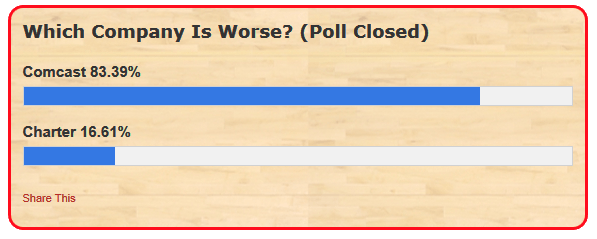
The final results were no help to Comcast in this square-off.

Comcast will do anything to avoid being labeled the Consumerist’s Worst Company in America, even if it means encouraging employees to stuff the ballot boxes with votes for one of their colleagues — Charter Communications.

Instead of improving service and making friends with their customers, Comcast sent asked employees to send in multiple votes to beat up on Charter Cable, one of America’s smaller cable companies that emerged from bankruptcy in late 2009.  Consumer Reports gives Charter low marks anyway, so why not pile on?  Comcast sure did in not one, but two memos begging for employees to vote soon and vote often:

Comcasters,

We need your help to show that Comcast is a great company.

The Consumerist website is currently hosting its poll of the “Worst Companies in America.” Comcast is part of the first round of this poll, which started today and ends at 9 a.m. (ET) this Friday. Unfortunately, this same poll named us as their worst last year. If you feel that Comcast does not deserve this label, we hope that you will participate and vote for the company that is paired against Comcast.

To vote, just click on the following link and place your vote: https://consumerist.com/2011/03/23/worst-company-in-america-round-one-comcast-vs-charter/.

Of course, your participation is voluntary. Naturally, we don’t want to vote for any company to receive this label; unfortunately that is how the Consumerist poll is structured.

You can only vote one time from a single IP address, so we hope that you will consider voting today/tonight and at home from your cell phone, iPad, personal computer or other web-enabled devices with a unique IP address. You can use company devices as well as your personal devices. (If you are having trouble voting, please send an email to us here and someone will contact you to assist you.)

We have all worked very hard to make Comcast the terrific company that it is today and to create a customer experience that we are all proud of. We hope you will consider defending our company name by participating in this poll. Thanks in advance for your assistance and for the great work you do every day.

Version 2:

Comcasters,

Our great company has been nominated by The Consumerist as one of the “Worst Companies in America in 2011” in their annual survey. We have all been working very hard to create a customer experience that we are proud of and need to come together to send a strong message that we simply don’t deserve this title.

We encourage you to participate in this poll and to vote with your heart to tell America that we are proud of our company. Participation is purely voluntary, and in the event you choose to vote, here’s what you need to know:

* DO NOT vote for Comcast. When you cast your ballot, vote for the other company. Remember, you’re voting for the “Worst Company in America.”

* Click on the following link and vote: https://consumerist.com/2011/03/23/worst-company-in-america-round-one-comcast-vs-charter/
* Feel free to vote from the office and at home on your personal computers and laptops. You can also vote via the web browser on your cell phones, iPads, tablets and other web-enabled wireless devices.

When you cast your ballot, vote for the other company. Remember, you’re voting for the “Worst Company in America.”

It’s good the memo clarified… repeatedly, not to vote -for- Comcast in case anyone got confused.

In the end, it was to no avail.  In fact, the Consumerist exposed the attempted vote rigging and Comcast won the square-off in the first round.

Meanwhile, the rest of the finalists consist of a remarkable number of telecommunications companies among the perennial favorites — financial vampire banks Chase and Bank of America and gougers like WellPoint, UnitedHealth and Ticketmaster.  All of the major telecom companies made the list, including Comcast (which won top honors last year), Time Warner Cable, AT&T, Charter, Verizon, Dish Networks, and DirecTV.

Time Warner Cable has lucked out in today’s competition.  It faces off against the ultimate evildoer – BP.  The cable company should come out ahead.  It only jacked up your cable rates.  It didn’t hemorrhage oil into the Gulf of Mexico for a good part of last summer.

Breaking News: Google Selects Kansas City, Kansas for 1Gbps Fiber to the Home Service

Google announced this morning it has chosen Kansas City, Kansas as the site of the search giant’s experimental 1Gbps fiber to the home service.

The announcement came at 12 Noon ET on Google’s blog:

After a careful review, today we’re very happy to announce that we will build our ultra high-speed network in Kansas City, Kansas. We’ve signed a development agreement with the city, and we’ll be working closely with local organizations, businesses and universities to bring a next-generation web experience to the community.

Later this morning we’ll join Mayor Reardon at Wyandotte High School in Kansas City, Kansas, for an event we’ll carry live on the Google YouTube channel—be sure to tune in at 10am PDT to watch.

In selecting a city, our goal was to find a location where we could build efficiently, make an impact on the community and develop relationships with local government and community organizations.

Google’s video talked a lot about bandwidth and the need for more of it.  While Google is striving to bring one gigabit access to ordinary consumers, other providers like AT&T are seeking to limit it.  The competition between cities looking for super high speed access was fierce, demonstrating Americans are hungry for better, faster, and unlimited broadband service.  Unfortunately, some of the country’s largest providers want to deliver the least amount of service possible for the highest price.

Google’s project is likely to call out more than a few providers, but until companies like Google can deliver real competition to America’s phone and cable broadband duopoly, only a handful of communities like Kansas City will exist as an oasis in the broadband desert AT&T wants to create across its middle-America service area.

[flv width=”640″ height=”380″]http://www.phillipdampier.com/video/Google and Bandwidth.flv[/flv]

Google released this video showcasing what its 1Gbps network will do for the people of Kansas City, Kansas.  (3 minutes)

Bell’s Usage-Based Billing Shell Game: Revised Proposal Will Still Cost Consumers

Phillip Dampier March 29, 2011 Bell (Canada), Broadband "Shortage", Canada, Competition, Data Caps, Editorial & Site News, Public Policy & Gov't Comments Off on Bell’s Usage-Based Billing Shell Game: Revised Proposal Will Still Cost Consumers

Bell's Broadband Shell Game (image: Dave Blume)

The digital equivalent of a Trojan Horse was laid at the feet of Canadian telecom regulators Monday when officials from Bell, Canada’s largest phone company, announced they were withdrawing their controversial proposal to mandate usage-based billing on all wholesale broadband accounts.

The original proposal would have mandated that independent Internet Service Providers bill each of their individual customers a monthly fee based on their Internet usage in addition to the wholesale access rates paid to Bell all along.  The pricing proposal would have forced every ISP in Canada to abandon flat rate Internet service, raise prices, reduce usage allowances, and increase overlimit penalties.

Now Bell has told the Globe & Mail newspaper it wants to introduce something called “Aggregated Volume Pricing” instead — a plan Bell claims will shift financial penalties for “high usage” away from individual customers and onto the ISPs themselves. Bell also slashed the proposed overlimit fee from a heavily-defended-as-fair $2.50 per gigabyte to a more modest $0.30/GB, perhaps echoing AT&T’s forthcoming overlimit fee.

In fact, Bell’s revised plan is the same Internet Overcharging scheme under a new name.

The radical reduction in overlimit fees only further illustrates the “phoney-baloney” of providers attempting to monetize broadband usage under the guise of “fairness” and “congestion relief.”  Last week’s ’eminently fair’ $2.50 is this week’s ‘more than reasonable’ $0.30.

Bell exposed their hand — showing they have been bluffing about congestion all along.  An analysis of the proposed rates shows the company is still trying to target “heavy users.”  But instead of penalizing them into reducing their consumption, Bell is now seeking to monetize that usage, not control it.  By shifting aggregate usage costs to the wholesale market, Bell hopes individual customers will blame independent ISP’s for higher bills, not them.  Independent providers have to pass along their wholesale costs as part of the retail price of their service.  It’s a high tech shell game, one that consumers will always lose.

Despite this, Bell assumes the revised plan will take the bipartisan heat off its backside since it first proposed doing away with flat rate Internet service in Canada.

“With our filing today, we are officially withdrawing our UBB proposal,” said Mirko Bibic, Bell’s head of regulatory affairs. “Let’s move on, in my view, and use the CRTC hearing as an opportunity to approve those principles and get the implementation details right.”

"We don't like (Bell's proposal)."

Several Canadian officials were not impressed and one — Industry Minister Tony Clement — said exactly that.

Canada’s consumer groups and politicians have the giant telecom company on the run after using Bell CEO George Cope’s own words against him.  Cope openly admitted in conference calls with investors UBB had everything to do with monetizing broadband usage for profit.

Bell’s attempt to serve warmed-over Internet Overcharging from a new recipe isn’t flying among consumer groups either, who recognize it as more of the same leftovers, just under a new name.

Bill Sandiford, who heads a coalition of wholesale ISPs called the Canadian Network Operators Consortium, told the Globe & Mail Bell was simply presenting its usage-based pricing model in a more acceptable guise.

“We don’t think this is an about-face. It’s the same thing, just dressed up differently,” Mr. Sandiford said. “We don’t like it. It’s still wholesale UBB.”

Openmedia.ca, an online activist group, said Bell’s new proposal shows consumers are having an impact, but the fight is by no means over.

“We’re pleased that Canadians will now have the option to use indie ISPs like Teksavvy and Acanac to access the unlimited Internet,” said OpenMedia.ca’s Executive Director Steve Anderson. “This is a giant step forward for the Stop The Meter campaign, and a victory for those who support competition and choice in Canada’s Internet service market.”

“While this is a positive move, it is only a Band-Aid solution to a much larger problem. We at OpenMedia.ca hope the CRTC takes Bell’s submission as a sign that widespread usage-based billing is not an acceptable model for Internet pricing, and that it creates policy to support the affordable Internet.”

House Republicans Sell Out North Carolina’s Broadband Future to Big Telecom

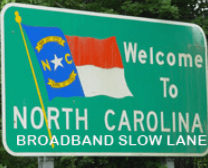
North Carolina: The home of the House-sanctioned broadband slow lane.

Not a single Republican member of the North Carolina House of Representatives stood with consumers yesterday as the cable industry’s custom-written anti-community-broadband bill — H.129 — passed the House in a lopsided 81-37 vote. Fifteen Democrats joined them, some after it was apparent the bill would enjoy lockstep support from their Republican colleagues.  Only three dozen Democrats were willing to choose the interests of their constituents over the interests (and campaign contributions) from Time Warner Cable, AT&T, and CenturyLink.

Rep. Bill Faison (D-Orange) told WRAL-TV voters need to be aware H.129 was Time Warner’s custom-written bill imposing harsh terms and conditions on community broadband networks, while exempting big cable and phone companies.

“Where’s the bill to govern Time Warner?” Faison asked.

Faison predicted the bill will make it next to impossible for any future community broadband effort to deliver service, even in areas where nobody else has or will.

In the communities of Mooresville and Davidson, House Speaker Thom Tillis (R-Cornelius), who represents north Mecklenburg including Davidson and Rep. Grey Mills (R-Mooresville) both voted for the bill, throwing the local community-owned MI-Connection cable system under the bus.  That cable system, acquired from bankrupt Adelphia Cable and rebuilt to modern standards, faced unexpected financial hurdles from the decrepit state the infrastructure was left in when it was sold.  H.129 would limit the system’s ability to reach its entire natural service area in an effort to remain viable, likely banning service for unincorporated Mecklenburg and Iredell counties, and parts of the community of Corelius.

Avila’s statements defending her bill ranged from confusing to the downright absurd — particularly the assertion that high tech businesses will avoid North Carolina if her bill didn’t pass because companies would not want to do business in a state where the local government provided competing broadband service.  That’s a ludicrous notion for a business confronted with 1.5Mbps DSL from CenturyLink.  No high technology business will want to do business in a state that delivers some of the nation’s least adequate broadband service.  With Ms. Avila’s efforts, that fact of life could gain rubber stamp approval from many in the state legislature more interested in protecting the profits of New York-based Time Warner Cable than Wilson, N.C.-based GreenLight.

The bill is headed to the Senate next.  We’ll have a Call to Action up shortly regarding this.

If your member from the House of Representatives is not on the list below, they need to be held accountable for doing the wrong thing for North Carolina broadband.

NC House of Representatives Members Voting For Consumers By Opposing H.129

(Click the name of your member to obtain current contact information, and please send thanks for their vote yesterday.)


Party District Member Counties Represented
Dem 58 Alma Adams Guilford
Dem 107 Kelly M. Alexander, Jr. Mecklenburg
Dem 106 Martha B. Alexander Mecklenburg
Dem 21 Larry M. Bell Sampson, Wayne
Dem 63 Alice L. Bordsen Alamance
Dem 60 Marcus Brandon Guilford
Dem 7 Angela R. Bryant Halifax, Nash
Dem 100 Tricia Ann Cotham Mecklenburg
Dem 50 Bill Faison Caswell, Orange
Dem 24 Jean Farmer-Butterfield Edgecombe, Wilson
Dem 114 Susan C. Fisher Buncombe
Dem 43 Elmer Floyd Cumberland
Dem 33 Rosa U. Gill Wake
Dem 45 Rick Glazier Cumberland
Dem 66 Ken Goodman Montgomery, Richmond
Dem 54 Joe Hackney Chatham, Moore, Orange
Dem 119 R. Phillip Haire Haywood, Jackson, Macon, Swain
Dem 29 Larry D. Hall Durham
Dem 57 Pricey Harrison Guilford
Dem 56 Verla Insko Orange
Dem 39 Darren G. Jackson Wake
Dem 59 Maggie Jeffus Guilford
Dem 115 Patsy Keever Buncombe
Dem 42 Marvin W. Lucas Cumberland
Dem 30 Paul Luebke Durham
Dem 34 Grier Martin Wake
Dem 69 Frank McGuirt [ Appointed 03/07/2011 ] Anson, Union
Dem 9 Marian N. McLawhorn Pitt
Dem 5 Annie W. Mobley Bertie, Gates, Hertford, Perquimans
Dem 44 Diane Parfitt Cumberland
Dem 72 Earline W. Parmon Forsyth
Dem 118 Ray Rapp Haywood, Madison, Yancey
Dem 38 Deborah K. Ross Wake
Dem 23 Joe P. Tolson Edgecombe, Wilson
Dem 35 Jennifer Weiss Wake
Dem 55 W. A. (Winkie) Wilkins Durham, Person
Dem 71 Larry Womble Forsyth


Verizon Launches FiOS-TV in Albany, NY; Company Still Expanding Service in Existing Markets

Phillip Dampier March 28, 2011 Broadband Speed, Competition, Consumer News, Verizon, Video 3 Comments

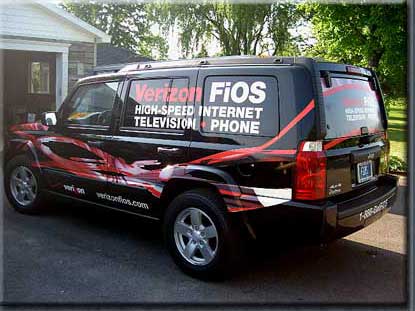
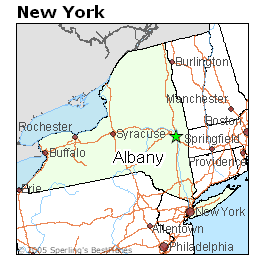
The 500 channel universe has arrived for around 23,000 households around the state capital as Verizon officially unveiled its FiOS television service last week.

The company added television to its broadband service offering after securing video franchise agreements in suburban Bethlehem, Colonie, Guilderland, and Scotia.  It also expects to win approval to provide television service to the nearby city of Schenectady and the town of Colonie shortly.

The arrival of Verizon’s triple-play package begins with a $100 monthly promotional package (go to Verizon’s FiOS website and the online price can be lower) including phone, Internet, and television service for a year, rivaling a similar $99 promotion on offer for new customers from incumbent Time Warner Cable. But Verizon delivers faster broadband service and more HD channels than its cable rival, and will deliver up to 535 channels to subscribers — 130 in High Definition.

“Consumers and small businesses in these communities at long last have a better choice for TV,” said Tracey Edwards, president and general manager for Verizon’s Upstate New York region. “We’ve had great success in many other parts of the state. Now it’s time to bring FiOS TV to this part of northeastern New York and provide customers in the region a choice that is truly different from the cable TV company.”

Verizon officials also claimed the introduction of FiOS TV would result in lower prices for local residents, a claim that does not necessarily hold up when examining the rates for each company.  Both deliver triple-play promotions and retention offers that come within a few dollars of each other.

Time Warner Cable says Verizon’s service does not come with the same local commitment to the region the cable operator has provided with its local news channel YNN, and features that allow customers to start programs over from the beginning or watch live streams of 32 channels on the company’s iPad application.

But the fact a new choice is now available has delighted some of our readers.

Jeff in Guilderland says a number of Albany residents were upset when Time Warner Cable unveiled its $99 promotion which turned out not to be available to existing customers.

“They only give the best prices to their least loyal customers who are ready to cancel their service or sign up as new customers,” Jeff says.  “We’ve had cable from these guys for over a decade and when we sought a temporary price break, they wanted to give us a $20 credit — thanks for nothing.”

Now Jeff says with Verizon around, Time Warner better offer more than that.

Verizon put expansion of its Verizon FiOS fiber-to-the-home service on hold more than a year ago, stopping new cities from winning new options made possible with fiber optics.  But Verizon is still continuing to meet its commitments to communities where the network has already broken ground.  Where communities have not given Verizon video franchise agreements, Verizon markets its broadband and phone options.  But delivering video completes the triple play package many consumers want.

[flv width=”640″ height=”500″]http://www.phillipdampier.com/video/Albany Gets FiOS TV 3-26-11.flv[/flv]

WNYT and WXXA-TV reports some Albany-area residents can now get FiOS TV, showing Verizon is still expanding its FiOS product line in areas where fiber has already been laid.  (3 minutes)

Search This Site:

Contributions:

Recent Comments:

Your Account:

Stop the Cap!