Home » Competition » Recent Articles:

United Arab Emirates Forecast to Achieve 100% Broadband Penetration by 2012

Phillip Dampier May 17, 2011 Broadband Speed, Competition, Public Policy & Gov't, Rural Broadband Comments Off on United Arab Emirates Forecast to Achieve 100% Broadband Penetration by 2012

United Arab Emirates

While North American broadband providers complain about the costs of wiring America’s rural expanse, the United Arab Emirates is on track to deliver 100 percent of its citizens with high speed broadband service by the end of next year.

The UAE made fiber optic broadband a priority, despite the fact the individual emirates that make up the federation are often separated by vast, rural salt pans, sand dunes, and mountain regions.

Sultan Bin Saeed Al Mansoori, UAE’s Minister of Economy told attendees at the Abu Dhabi Telecoms CEO Summit that despite the fact the country is already a mature market for telecommunications products, healthy competition is driving providers to temporarily reduce revenue expectations as they invest heavily to deliver better service to the UAE’s 8.3 million residents.

Broadband providers in the UAE already deliver a vastly superior experience than most customers in North America receive, and the country is currently measured as the world’s fifth fastest by Akamai.  The average broadband connection speed in the UAE exceeds 25Mbps, and that is before fiber-to-the-home service becomes available to nearly every home in the Emirates.

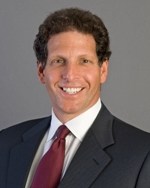
Al Mansoori

Providers are spending considerable sums of money to improve their networks to deliver faster, more reliable service to even the most rural communities.

”Customers definitely have gained from this diversity,” noted Al Mansoori.  “For operators, revenues have dropped in the short term but I understand this was something anticipated, and which the industry is well-equipped to eventually absorb.”

The Telecommunications Industry Association (TIA) reports 2011 may be the biggest year ever in communications spending, with the world’s fastest growing telecommunications markets being in the Middle East and Africa.

The UAE’s largest phone company, Etisalat, is now a major player in 18 markets across the Middle East and North Africa and has over 100 million customers.

Al Mansoori noted that fiber-to-the-home service was best equipped to deliver UAE world-class broadband service at an affordable rate to consumers.  He further recognized that robust competition inspired the country’s telecommunications companies to choose that technology to best compete with other players in the market — wired and wireless.

“Superior infrastructure that enables social and economic growth that keeps the UAE in the forefront of technology is an integral part of our development vision,” he declared.

Media Treats Sanford Bernstein’s Craig Moffett as ‘Independent Analyst’ on Broadband; He’s Not

Phillip 'Not Picking Up What Moffett Puts Down' Dampier

Tech, business, and even a few mainstream media outlets have been booking Sanford Bernstein’s Craig Moffett as an independent observer of all-things-broadband, without revealing he literally has a vested interest in boosting profits for the telecommunications industry.

The latest of Moffett’s heavily-slanted ideas appeared over the weekend on ZDNet, where Larry Dignan’s Between the Lines column used one of Bernstein’s “research notes” to provoke readers into a discussion about Internet Overcharging:

Metered broadband access is inevitable and may even be good for adoption of speedy Internet access.

That’s the argument from Bernstein analyst Craig Moffett in a research note. Moffett sets the scene:

  • The FCC’s open Internet push allows for metered broadband.
  • AT&T has introduced usage caps across its wireline business. DSL customers are limited to 150 GB of monthly consumption. U-Verse subscribers get 250 GB, or the same as Comcast. Users will be charged an extra $10 a month if they exceed the cap and it’s $10 per 50 GB after that.
  • AT&T has already introduced tiered wireless plans.
  • Time Warner Cable has a few usage based pricing pilots underway.

Moffett

Nowhere in Dignan’s column does he disclose Moffett is a paid Wall Street analyst working for the interests of investor clients of Sanford Bernstein who want to maximize the value of their telecommunications stocks.  Moffett’s long history of statements about industry pricing reflect those interests, which are often very different from those of most consumers.  Moffett’s world view: anything that brings in more revenue is good for shareholders (rate hikes, metered billing), anything that drives down shareholder value is not (infrastructure upgrades, pricing cuts, customer defections).

On that basis, Moffett has been called a “cable stock fluffer” by our friends at Broadband Reports for his relentlessly pro-cable industry commentary, even while ridiculing transformational projects like Verizon’s FiOS fiber to the home network for being “too expensive” and not delivering enough return on shareholder investment.  Consumer Reports delivers the opposite view: high marks for Verizon FiOS, mediocre to lousy marks for most of the nation’s cable operators.

While there is nothing inherently wrong with Moffett doing his job on behalf of his paying clients, using his views outside of that context — particularly when those interests go undisclosed — is journalistic malpractice.

Oh, and Time Warner Cable abandoned their usage-based pricing pilots in 2009 after customers declared war on the cable company.  Those darn customers, ruining the industry’s plans!

The rest of Moffett’s research note doesn’t get much better in the “true facts”-department:

The goal of moving to usage based pricing is not to undermine competition from Netflix (or anyone else… although it certainly wouldn’t be good news for Internet video). And it is most decidedly not to simply “raise prices for broadband” as Public Knowledge or New America would have it (although it might well do precisely that, too). Instead, it is nothing less than to re-align the entire business model of today’s infrastructure providers with the next generation of communications… so that broadband providers might stop fighting against the tide and embrace it instead.

With usage based pricing, broadband providers, and Cable operators in particular, can create an “iso-profit” curve, where the amount they make from a physical connection is about the same whether someone uses that connection for linear video or, alternatively, web video. The goal is not to stifle competition, but instead to create indifference not just to the end state of video by-pass, but indeed for all points along the way. The adoption of usage based pricing would be transformational to the debate for Cable operators, inasmuch as it would essentially indemnify them against all potential outcomes.

Moffett represents his interests, not yours.

Yet some of Moffett’s earlier statements would seem to argue with himself.

For instance, back in March Moffett was making plenty of noise about AT&T’s caps precisely targeting video providers like Netflix:

Moffett believes usage caps have everything to do with stopping the torrent of online video.  He notes AT&T’s caps are set high enough to target AT&T customers who use their connections to watch a considerable amount of video programming online.

“Only video can drive that kind of usage,” Moffett writes.

Moffett has repeatedly predicted any challenge to pay television models from online video will be met with pricing plans that eliminate or reduce the threat:

“[I]f consumption patterns change such that web video begins to substitute for linear video, then the terrestrial broadband operators will simply adopt pricing plans that preserve the economics of their physical infrastructure,” Moffett said. “Of course, any move to preserve their own economics has far-ranging implications. Any move towards usage-based pricing doesn’t just affect the returns of the operators, it also affects the demand of end users (the ‘feedback loop’).”

The only thing usage-based pricing indemnifies is the industry’s confrontation with revenue-eroding cable-TV cord-cutting.  And Moffett knows this, although he would probably give rave reviews to bringing similar usage-based-billing to cable television packages, which would charge you for every show you watched on top of your monthly bill.

These pricing models, already firmly rooted in Canada, have done nothing to bring the “next generation of communications” to our neighbors to the north.  Indeed, Canada’s ranking in broadband continues its decline as large cable and phone companies pocket the profits instead of committing to wholesale upgrades of their networks to deliver the kind of service increasingly common in Europe and Asia.

But the real laugh out loud moment comes last: Moffett’s prediction that AT&T’s usage pricing will increase broadband adoption.  Perhaps that’s true if you prefer telecommunications companies abuse you, but as we’ve documented over the past three years, these pricing schemes never save anyone money — they just increase the price of your service while decreasing the value of it.

Mexican Cities Getting Multiple Fiber to the Home Providers While You Are Stuck With 3Mbps DSL

Phillip Dampier May 11, 2011 Broadband Speed, Competition 1 Comment

Telefonos de Mexico is known as Telmex, the country's largest telecommunications provider.

Mexico’s largest phone company Telefonos de Mexico SAB is not about to allow themselves to be outgunned by upstart competitors like mobile-phone carrier Grupo Iusacell SA, which is installing fiber to the home broadband service in up to 40 cities offering 100Mbps speeds.  Now they are working on a fiber to the home network of their own, planned to reach up to one million Mexicans by the end of this year.

Mexico’s broadband expansion is coming on all fronts.  Cablevision (no relation to the U.S. company with the same name) is delivering cable broadband service to an increasing number of cities.  But news that consumers will soon have the choice of not one, but two fiber to the home networks has the country buzzing with excitement.

“Fiber-to-the-home is the best technology that exists,” Martin Lara, an analyst at Corp. Actinver SAB in Mexico City told Bloomberg News. “It’s going to be good for the consumer.”

The broadband speeds in Mexico will rapidly exceed those in the United States if the two fiber providers end up in a speed and pricing war .  For now, Telefonos plans on offering packages of 10, 20 and 50Mbps to subscribers.  That may increase to 100Mbps if competitors make an issue about maximum available speeds.  That’s quite a change from traditional DSL packages from Telefonos, which range from 1-5Mbps in most areas.

Upstart Iusacell is Mexico's third largest cell phone provider, but it has big plans for fiber-to-the-home service.

Iusacell, mostly known for its cell phone service, is building its own quad-play of wired fiber broadband, television, and telephone service — wireless and wired.  It’s Totalplay package risks Telefonos’ decades of dominance in the Mexican telecommunications marketplace, so the phone company is investing to compete.  The company’s Telmex landline customers are switching to wireless just like customers in the United States and Canada, so developing an attractive multi-element package is critical to keeping customers.

Mexico’s telecommunications laws are different from those in the United States.  Mexico’s dominant phone company has traditionally been prohibited from offering video services to their customers — a policy designed to protect cable providers and other competitors from heavyweight competition.  Those policies are likely to be revisited as a result of competitive fiber initiatives.  Additionally, Mexican providers have not been required to wire entire communities as part of operating agreements, and many don’t.  Instead, most cable and fiber providers build in lucrative neighborhoods where higher income residents live, often leaving poorer neighborhoods unwired. Foreign investment is also common in Mexico, with American and British companies joining Mexican super-billionaire Carlos Slim in financing and/or building out the advanced networks.

Mexico’s decision to adopt the latest fiber technology straight to customer homes increases questions about why American providers are mostly unwilling to do the same.

Wisconsin Republicans Rushing AT&T’s Deregulation Wishlist Into Law Before Recall Votes

Phillip Dampier May 11, 2011 Astroturf, AT&T, Competition, Editorial & Site News, Public Policy & Gov't, Rural Broadband, Wireless Broadband Comments Off on Wisconsin Republicans Rushing AT&T’s Deregulation Wishlist Into Law Before Recall Votes

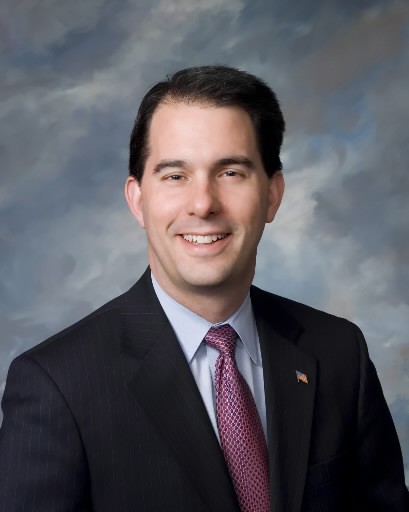
Governor Walker

You have to hand it to Wisconsin Gov. Scott Walker.  He wants to push through his legislative agenda come hell or high water.  After creating a national controversy about his battles with the state’s public unions, Walker and his Republican colleagues are in a hurry to ram through their laundry list of legislative initiatives before Wisconsin voters have a chance to potentially recall a number of them.

Among Gov. Walker’s favorites — a telecommunications deregulation bill ghost-written by AT&T.  If such legislation seems familiar to you, it is.  It’s largely the same bill written by and for telecommunications companies that withered in the Democratic-controlled legislature last year.  Now the Republicans hold the majority, and they see measures to strip out rate protection for basic landline service, investigations of consumer complaints, and holding low-rated companies’ feet to the fire as “anti-business and anti-competitive.”

Somehow, bill proponents claim, all of this deregulation will inspire AT&T and other companies to wire rural Wisconsin for broadband service, which would be a remarkable feat considering they’ve not done so in other states where they’ve passed nearly-identical deregulation bills several years ago.  In fact, the bill eliminates any state oversight of broadband matters period, end of story.

Perhaps AT&T’s goodwill will bring broadband to the rural masses.  What are the chances?  Not good, considering the proposed legislation also allows AT&T the right to abandon providing basic telephone service in the same rural areas still waiting for broadband.  Your chances of getting DSL from AT&T are markedly diminished if the company decides to disconnect your phone line, permanently.

“What’s in it for the citizens of Wisconsin?” asked Rob Boelk, president of one Wisconsin chapter of the Communications Workers of America that represents AT&T workers. “If you want to give away the farm, what will you get in return?”

Why campaign contribution checks, of course.

AT&T and other telecommunications companies have donated heavily to legislators in the state, particularly those sponsoring their legislative wishlists.  Walker has made serving the interests of AT&T and the Wisconsin State Telecommunications Association one of his top priorities this spring.

AT&T is delighted.  In fact, they are so confident in their friendship with Walker and the Republican-controlled legislature, they are willing to throw their usual deregulation allies overboard in the bill.  Verizon and Sprint are fiercely opposing AT&T’s bill, despite promoting it in prior years.  At issue are new provisions requiring wireless and VoIP providers to pay higher government fees and also pay access charges for using other companies’ broadband networks (AT&T’s) to complete calls.

At a recent hearing, telecom company executives told members of the state Senate’s Information Technology Committee Senate Bill 13‘s deregulation would bring competitive balance in the industry, wider broadband access and create tens of thousands of jobs.

They didn’t bring any evidence to back up those claims, but bill sponsor Rich Zipperer, (R-Pewaukee) was ready to deliver AT&T’s talking points anyway.  He’s a helper.

“Today’s smart phone world is governed by rotary phone regulations,” Zipperer said. “We have to ensure our telecommunications infrastructure can keep up with market demands.”

Evidently that means upgrading wireless networks, something AT&T is preoccupied with these days judging from their television ads, while ignoring Wisconsin’s rural consumers.

In fact, when similar bills passed in other AT&T states, basic telephone service rates began increasing, sometimes repeatedly.  AT&T wants to push customers into pre-packaged bundles of services, so most of the savings go to those who take all of their telecommunications business to AT&T.  But if all you want (or can afford) is a basic telephone line, price increases are in your future.

The dollar-a-holler groups are out and about

Zipperer called copper wire landlines “ancient technology,” a relevant point if AT&T was delivering something better to every Wisconsin resident.  They are not.  Instead, while their landline network languishes in rural areas, the company is investing in U-verse upgrades in larger cities, setting up the potential for telecommunications have’s and have-no-longer’s.

Some of the accompanying documentation supporting the deregulation bill is also suspect.

We were particularly struck with broadband map data provided by bill proponents showing a bountiful supply of competitive choice for broadband service in Wisconsin. Ironically, their bill also bans the state from getting involved in broadband mapping in the future.  Those who control the maps control the debate over broadband availability.  As usual, provider-influenced maps promise service where none exists or comes with strings attached.

Providers equate wireless broadband as identical to DSL, fiber, and cable Internet service.  Because of that, customers even in “one-bar” towns can “enjoy” wireless broadband from AT&T and Verizon (as long as they keep it under 2-5GB a month with AT&T or under 10GB on Verizon’s mobile broadband plans.)  Sprint, which barely covers rural and suburban Wisconsin, is also considered a player.  So is T-Mobile, despite the fact AT&T wants to buy it.  For most of Wisconsin, the broadband reality is far different.  AT&T is the dominant provider of DSL and U-verse service, Time Warner Cable delivers most of the cable broadband.  In rural areas, a handful of Wireless ISPs deliver service to some areas, but many others have no access at all.

Robust competition?  No.  Will this bill change that?  No.

Wired Wisconsin is wired into AT&T's cash machine.

Deregulation only enhances the trend of landline providers like AT&T allowing their aging landline networks to go to pot.  Providing DSL or wireless broadband to rural Wisconsin requires the same return on investment with this bill as it does without, and these companies have refused to deliver either, using that reasoning, for years.

Despite common sense reality, the dollar-a-holler groups are working overtime with AT&T to push this bill.  Take “Wired Wisconsin,” a group particularly ‘burdened’ with its corporate sponsors (namely AT&T).  Wired Wisconsin is all for the deregulation bill, which they like to call “modernized telecom rules.”  The group’s leader Thad Nation, is a lobbyist who has run several campaigns promoting AT&T’s agenda, including the ironically-named Midwest Consumers for Choice and Competition, TV4Us and Technology for Ohio’s Tomorrow, all creatures of AT&T.

Nation’s lobbying firm explains how it works:

Getting government officials or bodies to do what you want isn’t easy. Government is inherently a slow, bureaucratic entity. When you want elected or appointed officials to change policy, you need a comprehensive plan – and the resources, relationships and quick-thinking to implement that plan.

We come to you with decades of experience in advocacy, moving legislators and engaging state agency leaders to action. Let us help you build and drive an aggressive advocacy agenda.

It’s a tough job, and Nation can be glad he isn’t doing it alone.  The Discovery Institute, which has turned pay-for-play research into an art form, was linked by Wired Wisconsin to “negate the myths and false assumptions” deregulation will bring.  They quote from Connected Nation, another industry connected group.  The only false assumption is that these people do this work for free and their results represent actual independent analysis.

Even if one were to believe AT&T’s claims, fact-checking them is just a few states away, in places like Arkansas, Kansas, or Texas.  None of them are bastions of rural broadband.  They weren’t before AT&T’s lobbying circus came to town and they still aren’t after they left.

Canada’s Conservatives Win Federal Elections; May Push Change in Telecom Policies

Prime Minister Stephen Harper

Canada went to the polls last week and managed to deliver a predictable majority for incumbent Prime Minister Stephen Harper and his Conservative Party.  Even Americans ignorant of Canadian politics knew as much, but more than a few with an interest in the country’s telecommunications future were stunned to watch some long-standing parties get handed their hats and ushered out the door into the political wilderness (for at least a few years anyway).

The former mighty Liberal Party — the one that always saw themselves as Canada’s Natural Governing Party, succumbed to an embarrassing election failure.  Leader Michael Ignatieff not only oversaw the loss of more than 40 Liberal seats in the House of Commons, he couldn’t even manage to hold his own, losing his Toronto-area seat in Etobicoke-Lakeshore.  The centrist party won just short of 19 percent of the popular vote.  That’s a long fall for the party of former Prime Minister Jean Chrétien, who won three successive majority governments in 1993, 1997 and 2000.  Much of the party’s strong support in Ontario collapsed, with seats swiped by Conservative and NDP candidates.  The centrist era is evidently over for now.

The Liberals take on telecommunications issues seemed mostly to rely on bashing whatever the Conservatives were doing.  Much of their criticism seemed to delight in Tory missteps and disorganization, particularly over what the party felt was incoherent policy direction for telecom issues.  Unfortunately, presenting a credible digital strategy alternative was not a high priority for the Liberals, and voters fretting about Internet Overcharging saw as much.  The Liberals have also taken flak for being too “establishment” and business friendly in recent years.  As a result, many former Liberal voters took their votes elsewhere.  At least Liberal Industry critic Marc Garneau survived.  He was successful at crystallizing the usage based billing (UBB) issue (and the CRTC’s failure by adopting it) in a way that consumers could easily understand.

The biggest catastrophe befell the Bloc Québécois, the separatist-motivated party in Quebec.  Outside of wins on the Gaspé Peninsula riding that covers the rural regional county municipalities of La Haute-Gaspésie, La Matapédia, Matane and La Mitis, and a few victories around Trois-Rivières, the Bloc was effectively obliterated — left with just four seats.  They had 47. That means the BQ is now too small to even count as an official party in Canada.  Observers say it was Quebec’s version of “throw the bums out,” with a very strong voter sentiment against “the establishment,” which in Quebec means the BQ.  Which Canadian party is the least establishment?  The NDP — and votes flowed in that direction.

On telecom issues, BQ members didn’t seem to appreciate Bell and Videotron’s usage-based-billing policies any more than the rest of Canada, and Bell in particular endured harsh questioning from BQ members at earlier hearings.

But the big news from the election was the sweeping realignment of Opposition to the Tories into the hands of the NDP – Canada’s social-democratic, left-wing New Democratic Party.  The NDP has championed opposition to UBB like no other party in Canada. Digital affairs critic Charlie Angus, who is a brash firebrand against corporate telecom abuse and their lackeys on the CRTC, will get an even larger platform to blast away at anti-consumer policies on offer from the telecom regulator.  Both Angus and the NDP champion Net Neutrality as well.  Two MPs from Toronto, Peggy Nash and Andrew Cash, will also bring strength to the NDP’s policy platform on copyright issues.

The NDP won most of the seats lost by the BQ in Quebec, and also won strongholds in western Ontario, northern British Columbia, Manitoba, and the Western Arctic.  In fact, NDP wins in Quebec were so frenzied, Leader Jack Layton found himself presiding over a dramatically younger caucus, including three McGill University students and a bartender in the heavily francophone riding of Berthier-Maskinonge.  That presents a problem for newly elected Ruth Ellen Brosseau, who so disbelieved she was a serious candidate, she spent the last week of the campaign running around Las Vegas.  She also doesn’t speak French.  A local station that finally reached her in Las Vegas to discuss her win had to abandon the interview when she was unable to offer coherent answers to questions in Quebec’s majority language.  Rosetta Stone is in her near future.  So is a trip to her district — Brosseau told the Trois-Rivières newspaper Le Nouvelliste she has never stepped foot in the riding before.  But she offered the people there seemed nice.

While the NDP doesn’t have a majority, they are sure to call out any Conservative telecommunications policies that appear to be anti-consumer, and turn them into media events — good news for a country whose television media often ignores telecommunications stories.  A five minute interview with Charlie Angus will surely deliver plenty of amusing soundbites for the evening news.

With the strengthened majority of the Conservative Party, it’s a safe bet Canadian telecommunications policies will no longer be stuck in neutral.  There are open questions if Tony Clement, Industry Minister will retain his portfolio or make a move elsewhere in government.  Clement has steadfastly insisted UBB is unacceptable to him and the government.  The upcoming review by the CRTC of their earlier decision is likely to give the government some time to sort things out.  The Conservatives ignored Openmedia.ca’s request for a formal position against UBB, something that does give us pause.

It will remain important for Canadian consumers to keep the pressure on the Tories to act when regulatory bodies like the CRTC fail.  The natural view of the Conservatives in to let the marketplace sort things out, but even they recognize that is an impossibility in a duopoly.  When 500,000 Canadians sign a petition against UBB, standing with big cable and phone companies would be political suicide.

What Conservatives are likely to promote is increased competition.  So far, that has not meant much, especially as consolidation continues in the broadcasting and telecommunications sector.  The Tories best answer for now is throwing doors open to foreign investment in telecommunications, especially in wireless.  That will mean relaxing foreign ownership rules which could help new cell phone entrants — Wind Mobile, Mobilicity and Public Mobile expand their competitive reach.  If the Tories adopt the new rules, even AT&T could move north of the border — but that will bring no relief to Canadians seeking an escape from Internet Overcharging schemes.  Other issues likely to come up — copyright reform legislation, royalty taxes imposed on digital devices, and piracy.

Search This Site:

Contributions:

Recent Comments:

Your Account:

Stop the Cap!