Home » Competition » Recent Articles:

Why Community Fiber Broadband is Better Than Most of Today’s Big Cable/Telco Alternatives

Phillip Dampier July 11, 2011 Broadband Speed, Community Networks, Competition, Public Policy & Gov't, Video Comments Off on Why Community Fiber Broadband is Better Than Most of Today’s Big Cable/Telco Alternatives

Digging into the reality of community broadband – the New Rules Project compares the broadband prices and speeds of community networks to incumbent providers, using examples from North Carolina that are representative of modern community fiber networks. Incumbent providers including AT&T, Comcast, and Time Warner Cable want to outlaw these networks even as many, including the Federal Communications Commission, recognize the clear benefits of allowing communities to decide locally whether such an investment makes sense.  What is your broadband service like?  Would you trade your ISP for one of these community fiber providers?  (3 minutes)

DSL Threatened by Obsolescence in Asian-Pacific Region; Fiber Broadband Replaces Old School Internet

Phillip Dampier July 11, 2011 Broadband Speed, Competition, Public Policy & Gov't Comments Off on DSL Threatened by Obsolescence in Asian-Pacific Region; Fiber Broadband Replaces Old School Internet

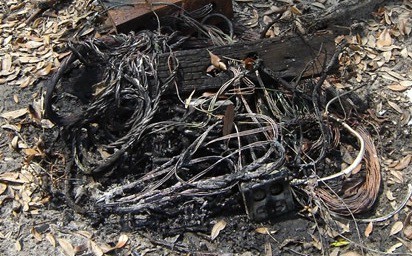
Discarded copper wire

Fixed line DSL service is at risk of obsolescence in Asia and the Pacific thanks to the widespread deployment of fiber optic cable.

According to a report from the industry analyst firm Ovum, fiber broadband will surpass DSL’s market lead in the Asia-Pacific region by 2014.

Study co-author Julie Kuntsler says Hong Kong, Japan, Korea and Taiwan has already achieved more than 25 percent penetration of fiber to the home in those countries, and the People’s Republic of China’s accelerated fiber deployments mean that country is also on track to retire millions of miles of obsolete copper wiring in favor of fiber-delivered broadband.

With China’s enormous population, even today’s small percentage of Chinese citizens with access to fiber, currently 4 percent, still delivers a staggering number of customers now in excess of 74 million.

But fiber broadband growth is not just limited to those countries.  Fiber expansion projects are underway in  Australia, Bangladesh, India, Indonesia, Malaysia, New Zealand, Pakistan, the Philippines, Singapore, Thailand, and Vietnam — growth that will deliver faster broadband expansion than found in North America, where most phone companies continue to rely on traditional DSL, especially in rural service areas.

Factors that help promote fiber broadband deployment include cohesive national broadband policies from governments that insist on more than incremental broadband expansion, financial incentives for providers who install fiber broadband for consumers, and a population that wants fiber-fast Internet speeds.

The Fiber to the Home Council – Asia-Pacific predicts that 129 million customers in the region will dump copper wire DSL for fiber to the premises by 2014. Cable broadband will also increase its market share.  Combined, the two technologies will shove traditional DSL to second place, as the technology is expected to see no market share growth for the foreseeable future.

Updated: Canada’s Telecom Regulator Investigates Rigged Broadband Pricing in Six Days of Hearings

The Canadian Radio-television Telecommunications Commission is investigating Canadian ISP practices all week in a series of public hearings.

The Canadian Radio-television and Telecommunications Commission (CRTC) opened the first day of hearings on the practice of usage-based billing for Internet usage, advocated by the country’s largest wholesale provider of Internet bandwidth, Bell Canada.

These hearings are a follow-up to earlier ones that ultimately allowed Bell to mandate usage billing not only for its own customers, but for all independent ISPs that purchase bandwidth from the company.  Since the vast majority of independent providers purchase bandwidth from Bell, the CRTC ruling would have mandated the end of “unlimited use” Internet plans across the country.

Nearly a half-million Canadians disagreed with the CRTC ruling and created a political firestorm earlier this year, demanding that the government step in and overturn the CRTC ruling.  Bell temporarily withdrew the usage based billing mandate pending the outcome of hearings expected to run from today until early next week.

Appearing at today’s hearing, executives from Bell continued to defend usage-based pricing and plan pricing that forces consumers to guess at how much Internet usage they will need each month.

In more aggressive questioning than earlier hearings, CRTC chairman Konrad von Finckenstein questioned Internet pricing plans that do not “rollover” or rebate consumers for unused usage, but still penalizes customers for going over their plan limits.

von Finckenstein also questioned Bell’s pricing for independent ISPs, particularly penalty rates ISPs who underestimate their wholesale usage needs would face under Bell’s advocated pricing model.  The chairman seemed suspicious of the fact Bell does not charge its own ISP unit penalty rates, only independent providers.

The hearing will also explore why companies like Bell can deliver “unlimited viewing” on their Fibe TV IPTV service, but cannot deliver unlimited Internet access to end users.

Interested in following the hearings live? Visit the CRTC live stream hearing page.

[Updated 10:20am ET: Bell Canada executives just admitted in this morning’s hearings its Internet Overcharging scheme involving usage pricing many times higher than the actual cost of provisioning the service was driven by “competition” and not by “congestion” issues.  In other words, Canadian consumers are paying very high Internet pricing and overlimit fees because of the pervasive lack of competition, not because companies need the extra money to “upgrade their networks.”]

Canada: Get Off the Internet and Go Outside – You Are the Second Largest ‘Data Hog’ in the World

Phillip Dampier July 7, 2011 Broadband Speed, Canada, Competition, Data Caps, Public Policy & Gov't, Wireless Broadband Comments Off on Canada: Get Off the Internet and Go Outside – You Are the Second Largest ‘Data Hog’ in the World

Toronto

Except for South Korea, nobody uses the Internet more than Canadians.  That’s an important finding in a new report produced for Canada’s telecommunications regulator to better understand the current state of the broadband market in the country.

According to recent reports from the Organization for Economic Cooperation and Development, the country generates 2,288 terabytes of data traffic per month per 100,000 residents.  That’s among the highest in the world and comes from avid web browsing, watching online video, and a love affair with smartphones.

But like many relationships, this one is also expensive.  You pay all of the money you have to spare, and your provider delivers you just enough of a usage fix to keep you from running to Ottawa to demand change.

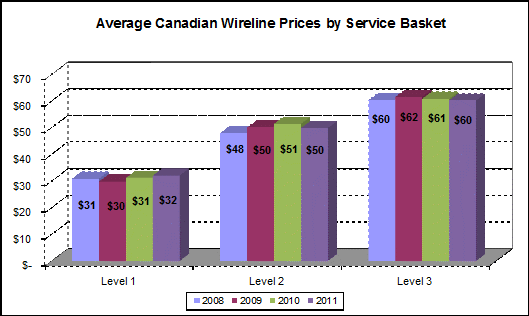
Canadian broadband pricing is in the top third of all OECD-measured nations, with the average price for High Speed Internet running $55.18.  The average median price across all OECD members runs a lot less — $39.23 per month.  If you want to pay less, you have to bundle your landline, cell phone, television, and Internet service with the same provider, or make due with a slow speed “lite user” plan, where average pricing had been running lower until this year.

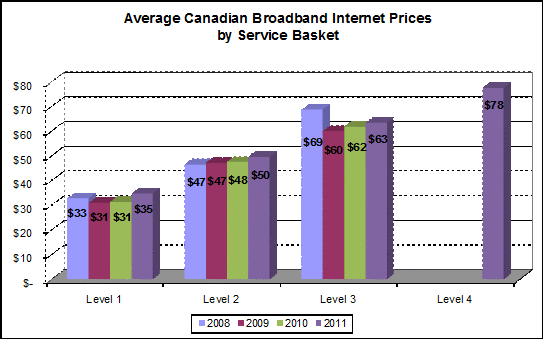
The average monthly price of the Level 1 basket increased to roughly $35 in 2011, up considerably from $31 the previous year.

Similarly, average monthly price of the Level 2 basket increased this year as well to roughly $50, up from $48 last year.  The average advertized download speed of the services included in the Level 2 basket is close to 6.5 Mbps, which is similar to the average speed in last year’s study.

The average monthly price of the Level 3 basket also increased slightly to $63, but still remains well below the 2008 price of $69 per month.  The average advertized download speed of the services included in the Level 3 basket is roughly 14 Mbps, which is slightly higher than in last year’s study (where the average speed was 12.5 Mbps).

Lastly, the average price of the new Level 4 broadband service basket is roughly $78 per month.  The advertized download speeds for the Level 4 broadband services included in the study range from 25 to 50 Mbps – the average is close to 30 Mbps.

Roughly half of the Canadian broadband service plans surveyed for this study included monthly usage caps.  For those that do, they range from 1 to 13 GB on the Level 1 service basket – the average is 7 GB per month.  The range for the Level 2 service basket is from 25 to 75 GB – the average is 55 GB per month.  The range for the Level 3 service basket is from 75 to 125 GB – the average is just over 90 GB per month.  There has been little change in these monthly usage caps, on average, compared to last year.

In the case of the new Level 4 broadband service basket, for those service providers applying data usage caps, the caps range from 75 to 250 GB per month – the average was close to 140 GB per month.

The Canadian pricing and usage study was developed by Wall Communications for the Canadian Radio-television and Telecommunications Commission.  The best news for Canada?  Your broadband pricing remains relatively stable, with some package pricing reducing the cost of the broadband component.  Standalone service appears to have increased in price only slightly in many markets.  Increased foreign investment in the wireless marketplace is shaking up wireless pricing, as the hegemony of Bell, Telus, Rogers, and Quebecor are under increasing competitive pressure.  It’s a much sunnier outlook than what is taking place in the country to your south.

For Americans, pricing is headed in only one direction: up.

All charts courtesy of Wall Communications, Inc.

“The Price is Too Damned High”: Verizon Wireless Customers Revolt on Facebook Page

A Verizon Wireless tweet from this morning welcoming customers to a new era of "wonderful usage based plans."

Verizon Wireless might be regretting having a Facebook page open for comments after users started excoriating the company yesterday, when it first publicly broached the subject of its now-implemented wireless Internet Overcharging scheme.

“The price is too damned high,” exclaimed one customer livid that new customers would pay $30 for just 2GB of data usage (one penny higher than the company’s now-retired unlimited use plan).  “$80 for 10GB?  And I thought AT&T was greedy,” commented another.

Judging from the countless hundreds of negative comments, Sprint is about to have a robust quarter of new customer additions defecting from Verizon.  Sprint retains its unlimited use plans on both its 3G and 4G networks, although the speeds do not compare favorably to Verizon’s LTE/4G network.

Matt Hamann summed up the sentiment of customers who despise usage caps, even if they are currently grandfathered on an unlimited use plan:

Hey, Verizon…I will *never* add another smartphone to my plan until you come up with fairer data prices. $30 for 2GB?? You gotta be kidding! How is this fair? How is it in your customer’s best interests?

Bottom line: IT ISN’T! It’s 90% corporate greed. What’s the best way to get more revenue from customers, huh?

Listen here: I’m already looking for better options. As soon as I find one, I’m gone. And I’ll take every family member and friend that I can along with me.

The best mobile provider you are no more.

Verizon created considerable confusion for their customers by saying nothing until just a day before the new plans took effect.  Although the media has covered the imminent end of unlimited data for over a week, customers have not been notified by Verizon itself, despite one customer’s claim Verizon told him they mailed letters in advance of the plan changes.

As we have reported, those customers with pre-existing unlimited data plans will be able to retain them indefinitely, even if they upgrade to a new phone in the future, and even if they renew their contract.  Only new customers, those changing plans or any new lines added to a family plan will face the “wonderful” tiered pricing Verizon tweeted about this morning.

To commemorate Verizon Wireless’ new mobile data prices, we present a clip from the leader of ‘The Rent is Too Damned High’ party.

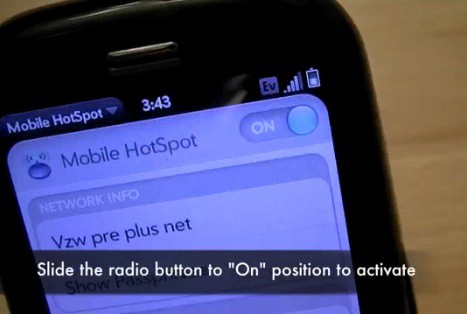
Mobile Hotspot App from Verizon Wireless (Courtesy: Pocketnow.com)

Things got considerably more confusing over the mobile Hotspot feature — a tethering application built into most Verizon smartphones.

Verizon Wireless representatives were sharing conflicting information with Stop the Cap! about the availability and pricing of this feature as late as this morning, but we’re now confident we have an answer the company will commit to for impacted customers.

For 3G Verizon Wireless smartphones, nothing changes.  It was $20 a month for 2GB before July 7th, and remains the same going forward.  For LTE/4G phone owners, things are much more confusing.  Existing customers have been enjoying free tethering on a special promotion made available only to 4G customers for several months now.  That promotion officially ended this morning.  A software update is imminent for 4G phone owners which will remove the free Hotspot feature and replace it with a prompt for one of two options:

  • a $20 for 2GB Hotspot plan
  • $30 Hotspot plan with unlimited usage

Most would be foolish not to lock in unlimited tethering with the $30 plan, which is a much better deal going forward.  Where the confusion comes in is for customers rushing out to upgrade their existing phones to a 4G phone just to lock in unlimited data -and- unlimited Hotspot tethering.

We spoke yesterday afternoon to Verizon Wireless representatives who denied any knowledge of the $30 unlimited tethering plan or confused it with the basic unlimited data plan.  Eventually, we were told only pre-existing customers with already-activated 4G phones would qualify for the option of choosing the $30 unlimited tether plan.  It was too late, even before yesterday at midnight, for others to hop on board this deal.

But by this morning, we were starting to get different answers, culminating in a Verizon representative telling Stop the Cap! any customer who placed an order for a 4G smartphone through Verizon Wireless that invoked a plan change (part of the process of ordering the phone direct from Verizon assures that) would have likely found the addition of the “Verizon Mobile Hotspot Promo” as one of the line items added to your plan as part of the order.  If so, that qualifies you for the $30 unlimited tethering option, even if you are still waiting for your 4G phone to arrive in the mail.

Verizon claims after you receive and activate your new 4G phone, attempts to use the Hotspot feature should offer you the choice for the $30 Hotspot plan.  If it does not, we have the name and contact details of a Verizon employee that should be able to cut through the red tape and get you this plan.  The only requirement is you had to order the phone before midnight on July 7th.

Verizon does not know at this point if customers will be offered the promotional $30 unlimited price for a limited time only, or will forfeit it forever if they do not accept it immediately (or drop the optional add-on at some point).

Search This Site:

Contributions:

Recent Comments:

Your Account:

Stop the Cap!