Home » Competition » Recent Articles:

AT&T Drops the Ball in the Dakotas and Montana: Customers Forced Off Alltel Regret It

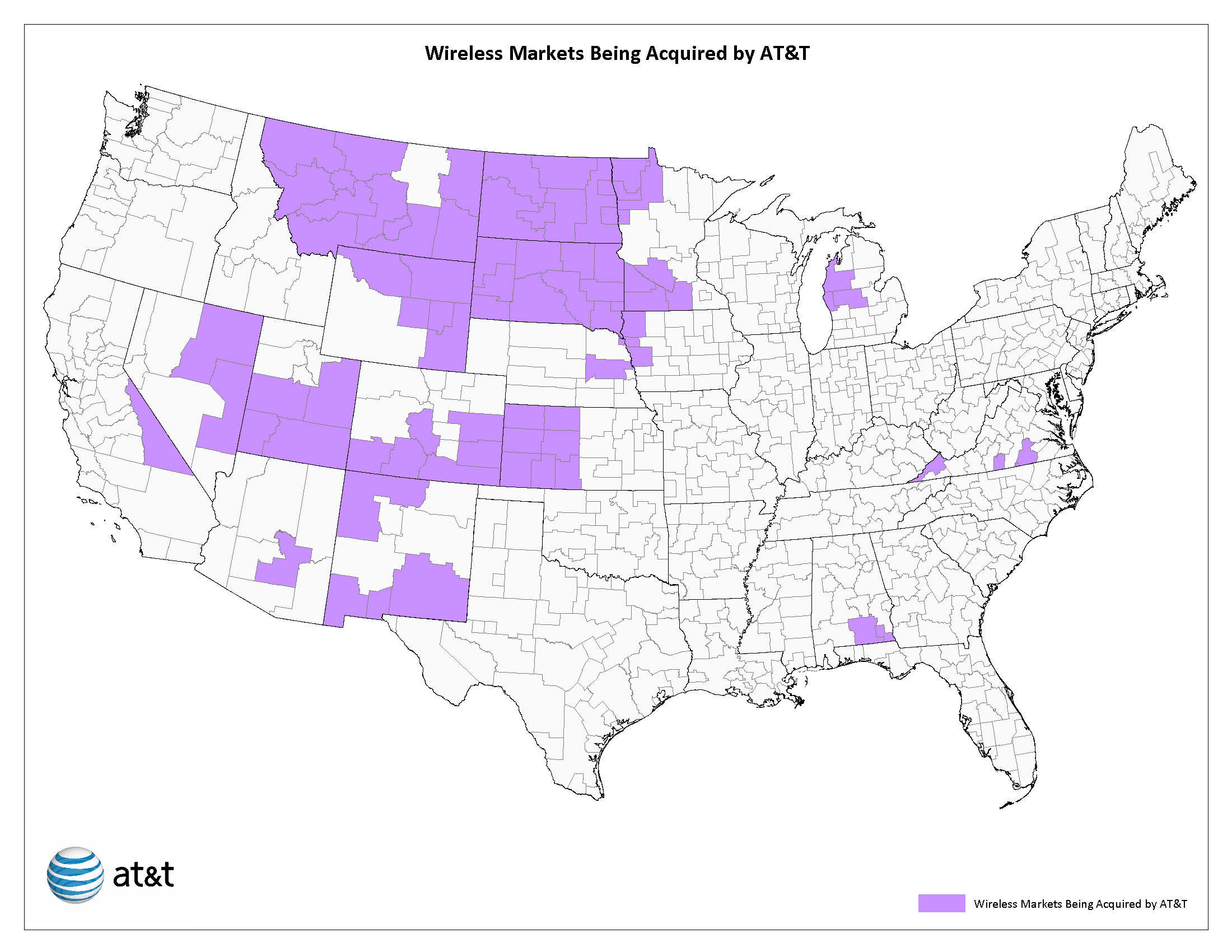
Alltel Service Areas Sold by Verizon Wireless to AT&T

When Verizon Wireless won approval of its takeover deal with formerly-independent wireless carrier Alltel, the federal government required Verizon to divest itself of Alltel’s assets in areas where the combined company would have a mega-share of the local wireless market.  The majority of affected customers, particularly in Montana and the Dakotas, were eventually acquired by AT&T, which uses a completely different network standard.  Customers were handed new phones that work on AT&T’s GSM network, but have since discovered those phones have little use in wide areas where AT&T simply doesn’t deliver a signal.

Even worse, Verizon’s robust network across the region is off-limits for roaming purposes, forcing customers that were perfectly satisfied with Alltel ready to throw their AT&T phones off Mount Rushmore.

“We got stuck with AT&T, which doesn’t care about the rural areas,” Mark Freeman of Harlowtown, Montana told a visiting reporter with the Wall Street Journal.

In the Black Hills, where AT&T’s network is as spartan as the landscape, some customers waited months before they could actually make and receive phone calls in places where Alltel’s old network (and their roaming agreement with Verizon Wireless) suited local residents just fine.

“We’ve been getting dropped calls, missed calls, and [have trouble] servicing [ATM] machines,” said Bill Huffman, an armored car worker in Sioux Falls frustrated by AT&T.  Area ATM machines depend on AT&T’s wireless network to alert drivers when local cash machines run low.  But AT&T’s network isn’t dependable, according to Huffman.

Ironically, customers are flocking to the carrier that would have been their new provider to begin with if not for the federal government divestiture order: Verizon Wireless.

[flv width=”512″ height=”308″]http://www.phillipdampier.com/video/WSJ In South Dakota Dropped Calls and Dead Spots 11-27-11.flv[/flv]

Verizon Wireless stores in the region have suffered periodic equipment shortages ever since AT&T switched on their own, less satisfactory network.  That’s because AT&T customers are dropping their contracts at a rate rivaling the number of calls AT&T itself drops across the region.  The Wall Street Journal visits with perturbed local residents in Montana and South Dakota.  (4 minutes)

FCC Releases Report Slamming AT&T/T-Mobile Deal As a Job and Competition Killer

The Federal Communications Commission has concluded allowing AT&T and T-Mobile to merge will cause huge job losses and knock out a vital wireless competitor in an increasingly concentrated U.S. wireless marketplace.

The new 266-page document, produced by FCC staffers, directly challenges AT&T’s contention that the merger will bring about job creation and an improved mobile broadband network for millions of rural Americans.

The report comes on the heels of news the Commission will allow the FCC to withdraw its pending application before the FCC to win approval of the merger.  That allows the company to resubmit the merger request at a later date.
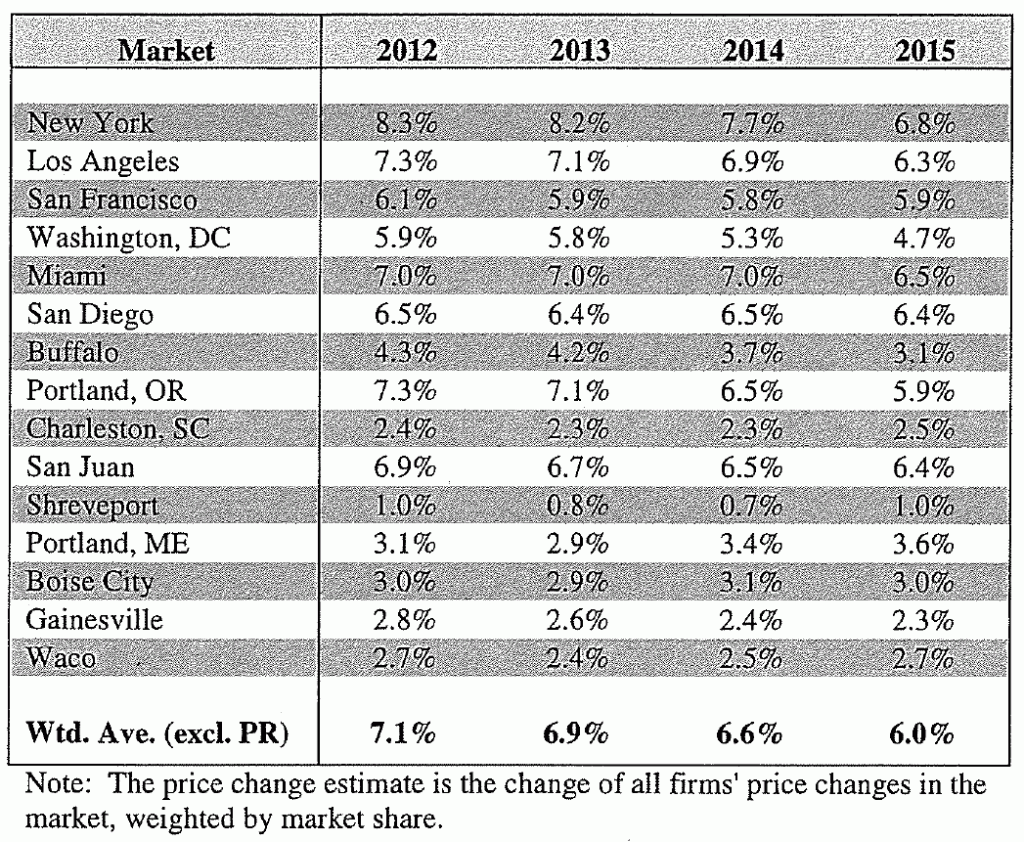
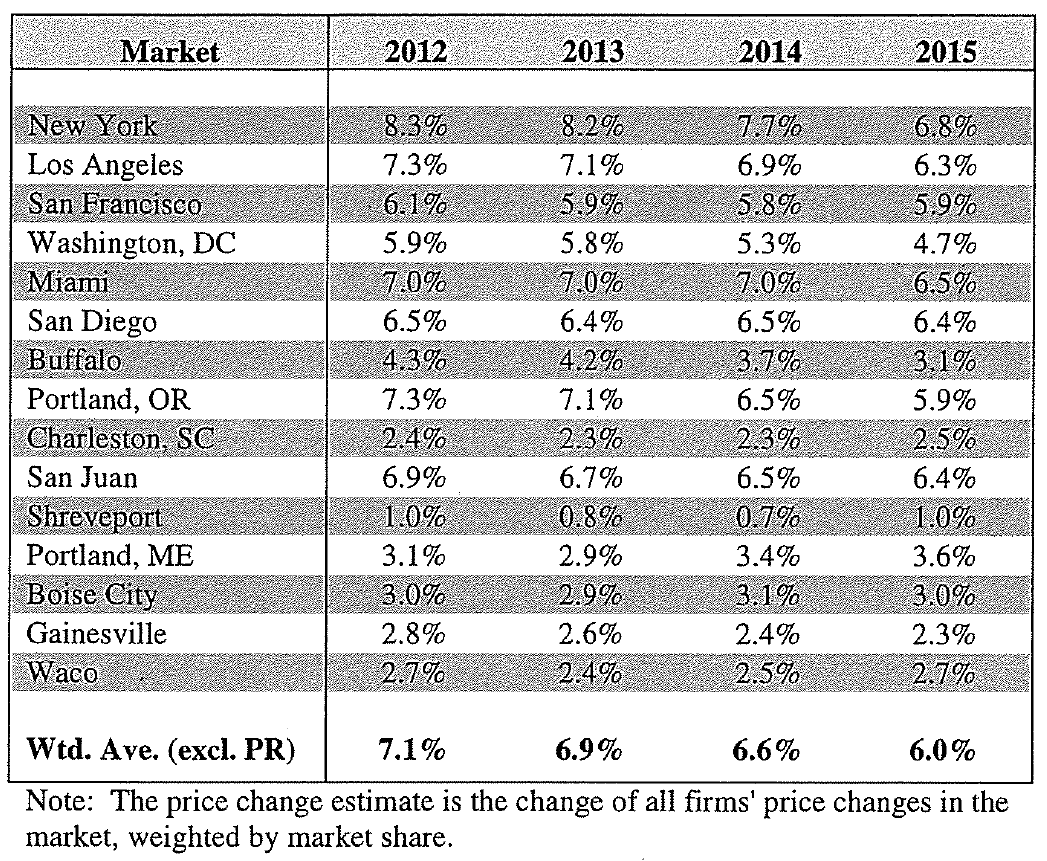
The FCC determined prices will increase an average of 6-7% in these cities if the merger deal gets approved.

The new report, occasionally redacted to remove competitive information, found AT&T vastly exaggerating the benefits of the deal, questioning whether it would indeed lead to lower prices for consumers, bring about enhanced service, and create new jobs.

Overall, the agency concludes, AT&T and T-Mobile have failed to meet their burden of proof that the merger is in the public interest.  The FCC staffers found no compelling reason why AT&T needed T-Mobile to build out its 4G network to the majority of the country.  Indeed, memos accidentally leaked to the Commission by AT&T’s legal team suggested AT&T executives rejected expansion plans as too costly.  Instead, they proposed a $39 billion dollar merger with T-Mobile with a $6 billion deal cancellation clause.  That penalty exceeds the $3.8 billion AT&T rejected spending to pursue 4G upgrades on its own.
Among the Commission report’s findings:

  • The merger would increasingly concentrate the U.S. wireless marketplace, leading to unilateral and coordinated efforts to raise prices by remaining carriers;
  • Roaming agreements for remaining smaller and regional carriers could become more difficult and expensive to reach with fewer players in the marketplace;
  • Pricing innovation, a hallmark of T-Mobile, would be lost.  T-Mobile is cited by the FCC as one of America’s most-disruptive carriers, forcing other companies to match their aggressive offers;
  • Despite AT&T’s promises to grandfather existing T-Mobile customers to their existing plans, customers would be unable to upgrade to an equally innovative plan T-Mobile probably would have offered on its own.  Instead, customers would be forced to choose one of AT&T’s more expensive, traditional plans;
  • AT&T is overstating the importance of remaining competitors, especially regional carriers and Leap Wireless’ Cricket and MetroPCS, which all have a negligible market share and depend heavily on roaming agreements with companies like Verizon, Sprint, and AT&T to survive;
  • Substantial evidence exists to believe without T-Mobile, AT&T and Verizon Wireless would likely raise prices and mimic each others’ respective service plans, pricing, usage allowances, and network policies;
  • Sprint will probably be forced to raise prices as a consequence of the merger to pay for increasingly expensive backhaul and roaming services, often purchased from AT&T or Verizon.  Sprint would also be pressured by market forces into pricing its services closer to AT&T and Verizon, if only to pay for handset and subscriber acquisition costs.  Sprint’s new customers often come from T-Mobile or smaller providers — less often from AT&T and Verizon.
  • AT&T did not submit sufficient evidence to demonstrate the combination of T-Mobile and AT&T’s cell sites would substantially relieve congestion issues, especially in America’s largest cities where AT&T’s network issues are the worst;
  • AT&T’s own documents suggest the company will fire most of T-Mobile’s customer service staff post-merger, leading ironically to the loss of a customer service support unit that has a higher customer satisfaction rating than AT&T itself.  Not only would T-Mobile customers be forced to deal with AT&T’s customer service, AT&T customers will have to compete with millions of T-Mobile customers for the time and attention of AT&T’s existing customer service representatives — a recipe for a congestion of a different kind;
  • Much of the cost savings realized from the merger, earned from laying off T-Mobile workers, closing T-Mobile retail stores, terminating reseller agreements, and unifying billing, administration, and network technologies, will be realized by AT&T (and its shareholders), not average customers.  The end effect for consumers will be higher prices and a deteriorating level of customer service.
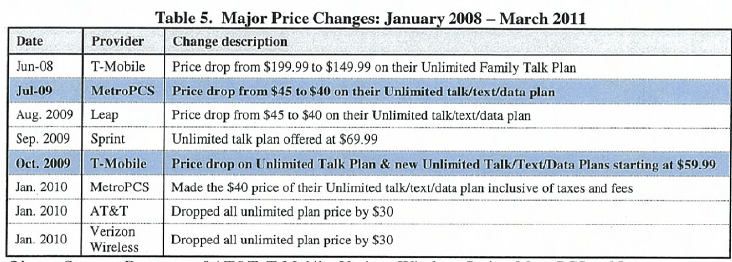
Smaller, scrappier carriers with aggressive pricing have historically forced larger companies like AT&T and Verizon to compete by lowering prices and offering more generous calling and data plans.

The report angered AT&T’s chief lobbyist, Jim Cicconi, who called its release “troubling” because, in his words, it represents a “staff draft” not voted on by the Commission as a whole.

“It has no force or effect under the law, which raises questions as to why the FCC would choose to release it,” Cicconi said in a statement. “The draft report has also not been made available to AT&T prior to today, so we have had no opportunity to address or rebut its claims, which makes its release all the more improper.”

But the report’s substantial research suggests FCC staffers have taken a very close look at the arguments and the evidence submitted by AT&T, T-Mobile and opponents of the deal.  The findings only favor AT&T and T-Mobile with a mild agreement that combining resources in certain markets where both compete might reduce network redundancy.  But the cost to consumers is way too high, the report concludes.

Sprint couldn’t be happier with the report’s findings, saying in a statement:

“The investigation’s findings are clear. Approval of AT&T’s bid for T-Mobile would lead to higher prices for consumers, eliminate jobs, harm competition, and dampen innovation across the wireless industry.”

An unredacted copy of the findings will be available to the U.S. Department of Justice for its consideration as it presses its own legal case against AT&T to derail the merger on anti-competitive grounds.
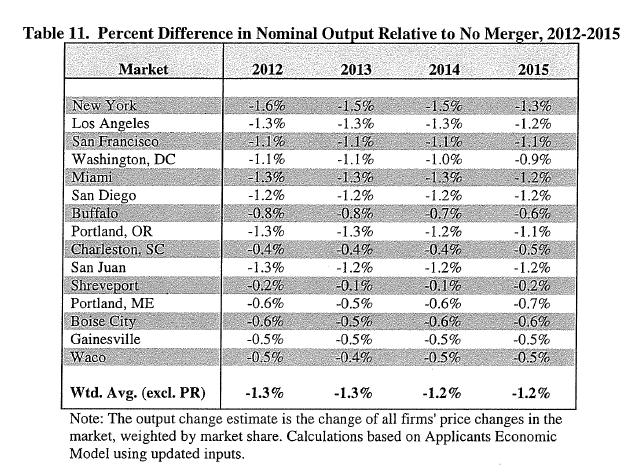
Should T-Mobile remain independent, the FCC says wireless prices will decline.


Dear Valued Time Warner Cable Customer: Pay Us More… Or Not — Here’s How

Phillip Dampier November 29, 2011 Competition, Consumer News, Editorial & Site News 1 Comment

Pay $160 a month... or $89.99

Time Warner Cable attached their new rate schedule to my November cable bill which arrived in the mail last week.  It’s the second major rate increase in western New York this year, and it means customers who just want to watch standard basic cable television will now pay $80.50 a month to do so.  We’re a long, LONG way from the $20 cable TV package the industry used to advertise as “less expensive than a cup of coffee a day.”  This is Starbucks’ coffee pricing, with no end in sight.

Time Warner Cable’s Triple-Play package of phone, Internet, and television service will now run $160.49 a month here in Rochester.  It wasn’t too long ago that a bill that size was reserved for the gas and electric company, or perhaps for a used car payment.  That’s before taxes, franchise fees, and other pad-ons, too.  Need that extra set top box?  Add another $7 a month each with remote control.  Want to speed up your broadband?  $10 a month for that.  HBO?  Time Warner Cable’s premium channel-pricing completely ignores today’s economic and marketplace (Netflix/Redbox) realities.

The cable company does have competition in the television business. In the same day’s mail was the latest offer from DirecTV, which has nearly as many sneaky extra fees as local phone company Frontier Communications.  That $24.99 a month “amazing deal” starts to snowball as you build a package, and it also means a satellite dish on your roof, which some people just don’t want.

Assuming you stick with the cable company’s triple play package, the sobering truth is that doing business with Time Warner at their everyday-high-pricing will cost you at least $1,920 a year.  But you don’t always have to pay them the asking price.

So with rate increase notice in hand, what can you do?

  1. Call them up and tell them the relationship is over unless changes are made.  Good things come to those who wait for the other side of the relationship to start sacrificing for a change.  You’ve coped with rate hikes for years and cable companies keep shoveling more channels you never watch and then raise rates because of “increased programming costs.” This time, let the cable company give a little.  Call and tell them you want to disconnect your service two weeks from today.  A retention specialist will attempt to negotiate with you (starting with efforts to pare down your package, leaving you still paying regular price for fewer services).  Be non-committal,  because better deals will start to arrive by phone as early as a few hours after telling them you’re leaving.  (But you have to answer those unfamiliar Caller-ID calls to hear about them.)  The worst that will happen is you don’t win a significantly better deal. You still have two weeks to rescind the cancel request with no interruption in service and at least get something for your efforts.  Consolation prizes to sweeten a mediocre retention deal: free sample of premium channels, a free Turbo-class upgrade for Road Runner, and/or a break on DVR service.

  2. Compare prices.  If you live in an area with telephone company-delivered TV, offer to stay with the cable company if they will match the new customer offers you are probably already getting pelted with in your mailbox.  Most will.  There are customers who literally bounce back and forth between AT&T/Verizon and Comcast/Time Warner Cable year after year just to keep the $89-99 triple-play promotional price that effectively never expires.  Getting your existing provider to match it saves you and your provider the time and hassle of switching.

  3. Demand a new customer price.  Do a Google search for “Time Warner Cable deals” (or for your respective cable company) and at least a dozen offers will appear, mostly from third-party, authorized resellers.  Double-play offers for broadband and cable-TV often range between $75-85.  A triple play offer which adds phone service is usually just a few dollars more.  Some resellers pitch combo offers that deliver a discounted rate and a substantial rebate ($150), like the one below:

TURBO INTERNET, TV+HD, VOICE


  • Free DVR Service for 12 months
  • You Get $150 in Rebates!
  • No Fee HD
Features:

  • Digital Cable with Free On Demand Programming
  • On-Screen Program Guide
  • Parental Controls
  • Blazing High Speed Internet
  • Unlimited Calling anywhere in the US
  • No-Hassle standard Installation
  • Call Waiting, Caller ID, Call Forwarding and more are included at no extra charge
  • Plus You Get A 3 Month Free Trial of HD Service!
only
$99.99/mo
for 12 month

Ask Time Warner to match the price of these offers (you likely won’t get the rebate, however).  They certainly can come close on retention deals — in fact they will go as low as $85 a month for an annual triple play deal in some areas.

Some customers deal with intransigent retention agents by canceling service and quickly signing up as a new customer soon after.  That is more of a hassle, and some areas require a waiting period before they’ll offer a new customer promotion again, but the usual trick around this is to sign up under a spouse’s name.

It pays to shop around and read the fine print carefully.

For example, in the deal above, I highlighted three important features — the $150 rebate, which is important for reasons I’ll explain in a moment, the free DVR service, and “standard installation.”  In some cases, promotional offers for new customers do not include free installation or equipment, so it is always important to ask exactly what is included.  The $150 rebate will help defray those expenses, but some competing deals omit the rebate and knock $10 off the $99 monthly price for the same bouquet of services and installation is free.

  1. Drop services you don’t need.  Still paying for premium channels?  Why?  Also check your bill for extra mini-pay tiers for certain HD channels Time Warner Cable dropped a few years ago.  You may still be paying $5 a month or more for channels like HDNet Time Warner replaced with the hardly-comparable RFD-TV.  Some customers who signed up for a discounted promotional offer for Time Warner phone service are now paying upwards of $30 a month for the company’s regular-priced unlimited long distance plan.  Consider switching to the $20 “local calling only” plan.  You can make those long distance calls on your cell phone or Google Voice and save $120 a year.

Time Warner, like every other cable company, understands the word “cancel” very well.  The best way to put an end to endless rate increases is to refuse to pay them and being willing to cut the cord until they get the message.

FCC Chairman Calls AT&T CEO Personally to Deliver His Opposition to Merger Deal

Phillip Dampier November 28, 2011 AT&T, Competition, Public Policy & Gov't, T-Mobile, Video, Wireless Broadband Comments Off on FCC Chairman Calls AT&T CEO Personally to Deliver His Opposition to Merger Deal

Federal Communications Commission chairman Julius Genachowski personally called AT&T CEO Randall Stephenson a few days before Thanksgiving giving him advance notice he was moving to oppose AT&T’s merger with Deutsche Telekom’s T-Mobile USA.

Genachowski told Stephenson he was handing AT&T’s merger application over to an administrative judge — extremely bad news for the merger’s prospects.  The personal phone call was revealed Friday by AT&T, which disclosed it in an ex-parte communication filed with the FCC.

“During the call, Chairman (Julius) Genachowski indicated that he would be circulating to his fellow Commissioners a draft order approving the Qualcomm transaction and a draft order designating the T-Mobile transaction for an administrative hearing,” according to the filing. “Chairman Genachowski indicated that the draft designation order would likely be voted in the next several days or weeks but the administrative hearing would be deferred until after resolution of the pending litigation with the Department of Justice.”

It was the second piece of bad news received by AT&T last week, the first being notification the Justice Department had suddenly canceled a meeting it had planned to hold with AT&T about the merger and its antitrust implications.

Earlier today, Bloomberg News reported the FCC wasn’t so sure it would allow AT&T to refile its withdrawn merger application, which immediately brought new threats of legal action by the telecommunication company.

Now AT&T is considering a new strategy to save a merger given a 10 percent chance of succeeding, according to some analysts.  It will likely hold a fire sale of T-Mobile’s assets — up to 40 percent of them to be more exact, in order to satisfy regulators concerned about the merger’s anti-competitive implications.

The prospects make Wall Street bankers salivate with dreams of steep fees earned from structuring and marketing the equivalent of a corporate estate sale.

Among potential buyers might be regional players Leap Wireless, which owns Cricket, and MetroPCS.  The New York Times reports Mexico’s multi-billionaire Carlos Slim Helú, who owns Mexico’s América Móvil, might be interested in buying T-Mobile assets himself to boost the company’s American unit, better known as TracFone.

Sanford Bernstein’s Craig Moffett suggests it would be a mistake to ignore America’s largest cable operators, which own spectrum themselves and could integrate T-Mobile into a new mobile operator owned, controlled, and branded under the names of their respective cable owners.

[flv width=”640″ height=”500″]http://www.phillipdampier.com/video/Bloomberg Davis Says ATT Asset Sale May Be Tricky 11-28-11.flv[/flv]

Michael Nelson, analyst at Mizuho Securities USA Inc., and Jeffrey Davis, chief investment officer at Lee Munder Capital Group, discuss AT&T Inc.’s proposed purchase of T-Mobile USA Inc. AT&T, with its T-Mobile USA takeover facing regulatory opposition, is preparing the biggest remedy proposal yet to the Justice Department to salvage the $39 billion deal, according to a person familiar with the plan: an asset fire sale. From Bloomberg News.  (4 minutes)

Cogeco’s Days May Be Numbered: Asset Sale Abroad May Provoke Rogers Takeover

Phillip Dampier November 28, 2011 Canada, Cogeco, Competition, Rogers 2 Comments

Cogeco’s disastrous investment in a Portuguese cable company may be the beginning of the end for the Canadian cable operator.  Cogeco, which primarily serves smaller communities in Ontario and Quebec, may eventually find itself the property of Rogers Communications, Inc., particularly if its messy overseas cable operation can be dispensed with soon.

The Financial Post suggests rumors of Cogeco’s increasing efforts to rid itself of Portugal’s Cabovisao could be a prelude to a bigger sale of its Canadian cable operation to Rogers.

Cogeco’s interest in Portugal’s cable industry came after the company determined there were limited opportunities to invest or acquire cable operations in the highly concentrated North American market.  In 2006, it spent $660 million to acquire Cabovisao, two years before Portugal felt some of the worst impacts of a global economic crisis that continues to this day.

Cogeco's financial mess in Portugal.

Portugal’s efforts to stabilize its economy have brought widespread salary reductions and tax increases, making luxuries like full-priced cable service untenable.  Subscribers have been canceling in droves, either because they found a better deal from a competitor, or because they could no longer afford the monthly bill.

Earlier this summer, Cogeco wrote-off its entire investment in Cabovisao and has been rumored to be shopping the cable system for a quick sale.

One analyst told the newspaper if Cabovisao is for sale, Cogeco may be perceived to be “throwing in the towel” on the strategy of investing abroad — and moreover, paving the way for a takeover by Rogers.

Rogers already holds a nearly one-third equity interest in Cogeco.  Being rid of Cabovisao could make Cogeco that much more attractive to Rogers, whose systems largely surround Cogeco’s operations.

The only thing remaining in the way of a wholesale takeover could be the Audet family, which controls the majority of shares in Cogeco.  Earlier this summer, it was clear the Audets had no interest in selling, but that may be changing with the unwinding of its international investment strategy.

Search This Site:

Contributions:

Recent Comments:

Your Account:

Stop the Cap!