Home » Broadband Speed » Recent Articles:

Next Round of FCC Speed Testing Needs More Volunteers: Get a Free Router

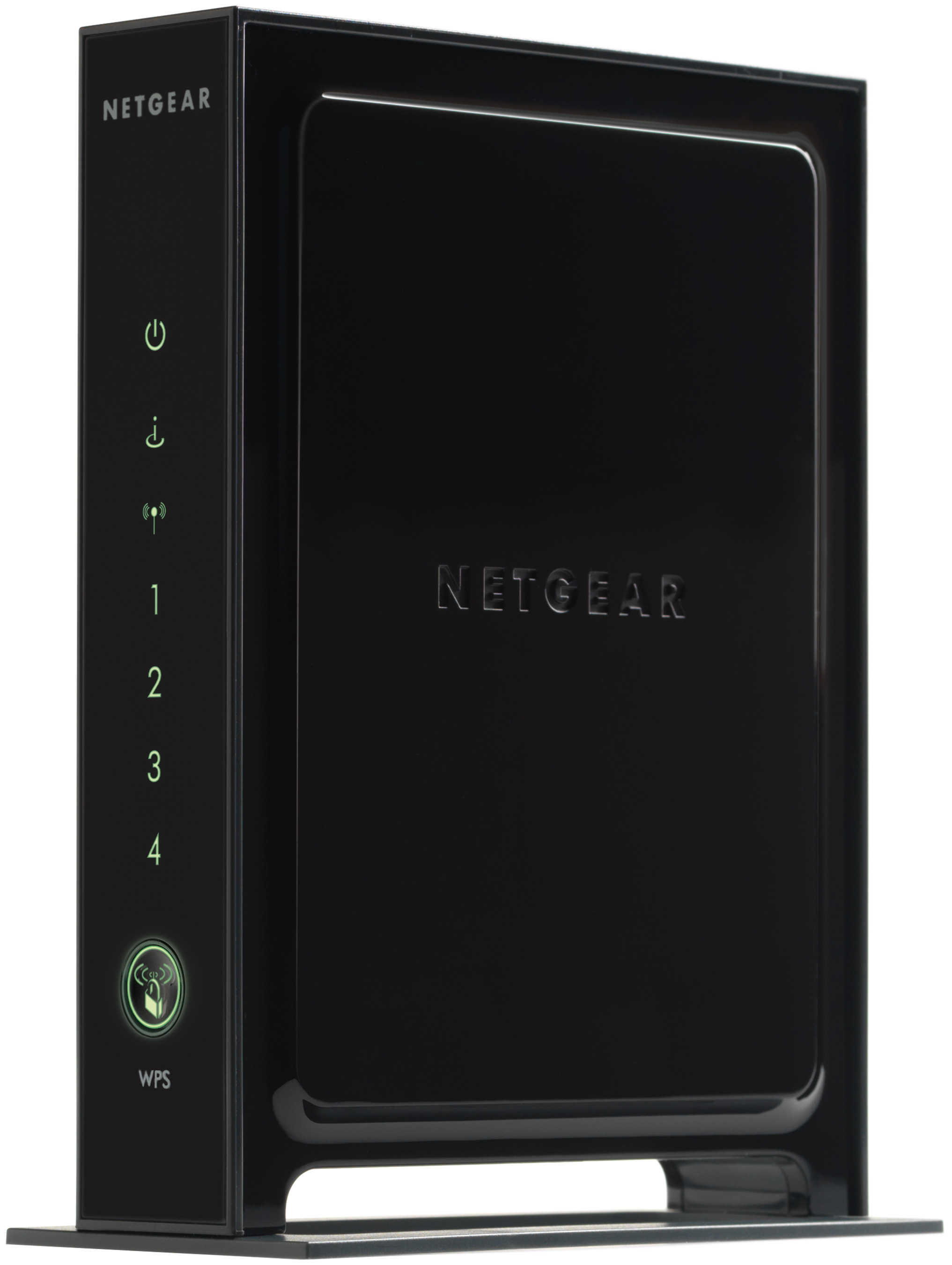
Netgear WNR3500L Wireless-N Router

The Federal Communications Commission’s efforts to measure America’s real broadband speeds needs you.  The federal agency is looking for American volunteers willing to host a wireless router that can conduct occasional background speed tests and report the results to Samknows, the independent company contracted to manage the testing program.  Stop the Cap! has participated in the project for more than eight months and can report the tests are completely un-intrusive and the router has worked well amongst all of our other broadband and networking equipment.

Samknows will supply you with a Netgear WNR3500L Wireless-N router free-of-charge.  We’ve found the router a tad plasticky, but it has performed well with no serious performance issues, especially after the firmware was updated earlier this year.  The router comes pre-configured with the speed and performance testing protocol built right in.  It conducts various automated tests a few times daily — tests that we’ve never found bothersome while using our broadband service.  It reports results back to Samknows, and by extension the FCC. Once a month you will receive an e-mailed “report card” for your particular Internet Service Provider’s performance.

Time Warner Cable has received high marks from our Samknows router here in Brighton, N.Y.  But we know of plenty of cases where volunteers have successfully been able to call out their providers with less-than-stellar performance results.  Just ask Cablevision, whose dismal performance in the first broadband report from the FCC exposed an obviously oversold broadband network.  Cablevision hurried out press releases trying to deflect blame, but we suspect they are also quietly upgrading their network to ensure no repeat performance of their failing grade in the next report.

The program is a great way to do your part to fight for better broadband in the United States, and you walk away with a free wireless router when it’s all over.

There are some requirements to participate:

  • You have a fixed line broadband Internet connection to your residence.
  • You use a standalone device to connect to your broadband service (a cable or DSL modem or router combination with modem built-in).
  • You have a stable broadband connection (i.e. it doesn’t disconnect frequently). Note that this is just referring to the connection – not the speed.
  • You are not a heavy downloader. Our tests can only run when your line below a certain traffic threshold, therefore we would not be able to run any tests if your line is in constant use.
  • You have a spare power socket near your existing router (or wherever you plan to connect the unit. Keep in mind that a network cable must run between the unit and your router though! We supply a 1m cable).
  • You need to be on one of the ISPs that we’re measuring.
  • You are not an employee or a family member of an employee of one of the ISPs being monitored.

With respect to being a “heavy downloader,” what Samknows really means here is that you are not running peer-to-peer file-sharing software 24/7.  They don’t mind if you spend a lot of time with Netflix or other online services.  If your provider delivers inconsistent service with frequent outages, I’d still apply.  The poor results will be reflected in the FCC report.

Participants also have to broadly agree with certain terms and conditions:

  • Not to unplug the unit or your ISP’s router unless away for an extended period of time.
  • Not attempt to reverse engineer or alter the unit.
  • To notify Samknows if and when you choose to change ISPs.
  • To return the unit to Samknows should you no longer wish to be involved (Samknows to pay reasonable postage costs).
  • To connect the unit in the way described in the documentation.
  • To keep Samknows updated with valid contact details (i.e. email and postal address).

In our experience, we can offer some clarifications here:

  1. They don’t care if you unplug equipment during a storm or for other short-term periods;
  2. They do allow you to run the equipment in “bridge mode,” meaning you can still rely on your primary router, leaving the Netgear Samknows router as an adjunct to your home network;
  3. You are allowed to apply firmware upgrades, as available, so long as they retain the performance testing protocol.

Applying is easy enough.  Simply complete the online form and Samknows will contact you when the next round of routers is prepared to ship.  It typically takes several weeks between rounds, so don’t expect an immediate reply.  The router will be sent to you through UPS or FedEx, no signature required.  The testing program is scheduled to last up to three years.

TDS Telecom: Losing 5.5 Percent of Its Landline Customers Every Year

Phillip Dampier August 9, 2011 Broadband Speed, Competition, Consumer News, Rural Broadband, TDS Telecom Comments Off on TDS Telecom: Losing 5.5 Percent of Its Landline Customers Every Year

TDS Telecom, the Madison, Wisc. independent telephone company serving about 1 million landline customers in rural and suburban communities in 30 states, is losing 5.5 percent of those customers every year, as consumers increasingly drop their landline telephone service.

In second quarter financial results reported to investors this week, TDS noted it is increasingly dependent on selling DSL broadband and managed data services to stabilize long term revenues and minimize line losses.  Like many independent phone companies, TDS’ largely rural service areas offer the opportunity of delivering broadband service to areas unserved by cable broadband, and unlikely to find robust cell phone or wireless data coverage.

Vicki Villacrez, TDS’ chief financial officer, reports the phone company now has a 60 percent penetration rate for residential landline customers taking DSL service.

TDS is losing more than 5% of their landline customers a year, which limits potential growth.

“High speed data subscribers grew 6% year-on-year.” Villacrez said. “We continue to attract healthy levels of new customers and they are taking higher speed. Over 80% of our data subscribers are taking speeds of three megabits or greater and 16% are taking greater than 10 megabit speeds.”

Because TDS customers are migrating to faster speeds, where available, the company’s average revenue per subscriber has remained stable at $37 per month.  That comes from a combination of the higher prices some customers pay for better service minus line losses, customer defections and retention offers delivering discounts to those threatening to switch providers.

TDS is also adopting similar strategies other phone companies are trying to hang onto customers: marketing their own triple play package of voice, broadband, and television service.  Like most smaller phone companies, TDS delivers voice and data over their existing copper wire network and relies on a resale arrangement with DISH Network to provide satellite television.

About 26 percent of TDS customers are enrolled in the company’s triple play package, up 2,700 customers in the quarter.

But the company’s cost control measures also signal TDS’ unwillingness to invest noticeably in expanding their DSL footprint to additional customers, or dramatically improve their existing network.  The company admits it plans to limit investment in new residential customers, and consolidated cash expenses were down 2.1% for the period, reflecting reduced spending.

Where is TDS willing to invest?  In data center assets and future acquisition opportunities.  TDS intends to broaden its presence in managed hosting and will continue to explore mergers and acquisition opportunities with other small, independent phone companies.

Bell’s Hilarious ‘Come Back’ Website Gives Subscribers Reminders Why They Left

Customers who flee Bell Canada’s products and services for lower prices and less abusive Internet Overcharging are being encouraged to visit what Bell internally calls its “customer winback” website.  It’s Bell Canada’s place to extend special pricing and promotional offers to those considering a return to the telephone company.  But Stop the Cap! found the offers less than compelling and some of the company’s claims a real stretch:

There are many reasons to switch to Bell.

Switch to Bell for the most reliable home phone service1. We’ve made many enhancements and are so confident you’ll enjoy our services, they come with a complete 30-day satisfaction guarantee, or your money back2.  Switching is easy.  You can keep your existing home phone number3 and we’ll take care of the details with your current service provider.

With Bell Home phone you’ll enjoy:

  • The most reliable service
  • No reconnection fees

Plus, take advantage of savings on more great Bell services for your home.

Bell Internet – Perfect for sharing

  • The largest fibre optic network in Canada
  • Upload speeds up to 3x faster than cable4
  • Free Wireless Home Network

Bell Satellite TV- Over 100 HD channels

  • Stunning HD picture quality – 10x better than regular cable
  • Canada’s best HD PVR5 – set and manage recordings from anywhere
  • On Demand movies in 1080p HD – the highest quality of any provider

With Bell Install, you get a complete and customized installation at no charge6. Sit back, relax and we’ll set everything up for you.

Join the thousands of customers switching to Bell every week and start saving.

With six footnotes to the fine print in as many paragraphs, warning bells begin to ring almost immediately.  Those footnotes can cost customers some real money:

1. Applies to traditional copper-based (excluding fibre-based) wireline telephony; compared to cable telephony and based on continued service during extended power outages at customer’s home.

In other words, Bell phone service is more reliable because it works when the power goes out, unless it’s from Bell’s Fibe TV.  When power drops, your Bell Fibe phone line goes with it.  But if your phone lines are rotten, nothing will save you from a phone service outage, whether you are a wireline or “fibre-based” customer.  By the way, although Fibe is fibre part of the way, it ultimately arrives for most customers on the same copper wire phone line technology you’ve had for decades.

2. Credit offered on service fees for TV, Internet, Home phone (excluding Mobility), and applicable installation, activation or equipment fees; does not apply to usage fees (such as long distance, additional Internet usage capacity, On Demand TV programming). Client must call within 30 days of activation. Conditions apply, see bell.ca/satisfaction.

Among the other terms and conditions not immediately disclosed:

  • No refunds will be issued to customers modifying or upgrading any existing Eligible Services;
  • Prior to issuing a refund for equipment purchased directly from Bell, the equipment must be returned to Bell in the same condition as when it was purchased, with all original packing materials, manuals, accessories and associated equipment, along with proof of purchase;
  • You may claim no more than one (1) refund under the Bell Satisfaction Guarantee in any 12 month period;
  • You must be fully compliant with the terms and conditions applicable to your Eligible Services, and
  • All accounts for Bell services must be in good standing.

3. Within same local calling area

A no-brainer.

4. Current as of May 1, 2011. Comparison between Bell Fibe Internet 25 (upload up to 7 Mbps) and Rogers Ultimate Internet (upload up to 2 Mbps).

Bell apparently doesn’t think Quebec’s Videotron is worth mentioning.  They upgraded to 3Mbps upload speeds for their highest tiers last February.  Like AT&T’s U-verse, “fiber to the neighborhood” networks simply cannot deliver the fastest download Internet experience that fiber to the home or cable DOCSIS 3 providers can deliver, although the upload speed for Fibe (when you actually achieve 7Mbps) is a nice change from the neutered speeds cable companies provide for “the up side.”  But Bell counts your upload traffic against the usage allowance.

5. Based on a combination of 30-second skip function, 9-day programming guide, expandable recording capacity and remote PVR feature. Additional equipment required.

Additional equipment costs additional money.

6. Conditions apply; see bell.ca/fullinstall for Bell Internet and bell.ca/installationincluded for Bell TV. For Home Phone, available to customers with Home Phone Choice or Complete, or with Unlimited Canada/US long distance plan, or the Bell Bundle; one-time activation fee (up to $55/line) applies, credited on the account before taxes, and additional charges may apply for installation of a new phone jack.

A complete and customized installation “at no charge,” except for that pesky $55 “activation fee” eventually credited on the account (but you still pay GST/PST on the ‘rebated’ amount).  Some of our readers have complained to us that they’ve had to call Bell, sometimes repeatedly, to get that activation fee credited back.  Bell sometimes forgets.

Unfortunately, for too many in suburban and rural Canada, it’s Bell telephone infrastructure or nothing — no cable provider exists to offer a competitive alternative.  They are the company that charges more for less.

Considering Bell is Canada’s number one advocate for Internet Overcharging, you can do better with almost any other provider.  Let Bell know they can “win you back” when they deliver scheme-free service at a fair and reasonable price.  Until then, tell them they can swing alone.

Windstream’s 2nd Quarter: “Broadband For Us Is About Revenue Growth”

Phillip Dampier August 8, 2011 Broadband Speed, Competition, Online Video, Public Policy & Gov't, Rural Broadband, Video, Windstream Comments Off on Windstream’s 2nd Quarter: “Broadband For Us Is About Revenue Growth”

“We’ve been talking for some time that broadband for us is not just about customer growth… it’s about revenue growth.” — Anthony Thomas, Windstream’s Chief Financial Officer

For the first time in some time, Windstream reported revenue growth during the second quarter of 2011.  The independent landline telephone company that last week acquired Rochester-based PAETEC Corporation managed to win new revenue from its business services unit and equipment sales, even as it continues to lose core landline customers, who are disconnecting service in favor of cell phones or cable telephone products.

It added up to a measurable, but meager growth of 0.1 percent for the company year-over-year during the second quarter.

Like many traditional wireline phone companies, Windstream is betting the farm in their largely rural and suburban service areas on selling broadband and maintaining the allegiance of their business customers, challenged in larger cities by increasingly aggressive “Business Class” products from competing cable companies.

Windstream executives responded to questions from Wall Street bankers during their second quarter conference call held last Friday.

While several investment firms were happy to see Windstream manage some revenue growth, several zeroed in on the company’s increased capital expenditures.  Windstream reports the company will continue major investments in fiber and broadband services, but not primarily for their residential retail customers.  Instead, Windstream hopes to capitalize on the “high margin” business of selling fiber-based cell tower services, primarily to support forthcoming 4G deployments.

Windstream officials faced some hesitancy from Wall Street about the company’s spending during Friday’s conference call, particularly from Bank of America and Goldman Sachs.

Anthony Thomas, chief financial officer for Windstream, defended the investments.

“The most important part of fiber-to-the-tower projects are the initial investments. Those are very high-margin businesses,” Thomas said. “But you have be comfortable with the upfront capital and be patient at recognizing those are 6-to 12-month investment time horizons. But once you start bringing those revenues in, the actual cost of operating a tower is low.”

Wall Street also expressed concerns about consumer broadband traffic growth, but did not broach the subject of usage control measures like usage caps or metered billing.  Windstream acknowledged the growth, primarily from online video, and said it had well-equipped data centers to handle the traffic.

Windsteam’s Consumer Strategy: Bundle Customers & Keep Them Away from Cable TV

It's all about the bundle.

Online video may be an asset for Windstream, which is facing increasing challenges retaining landline customers and up-selling them other products like broadband.  That competition comes primarily from cable companies, who are targeting Windstream customers with invitations to cut their landline service and bring all of their telecommunications business to cable.

Traditional phone companies have a major weakness in their product bundle: video.  Independent phone companies, in particular, are usually reliant on satellite TV partners to support the television component of a traditional “triple play” bundle.  Windstream’s network is capable of telephone and slow speed broadband in most areas, but the company’s involvement in video is largely left to a third party satellite-TV provider.

Customers who do not want satellite TV service may be easily attracted to a local cable provider.  But as an increasing amount of video viewing is moving online, Windstream may find customers increasingly tolerant of doing their viewing online, reducing the importance of a video package.

Windstream’s strategies to keep customers:

  • Sell customers on product bundles, now enhanced with online security/antivirus options and on-call technical support for computer-related technical issues;
  • Pitch Windstream’s Lifetime Price Guarantee, which locks in a single price for basic services, good as long as you remain a customer;
  • Challenge cable competitors head-on with its “Quitter Campaign,” which tries to convince cable customers to “quit cable” in favor of Windstream;
  • Offer faster broadband speeds in limited areas to satisfy premium customer demand.

Windstream Tries to Convince Customers the Broadband Speeds It Doesn’t Offer Do Not Matter for Most

Windstream’s efforts at winning over new broadband customers have been waning as of late.  One of the primary issues Windstream faces is the cable industry’s effective portrayal of DSL as “yesterday’s” technology, incapable of delivering the broadband speeds consumers crave.

Instead of investing in improved broadband speeds for everyone, Windstream spends its time and efforts trying to convince most customers they don’t need the faster speeds being pitched by most cable companies in the first place.


Windstream tries to convince customers they can make do with less speed (as low as 1.5Mbps), and there is no difference in speed between different providers — both questionable assertions.  (4 minutes)

The COO says 3Mbps is Windstream's biggest seller -- their website says something else.

Windstream chief operating officer Brent Whittington says his customers “don’t want to pay for incremental speed,” but is expanding their capacity to offer somewhat faster speeds.

“We still see that long term as [an increased revenue opportunity] because we know the demand is going to be there,” Whittington told investors.  “As we’ve rolled it out currently, it’s largely to — from a marketing benefits standpoint to talk about our competitiveness relative to our cable competition, but [consumers] are largely buying at 3Mbps.”

Either Whittington is mistaken, or Windstream’s website is, because it promotes the company’s 6Mbps $44.99 option as its “top seller.”  Many of Windstream’s cable competitors charge less for almost twice the speed, which may be another reason why Windstream’s broadband signup numbers are lagging behind.

Finding More Revenue: Universal Service Fund Reform & Business Services

Among the most important components of Windstream’s strategy for future growth are reform efforts underway in Washington to overhaul the Universal Service Fund.  Rural, independent phone companies like Windstream have reaped the rewards of this subsidy for years in its rural service areas.  But now Washington wants to transform the program away from simply underwriting rural landline phone service and redirect revenues to enhancing broadband access in areas too unprofitable to service today.

Windstream sees the reform as a positive development.

“It focuses USF on high-cost areas,” said Windstream CEO Jeff Gardner. “If you were a customer in a rural area of Windstream versus a customer in a rural area of a small carrier, your subsidy would much be higher, and we would get very little USF for that going forward. In this proposal, USF is really targeted towards those high-cost areas, so we kind of deal with this issue that we refer to as the rural-rural divide.”

Gardner says USF reform will end disparity of access.

“All rural customers are going to have the opportunity to get broadband out to them under this plan,” he said. The more customers paying monthly service fees, the higher the company’s revenues, assuming nothing else changes.

While redirected subsidies may help rural broadband customers, Windstream’s capital investments in expanding their network are going primarily to benefit their business clients, not consumers.

“On the small business side, our service there is very superior to our cable competitors,” said Windstream’s chief financial officer Anthony Thomas. “We’ve made investments in our network to offer VDSL and higher-speed data services. That’s going to be directed predominately toward those small business customers.”

Whittington added most of the company’s efforts at deploying VDSL technology are focused on the company’s small business segment to bring faster speeds to commercial customers.  For consumers, Windstream’s efforts are targeted primarily at keeping up with usage demands.

“Like a lot of folks in the industry, we’ve definitely seen increases in network traffic really due to video consumption,” Whittington said. “No question Netflix and other related type services are driving some of that demand. We continue to invest in broadband transport like we have in years past. And the good thing with a lot of things we’ve been doing from just a network perspective like rolling out as I mentioned before, VDSL technology in our larger markets. That’s really all about fiber deployment, which helps solve some of those transport issues. So we feel like we’ve been in good shape there, but it’s certainly something we’ve been very focused on operationally so our broadband customers don’t see a degradation in the quality of their experience.”

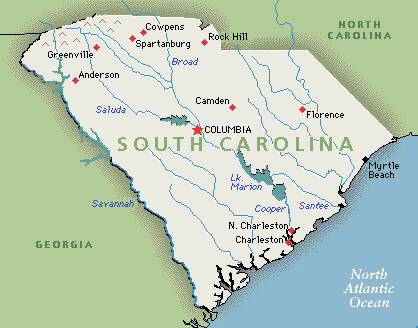
South Carolina: America’s Broadband ‘Corridor of Shame’

In the fall of 2009, South Carolina’s Budget and Control Board approved a fire-sale deal that leased out 95 percent of the state’s public wireless broadband spectrum to two private companies in a 30-year contract valued at $143 million, with the promise South Carolina would enjoy better broadband as a result.

Two years later, South Carolina’s broadband standing has been called “a Corridor of Shame” according to one provider that is trying to expand service while Clearwire and DigitalBridge — the contract winners, sit on their respective hands.

Both companies secured access to the statewide Educational Broadband Service spectrum they get to control with near-exclusivity for less than $5 million annually — around $1 a year for every South Carolinian that could eventually be served with improved broadband.  But nobody is getting service from either provider, indefinitely.

Columbia’s Free-Times notes neither company has concrete plans to bring broadband to anyone in South Carolina.  Clearwire, now in financial trouble, provides no service in the state and DigitalBridge refused to comment for the newspaper’s story.  Free-Times reporter Corey Hutchins could not find anyone able to provide any definitive information about either company’s short or long-term plans to hold up their end of the bargain.

Khush Tata, chief information officer for the S.C. Technical College System suspects one might not even exist.  So long as these two companies maintain a lock on the spectrum, nobody else can deliver the wireless service either.

“I haven’t seen any big cohesive strategy since [the leasing] at all,” Tata told the newspaper. “I think that it’s still based on market and business viability for each provider so they’re sort of on their own. Each provider, they invest based on their return on investment, which is good for their business, but as a state there isn’t any overall planning or approach — and I think the leasing of spectrum provided the largest overall strategy opportunity, which is a pity that it hasn’t panned out yet.”

Don’t tell that to industry-connected Connected Nation, whose South Carolina chapter claims the state is doing better than most providing broadband service.  The group has published maps, based entirely on data provided by the state’s phone and cable companies, that suggest most residents not only get the service, but have a choice in providers.

“That’s just plain bull,” says Stop the Cap! reader Jeff Lodge, who lives outside of Columbia.  Not only does the local cable company pass him by, but there is no DSL either.  He relies on an unlimited wireless data plan from AT&T and does most of his web browsing during breaks at work.

No Plans

“I live in a community of 22,000 people and only those along the main streets in this community have access to broadband,” he says. “The cable company doesn’t go far off the beaten path, and the here-and-there DSL some get is dreadful.”

Even Connect South Carolina acknowledges broadband speeds in the state are often woefully behind others in the region.  Many well-populated census tracts have no wired broadband at all.

With the pervasive lack of broadband, incumbent providers have been heavily lobbying the state to keep others off their spartan turf — pushing for the same type of legislation effectively banning community broadband networks that North Carolina passed earlier this year.

“It’s Time Warner Cable and AT&T… again, that are behind most of this effort, and those two companies treat South Carolina like a forgotten bastard child now,” Lodge says. “Can you imagine the arrogance of big cable and phone companies to keep competition away even when they, themselves, won’t compete?”

No Comment

One company trying to make a difference: GlobalCo and their partner On-Time-Communications.  A review of the under-developed website of the latter suggests neither entity is well-positioned or backed to deliver broadband without significant financial assistance.  But at least they recognize the problem.

“In South Carolina there’s 10 counties that made [the FCC’s report on broadband unavailability] and the majority of them come out of what’s commonly referred to as the ‘Corridor of Shame’,” Ronnie Wyche, GlobalCo’s vice president of sales told Free-Times.

None of this comes as a surprise to Brett Bursey, director of the South Carolina Progressive Network, who opposed the spectrum sell-off.

“The bargain basement lease of the nation’s only statewide broadband system was a theft from, and insult to, the taxpayers who built and own the system,” Bursey told the paper. “The system is not being developed by the companies who won the lease and the Legislature is ideologically opposed to public ownership.”

Search This Site:

Contributions:

Recent Comments:

Your Account:

Stop the Cap!