Home » Broadband Speed » Recent Articles:

FairPoint’s Funny Numbers: Counts Customers Who Can’t Buy DSL ‘Broadband-Ready’

Phillip Dampier December 1, 2011 Audio, Broadband Speed, FairPoint, Public Policy & Gov't, Rural Broadband Comments Off on FairPoint’s Funny Numbers: Counts Customers Who Can’t Buy DSL ‘Broadband-Ready’

FairPoint Communications is under fire for counting customers “broadband ready” when, in fact, they can’t buy DSL service from the northern New England phone company at any price.

One of the commitments FairPoint made to regulators who approved their buyout of Verizon landlines in Maine, New Hampshire, and Vermont in 2007 was that the company would expand broadband availability to at least 87 percent of residents in states like Maine.  In October, FairPoint claimed it had met that target, but now the Office of the Public Advocate has found instances where the phone company counted customers who live too far away from the phone company’s facilities to buy the service as “served.”

FairPoint is apparently counting most customers within a DSL-equipped exchange as reachable by broadband, even if only some of them actually are.  The rest either live too far away to get proper broadband speeds, or are connected to inferior lines that will not sustain a serviceable connection.

Maine’s Public Utility Commission (PUC) is upset FairPoint seems to be padding the numbers in its favor.  Maine’s Public Broadcasting Network talked with commissioners:

“I just find it hard to reconcile that it’s in the public interest to include in the definition of addressable lines, a line on which no customer can be connected and to which Fairpoint has made no planning or economic commitment to serve in the future,” said Vendean Vafiades. She, along with fellow commissioner David Littell, voted in favor of a decision which is likely to require Fairpoint to re-calculate the 87 percent figure using a stricter methodology.

“And I do believe that Fairpoint has a commitment to be economically viable in this state and to provide good quality service. And at a minimum I think Fairpoint should be required to provide actual access to meet its merger condition and obligations,” said Vafiades.

The holdout vote was that of PUC Chairman Tom Welch, who sympathized with Fairpoint on this issue.

The vote in Maine is likely to force FairPoint, which had hoped it was “all done” fulfilling broadband obligations, to spend more to upgrade its network to sufficiently service customers it promised it would.

FairPoint defends their interpretation of the numbers, noting the company has spent more than $169 million across their northern New England territories on broadband, making good on their commitment.  The state’s consumer advocate and PUC disagree, so now all parties will be re-evaluating their numbers, and FairPoint customers still waiting for DSL might still have a chance to get it after all.

Maine’s Public Broadcasting Network reports on the controversy over FairPoint’s promise to serve at least 87% of Maine with broadband service. Maine’s public utility commissioners voted to ramp up the pressure on Fairpoint Communications with regard to their broadband rollout. The expansion of high-speed internet to most areas of Maine was one of the conditions of Fairpoint’s purchase of Verizon’s former landline operation in 2007. (3 minutes)
You must remain on this page to hear the clip, or you can download the clip and listen later.

AT&T/T-Mobile Merger Prospects Dim; Alternative Buyers for T-Mobile May Eventually Emerge

Phillip Dampier November 22, 2011 Astroturf, AT&T, Broadband Speed, Competition, Editorial & Site News, Public Policy & Gov't, Rural Broadband, T-Mobile, Video, Wireless Broadband Comments Off on AT&T/T-Mobile Merger Prospects Dim; Alternative Buyers for T-Mobile May Eventually Emerge

AT&T pays a lot of money — millions annually — to make sure its business agenda does not run into political or legislative roadblocks in Washington, D.C.  With dozens of members of Congress effectively on AT&T’s campaign contribution payroll and the company’s unparalleled skill at convincing non-profit organizations to advocate for its interests, worrying about the government’s antitrust views on its proposed buyout of Deutsche Telekom’s T-Mobile was the least of its troubles.

“It’s a done deal,” several analysts predicted shortly after the deal was announced, especially after AT&T demonstrated its confidence level in the merger was as high as the enormous $6 billion dollar breakup concession payable to Telekom if it ever fell apart.

Then the government dared to put its two cents in, in the form of a “are you kidding me?”-lawsuit courtesy of the U.S. Department of Justice.  It seems, in the words of some Beltway cynics, the Obama Administration can manage to see a clear cut case of anti-competitive behavior when given enough time.

Since the lawsuit was announced on Aug. 31, it has been “all-hands-on-deck” for the company’s government relations division, packed full of the company’s top lobbyists.  While company lawyers desperately attempt to block what it sees as “pile on” objections and lawsuits from worried competitors, Sprint-Nextel in particular, AT&T lobbyists are trying to compromise away the Justice Department case with proposals of concessions and giveaways to make approval more palatable.

Further north, as fall turns into winter in New York’s financial district, Wall Street analysts are cold on the troubled deal themselves.

The Financial Times reports most analysts think there is now less than a 50-50 chance the merger will be completed unless the two companies agree to disgorge themselves of market share, territories, and increasing “shareholder value” that will come from eventual rate increases a wireless duopoly would inevitably bring.

Some are even less sanguine, predicting AT&T has only a 20 percent shot, and only if it sells off considerable chunks of valuable spectrum to competitors other than Verizon Wireless.

AT&T is retuning its “message” for the times, downplaying the original, ludicrous notion that urban-focused T-Mobile would be the keystone of a new era in 4G wireless service for rural America.  There is a reason T-Mobile isn’t the first choice for small town America’s cell phone buyers.

Instead, AT&T is now positioning the merger deal as a lifeboat for its troubled competitor.  AT&T suggests the number four carrier is in immediate peril — hemorrhaging customers, caught without a coherent 4G strategy, and an exodus of interest by its increasingly neglectful parent — Deutsche Telekom.

Could Time Warner Cable be an eventual part-owner of T-Mobile USA?

“Over the past two years, T-Mobile USA has been losing customers despite explosive demand for mobile broadband,” AT&T said in a statement this week. “T-Mobile USA has no clear path to 4G LTE, the industry’s next generation network, and its German parent, Deutsche Telekom, has said it would not continue to make significant investments in the United States.”

With AT&T predicting the demise of its smaller would-be cousin, consumers may not be in the mood to sign a two-year contract with a company that could soon be rechristened AT&T, especially those leaving AT&T for T-Mobile.

But don’t tell T-Mobile’s marketing department it’s a phone company on life support.  T-Mobile has beefed up its advertising and continues to irritate its larger competitors, particularly AT&T, with very aggressive pricing on its prepaid plans.

T-Mobile recently unveiled two disruptive $30 4G prepaid plans that offer either 1500 shared minutes/text messages and 30MB of data usage -or- 100 voice minutes combined with unlimited texting and up to 5GB of mobile data before the speed throttle kicks in.  Those prices are too low for AT&T and Verizon to ignore, especially when offered on a 4G network.

So far, the Justice Department shows no signs of backing down from their resolute opposition to the deal, minor concessions or not.  Shareholders may not appreciate giving the government too much of what it wants in order to win approval.  Washington lawmakers are split — virtually every Republican favors the merger, Democrats are less absolute, with most opposed.  Among those in favor, by how much is often a measure of what kind of campaign money AT&T has thrown their way.

AT&T absolutely denies they have a “Plan B” in case the merger eventually fails.  But the Times doubts that, reporting as time drags on, an alternative deal might emerge.  Some of the possibilities:

  • T-Mobile USA could merge its spectrum with Dish Network, the satellite TV company, to launch a new 4G mobile operator in the USA;
  • Combine forces (and spectrum) in a deal with leading U.S. cable companies like Cox, Comcast, and Time Warner Cable to launch a new cable-branded mobile operator;
  • Sell or merge operations with MetroPCS, Leap Wireless’ Cricket, or one of several regional cell companies.

Perennial cable booster Craig Moffett from Sanford Bernstein predictably favors the cable solution, which would let companies offer a quad or quint-play of cable TV, wireless mobile broadband, wired broadband, phone, and cell phone service all on one bill.  It would also get the FCC off the backs of cable operators Time Warner and Comcast, who both control a total of 20MHz of favored wireless spectrum they have left unused since acquiring it at auction.  The Commission is increasingly irritated at companies who own unused spectrum at a time when the agency is trying to find additional frequencies for wireless providers.

[flv width=”640″ height=”380″]http://www.phillipdampier.com/video/Bloomberg ATTs 96000 Job Claim in T-Mobile Deal Questioned 11-8-11.flv[/flv]

Bloomberg News questions AT&T’s claim its merger deal with T-Mobile will create 96,000 new jobs. [Nov. 8] (3 minutes)

Comcast’s Digital Upgrade Chaos in Virginia: Supplied Equipment Doesn’t Work, Some Say

Phillip Dampier November 21, 2011 Broadband Speed, Comcast/Xfinity, Consumer News, Video 5 Comments

Comcast Cable has been embarked on a gradual effort to convert many of their cable systems to digital platforms, which means more channel space, faster broadband speeds, and major headaches for some customers.

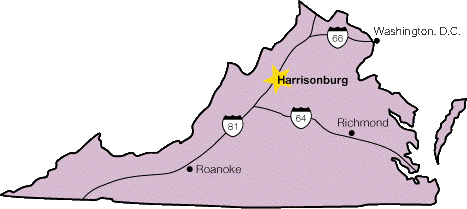
In Harrisonburg, Va., Comcast customers have been surprised and frustrated to find many of their favorite channels missing.  The cable company migrated most of the basic cable lineup to digital.  Customers who already use Comcast set top boxes never noticed the difference, but those who don’t certainly did.

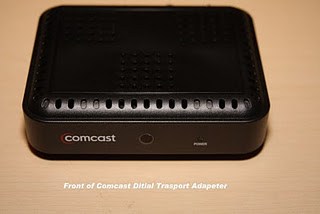
The cable company spent weeks notifying customers they may need a “digital transport adapter” (DTA) — a fancy name for a small set top box — to continue to receive Comcast service on televisions that do not already have a box attached.  Many cable customers are confused by the transition, assuming if they own a “digital-ready” television, they don’t need extra equipment.  But most, in fact, do.

When customers discovered they needed the new box, minor chaos ensued at area Comcast retail outlets.  The Virginia State Police was reportedly pressed into service directing traffic in and out of some crowded cable store parking lots, and one customer even found a trooper guarding the cable company’s front door.

Some customers are telling local media they waited hours in long lines to obtain the equipment.  Several others are complaining even with the boxes, their favorite channels are still missing.

Most of the trouble seems to surround the authorization process required to enable the new equipment.

Comcast DTA (Courtesy: David Trebacz)

A reporter for an area television station discovered that on the air as she attempted, and failed, to get her box authorized for service, even after an hour waiting.  Customers report very long hold times when calling Comcast as well.

The cable company acknowledged some of the challenges.

“For the past few months, we’ve been communicating with our customers in the Shenandoah Valley about our ‘World of More’ digital enhancement,” the company said in a statement. “We’re moving analog channels to digital, and we do see an increase in the number of customers trying to get digital equipment. We’ve been offering extended hours and stepping up staffing to respond to increased demand.”

Comcast says the transition will increase the number of HD channels on offer in Virginia.  It also opens the door to faster broadband speeds through DOCSIS 3 upgrades.  In all, the company plans to add 50 new HD channels in the Staunton, Waynesboro and Augusta County areas after the upgrade is complete.

Area customers just wish the experience worked more seamlessly. Comcast customers in many communities have already dealt with digital upgrades.  Time Warner customers, starting in Maine, are just beginning the experience.

[flv width=”640″ height=”380″]http://www.phillipdampier.com/video/WHSV Harrisonburg Comcast Problems in Va 11-16-11.flv[/flv]

This WHSV reporter in Harrisonburg, Va. tried to demonstrate how to install and activate Comcast’s new set top box equipment… and failed because the cable company authorization process didn’t work.  (2 minutes)

Charter Cable Increasing Broadband Speeds, But You’ll Hit Their Caps Faster

Phillip Dampier November 21, 2011 Broadband Speed, Charter Spectrum, Consumer News, Data Caps 5 Comments

Charter Cable is upgrading its broadband service to deliver free speed upgrades, but with the company’s Internet Overcharging-usage cap scheme in place, some customers are not impressed.

“We plan to streamline Charter Internet options to: Lite, Express, Plus, and Ultra,” Charter social media rep “Eric” wrote on the Broadband Reports‘ Charter customer forum. “Current Max customers will be able to move to a different level of Internet Service.”

The company’s boosted speeds (prices vary in different markets):

  • Charter Lite: 1Mbps/128kbps → Unknown ($19.99) 100GB limit
  • Charter Express: 12/1Mbps → 15/3Mbps ($44.99) 100GB limit
  • Charter Plus: 18/2Mbps → 30/4Mbps ($54.99) 250GB limit
  • Charter Max: 25/3Mbps → Discontinued ($69.99) 250GB limit
  • Charter Ultra: 60/5Mbps → 100/5Mbps ($99.99-109.99) 500GB limit

Charter has usage caps on all of its residential broadband service plans, but Stop the Cap! readers tell us they are not always enforced.  No overlimit fees are charged.  No announcements have been made about any changes to the existing usage limits.  Some Charter Max customers tell us they are using the speed upgrades an an excuse to downgrade to the cheaper Plus plan, which is faster and $15 less a month, with the same 250GB usage cap.  Customers who absolutely won’t tolerate a usage limit have to upgrade to commercial-grade service, which is considerably more expensive.  Lower speed plans run about $80 a month in many areas, but are unlimited.

“I’m glad to discover faster upload speeds, which I’ve waited for a long time, but I’d rather have no usage limits to worry about instead of faster speeds,” shares Stop the Cap! reader and Charter customer Paul McNeil.  “My problem with these faster speeds is that you can’t use them for too long.  Why buy a luxury race car you can only drive down the street?”

Light users who use the Internet primarily for e-mail or web page browsing rarely require more than the most budget-priced broadband package because high speeds do not deliver a significantly improved user experience.  But those who use the Internet for higher-bandwidth applications including video, downloading, certain online games, and file backup do benefit the most from high speed packages.  But when providers slap usage limits on them, the value erodes away.

“Why spend more for less?” asks McNeil. “Two years ago there were no limits and I honestly received more value from my Charter Internet service then over what I have to deal with now.”

Time Warner Cable’s Rate Hikes Reach the Carolinas: Still $58/mo for Standalone Broadband

Winston-Salem Time Warner Cable customers can expect to pay around 4% more for cable service in 2012.

Time Warner Cable’s annual rate increases have now reached the Carolinas.

The company is mailing letters to customers that announce rate hikes for off-contract clients in the $2-4 a month range, including price increases for Road Runner broadband that will now cost between $49.45-$57.95 a month.

“Our new prices reflect dramatically higher programming costs, additional programming and features, and continued investment in our network and customer service,” said Time Warner spokesman Scott Pryzwansky. “Time Warner Cable invested more than $350 million in capital in the Carolinas over the past year to make our network even more robust and to enable our customers to get the services and features they want.”

The company also invested heavily in lobbying lawmakers to keep community-owned broadband competition at bay, helping pass a measure through the Republican-controlled legislature that makes municipal broadband competition much more unlikely.

The result is another year of unfettered rate increases for customers in cities like Winston-Salem:

  • Cable TV increases from $10.23 to $11.49 for broadcast basic, $64.99-$69.49 for standard analog service, $80.99-$85.49 for digital cable;
  • Broadband increases from $47.95 to $49.45 for customers who also have digital cable, $52.95 to $55.95 for customers with any other tier of cable TV, $57.95 for standalone broadband service;
  • Telephone rates are unchanged.

Customers can avoid some of the price increases through creative bundling, threatening to take your business elsewhere, or by signing up for alternative providers:

  1. Customers on discounted promotional packages, retention deals, and term contracts will not face the rate increases until their promotional rates or contract expires;
  2. If you are unhappy with the rate increase, consider calling Time Warner and telling them to cancel your service 1-2 weeks from today’s date.  Then wait for them to start calling you with promotional “win-back” offers that deliver at least a year of substantial savings off regular rates;
  3. If you are a broadband standalone customer, consider signing up for Earthlink under their six-month promotion for just under $30 a month.  You will continue to be billed by Time Warner Cable and receive the same speeds and service with two exceptions: no PowerBoost (a temporary speed increase during the first few seconds of downloading), and you lose your Road Runner e-mail address (which you are not actually still using, are you?)  Get a Gmail account, don’t worry about speed gimmicks, and save $28 a month.  At the end of six months, sign up for Time Warner’s Road Runner service under their promotional rate, which is around $30 a month for a year.  Total savings over the 18 month combined promotional rate term: $504!

More than two years after Time Warner introduced DOCSIS 3 speed upgrades in New York, Time Warner is finally completing broadband upgrades for their customers in the Carolinas.  The latest cities scheduled to get the company’s Wideband (50/5Mbps) and Road Runner Extreme (30/5Mbps) services are Wilmington, Jacksonville and Morehead City. The new services will be available by early 2012.

Most customers in eastern North Carolina and parts of South Carolina still get Standard service speeds of 10Mbps download, 512kbps upload.  After the upgrade, a boost in upstream speeds to 1Mbps for Standard service customers is expected.

Search This Site:

Contributions:

Recent Comments:

Your Account:

Stop the Cap!