Home » Broadband Speed » Recent Articles:

Sprint Will Continue Offering Unlimited Data On Its Forthcoming LTE 4G Network

A Sprint spokesperson this week confirmed the company will continue selling “unlimited data” service on their forthcoming LTE 4G network.

Sprint’s Nichole Cappitelli told TechHog the carrier plans to extend unlimited access, with no speed throttling, to those buying Sprint’s first LTE phone, the Viper 4G.

Sprint begins accepting pre-orders for the LG phone April 12, with an anticipated shipping date by the end of the month.

Sprint’s 4G LTE network, still under construction, will provide improved 4G speed and value for customers looking for some savings over AT&T and Verizon Wireless.  Sprint currently delivers slower 4G WiMAX service from its partner Clearwire.

The Viper 4G phone will sell for $100 with a 2-year contract and $50 mail-in rebate.  With Sprint’s Everything plan, $80 will buy you unlimited mobile data, texting, and calling.  A similar plan from Verizon that only includes 2GB of mobile data is priced $40 higher.

Until July 22, Sprint will bundle 50GB of free cloud storage and sharing from Box, available from the Google Play app store.

Sprint is America’s only national mobile phone company offering unlimited and unthrottled data plans.

AT&T, Colorado Lawmakers Target Landline Subsidy; Collateral Damage: CenturyLink, Public Broadband

Phillip Dampier April 3, 2012 AT&T, Broadband Speed, CenturyLink, Community Networks, Competition, Consumer News, Editorial & Site News, Public Policy & Gov't, Rural Broadband, Wireless Broadband Comments Off on AT&T, Colorado Lawmakers Target Landline Subsidy; Collateral Damage: CenturyLink, Public Broadband

AT&T’s ongoing efforts to win deregulation and an end to universal landline service have now reached Colorado, where state lawmakers are reacting favorably to an AT&T-sponsored bill that would strip away rural landline subsidies and deregulate basic phone rates, much to the consternation of incumbent provider CenturyLink.

The long-winded bill,  SB 157 – Concerning the Regulation of Telecommunications Service and, in Connection Therewith, Enacting the “Telecommunications Modernization Act of 2012,” is just the latest in a series of deregulation measures co-authored by AT&T that would let phone companies off the hook for guaranteeing affordable, universal landline service to every American.  Instead, AT&T is happy to sell rural consumers pricey mobile phone service.

Ironically, AT&T’s bill would deliver the worst blows to fellow landline provider CenturyLink, the largest phone company in the state. Consumers pay 2.9 percent of their phone bill toward a rural landline subsidy fund, or 87 cents for a $30 bill. It is no surprise CenturyLink is adamantly opposed to the measure, declaring the loss of rural phone service subsidies a guarantee of future rate hikes and discriminatory pricing, if not the end of basic telephone service in rural Colorado.  The company also receives more than 90 percent of the annual proceeds collected from Colorado ratepayers.

“The bill continues to legislate discrimination of one very large group of consumers. It allows a consumer living on one side of the street in rural Colorado to continue to receive High Cost Fund support while his neighbor on the other side of the street will not, simply because of the logo at the top of their telephone bills” said Jim Campbell, CenturyLink regional vice president for regulatory and legislative affairs. “We continue to be baffled that lawmakers voting in favor of this bill feel it is good public policy to write consumer discrimination into Colorado law.”

As with other AT&T-written deregulation bills, the “sufficient competition” test to prove consumers have plenty of choices for phone service is notoriously easy to meet.  SB 157 defines a market competitive when 90 percent of customers in a geographic area have a choice of at least five providers.  While that sounds like competition, in fact the bill defines just about anything resembling a phone company as “competition.”  That includes traditional landline service, mobile phones, satellite telephony, Voice Over IP providers like Skype, and cable company phone service.

Back for More....

A provider declaring service to any particular geographic area on a coverage map is sufficient evidence that competition exists, even if that provider does not deliver a consistently suitable signal, charges extraordinarily high prices, or only markets service in selected areas or in a package that includes other services.  In rural Colorado, wireless companies maintaining roaming agreements with other providers would count as multiple competitors, even though they rely on the same infrastructure to handle calls.  Poor reception? That’s your problem.

The bill also allows phone companies to charge whatever they like for traditional phone service, and only requires one day’s notice of pricing changes.  The bill would also strip away the right of regulators to demand justification for the inevitable rate increases and takes away their right to reject, modify or suspend rate hikes they deem unacceptably unfair.

That could force CenturyLink prices way up in rural Colorado, perhaps to a level that makes AT&T cell phone pricing not that bad after all.
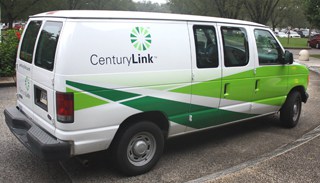
CenturyLink: Victim of Friendly Fire from AT&T?

That suits AT&T’s Colorado president William Soards just fine, as AT&T is willing to sell rural Colorado lots of wireless phones.

“There’s plenty of competition out there that will be very excited to take their business, and AT&T will be one of them,” Soards told the Denver Post.

Colorado’s Rural Broadband Fund: The Fix Is In

One of the boldest provisions of SB 157 is the establishment of a rural broadband fund that delivers up to $25 million of ratepayer money to a select group of telecommunications companies to underwrite the costs of building  non-competitive broadband networks in the most distant, unwired corners of the state.  They wrote the rules, so it comes as no surprise they are, by definition, the intended recipients — often the very same companies that have refused to provide service in rural communities in the past.  Among those they’ve made certain are prohibited from accessing the broadband fund:

  • Broadcasters experimenting with sub-channel broadband data service;
  • Government agencies;
  • Local municipalities;
  • Public-private partnerships;
  • Any organization, including non-profits, controlled in whole or part by a public entity;
  • Electric utilities;
  • Electric co-ops;
  • Non-profit electric companies or associations;
  • Every other supplier of electrical energy.

Who can access the broadband fund?  Why, the backers of the bill of course, especially AT&T:

  • Wireless companies like AT&T;
  • Telephone companies;
  • Cable operators;
  • Wireless ISPs (meeting certain conditions).

Padgett: Let local communities solve their broadband challenges themselves.

The bill is written to require a minimum level of 4/1Mbps service, which may lock out many rural telephone companies unable to deliver those speeds over traditional DSL as well as congestion and distance-sensitive wireless ISPs.  Cable operators are unlikely to provide any service in the most rural areas qualified to receive broadband funding. CenturyLink’s ongoing opposition to the bill suggests they don’t see much broadband funding in their immediate future either. That leaves just one technology most suitable to receive ratepayer funding: heavily capped and expensive wireless 4G broadband from companies like AT&T.

That may leave rural (but potentially not rural enough) Ouray County up the broadband creek without a paddle.

CenturyLink has shown minimal interest in providing ubiquitous broadband across the area dubbed the “Switzerland of America” for its rugged mountainous topography.  With just 4,450 residents, Ouray County is not the phone company’s highest priority.  But the company serves just enough of the county that it might fail the “unserved area” test — a ludicrous notion for broadband-starved Colona, Eldredge, Dallas, Ridgway, Ouray, Thistledown and Camp Bird.

Long-term residents have been through something like this before.  Some remember having to fight for basic electric service as well.  The San Miguel Power Association, a non-profit, member-owned rural electric cooperative established back in 1938, finally brought electric service to the San Miguel Basin area after residents were denied service for years by Western Colorado Power.  The region ultimately had to fend for itself, and did so successfully.

That same electric co-op may just have the best broadband solution for Ouray County — fiber infrastructure already in place, but prohibited from being funded to completion by AT&T’s corporate welfare bill.

Many rural legislators understand the rural broadband problem and see community-owned co-ops as their best chance of getting broadband service in rural Colorado.  They want to amend the bill to strip out the anti-competitive, anti-public broadband language.

Ouray County Commissioner Lynn Padgett is convinced her county’s broadband problems will never be solved by the Colorado Legislature or AT&T.

“Fundamentally, I believe that we need to let those closest to the areas with the rural broadband challenges, and those most accountable, help their communities,” Padgett said.


Want Better Canadian Broadband? Move West

If you want better Canadian broadband with fewer tricks and traps and live in Ontario or Quebec: put the house up for sale, pack up your things, and head west.

Canada’s heavily metered and capped broadband is ubiquitous in the country’s two most-populated provinces where a convenient duopoly of Bell and Rogers in Ontario and Bell and Videotron in Quebec control the vast majority of the broadband market.  But cross west into Saskatchewan and things start to look a lot better.

Canadians telecommunications consultancy The Seaboard Group praised SaskTel, the provincial phone company, for refusing to slap usage caps on its customers.  SaskTel does not deliver the cheapest Internet access by any means, but the company is investing heavily in fiber optic upgrades to turn the page on aging copper wire infrastructure.  Stringing fiber through Regina, Saskatoon and beyond may seem counterintuitive to other providers.  Saskatchewan, one of Canada’s “prairie provinces,” is hardly packed with people.  With more than 20 million Canadians living in Ontario and Quebec, Saskatchewan gives its 1 million residents a lot of open space.  Sparser populations usually translate into higher costs per customer for upgrades, but SaskTel persists.

SaskTel has historically relied on traditional DSL and has competition in larger communities from Shaw Cable, western Canada’s largest cable operator.  Although SaskTel’s DSL delivers lower speeds than Shaw can provide, it does so with no usage limits.

Shaw’s decision to provide considerably more generous usage allowances has kept the pressure on SaskTel to upgrade its infrastructure to compete.

SaskTel CEO Ron Styles told the Leader-Post its fiber optic network will give cable a run for its money, and until then, it is satisfied undercutting cable pricing for broadband, delivering a far better experience than either Rogers or Bell provides eastern Canadians, Styles says.

Seaboard president Iain Grant found that what customers are willing to pay for service can also influence what prices providers charge.

“The price is more based on what you’re prepared to pay,” Grant said.

People in western Canada evidently are not willing to hand over as much money as their friends in Ontario and Quebec.

West of Saskatchewan lies Alberta and British Columbia — Telus territory.  Telus is western Canada’s largest phone company and also principally competes with Shaw Cable.

Shaw has forced Telus to back down on fueling enhanced revenue with usage caps of its own, and has been aggressively upgrading its network with additional fiber optics and DOCSIS 3 technology, forcing Telus to embark on its own upgrade effort.

Macleans reports western Canada’s more-competitive broadband market has been good for consumers, but has also exposed a difference in priorities for providers.

With Shaw breathing down its neck, Telus has committed to a $3 billion fiber optic network expansion in B.C., improved wireless coverage, and more IPTV service.  Macleans notes Telus is the only major telecom or cable company in Canada that hasn’t purchased a television asset, focusing instead on its core businesses of connecting customers.

In eastern Canada, Bell faces Rogers and Videotron.  Critics contend Bell sees no imminent threats there, and the phone giant is spending its money elsewhere, announcing a $3.4 billion acquisition of Astral Media — an entertainment company owning 24 specialty cable channels and pay-TV networks, including the Movie Network and HBO Canada.

Bell’s latest “investment” follows its 2010 $1.3 billion buyout of CTV and last year’s $1.32 billion co-purchase of Maple Leafs Sports and Entertainment (the other buyer was their ‘arch-competitor’ Rogers Communications).

While Telus spends money on upgrading its broadband and video services to customers, Bell is positioning itself to control 34% of Canada’s TV universe.  Bell is also the same company that advocated slapping nationwide usage-based pricing on Canadian broadband consumers to pay for the “network upgrades” it contends were needed to handle increasing demand.

America’s Best Broadband Is Publicly Owned: See How It Transforms Chattanooga, Tenn.

Phillip Dampier March 28, 2012 Broadband Speed, Community Networks, Consumer News, EPB Fiber, Public Policy & Gov't, Video Comments Off on America’s Best Broadband Is Publicly Owned: See How It Transforms Chattanooga, Tenn.

[flv width=”640″ height=”380″]http://www.phillipdampier.com/video/Living in a Smart City Chattanooga TN.flv[/flv]

The only one Gigabit broadband service currently available in the United States for residential and business customers is in Chattanooga, Tennessee. Meet people who live and work in one of the smartest cities in the country: what services do they embrace today, what is their vision for the future, and what kind of culture do they think makes this all possible.  New jobs are moving into Chattanooga every day, and existing companies are learning to take advantage of the new business opportunities gigabit broadband delivers.  You may be surprised to learn America’s best Internet access comes from a publicly-owned utility that works hard every day for its customers, not investors and banks living a thousand miles away.  (6 minutes)


Call to Action: Thank Cox for Calling Overlimit Fees “An Error,” But Demand Caps Come Off

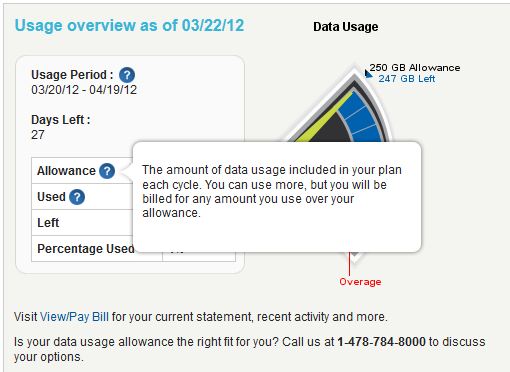
Our good friends at Broadband Reports reported they discovered a new usage meter for Cox Cable customers that implied overlimit fees were on the way for those who exceeded the company’s arbitrary usage caps.

Now Cox Cable’s director of media relations is calling the appearance of the new glitzy usage gauge, and references to “overages” all a ‘big mistake‘:

“Thanks for bringing this to our attention,” Cox Director of Media Relations Todd Smith tells Broadband Reports. “This is an error and the language is being removed from the site. Our policy remains the same, we do not currently charge customers for exceeding bandwidth allowances.”

Cox did not make it clear how exactly the language was included in the meter by accident, and their statement does not preclude the possibility that they’re interested in moving this direction eventually.

Cox's New Meter (Courtesy: Broadband Reports)

Cox Cable customers upset the cable company has a usage meter and caps should first thank them for backing down on charging broadband users overlimit fees for “excessive use.”

After that, it is time to take Cox on and tell them you don’t want your broadband usage metered at all, especially at the prices they are charging for broadband service.

Just last June, Cox Communications President Pat Esser told an audience at the National Cable & Telecommunications Association Cable Show that the industry must keep asking customers what they want and find ways to satisfy those demands.

‘Cable must accept that fact that a robust broadband platform means the ‘industry won’t control everything,’ Esser told fellow cable executives.

Stop the Cap! thinks Esser needs help understanding Cox Cable customers do not want their Internet access limited with caps and additional fees.

You don’t want to check a usage meter and cannot understand why a company that earns incredible profits from broadband that costs less and less to deliver needs to cap your access.

Cable operators don’t unveil new usage meters and mentions of overlimit fees by mistake. It is likely their new usage meter “jumped the gun” and the company temporarily withdrew it.

This is your opportunity to deliver a death blow to Cox Cable’s Internet Overcharging.

Get Involved and Send Cox Executives the Message!

Call Cox Corporate Relations at (888) 566-7751 or e-mail them at [email protected]

Better yet, you can write directly to Cox’s top executive.  We have provided a sample, but you can be most effective writing it in your own words:

Mr. Pat Esser
President, Cox Communications
1400 Lake Hearn Drive
Atlanta, GA 30319

Dear Mr. Esser,

Last June, you told attendees at the National Cable & Telecommunications Association annual meeting that the cable industry needs to keep asking customers what they want and then find ways to satisfy those demands.  As a loyal Cox customer, I am taking advantage of that opportunity to write and express my profound concern Cox Cable has started to limit my Internet usage.  I cannot understand why Cox needs usage caps at a time when broadband revenue is skyrocketing and the costs to deliver the service are actually in decline. There is simply no justification for these limits, particularly after Cox upgraded its network to DOCSIS 3, which supports a considerably larger data pipeline.

Cox and other cable operators are introducing new, faster speeds for customers to earn more revenue.  But with usage caps, there is little incentive to pay more for faster service that remains constrained with a usage limit.  Would you buy a race car you could only drive around the block?

As competition for my telecommunications dollar continues to increase, I am willing to cancel my Cox service over this issue and take my business to another provider.  Some have shown a willingness to waive usage caps in order to win my  business, and I am happy to oblige. I’d prefer to stay with Cox, but not if your company keeps refusing to listen to its customers on this issue.

If you were serious in your remarks last summer in Chicago, then you should follow the lead of companies like Verizon, Cablevision, and Time Warner Cable which have all avoided imposing usage limits on customers. Time Warner Cable believes unlimited broadband should always be available to customers. Cox has imposed limits on everyone, and that has to change.

Very truly yours,

// Your signature here

Search This Site:

Contributions:

Recent Comments:

Your Account:

Stop the Cap!