Home » Broadband Speed » Recent Articles:

Verizon to Sell Super-Fast Broadband to Wall Street Traders

Phillip Dampier April 17, 2012 Broadband Speed, Competition, Verizon 3 Comments

While your phone company refuses to provide you with better than 3Mbps DSL, Verizon Communications is set to unveil its fastest broadband network yet — targeting Wall Street traders.

Verizon Financial Services is upgrading fiber between New York and Chicago and replacing routers, cutting round trip communications to as little as 14.5 milliseconds — 5 milliseconds faster than Verizon’s current network.

Why the need for speed?

To cut trading time to the bare minimum.  The Wall Street Journal reports that even shaving a few milliseconds off deals can mean the difference of millions of dollars.

As Wall Street and other commodities exchanges become increasingly automated, new opportunities to take advantage of tiny price fluctuations that occur over fractions of seconds can earn traders enormous profits from volume trading.  High frequency trading now represents more than half the volume on the U.S. stock exchanges.

Pricing for the new service was not available at press time.

Retired Verizon Employee Tells Rural Upstate New York “Fiber Optics is Old School”

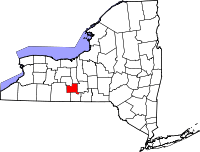
Schuyler County

The fastest thing in Schuyler County, N.Y., isn’t broadband — it’s the Watkins Glen International speedway.

County officials hope to change that, voting unanimously this month to approve an agreement with the Southern Tier Network to bring a regional fiber optic system into the county.

The not-for-profit local development corporation established to build and manage the regional fiber network doesn’t sit well with some county residents, however, including one retired Verizon employee who dismissed the project.

Odessa resident Karen Radenberg called fiber optics technology “old school” and said no private company will connect to the fiber network to expand broadband service.

Radenberg urged the county to consider that communications companies have now moved on to using 4G wireless technology instead of fiber.

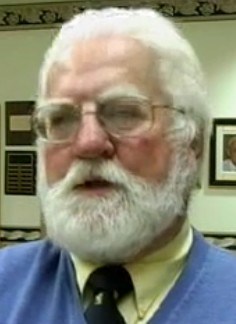
“That’s ridiculous,” countered Legislature Chairman Dennis Fagan (R-Tyrone).

Fagan

Fagan pointed to nearby Ontario County’s fiber middle-mile and institutional network which has signed companies, including Verizon, as customers.  Verizon reportedly uses the Ontario County network to deliver backhaul connectivity to its cell tower network in the area.  Ontario County is served by several different landline companies including Frontier Communications, Verizon, and Windstream.  Time Warner Cable is the dominant cable provider, but large sections of the county are deemed too rural for cable television service.

Fagan said the new fiber network will improve the chances private companies will expand broadband across the county, but also help deliver an important upgrade to the region’s emergency responder communications system.  The extremely hilly terrain across much of the southern tier creates problems because of signal gaps.  The new fiber network will allow the county to build radio repeaters into areas where the existing network of microwave communications towers cannot reach.

Schuyler County currently has no plans to sell Internet connectivity to the public, but hopes existing private cable and phone companies — including Time Warner Cable and Verizon Communications — will consider utilizing the network to expand service.  Neither company has shown much interest expanding service to new areas recently, most likely because expansion costs will not be recouped fast enough.

If the county network reduces the cost to expand service, more homes and businesses may now fall within a “Return on Investment” formula that could mean the difference between broadband and dial-up.

[Updated With Video] T-Mobile’s Ad Star Drops Dress for Get Tough-Biker Leather; Wireless Competition is Back

She’s back and wants to “set the record straight.”

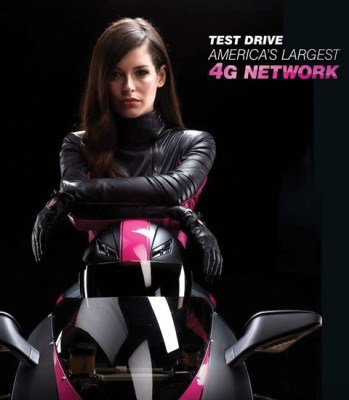
T-Mobile’s familiar ad star is dropping her amazing pink dresses like these 2024 short pink prom dresses for some get-tough biker leather in a new series of commercials for the wireless carrier.

Canadian actress-model Carly Foulkes has appeared in “approachable”-wear designed by Debra LeClair since 2010, mostly chiding competitors like AT&T for tricky fees and “gotchas” that T-Mobile doesn’t charge. Typically amused by the antics of other wireless carriers, she promised relief for customers switching to T-Mobile’s value-oriented wireless plans.

Nearly a year after the failed merger-buyout by AT&T was first announced, T-Mobile this week unveils a “brand refresh” that promises wireless customers it is back in the fight for their business.  Traditionally, T-Mobile has positioned itself as a low-cost, value-oriented provider.  Often, the company’s service plans and pricing have forced other wireless carriers to follow suit.  AT&T’s buyout of T-Mobile would have eliminated that aggressive pricing.

T-Mobile will spend millions on the new ad campaign.

In the first ad in the series, Foulkes metaphorically tears up T-Mobile’s image over the past year, perceived as supine as the company waited to be absorbed into AT&T’s empire.  Ripping through her closet, Foulkes emerges in black leather and hops on board a motorcycle, demanding that visitors test-drive T-Mobile’s 4G network speeds against AT&T, Sprint, and Verizon.

Before her biker phase

T-Mobile’s year-long courting by AT&T cost the company plenty.

At last 802,000 contract customers fled T-Mobile for the competition, many for Sprint and Verizon, some only to avoid dealing with AT&T.

Others left because T-Mobile is the last major carrier still not offering Apple’s popular iPhone.  

The company promises to invest at least $200 million in advertising its comeback and is keeping Foulkes front and center.  In fact, outside of Verizon’s “Can You Hear Me Now” campaign which ran for a decade, ending last April, no spokescharacter has proved as recognizable as Foulkes.

The motorcycle theme will focus viewers on T-Mobile’s 4G network speeds.  Customers perceived that T-Mobile stopped upgrading and expanding its network while it pursued a merger with AT&T.

T-Mobile continues to claim it operates the nation’s largest 4G network, operating with HSPA+ technology.

T-Mobile’s “4G” network does deliver speed improvements over 3G, but some have dubbed HSPA+ “3.5G,” because resulting speeds usually cannot compete with 4G LTE technology.

T-Mobile plans to spend $1.4 billion to build its own LTE network to launch in 2013.

[flv width=”640″ height=”380″]http://www.phillipdampier.com/video/T-Mobile Relaunch Ad.flv[/flv]

T-Mobile’s “brand refresh” starts with this ad, “No More Mr. Nice Girl.”  (1 minute)

Leverett, Mass. Fed Up With Poor Broadband; Town Wants Its Own Gigabit Network

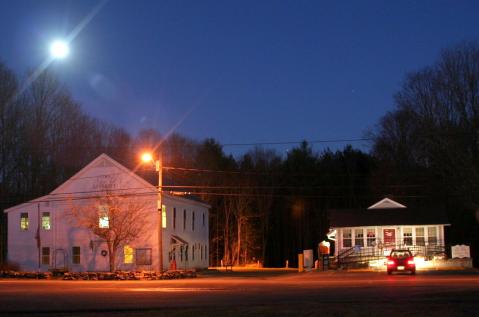
Downtown Leverett (Courtesy: Town of Leverett)

Life in Leverett, Mass. could get a lot faster as the community considers entering the 21st century by bringing high speed gigabit broadband to town.

For years, residents have had three relatively slow choices for Internet access: dial-up, wireless or satellite-delivered service.  Verizon and cable companies like Comcast and Time Warner Cable, which have systems in western Massachusetts, have largely ignored Leverett’s need for speed.

Now the town is considering building its own fiber-to-the-home network to reach every home in Leverett starting in 2014.  The proposed $3.6 million network will also offer residents cable television and phone service — helpful upgrades in the western half of Massachusetts where Verizon has allowed their landline network to degrade to conditions declared intolerable by the state Department of Telecommunications.  Last year, the state agency ordered Verizon to assess and repair its landline network in almost 100 communities in the western half of the state.

Town officials will introduce their plans for the new municipal broadband network at a public meeting April 28.  The community would borrow the money to construct the network, paying it off over 20 years and outsourcing its construction and maintenance to outside companies.

The town originally planned a fiber-to-the-neighborhood network similar to AT&T U-verse, but quickly decided the benefits of a true fiber-to-the-home network were worth the extra investment.

Unlike some other community-owned networks, Leverett will raise taxes on local residents to cover the cost of the service, but Selectman Peter d’Errico says it will save most residents money if they currently pay a satellite provider for broadband service. Research shows the largest majority of Leverett residents get broadband from satellite providers.

“It will be a little more on their tax bill and a lot less on their Internet bill, so overall they will pay less,” d’Errico told the Daily Hampshire Gazette.

d’Errico added the local community is done waiting for private companies to deliver modern telecommunications services in Leverett.  Those companies have repeatedly told town officials there isn’t enough profit or return on investment to justify expanding broadband in rural communities.

Leverett hopes to serve as a template to more than 40 other western Massachusetts communities who belong to WiredWest, a consortium of similarly-situated towns working together to build a regional broadband network.  Leverett’s network would leverage the Massachusetts Broadband Institute’s 1,300 “middle mile” fiber backbone network that is working its way through 123 western and central Massachusetts towns.

[flv width=”480″ height=”290″]http://www.phillipdampier.com/video/WGGB Springfield Internet Connection in Leverett 4-11-12.mp4[/flv]

WGGB in Springfield previews Leverett’s efforts for better broadband. Big commercial providers ignore the community so now they want to provide service themselves.  (2 minutes)

Verizon Sued for Selling Faster Speed DSL Services They Can’t Deliver

Phillip Dampier April 11, 2012 Broadband Speed, Consumer News, Data Caps, Public Policy & Gov't, Rural Broadband, Verizon Comments Off on Verizon Sued for Selling Faster Speed DSL Services They Can’t Deliver

A California woman is suing Verizon Communications for selling her faster Internet service, at a higher price, the company cannot actually deliver.

Patricia Allen of Santa Monica filed suit in Los Angeles after Verizon sold her an upgrade to her current DSL plan that turned out to be anything but.  Allen was paying $23.99 a month for 768kbps service, but in March, 2011 Verizon promised they could give her a speed upgrade to 1.5Mbps for $11 more per month.

Exactly one year later, Allen learned her “upgraded service” performed no better than her original Internet plan, which itself only managed around 500kbps, and called Verizon to complain.

Verizon technicians quickly responded Allen could never get the benefits of a faster speed plan because she lived at least two miles from her local Verizon central office.  DSL speeds degrade with distance and can also be impacted by the quality of the landline network Verizon maintains in southern California.  Because Allen lives too far away to receive anything better than 700kbps service, she was advised to downgrade her $34.99 DSL plan back to the one she started with.

Allen requested a refund for the extra $11 a month she was paying for the last year for promised speed improvements Verizon never delivered, but the company flatly refused her request.  Allen is now taking her case to the California courts, and her legal representatives are seeking to have the case designated a class action covering all Verizon landline customers in California who, like Allen, are paying for Verizon-marketed speed upgrades they actually cannot receive.

The suit claims Verizon is well aware it is selling speed upgrades to customers who live too far away from the company’s facilities to actually benefit from the enhanced service, and pockets the proceeds without delivering improved service.  The suit alleges Verizon is engaged in unethical, unscrupulous, immoral, and oppressive business conduct in violation of California state law.

Verizon’s spokesman Rich Young called the lawsuit “baseless and without merit.”

Verizon Class Action Copy

Search This Site:

Contributions:

Recent Comments:

Your Account:

Stop the Cap!