Home » Broadband Speed » Recent Articles:

New York City Broadband “Sucks,” Says Village Voice

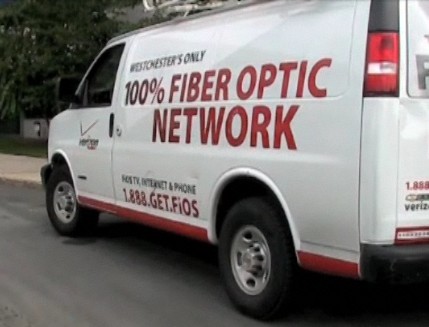
Waiting for FiOS

For those who admire the apparent pervasiveness of competition between Time Warner Cable and Cablevision Industries vs. Verizon Communications’ FiOS, the idea the Big Apple has a broadband problem seems a bit ridiculous, particularly if you can’t get your local cable company to pick up their phone and AT&T will only hand you a 1.5Mbps DSL line, if you can get it.

But according to the Village Voice, New York City broadband “sucks,” and it will continue to suck for at least the next eight years.

“Though entrepreneurs in most parts of the city can access a fast broadband connection today, many of those we interviewed said that New York’s telecom infrastructure is well behind where it should be for a city vying to be one of the nation’s two leading technology hubs,” the study notes.

What it comes down to is that New York — despite being the world’s media capital — does not have adequate access or bandwidth to support tech companies’ needs.

For example, some companies might be able to get either FiOS or Time Warner Cable, but not both, which means they can’t have broadband backup.

“It’s like the elephant in the room is that bandwidth here sucks,” one entrepreneur told the researchers. “You should be able to walk into any building and have at least 150 megabit connection available to you. There has to be ways for the city to construct much better bandwidth availability for start-ups.”

Many cited told the researchers that their internet routinely goes down. And startups who want to set up shop in cheaper, industrial districts often can’t, because the cable companies would rather provide service to more lucrative residential areas. Sometimes, telecom concerns are willing to dig up streets and lay cable, but at a hefty price — around $80,000.

That $80,000 bill is handed to a prospective customer and does not come from cable operators’ capital expense fund.

Researchers gave New York a broadband grade of B to B-, which isn’t too bad considering what broadband is like in the mid-south, the midwest, and the rural west. But it doesn’t cut it for helping New York become a bigger tech city.

Waiting for "Business Class"

While Time Warner Cable and Cablevision have wired multi-dwelling units and homes across New York City, cable operators have only recently started to turn their serious attention to corporate business customers.  Time Warner Cable agreed, as part of its franchise renewal deal with the city, to invest $1.2 million per year for fiber connections to commercial buildings yet to be wired for cable. Cablevision, which can be found in boroughs like Brooklyn and out on Long Island, agreed to spend a more modest $600,000 a year for the same purpose.

Time Warner Cable has already warned investors its capital spending on wiring commercial office buildings across the country is increasing as the company sees lucrative new revenue opportunities competing with their usual nemesis — the phone company.

Verizon treats FiOS deployment in New York City as a long, long-term project. There are neighborhoods in Manhattan that can’t wait much longer for the fiber optic network as Verizon increasingly lets its old copper wiring go to pot, leaving some New Yorkers without phone service for weeks.  The city of New York has given Verizon until 2014 to wire the city, and the company appears likely to need those two additional years at their current pace, and that agreement only covers residential properties, not commercial ones.

Robust broadband is essential for many high technology startups and the multi-million dollar data centers that support them. New York mayor Michael Bloomberg considers it a top priority to reduce the city’s economic dependence on Wall Street, which generates considerable tax revenue for both the city and state. High tech enterprises fit that bill. But the city’s broadband grades do not.

“For a city that’s trying to be a tech powerhouse, we need to have an A,” said Jonathan Bowles, the author of the study, “New Tech City.”

Time Warner Cable Kills Off “Road Runner” – New Speeds & Higher Standalone Pricing

Phillip Dampier May 15, 2012 Broadband Speed, Consumer News, Data Caps, Video 5 Comments

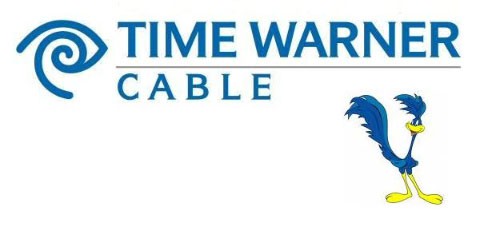
Time Warner Cable's old branding for broadband

Time Warner Cable is nearing the end of a licensing deal that has allowed the company to use a familiar Warner Bros. animated character to promote their broadband service.

The company has spent at least a year transitioning customers away from the Road Runner brand name, now simply referring to their broadband product as “Internet” or, in some markets, “HSI” — High Speed Internet.

The “brand refresh” comes as Time Warner tries to associate all of its products and services around its traditional “eye-ear” logo, according to company spokeswoman Jeannette Castaneda.

Licensing the Road Runner character as the broadband service’s mascot has also been expensive, and the continued need to use the character to educate consumers about the speed benefits of cable broadband over DSL has diminished in importance.

The new look

The transition away from the Road Runner brand has been ongoing since last summer, but Broadband Reports notes numerous markets will see the brand and logo eliminated completely effective May 19th.  The company is also using the occasion to adjust pricing and tiers of its broadband service.  Hardest hit will be standalone broadband-only customers, who will now pay $53.95 a month for Time Warner’s standard 10/1Mbps Internet service. New customers will also pay a modem rental fee of $2.50 a month. Standalone Turbo (20/2Mbps) customers will pay $73.95 for their Internet service.

Time Warner Cable’s a-la-carte pricing for broadband is designed to make their bundled service offerings more attractive in comparison. The company will sell you Internet-only service for $73.95, or sell you a triple play package of phone, Internet, and television service for just $16.04 per month more on a 12-month promotion.

Broadband Reports‘ source lists pricing for one unspecified market:

  • $53.95 for Time Warner’s 10/1Mbps Standard Internet
  • $20.00 additional for 20/2 Turbo
  • $30.00 additional for 30/5 Extreme
  • $50.00 additional for 50/5 Ultimate
  • $29.95 for 1/1 Lite (Usually a retention only offer)
  • $42.95 for 3/1 Basic

Customers can avoid paying regular pricing by bundling multiple services together, getting a customer retention deal when threatening to cancel service, or bouncing between a six-month new customer promotion available from Earthlink over Time Warner Cable and the cable company’s own broadband promotional offer, good for 12 months. Both cost $29.99 a month in many markets.

Time Warner Cable's marketing machine pushes customers towards multi-service bundles. New customers pay even less.

[flv width=”480″ height=”380″]http://www.phillipdampier.com/video/Road Runner 2002 Ad.mp4[/flv]

A Time Warner Cable Road Runner advertisement from 2002.  (1 minute)

Cox Slams DSL in New Ads, But Cox Cable Customers Stuck With Usage Caps

[flv width=”640″ height=”380″]http://www.phillipdampier.com/video/Cox Ads 5-2012.flv[/flv]

Cox Cable has slammed its phone company competition in a series of new TV commercials that call out antiquated and slow DSL. But customers switching to Cox have to endure that company’s unjustified Internet Overcharging schemes.  Cox arbitrarily limits your Internet usage in an effort to maximize profits and reduce costs.  Watching the online video Cox advertises could put you perilously close to your monthly allowance. Exceed it once too often and you may find your account shut off.

Cox executives promise they’ll listen to customers and what they want. Stop the Cap! urges you to participate in our pushback against Cox usage caps. Tell the cable company it does no good selling their broadband service for online video when the company threatens to shut it down if you watch “too much.”  (2 minutes)

West Virginia Broadband Stimulus Money Flush: $22,000 Routers Sit Unused for 2 Years

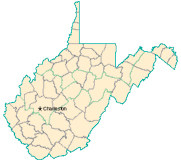
As Stop the Cap! first reported last summer, the state of West Virginia is embroiled in a growing scandal over how the state spent more than $126 million in federal institutional broadband expansion funds it was awarded in 2010.

Sources inside two small community libraries and a regional government office collectively contacted Stop the Cap! this week warning that some of the targets for broadband funding including schools, government offices, and libraries have been handed world-class broadband networks they cannot operate without ongoing support not included in the grant.  With little chance of funding, many institutions will be unable to pay the monthly service rates and maintenance fees charged to keep the networks running.

“We are getting a Hummer network on a Kia operating budget,” one community library official tells Stop the Cap! “The network sounds great, but in our case we have to find the money to pay the bill to run it every month, and that money is hard to find in a library with five outdated public terminals.”

Another source tells us installers left more than one library with equipment nobody knew how to operate.

The Cisco 3900 router series

“They installed it over the course of a few days and just left, and nobody here knows how it works,” the librarian tells us. “We’ve quietly gone back to our old Wi-Fi system until we can figure these things out. We don’t even have their phone number.”

At a library in Hurricane, librarian Rebecca Elliot said workers who showed up to install the router didn’t leave behind instructions or a user manual either.

“I don’t know much about those kinds of things,” Elliot told the AP. “I just work here.”

While the original purpose of the grant was to “improve broadband” in the Mountain State, the funding came with significant restrictions that targeted the money exclusively for institutional broadband networks that do not serve individual residences or businesses. While West Virginians languished with some the country’s worst broadband service, state officials were green-lighting spending on grossly oversized equipment that institutional users simply don’t need and sometimes cannot afford to operate.

Martin

One critic, Jim Martin, president of business broadband provider Citynet said last summer the state gave preferential treatment to Frontier Communications to construct networks that ultimately favored them as the logical choice of service provider, but left small institutions with service bills they can never hope to pay.

“Where is the accountability,” Martin asked this week.

His fears appear to be justified. This week, a consulting firm has been hired by the state to audit how more than $126 million in taxpayer funds were spent after reports in the Charleston press brought news the state paid millions to deploy equipment to facilities that did not need any service improvements.

The Charleston Gazette reports it found 366 unused routers valued at more than $22,000 each in storage.  They have been there for two years.  In fact, at least $24 million was spent on routers designed to be used by large corporations or universities that were installed in libraries and public safety centers with just a handful of personal computers. Experts say a basic retail router priced at $50 could have provided more than acceptable service to these locations.

West Virginia’s state Commerce Secretary Keith Burdette on Monday admitted, more than two years after the state won the grant, now might be a good time to hire a consultant that does not work for a company trying to sell the state broadband equipment or services.

Despite the suggestion the state designed its network improvements based on the recommendation of equipment vendors, Burdette sought to move on and avoid “finger-pointing” and “dwelling on past decisions.”

Burdette

“I don’t want to spend a lot of time on things we cannot change,” Burdette told the Gazette. “If we made mistakes, then we need to look at how do we take lemons and make lemonade.”

“That’s the most expensive glass of lemonade in the history of West Virginia,” replies our source inside a regional government office. “Imagine what that money could have done extending broadband service to the homes and businesses that do not have it today.”

Our source says the state government is engaged in classic “butt-covering” with the announced state audit.

“Of course the report will blame people lower down in government while leaving the oversight failure for another day,” he tells us. “What’s a hundred million in taxpayer money, right?”

Burdette and other state officials might have listened to the state’s own Office of Technology, whose administrator warned that the routers — the Cisco series 3945 — “may be grossly oversized.”  Other state and library officials also questioned the purchases.  Burdette said the state should have hired a consultant before purchasing the equipment and launching the expansion project, which will not deliver a single broadband connection to any resident or business in the state.

Martin said in 2011 the entire grant process was wrong-headed from the beginning.  Martin says the state should have spent the money on a stronger middle-mile network to boost capacity for everyone in the state.

Now West Virginia is in a hurry to spend the remainder of the grant award — an undetermined amount — before the grant spending expiration date is reached. Unspent funds must be returned to the federal government.

State officials promise they will find a home for every unused router by the time the stimulus grant expires. That could leave a rural county sheriff’s office with a router designed to serve a minimum of 500 concurrent users in a facility with fewer than a dozen aging personal computers.

Doing Things ‘The Frontier Way’ Has Been a Recipe for Disaster

Phillip "An Ex-Frontier Customer" Dampier

The other week while sitting in the dentist’s office waiting for my wallet to be drilled, I overheard a conversation at the reception desk over the latest effort by Frontier Communications to shoot itself in the proverbial foot.

“I decided to get rid of my phone line the other day and when I called Frontier to disconnect, I was told I would owe them more than $150 in disconnection fees for a contract I never knew I had with them,” opened the conversation.

“That happened to my sister as well, and she couldn’t believe it because nobody ever told her she was on a contract,” came the reply.

“I never knew I was either, and I told the representative they needed to show me where I signed up for anything like that or else I’m not paying it,” insisted the latest victim of Frontier’s phantom service contracts.

Within a minute or two, all had decided they were done doing business with the phone company that got its start more than 100 years ago as the well-regarded Rochester Telephone Corporation.  In 2012, there was no turning back after $150 “disconnect” penalties and other insults.  They were intent on being rid of Frontier once and for all.

With customer unfriendly policies like that, it comes as no surprise Frontier has been losing customers in the Rochester market for years, mostly to cell phone providers or Time Warner Cable — the latter which delivers more value and far superior broadband speed in western New York communities not served by Verizon FiOS.

Surprise... you're on a contract with a $150 cancellation penalty.

Twenty years ago, Rochester Telephone delivered excellent value, charging about half what then-NYNEX customers in Buffalo and Syracuse paid for telephone service. But as Frontier has increasingly disengaged from being an aggressive contender for telecommunications services in Rochester, people in this region of one million noticed, especially when Verizon’s fiber to the home service arrived in Buffalo, Syracuse, Albany, and beyond.

What did Frontier offer? Not much. Frontier’s local general manager Ann Burr, who used to be in charge at Time Warner Cable locally, told local media Rochester didn’t need faster broadband speeds. That’s a fitting argument for a company that doesn’t deliver them and believes 3Mbps broadband is plenty fast enough.  If you don’t like it, feel free to leave, so long as you aren’t trapped with that long-term service contract you never knew you had. (The New York Attorney General’s office has already spanked Frontier once for the practice, forcing them to issue refunds, and judging from last week’s conversation, it appears the problem has not abated.)

The fact is, Frontier offers little compelling to the landline customers they have left.

Rochester’s experience with Frontier seems apropos when contemplating the phone company’s latest quarterly results, which one analyst called “ugly.” Having listened to at least a dozen of Frontier’s quarterly conference calls with investors over the past three years, there seems to be no shortage of promises of better days to come.  Frontier is among the few companies I have heard call customer losses of 5-11% every quarter “an improvement.”

As one investor put it, the management at Frontier should win an Academy Award for feigned optimism.

This week, the company announced first-quarter earnings fell 51% thanks to lower revenue earned from the dwindling number of residential and business customers. But better days are ahead, really.

Road to nowhere?

Frontier has spent the last year treating their “system conversion” for ex-Verizon territories as the telecom equivalent of the Holy Grail.  Once achieved, the company can do anything. The reorganization underway internally at the company is supposed to improve its lackluster customer service, generate more marketing opportunities, save the company money, and open the door to a new chapter of a unified Frontier family, with ex-Verizon and always-Frontier employees coming together to do things “the Frontier way.”

How much longer investors will stick around waiting for the promised land remains an open question. The stock has already achieved a 52-week low, and if the company cuts its dividend — the primary point of attraction for investors — it will drop much lower.

Frontier’s management decisions have effectively left the company between a rock (Wall Street) and a hard place (its dwindling customers).  Much of the company’s success is predicated on rural broadband/landline service, where the company expects to face little competition.  But Verizon, the company that sold them much of their inherited network, has a little surprise for them.  After selling off the “junk” (a deteriorating copper landline network they no longer care much about), the company’s wireless division is coming back to town to poach Frontier’s customers.

Verizon’s grand plan is to pitch two products:

  1. Home Phone Connect: Verizon’s landline replacement works with the customer’s home phones over Verizon Wireless’ network. Customers can share minutes on an existing Verizon Wireless plan for $9.99 a month or get unlimited calling for $19.99 a month. It comes with most popular calling features included.
  2. Verizon HomeFusion Broadband: Verizon Wireless has excess capacity in rural areas, especially on 4G LTE-equipped towers, so why not put it to use? While commanding a premium at $60 a month for just 10GB of usage, customers who value speed over money may tolerate that diamond price.  If Verizon finds a way to relax that usage limit and lower prices, it could present a real competitive threat to phone companies delivering lower end DSL service.

[flv width=”480″ height=”290″]http://www.phillipdampier.com/video/Home Phone Connect – Home Phone Transfer Verizon Wireless.flv[/flv]

Verizon Wireless introduces Home Phone Connect, a product designed to tell landline companies like Frontier to take a hike.  (2 minutes)

While Verizon isn’t likely to immediately grab major market share with either product, it foreshadows an intent to leverage their rural wireless network to remain a player, even in places where they have abandoned selling landline service.

How to Stop the Erosion

Turning things around? Frontier contemplates licensing U-verse from AT&T

Even in a barely-competitive marketplace, companies must invest to keep up. But that investment annoys Wall Street, which can depress the stock (and the all-important dividend). But improved service retains customers (and may even win a few ex-customers back). So news that Frontier was considering licensing U-verse technology to upgrade their major markets is a logical first step to stop the bleeding. Frontier is irrelevant delivering broadband at speeds of 3Mbps at out the door prices that meet or exceed what the much-faster cable competition charges. U-verse would allow Frontier to deliver faster broadband (up to 24Mbps is plenty fast for a lot of consumers), build its own IPTV offering instead of relying on satellite dish reseller agreements, and maintain landline customers, assuming the company prices its bundle correctly.

While we are big proponents of fiber-to-the-home service, it is clear Frontier will never spend the money to deliver it, even to their largest service areas. They will prefer the cheaper route of fiber to the neighborhood, relying on existing copper infrastructure to connect individual homes to the service. It represents a reasonable first step.

Frontier also must continue aggressive investments in their broadband network in more rural areas. Some of the company’s regional backbones remain woefully congested, and the company just doesn’t deliver the speeds it markets on its website in too many areas.

High speed should really mean "high speed"

Jameson, a Stop the Cap! reader, is a good example. He signed up for “Frontier Max DSL” which claims it can deliver up to 6Mbps in his part of east-central Indiana.  He ended up with 1.6Mbps instead, in part of because Frontier’s records were inaccurate.

I called Frontier tech support after reading some stuff on Stop the Cap! and another site, learning that since I live under 5000 feet from the DSL termination point (the Frontier building down the road) that I shouldn’t have any problems getting their highest speeds. I got lucky and got a customer support agent who understood my problem, and a tech support guy who genuinely seemed concerned about my issue. The tech guy checked Frontier’s records and I was labeled as being 30,000 feet from the building, but I’m really only around 4200 feet away, and my speeds were provisioned at 1.6mbps down and around 450kbps up. He put in a support ticket to have my speeds automatically raised up to the max I’m paying for.

Jameson ended up with around 7Mbps — a little better than the advertised speed, but only because he thought to ask and reached the right people at Frontier to follow through.

Some of our readers in West Virginia are not so lucky, having the mediocre speeds they fought to receive reduced further when a technician suddenly remotely adjusts speed provisioning on customer equipment to reduce their maximum broadband speed.

Frontier’s DSL problems don’t just exist in rural areas. We experienced it first-hand in 2009 when the company advertised up to 10Mbps speeds in Rochester, and delivered 3.1Mbps to us instead.

Consumer Reports documents this is not an isolated problem, with only two-thirds of Frontier customers getting the broadband speeds they pay to receive. If and when a competitor does better, Frontier loses another customer.

Finally, Frontier must improve its customer service. The company is notorious for giving inconsistent answers to customer questions, doesn’t always follow through on commitments, and maintains far too many “gotcha” terms and conditions on contracts that leave customers exposed to unjustified early termination fees.

[flv width=”640″ height=”380″]http://www.phillipdampier.com/video/CNET Verizon HomeFusion Broadband May 2012.flv[/flv]

CNET shows off the equipment used with Verizon’s new HomeFusion wireless broadband service.  (2 minutes)

Search This Site:

Contributions:

Recent Comments:

Your Account:

Stop the Cap!