Home » Broadband Speed » Recent Articles:

Faster Frontier DSL Arrives in Ohio… If You Qualify

Phillip Dampier September 6, 2012 Broadband Speed, Consumer News, Frontier, Rural Broadband 7 Comments

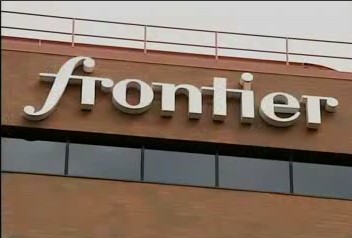
Frontier’s headquarters in Rochester, N.Y.

Frontier Communications has boosted speeds for some customers in 28 communities in Appalachian Ohio, but Stop the Cap! readers report actually qualifying to get faster broadband can be hit or miss.

Frontier has deployed ADSL2+ bonding technology in several exchanges throughout the region, which means customers can potentially double their current broadband speeds. The company says it will now sell residential customers up to 12/2Mbps and business customers up to 15/2Mbps DSL.

“With Frontier’s recent deployment of the latest broadband technology, residential customers can get the speeds they need to stream high-definition videos, run multiple devices, do online gaming and surf the net without lag,” said Dave Davidson, senior vice president and general manager for Frontier’s Ohio operations. “The ADSL 2+ Bonding technology also allows us to offer business customers super-fast speed that’s perfect for sending large files and for videoconferencing.”

The communities where Frontier recently deployed technology for increased broadband speeds in Appalachian Ohio include:

  • Central Ohio — Logan
  • Eastern Ohio — Bowerston, Byesville, Cambridge, Cooperdale, Flushing, Freeport, Knoxville, Lowell, Lower Salem, North Georgetown, New Philadelphia
  • Southern Ohio — Albany, Athens, Portsmouth, Guysville, Wellston, Idaho, Jackson, Lucasville, New Marshfield, Otway, Pomeroy, Shade, Piketon, Wellston
  • Southwest Ohio — Felicity, Manchester

But several Stop the Cap! readers in Ohio told us even though their communities are on Frontier’s upgrade list, they still don’t qualify for anything above 3-5Mbps service.

“Frontier’s online qualification tool rarely works, and is generally useless for predicting your likely speed, so I called Frontier this morning to inquire about 12Mbps service and was told my exchange does not yet qualify for the new speeds,” writes Dana B. from Jackson. “It would have been nice because I currently consider it a good day when a speed test shows I reach 3Mbps on my Frontier DSL.”

Ken, who lives near Manchester, found out he could not get the faster speed either.

“Frontier’s national customer service really was not much help as they simply processed my order,” says Ken. “Several hours after I was confirmed for the new speeds, I got a call back saying my line could not handle anything faster than around 5Mbps, which is about what I have now thanks to the hard work of a local lineman who tuned up my DSL service during an earlier service call.”

“It’s a real bummer because Frontier is charging me some very high prices for what I can manage to get, but unless and until a cable company wires my street, I do not have any other option.”

If anyone is able to get 12/2Mbps service from Frontier in Ohio, share your thoughts in our comment section.

For more information on Frontier’s Internet services, residential and business consumers may call 1-800-921-8101.


Head of Verizon FiOS TV Doesn’t Watch Much Live TV; Nothing on Data Caps “Just Yet”

Maitreyi Krishnaswamy, Verizon’s head of FiOS TV admits she practically never watches live television — she records everything on her DVR first.

Krishnaswamy has been responsible for many of the interactive video services offered on Verizon’s FiOS TV platform, including on-screen apps, the media program guide, and how customers connect various devices to the FiOS television experience.

Now she’s directing Verizon’s consumer video services — deciding which channels make the lineup on FiOS TV and the networks available for streaming to mobile devices.

Krishnaswamy told the Tampa Tribune she recognizes the way Americans watch television has changed over the past few years, and she admits it has led to the “growing” trend of customers’ cord-cutting their cable TV subscriptions in favor of online viewing.

Krishnaswamy

“The question is: Is it growing enough for us? For us, it’s a matter of cord-cutters versus cord-shavers — people who switch to smaller tiers,” Krishnaswamy said. “Is the migration to a-la-carte enough that we can go that route? It has a way more important impact that just on them. It impacts how we negotiate TV contracts with studios. It’s not something we can do overnight, but definitely something we’ve been looking at.”

Verizon has made it clear it intends to compete for customers regardless of how they watch television, but Krishnaswamy signals the company is also considering protecting their core video business model, and would only say Verizon had no announcements to make “just as yet” regarding an Internet Overcharging scheme including usage caps and overlimit fees. Critics of data caps argue that limiting broadband usage prevents customers from taking their viewing experience online because it threatens consuming the majority of their monthly data use allowance.

But Verizon does not mind offering customers a TV Everywhere experience — streaming video content over its broadband network, so long as a customer also subscribes to its TV package. The company already offers live streaming television of many channels on its lineup and wants to bolster that with on demand content. Verizon also is experimenting with non-traditional set top boxes, and although Krishnaswamy had nothing to say about supporting the forthcoming Apple TV, she is actively working on improving how Verizon’s television service works away from the traditional company-provided set top box.

Some highlights:

  • Verizon’s partnership with Redbox will let the company offer a new streaming and DVD rental service for customers, regardless of whether they live in a Verizon FiOS area or not. Customers will be able to access the service over mobile broadband, Wi-Fi, or any home broadband connection;
  • Verizon will introduce an online viewing app for forthcoming versions of Amazon’s Kindle;
  • The company has thus far only managed to secure streaming rights for in-home viewing and has run into difficulty getting content providers to let customers watch shows while on the go;
  • Google Fiber is “interesting,” but Krishnaswamy doesn’t believe they are “a real operator” when only offering service in one city. She thinks the project is a good idea, however, because it forces competing providers “to increase your speed;”
  • Verizon is considering simplifying its family of apps to reduce customer confusion. They currently have different apps for home security, home media, the remote control, and the program guide. Verizon wants its MyFiOS app to become a “super-app” that manages everything.

[flv width=”640″ height=”500″]http://www.phillipdampier.com/video/TVnext Interview – Maitreyi Krishnaswamy Verizon FIOS 1-28-11.m4v[/flv]

Back in 2011, Maitreyi Krishnaswamy explained her thinking about where Verizon FiOS was taking the TV experience. Many of these applications have since been released, but Verizon — like most providers — still runs into brick walls with content providers getting licensing to allow more flexible viewing of content.  (12 minutes)

Kansas’ Fiber Broadband Cup Runneth Over: New SureWest Projects Compliment Google

Phillip Dampier September 5, 2012 Broadband Speed, Competition, Consumer News, Google Fiber & Wireless, SureWest Comments Off on Kansas’ Fiber Broadband Cup Runneth Over: New SureWest Projects Compliment Google

Did you miss out on Google Fiber’s forthcoming gigabit broadband network in Kansas City, Kansas and Missouri? Kansans may not be out of luck, as provider SureWest aggressively continues work to expand its own fiber to the home network in several Kansas City suburbs and nearby communities.

SureWest, which believes strongly in fiber service, is busy laying fiber in conduits in Fairway, Mission, Roeland Park — all in Kansas. It also offers service in Lenexa, Overland Park, Shawnee and parts of Kansas City, Mo.

With all of this fiber, some Kansans may soon be able to choose between two competing fiber to the home providers.

SureWest General Manager of Kansas City operations Matt Zuschlag says SureWest’s fiber broadband service, which tops out at 50/50Mbps, will work just as well as Google’s gigabit (1,000Mbps) service because most web sites don’t need super fast speeds to load equally as fast. Even some bandwidth-intensive applications will not be able to take full advantage of Google’s fiber speeds because the networks currently supporting them were not designed to deliver sustained gigabit speed to end users.

SureWest works good enough for communities like Prairie Village, which is asking the company to wire its community for fiber service, regardless of where Google expands next.

SureWest competes with traditional cable and phone companies — Time Warner Cable and AT&T in the case of northern Kansas, and sells traditional triple play packages of phone, Internet, and television service.

But SureWest says its fiber network is always laid underground, which the company says offers improved reliability. Google Fiber is being installed largely on overhead lines alongside other utility services. SureWest says going underground allows it to skip the delays associated with obtaining pole use permits.


North Carolina Cable Company Believes in Fiber to the Home Service for Rural Customers

Phillip Dampier September 4, 2012 Broadband Speed, Consumer News, Public Policy & Gov't, Rural Broadband Comments Off on North Carolina Cable Company Believes in Fiber to the Home Service for Rural Customers

Country Cablevision, a small cable operator providing service in the heart of the Blue Ridge Mountains in rural northwestern North Carolina, will deploy fiber to the home service to Mitchell and Yancey counties, home to more than 33,000 people, thanks to $25.3 million (75% grant/25% loan) from the U.S. Department of Agriculture’s Rural Utilities Service.

The money is intended to fund broadband expansion in areas currently not served by the cable operator. When the project is complete in 2013, 97% of all homes in both counties will have access to the fiber network. Faster Internet speeds and competitive phone service will also be available to area businesses, and medical facilities in both counties will enjoy improved high speed connectivity.

Country Cablevision is one of the first cable operators in the country choosing to upgrade to an all-fiber network instead of extending its current, traditional cable infrastructure into currently unwired areas.

Modern utilities came to rural America through some of the most successful government initiatives in American history, carried out through the United States Department of Agriculture (USDA) working with rural cooperatives, nonprofit associations, public bodies, and for-profit utilities. Today, USDA Rural Development Utilities Programs carries on this tradition helping rural utilities expand and keep their technology up to date, helping establish new and vital services such as distance learning and telemedicine.

A Look at Broadband Numbers in the United States: DSL Hurting Phone Companies

Phillip Dampier September 4, 2012 AT&T, Broadband Speed, Cablevision (see Altice USA), CenturyLink, Charter Spectrum, Comcast/Xfinity, Competition, Consumer News, Frontier, Rural Broadband, Verizon, Windstream Comments Off on A Look at Broadband Numbers in the United States: DSL Hurting Phone Companies

Lost more customers than it gained for the first time.

Phone companies depending on DSL to keep them in the broadband business are in growing trouble, unless they lack a nearby cable competitor. Subscriber numbers from nine different major phone and cable companies over the summer of 2012 show cable broadband continues to grow as customers cancel DSL service from their local phone company. But for rural customers, DSL often remains the only option. That leaves rural providers like Frontier, Windstream, and CenturyLink in better standing than larger companies like AT&T and Verizon.

Phone Companies

  • AT&T‘s U-verse service is the only thing keeping AT&T broadband numbers on the rise. AT&T added 553,000 new U-verse customers during the summer and now serves 6.5 million customers on its fiber-to-the-neighborhood network. AT&T continues to lose DSL customers, primarily to local cable competitors.
  • CenturyLink, Inc. has been upgrading its DSL service in several areas to better compete with cable broadband, and is also deploying a fiber-to-the-neighborhood service in select cities. The network upgrades are helping, bringing the company 18,000 new broadband customers. CenturyLink currently serves 5.76 million Internet customers nationwide.
  • Frontier Communications has lost broadband customers in its larger service areas, mostly to cable, but those losses have been offset by its DSL expansion in rural areas that have never had broadband before. But the company only managed to add just under 6,000 new broadband customers during the last quarter, serving 1.78 million customers across the country.
  • Verizon Communications: Verizon was willing to turn away potential DSL customers for the first time, as it discontinued selling DSL to those who don’t want Verizon landline service. That, and pervasive cable competition, meant Verizon only picked up 2,000 new DSL customers this quarter — the worst showing in four years. Verizon FiOS’ recent price hikes also cost the company some growth for its fiber to the home service,  but still earning a respectable 134,000 new customers (5.1 million total). Time Warner Cable, Cablevision, and Comcast have all managed to win back FiOS customers with attractive discount offers.
  • Windstream Corp. faces cable competition in a number of its semi-rural service areas, and its DSL service has not been able to keep up with the growing speeds available to cable broadband subscribers. For the first time, Windstream reported it lost more customers than it added, losing 2,200 DSL subscribers. Windstream still has 1.36 million customers signed up for its broadband service.

Cablevision has won back some of its former customers who went with Verizon FiOS but do not like the recent rate hikes.

Cable Companies

  • Cablevision, which serves mostly suburban New York City, New Jersey, and Connecticut added 25,000 new high speed customers, many coming back to the cable company from Verizon. Cablevision serves a relatively small geographic area, but a densely populated one. Nearly 3 million broadband customers have remained loyal to the cable company.
  • Charter Cable picked up 37,000 new broadband customers, a number fleeing phone company DSL for Charter’s higher speed broadband services. Charter serves 3.8 million broadband customers.
  • Comcast added 156,000 new customers to its roster of 18.7 million Internet customers, again mostly from former DSL customers.
  • Time Warner Cable expanded with 59,000 new high speed customers, primarily from DSL disconnects. Time Warner provides service for 10.8 million broadband customers.

Search This Site:

Contributions:

Recent Comments:

Your Account:

Stop the Cap!