Home » Broadband Speed » Recent Articles:

Frontier Attempts to Win Over Dissatisfied Cable Customers Plagued With Rate Hikes, Outages

Phillip Dampier September 27, 2012 Broadband Speed, Competition, Consumer News, Frontier, Rural Broadband Comments Off on Frontier Attempts to Win Over Dissatisfied Cable Customers Plagued With Rate Hikes, Outages

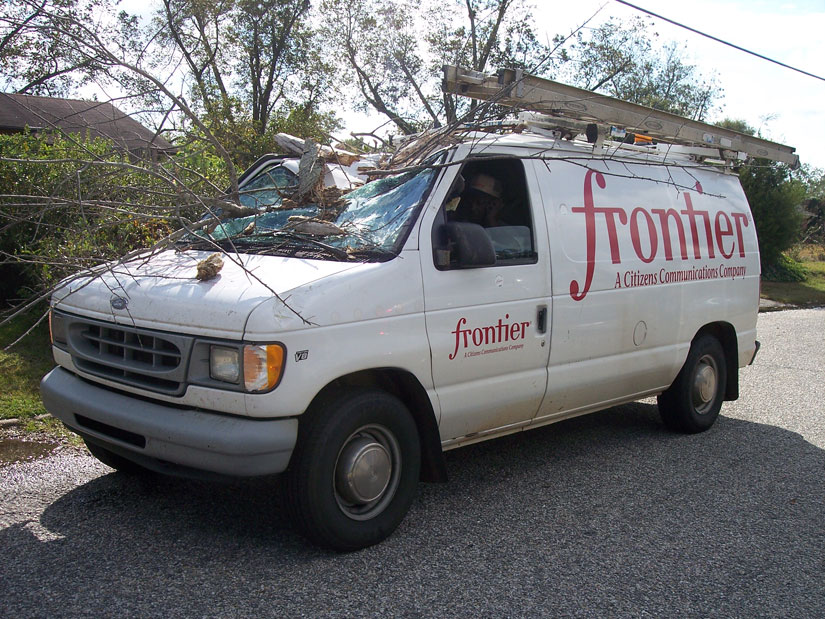
Frontier Communications is targeting promotional offers to customers that have been impacted by cable service outages and rate hikes, despite having a relatively poor service record itself.

Frontier president and chief operating officer Dan McCarthy told investors attending the recent Goldman Sachs Communicopia Conference the company was pulling out all the stops looking for surgical marketing opportunities.

“People don’t wake up every day, and say, ‘I want to switch broadband providers.’ It’s really about finding what is that lever to pull. Sometimes it’s a message at a key point — it could be during an outage, it could be during change of prices for them. It could be there are some substandard speeds that are being offered,” McCarthy said. “We are looking at what is the right mix of messaging and promotional offers that really allow us to do that. I think you’ll see us be pretty aggressive in that area,” he added.

But Frontier itself has had plenty of service problems, and was the only major Internet provider in the country to have lost ground in a July FCC report measuring broadband quality. The company continues to face extensive service outages when fiber cables are cut or copper wiring is stolen by thieves. Recent storms this past summer disrupted 277 Frontier central offices in the Carolinas, Indiana, Pennsylvania, and West Virginia, according to a Securities and Exchange Commission filing. The repair work, including overtime and equipment, is expected to cost the company at least $15 million.

Frontier reports it expected to replace at least 167,000 feet of damaged or stolen copper cable and purchased 203,000 backup power generators to keep central exchanges up and running during extended electric outages.

This week, a major service outage struck customers in parts of Ft. Wayne, Ind. after an accident severed an important cable.

A number of customers in Frontier service areas have already disconnected their landlines with the company, but where cable companies do not provide service, Frontier reports it is having success selling a standalone DSL product it dubs, “Simply Broadband.”

“We are seeing success in attracting and retaining customers with this product and it is having a positive impact on our Q3 residential customer counts,” Frontier reports in an SEC filing.

Frontier has also recently announced speed boosts in several states that can deliver up to 25Mbps DSL service to certain customers.

Lafayette’s Fiber to the Home Network Creates High-Tech Haven in South-Central Louisiana

Phillip Dampier September 27, 2012 Broadband Speed, Community Networks, Consumer News, LUS Fiber, Public Policy & Gov't, Video Comments Off on Lafayette’s Fiber to the Home Network Creates High-Tech Haven in South-Central Louisiana

Lafayette, Louisiana has never sit still for private companies bypassing the heart of Cajun country. When electric companies refused to wire the city, the community elected to do it themselves. When Cox Cable and AT&T said no to providing the kind of cutting-edge broadband that would allow Lafayette to protect its reputation as an entrepreneur-driven community, publicly owned utility LUS constructed a fiber to the home broadband network for every resident and business. Today, LUS Fiber has helped transform the parish, with half the unemployment rate of the rest of the country and an attractive place for digital economy jobs. It has even helped curtail well-educated recent graduates moving away in search of high-tech employment.

“There really is no infrastructure more important in the 21st century economy than fiber,” said Geoff Daily, executive director of Fibercorps, a non-profit group promoting digital economic development in Lafayette.

[flv width=”640″ height=”380″]http://www.phillipdampier.com/video/FTTH Council – LUS Profile 9-24-12.flv[/flv]

Watch how LUS Fiber has transformed the lives of students, attracted new high-tech business, and promoted job growth with broadband infrastructure most cable and phone companies simply won’t provide.  (9 minutes)


Exploiting America’s Utilities for Fun and (Endless) Profits: The Big Telecom Swindle

Phillip Dampier September 25, 2012 AT&T, Broadband Speed, Competition, Consumer News, Editorial & Site News, Public Policy & Gov't, Rural Broadband, Verizon, Video, Wireless Broadband Comments Off on Exploiting America’s Utilities for Fun and (Endless) Profits: The Big Telecom Swindle

[flv width=”448″ height=”276″]http://www.phillipdampier.com/video/David Cay Johnston The Fine Print How Big Companies Use Plain English to Rob You Blind 9-19-12.mp4[/flv]

Fellow Brighton, N.Y. resident and Pulitzer Prize-winning journalist David Cay Johnston hits the nail right on the head describing the Big Telecom Swindle that promised America it was going to get something magical called “the information superhighway.”

Over a half-trillion dollars in rate increases later, AT&T and Verizon instead spent a lot of that money on an enormously profitable wireless business that redefines the average American family’s monthly phone bill at $100+. Johnston talks about the broken industry promises of ubiquitous broadband, leaving millions of potential FiOS and U-verse customers behind.

With vast lobbying arms, large cable and phone companies have manipulated public policy to assure they can gouge customers, shortchange workers, and erect barriers to fair play. If consumers don’t pay attention, politicians armed with fat campaign contributions will continue to represent corporate interests, not those of the average American.  

[Note to Mr. Johnston: He isn’t the only reporter paying attention. Hat tip to Stop the Cap! reader Pat McDermott who shared the video.]  (17 minutes)


Verizon Won’t Expand FiOS Beyond Current Franchise Obligations, CFO Tells Investors

Verizon has a moratorium on further expansion of its fiber to the home service except in areas where it has existing agreements to deliver service.

Verizon Communications will not expand their FiOS fiber optic network beyond the current obligations the company has with communities where it presently provides service.

Verizon chief financial officer Fran Shammo told investors the company intends to wind down FiOS expansion once its contractual commitments to state and local authorities are met to reap the financial rewards of the fiber optic network it began building in 2006.

“At this point we won’t build beyond that, because at this point we have to capitalize on what we have invested,” Shammo told an investor at the Goldman Sachs Communacopia Conference.

From 2014 beyond, Verizon plans to substantially decrease capital investments in its wired networks and continue to shift spending towards Verizon Wireless. Shareholders may also benefit from an increased dividend payout as the company’s balance sheet improves.

In real terms this means that Verizon will only expand FiOS where it previously signed agreements that allowed the company to gradually roll out its fiber optic network. Large sections of Verizon’s service areas, including major cities in the northeastern corridor, are not on the upgrade list and will not get the service.

Verizon’s experience and scale rolling out fiber to the home service over the past five years allowed the company to achieve a cost of  just $700 to reach each home, less than half the original estimated expense for fiber upgrades. But Verizon still considers the network too expensive to expand further.

Shammo also admitted Verizon is targeting its landline investments to bolster its more profitable wireless business.

“The fact of the matter is wireline capital — and I won’t give the number but it’s pretty substantial — is being spent on the wireline side of the house to support wireless growth,” Shammo said. “So the IP backbone, the data transmission, fiber to the cell, that is all on the wireline books but it’s all being built for the wireless company.”

Bruce Kushnick found no bump in construction expenses for FiOS after 2008 and no major increases in capital expenditures in general. In fact, Verizon, on average, spent more on construction from 2000 to 2004 than from 2005 to 2011, when FiOS construction was at its peak.

Bruce Kushnick from New Networks Institute has been tracking Verizon’s capital investments for the last decade and found Verizon was hardly hurting paying for FiOS network upgrades. In fact, Kushnick suspects much of the money to pay for FiOS came from a combination of ratepayer rate increases and diversion of investments intended to maintain Verizon’s existing landline network:

Whatever amount Verizon did spend on FiOS — and obviously it was a not insignificant amount — would therefore appear to have come out of the standard construction budgets that were supposed to be used to upgrade the lines that most Americans are still using for their phone service: the Public Switched Telephone Networks, or PSTN. It would seem that customers, including seniors, low income families, minorities and municipalities have been funding the construction of a cable service through the hefty monthly fees they pay for a dialtone and ancillary services. In some states this is actually illegal.

If Verizon did actually spend $23 billion, then it appears to have come at the expense of the traditional maintenance and upgrades of the utility plant — and the PSTN got totally hosed. At the very least, prices for basic phone service should have been in steep decline as one of the major costs, construction, was dramatically lowered.

Instead, Verizon was also getting rate increases specifically to pay for FiOS. For instance, Verizon persuaded New York officials to increase rates for “fiber optic investments,” where the only service that could use the fiber optic service was Verizon’s FiOS.

For instance, when New York State Department of Public Service Commission Chairman Garry Brown announced the approval of a $1.95 a month rate hike for residential phone lines in 2009, he said “there are certain increases in Verizon’s costs that have to be recognized.” He explained: “This is especially important given the magnitude of the company’s capital investment program, including its massive deployment of fiber optics in New York. We encourage Verizon to make appropriate investments in New York, and these minor rate increases will allow those investments to continue.”

Of course the states weren’t told that everyone would be charged extra for a service that only some people were going to get. In New Jersey, for instance, Verizon made a firm commitment to rewire the entire state with fiber optics — capable of 45 Mbps in both directions. It was supposed to be 100 percent completed by 2010. Instead, Verizon claims to have “passed” 1.9 million homes, representing 57 percent of the households in its territories — but “passed” may or may not mean that they can actually get service.

With Shammo reporting FiOS investments winding down by 2014, Verizon is not increasing the budget to maintain the copper infrastructure it will require non-FiOS customers to keep using for service. Instead, capital investments will continue to be spent supporting Verizon Wireless, although in lower amounts.

“So if you look at overall, I continue to say [investments] will be flat to down and I think we will be probably more slightly down than flat, and [CEO] Lowell [McAdam] and I are really starting to focus in on where we spend that investment and make sure that that investment returns on a shorter period of time,” Shammo said. “And that is really the focus. So what I like to say is that our ratio of CapEx to revenue will continue to decline.”

N.J. State Commission report from June 2010 saw this coming two years earlier and noted:

“While it is possible for Verizon to extend service throughout its authorized territory, to an additional 155 municipalities in the state that are not included in its current application of 369 towns, Verizon has indicated it will now concentrate its capital expenditures, expected to be between $16.8 billion and $17.2 billion in 2010 on its wireless telephone network. Further FiOS expansion will be limited to increasing penetration in those communities where FiOS is currently available, according to the company.”


Building a Broadband Superhighway 5 Miles Long: How Usage Caps Ruin Faster Speeds

Phillip “Tollbooths are not innovation” Dampier

Federal Communications Commission chairman Julius Genachowski last week wrote a guest editorial on TechCrunch espousing the benefits of faster broadband networks, but the advances he celebrates often come with innovation-killing usage caps and overlimit fees he continues to ignore.

We feel the need – the need for speed. As Tom Friedman and others have written, in this flat global economy a strategic bandwidth advantage will help keep the U.S. as the home and most desired destination for the world’s greatest innovators and entrepreneurs.

[…] But progress isn’t victory, particularly in this fast-moving sector. Challenges to U.S. leadership are real. This is a time to press harder on the gas pedal, not let up. The first challenge is the need for faster and more accessible broadband networks. We need to keep pushing because our global competitors aren’t slowing down. I’ve met with senior government officials and business leaders from every continent, and every one of them is focused on the broadband opportunity. If we in the U.S. don’t foster major investments to extend and expand our broadband infrastructure, somebody else will take the lead.

We need to keep pushing because innovators need next-generation bandwidth for next-generation innovations – genetic sequencing for cancer patients, immersive and creative software to help children learn, ways for small businesses to take advantage of Big Data, and speed- and capacity-heavy innovations we can’t yet imagine.

We need to remove bandwidth as a constraint on our innovators and entrepreneurs. In addition to steadily increasing broadband speed and capacity for consumers and businesses throughout the country, we need – as we said in our National Broadband Plan – “innovation hubs” with super-fast broadband, with speed measured in gigabits, not megabits.

[…]Some argue the private sector will solve these challenges itself, and that all government has to do is get out of the way. I disagree. The private sector must take the lead, but the public sector has a vital though limited role to play.

Among the policy levers government needs to use is the removal of barriers to broadband buildout, lowering the costs of infrastructure deployment with new policies like “Dig Once” that says you should lay fiber when you dig up roads. The President recently issued an Executive Order implementing this idea, suggested in our Broadband Plan. Government must promote competition, which drives innovation and network upgrades.

We must ensure the Internet remains an open platform that continues to enable innovation without permission.

Genachowski

Genachowski’s vision for faster broadband has the noble goal of maintaining competitiveness with the rest of the world and putting the United States back on top in broadband rankings and innovation. But while hobnobbing with his industry friends at recent industry conventions, he may have gotten too close to one of the biggest impediments holding us back — big cable and phone companies merrily working their magic to create a comfortable duopoly with pricing and service plans to match.

Back in the late 1990s, most cable operators thought of broadband as an ancillary service easy enough to operate, but probably hard to monetize. Just like digital cable radio services like Music Choice and DMX, “broadband” would likely appeal only to a tiny subset of customers.

“Back in the 1990s, Time Warner was primarily a TV company in a TV industry.  Broadband then was an innovating and radical thing, and a lot of people thought it was stupid and wouldn’t work,” Time Warner Cable CEO Glenn Britt said in April, 2009.

The launch of “Road Runner” was not the most auspicious marketing effort undertaken by the cable operator. In fact, the service was rarely targeted for price adjustments, hovering at around $40 a month for a decade.

When the Great Recession hit the United States, something unexpected happened. Cable operators discovered people were willing to cancel their cable and phone services, but not their broadband. In fact, as high bandwidth online video became an increasing part of our lives, the cable industry realized they were in the catbird seat to deliver the best broadband experience, and be well-paid for it. With little competition, increasing prices brought little risk and, thanks to the insatiable drive to boost revenue and reduce costs, implementing usage caps to control “excess” usage and costs were within their grasp.

In 2008, when Stop the Cap! launched, only a handful of ISPs had usage caps. Now most providers, with the exception of Time Warner Cable, Verizon, Cablevision, and a handful of others, all have usage allowances and overlimit fee Internet Overcharging schemes to further pad their bottom lines.

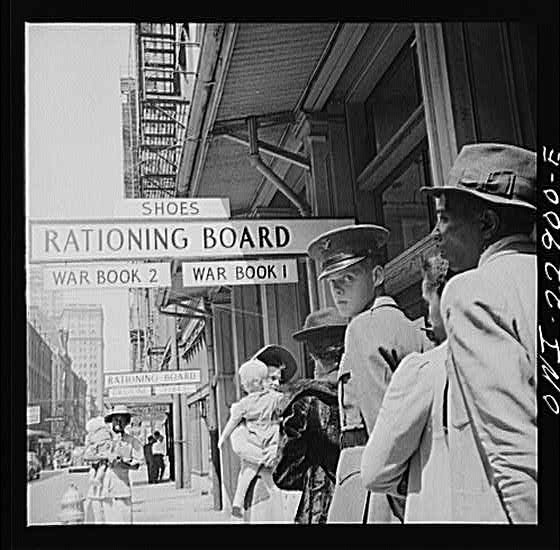
Innovation: Rationing Your Internet Experience — Stick to e-mail and web pages.

Genachowski has completely ignored the growing pervasiveness of usage caps, and even excused them as an experiment in marketplace innovation. But limits on broadband usage will also limit the broadband innovation revolution he wants, especially when most Americans have just one or two realistic choices for broadband service:

  1. Usage caps are the product of artificial scarcity. Rationing Internet usage, even with now-pervasive cost-effective upgrades like DOCSIS 3, simply does not make sense (but it will make dollars). Cable operators are switching off analog television service to free up bandwidth to provider faster Internet speed and fatten the pipeline that delivers it. They have plenty of capacity, but continue to proclaim they must limit usage for “fairness” reasons, without providing a single shred of evidence to prove the need for usage caps. Consumers will self-ration just to avoid the prospect of being cut off or handed a bill with overlimit fees.
  2. Usage caps make faster speeds irrelevant. Selling customers premium-priced, super fast broadband speed is hardly compelling when accompanied by usage caps that constrain the benefits of buying. Why pay $20-50 more for faster speeds when customers cannot take practical advantage of them. Customers using their Internet service to browse web pages and read e-mail have no interest in upgrading to 30+Mbps. Customers streaming video or moving large files do.
  3. Usage caps retard innovation. Google’s new 1Gbps fiber optic network was built on the premise that usage caps were unnecessary on a fiber-based network and would retard innovation. Developing the next generation of innovative apps that Genachowski celebrates will never happen if developers are discouraged by Internet usage toll booths and stop signs. The cost to provide the service is not largely dependent on customer usage. It is the initial price of last mile infrastructure that really matters. Both cable and phone companies have reduced their investments to upgrade their networks, and AT&T and Verizon both contemplate getting rid of their rural landlines. Most cable operators paid off their networks years ago.
  4. Usage caps create a whole new digital divide.  Time Warner Cable’s discounted Internet Essentials program delivers only a $5 discount with a harsh 5GB usage cap. For an income-challenged home compelled to switch to a provider’s budget plan, the result is a different Internet experience than the rest of us enjoy. Imagine if your home broadband account was limited to 5GB a month. What online services would you have to avoid to stay under the provider’s limit? Traditionally, operators sell the lowest speed tiers with the lowest usage allowances. Slower speeds already offer a disincentive to use high bandwidth services, but many providers typically drive that disincentive home even harder with a paltry allowance that will cost plenty to exceed.
  5. Usage caps harm our broadband standing. While Genachowski celebrates increasing broadband speeds, he ignores the fact the rest of the world is moving away from usage caps even as the United States moves towards them. Both Australia and New Zealand elected to construct their own national fiber networks in large part because the heavily usage-capped experience was holding both countries back. Usage caps are a product of a barely competitive market.

[flv width=”640″ height=”380″]http://www.phillipdampier.com/video/Bandwidth Caps 7-2011.flv[/flv]

Tech News Today debunks providers’ claims that usage caps are fair and control those who “overuse” their networks, noting the same phone companies (AT&T) pushing for usage caps are also moving voice calling to unlimited service plans. (August, 2011) (4 minutes)

Search This Site:

Contributions:

Recent Comments:

Your Account:

Stop the Cap!