
Home » Broadband Speed » Recent Articles:

FreedomPop Set to Introduce Free 500MB of Data a Month on Sprint’s LTE Network

freedompopFreedomPop, which offers 500MB of free wireless data service a month via Clearwire’s WiMAX service on a range of devices, has a better offer for tablet owners coming in the second half of this year.

The FreedomPop Clip is designed to attach to Wi-Fi only tablets and provides wireless Internet connectivity when away from Wi-Fi. Better still, the service will be free for the first 500MB of usage each month and will support Sprint’s up-and-coming 4G LTE network for faster browsing. The add-on hardware only weighs 2.5 ounces and has its own built-in rechargeable battery estimated to last up to six hours.

Tablets enabled with support for mobile data networks have never sold particularly well because of the added cost and expensive two-year contract required to maintain the service. Instead, some customers tether their tablets or enable an add-on Mobile Hotspot feature on their smartphone, which can cost $30 extra per month. The new FreedomPop Clip does not come with a contract or a monthly fee when users keep browsing to under 500MB each month. The forthcoming device will also support up to eight extra connections, in case you want to share.

Those who want more data, and around 30 percent of FreedomPop’s customers reportedly do, they can buy it on-demand without any contract or commitment. If you bug your friends to also buy the device, you can earn additional free browsing. In fact, FreedomPop will try and encourage sharing by including a new “open Wi-Fi” Internet service on a separate SSID. Those connecting through the open feature will likely get a marketing message encouraging them to get their own FreedomPop device, and their usage won’t count against your allowance.

FreedomPop Clip supports Sprint's up and coming LTE 4G network.

FreedomPop Clip supports Sprint’s up and coming LTE 4G network.

Stop the Cap! has FreedomPop’s $99 iPod Touch add-on device, which works exclusively on Clearwire’s network. We’ve used it for about five months and can report the device works well whether you actually have an iPod or not. It is simply a portable hotspot shaped to clip to the back of the 4th generation iPod Touch (it won’t fit ours). But even if it cannot clip on, it still delivers excellent signals up to 12 feet away from the MP3 player.

Its biggest weakness is Clearwire’s hit or miss network. Here in suburban Rochester, N.Y., Clearwire provides service through a nearby cell tower about a mile away. At home, the device works with fair reception indoors, but really needs to be near a window to perform reliably. Outdoors, the device works much better. We found more trouble trying to use the device in a nearby restaurant and while in downtown Rochester because Clearwire reception proved spotty. When it does work, it provides an average of 800kbps-1Mbps downstream speeds, which is superior to most 3G networks, but does not come close to what Verizon’s LTE network can deliver. But then, FreedomPop data comes free.

Just remember to keep usage at 400MB or less every month. As you approach 500MB of usage, FreedomPop will “conveniently” bill you for additional usage it anticipates you will use unless you remember to shut this auto top-up feature off on FreedomPop’s website control panel. You must also use at least 5MB a month to keep the device active, so remember to power it up at least once a month and do some browsing.

The FreedomPop LTE-capable Clip will also reportedly work with 3G service, according to Forbes. This is an important consideration because Sprint’s 4G LTE network is still in its infancy and not yet available in most major metropolitan areas. But if it relies on Sprint’s overwhelmed 3G network, expect much slower performance.

The selling price for the device itself has not yet been announced, but we expect it will be available later this year at $99 or slightly higher.

Thanks to Stop the Cap! reader Jerry for sending this news tip.

Reports of “Free Nationwide Wi-Fi” Network are Overhyped; No ‘Obama-Wi-Fi’ Forthcoming

Phillip Dampier February 5, 2013 AT&T, Broadband Speed, Community Networks, Competition, Consumer News, Editorial & Site News, Public Policy & Gov't, Verizon, Video, Wireless Broadband Comments Off on Reports of “Free Nationwide Wi-Fi” Network are Overhyped; No ‘Obama-Wi-Fi’ Forthcoming
A big 40oz can of Hype from the Washington Post.

A big 40oz can of Hype from the Washington Post.

Conservative bloggers are calling it socialized “Obama-Wi-Fi,” broadband advocates claim it represents salvation from high-priced wireless service plans, and the media echo chamber is amplifying reports that the federal government in on the verge of launching a nationwide free Wi-Fi network.

Sorry folks, it is not to be.

An article in Sunday’s Washington Post originally titled, “FCC Proposes Large Public WiFi Networks” got the ball rolling, and almost 3,000 reader comments later, a full-scale debate about the merits of government-supplied Wi-Fi Internet access is underway.

Cecilia Kang and her headline writer mislead readers with statements like these:

The federal government wants to create super WiFi networks across the nation, so powerful and broad in reach that consumers could use them to make calls or surf the Internet without paying a cellphone bill every month.

[…] If all goes as planned, free access to the Web would be available in just about every metropolitan area and in many rural areas.

There is nothing new about the FCC’s effort to set aside unlicensed spectrum for so-called “white space” Wi-Fi. As the spectrum wars continue, wireless companies like Verizon and AT&T are pushing proposals to further shrink the number of channels on the UHF television band and repurpose them for expanded cellular data networks. That newly available spectrum would be secured through an FCC auction. FCC chairman Julius Genachowski wants to set aside some of that available spectrum for unlicensed use, including the next generation of Wi-Fi, which will greatly extend its range and speed.

There is no proposal on the table for the government to fund or create a free, national Wi-Fi network as an alternative to paid commercial services. At issue is simply how 120MHz of newly-available television spectrum would be made available to new users. Republicans and large wireless companies like Verizon and AT&T are demanding the vast majority of that spectrum be auctioned off. AT&T and Verizon would like to expand their spectrum holdings, and a straight “highest bidder wins” auction guarantees the vast majority of it will be divided by those two companies. Many Democrats and broadband advocates want a portion of that spectrum set aside to sell to AT&T and Verizon’s competitors — current and future — to promote competition. They also support set-asides that make frequencies available for unlicensed uses like Wi-Fi.

Genachowski’s proposal could potentially spur private companies or communities to build community-wide Wi-Fi networks operated on unlicensed frequencies. With more robust signals, such high speed wireless networks could be less costly to construct and serve a much wider geographic area.

The potential for competition from the public or private sector is what bothers companies like AT&T and Verizon. Both argue that since they had to pay for their spectrum, allowing other users access to free spectrum would be unfair, both to themselves and to the government’s effort to earn as much as possible from the auction. AT&T has been the more aggressive of the two companies, repeatedly attempting to insert language into legislation curtailing the FCC’s ability to set aside a significant amount of spectrum for unlicensed use. While AT&T’s lobbyists do not go as far as to advocate banning such networks, the technical conditions they demand would make them untenable. AT&T and others also demand the FCC must close down unlicensed networks if they create “harmful interference,” which is open to interpretation.

Helping the wireless companies in the campaign against the next generation of Wi-Fi are hardware manufacturers like Cisco, which has been trying to deep six the proposal for at least two years. Why? Because Cisco’s vision of wireless networking, and the products it has manufactured to date, are not in sync with the kind of longer distance Wi-Fi networks the FCC envisions. Cisco faces overhauling products that were designed under the premise Wi-Fi would remain a limited-range, mostly indoor service for consumers and businesses.

The threat to incumbent Internet Service Providers is clear enough. If a new version of Wi-Fi launched that could blanket entire neighborhoods, communities, non-profits, or even loosely-knit groups of altruistic individuals could launch free Wi-Fi services sharing their Internet connection with others. If the technology allowed users to seamlessly hand off wireless connections from one free Wi-Fi hotspot to another, much like cell sites do today, customers might downgrade their wireless data plans with big telecom companies. Machine-to-machine networking could also rely on Wi-Fi instead of commercial wireless data plans. It could threaten billions in potential revenue.

Stopping these networks is a priority for corporate interests with profits at stake. But one thing they do not have to worry about, at least for now, is the federal government getting into the wireless Internet business.

[flv width=”640″ height=”380″]http://www.phillipdampier.com/video/Washington Post FCC offers path to free Internet access 2-4-13.flv[/flv]

After the original story ran in the Post, Cecilia Kang participated in this interview which clarified what the FCC is actually proposing. This video explains what spectrum allocation and unlicensed spectrum is all about. Kang clarifies her article, explaining private companies and/or communities will have to decide what to do with the unlicensed spectrum. The federal government is only facilitating the space and has no plans to run a national network itself. (5 minutes)

https://www.washingtonpost.com/business/technology/tech-telecom-giants-take-sides-as-fcc-proposes-large-public-wifi-networks/2013/02/03/eb27d3e0-698b-11e2-ada3-d86a4806d5ee_story.html

The Tarheel State Scrapes the Bottom: N.C. Has Lowest Broadband Adoption in America

rotting barrelNorth Carolina has achieved a new low. It is now tied with bottom-rated Mississippi as America’s least-connected state, at least in terms of broadband adoption.

Christopher Mitchell and Todd O’Boyle add up the cost to the state’s economy from years of broadband neglect from dominant providers like Time Warner Cable, AT&T, and CenturyLink.

Although the largest cities in the state do reasonably well, suburban and rural North Carolina continue to suffer with slow or no service at all, thanks to last-generation cable and spotty DSL service that has not kept up with other states.

Mitchell and O’Boyle blame much of the problem in their editorial in the Charlotte News & Observer on two factors: a lack of competition and a legislature that cozied up to corporate dollars to pass an anti-competitive community broadband ban in 2011.

After state legislators collected more than $1 million in campaign donations from Time Warner Cable and AT&T, the General Assembly passed a law in 2011 that effectively barred communities from building their own networks. These corporations are members of the American Legislative Exchange Council, a national organization that drafts business-friendly “model bills” to push a corporate agenda in statehouses across the country.

The impetus for that effort was the city of Wilson’s decision to build its own network after existing providers declined to improve their services. The city’s globally competitive fiber optic network offers Internet connections far faster than possible on DSL or cable – and it is far more reliable.

Because it is owned by the city, the Wilson network keeps its prices affordable. And because locals now have a choice, Time Warner Cable priced its services more competitively in Wilson than in nearby towns without meaningful competition.

Time Warner Cable, AT&T and CenturyLink waged a multiyear lobbying campaign to secure the 2011 bill. They claimed it encouraged fair competition, but their real goal was to eliminate consumer choice, as documented in a new report by the Institute for Local Self-Reliance and Common Cause: “The empire lobbies back: How national cable and DSL companies banned the competition in North Carolina.”

As a result, although Time Warner Cable has invested in a data center and billing operation in the state (and received taxpayer-funded tax breaks in the process), average consumers are still receiving service that lags far behind community-owned fiber networks in cities like Wilson and Salisbury.

AT&T’s response to a call for investment was news it told 75 of its Greensboro-area workers to either move to Alabama or start looking for work somewhere else.

Both authors argue that North Carolina’s state legislature has decided to outsource the state’s broadband future to a handful of out-of-state corporations that have been able to increase rates, trickle out service improvements, and keep true competition at bay.

Christopher Mitchell works for the Institute for Local Self-Reliance and Todd O’Boyle is affiliated with Common Cause.

Snow Day: Missouri Businesses Temporarily Close Because Kids Home Online Clog Windstream’s DSL

Phillip Dampier January 28, 2013 Broadband Speed, Competition, Public Policy & Gov't, Rural Broadband, Windstream Comments Off on Snow Day: Missouri Businesses Temporarily Close Because Kids Home Online Clog Windstream’s DSL

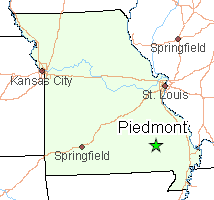
Fiber Dreams are Gone With the WindstreamWhen inclement weather forces Wayne County, Mo. schools to close, some area businesses in Piedmont also send employees home because their Windstream Communications’ DSL Internet speeds slow to a crawl.

“People feel they are paying for a service they are not getting,” Missouri state Rep. Paul Fitzwater told Windstream. “I get emails every day, letters, telephone calls. The other day there was a water main break and school was closed. Some of the businesses had to shut down because of reduced Internet speeds because the kids were online playing games.”

Fitzwater complained to Windstream officials that broadband issues are so bad in the region, it is affecting the local economy.

“McAllister Software is a major employer, employing around 140 people,” Fitzwater said. “They are vital to the local economy and they need Internet service. There were about 45 hours last year that they had to shut their doors because they had no Internet.”

Fitzwater

Fitzwater

Windstream plans broadband feast or famine for southeast Missouri’s Wayne County, with well-populated communities getting some broadband service improvements while more rural areas continue to go without high speed Internet.

“Windstream has made it clear that they have no plans to invest in areas where they don’t feel they can be profitable,” said Piedmont Area Chamber of Commerce president Scott Combs.

With no cable broadband competition in rural parts of Missouri, customers can take Windstream DSL or leave it. With no major competitive pressures, Windstream has taken its time to manage capacity upgrades and extend service.

When the kids are home from school, browsing speeds crawl because Windstream lacks sufficient capacity in the region. The company’s last fiber backbone upgrade made little difference, according to the Journal-Banner. Customers regularly find DSL speeds in the Piedmont area slow to 80-100kbps, about twice what dial-up customers receive. The speeds also degrade during evenings and weekends, when more users are online.

“Obviously, this is a problem in the area,” Fitzwater said. “There are a lot of people that come through the Piedmont area annually due to tourism—two to three million each year. When I was going door-to-door campaigning, Internet speed was the number one issue of constituents. Everyone I met with, the Internet was all they wanted to talk about.”

At the local Wal-Mart, customers compete to tell the worst Windstream DSL horror story.

Windstream’s rural service area in southeast Missouri is served by 11 remote switches. Only one — provisioned for McAllister Software — is fed by fiber. The others are served by copper. The city of Piedmont is served by three D-SLAMS which help extend Internet to more distant sections of town. Even Windstream admits their current infrastructure is inadequate and plans to improve Piedmont’s broadband service in the near future.

But after Piedmont’s service is upgraded, the rest of southeast Missouri will just have to grin and bear it. Windstream says it plans no further upgrades in 2013 and beyond because spending money on extending improved Internet service costs too much and is not financially feasible.

piedmontFor rural customers who remain without service, Windstream suggests they sign up for satellite broadband service, which also delivers slow speeds and very low usage allowances.

In 2009, Windstream won a $10.3 million grant for rural broadband projects. The money was not spent in Piedmont, however. Instead, Windstream used the funds for projects in Greenville and Wappapello, which also suffer from inadequate service.

Without further upgrades, customers are guaranteed additional speed degradation throughout the county. Those customers are angry.

Combs says Windstream is effectively engaged in bait and switch broadband marketing, promising customers 3Mbps service and delivering a small fraction of that speed during peak usage periods.

“I believe that Windstream, by taking money from customers that are being billed for 3Mbps download service (and greater), are obligated to provide that service,” Combs writes. “It is unethical and possibly illegal to charge customers for services that you have no capability or intention of delivering.”

Despite admissions from the company it faces growing usage and capacity issues, Windstream keeps marketing its broadband service to new customers, and charges voice-only customers more than those who bundle both voice and broadband, which only increases demand further.

“[Windstream has] no qualms about selling new accounts or ‘upgrading’ services on a system [it knows] cannot handle the additional pressure. How can this possibly be anything short of fraud?” asks Combs.

Susan Crawford Explains America’s Captive Audience: The Telecom Industry and Monopoly Power

[flv width=”636″ height=”380″]http://www.phillipdampier.com/video/Susan Crawford on Captive Audience The Telecom Industry and Monopoly Power in the New Gilded Age 12-12.flv[/flv]

Invest an hour of your time and learn about how America ceded its broadband leadership to a handful of telecom companies that have carved out comfortable, barely competitive territories for themselves, leaving Americans overpaying for slow broadband service. Susan Crawford is author of the new book, “Captive Audience: The Telecom Industry and Monopoly Power in the New Gilded Age,” which has just been published. (65 minutes)

Search This Site:

Contributions:

Recent Comments:

Your Account:

Stop the Cap!