Home » Broadband Speed » Recent Articles:

WOW! Boosts Broadband Speeds to 110Mbps in Ohio and Alabama

Phillip Dampier January 22, 2015 Broadband Speed, Competition, Consumer News, Data Caps, WOW! Comments Off on WOW! Boosts Broadband Speeds to 110Mbps in Ohio and Alabama

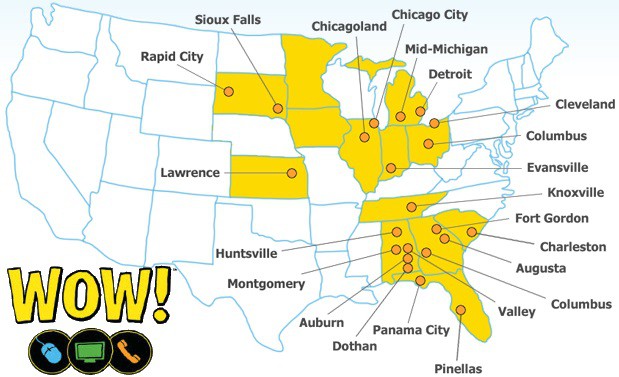
wowWOW! broadband customers in Ohio and Alabama can now sign up for Internet speeds as high as 110Mbps.

The communities getting the upgrades include parts of Columbus, Oh. and the Alabama cities of Auburn, Valley, Huntsville and Montgomery.

WOW! previously upgraded customers in Chicago, Detroit, part of Columbus and Cleveland, Evansville, Ind., Lawrence, Kan., and Pinellas, Fla.

“We recognize and embrace that consumers are increasingly using their Internet connection to stream video content to multiple devices,” Cathy Kuo, WOW! chief operating officer, said in a statement.

Many of the customers getting this week’s speed boost were former Knology customers. All are now free of usage caps that some used to endure under the systems’ former owners.

WOW! receives top customer approval ratings among cable companies in the United States, in part because it maintains a list of values drummed into employees that are lacking at other cable companies:

  1. Courage: Act on your beliefs with pure intention in spite of your fears.
  2. Respect: Treat others as you wish to be treated.
  3. Integrity: Choose to do what’s right.
  4. Accountability: Own your part of any situation and work towards a solution.
  5. Servanthood: Embrace the attitude and honor of serving others rather than being served.

Most customers can upgrade from the company’s old top-tier of 50/5Mbps to 110/5Mbps for about $13 extra a month.

Republicans’ Fake Net Neutrality Alternative Contains Grand Canyon-Sized Loopholes

Thune

Thune

When Sen. John “Net Neutrality is unjustified” Thune (R-S.D.) and Rep. Fred “Net Neutrality is a solution in search of a problem” Upton (R-Mich.) last week magically became Internet activists ready to solve the Net Neutrality issue with an “unambiguous” bill to “protect Americans” from greedy ISPs, you will pardon me if I am just a tad suspicious.

The two Republicans who champion “less government regulation is better” and “let the marketplace decide for itself”-principles are proposing new legislation that will regulate the conduct of Internet Service Providers, claiming it will tie their hands and prevent the launch of Internet fast lanes and ban traffic degradation.

The two legislators are traveling in a fast lane of their own — hurrying to schedule hearings, mark up a bill, and speed it to the floor for consideration by the end of this month. That’s a marked departure for the U.S. Congress-as-usual, the one that can’t manage to pass virtually anything, much less in a hurry. So where is the fire?

It is at the Federal Communications Commission in Washington, scheduled to vote on its own new Net Neutrality proposal by the end of February. Thune and Upton are hoping to launch a pre-emptive strike against the anticipated strong Open Internet protections the FCC will probably enact on a party line vote. The FCC is likely to pursue a reclassification of broadband away from the lobbyist-lovin’, largely deregulated “information service” it is today towards a “telecommunications service” under Title II of the Communications Act. That represents Comcast’s worst nightmare.

???????????????????????????????Current FCC rules have allowed traffic shenanigans from ISPs like Comcast that don’t mind slowing their customers’ Netflix experience to a crawl until the streaming company opens its checkbook. The FCC’s anticipated new proposal would strictly forbid any creative end-runs around the concept of paid fast lanes Comcast can get away with today.

The proposed Republican alternative suggests a “third way” compromise only Comcast and AT&T could love. While ostensibly banning intentional interference with Internet traffic, the two legislators include a Grand Canyon-sized loophole in the form of one word you could fly an Airbus A380 through: reasonable

SEC. 13. INTERNET OPENNESS.

(a) OBLIGATIONS OF BROADBAND INTERNET ACCESS SERVICE PROVIDERS.—A person engaged in the provision of broadband Internet access service, insofar as such person is so engaged (1) may not block lawful content, applications, or services, subject to reasonable network management; may not prohibit the use of non-harmful devices, subject to reasonable network management; may not throttle lawful traffic by selectively slowing, speeding, degrading, or enhancing Internet traffic based on source, destination, or content, subject to reasonable network management; may not engage in paid prioritization; and shall publicly disclose accurate and relevant information in plain language regarding the network management practices, performance, and commercial terms of its broadband Internet access services sufficient for consumers to make informed choices regarding use of such services and for content, application, service, and device providers to develop, market, and maintain Internet offerings, except that a provider is not required to publicly disclose competitively sensitive information or information that could compromise network security or undermine the efficacy of reasonable network management practices.

No ISP has ever declared its own traffic management policies unreasonable, so whatever they do, in their minds, is “reasonable” by definition.

Upton

Upton

The proposed bill would keep Net Neutrality far away from the critical Title II foundation it needs — essential armor that will help withstand inevitable court challenges by providers outraged by the government’s attempt to interfere with their free speech rights (at the expense of their customers’ freedom from content-killing traffic slowdowns).

The concept of “network management” is Play-Doh in Comcast and AT&T’s hands. It could mean balancing traffic by adding more capacity as needed or implementing a “fair access policy” that rations inadequate capacity. Both could easily be called “reasonable” by them. Customers paying for 25Mbps and getting 6Mbps during the evenings may think otherwise.

But no worries, the Republicans’ plan requires ISPs to disclose exactly how they are undercutting the broadband service you paid good money to receive. They claim that will give you an “informed choice,” except for many Americans, there is no choice.

The FCC’s plan is much more likely to stop to the tricks, traps, and traffic manipulation in whatever form arises now or in the future. It uses well-established precedent that is unlikely to be thrown out by the courts, delivers real oversight desperately needed in the monopoly/duopoly broadband marketplace, and will actually protect consumers.

The Republican alternative primarily protects AT&T, Comcast, and their chances of getting more campaign contributions from their friends in the cable and phone business. In short, it isn’t worth your time, and you should tell your member of Congress it isn’t worth theirs either.

Cuomo Administration Promises $1 Billion for Rural Broadband Expansion Across Upstate New York

Phillip Dampier January 19, 2015 Broadband Speed, Consumer News, Public Policy & Gov't, Rural Broadband, Video Comments Off on Cuomo Administration Promises $1 Billion for Rural Broadband Expansion Across Upstate New York

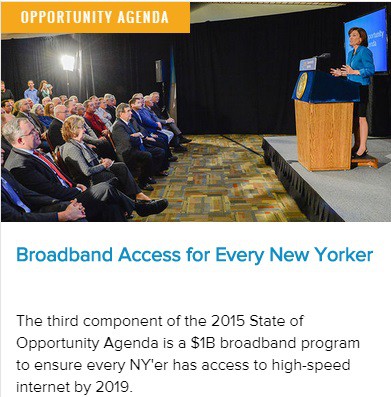
ny agendaNew York will see at least $1 billion in investments to expand and improve rural broadband in upstate New York to bring Internet access to every home in the state by 2019, if the state legislature approves the budget for Gov. Andrew Cuomo’s New-New York Broadband Program.

New York Lieutenant Gov. Kathy Hochul traveled to the North Country to unveil the spending plan in the broadband-challenged Adirondack region.

“Governor Cuomo’s program will be the largest universal broadband deployment in the nation,  investing up to one billion dollars in both public and private resources to connect every New Yorker to high-speed Internet,” Hochul told the audience. “With a state investment of $500 million in capital funds from bank settlements the program will incentivize the private sector to expand high-speed broadband access to under-served New Yorkers. The plan will elevate broadband speeds in under-served areas to previously unheard levels including a minimum speed of 100Mbps, more than ten times the federal definition of broadband.”

New York’s newest broadband initiative comes courtesy of an unexpected windfall of more than $5 billion in legal settlements with crooked banks and mortgage companies that defrauded state residents and helped trigger the Great Recession.

At least $500 million of the settlement fund would be set aside for broadband expansion, with providers required to match any funds received from the state. Time Warner Cable is likely to be awarded a significant percentage of the money, used to expand cable infrastructure into sparsely populated areas that have never met the company’s Return On Investment requirements.

The Cuomo Administration expects little opposition to the plan, because the bulk of the broadband money would be spent in Republican-controlled rural districts and won’t come from taxpayers’ pockets.

Hochul

Hochul

Republican assemblyman Dan Stec’s 114th district is a case in point. Hamilton County has little or no access to broadband service and Stec’s constituents in nearby Essex, Saratoga, Washington and Warren counties have spotty coverage. He’s thrilled the state will likely spend money on broadband in his district.

“There are towns in my district that don’t have good access to the Internet,” Stec said. “Moms and dads will drive their son or daughter and park in the parking lot of the public library or park in the parking lot of Town Hall to access a broadband wireless connection. That’s crazy.  It’s nice to see the governor making the infrastructure investment that needs to be made in the North Country and frankly in all of upstate.”

Although speaking in the Adirondacks, the former congresswoman turned lieutenant governor said there are plenty of areas in western New York that also desperately need broadband access. Regional economic development committees will be responsible for identifying the most broadband-challenged areas where funding should be prioritized.

“I had [served] seven counties including Wyoming, Livingston, Ontario, Niagara, and Genesee,” Hochul said, referring to parts of the 26th Congressional District between the cities of Buffalo and Rochester she lost in the 2012 election. “The Southern Tier has challenges as well. We have a map that shows the areas which do not have the access and so we know where to have a laser focus on increasing that availability. We know New York City is in good shape. The urban areas are in good shape. So this is very much a rural initiative.”

Despite the unlikely case for any significant broadband funding headed downstate, the governor is attempting to carefully balance his overall spending initiatives between upstate and New York City, the latter now demanding a larger share of the settlement money for downstate. To avoid a budget battle between the two regional factions, Gov. Cuomo intends to bundle his spending programs together in a package presented to the state legislature as part of today’s State of the State address.
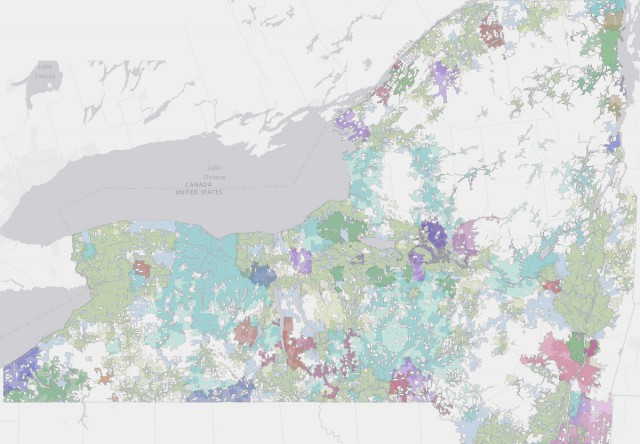
New York's Broadband Availability Map

New York’s latest Broadband Availability Map, excluding well-covered downstate regions – Areas in white have no broadband access.

“He’s going to present them as part of a package: the New York State Opportunity for All program,” said Hochul. “This is one of the most significant announcements he’s going to make because it’s going to affect the lives of so many millions of people in our state. In this day and age the fastest road to opportunity is the information highway. Probably the comparable analogy would be the interstate highway system back in the 1950’s. That was able to connect communities and enhance commerce. It was transformative. It was essential in its day. That’s the opportunity that lies before us.”

Ironically, the state-funded initiative is likely to deliver faster broadband to rural New York than their more urban neighbors receive. Under the program, grant recipients will have to pledge to deliver at least 100Mbps speeds to customers, except in the most rural areas where the minimum speed requirement will be set at 25Mbps, with upgrades to come later. Most urban residents receive between 3-10Mbps DSL from Verizon or Frontier Communications and 10-15Mbps from Time Warner Cable, the largest cable company in the state. Verizon FiOS delivers even faster broadband to customers in New York City and Long Island, and selected suburbs in Buffalo, Syracuse, and Albany.

Providers will be encouraged to use state-owned institutional fiber networks, including one laid along the length of the New York State Thruway, and other government infrastructure wherever possible. That is likely to mean fiber broadband will constitute a major part of the initiative. That pleased the Fiber to the Home Council, which advocates for fiber to the home broadband service.

“The [council] commends Governor Andrew Cuomo on an ambitious plan to hit 100 Mbps in every New York home by Jan. 1, 2019,” read a statement from the Council. “This $500 Million investment into the NYS Broadband Program Office will make high-speed Internet affordable in underserved communities by incentivizing private investment, something the FTTH Council strongly supports.”

The state’s chief digital officer Rachel Haot claimed New York is doing more than any other state to invest in high-speed broadband.

[flv]http://www.phillipdampier.com/video/2015 Opportunity Agenda NY Statewide Broadband Access for Every New Yorker 1-16-15.mp4[/flv]

Upstate New York officials discuss the broadband problems in rural New York and how they spent years trying to get attention in a state where government is often focused primarily on the interests of New York City. Lt. Gov. Kathy Hochul announces a $1 billion statewide broadband improvement program. (44:42)


Updated: GCI Changes Usage Cap Policies: Automatic Overlimit Fees Replaced With Speed Throttling

GCI_logoAlaska’s largest cable company today unveiled changes to its Internet plans, ditching surprise overlimit fees in favor of a speed throttle.
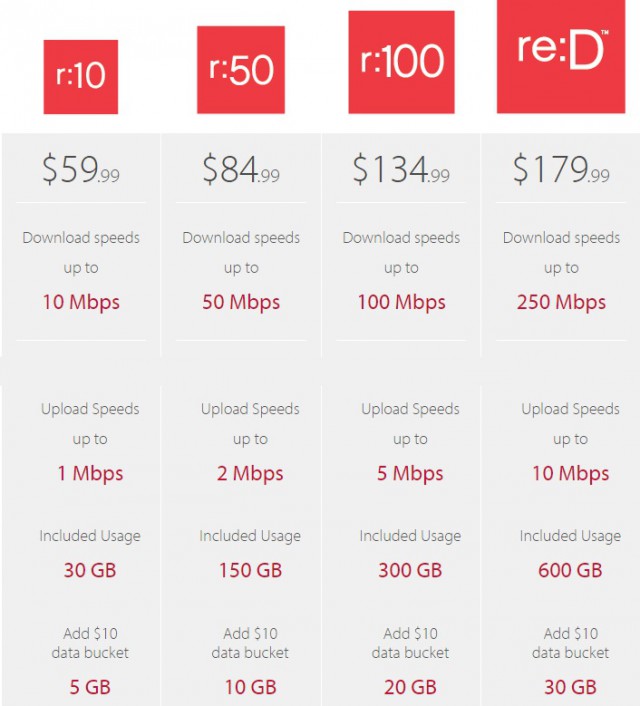

GCI has been the subject of bad press in the past, with some customers experiencing up to $1,200 in overlimit fees after exceeding GCI’s usage allowances. In an effort to avoid public relations nightmares like that, GCI will stop assessing automatic overlimit fees and instead impose a speed throttle on customers over their limit that will temporarily reduce broadband speeds to less than 1Mbps until the next billing cycle begins. Customers can voluntarily pay for more usage in $10 increments, which buys a reprieve from the speed throttle.

GCI “No Worries” Broadband Plans offer varying usage caps and extra usage allotments:

no worries

Customers on lower speed plans continue to face a lower usage allowance and will receive considerably less extra data for their $10 add-on data plan. GCI’s highest speed re:D offering does get a bigger usage allowance: 600GB, up from 500GB. An $11.99/mo surcharge continues for broadband-only customers.

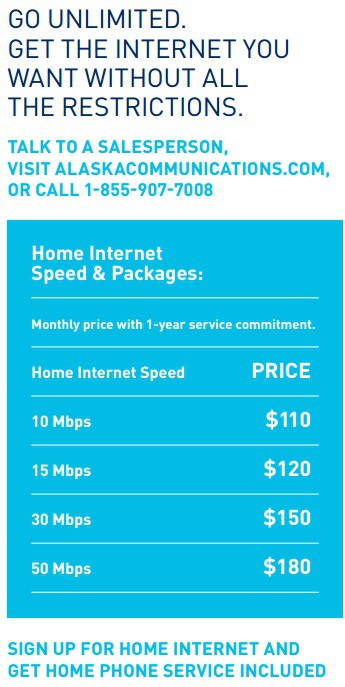
GCI’s largest competitor remains telephone company ACS, which heavily markets its unlimited usage DSL plans. Almost as an afterthought, ACS now markets packages that include landline service with unlimited local calling and 180 minutes of long distance for free.

acs unlimited

A price comparison between the two providers is somewhat hampered by the fact GCI does not publicize a broadband+home phone bundle package on their website. GCI Home Phone is priced at $19.99 a month.

A 10Mbps unlimited use package from ACS costs $110/month. A 10Mbps plan from the cable company with a 30 40GB allowance + GCI Home Phone costs $79.98. On price, GCI wins at this speed… if you stay within your allowance. A 50Mbps unlimited use package from ACS runs $180 a month. GCI charges $104.98 with 150GB of included usage. Again, the price winner is GCI if you stay within your allowance. Taxes, surcharges and government fees are extra.

Heavier users may find ACS’ initially higher prices worthwhile if they are forced to buy GCI’s add-on data buckets. Both companies charge considerably more than providers in the lower 48 states.

Last year, nearly 10% of GCI’s revenue was earned from automatically applied overlimit fees. Giving up some of that revenue is a concession, but one that is likely to end bill shock and negative media attention. Still, usage allowances remain arbitrary. GCI’s entry level 10Mbps plan only offers a paltry 30 40GB a month — an allowance largely unheard of among other U.S. cable providers. GCI will also have a difficult time explaining why $10 will only offer one customer 5GB of extra usage while others will get up to 30GB. The costs for the additional data to GCI are the same.

Our thanks to an anonymous reader for sharing the news.

Updated 4:08pm EST 1/15: After going to press, GCI changed their website, adjusting the usage allowance for their 10/1Mbps plan to 40GB (up from 30GB) and deleted references to the $11.99 surcharge for broadband-only customers, which apparently no longer applies.

President Obama Calls for an End to State Bans on Community Broadband; Public Networks Save $

Obama

President Barack Obama

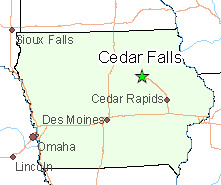
President Barack Obama will be in Cedar Falls, Iowa today to announce steps his administration plans to take to improve broadband in the United States, including a call to end laws that restrict community broadband development that limits competition.

“Today, too few Americans have affordable and competitive broadband choices, but some communities around the country are choosing to change that dynamic,” says a statement issued by the White House. “As a result – as outlined in a new report being issued today – cities like Lafayette, Chattanooga, and Kansas City, have broadband that is nearly one hundred times faster than the national average, yet still available at a competitive price. By welcoming new competition or building next-generation networks, these communities are pioneers in broadband that works, and today in Cedar Falls, Iowa, the President is highlighting their remarkable success stories and providing municipal leadership and entrepreneurs new tools to help replicate this success across the nation.

The report, produced by the National Economic Council and Council of Economic Advisers, finds no evidence to support industry contentions that community-owned broadband duplicates existing broadband services and wastes taxpayer dollars. It also challenges cable and phone industry-backed groups claiming publicly owned broadband networks are business failures.

It cites the success of Chattanooga’s EPB Fiber service, operated by the local municipal utility. Not only is EPB successful financially, but it has introduced Chattanooga residents to the kind of competition sorely lacking in most cities for telecom services.

cedar falls“EPB’s efforts have encouraged other telecom firms to improve their own service,” states the report. “In 2008, for example, Comcast responded to the threat of EPB’s entrance into the market by investing $15 million in the area to launch the Xfinity service – offering the service in Chattanooga before it was available in Atlanta. More recently, Comcast has started offering low-cost introductory offers and gift cards to consumers to incentivize service switching. Despite these improvements, on an equivalent service basis, EPB’s costs remain significantly lower.”


In Wilson, N.C., Time Warner Cable customers pay significantly less for cable and broadband service than other North Carolina customers because of the presence of Greenlight, the community-owned fiber to the home provider. TWC customers in Wilson pay stabilized prices for service while residents in the nearby Research Triangle pay as much as 52 percent more for basic Internet service, according to the report. Greenlight’s competition has brought gigabit broadband to the community as well as lower prices for customers who decide to remain with Time Warner. The combined savings is estimated at more than $1 million annually for Wilson residents.

EPB is the municipal utility in Chattanooga, Tenn.

EPB is the municipal utility in Chattanooga, Tenn.

Those who believe municipal broadband is a waste of taxpayer dollars should consider the story of Lafayette, La.’s LUS Fiber. In addition to bringing superior broadband service to a city dominated by a cable operator that used to treat the market as an afterthought, the presence of LUS’ fiber to the home network has forced Cox Cable to improve service, offer significant customer retention deals to departing customers and defer rate increases. The investment in community broadband has saved residents an estimated $4 million from rate hikes that went ahead in other Cox cities, with an estimated total savings of between $90 and $100 million for Lafayette-area broadband customers over LUS’ first 10 years of service.

Taxpayer-supported institutions like local government, law enforcement, and schools have also seen dramatic savings by switching to municipal solutions. In Scott County, Minn. the local government’s annual bond payment for constructing their own broadband network is $35,000 less than what the county used to pay private companies for a much slower network. Area schools that formerly paid private sector telecom companies $58 per megabit of Internet speed now pay $6.83 — a savings of nearly 90 percent. Schools also received dramatic speed increases from 100 to 300Mbps. They paid less for more service — from $5,800 a month before to $2,049 a month today. Those payments go straight back to the county government instead of into the hands of out-of-state investment bankers and shareholders. On the state level, Minnesota’s public institutional network is saving taxpayers almost $1 million a year.

With the broadband profit gravy train for big cable and phone companies grinding to a halt in competitive areas, several of these companies have spent millions lobbying state governments to outlaw public broadband services. They have succeeded in 19 states, primarily with the assistance of the corporate-funded American Legislative Exchange Council (ALEC), which appeals to primarily Republican lawmakers with claims government broadband is unfairly competing with the private sector. In fact, private providers have not been driven out of communities where they face municipal competition, but they have been forced to lower prices and improve service for customers.

Today the president will call for a new effort to support local self-determination for broadband by strongly opposing industry-backed, anti-competitive deterrents and bans on community-owned networks. The president will also sign a letter addressed to FCC chairman Thomas Wheeler encouraging him to move forward with a federal ban on state broadband laws that restrict broadband development.

He will also announce additional funding for rural broadband expansion and take steps to bring local leaders together to explore how the development of community broadband initiatives in their cities and towns can make a major difference in the 21st century digital economy. The president recognizes that most Americans lack sufficiently competitive choices for broadband service and often have just one choice — the cable company — for broadband speeds greater than 25Mbps. That means many Americans are seeing their broadband speeds lag while their monthly bills continue to grow.

Community-owned broadband may be the only alternative many cities have for better broadband as would-be competitors are scared off by high construction costs and an inability to secure cable television programming at competitive prices for their customers.

Search This Site:

Contributions:

Recent Comments:

Your Account:

Stop the Cap!