Is Public Wi-Fi Safe? Indianapolis TV Station Finds Black Hat Wi-Fi Networks Abound

Phillip Dampier February 28, 2012 Consumer News, Video, Wireless Broadband 2 Comments

[flv width=”360″ height=”290″]http://www.phillipdampier.com/video/WISH Indianapolis Is public WiFi really safe 2-21-12.mp4[/flv]

WISH in Indianapolis produced this special investigative report on open, public Wi-Fi networks.  While offering an enticing chance to get free access to the Internet, the reporter found several serious potential security risks relying on the goodwill of others, some of whom may be spying on your online activity.  (5 minutes)

Our Concerns About Time Warner Cable’s New Usage-Based Billing

Phillip "Keeping an Eye on Time Warner's Eye" Dampier

Today’s announcement by Time Warner Cable that it is reintroducing usage based billing, at least optionally for customers in southern Texas, is a concerning development that requires further examination and vigilance.  But before we delve into that, I’d like to thank the company for avoiding the kind of mandatory usage billing/cap system we’ve seen appearing at certain other providers.  We also welcome the company’s admission that they have earned enormous profits from unlimited consumption plans and consider that pricing part of the success story they’ve had selling Internet access.

Stop the Cap! has never opposed optional usage-based billing tiers for customers who feel their light usage justifies a service discount.  However, industry trends so far have made no provisions for truly unlimited usage plans that sit side by side tiered plans without quietly diluting the value of flat rate Internet with tricks and traps in the fine print.  We have serious concerns this “foot in the door” to Internet Overcharging could eventually become mandatory for all customers.  Perhaps Time Warner Cable will be different than all the rest.  We can only hope so.

Let’s break it down:

First, Time Warner Cable’s admission it blew it the first time it experimented with these pricing schemes is most welcome.  Being on the front lines of the battle against the company’s Internet Overcharging experiment in 2009 remains very-well-documented on this website.  We confronted arrogant local management that argued usage billing was “fair” and would barely affect any customer.  In fact, the original plan a later revision would have tripled flat rate Internet access to a ridiculous $150 a month.

The company’s 2009 “listening tour” was also a farce, with a number of e-mailed comments deleted unread (we know, because Time Warner’s comment system sent e-mail to customers telling them exactly that.)  Local media outlets, newspaper editorials, and customers made it quite clear: customers want their unlimited Internet access left alone.  They do not want to learn the mysteries of a gigabyte, they don’t want to watch a gauge to determine how much usage they have left, and they sure don’t want to pay any more for broadband service.

If Jeff Simmermon, Time Warner Cable’s director of digital communications, now represents the prevailing attitude about unlimited Internet access among Time Warner Cable’s executive management, that is a very welcome change indeed.  But we’re not completely convinced.  For nearly two years, Time Warner executives have talked favorably about usage-based billing as the “fairest way” to bill for Internet usage.  Besides Simmermon’s comments, we have seen nothing from CEO Glenn Britt or CFO Irene Esteves that indicates they have changed their original views on that.

Unfortunately, we’ve learned over the last three years today’s promises may not mean a lot a year from now.  We’ve watched too many companies introduce these pricing schemes and then gradually tighten the noose around their customers.  Once broadband usage is monetized, Wall Street looks to the practice of charging for usage as a revenue source, and they pressure companies to keep that money flowing.  What begins as an optional tiered plan can eventually become the only plan when flat rate broadband is “phased out.”

Canadians understand this is not unprecedented.  They’ve been down this broadband road before, and it is loaded with expensive potholes and broken promises to repair them.  Usage allowances have actually dropped at some Canadian providers.  The fixed maximum on overlimit fees has gradually been relaxed or removed altogether, exposing Canadian consumers to broadband bill shock.

Time Warner Cable customers are now paying upwards of $50 a month for broadband after consecutive annual rate increases.  That’s plenty, and usage should remain unlimited for that kind of money.

Still, Stop the Cap! has never been opposed to truly optional usage-based billing plans.  We’re just unconvinced companies will keep the wildly popular flat rate pricing if boatloads of additional revenue can be made dragging customers to tiered usage plans, particularly in the absence of aggressive competition.  Just ask AT&T.

Second, as we’ve seen on the wireless side, “unlimited Internet access” means one thing to consumers and all-too-often something very different to providers.  For example, companies have discovered they can claim to provide unlimited access but then de-prioritize flat rate traffic, or even worse, throttle speeds and give preferential treatment to usage-based billing traffic.  Time Warner Cable needs to commit that unlimited access means exactly that — no traffic prioritization, no speed throttles, and no sneaky fine print.

Third, we don’t expect Time Warner will get too many takers for their Broadband Essentials Internet program.  The discount, just $5 a month, is quite low for broadband service limited to 5GB per month.  Exceeding that limit is quite easy, and after just 5GB of “excess usage,” the discount is eaten away and the penalty rate of $1/GB kicks in.  That could ultimately risk up to $25 a month in extra charges.  I’m uncertain how many customers would want to risk exposing themselves to that for a modest discount.

While we are not issuing a Call to Action over these developments, we will be watching them very closely.  Time Warner Cable should make no mistake: if their usage billing plans begin to eat away at fairly priced unlimited access plans, we will once again picket the company and do whatever is necessary to bring political and consumer pressure to force them to rescind these kinds of pricing schemes yet again.

Breaking News: Time Warner Cable Relaunching Usage Based Billing

Phillip Dampier February 27, 2012 Consumer News, Data Caps 8 Comments

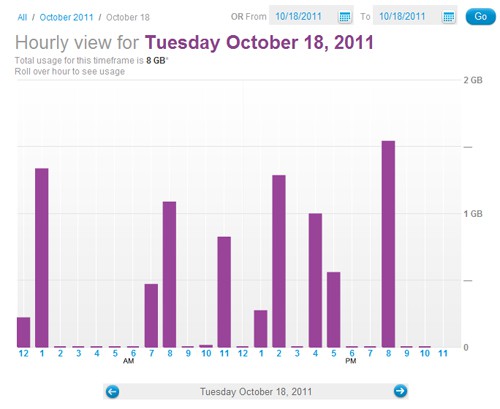
Time Warner Cable's usage meter.

Time Warner Cable today relaunched usage-based billing, offering customers a $5 monthly discount off Internet access when they confine their usage to a maximum of 5GB per month.

Stop the Cap! was at the forefront of protesting Time Warner’s last Internet Overcharging experiment in 2009, which would have allowed unlimited access for $150 a month — a major rate increase to be sure.  Other customers had usage allowances that originally would have ranged from 40-60GB per month, with overlimit fees of $1/GB or more.

Time Warner Cable’s Jeff Simmermon, director of digital communications, admitted the 2009 experiment attempted in Beaumont, San Antonio, and Austin, Texas, Greensboro/Triad, N.C., and Rochester, N.Y. was unsuccessful.

“Yes, we did try this before, a few years ago,” Simmermon said. “And yes, pretty much everyone agrees that it didn’t go so well. So we listened to customer complaints. A lot.”

The cable company is trying again in southern Texas, including the cities of San Antonio, Laredo, Corpus Christi, the Rio Grande Valley and the Border Corridor.

This time Simmermon says the usage-based pricing program for Time Warner Cable customers will be optional. He also promised Time Warner Cable customers will always have access to unlimited broadband at a flat monthly rate.

This is a major change for the cable company, because earlier statements from both CEO Glenn Britt and the chief financial officer Irene Esteves called usage based billing inevitable.

Simmermon admitted Time Warner Cable is making plenty of money selling unlimited access to customers today.

Simmermon

“We profit from unlimited consumption, and a free, open Internet is the sort of Internet that has gotten us this far,” Simmermon wrote on the company’s blog.

“All participation in the Essentials plan is opt-in, with the opportunity to save a few dollars each month,” Simmermon said. “It’s not going to be for everybody, and that’s fine — all Time Warner Cable customers will still have the option of selection an unlimited broadband plan.”

The details:

1) Up to 5GB/month of data transmission for a $5/month discount from one’s current monthly bill. All Standard, Basic and Lite broadband customers will be eligible. Turbo, Extreme and Wideband customers will continue as always, with access to unlimited broadband and no optional tiered plan or discounts.

2) The ability to opt-in and opt-out of a tiered package at any time.

3) A “meter” that tracks usage on a daily, monthly, weekly or even hourly basis, enabling customers to accurately gauge usage.

3) A 60 day/2 billing-cycle grace period to allow customers to adjust usage patterns. During this time the company will notify customers of overages but won’t charge for them.

4) Overages will cost $1 per GB, not to exceed a maximum of $25/month.

This presents the opportunity to save $5/month from a monthly broadband bill.

Time Warner already has the TV Essentials plan for $39.99/month that offers low-income households to have access to cable, in a stripped down package. Simmermon says this is meant to be the broadband equivalent.

[Stop the Cap! will publish our own views on this development in a separate editorial.]

Sprint Attempts, Pulls Back from Buyout of MetroPCS; Wall Street Questions Management

Phillip Dampier February 27, 2012 Competition, Consumer News, MetroPCS, Sprint, Video, Wireless Broadband Comments Off on Sprint Attempts, Pulls Back from Buyout of MetroPCS; Wall Street Questions Management

An aborted takeover attempt of MetroPCS by America’s third largest cell phone company — Sprint Nextel has some on Wall Street calling for the hide of Sprint CEO Dan Hesse.

The proposed multibillion dollar takeover of prepaid provider MetroPCS, which offers mostly urban service in select cities, was vetoed late last week by Sprint’s own board of directors.

The deal would have delivered a 30 percent premium to MetroPCS shareholders, and further consolidate America’s wireless marketplace. It would have also further complicated Sprint’s financial position — already heavily indebted as it commits to a major 4G wireless service upgrade and deals with an even more expensive commitment to Apple to pitch the iPhone on Sprint’s network.

Reuters reports some investors considered the deal a mistake and are glad it was aborted.

A 30 percent premium seemed “irrational” and would have hurt Sprint shareholders, Roe Equity Research Kevin Roe told the news service.

“He’s on a short leash,” Roe said. “The board did the right thing, thank God. It’s remarkable this deal got this far.”

MetroPCS competes with Sprint’s prepaid services in several regions including metropolitan New York City, northeastern Texas, southern California, southern Michigan and central/southern Florida.  MetroPCS operates its own 4G LTE network.

Now that MetroPCS is considered “in play,” it is likely other suitors may consider buying the company out.  Among the most likely — Leap Wireless, which owns Cricket and operates a comparable service.

Craig Moffett of Bernstein Research has told investors the wireless industry continues to be “crying out for consolidation.”  The most important players in that consolidation story are T-Mobile and Sprint, which remain potential partners if the two companies can overcome their technology differences.  T-Mobile operates a GSM network incompatible with Sprint-Nextel.

[flv]http://www.phillipdampier.com/video/CNBC Sprint Walks Away from MetroPCS Deal 2-24-12.flv[/flv]

CNBC reports Sprint walked away from a takeover attempt of MetroPCS on Friday.  (3 minutes)

CNN Turns Over Tech Reporting to Wireless Lobby for ‘Sky is Falling’ Scare Stories

Phillip Dampier February 27, 2012 AT&T, Broadband "Shortage", Competition, Data Caps, Editorial & Site News, Public Policy & Gov't, T-Mobile, Video, Wireless Broadband Comments Off on CNN Turns Over Tech Reporting to Wireless Lobby for ‘Sky is Falling’ Scare Stories

CNN's Scare Stories on Wireless

As part of our ongoing coverage of the telecommunications industry, I talk with a variety of reporters in both Canada and the United States.  We have educated local newspapers, national wire services, local TV news, and even big national consumer magazines about the problems consumers have with the North American telecommunications industry.  Whether you are a wireless customer facing eroding usage caps and increasing prices, or a wired broadband customer now being slapped with Internet Overcharging schemes that monetize your usage, the truth about why your bill has gone up isn’t too hard to find, if you bother to look.

Unfortunately, CNN-Money just published a “week-long” series on the wireless mobile phone market that might as well have been written by the CTIA, the nation’s cell phone lobby.

The Spectrum Crunch” was supposed to be a sober and objective report about the state of congestion on America’s cell phone networks. Instead, the reporter decided industry press releases and lobbyist talking points were good enough to form the premise that America is deep in a cell phone crisis.

Sorry America, Your Airwaves Are Full

Part one of CNN’s special report is a laundry list of disaster predictions, explaining away rate increases and usage caps, and an industry-skewed view that the answer to the “crisis” is to give wireless carriers all the frequencies they want.

The spectrum crunch is not an inherently American problem, but its effects are magnified here, since the United States has an enormous population of connected users. This country serves more than twice as many customers per megahertz of spectrum as the next nearest spectrum-constrained nations, Japan and Mexico.

When spectrum runs short, service degrades sharply: calls get dropped and data speeds slow down.

That’s a nightmare scenario for the wireless carriers. To stave it off, they’re turning over rocks and searching the couch cushions for excess spectrum.

They have tried to limit customers’ data usage by putting caps in place, throttling speeds and raising prices. Carriers such as Verizon, AT&T, Sprint, T-Mobile, MetroPCS and Leap have been spending billions to make more efficient use of the spectrum they do hold and billions more to get their hands on new spectrum. And they have tried to merge with one another to consolidate resources.

The FCC has also been working to free up more spectrum for wireless operators. Congress reached a tentative deal last week, approving voluntary auctions that would let TV broadcasters’ spectrum licenses be repurposed for wireless broadband use.

[…] The bad news is that none of the fixes are quick, and all are expensive. For the situation to improve, carriers — and, therefore, their customers — will have to pay more.

The United States also covers more ground, with lots of wide open spaces where frequencies can be used and re-used without interference problems.  As AT&T keeps illustrating, how you run your business has a lot to do with the quality of your service, spectrum crisis or not.  AT&T customers in heavily-populated urban markets cope with dropped calls and slow data not because the company has run out of frequencies, but because AT&T has failed to appropriately invest in its own network.  AT&T’s problems are generally not shared by customers of other carriers.  Even T-Mobile, which has the least spectrum of all major carriers, does not share AT&T’s capacity issues.

CNN reporter David Goldman suggests mergers and consolidation have been a solution for ‘wireless shortages’ of the past.  But are mergers about consolidating resources or leveraging profits?

The spectrum war’s winners and losers

AT&T’s failed $39 billion bid for T-Mobile was largely aimed at getting its rival’s spectrum. The Department of Justice and the Federal Communications Commission killed the deal, saying it would be too damaging to wireless competition.

That put the entire industry on notice: The carriers will have to solve their problems without any blockbuster takeovers.

The regulators’ main concern was that the deal would take the ranks of national carriers down from four to three. That’s why experts now expect the big players to focus instead on acquiring smaller, low-cost carriers like MetroPCS and Leap Wireless. Their spectrum could relieve capacity issues in large metro areas, which are the places most crippled by the crunch.

Industry analysts also think that Sprint and T-Mobile could gain approval to merge, though that’s a bit like two drowning victims clinging together. Sprint is losing piles of money every quarter, while T-Mobile is hemorrhaging customers with contracts.

Another possibility is that several carriers could partner in a spectrum-sharing joint venture.

But the most likely scenario is that the carriers continue fighting each other to snap up the last remaining large swaths of high-quality spectrum.
Stephenson

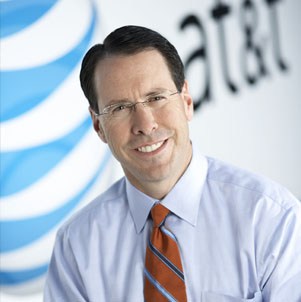
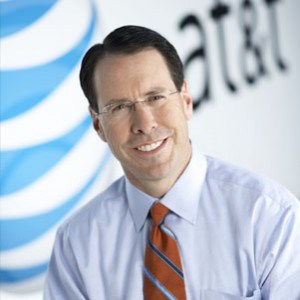
The claim that AT&T sought the purchase of T-Mobile USA for spectrum acquisition falls apart when you examine the record.  For instance, during AT&T CEO Randall Stephenson’s presentation at the merger announcement, shareholders were told the buyout would deliver cost synergies and savings, would stabilize earnings from a more predictable mobile market (with T-Mobile’s ‘market disruptive’ pricing out of the way), and would allow the company to secure additional frequencies.  However, as Stop the Cap! reported back in August, documents released by the FCC showed AT&T unprepared to specify what T-Mobile spectrum it expected to acquire, much less how the company intended to use it.

The “problem” AT&T sought to solve, in the eyes of both the Justice Department and the FCC, was pesky competition from T-Mobile and the reduced profits AT&T endured as T-Mobile forced competitors to deliver better service at lower prices.

Even Goldman admits T-Mobile had the smallest inventory of wireless spectrum among the major carriers — scant reason for AT&T to court a merger for spectrum purposes.

The spectrum winners continue to be AT&T and Verizon, who have the largest inventory of favorable frequencies, and both continue to warehouse spectrum they are not using for anything.

Your Cell Phone Bill is Going Up

Has your mobile phone bill jumped this past year?

Get used to it.

Demand for wireless data services is soaring, forcing carriers to invest massively to keep up. They have two main options: Upgrade their network technology or acquire more wireless spectrum to give them more bandwidth.
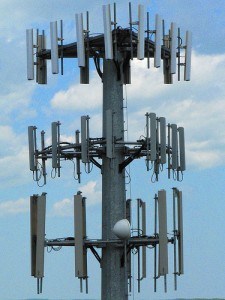
“Massively” is in the eye of the beholder.  Verizon outspent AT&T on network upgrades and continues to enjoy enormous returns on that investment.  Most major cell companies spend billions on network improvements, but also earn tens of billions from their customers.  Yet in the midst of the “spectrum crisis,” AT&T CEO Randall Stephenson told investors revenue was up — way up:

“We’ll expand wireless and consolidated margins. We’ll achieve mid-single-digit EPS growth or better. Cash generation continues to look very strong again next year. And given the operational momentum we have in the business, all of this appears very achievable and probably at the conservative end of our expectations.”

AT&T’s chief financial officer John J. Stephens put a spotlight on it:

In 2011, 76% of our revenues came from wireless and wireline data and managed services. That’s up from 68% or more than $10 billion from just 2 years ago. And revenues from these areas grew about $7 billion last year or more than 7% for 2011. We’re confident this mix shift will continue. In fact, in 2012 we expect consolidated revenues to continue to grow, thanks to strength in these growth drivers with little expected lift from the economy.

[…] We also continue to bring more subscribers onto our network with tiered data plans, more than 22 million at the end of the quarter, with most choosing the higher-priced plan. As more of our base moves to tiered plans and as data use increases, we expect our compelling [average revenue per subscriber] growth story to continue.

That’s a story AT&T has avoided sharing with customers, because more than a few might take exception that the past year’s rate increases have more to do with the company’s “compelling growth story” than a spectrum shortage.

CNN could have reported this themselves, had they bothered to look beyond the press releases and talking points from the wireless industry. The reporter even conflated recent increases in early termination fees as part of the “spectrum shortage.”

Readers have to glean the real story by reading between the lines.  Here is an example:

As Suraj Shetty, Cisco’s marketing chief, puts it: “Data caps are curbing the top 1% of users, but not the top 20%.”

For carriers, finding the sweet spot is a delicate balancing act. Heavy data consumption is costly for them. On the flip side, smartphone users, who are typically required to buy pricey monthly data plans, are their most lucrative customers.

The ideal customer is someone with a smartphone they use sparingly.

That reality could eventually be reflected in your monthly bill. All four of the major carriers declined to comment about their future pricing strategies, but analysts expect them to start experimenting with new “pay for what you consume” approaches.

The real agenda is finding customers who buy the most service and use it the least.  Usage caps and throttles don’t even work, if one believes Mr. Shetty.  Curbing one percent of your heaviest users does little to curtail congestion when the top 20% remain within plan limits and create an even greater strain on the network.

It’s another hallmark of Internet Overcharging — monetizing broadband usage while using “congestion” as an excuse.  If a customer uses 10GB on an unlimited usage plan or 10GB on a limited use plan, the impact on the network is precisely the same.  Only the profit-taking is different.

There Are Solutions

Only in the last part of the series does CNN’s reporter discover there are some practical solutions to the spectrum crunch.  They include:

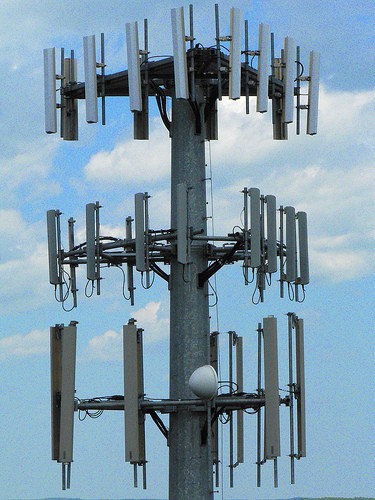
  • Splitting cell phone traffic to reduce tower load.  Adding additional towers is one solution, but not all have to be huge, unsightly monstrosities.  In parts of Canada and Europe, new “micro-cells” on top of traditional power poles or buildings can reduce tower load, especially in urban areas.  These units, which can fit in the palm of your hand, are especially good at serving fixed location users, such as those sitting at home, work, or in a shopping center.  They don’t create eyesores, are relatively inexpensive, and are effective.
  • Allocation of spectrum.  The FCC is working on making additional wireless spectrum available.  Some carriers are cooperating to alleviate capacity issues, share towers, and collaborate on new tower planning.
  • Consider Wi-Fi.  AT&T found offloading traffic to Wi-Fi and even home-based “femtocells” — mini in-home cell towers have effectively reduced demand on their wireless 3G/4G networks.  There is still room to expand.

[flv width=”576″ height=”344″]http://www.phillipdampier.com/video/CNN Solutions to the spectrum crunch 2-2012.flv[/flv]

Alcatel-Lucent has a solution to the capacity crunch — a microcell cube that can be attached to a building or phone pole.  (3 minutes)

Search This Site:

Contributions:

Recent Comments:

Your Account:

Stop the Cap!