Southern Ohio Copper Thieves Cripple Phone, 911, Broadband Service for 8,000

Phillip Dampier April 5, 2012 Consumer News, Frontier, Public Policy & Gov't, Rural Broadband, Video Comments Off on Southern Ohio Copper Thieves Cripple Phone, 911, Broadband Service for 8,000

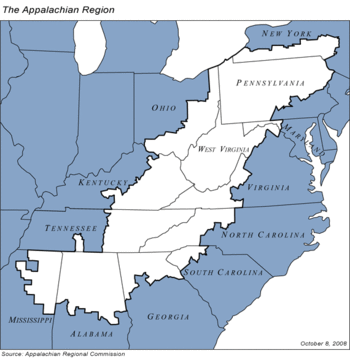
Appalachia: A major target for copper theft

Some 8,000 residents in Pike, Scioto, and Jackson counties found themselves without phone service when copper thieves mistakenly cut a critical fiber optic line serving Frontier Communications customers across the region.

As a result, phone service, broadband, 911, and even ATM machines were left out of order for hours last Wednesday, not restored until Thursday afternoon.

Pike County Sheriff Richard Henderson told WBNS-TV the outage was devastating for emergency responders.

“It’s a fear for us, because we depend on it for people to be able to call us for emergency situations,” Henderson said.

As a result of the fiber cut, the department was able to forward cellular 911 calls to neighboring counties, but the delay in response could have been life-threatening in some cases.

Frontier and other phone companies in Appalachia have been particularly hard-hit by copper theft, often committed by those with substance abuse problems.

Scrap copper prices remain very high, and some scrap dealers are accused of looking the other way when suspiciously-obtained “scrap copper” is delivered for a cash sale.

Brazen copper thieves have even stripped copper phone wiring in broad daylight, literally tearing it off utility poles as they drive down rural country roads.

Some of the worst problems have occurred in West Virginia, where lawmakers are beefing up criminal penalties for copper theft in an effort to control the problem.

Unfortunately for phone companies like Frontier, thieves often mistake fiber optic cabling — worthless for scrap metal resale — for copper, and with phone companies increasingly dependent on fiber to move a substantial amount of data traffic and phone calls between central offices and beyond, a single fiber cut can create major headaches for customers, and an expensive, often complex repair job for technicians.

Some companies in hard-hit areas are now building network redundancy into their service areas, allowing for quicker restoration of service.

That won’t help customers who are missing the phone cable that used to wind through their neighborhood, but maintaining a backup could be a life-saver in cases where phone companies rely on fiber and copper cables to move large numbers of calls between their switching centers and beyond.

[flv width=”600″ height=”356″]http://www.phillipdampier.com/video/WBNS Columbus Thieves Cripple 911 Internet Phone Services In Pike Scioto Jackson Counties 3-30-12.f4v[/flv]

WBNS in Columbus covered the extensive impact copper theft can have disrupting daily life in southern Ohio.  (3 minutes)

 

Geordi La Forge’s Encounter With Usage Caps Will Temper Google’s New Goggles

Phillip Dampier April 5, 2012 Consumer News, Data Caps, Editorial & Site News, Online Video, Video, Wireless Broadband Comments Off on Geordi La Forge’s Encounter With Usage Caps Will Temper Google’s New Goggles

Google's prototype

Google’s plan to revolutionize eyewear by turning it into a virtual Internet appliance could be tempered considerably by the Internet Overcharging schemes enforced by most of North America’s wireless phone companies that would provide the connectivity.

Google’s Project Glass reportedly will produce the first set of Google glasses, which provide eye-activated online content, before the end of the year.  Without any vision correction, the glasses are anticipated to retail for $250-600, not including your wireless Internet plan.

Chris Green, principal analyst at Davies Murphy Group Europe, told the BBC Google may have bit off more than they can chew, and that other companies have considered similar techwear but abandoned prototypes because technology was insufficient to adequately power the devices.

I see a data cap.

“Monetization opportunities would be enormous, but there are still big issues involved with shrinking the technology and making the computer that receives and processes the data truly portable,” Green said.

The glasses project icons and images within the wearer’s field of vision and allow voice-activated control and communication.

The constant connectivity could provide a major new revenue source for usage-capping wireless providers, especially if the wearer decides to pass the time watching something other than what is directly within the field of view. While short messages and updates would have almost no impact on wireless data allowances, streamed content, especially video, could.

That may make the initial price tag for the glasses the least expensive part of owning them.

A two-year contract for wireless data can run more than $720 with companies like AT&T.

[flv width=”640″ height=”380″]http://www.phillipdampier.com/video/Google eyeglasses can surf internet 4-3-12.flv[/flv]

Google’s prototype eyeglasses can surf the Internet in this Google-produced video envisioning potential uses.  (2 minutes)


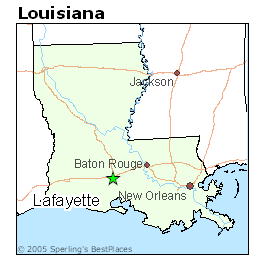
Publicly Owned LUS Fiber Launching Gigabit Broadband for Lafayette, Louisiana

Your Internet Service Provider keeps telling you there is no need for faster broadband speeds, but no matter how many times they say it, you still don’t believe them.

Neither do the folks at LUS Fiber — Lafayette, Louisiana’s publicly-owned fiber to the home broadband network.

In a state dominated by AT&T and cable companies like Cox, Louisiana has never experienced super-fast broadband.  But now they will.  LUS Fiber today announced 1Gbps broadband is now available in the Hub City.

Businesses will now have access to affordable broadband at speeds 20,000 times faster than dial-up.  Residential customers used to getting 1-12Mbps from phone company DSL or up to 50Mbps from Cox can put the slow lane behind them forever.  LUS Fiber can deliver upload and download speeds as fast as 1,000Mbps.

“Gigabit service from LUS Fiber is one of the most robust Internet offerings on the market today,” says Terry Huval, Director of Lafayette Utilities System and LUS Fiber. “We built this community network with a promise to the people of Lafayette that we will work hard to provide them with new opportunities through this unique, state-of-the-art fiber technology, and that’s just what we’ve done.”

That puts Lafayette on the map with Chattanooga, Tenn., as the two fastest operating fiber broadband networks in the country selling to both residential and business customers.  Both are publicly-owned networks private companies like AT&T have lobbied hard to banish.

In fact, Louisiana’s record on broadband outside of Lafayette is decidedly poor.

An $80 million federal grant to fund much-needed improvements to the state’s Internet infrastructure was returned in what one public official called Gov. Bobby Jindal’s special favor to Big Telecom companies like AT&T.

Public Service Commissioner Foster Campbell publicly berated the Republican governor for intentionally interfering with the project until time ran out and the government withdrew its funding.

The cancellation of the project has proved embarrassing because it was the first time a state lost federal broadband grant money.

The state’s Division of Administration eventually scrapped plans for the public broadband network and replaced it with a proposal to use grant dollars to purchase long term institutional broadband contracts from private providers.  AT&T is the dominant local phone company in Louisiana — the same company that has steadfastly refused to provide DSL service across rural Louisiana. The new proposal would have not delivered any broadband access to individual Louisiana homes, only to institutions like schools, libraries, and local government agencies.

Canadian Telecom Giants Outwit Would-Be Cord Cutters; Alternatives Also Under Pressure

Canadian cable, phone, and satellite providers have done a better job stymieing would-be “cord-cutters” than their counterparts further south in the United States.

The Canadian Radio-television and Telecommunications Commission’s (CRTC) annual report on the country’s telecom companies shows all of them remain exceptionally profitable, keeping pay TV customers far more effectively than American providers. Total revenues climbed from $12.5 billion to $13.5 billion in just one year, as price hikes, Internet Overcharging schemes like usage-based billing, and lack of competition continue to takes its toll on Canadian wallets.

The biggest winners were the biggest telecom companies in Canada — Rogers Communications, Bell Canada (BCE), and Shaw Communications, which all saw profits soar 8.2% to $11 billion.  Costs increased about 10.7% in 2011, fueled by network upgrades and rampant hikes in programming costs — an interesting state of affairs considering Rogers and Bell own or control a substantial number of the programmers demanding higher payments.  Most of those increases were passed on to customers in the form of rate hikes.

Although Canadians are increasingly interested in streaming online video, virtually every major Internet Service Provider in the country has effectively prevented customers from dropping cable television service in favor of broadband-only access.  They manage it with usage caps and usage billing on their broadband products.  With streamed video accounting for a substantial drain on customers’ monthly usage allowances, Canadians are unlikely to cancel cable TV in favor of watching all of their favorite shows online.

In fact, the number of Canadian households that subscribed to a cable company’s basic television service actually increased by 2.8% in 2011 to reach 8.5 million.  Experts say the country’s transition to digital over the air television may account for some of that increase, but a few high broadband bills with overlimit fees for “excessive Internet use” can effectively drive online video fans back to traditional cable TV as well.

Satellite television in Canada remained flat,  with a virtually unchanged 2.9 million Canadians relying on Bell and Shaw satellite service for television entertainment.

But everyone is paying more to watch.

In 2011, cable companies paid $2.1 billion in wholesale fees to the pay and specialty services they distribute, an increase of 10.2% over the $1.9 billion paid the previous year. The fees paid by satellite companies rose by 2.8% in one year, going from $894.4 million to $919 million.

That leaves vertically and horizontally-integrated conglomerates like Bell in the perfect position to extract higher programming payments.  Those costs are passed down to Canadian consumers and blamed on “greedy programmers,” despite the fact those programmers are owned in part or outright by Bell.

A Rogers retail rental store

Rogers is also well-suited to remain a part of the Canadian entertainment experience.  The company owns cable systems, wireless phone networks, programmers, and even home video stores. However Stop the Cap! reader Alex notes Rogers has been closing a number of those video stores over the past few months.

“This gives customers one less choice for renting movies, basically forcing them to use Rogers On Demand instead,” writes Alex.

Rogers On Demand comes with a higher price, too.  In-store rentals from Rogers are priced at 2 for $9 or 3 for $15.  A recent look at Rogers’ video on demand website, Rogers Anyplace TV, shows most movie titles priced at $4.99 each.  With Rogers closing 40 percent of their retail rental outlets, movie fans have had fewer competitive choices for movie rentals.

One potential new contender coming to Canada – kiosk video rentals.  Although services like Redbox are now commonplace in the States, they are virtually unknown in the north.  Jim Gormley, former owner of Jumbo Video is back with Planet DVD.  With just 2% of Canadians renting movies from kiosks, Gormley believes there is plenty of room to grow, especially as Rogers scales back its video rental business.

Planet DVD has a pilot project running with supermarket chain Sobeys to place kiosks in front of nine store locations.  The first kiosk was erected in early March in front of a Sobeys store in Mississauga, Ont.

A new release at a Planet DVD kiosk is priced at $3 for a one-day rental.  That’s less than what most video stores charge, but more than double what Americans pay at a Redbox kiosk.

AT&T “Wins” Consumerist’s Third-Worst Company in America Award

The Consumerist awards AT&T the "Bronze Poo" Award for Third Worst Company in America. (Image: The Consumerist)

A video game company reviled by game fans and the perennially-shoddy Bank of America managed to beat out America’s lowest rated phone company in The Consumerist’s “Worst Company in America” annual award contest, but not by much.

As Electronic-Arts tries to explain away its top-worst rating, AT&T easily took third place after a consolation round decidedly eliminated Walmart.

Congratulations to the folks aboard the Death Star! As soon as we get some proper bronze-colored paint, we’ll be packing up your Bronze Poo and sending it off in the mail. It will, of course, include a 620-page end-user agreement that preempts any class-action lawsuits by AT&T employees.

Some Consumerist readers wondered why game fans rushed to beat EA over the head over its anti-consumer tendencies when Ma Bell was still ripe for some kicking:

This should be easy call. I’m pulling for AT&T to go all the way. The list of AT&T transgressions is long and wide-ranging. Much more so than EA.

  • AT&T is like the T-1000 Terminator, reassembling itself after Ma Bell was broken up in the 80’s;
  • AT&T caps broadband Internet connections;
  • AT&T is one of Washington’s biggest lobbyists;
  • AT&T blocks important updates from customer’s phones;
  • AT&T tried to buy up a competitor to reduce competition and further monopolize the spectrum which is collectively owned by We The People;
  • AT&T shameless displays its arrogance on its own AT&T Public Policy blog;
  • AT&T opposes Net Neutrality.

I could go on and on…

The Consumerist notes their award epitomizes the last 12 months for AT&T.

“First it attempted to leap-frog to the head of the wireless pack by swallowing T-Mobile whole, only to fail miserably after many months and at a cost of several billion dollars,” the piece reads. “Then it came tantalizingly close to vying for the coveted Worst Company In America Golden Poo trophy, only to be given the smack-down by a video game company. At least it won’t be leaving the tournament empty-handed.”

Search This Site:

Contributions:

Recent Comments:

Your Account:

Stop the Cap!