

Home » mobile data » Recent Articles:

Spectrum Changing its On-the-Go Wi-Fi Service, Retiring “CableWiFi” Hotspot ID

Phillip Dampier December 3, 2020 Charter Spectrum, Consumer News, Wireless Broadband 7 Comments

Cable internet customers connecting to Spectrum’s large national network of Wi-Fi hotspots may have to make some adjustments on their mobile devices to keep those connections working.

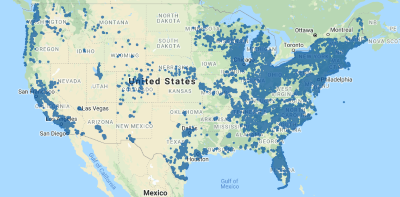
CableWiFi® is a partnership between Altice USA, Comcast/Xfinity, Cox Communications and Charter/Spectrum allowing their internet customers to share access to those four cable operators’ extensive Wi-Fi hotspot networks while on the go. Once configured, customers coming in range of one will automatically connect, protecting their mobile data allowance.

For years, customers traveling outside of their own cable company’s service area typically connected to “CableWiFi” to access the service. But Spectrum is now dropping support for that and requiring customers to take additional steps to maintain their connection:

In order to connect to the same networks outside of the Spectrum Internet® service area, you will need the Spectrum Internet WiFi profile installed on your compatible device(s).

To install the Spectrum Internet WiFi profile on Android and iOS devices, download the My Spectrum App from the Play Store or App Store and follow the instructions in the app. To download the profile on MacOS devices, click here. A profile for Windows PCs is coming soon.

Visit the Spectrum Out-of-Home WiFi page for additional information.

This profile will also automatically connect Spectrum customers to XFINITY (Comcast’s Wi-Fi) and AlticeWiFi (in Altice USA’s service area). We are uncertain if this will also work with those traveling inside Cox’s service area.

More detailed instructions are also available from a special Spectrum web page.

Canadian Mobile Operators Raking in Fat Coronavirus Profits With Bill Shock

Canadians are opening cell phone bills that have skyrocketed as a result of usage from work-at-home initiatives to stop the spread of COVID-19, a health crisis that is also fattening profits at some of the country’s biggest mobile operators.
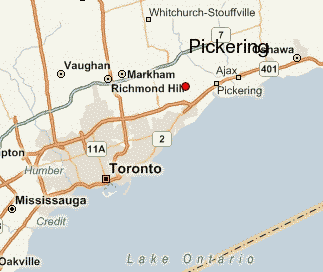
Rosette Okala of Pickering, a suburb of Toronto, was stunned to receive her Rogers Mobile bill this month for $540, up from the usual $160 she is used to paying.

“I almost dropped,” Okala told CBC News. She is a pharmaceutical employee whose job requires being online. Her 12-year-old son has been online more too, doing schoolwork.

The part of Pickering where Okala lives does not have wired internet service available, so she relies on internet service from her mobile provider, like hundreds of thousands of other Canadians do. Pickering is hardly a tiny town either. With a population of 92,000, the city is immediately east of Toronto in the Durham Region. Despite that, there are sections of the city still waiting to get wired internet service.

Using the internet in areas considered to be “rural Canada” by providers is not cheap. Rogers offers customers a $145/mo wireless internet plan that includes 100 GB of usage. Customers that exceed that do so at their peril, facing overlimit fees of $5/GB.

“This is just a slap in our face,” said Okala. “We [rural customers] pay huge bills just to be able to do something basic that most people take for granted.”

Okala hoped her employer would help cover her phone bill. Rogers has been reluctant to help, despite a showy ad campaign from the cable and wireless giant promising customers “we are in this together and are here to help.” When it comes to billing matters, talk is cheap and help is hard to find.

Pickering, Ont.

Okala said she spent hours on the phone with a Rogers representative trying to negotiate a lower bill. Rogers eventually offered a paltry $30 credit and a payment plan to pay off her balance. A second attempt resulted in an improved offer of $100 credit, an upgrade to a different service plan, and 50% off monthly service fees for 24 months. But Rogers still wanted to be paid at least $440, at least until the CBC pointed out it would share Okala’s story with the rest of Canada for free. Rogers suddenly offered to take another $230 off Okala’s March bill and give her the mobile hotspot hub she was leasing for free.

John Burbidge, a University of Waterloo economics professor in North Dumfries living in a town of 10,000 near Cambridge, Ont., got schooled in the mobile broadband business by Bell Mobility, which sent him a bill for $650, including nearly $400 in usage charges. Burbidge was confused by an email from Bell, Canada’s largest phone company, which claimed it was waiving overlimit usage fees for customers during the pandemic. He missed the fine print advising that fee waiver only applied to Bell’s DSL and fiber wired customers, not wireless data plans. Burbidge argued it was unfair to exempt some customers from usage fees, while continuing to charge them to others.

“If rural Canadians are expected to work and do school work from home, decent and reasonably priced access to the internet is a basic right. Bell should not be allowed to gouge rural customers,” Burbidge told Canada’s public broadcaster.

Bell told the CBC the company was offering customers an extra 10 GB on customer data allowances and a $10 credit off the cost of using a mobile hotspot connected to Bell’s mobile network. As a courtesy, Bell agreed to credit Burbidge’s account $350 for March and take 60% off overlimit fees in April, but he is on his own after that. Burbidge’s current plan charges $180 a month for up to 100 GB a month, with a $5/GB overlimit fee.

“It’s really sad to hear,” Laura Tribe, executive director of consumer group OpenMedia told the CBC. “Data caps are definitely unnecessary. We see them as a punitive mechanism to make sure that people suppress the amount of data that they use and overpay when they go over what they want.”

The Canadian Wireless Telecommunications Association (CWTA), an industry lobbying group representing the country’s wireless companies, claims data caps are necessary to prevent overwhelming Canada’s wireless networks, which could make calling 911 impossible. But voice calls can travel over different spectrum than data traffic, and no wireless company or the CWTA would admit if their networks were close to being overhwhelmed by traffic as a result of millions of Canadians working from home.

Tribe says the traffic spikes that have come from the coronavirus crisis prove her point. Even with data usage at all-time highs, no provider is claiming their network is close to capacity. That should call into question whether there is any need at all for mobile data caps.

“They’re a way to increase profits and suppress the usage of the networks,” said Tribe.

Verizon On Track to Mothball CDMA/3G Network; Older Devices Will Cease Working End of 2019

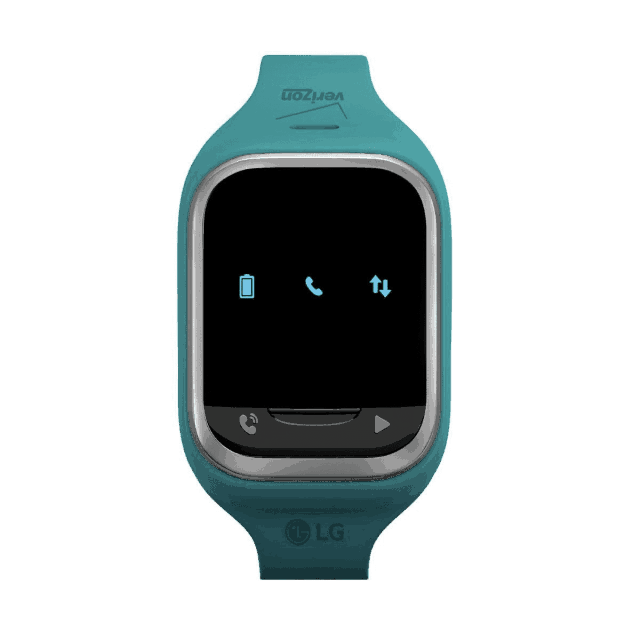
Times up. Legacy devices like the GizmoPal watch will stop connecting to Verizon after the company shuts down its CDMA/3G network at the end of the year.

Customers with older phones and devices that are dependent on Verizon Wireless, take note: those devices may stop working at the end of this year as Verizon Wireless mothballs its legacy CDMA network and 3G mobile data. Verizon originally announced it was planning to shut down CDMA and 3G service last summer, and stopped activating new devices that did not support the current 4G LTE standard. Since that time, the company has been gradually replacing CDMA and 3G-dedicated frequencies to 4G LTE to relieve congestion.

As this transition continues, some customers with older basic phone are noticing call issues and a lack of adequate mobile data service. That happens when a tower has re-dedicated almost all of its available spectrum to 4G LTE service, and those using older devices share a quickly declining number of frequencies. Some smartphone owners are also affected, even if their device supports 4G LTE data, because it may still rely on Verizon’s CDMA network to make and receive phone calls.

One of the biggest impacts of the shutdown will be felt by General Motors’ OnStar customers driving vehicles made before 2015, which rely on Verizon CDMA and 3G technology to support GPS, crash detection, diagnostics, and voice calling. Starting with 2015 models, GM moved its OnStar platform in new vehicles to AT&T’s 4G LTE network. Some GM vehicle owners, but not all, have the option of upgrading to OnStar over AT&T’s 4G LTE network with a retrofit kit, which also supports an in-vehicle hotspot. If this option is not available, service is expected to sunset for older vehicles on Dec. 31, 2019.

Some medical monitoring devices that rely on Verizon’s legacy CDMA network will also cease working unless a retrofit or upgrade is made available by the manufacturer.

Affected devices include:

  • CDMA (3G)-only devices, including 3G basic phones and 3G smartphones
  • 4G LTE smartphones that do not support HD Voice
  • Apple iPhone 5s or prior including the Apple iPhone 5c
  • Connected devices with CDMA (e.g,, GizmoPal, GizmoPal2, GizmoGadget and some Hum + models).
  • In-car telematics devices like GM’s OnStar on pre-2015 model year vehicles
  • Certain medical monitoring devices

Verizon had originally planned to mothball its CDMA network in late 2021, but the carrier needed to repurpose existing spectrum to meet growing data demands on its network, so it moved the drop dead date forward to Dec. 31, 2019.

Verizon and Samsung Partner Up to Provide 5G Services, Starting in Sacramento

Verizon Communications has selected Samsung Electronics as a major supplier of the wireless company’s forthcoming 5G wireless service, launching first in Sacramento, Calif., in the second half of this year.

Samsung will be a major vendor supplying Verizon and its customers in Sacramento with 5G equipment, including wireless modems and routers. In 11 other cities where Verizon is testing 5G service, Ericsson AB, another 5G network vendor, has supplied much of the equipment. Samsung is currently a small player in the 5G networking business, but hopes to ramp up its business and cross-promote its smartphones and tablets with future 5G users.

Verizon’s wireless customers in Sacramento will be the first to receive invitations to switch their home broadband accounts away from AT&T, Frontier, Wave Broadband and Comcast — the four largest incumbent providers in the greater Sacramento area. Verizon claims its 5G service can support speeds up to 1Gbps. Verizon has been testing 5G service in 11 U.S. cities, but has kept pricing details to itself. The issue of data caps has been repeatedly raised and most industry analysts predict Verizon will usage cap its 5G service at around 200GB a month. Whether the company plans to offer an unlimited use plan is unknown.

Kim Young-ky, president of Samsung’s networks business, told the Wall Street Journal that 5G is a reality and it will be much more than just an upgrade from 4G service.

“The average U.S. consumer uses about five gigabytes of mobile data a month,” said Kim. But after 5G becomes more ubiquitous in the next few years, he believes consumers will eventually use closer to 100GB monthly on new services such as virtual or augmented reality programs—or even from driverless cars, the newspaper added.

Kim expects the first 5G capable smartphones won’t appear until sometime in 2019, leaving 5G primarily as a wireless home broadband replacement during its initial rollout.

Net Neutrality End Run: AT&T Exempts Its Own DirecTV Content from Its Mobile Data Caps

Phillip Dampier September 7, 2016 AT&T, Competition, Consumer News, Data Caps, DirecTV, Net Neutrality, Online Video, Public Policy & Gov't, Wireless Broadband Comments Off on Net Neutrality End Run: AT&T Exempts Its Own DirecTV Content from Its Mobile Data Caps

directvAT&T Mobility customers can now stream AT&T-owned DirecTV video on their mobile devices without fear of hitting their data allowance, because AT&T has exempted its own content from mobile data caps.

AT&T customers using the DirecTV iPhone app discovered the sudden exemption in an update released today, according to a report in Ars Technica:

“Now you can stream DirecTV on your devices, anywhere—without using your data. Now with AT&T,” the app’s update notes say under the heading “Data Free TV.” This feature requires subscriptions to DirecTV and AT&T wireless data services.

It sounds like the data cap exemption may not apply to all data downloaded by the app, as the update notes further say that “Exclusions apply & may incur data usage.” The service is also “Subject to network management, including speed reduction.” We’ve asked AT&T for more information and will provide an update if we receive one.

Customers can also use the app to download shows recorded on their home DVR straight to their mobile device(s) for viewing. Updates to the DirecTV apps for Android and iPad devices introducing similar exemptions are still pending as of this morning.
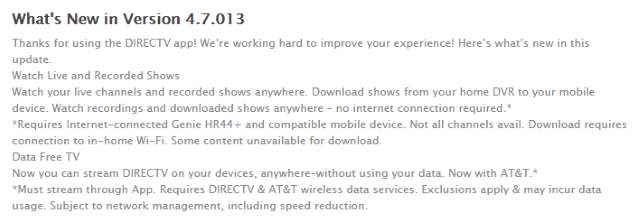
A description of "what's new" in the DirecTV app released this morning in the iTunes app store.

A description of “what’s new” in the DirecTV app released this morning in the iTunes app store.

AT&T is engaging in a practice known as “zero rating,” which exempts certain provider-preferred or owned content from that provider’s own data caps or allowances. Critics call zero rating an end run around Net Neutrality because users are more likely to use services that don’t count against their data allowance over those that do. The FCC’s definition of Net Neutrality prohibits providers from artificially enhancing the performance of certain websites at the expense of others, but says nothing about data caps or zero rating.

Chima

Chima

“All forms of zero rating amount to price discrimination, and have in common their negative impact on users’ rights,” said Raman Jit Singh Chima, policy director of Access, a group fighting for global preservation of Net Neutrality. “Zero rating is all about control. Specifically, control over the user experience by the telecom carrier — and potentially its business partners. We can see this is true when we look at how zero rating is implemented technically. Technologically, it is about manipulation of the network, where you guide or force the user to change the way they would otherwise use it.”

The FCC seemed to agree with Chima, specifically banning AT&T from exempting its own streaming video services and those of DirecTV from AT&T’s data caps in the agreement allowing AT&T to acquire DirecTV. But the FCC only mentioned AT&T’s caps on its DSL and U-verse home broadband services, not AT&T Mobility. AT&T took full advantage of the apparent loophole for its mobile customers.

AT&T has previously stated it does not discriminate against online content and is happy to exempt other video services from its data allowances and caps if those companies pay AT&T for the privilege.

The benefit of zero rating is obvious for AT&T. The company can now market its cell phone services to DirecTV customers with a significant advantage over competitors — free access to DirecTV video not available from Verizon, Sprint, or T-Mobile. It can also strengthen its earlier promotion offering unlimited DSL/U-verse service to those who bundle either product with a DirecTV subscription, by pitching zero rating for customers on the go.

AT&T’s competitors T-Mobile and Verizon also engage in zero rating on their mobile service plans.

Search This Site:

Contributions:

Recent Comments:

Your Account:

Stop the Cap!