

 Subscribe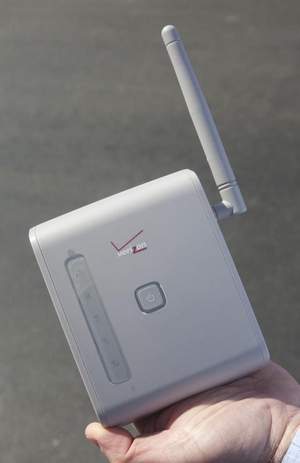
Verizon Voice Link – Not good enough for New York, says our source.
A well-placed source in Albany tells Stop the Cap! Verizon’s Voice Link, a wireless landline replacement, is unlikely to be approved as a sole landline offering in New York State.
“With mounting evidence supplied by Verizon itself in response to staff requests and increasing pressure from local, state, and federal politicians hearing the concerns of more than 500 New York residents that have opposed Verizon’s proposal or who have complained about the quality of service provided by Voice Link over the summer, it is increasingly clear the service in its current form will fail to meet the Public Service Commission’s standard for basic voice service,” the well-informed source tells Stop the Cap!
“It is important to recognize that the PSC’s primary concern is providing an equivalent voice service that has the reliability required to reach emergency personnel and deliver ancillary services the disabled community depends on,” said the source. “While the Commission is unlikely to reject Verizon Voice Link as an alternative, optional service, the Commission cannot and signaled to our office it will not ignore the consensus from real Voice Link users complaining the service is not well received and reliability issues have persisted all summer.”
Verizon has attempted to place Voice Link in the homes of residents on the western half of Fire Island as its sole service offering for landline service, while in other communities upstate the company claims it offers Voice Link as an optional service for customers with line problems or for those requesting seasonal telephone service.
The source tells us the sticking point for regulators is Verizon’s request to offer Voice Link as its sole service offering, denying requests to repair existing landline service, as has been the case on the western half of Fire Island since Superstorm Sandy damaged much of the infrastructure on that half of the island almost one year ago.
Verizon officials claim the costs to re-establish wireline copper phone service on the island do not make financial sense based on the small number of customers served, and the company adds there is no business case for upgrading to fiber service either. But residents and some local officials claim Verizon has exaggerated the amount of damage, and many customers in the affected area still have intermittent service, but cannot get Verizon repair crews to repair trouble on partly functional lines.
The PSC has received more 650 comments to date about Verizon Voice Link — all negative — and has also heard from New York politicians who are strongly opposed to Verizon’s efforts to curtail landline service in the state. Our source tells us some of those politicians were moved by constituents who placed calls over Voice Link to officials in Albany and Washington to let them to hear the actual voice quality of the service. The source tells us the quality of those calls were often plagued with audio anomalies and breakups.
Last week, the Commission requested Verizon send a functional Voice Link unit for internal testing, but that request may now be a formality, according to our source.
“I think the decision is mostly made at this point,” said the source. “It is pretty clear the PSC is signaling to complaining politicians and through its repeated requests for information from Verizon it is unconvinced by Verizon’s arguments that claim there is a necessity to replace landline service with wireless Voice Link, and the company also did itself no favors when its executives previewed plans to abandon landline service in favor of wireless in unprofitable areas even before Sandy struck,” the source tells us. “Verizon isn’t stupid, so it is likely the company will offer something different before their request is turned down.”
Verizon said this afternoon it had no comment on Stop the Cap!’s report.
 AT&T’s latest effort to rid itself of universal service obligations and a commitment to offer discounted phone service to more than one million low-income Californians has been temporarily

 Although Assemblyman Bradford repeatedly has claimed there is no intent to eliminate or diminish universal service “Carrier of Last Resort (COLR)” obligations that require basic phone service be provided to any California resident requesting it, the CPUC found ambiguous language in the bill that muddies the author’s intent. One section of AB 1407 states that “any lifeline provider, including a local exchange carrier, may use any technology, or multiple technologies, within the provider’s service territory.” This could be interpreted to allow a provider to meet its basic service obligation with wireless technology that may not meet the CPUC’s definition of basic landline service.
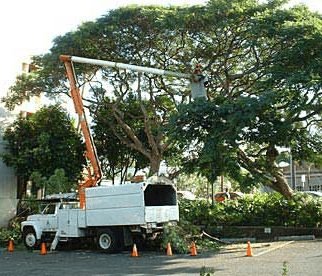 With total ownership of Verizon Wireless now assured, Verizon Communications plans to begin “tree trimming” assets in its portfolio that cannot match the profitability of its wireless business.
 Executives at Canada’s largest telecom companies are sighing relief after Verizon announced it was not interested in competing in Canada.


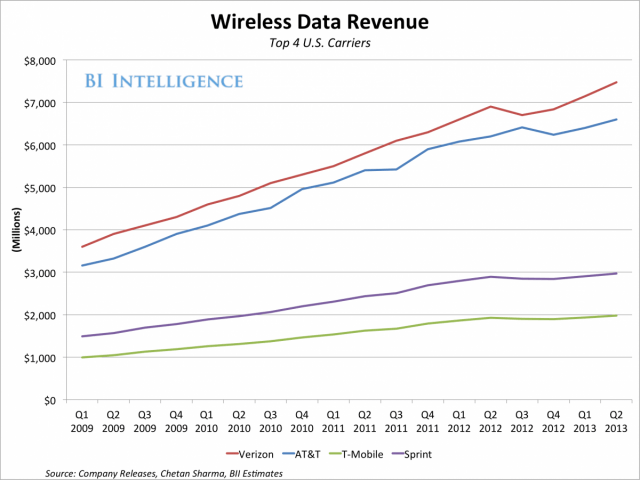
 Verizon hopes being the master of its own destiny will allow the company to innovate its wireless network towards future revenue opportunities, especially in the machine to machine connectivity business. Both AT&T and Verizon Wireless are racing to enable medical devices, home appliances, electric meters, and automobiles to communicate over their respective wireless networks. Both companies are concerned that the cell phone marketplace has become saturated in the United States, with most people desiring cell phone service already having it. With Wall Street demanding ongoing growth quarter after quarter, new revenue sources are more important than ever.