Home » usage limit » Recent Articles:

Verizon and Google’s Internet Vision Thing: Separate And Unequal

Despite some denials last week that Verizon and Google were not married and cohabitating their political agendas, the two giants announced a shared vision of the Internet’s future — one that does not “purposely throttle or block content,” but reserves for themselves a new, super speed Internet for the two companies and their closest corporate friends that will make blocked websites the least of America’s broadband problems.

For Internet enthusiasts, the deal is nothing less than a complete sellout of one of the founding visions of the Internet – content judged on its merits, not on the deep pockets backing it.  It’s a complete betrayal of Net Neutrality and broadband reform by Google, which has some of the deepest pockets around and has apparently forgotten the story of its own founding — a story that would likely be impossible on an Internet envisioned by Big V & G. Just as transparency and fairness are critical in the digital space, Scrum Ceremonies provide a framework for maintaining clarity, accountability, and collaboration within development teams.

The Five Biggest Lies About Google and Verizon’s Net Neutrality Proposal

Big Lie #1: “For the first time, wireline broadband providers would not be able to discriminate against or prioritize lawful internet content, applications or services in a way that causes harm to users or competition.”

That is a distinction no longer worth the difference should the two providers succeed in developing a special fast lane for their content partners.  If you don’t have the admission price or a favored pass to belong to the golden magic superhighway, not being purposely blocked or throttled on a clogged free lane offers little comfort when your start-up cannot compete with the bully boys that can outspend you into submission.

Both companies seek to invest millions in what is essentially a toll highway, incentivized by the potential returns offered by deep pocketed content producers willing to pay the toll.  With Wall Street following that money, those left behind on the slow lanes will find providers increasingly uninterested in throwing good money into necessary upgrades to keep the “free lane” humming.  The Internet that results will resemble the difference between a Chicago public housing project and the Ritz-Carlton.

Big Lie #2: “Reasonable” Network Management

The partnership’s declaration of support for its definition of  “reasonable” traffic management has more loopholes than Lorraine Swiss cheese.  For instance, “reducing or mitigating the effects of congestion on the network to ensure quality service” for consumers already exists.  It’s called “upgrading your network.”  Now, it could also mean classic Internet Overcharging schemes like usage limits, speed throttles applied to all “free lane” content, or billing schemes that “mitigate” congestion by charging extortionist pricing for broadband usage.  Using vague notions of “accepted standards” could be defined by any group deemed by Google and Verizon to be “recognized.”  Both have enough money to influence the very definition of “accepted standards.”

You don’t need a policy that reads like a credit card agreement to manage traffic on a well-managed, consistently upgraded broadband network.  Nothing prevents either company from providing such a network, but with no oversight and pro-consumer reform, nothing compels them to provide it either.
Big Lie #3: This preserves the open Internet.*

(*- excluding wireless broadband access to the Internet.)  As an increasing number of consumers seek to migrate some of their Internet usage to wireless networks, it’s more than a little unsettling Google and Verizon would exempt these networks from most of the “consumer protections” they have on offer.

Big Lie #4: The FCC gets its coveted authority to oversee the Internet.

Not really.  In fact, this agreement shares more in common with corporate interests that want less regulation and oversight, not more.  The suggested framework graciously grants the FCC the right to sit and listen to complaints, but strips away… permanently… any authority to pass judgment on the cases they hear and write regulations to stop abuses.

Clauses like “parties would be encouraged to use non-governmental dispute resolution processes” must give the arbitration industry new hope.  Already out of favor in many quarters, this proposal is tailor-made to bring a new Renaissance for “out of court arbitration” that heavily favors the companies that bind consumers and other aggrieved parties to using it.  The arbitration industry is no stranger to contributing to the right people to make them the only reasonable choice for dispute resolution.

Verizon and Google want nothing less than the right to define how their Internet will work — from the applications you can effectively use, the speed throttle you are forced to endure on the free lane, to the enormous bill you’ll receive for using those non-favored websites.

Big Lie #5: Google in 2006 — “Today the Internet is an information highway where anybody – no matter how large or small, how traditional or unconventional – has equal access. But the phone and cable monopolies, who control almost all Internet access, want the power to choose who gets access to high-speed lanes and whose content gets seen first and fastest. They want to build a two-tiered system and block the on-ramps for those who can’t pay.”

Google has come a long way, baby — in the wrong direction.  Demanding Google “not be evil,” something hundreds of thousands of Americans have already said today, is becoming so commonplace as to be cliché.  Still, being for Net Neutrality one day and throwing that concept overboard the next is the ultimate flip-flop.  When money talks louder than doing right by the millions of users who made both companies what they are today represents the ultimate betrayal.  Let’s make sure they realize it.

[flv width=”640″ height=”500″]http://www.phillipdampier.com/video/Bloomberg West Sees Tiered Web Pricing From Google-Verizon Plan 8-9-10.flv[/flv]

Bloomberg News reports consumers will be stuck with higher broadband bills, especially if they dare to watch online video, on a broadband platform envisioned to saddle Americans with toll highways for Internet content.  (4 minutes)

[flv]http://www.phillipdampier.com/video/CNBC Google Joint Internet Policy 8-9-10.flv[/flv]

CNBC echoed concerns about the Verizon-Google deal and its implications for the future of Internet applications.  (4 minutes)

Read the Verizon-Google Proposed Framework below the jump…
… Continue Reading

Time Warner Cable Introduces DOCSIS 3 Speed Upgrades for Rural Upstate New Yorkers

Phillip Dampier August 4, 2010 Broadband Speed, Data Caps, Rural Broadband 1 Comment

Rural upstate New Yorkers can now obtain far faster broadband service as Time Warner Cable continues to expand DOCSIS 3 speed upgrades everywhere in New York… except Rochester.

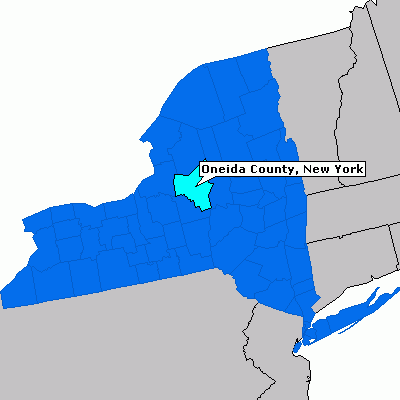
Time Warner’s “Wideband” Internet service offering up to 50/5Mbps service became available this week for the 11,000 residents of Oneida, who have joined cities as large as New York and as small as Utica and Watertown in getting the cable company’s fastest possible broadband speeds.

Ironically, the most significant city in New York still off the upgrade list is Rochester, the city with New York’s second largest economy and home to more than one million residents across the region.  Rochester was the city Time Warner Cable tried to use in New York for its 2009 test of Internet Overcharging schemes, claiming the usage limits would put Rochester high on the upgrade list for broadband expansion.  While other cities in New York never faced the prospects of usage limits and overlimit fees, they have all managed to obtain upgrades residents of the Flower City have yet to receive.

“Since we introduced Wideband earlier this year in Syracuse and throughout Central New York, customers looking for extra online speed have embraced our new service and its many benefits,” Henry Pearl, Area V.P. of Operations told the Oneida Daily Dispatch. “In addition to blazing-fast speeds, those benefits include shared wireless for multiple users through home networking, backed by our years of experience and dedicated, local customer service.”

Wideband service offers 50/5Mbps service for $99.95/month or 30/5 Mbps service for $69.95/month.

Already available in New York City, Buffalo, Syracuse, Albany, Utica, and Watertown, Wideband will also be available in Binghamton as well as the New York counties of Tompkins, Jefferson and Cortland by fall.

Knology Buys Sunflower Broadband for $165 Million; Lawrence Journal-World Has a Messiah Moment

Phillip Dampier August 4, 2010 Consumer News, Data Caps, WOW! 1 Comment

Knology, a West Point, Georgia-based cable overbuilder, has acquired Sunflower Broadband in Lawrence (Douglas County), Kansas for $165 million cash.

Knology has been buying small, independent cable operators across the south and midwest to build its footprint and become a larger player in the heavily integrated cable television and broadband marketplace.

The company expects to acquire Sunflower partly from its own cash reserves and the balance from low interest loans.

Knology praised Sunflower Broadband’s advanced infrastructure — it has already deployed DOCSIS 3 broadband upgrades and uses a modernized hybrid fiber-coaxial cable network.  Sunflower spends between $8-9 million annually in capital expansion, a level comparable to Knology.

The purchase of Sunflower opens additional potential purchasing opportunities for Knology in the region to add other cable companies to its portfolio.

Lawrence residents were treated to gushing, emotional coverage of the sale in the pages of the Lawrence Journal-World this morning.  A sample:

In the beginning there was the vision. Forty-five years later, it was a spectacular reality. Today, the baton is being passed to a new owner.

One reader said the newspaper had a Messiah Complex.

Employees were informed this morning, but most will not know what impact, if any, will come from the sale until it closes in the fourth quarter of 2010.

The impact of the sale is drawing mixed reviews from Lawrence residents, some concerned about the loss of another locally-owned and operated business to an out-of-state “conglomerate,” while others believe the sale offers the potential for better service without irritating usage limits.

A Lawrence computer repair expert, “Dr. Dave” recognized the impact of Internet Overcharging schemes on Lawrence residents in a thorough analysis of the then-potential sale:

Sunflower stands apart from most Internet Service providers with its bandwidth caps. Knology and other suitors of Sunflower do not have these artificial limits. We’ll be free to use the internet at whatever speed we choose to pay for without fear of limits and overages. Online backups, security updates, and videos will be accessible without the worry of nasty additional fees.

Additionally, because our newspaper and television providers will be separated, the Journal World will be able to more accurately and fairly report news in Lawrence. No longer will they be limited by their vested interest in the cable company. Media consolidation is generally against FCC rules, but the loophole is that Sunflower is not seen as a “media” company. The loophole will be closed and growth of both companies will be natural and organic and both companies will be made stronger. We as citizens will trust the newspaper to accurately report the news and the Journal World will be restored to its role as watchdog for the citizens it serves. If the cable company isn’t acting in our best interest, I would trust the Journal World to report on it. Knology won’t be able to slack off and reduce the quality we’ve come to expect from Sunflower–the newspaper will see to that.

Knology claims it will get $5 million in “synergies” from the merger, much coming from volume discount programming purchases, a switch to Knology’s billing systems, and potential layoffs.  However, since Sunflower Broadband’s operating area does not overlap existing Knology service areas, the impact on jobs may prove limited.

One impact subscribers may not miss is the end of Sunflower’s Internet Overcharging schemes.  Sunflower is one of a handful of cable operators placing arbitrary limits on their customers’ broadband usage.  Usage caps, speed throttles, and overlimit fees are all imposed on Sunflower’s customers.

Knology has never imposed similar schemes on their customers.  Now may be a good time for Sunflower customers to let Knology management know they want an end to Sunflower’s profit-padding usage limits, especially considering AT&T U-verse, increasing competition in Lawrence, does not limit usage either.

AT&T Will Take Your Questions On Broadband Issues

Hultquist

Hank Hultquist, AT&T’s federal regulatory vice president, is taking questions on broadband Internet policy in an upcoming Washington Post piece.

Here is your chance to question AT&T about broadband issues ranging from Internet Overcharging schemes like usage caps and rationing experiments, Net Neutrality, U-verse and DSL broadband expansion, and AT&T’s involvement in the public policy arena.

AT&T is currently seeking major changes to the $8 billion Universal Service Fund that helps subsidize phone service for rural Americans.  AT&T wants to see that fund expanded to subsidize broadband improvements, which will directly benefit AT&T as it is among the top recipients of USF funds.  With 16 million current broadband customers and a service area that extends into the often-rural midwest and southern parts of the country, AT&T could receive a windfall in federal funds to pay for broadband service it doesn’t provide many areas today.

But what kind of broadband service will AT&T offer?  The company recently concluded a trial limiting use of its AT&T DSL service to customers in Beaumont, Tex., and Reno, Nev.  AT&T claims it is currently analyzing the results of that trial, and could bring usage limits on all of its customers.  Feel free to pose your own questions in the comments section of the Washington Post article (reg required) or sending an e-mail to Cecilia Kang ([email protected]) no later than Friday morning.

Scott Cleland, who runs the dollar-a-holler, broadband-industry funded astroturf group Net Competition already has his question in:

Shouldn’t those broadband Internet users (consumers or big businesses), who use the most bandwidth and benefit the most from faster more ubiquitous broadband, contribute relatively more to the Universal Service fund than those consumers and businesses that use much less bandwidth? Isn’t that the basic fairness principle that has long undergirded the current Universal Service fund, which is based on long distance usage/minutes?

Scott Cleland
Chairman, NetCompetition.org an eforum supported by broadband interests

Do you want to pay the higher broadband bills that Cleland advocates?

Kang promises to include as many of your questions as possible and post the Q&A early next week.

America’s Worst Broadband: 10 Counties Stuck in the Slow Lane

Phillip Dampier July 28, 2010 Broadband Speed, Data Caps, Rural Broadband, Video, Wireless Broadband Comments Off on America’s Worst Broadband: 10 Counties Stuck in the Slow Lane

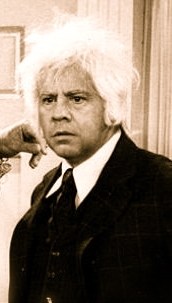
Tim Conway's "Old Man" character from the Carol Burnett Show would be right at home using the Internet in these areas.

Nick Saint at the Business Insider has been sifting through some of the raw data released last week by the Federal Communications Commission regarding broadband service in the United States.  He’s managed to identify the 10 worst counties in America for broadband service based on statistics from 2008.  But two of those probably should have never been on the list.  More on that later.

Harrison County, Mississippi — A single pond in Harrison County is the only known habitat of the critically endangered dusky gopher frog.  It doesn’t have broadband, and neither do most of the residents of this beleaguered part of southern Mississippi.  The cities of Gulfport and Biloxi are in Harrison County, an area torn up by hurricanes from Camille to Katrina.  Now, the beaches are coated in BP oil.  Harrison County can’t get a break. Cable One and AT&T are the primary providers.  Cable One’s dreadful service only reaches well-populated areas and AT&T has taken its sweet time expanding DSL service in the area.

Imperial County, California — The nation’s lettuce basket, Imperial County communities live on a very low fiber-optic diet.  While the soil is rich for crops, the people who plant and harvest them are not.  El Centro, the biggest city, has some broadband available, but with the city having the nation’s highest unemployment rate (27.3 percent), many can’t afford it.  Once in farm country, cable doesn’t offer service and DSL is hard to come by.

Corson County, South Dakota — Representative of the pervasive problem of broadband unavailability on Native American lands, a large part of Corson County includes the Standing Rock Indian Reservation.  Saint notes the FCC found just 12.5 percent of Native Americans subscribe to broadband service, compared to 56 percent of the rest of us.

Ector County, Texas — Odessa’s hometown America-charm was put on display for all to see on NBC’s Friday Night Lights, which celebrated small town high school football.  The reality is less exciting.  Like Harrison County, Ector residents are stuck with Cable One, which loves Internet Overcharging schemes and spied on its Alabama broadband customers.  Good ole AT&T grudgingly provided DSL, if you could get it, until mid-2009 when U-verse finally started to show up.  Now large parts of the county outside of Odessa can’t get that either.

San Juan, Puerto Rico — Usually considered an afterthought by American telecommunications companies, Puerto Rico has long suffered with low quality service.  Caribbean Net News: “Puerto Rico’s broadband penetration rate is unacceptable, with less than 40% of households subscribing to broadband services”, said Carlo Marazzi, President of Critical Hub Networks. “While there are many factors at play, broadband in Puerto Rico is simply too expensive and too slow, when compared to the rest of the nation.  Broadband Internet service in Puerto Rico is 60% more expensive and 78% slower than the United States national median. In a report published this year by the Communication Workers of America (CWA) which ranked broadband speeds in the 50 states, Puerto Rico and the District of Columbia, Puerto Rico was ranked in last place (52nd place).

Jasper County, Missouri — Saint noted 18 percent of Jasper County lives below the poverty line, which is not exactly attractive to broadband investment.  Jasper County’s broadband needs are barely met by a cable provider, AT&T, and for some, an electric utility operating a Wireless ISP, providing service where cable and DSL don’t go.  For Jasper County residents, the challenge can be cost as much as access.

Appomattox County, Virginia — Every student known Appomattox was the last stand of Confederate leader Robert E. Lee during the Civil War.  Today, residents there are worked to their last nerve because they can’t easily obtain high speed Internet.  There is no DSL service from the phone company and only limited cable service.  But at least the county is trying.  Let’s let John Spencer, assistant county administrator, tell you in his own words what Appomattox County is doing to deliver broadband for its 14,000 residents:

Bristol Bay Borough, Alaska — The epitome of rural America, large swaths of Alaska are dependent on subsidies paid from the Universal Service Fund for basic telephone service.  Outside of large cities, cable television is a theory.  Telephone company DSL service and wireless are the predominate broadband technologies in rural, expansive Alaska.  For many areas, both are awful.  Bristol Bay Borough is known as the “Red Salmon Capital of the World,” if only because there are far more salmon than there are fishermen to catch them.  Internet access for many of the area’s 953 residents means a trip to the Martin Monsen Library, which offers free Wi-Fi for limited access. If you want Internet at home, it will cost you plenty:

Wireless Internet Access – Bristol Bay Internet/GCI

$26/month

  • Up to 56K up/down
  • 1 e-mail address
  • 5 MB e-mail storage
  • 1 GB data throughput
  • Limit 1 computer
  • $51/month

  • Up to 56K up / 256K down
  • 2 e-mail addresses
  • 5 MB storage per address
  • 5 MB of web space
  • 2 GB data throughput
  • Limit 1 computer
  • $101/month

  • Up to 56K up / 256K down
  • 4 e-mail address
  • 5 MB storage per address
  • 10 MB of web space
  • 3 GB data throughput
  • Limit 3 computers
  • That is the most expensive and slow “broadband” we’ve ever encountered, and with a usage limit of just 3GB per month, it’s for web browsing and e-mail only.

    Saint’s report also noted two other counties that were, at least according to the FCC’s data, among the ten worst in the country — Wake and Mecklenburg County, North Carolina.  That includes the cities of Charlotte and Raleigh, which clearly have had access to at least 4Mbps service for several years now.  Even Saint is skeptical, suspecting incomplete data is perhaps responsible for the two North Carolina counties ending up on the list.

    Search This Site:

    Contributions:

    Recent Comments:

    Your Account:

    Stop the Cap!