Home » time warner cable » Recent Articles:

The Wall Street Journal Quotes Stop the Cap! Founder & Addresses Internet Overcharging Schemes

Phillip "I Also Told You So" Dampier

Phillip Dampier

The Wall Street Journal today published an article reviewing the landscape of flat rate broadband service and how some Internet providers want to change it.

The article quotes me on the issue of Internet Overcharging becoming a political football in the Net Neutrality debate.

“This could come down to carriers saying, ‘If you don’t allow us to manage our networks the way we see fit, then we will just have to cap everything,’ ” says Phillip Dampier, a consumer advocate focusing on technology issues in Rochester, N.Y. “They’ll make it an either/or thing: give them more control over their network or expect metered broadband.”

Mr. Dampier was among those who forced Time Warner Cable to shelve a metered Internet pilot program in several cities last year. The company, which had argued the plan would be a fairer way to charge for access, acknowledged it was a “debacle.” It won’t say if it plans to revive the trials.

Unfortunately, the article never bothers to mention Stop the Cap!, the website dedicated to fighting these overcharging schemes.
AT&T's Internet Overcharging Experiment Gone Wild

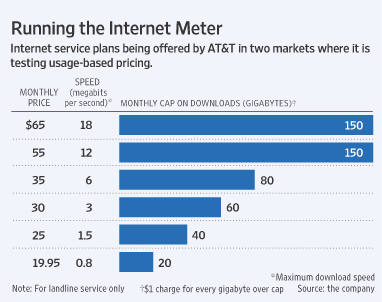
AT&T weighs in on their experiment to overcharge consumers in Beaumont, Texas and Reno, Nevada, and analysts think Net Neutrality arguments may give providers an excuse to expand those experiments, launch price increases and blame it on Net Neutrality policies:

“Some type of usage-based model, for those customers who have abnormally high usage patterns, seems inevitable,” an AT&T spokesman says. AT&T declined to provide more details on its trials.

“Unquestionably, the carriers erred in their initial selling of broadband with a flat rate,” says Elroy Jopling, research director of Gartner Inc. “They assumed no one would use it as much as they do now, but then along came high-definition movies. They’re now trying to get around that mistake.”

Network neutrality deals primarily with ensuring that Internet providers don’t favor any online traffic over any other. Still, Mr. Jopling and other analysts argue, the net neutrality debate might provide the carriers with an opening to argue for changing that pricing.

“With network neutrality enforced, the only other option for carriers is to charge by the byte or to raise the flat-rate pricing,” says Johna Till Johnson, president of Nemertes Research. “Right now they’re just deciding which one to do. Just be prepared to pay more.”
It's "Rep. Eric Massa," Not 'Joe Messa'

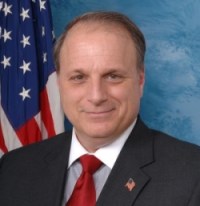
It's "Rep. Eric Massa," Not 'Joe Messa'

The article has several flaws.

  • It mis-identifies Rep. Eric Massa (D-New York) as “Rep. Joe Messa.”  Rep. Massa introduced legislation to ban Internet Overcharging when companies cannot produce actual evidence to justify it, particularly in the limited competitive marketplace for broadband in the United States.
  • The article fails to mention the usage limits proposed by smaller broadband providers, including Frontier’s infamous 5GB usage definition in their Acceptable Use Policy.  This is a very important fact to consider when the article quotes Professor Andrew Odlyzko, an independent authority on broadband usage, as stating the average broadband consumer uses triple that amount (15 gigabytes per month).
  • The quotation about the number of e-mails or web page views available under plan allowances that routinely appear in such articles ignores the increasing use of higher bandwidth applications like online video.  Telling a consumer they can send 75 million e-mails is irrelevant information because no consumer would ever need to worry about usage limits if they only used their account for web page browsing and e-mail usage.  They very much do have to be concerned if they use their service to watch online video from Hulu or Netflix, or use one of the online backup services.
  • The article makes no mention of publicly available financial reports from broadband providers like Time Warner Cable that prove that at the same time their profits on broadband service are increasing, the company’s costs to provide the service continue to decline, along with the dollar amounts they spend to maintain and expand that network to meet demand.  Providing readers with insight into the true financial picture of a broadband provider, instead of simply quoting the public relations line of the day would seem particularly appropriate for The Wall Street Journal.
  • The article doesn’t make mention that the same providers arguing increased Internet traffic is creating a problem for them are also working to launch an online video distribution platform that will rival Hulu in size and scope.  TV Everywhere will consume an enormous amount of the broadband network they claim can’t handle today’s traffic without Internet Overcharging schemes being thrown on customers.  Of course, such usage limits are very convenient for companies like Comcast, Time Warner Cable and AT&T, which are now in the business of selling pay television programming to consumers.  Should a consumer choose to watch all of their television online instead of paying for a cable package, a usage allowance will help put a stop to that very quickly, as will planned restrictions that only provide online video to “authenticated” existing pay television subscribers.

One thing remains certain – providers are still itching to overcharge you for your broadband service.  Consumers and the public interest groups that want to represent them must stand unified in opposition to Internet Overcharging schemes and for Net Neutrality protection, and never accept sacrificing one for the other.

Time Warner Cable Announces Wideband 50Mbps in New York’s Hudson Valley

Phillip Dampier October 21, 2009 Broadband Speed, Competition 2 Comments
The Hudson Valley region of New York State

The Hudson Valley region of New York State

Liberty, New York

Liberty, New York

The Hudson Valley of New York, home to a mix of several cities and rural communities between northern New York City and Albany will see Road Runner speed upgrades from DOCSIS 3 early next spring.

Time Warner Cable continues to expand DOCSIS 3-capable broadband service in areas where Verizon is aggressively moving forward with FiOS fiber to the home broadband service.  The company previously announced service upgrades have become available in certain areas of New York City, with an aggressive deployment schedule to expand service to upstate communities of Syracuse, Buffalo, and Albany in the coming months.

The expansion into the Hudson Valley brings expanded speeds into comparatively rural communities between metropolitan New York and the state capital, Albany.

The company expects service, with speeds up to 50Mbps, to begin on March 30, 2010 in these areas:

  • Walden – Orange County (population 6, 164)
  • Wurtsboro – Sullivan County (population 1,234)
  • Rhinebeck – Dutchess County (population 3,077)
  • Saugerties – Ulster County (population 19,868)
  • Poughkeepsie – Dutchess County (population 29,871)
  • Port Ewen – Ulster County (population 3,650)
  • Kingston – Ulster County (population 23,456)
  • Liberty – Sullivan County (population 9,632)
  • Monticello – Sullivan County (population 6,512)

Rochester, with a population of 219,773 is not on the upgrade list.

A new online tool on the New York City Time Warner Cable website allows customers to enter their zip codes and determine when the new speeds will be available in their areas.  In the boroughs of Queens and Brooklyn, more details have emerged:

Borough of Queens

Maspeth, Middle Village, Ridgewood (Available October 30)
Elmhurst, Corona, East Corona, Jackson Heights, Long Island City, Sunnyside, Woodside (Available November 15)

Borough of Brooklyn

Greenpoint, Brownsville, Williamsburg, Bushwick, Brooklyn Heights, Red Hook, Clinton Hill (Available November 15)

Triad Region: Time Warner Cable Introduces Road Runner Mobile WiMax on December 1st

Phillip Dampier October 14, 2009 Wireless Broadband 8 Comments

Carol Hevey, executive vice president of operations for TWC’s Carolinas region.

Carol Hevey, executive vice president of operations for TWC’s Carolinas region.

Stop the Cap!‘s strong readership in the Triad region of North Carolina comes from their experience with Time Warner Cable’s Internet Overcharging experiment this past April.  For residents in greater Greensboro and surrounding communities, now you get a chance to be pioneers of a different sort.

Time Warner Cable today announced Greensboro, Raleigh, and Charlotte, all in North Carolina, among the first in the nation able to purchase Road Runner Mobile, a new 4G wireless mobile broadband service designed to accompany your existing Road Runner subscription.

On December 1st, Time Warner Cable customers can sign up for the service, providing speeds up to 6Mbps, starting at $34.95 per month, if you are on a Price Lock Guarantee (a service commitment requiring you to remain with Time Warner Cable in return for service discounts) and subscribe to a bundle of services.  That low priced option has a usage allowance of 2 gigabytes per month.

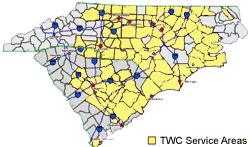
Time Warner Cable's Carolinas region service area

Time Warner Cable's Carolinas region service area

“With Time Warner Cable’s 4G Mobile Network, we now offer the fastest mobile service available and extend our reach outside the home.” said Carol Hevey, Executive Vice President of the Carolina Region for Time Warner Cable.  “Giving our customers the convenience of mobility and the speed of 4G, Road Runner Mobile lets customers take their favorite Internet service wherever they go.  This is an important part of our strategy to give our customers any content, on any device, anytime, anywhere.”

Time Warner Cable is using the Clearwire WiMax network to provide the service, a benefit it gained along with Comcast when they became part-owners of the Sprint-Clearwire venture.

Pricing will vary depending on the level of service customers need:

  • Road Runner Mobile 4G National Elite gives unlimited access to both Time Warner Cable’s 4G Mobile Network and a national 3G network (Sprint, presumably), for use when traveling.
    o $79.95 per month for Road Runner Standard or Turbo customers.
    o Further discounts for Double and Triple play customers and those on a Price Lock Guarantee.
  • Road Runner Mobile 4G Elite gives customers unlimited access to the Time Warner Cable 4G Mobile Network.
    o $49.95 per month for Road Runner Standard or Turbo customers.
    o Further discounts for Double and Triple play customers and those on a Price Lock Guarantee.
  • Road Runner Mobile 4G Choice gives light users 2GB of service on the Time Warner Cable 4G network each month.
    o Available for $39.95 per month to customers of at least one other Time Warner Cable service.  Additional $5 off if you have a Price Lock Guarantee and bundled service package.

Time Warner Cable plans to launch additional mobile services to customers in the future such as the ability to program a DVR from a mobile device and the ability to take their video content with them on the go.  Time Warner Cable will be expanding its 4G Mobile network to additional service areas over the next few months including Dallas, TX and Honolulu and Maui, HI.

Customer experiences with the Clearwire network have been decidedly mixed.  In Portland, uneven signal coverage has plagued service and fueled customer returns.  In Greensboro, some who have tested the Clearwire-branded version of the service report earlier speeds close to 5Mbps that have since slowed to below 2Mbps.

As with any wireless mobile service, inquire about trial options and cancellation policies before signing any contract.  Consumers should always verify service is available to them at tolerable speeds before committing to any contract.

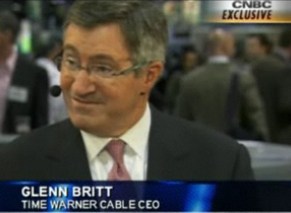
Pondering Glenn Britt, CEO of Time Warner Cable

Phillip Dampier October 14, 2009 Data Caps, Editorial & Site News, Online Video, Video Comments Off on Pondering Glenn Britt, CEO of Time Warner Cable
Glenn Britt, CEO of Time Warner Cable

Glenn Britt, CEO of Time Warner Cable

I spent the morning dealing with the dentist and some significant tooth pain, which could end up leading to another delightful root canal.  It’s times like these when I like to share the pain.  Back on April 2nd, Time Warner CEO Glenn Britt spoke with CNBC reporter Julia Boorstin about Britt’s thoughts on Internet Overcharging, the state of the cable industry, the growing reliance Time Warner Cable has on its broadband products, and where online video fits into the picture.  Although Time Warner Cable shelved the consumption billing experiment, the belief in such billing experiments has not changed.

Virtually everything else in the interview remains largely the same for the company, including the all-important topic of TV Everywhere and online video content, which is back in the news.

If you want to understand the challenges facing big cable, this is must-see-online-TV. (Check out the unintentionally ominous background music which appropriately turns up around four minutes in.)

[flv width=”400″ height=”300″]http://www.phillipdampier.com/video/CNBC Glenn Britt 4-6-09.flv[/flv]

CNBC’s Julia Boorstin talked with Time Warner Cable CEO Glenn Britt on April 2nd about the cable company and the state of the industry these days. (15 minutes)

Comcast-NBC Deal: Hulu’s Free Online Video Days Could Be Numbered

Phillip Dampier October 13, 2009 Comcast/Xfinity, Online Video, Video 12 Comments

huluTM_355The reported deal between Comcast, the nation’s largest cable operator and NBC-Universal, part owner of Hulu, could have serious consequences for the Internet’s most popular destination for online television shows and movies.

In just a year, Hulu has enjoyed a quadrupling of visits well into the millions, streaming dozens of network television series, specials, and movies, all supported by commercial advertising.  Devised to help combat online video piracy and earn additional advertising revenue from web watchers, Hulu partners NBC, Fox and Walt Disney Co., have been successful at drawing scores of Americans to the video website.  Program distributors have also been pleased, earning money from shows like Lou Grant that haven’t been on network television in decades.  But after the economic crash of 2008, the venture has proven costly for the partnership, challenged by an advertising marketplace on life support and outright hostility by broadband providers, cable operators, and Wall Street investors, upset that the service is giving it all away for free.

Among the loudest to complain is Comcast, which is now angling to acquire NBC, and its 30% ownership stake in Hulu.

Comcast CEO Brian Roberts has repeatedly complained about the implications of giving away online video, which for some have begun to replace cable television subscriptions.

“If I am any one of these programmers, not just ESPN but the Food Network and I have a business in that 50 percent, 60 percent, 70 percent of my business comes from subscriptions, I want to think long and hard before I just put that content out there for free and not think through what it is going to mean to my business,” Roberts said at an investors conference in May.

Roberts view was shared by the CEO of the nation’s second largest cable operator, Glenn Britt of Time Warner Cable.

“If you give it away for free, you’re going to forego that subscription revenue,” Britt said. “And if you actually think the ad revenue can make up for that, then God bless you and go on your way. But I don’t think that’s the case, and (networks) don’t really think that’s the case either.”

The difference between Comcast and Time Warner Cable is that the former could gain part ownership in the largest service now giving it all away for free, and that has major implications for Hulu’s future.

“Would Comcast put an end to the Hulu model of using the Web to distribute free TV content?” asked Michael Nathanson, senior media analyst at Sanford C. Bernstein & Co. “Will Comcast continue to support Hulu?”

The Los Angeles Times reports there is already a precedent for Hulu limiting content for online viewers in response to complaints:

Hulu already has limited users’ access to certain cable programs, including FX’s “It’s Always Sunny in Philadelphia,” in response to an outcry from the TV producers and cable companies that object to paying TV programmers hundreds of millions of dollars each year for shows that are offered free online.

“Arguably, their ability to shape online content distribution, and to recast windows for video on demand, would be an important attribute of any deal,” wrote Craig Moffett, a cable industry analyst at Sanford C. Bernstein.

Comcast’s interest in NBC Universal would dramatically expand its entertainment portfolio with such attractive cable channels as USA Network, MSNBC and CNBC as well as the Universal Pictures movie studio. The proposed Comcast-NBC Universal venture also would give the cable operator a greater role in deciding how and when TV shows and movies are distributed online and at what price to consumers.

Comcast’s influence would primarily be felt in cable network programming streamed online, as Comcast has a vested interest from the millions it currently pays those programmers to carry their networks on Comcast cable systems nationwide.  Comcast could advocate Hulu become a partner in the TV Everywhere cartel, providing video content only to “authenticated” pay television subscribers, or it could limit the number of episodes available for free, or when those episodes appear on the service.

Soleil Securities media analyst Laura Martin thinks an even more likely possibility would be charging a fee for some of its more popular content.  Martin points to Hulu’s own financial problems, a consequence of the crash in the advertising market.  Soleil estimates that the three partners subsidize $33 million of the losses at Hulu even after earning $123 million this year from advertising.  Even worse, Martin says, is the cannibalizing of the networks’ own advertising earnings from broadcast runs of those shows now available online.  She told the Times that for every viewer who migrates to the Internet, the companies forfeit $920 a year in ad revenue.

But not everyone believes the Comcast-NBC deal is such a great idea.

Time Warner CEO Jeff Bewkes today told an industry conference in Manhattan that large media mergers have had a lousy track record.  Still, he said the merger would probably benefit the cable industry as a whole, because broadcast networks content with giving away content for free online will now be a part of the very industry hurt by that formula and will be more friendly towards arguments to stop it.

“We love to see our competitors taking risks,” Bewkes said.

[flv width=”400″ height=”300″]http://www.phillipdampier.com/video/CNBC Hulu 9-7-09.flv[/flv]

CNBC’s Julia Boorstin talked with Hulu CEO Jason Kilar in September about the desire for the company to partner with the cable industry’s TV Everywhere project.

Search This Site:

Contributions:

Recent Comments:

Your Account:

Stop the Cap!