Home » time warner cable » Recent Articles:

More Carriage Disputes: Time Warner vs. Disney, AT&T vs. Hallmark – Online Video Dispute New to Fight

Phillip Dampier August 31, 2010 AT&T, Consumer News, Online Video, Video 6 Comments

Time Warner Cable subscribers are at reduced risk of losing access to Disney owned channels like ESPN, Disney and local television stations in several major cities now that the two companies are close to an agreement.  But, as usual, regardless of whether Time Warner Cable whittles down Disney’s demands or Disney secures dramatically higher pricing for its cable channels, one thing is certain: Time Warner Cable subscribers will ultimately lose, facing higher cable bills in 2011.

AT&T U-verse customers: your nail-biting has just begun, as AT&T sends home postcards announcing the potential loss of the Hallmark Channel and its companion the Hallmark Movie Channel.  AT&T’s contract expired at 12:01 AM this morning, but Hallmark said it was willing to keep the signals running on U-verse while negotiations continued.

Ultimately, it’s all about who gets a bigger piece of your money.  Be it local broadcasters, cable networks, or programming conglomerates who can darken a dozen channels on your basic cable lineup, all say the cable industry is enriching itself on subscriber fees and all these networks are asking for is a bigger share of the pie.  The cable industry says cable programming fees are the most significant part of rate increases, as the industry is unwilling to absorb most of the programming rate hikes.  Cable wants to continue its healthy returns, so programming rate hikes come out of your pocket, not theirs.
Sometimes the amounts involved come down to pocket change, other times several dollars a month can be involved.

For example, Disney-owned ESPN is typically the most expensive basic cable channels in the lineup.

SNL Kagan, a cable research firm, estimates Disney charges Time Warner $4.08 a month per subscriber to carry ESPN.  The costs are high because ESPN competes with major broadcast networks to secure increasingly expensive television rights to major sporting events.  ESPN’s early days were filled with coverage of volleyball, log-rolling, and billiard sports.  The rights to air these events were affordable.  But with the benefit of increased programming fees, the cable network successfully bid for professional football and other popular sports.  The more money ESPN charges, the more money they can use in bidding wars to secure television rights.

With most cable networks charging closer to 20 cents a month per subscriber, what ESPN charges (and demands) for contract renewals can, all by itself, trigger rate increases.

AT&T and Hallmark are currently arguing over an increase in subscriber fees that currently run around just four cents per month per subscriber.  AT&T argues it doesn’t want to pay the percentage increase Hallmark is demanding, even if it amounts to pennies per month.

ESPN’s rate increase demands often exceed 50 cents, if not higher.

This year a new issue enters the debate — online video programming fees. Disney wants to generate income from a whole new tier of sports programming – that streamed online to Time Warner Cable customers.  The sticking point in Time Warner Cable and Disney’s negotiations seems to hinge on the cable company ponying up for ESPN3, an online network.  The concept of cable operators paying programming fees for online content is highly controversial, especially when broadband customers could face ever-increasing broadband bills blamed on the same “increased programming costs” that have taken basic cable packages from under $20 a month in the 1980s to over $60 a month today.
ESPN3 reportedly wants 10 cents a month from every Time Warner Cable broadband customer, regardless if they have the slightest interest in watching ESPN3.  Some in the cable industry fear once this precedent is set, other cable programmers with online shows could start demanding payments for those as well.

While Time Warner Cable continues to resist, other major cable companies like Comcast Corp., Cox Communications Inc., Charter Communications and phone companies AT&T, Frontier, and Verizon Communications have ESPN3.com agreements with Disney.  Nearly all have also boosted their broadband prices for consumers as well.

Despite assurances from Time Warner Cable’s Roll Over or Get Tough website, the cable industry typically caves in on programming fee increases, often agreeing to split the difference.  Since they simply pass those increases along to consumers, it doesn’t impact their bottom line until customers start canceling cable service.

Subscribers on Time Warner Cable’s blog keep coming up with an innovative idea to solve these problems — allow subscribers to pick and choose (and pay for) only the channels they want to receive.  That novel a-la-carte concept invokes fear in the cable industry like garlic repels vampires.

In the end, even if Disney and Time Warner Cable can’t reach an agreement, should screens darken September 2nd, watch in amazement as a deal is achieved hours after the disruption in programming begins.  Then, just a few months later, the accompanying rate hike will surely follow.

[flv width=”640″ height=”380″]http://www.phillipdampier.com/video/WESH Orlando FL Will Bright House Customers Lose ESPN 8-26-10.flv[/flv]

WESH-TV in Orlando notes Bright House cable customers are also potentially affected because Time Warner Cable negotiates on behalf of that cable company, which has a major presence in central Florida.  (1 minute)
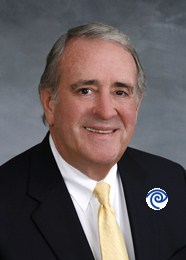
The Dishonorable Senator from Time Warner Cable: David Hoyle’s Disgraceful Exit from Public Service

Sen. David Hoyle (D-Time Warner Cable)

After 18 years representing the people of Gaston County, N.C., Senator David Hoyle closed out his ninth and final term in the North Carolina Senate with a disgraceful admission:  He allowed the state’s largest cable company, Time Warner Cable, to draft legislation in his name to thwart competition and allow skyrocketing cable and broadband bills for his constituents.  Worse yet, he admits he’s proud he did it.

Hoyle, who calls himself a “pro-business Democrat,” ignored his own constituents’ interests when he introduced legislation earlier this year that would effectively curtail municipal broadband projects across the state from providing enhanced broadband at significant savings for residents.

Stop the Cap! has covered Hoyle’s water-carrying for the cable and phone companies since he announced his pro-cable legislation and accompanying municipal broadband moratorium.  Our regular reader Tim sent word Hoyle blurted out whose interests he really represented on a Charlotte TV newscast last week.  Not having to answer to voters in a future election gave Hoyle remarkable courage to tell viewers he carried more water for Time Warner Cable than Gunga Din:

When the I-Team asked him if the cable industry drew up the bill, Senator Hoyle responded, “Yes, along with my help.”

When asked about criticism that he was “carrying water” for the cable companies, Hoyle replied, “I’ve carried more water than Gunga Din for the business community – the people who pay the taxes.”

Evidently Hoyle forgot his constituents pay taxes too, along with ever-increasing bills from Time Warner Cable.  With Hoyle’s help, North Carolina’s phone and cable companies hoped to limit competition, guaranteeing future rate increases and higher bills — a Hoyle Tax that consumers across the state would pay indefinitely.

Last December, Hoyle was more high-minded when announcing his imminent retirement from office:

[…]Having had the honor and privilege to serve my community and state in every way that has been asked of me, beginning 45 years ago as mayor of Dallas, it is now the time and the season to welcome the next phase of my life.

After much thought, I have made the difficult decision not to seek re-election to the Senate. While I will not seek re-election, please be assured that I will serve the rest of my term with the same diligence, dedication and integrity with which I have served from my first election. Public service has always been a central part of my life and my commitment to our community and our state remains strong.

Hoyle’s actions prove that his diligence, dedication, and integrity only extend to the businesses that heartily supported him while in office.  That pact protected each others’ interests while trampling yours.

Despite Hoyle’s dogged efforts to place a moratorium on municipal broadband projects in the state, even going as far as to suggest fiber was “obsolete,” several of his colleagues thought better and blocked the attempt.

For consumers in Salisbury, not too far from Charlotte, the good news is fiber optic broadband will outlast memories of a  senator working at the behest of the cable industry.

Fibrant, the city-owned fiber broadband provider, will commence beta testing of its new service in September.  It will deliver broadband service 10 times faster than that offered by Time Warner Cable and AT&T U-verse at highly competitive prices.  Standard 15Mbps service — upstream and downstream — will cost 10 percent less than the competition’s slower services.

Salisbury has spent $50 million to construct the network using bond money that will be paid back from revenue earned by the system.

For Hoyle, spouting traditional industry talking points, that’s a recipe for disaster.  Considering Hoyle raked in substantial contributions from Time Warner Cable, Sprint/Nextel PAC, and telecom lobbyist Parker, Poe, Adams, and Bernstein PAC, among others, voters may wonder whether Hoyle’s anti-municipal broadband declarations were also written by the telecom industry.

Opponents like Hoyle declare earlier municipal broadband efforts have been financial failures for cities.  If so, why the industry fulminates about such “failures” that would hardly threaten them is more than a little curious.

Other opponents claim government cannot do anything right, so they should stay out of the private sector cable business.

This "financial failure" in Dalton, Georgia has cornered 70% of the residential market offering superior service, and keeps $1.5 million in monthly revenues at home in northwest Georgia.

Yet residents in decidedly red-state Dalton, Georgia had more than enough of their free market cable system — Charter Cable.  The community of 38,000 supported a move in 2003 by Dalton Utilities to build a publicly-owned alternative.  They couldn’t install service fast enough, and today Dalton Utilities’ Optilink brings in $1.5 million in revenue every month which stays in Dalton.  The local government option today reaches nearly 70 percent of the residential market and last week was voted 2010 #1 Internet Provider in the Daily Citizen’s Readers’ Choice Awards for the third year in a row.

Opelika, Alabama also rejected the “government can do nothing right” talking point in a referendum to support a fiber to the home network for their community as well.

In reality, although no government is perfect, Americans do trust local government to provide safe drinking water, put out fires, and arrest criminals — all incredibly vital services.  As broadband increasingly joins electricity, gas, phone and water as an essential utility, providing it at unregulated monopoly pricing just isn’t going to cut it any longer.

Hoyle has a future as a paid mouthpiece for the industries he befriends, but more importantly, he’s represents s a teachable moment.  The next time an elected official scoffs at the notion he’s bought and paid for by the companies who write him generous campaign contribution checks, just remember Senator David Hoyle… North Carolina’s first senator from Time Warner Cable, but almost certainly not the last.

[flv width=”432″ height=”260″]http://www.phillipdampier.com/video/WCNC Charlotte Salisbury to test fiber-optic cable system 8-24-10.mp4[/flv]

WCNC-TV in Charlotte got Sen. David Hoyle’s remarkable admission that Time Warner Cable wrote the bill he introduced to stop cable competition for North Carolina consumers.  (3 minutes)

Big Telecom Associates With Overheated, Industry-Backed Bloggers to Stop Reform

from: Progress & Freedom Foundation website

Wendy

Pro-broadband reform groups continue to hit the telecommunications industry’s last nerve.  While the fight for more expansive broadband and Net Neutrality continues, some providers and their water-carrying friends are pulling out all the stops to keep broadband under the firm grasp of a phone and cable duopoly.  Both will say or do just about anything along the way to stop consumer-friendly reform.

Say hello to Mike Wendy.  He’s made it his personal mission to “expose” groups promoting broadband reform as “radicals” and “hardcore entrenched lobbyists.”  Using rhetoric that will resonate with angry talk radio listeners, Wendy is convinced broadband policies that enforce the public interest and Net Neutrality are akin to a Marxist takeover.  While Wendy calls on good Americans like himself to man the barricades protecting AT&T, Verizon, Comcast, and Time Warner Cable, he just doesn’t have time to mention he happens to work for a special interest group funded by Big Telecom.  Maybe it slipped his mind?

Wendy’s ironically named “Media Freedom” blog is chock full of attacks on “Free Press and the radical media reformistas [sic].”  Special guest stars include Venezuela’s Hugo Chavez, Marxism, collectivism, and a whole slew of rhetoric that ultimately tells readers efforts to enact broadband reform are little more than a grand socialist conspiracy.

A real grassroots campaign is run for and by consumers. An astroturf campaign is bought and paid for by corporate interests to push their own agenda.

His visitors’ enthusiasm for such accusations might be diminished a tad had Wendy prominently disclosed his day job: Vice President of Press & External Affairs at the Progress & Freedom Foundation, a “think tank” that ingests money from Big Telecom and then spews forth their talking points.  Among the backers: AT&T, Comcast, the National Cable and Telecommunications Association, Time Warner Cable and Verizon.

That takes the wind out of the proclamation that Media Freedom is a bulwark against those who “threaten to quash speech and economic freedoms.”  Wendy isn’t working for Big Government.  He’s working for the interests of AT&T and Comcast.

Many of the companies supporting the Progress & Freedom Foundation have a vested interest in maintaining today’s barely-competitive broadband marketplace, avoid oversight, and stop reform regulation and legislation dead in its tracks.  They want Progress only on their terms and the Freedom to do whatever they please.

The real chutzpah moment came when Wendy claimed pro-consumer groups like Free Press and Public Knowledge were the ones running high-powered lobbying campaigns.  That’s a pot to kettle moment to behold, especially considering who paid to print Wendy’s business cards.  From a recent blog post:

The “public interest” lobby makes itself out to be the tireless, country-poor underdog for the downtrodden consumer.  But don’t be fooled.  In the technology space, three such groups – Public Knowledge, Media Access Project and Free Press – have few rivals.  Their humble appearance belies their take-no-prisoners, oftentimes shameless, below-the-belt approach to public policy formation and gamesmanship.  How do they do it?  They use all the tools, and then some, to make them every bit as sophisticated as the largest companies they’re trying to undermine.

Shameless and “below-the-belt” might better define Wendy’s last job: “Director of Grassroots” for the United States Telecom Association, a job title that literally defines astroturf-in-action. Who is on the board of USTA?  Among others, corporate executives and lobbyists for AT&T, Verizon, Qwest, and two members who shouldn’t be able to afford the annual dues considering their employers went bankrupt — Hawaiian Telcom and FairPoint Communications.

Wendy’s line of thinking is evident soon enough from his blog’s tag cloud, a regular cocktail of conspiracy:

The ironically named "Media Freedom" blog isn't media and its freedom is limited to carrying water for the nation's largest telecom companies.

  • Al Franken (the broadband industry’s ‘Boogie Man’)
  • Cyber-Collectivist (the secret link between broadband and Jean-Jacques Rousseau)
  • Fairness Doctrine (guaranteed to perk up the ears of any conservative talk radio fan wandering through)
  • First Amendment (for corporations)
  • Freedom (for said corporations to abuse your wallet)
  • Free Speech (for corporations)
  • Hugo Chavez (the go-to-guy for lazy smear-by-association rhetoric)
  • Marxist (chalkboard time)
  • New Deal (broadband users sure want one)
  • … and redistributionism (something overheard at the last session of the “Communications Comintern?”)

The rhetoric is two parts AT&T to one part 1970s Radio Tirana, Albania.  A Glenn Beck swizzle stick labeled “Marxism” is included to stir the overheated rhetoric into a hot mess for Verizon and the cable lobby.

All of the “isms” aside, we’ve created a convenient, handy-dandy chart you can use to see which team Wendy and his group really supports:

Distinctions With a Difference – A Telecommunications Issue Checklist

Issue Reform Groups Big Telecom “Media Freedom”
Universal Service Mandate – Service for Everyone At a Fair Price Favor Oppose Oppose
Speed Throttles/Network Management That Favors Premium Content Oppose Favor Favor
Net Neutrality Favor Oppose Oppose
Reduce Concentrated Ownership of Media/Telecom Favor Oppose Oppose
Allow Cable Customers to Pick, Choose, and Pay for Their Own Channels Favor Oppose Oppose
Public Interest Mandates for Local Radio & Television Favor Oppose Oppose
Usage Limits/Internet Overcharging Mostly Oppose Favor Favor
Source for “Media Freedom” views: The Battle for Media Freedom

Time Warner Cable Tries to Control Online Video Onslaught With iPad App to Manage Your Cable TV

Phillip Dampier August 17, 2010 Broadband "Shortage", Data Caps, Online Video, Video 2 Comments

Time Warner Cable faces an increasing number of subscribers cutting their cable television service off, choosing to watch their video entertainment online.

Now the nation’s second largest cable company is trying to mitigate the potential damage with a series of new applications designed to bring cable television and your computer, cell phone, and iPad together.

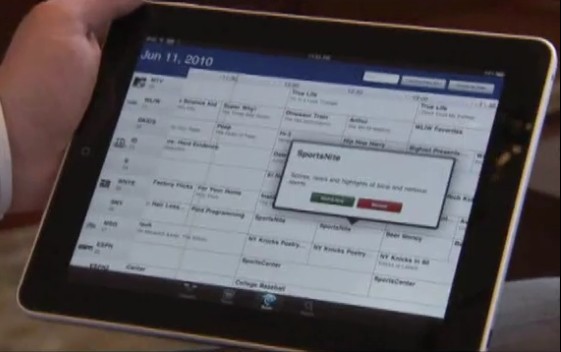
Time Warner is getting started with the iPad, developing an application that will help cable subscribers remotely control their DVR cable box to record and manage programming.  Away from home and want to scan a program guide and record an upcoming show?  The new app will let you do it.  Need to grab some video on-demand from Time Warner?  Not a problem.  You can even start watching on your iPad and pick up where you left off from your home.

Integrating the many devices consumers use as part of their daily lives with cable television could bring the cable viewing experience back front and center among at least some subscribers.  That reduces the chance customers will decide they can do without cable TV.  Since most of Time Warner Cable’s on demand library will only be available to current cable subscribers, cutting cable’s cord also means an end to online on-demand viewing of cable-licensed programming.

Time Warner Cable's prototype iPad app

Time Warner Cable CEO Glenn Britt has repeatedly emphasized his interest in delivering cable services the way customers want, and claims the new generation of applications on the way from the cable company will provide just that.

Although Time Warner will start with the iPad, the application will quickly become available for the iPhone and iPod Touch series.  Additionally, versions for other smartphones as well as portable and home computers will soon follow.

Ironically, this integration process could drive data volumes on Time Warner Cable’s broadband network to new heights.  Video streaming alone will dramatically increase traffic.  Yet the same company that is ready and willing to provide these bandwidth-intensive services also complained about existing broadband customers “using too much” of their existing broadband service.  In the spring of 2009, the company sought to implement a 40GB usage limit on some its broadband customers and charge up to three times more — $150 a month for unlimited access.  At the time, Britt and other company officials blamed the burden of online video and other usage-intensive applications for spiking the demand on their network.

Customers may wonder whether Britt’s new enthusiasm for online video means he recognizes their network has plenty of capacity to support unlimited access or is looking for a new excuse to justify a return to Internet Overcharging schemes.

[flv width=”640″ height=”500″]http://www.phillipdampier.com/video/Time Warner Cable iPad App.flv[/flv]

Time Warner Cable CEO Glenn Britt, CTO Mike LaJoie, VP of Web Services Jason Gaedtke and Director of Digital Communications Jeff Simmermon ponder their prototype iPad app and discuss the implications of integrating cable TV with other electronic devices.  For Time Warner Cable, it’s a matter of preserving cable TV subscribers who might contemplate cutting the cable TV cord and watching everything online.  (13 minutes)

Time Warner Cable Introduces DOCSIS 3 Speed Upgrades for Rural Upstate New Yorkers

Phillip Dampier August 4, 2010 Broadband Speed, Data Caps, Rural Broadband 1 Comment

Rural upstate New Yorkers can now obtain far faster broadband service as Time Warner Cable continues to expand DOCSIS 3 speed upgrades everywhere in New York… except Rochester.

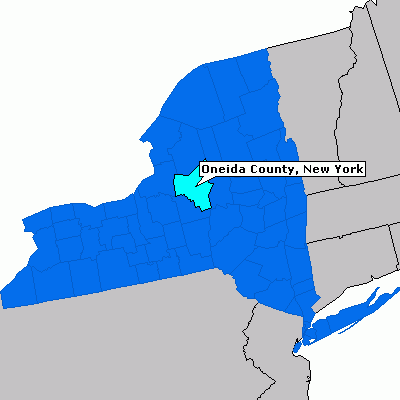
Time Warner’s “Wideband” Internet service offering up to 50/5Mbps service became available this week for the 11,000 residents of Oneida, who have joined cities as large as New York and as small as Utica and Watertown in getting the cable company’s fastest possible broadband speeds.

Ironically, the most significant city in New York still off the upgrade list is Rochester, the city with New York’s second largest economy and home to more than one million residents across the region.  Rochester was the city Time Warner Cable tried to use in New York for its 2009 test of Internet Overcharging schemes, claiming the usage limits would put Rochester high on the upgrade list for broadband expansion.  While other cities in New York never faced the prospects of usage limits and overlimit fees, they have all managed to obtain upgrades residents of the Flower City have yet to receive.

“Since we introduced Wideband earlier this year in Syracuse and throughout Central New York, customers looking for extra online speed have embraced our new service and its many benefits,” Henry Pearl, Area V.P. of Operations told the Oneida Daily Dispatch. “In addition to blazing-fast speeds, those benefits include shared wireless for multiple users through home networking, backed by our years of experience and dedicated, local customer service.”

Wideband service offers 50/5Mbps service for $99.95/month or 30/5 Mbps service for $69.95/month.

Already available in New York City, Buffalo, Syracuse, Albany, Utica, and Watertown, Wideband will also be available in Binghamton as well as the New York counties of Tompkins, Jefferson and Cortland by fall.

Search This Site:

Contributions:

Recent Comments:

Your Account:

Stop the Cap!