Home » time warner cable » Recent Articles:

Reviewing Time Warner’s ‘Whole House DVR’: Evolutionary, Not Revolutionary

Phillip Dampier February 15, 2011 Consumer News, Editorial & Site News, Video 22 Comments

Time Warner Cable’s “Whole House DVR” service has arrived on the east coast, and it’s no longer only available to the company’s super-premium customers.  Now every subscriber in Maine, Massachusetts, New Hampshire, New Jersey, New York, North Carolina and South Carolina can get the service without signing up for a $200 monthly service package.

The service’s biggest selling feature is the possibility of starting a recorded show on one television and picking up where you left off on another — perfect for late night viewing that continues in the bedroom before nodding off.  By networking set top boxes to communicate with one-another, customers are no longer tied down to a single television set watching their recorded shows.

The cable company is a bit late to the party.  Verizon FiOS, AT&T’s U-verse, and even satellite providers like DirecTV have offered this functionality for a few years now, but for customers who can’t or don’t do business with those rivals, it’s a nice addition to the company’s offerings.

But how well does it work?  Stop the Cap! found out after having our existing DVR boxes switched out for the new service last week.

Time Warner currently sells the service at different price points.  Bundled customers, especially those buying the company’s expensive Signature Home package for nearly $200 a month, will find the service included in their package.  Customers with bundles of services can upgrade their existing DVR units to Whole House service for just a few dollars more.  Standalone customers will spend $19.99 per month for the service, which includes the DVR box.  (Additional set top boxes on other televisions are provided at the usual rental price, around $7 a month.)

[flv width=”480″ height=”380″]http://www.phillipdampier.com/video/TW Cable Whole House DVR.flv[/flv]

Time Warner Cable’s promotional video introducing Whole House DVR service.  (1 minute)
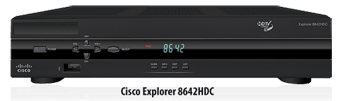
The cable company is deploying different boxes in different areas.  You will end up with the Cisco Explorer 8642HDC, the Motorola DCX3400M or the Samsung SMT-H3272.  These boxes replace any existing DVR equipment already installed, so be prepared to lose your recordings when you upgrade — they cannot be transferred.

Time Warner requires a service call to upgrade your service for the new Whole House DVR.  That’s because the company must install new filters on your cable line which block signals that can interfere with the boxes.  Time Warner uses the Multimedia over Coax Alliance (MoCA) home networking standard.
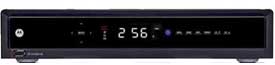
Motorola DCX3400M

In our area, the favored box is the Cisco unit.  It’s larger than its predecessor — the Scientific Atlanta 8300,and has an updated look.  The older box was silver in color.  Today’s look demands basic black and the 8642 delivers.  Heat dissipation was obviously a major concern for Cisco, and the box is well ventilated, and even carries a fan, about the size of a CPU.  Hard drive failure is the single most common reason for DVR problems, and a spinning hard drive often throws off considerable heat.  Stacking boxes together in an enclosed home entertainment center cabinet eventually spells doom for many DVR units.  Hopefully, the improved ventilation will reduce those failures.

Capacity has also been an ongoing concern for DVR users.  The hard drives in most traditional DVRs were designed to accommodate standard definition cable programming, not today’s world of HD channel choices.  Time Warner has dramatically beefed up capacity offering Whole House DVR service with 500GB of storage — a major improvement over earlier boxes.  The company says this should allow customers to record up to 75 hours of HD programming.
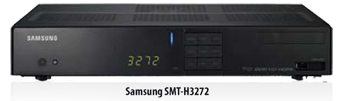
After Time Warner installed the necessary filters, checked line quality, and verified where we wanted the boxes placed, in came the new equipment.  In addition to the 8642 DVR box downstairs, an accompanying “client” set top unit replaced the existing box we had in the bedroom.  The client boxes are similar in style to the DVR, but considerably smaller.  Time Warner will install the Cisco Explorer 4642HDC, Motorola DCX3200M or Samsung SMT-H3262 on any television where you want to watch your recorded shows.

After installation is complete, Time Warner adds the set top equipment to your account and that authorizes the service.

Recording and watching shows will be very familiar if you have used DVR service from Time Warner before.  Recordings are accessed from client boxes just as if you were in front of a traditional DVR box.

Basic Whole House DVR service allows customers to record two shows at once while also watching a recorded show.  If your home needs additional recording capability, you can obtain additional equipment that will let you record four shows at the same time for an additional charge.
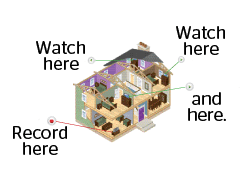
Overall, everything about the service feels evolutionary, not revolutionary.  Time Warner is simply extending the DVR service to additional televisions in the home without the need for DVR equipment on every set.  Taking shows with you from room to room is by far the biggest selling point of Whole House DVR, but it carries a price.  What originally began as a $9.95 add-on for DVR service is quickly getting more costly.  Two rate increases just a few years apart have upped the price for traditional DVR service to $11.95 per month, and now Time Warner is breaking the cost of the recording service out of the price to rent to equipment.  That means you can expect to pay up to $20 a month for DVR service, plus additional rental fees for every additional box in the house.  Packaged bundles can bring those costs down, and asking about special deals and offers before signing up can make a major difference in price.

One thing we do expect in the future: additional leveraging of MoCA technology, which can support far more than just multi-room DVR service.  This technology can handle multiple simultaneous HDTV, SDTV, DVR, data, gaming, and voice streams. It can support up to 1 Gbps home networks and is consistent with DLNA, CableHome, UPnP™ Technology, and 1394.  That means applications like multi-room gaming, or delivering all of your home entertainment system streams across a single coaxial cable is possible.  That could eventually challenge Ethernet cabling common in many newer homes, if improvements in wireless don’t make the very concept of cables obsolete.

What Works

  • The service works consistently to record programs as requested, with no missed shows or failures;
  • We were able to consistently access recorded shows on the unit with no pixels or glitches when playing them in full;
  • The Cisco box remembers where we left off when we partially view recorded shows, for every show. This is an excellent new feature;
  • There is plenty of recording space to handle today’s HD viewing choices;
  • The box is virtually silent. We never heard the hard drive or any cooling fans, something we could not say about the earlier generation of DVR boxes;
  • The menu options now let us consistently watch standard definition channels in “stretch” mode on our television without fussing with the picture settings;
  • On demand channels are far more fluid and responsive, especially when accessing shows or flipping channels between them.

What Sort of Works

  • Playback functions on client boxes are sloppy. Fast forward and rewind functions are imprecise at best;
  • 4x fast forward and rewind functionality is gone;
  • We found an inexcusable audio thumping sound present all-too-often during fast forward and rewind functions on client boxes;
  • The ponderous Navigator software remains as awful as ever. Intuitive design is lacking, navigating through the on-screen program guide is torture, and managing and finding new shows to record is tedious. When will cable companies simply give up their bad designs and license Tivo?
  • Remote recording through Time Warner’s MyServices website or from smartphone applications remains an inconsistent possibility. All too often this service is unavailable, and we found repeated instances when requested shows simply refused to be registered for recording. This remains “beta”-ware;
  • If one of your cable boxes crashes, it can mess up your in-home viewing network. Boxes can sometimes become “de-registered” and forgotten by the primary set top DVR box.

What Doesn’t Work At All

  • You cannot manage recordings on client boxes. That means you cannot delete old shows or schedule new ones unless you are in front of the DVR box;
  • You cannot attach external storage devices to the Cisco set top box we tested, at least not yet. It appears add-on expanded storage, which can increase your recording capacity, is presently disabled;
  • Our earlier DVR, the Scientific-Atlanta 8300, recorded several seconds before a recording was scheduled to begin, to make sure the start of a show was not cut off. The 8642 does not do this, so many shows we’ve recorded miss the first 10-20 seconds of the program;
  • Multiple DVR homes do not benefit from the ability for one box to pick up recording a show if another is busy or full. This elegant add-on would be a real convenience;
  • Rogers Cable customers in Ontario report their boxes do allow external add-on storage, but programming recorded on external hard drives cannot be accessed from client boxes;
  • The equipment remains expensive. Canadians can purchase this equipment for under $400CAD, while Time Warner customers will pay rental fees… forever.

[flv width=”640″ height=”500″]http://www.phillipdampier.com/video/MoCA DVR Installation.mp4[/flv]

Learn more about how MoCA-enabled services like Whole House DVR are installed in this video from the MoCA Alliance.  Ignoring the appalling acting, reminiscent of one of those late night movies on Cinemax where clothes start to come off, the video closely mirrors how our own installation went.  (7 minutes)
Escaping Canada’s Expensive Broadband With Wi-Fi Across the Niagara River

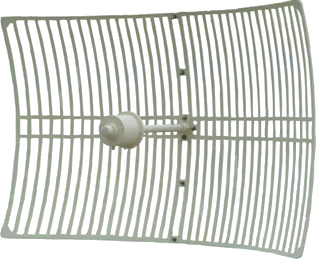
High gain Wi-Fi antennas like this one allowed one Ontario couple to leave Canada's cable companies behind and sign up for Time Warner service in the United States.

Last week, Stop the Cap! compared prices from two Internet Service Providers — Rogers Communications on the western side of the Niagara River — in Ontario, and Time Warner Cable on the eastern side in Niagara Falls, N.Y.

The price disparity is no secret to one Canadian family who read our piece and let us know they import their broadband service, thanks to long distance Wi-Fi, from the United States.

The couple, Neil and Michelle (we’ve been asked not their reveal their real names) and their three boys have lived along the Niagara River, which divides the United States and Canada, for over a decade.  Jim has been fascinated with low power, long distance communications since his days in amateur radio.

“I’ve always been trying to see what stations I can pick up, especially low power ones,” Neil tells us.

That curiosity came with Neil to his interest in broadband wireless communications.  Living along the river, Neil was fascinated to see Wi-Fi signals make their way across the river from the United States’ side.

“Thanks to a clear shot across the river, and a lot of businesses located adjacent to the Robert Moses Parkway, it’s easy to pickup Wi-Fi signals from businesses on the American side,” says Neil.

Neil discovered many networks wide open for public use and began to consider the implications of “importing” his broadband service from the United States to escape Rogers’ high prices.

“For Canadians, the idea of escaping the country’s communications providers is not that unusual,” Neil says.  “Some already have ‘gray market’ satellite dish accounts with America’s DISH or DirecTV, and some even use American prepaid cell phones, which are much cheaper than our own services and get good local reception across Niagara Falls down to Fort Erie.”

“So I began wondering what would happen if we could install a decent Wi-Fi system high enough on the house to get a good signal from a partner on the other side of the river,” Neil pondered.  “We started by putting a test signal up and driving through some Niagara Falls neighborhoods on the American side and found some good prospects.”

A long-shot advertisement on a well-known “for-sale/trade” website paid off, when an American family responded, intrigued by the experiment.

“The fact we were willing to pay their cable bill as compensation didn’t hurt either,” Neil suggests.  “The chances appeared very good for success, because we can see some of their trees from our roof.”

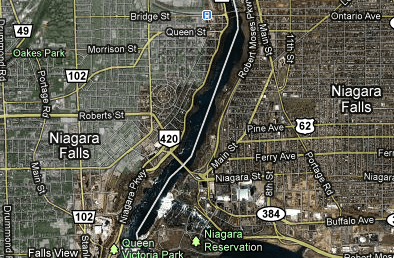
Niagara Falls, Ontario (left) and Niagara Falls, N.Y. (right), divided by the Niagara River.

Neil guessed right because today, with the help of two raised directional, roof-mounted high-gain Wi-Fi antennas that can literally “see” one another, the Ontario family enjoys its cable-TV and broadband service from Time Warner Cable.

“The signal is rock solid and the only time we get some speed problems is if someone in one of the bed and breakfast places nearby ends up on our channel,” Neil says.  “We can even watch television with the help of a Slingbox we installed on the American side which works perfectly fine on a Wireless N connection.”

Since the rise of Canada’s exchange rate against America’s declining dollar, the savings are dramatic. A comparable cable-TV plan with Rogers runs $80 a month for standard service, equipment fees, and HD service charges.  Add another $50 for broadband service with the modem rental fee and Neil would pay Rogers $130 a month before taxes for the two services.

“And we would be limited to just 60GB of usage per month before the $2/GB overlimit fee started making the bill even higher,” Neil says.

Time Warner Cable currently charges Neil’s adopted family $87 a month for television and broadband on a promotion.

Today, Neil’s conscience (and savings) led him to decide “borrowing” another family’s account wasn’t fair, so now he pays for -two- accounts with Time Warner, one for the New York family, the other belonging to him.

“Time Warner thinks of us as apartment renters and bills a post office box,” Neil says.  “The other family doesn’t care about cable-TV anymore so we’re just paying for their broadband account.”

The neighbors are certainly amused.

“When they come over, they call us ‘the American Embassy in Niagara Falls’ because of all the ads for Time Warner they see across the cable channels we get and because American cable systems ignore virtually all Canadian TV networks.”

Why go through all this?

“Now that we’re paying for two accounts, it’s a matter of principle,” Neil says. “I will not do business with a company that slaps usage limits on broadband, and now I don’t have to.”

In fact, now that the family’s sons are getting close to teen years, their Internet use is growing.

“We almost don’t care about the cable-TV anymore ourselves — we’re watching shows online, on-demand in this household,” Neil says.  “For my kids, they are growing up with the concept of television being always on-demand and it works around their schedule, not the other way around.”

Besides, Americans have access to Hulu, and Canada does not.

“Hulu is very important, and Netflix was even before it was sold in Canada,” Neil says.  “Now we can watch what we want, as much as we want, and pay a fair price for unlimited broadband.”

Neil can’t complain about Time Warner Cable, except for the fact it provides him with a U.S. IP address, which locks him out of a lot of Canadian online video-on-demand services from the CBC and other networks’ websites.

“They do a much better job than Rogers ever did with consistent broadband speeds and fewer outages, and we can live without replays of 18 to Life and Little Mosque on the Prairie,” Neil says. “I’m just glad you folks at Stop the Cap! convinced Time Warner to abandon the kind of pricing that is ruining the hell out of Canada’s broadband.”

Comparing Broadband Prices: Niagara Falls, Ontario vs. Niagara Falls, NY

Phillip Dampier February 2, 2011 Broadband Speed, Canada, Competition, Consumer News, Data Caps, Rogers 1 Comment

Despite claims from Canadian Internet Service Providers that Internet Overcharging schemes like “usage-based billing” are about pricing fairness, paying for what one uses, and keeping prices down, comparing broadband prices across the west and east sides of the Niagara River tell a very different story.

We went shopping for the lowest possible prices for standalone broadband service from two cable companies serving the Niagara Falls area, on both sides of the border.

Here is what we found (prices roughly equivalent in CAD/USD at today’s exchange rate of $1US = $0.99CAD):

Niagara Falls, N.Y. — Time Warner Cable

$34.95/month


Road Runner Standard Service: 10/1Mbps
No Usage Limit
No Overlimit Fee
No Modem Rental Fee
No Contract Commitment

Niagara Falls, Ontario — Rogers Communications

$39.00/month

Rogers Express Service: 10Mbps/512kbps
60GB Monthly Limit with $2/GB Overlimit Fee
$14.95 Installation Fee
One Year Contract Required
(Price above reflects a one-year promotion that includes the monthly Home Gateway Rental ($4.50 value) for one year, $5.50 per month thereafter, effective 3/2011)

The $46.99 price noted above reflects regular Rogers pricing, before the modem rental fee.

Wi-Fi Ripoff? NYC Parks Hand Over Wireless Space to Time Warner and Cablevision

NY City Council members are reviewing an application by Time Warner Cable and Cablevision to offer Wi-Fi services in 32 New York-area parks… for a fee that could bring the companies as much as $10 million dollars a year in new revenue.

The controversial proposal would frustrate efforts by the nonprofit group NYCWireless to find free Wi-Fi providers to deliver service in New York’s public parks.

In September, the city of New York renewed franchises for both Cablevision and Time Warner Cable that included a commitment to spend $10 million to install Wi-Fi service in area parks.  But nobody said the companies had to provide the service for free.

Instead, users will only get free samples — up to three ten-minute sessions per month.  Additional time on the network will cost 99 cents per day.  Cable customers will get unlimited access for free.

Dana Spiegel, executive director of the nonprofit NYCWireless, says handing over the wireless space in public parks to private fee-based providers is “absolutely unconscionable.”

City council members don’t have a final say over the deal — a state commission does — but intends to investigate the deal and its fairness to New York residents.

Verizon FiOS has a growing presence in New York City, and those customers would be locked out of free Wi-Fi access on the proposed park network.

NYCWireless offered the council several reasons why relying on cable companies to deliver public park Wi-Fi was not a great deal:

First, the plan does not establish any form of “Free Public Wi-Fi”, an amenity of New York City parks since NYCwireless began our work, and one replicated by the Parks Department and many other organizations around the City. Free Public Wi-Fi Hotspots were a very significant recommendation of the Diamond Consulting “Broadband Needs Assessment Study,” and the “Free” part of these public hotspots are exactly the part of these amenities that make them so valuable and essential for local residents.

Make no mistake: DoITT’s plan establishes a $1 per day fee for internet service in parks. There may be a few free 10-minute blocks per month, and there may be ways to hide the $1 per day charge in a resident’s cable service internet bill, but with DoITT’s plan, NYC won’t have Free Wi-Fi. We’ll have $1 per day Wi-Fi, delivered to public spaces that are maintained by our tax dollars, paid to a couple of huge private corporations.

In fact, Cablevision and Time Warner Cable stand to make tens of millions of dollars per year providing this service. Central Park gets about 25m visitors per year, and if we ignore all other parks, and figure that fewer than half of those visitors buy one day of internet service per year, Time Warner Cable and Cablevision get paid $0.99 x 10 million visitors = $10,000,000.

Second, the industry standard for gaining access to such types of subscription service as are contemplated by DoITT and the cable companies requires that a prospective user of a fee-based Parks Hotspot will need to create an account and enter their billing information. This requires the submission of identity, address, and credit card information into a web form prior to gaining access to the hotspot. Essentially, by promoting this solution, DoITT is pushing NYC citizens and visitors to hand over deeply personal and secure information to a private organization over which neither the user nor DoITT has any control.

Contrast this to the way that NYCwireless offers free Wi-Fi to citizens: we do require registration of a user account so that we can track agreement to our Acceptable Usage Policy. However we require only a valid email address. No billing address, no credit card, no other identity information.

Personally, I am fearful of handing over such information to such private organizations, though I have in the past. But I am more fearful for the harm that will be done to those that depend more significantly upon Park Hotspots. How many city residents don’t have a credit card? How many children in playgrounds who couldn’t get a credit card even if they wanted to? Adults? How many city residents live in neighborhoods that are otherwise safe, but in which they would prefer not pulling out their wallet and a credit card just to get what should be Free Internet Access? How many city residents depend upon Free Wi-Fi because they live below the poverty line, and because they can’t afford or don’t want cable internet, cannot afford the $5 it would cost them to get internet access in a city park during the week?

Lastly, because of DoITT’s “whole package solution”, most NYC residents and visitors won’t see any Wi-Fi, for free or for fee, for years, since local organizations that would otherwise have sponsored the creation of a Free Public Wi-Fi Hotspot say “oh, well, the city is going to do this someday, so we won’t bother doing this now for our community.” If past experience is any predictor of future performance, it will be years before the first Paid Wi-Fi Hotspot is opened, and many more before many others are opened, if at all. Meanwhile, DoITT’s actions will have stopped in its tracks any plans for more hotspots that local organizations may be contemplating.

[flv width=”640″ height=”500″]http://www.phillipdampier.com/video/NY 1 Time Warner Cable Offers Free WiFi Hotspots For City Customers 3-26-10.flv[/flv]

NY1 reported on Time Warner Cable’s expanded Wi-Fi hotspots in New York in this story from last March.  (1 minute)

Patent Trolls Want a Piece of Your Rising Cable Bill

Gertraude Hofstätter-Weiß February 1, 2011 Public Policy & Gov't Comments Off on Patent Trolls Want a Piece of Your Rising Cable Bill

A company claiming to own a broad patent covering ‘storage and retrieval playback systems’ has sued six large cable companies claiming they are infringing its patents.

Comcast, Time Warner Cable, Cox Communications, Bright House Networks, Charter Communications, and Cablevision have all been accused of violating patents that could cover their respective video-on-demand systems.

Pragmatus, whose website is “under construction,” acquired the patents from Intellectual Patents, which has extracted more than a billion dollars in licensing fees on broad-based general patents.  Law.com calls both firms “patent trolls,” because they exist largely to collect money from deep pocketed technology companies.

The lawsuit covers patents 5,581,479 and 5,636,139 which describe technology that uses “information service control points” that send blocks of data to remote stations.  That could cover just about any server.

As proof of infringement, the legal filing simply includes the URL’s of websites that promote video-on-demand services.

Many lawsuits eventually settle out of court quietly, with licensing deals that extract a portion of each subscriber’s monthly payment and send it on to companies like Pragmatus.

Harry Cole, who has dealt with these nuisance suits before, says they are a product of a broken patent system.

“[A patent trolls does] not produce anything. It does not sell anything bought or processed, nor does it buy anything sold or processed, nor does it process anything sold, bought or processed, nor does it repair anything sold, bought or processed … All the company does is speculate on patents, which it purchases on the secondary market in the hope that one such patent will hit it big.”

Search This Site:

Contributions:

Recent Comments:

Your Account:

Stop the Cap!