Home » time warner cable » Recent Articles:

“Mean and Nasty” Stop the Cap! Upsetting Time Warner’s Apple Cart in North Carolina

Community broadband networks deliver the best value and speed for North Carolina consumers and businesses

Word has reached Stop the Cap! that hundreds of e-mails and phone calls are pouring into Rep. Marilyn Avila’s (R-Time Warner Cable) office protesting her hard work on behalf of the state’s largest cable company.  We are being called “mean and nasty” by those supporting Avila’s anti-consumer bill, H.129.

Our answer to that: we are not “mean” or “nasty.”  We are fed up c0nsumers (and voters) who have serious concerns about certain state legislators who introduce bills custom-written by cable lobbyists to enact their business agenda into law.

These anti-community broadband bills have come year after year in North Carolina, despite the fact the state has an “also-ran” reputation as a broadband backwater, with tremendous room for improvement in broadband speed, price, availability, and choice of providers. The bills have also been nothing but trouble for those that have introduced them, alienating constituents and bringing them bad press:

Ty Harrell resigned his office in disgrace over financial irregularities, but he was already in hot water when he introduced his bill. We were stunned when his office staff literally handed the phone to a cable industry lobbyist sitting there to answer questions.  We held him accountable.

David Hoyle did not leave office at his finest moment either, openly admitting on television Time Warner Cable wrote the bill he introduced.

This year, it’s Ms. Avila, who repeatedly promised to hold existing community-owned networks harmless by exempting them from the draconian, project-killing legislation she has proposed.  But after closed door meetings, we learned those promises were hollow.  The words of her bill may have changed, but the results are exactly the same — she is micromanaging community networks into insolvency (while exempting the companies that wrote the bill she introduced).

The unanswered, critical question every legislator needs to ask is: How does H.129 improve North Carolina’s dismal broadband ranking and deliver improved service?
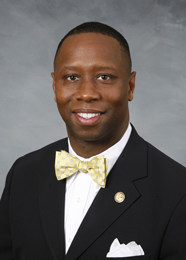
The former Rep. Harrell

The answer is, it does nothing.  Not only does it ignore the chasm of low quality service prevalent west of Charlotte and north of Winston-Salem, it specifically erects roadblocks to keep any community from trying to resolve a situation they’ve dealt with for years and years.  Ask any rural community’s leader if they’ve heard from constituents upset by the unavailability or quality of broadband in their area and you will get an earful.  The truth is, had the cable and telephone companies in the state had a real interest in providing 21st century service to these communities, they would have already done it.  With H.129, they can rest easy knowing nobody else will try.

This is not an auspicious position for Ms. Avila to take.  She ran for office upset with backroom deals, insider political maneuvering, and closed government.  Reviewing her campaign platform, the one thing she emphasized time and again was her promise to bring “open government” to the people in her district, just north of the state capital.

Where is the open government on H.129?  Nowhere to be found.

Stop the Cap! would have loved to include the complete video record of the first meeting to modify her bill to protect incumbent providers.  Only there is no video record.  The meeting was held behind closed doors, and it took a source to reveal details about how the cable and phone companies ran it as their own.  It’s the epitome of the kind of back-room deals Ms. Avila railed against in her campaign.

Considering the results, we can understand why the meeting was secret.  The cable lobby understands full well the power of sunshine’s disinfecting power.  Shining a bright light on the cozy connection between legislators and the companies whose interests they brazenly represent tells a story they do not want the voting public to hear.

Unfortunately, it gets worse.  We’ve learned Ms. Avila plans to bring H.129 to a vote in the Finance Committee as early as this Thursday, with no public discussion allowed.  Voters can be spectators of their own broadband demise, but they will not be allowed to say a word about it.  Meanwhile, certain members of the legislature have had plenty of time to meet repeatedly with cable and phone company lobbyists.

As we’ve seen time and time again, that lobbying campaign of disinformation tries to muddy the implications of bills such as these.

You cannot hear if you are not open to listening.

Legislators who may not understand what H.129 is really all about need to hear from the public and communities to understand precisely what they are voting for and what impact this legislation will have.  The ripple effects go far beyond just keeping Time Warner and CenturyLink free from pesky competition.

Neither company is truly harmed by community broadband networks.  In fact, both of them have thumbed their noses and shrugged their shoulders even in the presence of much larger competitive threats in their urban markets — Time Warner for the phone company and AT&T’s U-verse, which is available in limited areas.

The best thing Ms. Avila could do is withdraw her legislation because it simply is not in the best interests of North Carolina.  Barring that, she should do what she promised and specifically exempt ALL existing community networks in the state from the provisions of her bill.  At this point, that delivers a win to bondholders who will see their investment pay off, communities can continue to provide service to interested customers, and everyone else will continue to enjoy the benefits of lower rates these networks bring every telecommunications customer.

That’s common sense to everyone except the cable and phone companies that will stop at nothing to bury community-owned providers.

Where does your legislator stand?  If you have not made your feelings known to the members of the Finance Committee, time is running out.  Call and e-mail them and let them know you expect them to vote NO on H.129 when it reaches their committee this week.  We’re going to do our best to watch what may turn out to be another “voice vote” that prevents voters from knowing how individual members voted.  This time, we’ll be paying close attention to the lips and movements of individual committee members and take our own vote so we know who to thank and who needs to held accountable.

Finance Committee Members

(click each name for contact information)

Senior Chairman Rep. Howard
Chairman Rep. Folwell
Chairman Rep. Setzer
Chairman Rep. Starnes
Vice Chairman Rep. Lewis
Vice Chairman Rep. McComas
Vice Chairman Rep. Wainwright
Members Rep. K. Alexander, Rep. Brandon, Rep. Brawley, Rep. Carney, Rep. Collins, Rep. Cotham, Rep. Faison, Rep. Gibson, Rep. Hackney, Rep. Hall, Rep. Hill, Rep. Jordan, Rep. Luebke, Rep. McCormick, Rep. McGee, Rep. Moffitt, Rep. T. Moore, Rep. Rhyne, Rep. Ross, Rep. Samuelson, Rep. Stam, Rep. Stone, Rep. H. Warren, Rep. Weiss, Rep. Womble


Time Warner Cable Proves DOCSIS 3 Is A Winner for Everyone

Two years ago, when Time Warner proposed to limit consumption of consumer broadband accounts with an Internet Overcharging experiment, Stop the Cap! suggested they should instead upgrade their networks to meet the demands of their Internet-hungry customer base.

With thanks, they have taken our advice.  As DOCSIS 3 upgrades continue to roll across the cable company’s service areas, it is bringing immediate benefits to every Road Runner customer, and the company itself.

Several weeks ago, we shared the story of Time Warner customers in Webster, N.Y.  Time Warner had hopelessly oversold its broadband service in the growing town just northeast of Rochester.  Speeds plummeted to as low as 900kbps most evenings and weekends, and did not return to normal until most customers were back at their day jobs.

As a shared network, cable broadband delivers a limited amount of bandwidth into individual neighborhoods, shared by every customer.  When too many people pile on, speeds plummet.  When this happens, cable companies are supposed to either increase capacity, or more commonly divide a congested area into two or more parts, each served with their own broadband pipe.  In less densely populated towns, or where less net-savvy consumers tend to reside, capacity upgrades may come only once or twice over several years, and speeds are consistently fast day and night.  But where college students predominate, or where new housing developments deliver plenty of new upper-income homeowners more likely to leverage their broadband connections, the tell-tale evening and weekend slowdowns create problems.

A speedtest performed before the upgrade

“A good clue of overcongestion is when download speeds suffer, but upload speeds remain fairly consistent,” shares Prakash Patel, who consults with cable companies on HFC “cable” broadband deployment.  “Typically, if both speeds falter at different times of the day, that is usually a sign of a technical fault on one’s cable connection — not network congestion.”

For Stop the Cap! readers in Webster, the ongoing congestion made Road Runner virtually unusable during the evening and weekends, particularly for higher bandwidth applications like video or downloads.

Several of our readers filed complaints with the cable company and one took his case to the Better Business Bureau, who obtained a sympathetic response from Time Warner — but no immediate solution.  The Bureau accepted that explanation and “administratively closed” the complaint.

As we recommended, customers remained very vocal about the ongoing congestion problems in the town.  We’ve found the old adage, “the squeaky wheel gets the grease,” effective in moving upgrades higher up the list of priorities cable engineers deal with in maintaining their networks.

Original plans to deal with the problem were scheduled for late March, but Time Warner bumped the upgrade forward to this past weekend.  Instead of simply dividing up the town, Time Warner installed DOCSIS 3 technology, which greatly increases the size of the broadband pipeline available to customers.  The upgrade did the trick.

Our reader Tim shares the good news:

“I ran some speed tests Tuesday night and the improvement was very noticeable,” he writes.  “We were able to achieve speeds in the early evening that were previously only possible in the very early morning hours.”

Patel believes cable companies will continue to win a majority in the broadband marketplace using DOCSIS 3, which he considers an affordable and easy-to-deploy upgrade.

The results after the upgrade was completed.

“Not only is DOCSIS 3 relatively inexpensive, it provides plenty of new revenue opportunities for the companies that deploy it,” Patel says.  “It also fits well from an engineering standpoint, because it is an evolutionary update to a successful technology.”

Patel believes DOCSIS 3 and future versions of the cable broadband standard will allow operators to successfully compete, at least in download speeds, with virtually any provider.

“Cable companies can simply bond several channels together and accelerate download speeds,” Patel says.  “Upload speeds are proving to be a bigger issue, as most companies limit them to around 5Mbps.”

At least for now, customers in Webster are happy they are once again getting the service they paid to receive.  The upgrade solved the congestion issue for Time Warner, and the cable company plans to sell higher speed service to interested customers later this spring, earning new revenue to pay for the upgrades.

That’s a win-win everyone can appreciate — all done without an Internet Overcharging scheme.

More Broken Promises: Reps. Howard & Avila Renege and End Negotiations With North Carolina Cities

Phillip Dampier March 9, 2011 Community Networks, Competition, Consumer News, Editorial & Site News, Public Policy & Gov't, Rural Broadband Comments Off on More Broken Promises: Reps. Howard & Avila Renege and End Negotiations With North Carolina Cities

H.129 will insure rural North Carolina's broadband will resemble the backwaters of the Great Dismal Swamp.

Despite promises to protect North Carolina’s existing community-owned broadband providers, Reps. Julia “My Word is My Bond” Howard and Marilyn “I Do What Time Warner Tells Me” Avila have reneged and intend to ram through their anti-community-broadband bulldozer bill.

Stop the Cap! learned this evening that Avila has no intention of meeting with North Carolina communities again, even as resolutions continue to pile up in Raleigh condemning their special interest legislation.

Asheville and Rockingham County have joined the city of Raleigh issuing resolutions opposing H129 and are openly wondering why state legislators are so contemptuously overruling the interests of North Carolina communities for the benefit of out-of-state corporations.

The answer, clearly, is money.

Rep. Howard apparently answers to the interests of companies like AT&T, which has donated more than $1,500 to her campaign, CenturyLink — $4,000, and Time Warner Cable, which so far has shorted her with just $750.  It evidently doesn’t take much to influence a legislator these days, and we anticipate her telecommunications contributions will spike in the near future for a job well done.  That enormous contribution from CenturyLink is telling, considering they are not the primary phone company in Howard’s district.

As a result of the sellout, H129 will likely move to the Finance Committee as early as next Thursday, effectively unchanged from its original.  The implications for the state are staggering, particularly if it drives existing community networks out of business.  That will take the state’s bond rating with it.

Howard accepted $4000 from CenturyLink.

The sad part of all this is that both representatives were elected to serve the interests of their districts, and instead they are paying more attention to the well being of big cable and phone companies who honestly don’t need their help to earn enormous profits in the state.

While unserved communities and those stuck with dismal, antiquated DSL service have their pleas for better broadband ignored, Avila and Howard are doing all they can to sabotage the networks that do provide 21st century broadband to their residents.

With this kind of hostility, don’t look for Google to bring Gigabit broadband to the Tar Heel State anytime soon.  With all of the impediments and roadblocks these two legislators have thrown up on behalf of their friends at the cable and phone company, can Google expect to be treated any better?  The search giant even signed a letter strongly opposing H129, to no avail.

It’s not too late for Rep. Howard to prove us wrong.  She can turn this around in a second by demanding real exemptions for existing municipal networks — and I mean real exemptions, not the fake passes contained in the so-called substitute amendment.  Better yet, she can distance herself altogether from this disaster.

North Carolina residents must get on the phone and call Finance Committee members and tell them this broadband train wreck needs to stop in their committee with a resounding NO vote.

Let them know H129 will not only deliver years of sub-standard broadband service in the state, it will also ruin two showcase fiber networks, harm the state’s bond rating, and make North Carolina an also-ran in broadband innovation.

At a time when the state needs to move towards digital economy jobs, thumbing your nose at the likes of Google, Alcatel-Lucent, and Intel is a giant mistake — adding insult to injury to the potential loss of community broadband networks the cable and phone companies will stop at nothing to eliminate.

Finance Committee Members

(click each name for contact information)

Senior Chairman Rep. Howard
Chairman Rep. Folwell
Chairman Rep. Setzer
Chairman Rep. Starnes
Vice Chairman Rep. Lewis
Vice Chairman Rep. McComas
Vice Chairman Rep. Wainwright
Members Rep. K. Alexander, Rep. Brandon, Rep. Brawley, Rep. Carney, Rep. Collins, Rep. Cotham, Rep. Faison, Rep. Gibson, Rep. Hackney, Rep. Hall, Rep. Hill, Rep. Jordan, Rep. Luebke, Rep. McCormick, Rep. McGee, Rep. Moffitt, Rep. T. Moore, Rep. Rhyne, Rep. Ross, Rep. Samuelson, Rep. Stam, Rep. Stone, Rep. H. Warren, Rep. Weiss, Rep. Womble

Time Warner Cable’s CEO Still Obsessed With Internet Overcharging: ‘It’s Inevitable’

Phillip Dampier March 9, 2011 Competition, Consumer News, Data Caps 5 Comments

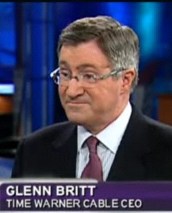
Time Warner CEO Glenn Britt just can’t get his mind off overcharging customers for their broadband service.

Despite increasing broadband rates twice in the past two years, Britt is still convinced slapping usage limits and so-called “usage-based billing” is inevitable for the nation’s second largest cable operator.

“I think you will naturally see evolve a world where people who use very little broadband expect to pay less and people who use a whole lot, may complain, but in their hearts know they are going to pay more than somebody who reads email once a week,” Britt told investors at the Deutsche Bank Securities Media & Telecom Conference in Palm Beach, Fla. “I think there will always be an unlimited tier, but I think you’ll see the element of consumption introduced over time.”

Time Warner Cable attempted to impose an Internet Overcharging experiment in the communities of Rochester, N.Y.,  Greensboro, N.C., Austin, San Antonio, and Beaumont, Tex., in April 2009.  Customer backlash over a tripling in price of unlimited broadband service — to $150 a month, forced those plans to be shelved.

But Britt has continued to make positive statements about the practice of raising rates on broadband customers ever since, claiming a small percentage of heavy users were increasing costs.

But Time Warner’s own financial reports tell a different story.  While the company increasingly depends on broadband profits to impress investors in its quarterly reports, the costs (and investment in) broadband has been declining for several years.  Broadband is Time Warner’s single best performing product, and the company has raised rates from $39 a month to as much as $58 — a $19 monthly increase, over the past few years in many communities.  The highest prices are reserved for customers who only take broadband from the cable company and ignore their cable TV and phone services.

Britt also expressed increasing concern over cable TV cord-cutting, the practice of dropping cable television service, to investors as the company continues to lose more subscribers than it gains.

“We need to really to focus on that with a renewed intensity,” Britt said . “It is not acceptable to me to continue to slowly lose video customers every year. That has been going on for too long. We’re going to put renewed energy against that both in the product space and in marketing, to see if we can slow that down.”

To that end, Britt has hired a pricing expert to develop different prices for different types of customers.  The disparity in pricing is already widely apparent.  With some promotional customer retention offers now providing the company’s triple play package of Internet, phone and television service (with DVR) for as low as $79 a month, that is less than half the regular price of up to $163.85/mo charged to customers in states like California, without DVR service.

A bare bones basic package of a handful of national cable networks combined with local stations is selling for as low as $29.99 in northeast Ohio in a last ditch effort to hang on to economically challenged TV-only customers.

Broken Promises: Rep. Marilyn Avila (R-Time Warner) Says One Thing in Public, Another in Private

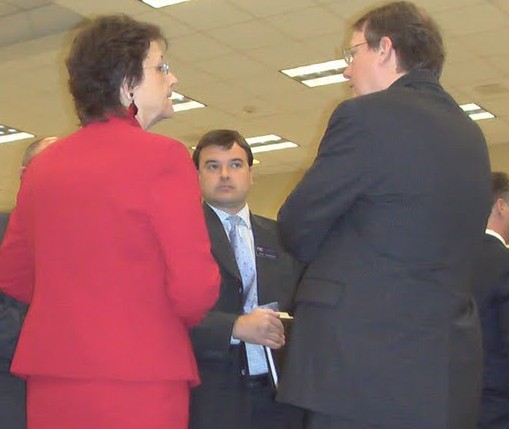
Rep. Avila (left) with Time Warner Cable's top lobbyist (right, back turned). Photo by: Bob Sepe of Action Audits

Rep. Marilyn Avila (R-Time Warner Cable) is living up to her much-deserved reputation as a shill for North Carolina’s largest cable company as she continues her campaign to wreak havoc on community-owned broadband networks and services.

Well-placed sources tell Stop the Cap! either Avila has an evil twin running around impersonating her, or she is saying one thing to a public audience while doing something completely different in private.

In a closely coordinated effort with the state’s top cable lobbyists, Avila met last Friday to negotiate promised protections for existing community-owned broadband networks that would otherwise be destroyed by her bill, H129, written by the state’s Big Telecom companies.

Both Reps. Avila and Julia Howard told us their word was their bond.  “The last thing that we want to do as a state is to harm one of our cities after they entered into the business,” Avila said to members of the Public Utilities Committee.

Howard expanded on her own promise: “The objective is to protect the cities that have already gone into the business.  It is our intent to carve out these cities and hold them harmless.  My word is my bond, and I don’t hear anybody snickering.  But when I say it I mean it, as the senior chair of finance, that is my pledge.  Before it heads into finance there will be a PCS that is satisfactory to everybody.”

Apparently those bonds were issued by Lehman Brothers, because they have lost all of their value to the people of North Carolina.  Nobody feels like snickering over such a serious betrayal of trust, especially when Howard’s definition of “everybody” is limited to lobbyists for the telecommunications industry.  Your consumer needs are irrelevant.

Last Friday’s meeting was once again a stage play from Time Warner Cable and their sidekick, the much-smaller CenturyLink.  After the cable company laid down the law to a stunned audience of representatives from communities across the state, fooled into thinking they were there to discuss an honest compromise, things went from bad to worse.

“It literally got down to the point where the cable company was dictating terms about what cities can and cannot do with their networks, even discussing which streets the networks would be allowed to serve,” our source tells us.

Avila’s stubborn streak was on full display, as she rejected proposal after proposal.

What about public private partnerships with full exemptions for pre-existing networks?

Rep. Avila's Message to North Carolinians: Live with what you've got or go without.

Not on Big Telecom’s approved list, so rejected out of hand, even after offering that she agreed with the concept.  Her reasoning?  She wants to go with her original bill.

The result of the one-sided discussion was two pages of legislative word jumbling in the form of a substitute amendment.  The word salad delivers substantially no real change to Avila’s original bill.  It contains virtually all of the same onerous provisions guaranteed to destroy community broadband networks, taking the state’s reputation for being a good credit risk with it.  It also delivers red meat to an industry meme “community broadband networks are business failures.”  Now you know why.

We predict Avila will use the farcical affair to claim her substitute amendment was the product of a “hard-fought compromise” with cities and providers.

In fact, it represents nothing more than a shameful broken promise to the citizens of North Carolina.  Their interests are completely secondary to Avila and her legislative allies, willing to listen to a telecommunications industry prepared to hand out campaign contributions to enact their agenda.

The collateral damage of Avila’s struggle to eliminate better broadband and keep competition to a bare minimum cannot even be measured yet. Should Avila’s bill become law, the clear message sent to would-be entrepreneurs is that North Carolina values their cable and phone companies over the needs of entrepreneurs contemplating the next generation of digital economy businesses.  Ms. Avila’s message to them, and to residents who want better broadband: live with what you’re getting from my friends or go without.

Many will choose a third option — avoiding setting up shop in a state where a handful of providers maintain a comfortable duopoly delivering the least amount of service for the highest possible price.


Search This Site:

Contributions:

Recent Comments:

Your Account:

Stop the Cap!