Home » time warner cable » Recent Articles:

North Carolina Call to Action: Anti-Community Broadband Bill On the Move – Get on the Phone!

Stop the Cap! has learned Rep. Marilyn Avila’s (R-Time Warner Cable) anti-consumer, anti-competition, anti-community broadband bill H.129 is on the move again.  Now it’s up for a final vote in the Senate Finance Committee early Wednesday afternoon.  This is our last chance to derail this nasty piece of legislation before it hits the Senate floor and community networks start considering pulling the plugs on their expansion efforts.

North Carolina is YOUR state.  The state legislature is not Time Warner Cable’s personal playground, where they can order up customized corporate protection bills to protect their monopoly profits and stick you with higher bills.  It’s time to let your state senator know H.129 is totally unacceptable.  North Carolina is suffering from America’s worst broadband, and nothing about H.129 will make it any better.  Instead, companies like Time Warner and CenturyLink will continue to charge more for less service than other states enjoy.

North Carolina needs all of the broadband it can get, and with the defeat of H.129, the towns and communities big providers have bypassed for years can finally address their own needs without enduring years of broken promises for broadband service that never seems to materialize.

Our allies at Free Press have made this as convenient as can be.  Check out their legislator look-up page, which will get you the contact information for your state senator.  Then make the call starting tonight (you can even leave a message on their voicemail):

“Hello, I am calling to ask Senator “x” to oppose H.129, Rep. Avila’s anti-broadband bill now before the state Senate.  H.129 is nothing short of a protection bill for Time Warner Cable’s fat profits and does not bring a single new broadband connection to our state.  If communities want to build better broadband for people like me, I say let them.

North Carolina has the worst broadband in the country and large parts of our state cannot get it even if they wanted it.  We have the power today to hold our local leaders responsible if they stray too far — it’s called an election.

We don’t need Ms. Avila and Time Warner Cable, an out of state corporation, telling us what kind of broadband service we can get.

I absolutely expect you to oppose H.129 and I am carefully watching who votes for and against this legislation as it will be a major determining factor how I vote in the next election.  Please feel free to contact me at (provide name, address, and phone number.)  Thank you for hearing me.”

We need your calls to make the difference!

HissyFitWatch: Time Warner Franchise Negotiation in Troy Turns Into ‘Caught on Tape’ Shoutfest

Phillip Dampier April 26, 2011 HissyFitWatch, Public Policy & Gov't, Video 3 Comments

HissyFitWatch: When contract negotiations with the local cable company get a little too heated for comfort.

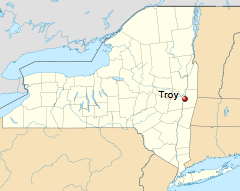
The city of Troy, N.Y. has lived with an expired franchise agreement with local cable company Time Warner Cable for more than a decade.  After a shouting match erupted between a city councilman and a city economic development coordinator over its renewal, now we know why.

City officials managed to complete a tentative renewal with the cable company back in March, subject to city council review.  The agreement comes even as Verizon’s FiOS fiber to the home network threatens to provide the cable company with some competition in the region.

As part of the renewal, Time Warner has agreed to provide $80,000 to fund a Digital Technology Lab at the Arts Center of the Capital Region. It will also front $70,000 to help construct a studio for a new government channel that will deliver coverage of city council meetings, which could draw some high ratings if tensions always run this high.

Troy also gets the right to collect the maximum franchise fee allowed by law and receives a $200,000 settlement to cover alleged franchise violations that occurred under the old agreement.

One of Time Warner Cable’s biggest skeptics on the city council is Councilman Bill Dunne, (D-District 4).  He’s heard complaints about Time Warner’s prices and service from his constituents for some time, and told The Record he is “cautiously optimistic” about the potential deal, but stressed it will not be approved by the council until it is thoroughly reviewed.

Dunne suspects the cable company has made a fortune off Troy residents for years, and he wants to closely examine how well the cable company has done in upstate New York before handing them a lengthy contract extension.

Troy, New York

“I would like to see an independent auditor open up the books on Time Warner Cable … to see exactly where the money is going and how much money is being made [from Troy cable subscribers],” he told the Troy newspaper.

Some residents suspect whatever Time Warner Cable “gives” the city as a result of contract negotiations will be quickly made back in future rate increases.

“These negotiations are a sham because Time Warner Cable is negotiating with our money,” Troy resident Bill Thompson tells Stop the Cap! “If they give the city $500,000, they’ll just raise our rates to get that money back.”

Thompson says he applauds Dunne’s skepticism, and believes bringing in competition from Verizon is the only way to keep prices in check.

Christopher, during happier times.

Dunne’s ongoing concerns about Time Warner caused a fracas during last Thursday’s city council meeting, when Dunne won approval to take the Time Warner Cable franchise renewal off the table.  In its place, Dunne’s new substitute resolution forming a working group to study the proposed franchise renewal and more importantly, perform an audit of Time Warner Cable and their supporting documents.

That decision infuriated Economic Development Coordinator Vic Christopher, who had been working with Time Warner Cable and the mayor’s office to push for a speedy approval of what he felt was a well-reviewed franchise renewal agreement. When Christopher objected to the study group, and delaying the agreement in general, Councilman Ken Zalewski (D-District 6) suggested he and the mayor’s office were representing the cable company more than city residents.

That did it.

As the meeting ended, a shouting match ensued between an offended Christopher, Zalewski, and Dunne. Christopher called the city council “obstructionists” and then followed up on his Twitter account accusing the council of talking everything to death. Dunne suggested Christopher should run for office if he didn’t like the way the council represented the interests of Troy residents.

“Christopher’s petulance was an amazing spectacle to watch, especially considering nobody was directly attacking him,” Thompson says.  “He took it as a personal attack and responded in kind, and it only reinforced the notion the mayor’s office was in a hurry to get this agreement signed.”

[flv width=”480″ height=”290″]http://www.phillipdampier.com/video/The Record Spat in Troy Over TWC 4-22-11.mp4[/flv]

The hissyfit over a Time Warner Cable franchise agreement extension was caught on a cell phone camera, and the resulting video was promptly published online by The Record, Troy’s local newspaper. (1 minute)


TWC Franchise Agmt

Time Warner Cable’s Backdoor Rate Hike in Kansas City

Phillip Dampier April 26, 2011 Consumer News, Video 1 Comment

As Time Warner Cable continues it channel re-alignments in markets across the country, some subscribers are coming up with fewer channels after the changes, but they are still paying the same cable bill — for fewer channels.

“It’s classic cable bait and switch,” shares Stop the Cap! reader Kyle from Kansas City, who spent hours fiddling with his TiVo box after Time Warner re-mapped the area’s channel lineup earlier this month.  “TiVo really underlined it for us, albeit unintentionally, when we discovered several channels no longer available to us unless we paid extra.”

While Time Warner Cable moved Kansas City to its theme-based lineup, which places similar channels together and aligns HD channels with their standard definition counterparts, they also used the occasion to re-tier some of their “free” channels into mini-pay tiers.

Among the channels out of the digital cable standard lineup:

  • Encore MoviePlex — Seven theme-based commercial-free movie channels;
  • IFC — Independent Film Channel
  • Fox Movie Channel
  • Flix
  • RFD-TV
  • Ovation

The movie channels are being re-tiered in a mini-pay package called TWC Movie Pass, which will eventually sell for $4.95 per month after some early promotional discounts.  RFD and Ovation are part of a new “Digital Choice” tier.

“It’s the usual deception from Time Warner, which claims to sell you ‘free HD’ service without also telling you a rented set top box is required, which adds at least $7 a month for the ‘free HD’ channels,” Kyle says.  “Now they don’t even give you that as they start stripping networks away from their HD lineup to sell you for more money.”

Some subscribers are less than happy with the outcome, considering they now have fewer channels and are still paying the same cable rate they were before the channel change.

“It’s a shell game they always win — find the channels, keep your eye on the channels, wait — they are gone.  Pay us anyway.”

Aaron Barnhart, who writes for the Kansas City Star, called it a PR failure.

RFD-TV: Buried in a backwater mini-pay tier few will pay extra to receive.

“Time Warner proved once again to be its own worst enemy, hyping all the good things and leaving it to customers to discover the not-so-good-things on their own,” Barnhart wrote.

Time Warner’s reasons for the channel changes, reported by Barnhart, seemed less than convincing to customers.

Time Warner’s spokesman Matt Derrick pointed out that “in most places, Encore is bundled as a premium package with Starz.” Liberty Media, which owns both Encore and Starz, used to offer Encore to cable operators as a digital-cable value alternative to premium channels. But that has changed, and Time Warner negotiated this 12-month rate with Liberty to encourage customers to go along with the switch.

Derrick explained that Digital Choice was designed as a low-cost alternative to its larger Digital Variety package, where the same channels are also available.

“Wait, that doesn’t even make sense,” Kyle argues.  “Time Warner negotiated with Liberty to turn a free set of channels into a pay tier to encourage us to go along?”

Kyle doesn’t think the reasons for Digital Choice made any sense either.

“How many people are demanding to pay extra for Ovation and RFD, exactly?” Kyle wonders.  “What is missing from all this is why our rates did not decrease to compensate us for the lost channels.”

Kyle says the $4.95 a month rate for TWC Movie Pass may not seem as much as a pay network, but he reminds us Time Warner will continue to collect money from every subscriber for the channels they’ll no longer get.

“So if it costs them $4.95 a month for Encore, we’re all still paying that because our bill isn’t going down; if we actually want those channels, that costs another $4.95 — $9.90 a month.

[flv width=”480″ height=”290″]http://www.phillipdampier.com/video/WLWT Cincinnati Time Warner Channel Realignment 4-18-11.mp4[/flv]

WLWT-TV in Cincinnati explains to certain Ohio viewers how to accomplish a needed channel “re-scan” that comes along with the channel re-alignments Time Warner Cable is performing across the country.  (2 minutes)

Time Warner Cable Blames Pole Fee Increases They Won’t Pay for Future Rate Hikes

Phillip Dampier April 19, 2011 Public Policy & Gov't, Rural Broadband Comments Off on Time Warner Cable Blames Pole Fee Increases They Won’t Pay for Future Rate Hikes

Time Warner Cable is blaming an increase in pole attachment fees in upstate New York for increasing the cost of doing business, despite the fact those increases will not apply to the cable company.

National Grid, which also does business as Niagara-Mohawk, is raising rates for third-party companies to attach new lines to the poles the electric utility owns.  The power company says it is the first rate increase since 2007, and covers the cost of engineering, safety reviews, and ongoing infrastructure costs.

The Albany Times-Union quotes Time Warner Cable spokeswoman Lara Pritchard’s reflexive complaints about the rate increases.

“Inevitably, any price increase to poles will impact our costs to bring service,” Time Warner spokesman Lara Pritchard said Monday. “At this time, we have no plans to adjust fees. We periodically assess all of our associated costs to do business, as any company would, and this would factor into that assessment.”

If so, it should be by a factor of zero because the pole attachment fee increases apply only to companies seeking to place new lines on utility poles, not those maintaining or replacing existing cables.

The New York Public Service Commission approved the utility’s request for a change in their “Make Ready” rates, which cover costs associated with new projects. Existing companies, including Time Warner Cable will continue to pay a locked-in rate of $11.13 per pole, which represents no change.

Verizon acknowledged as much, noting the company’s existing fiber and copper wire lines are exempt from the rate hike.

But not every company is being held harmless from the rate increases.

Major projects to extend fiber broadband service to rural Franklin and St. Lawrence counties in upstate New York could be at risk because Niagara Mohawk, the dominant power provider in the region, is raising the rates to place fiber on some 22,000 poles required for the network.

Slic Network Solutions, the Development Authority of the North Country and Ion HoldCo LLC are facing at least $3.5 million in higher pole attachment expenses the utility said nothing about when they reached an agreement with National Grid in December.

Taxpayer grant money is backing the projects, including Slic’s 136-mile network covering parts of Franklin County and another 660-mile project in St. Lawrence County.  Ion operates a fiber optic broadband backbone that extends throughout upstate New York.

Keith J. Roland, an attorney with the Herzog Law Firm representing the three companies, has filed a formal complaint with the N.Y. State Public Service Commission, calling the rate increase “unjust, unreasonable, excessive, and unlawful.”

Roland says the increased costs, which he calls “arbitrary,” could threaten the viability of the projects.

“Without access to those poles, SLIC, DANC and Ion and almost any other telecommunications, cable TV and Internet provider in rural area of Niagara Mohawk’s territory would be driven out of business or effectively be precluded from doing business,” the complaint states.

Cable Flipping: Insight Communications On Sales Block, Time Warner Cable Says Price Too High

Phillip Dampier April 14, 2011 Consumer News 1 Comment

In the 1980s and early 90s, independent cable companies were hot properties for speculators and investors looking to buy low and sell high.  But as the marketplace has become increasingly concentrated, the days of flipping cable companies for big profits are long gone.

But a few independent holdouts remain.  Bresnan Communications, the 17th largest cable company was sold last year to Cablevision Industries (8th largest).  Now Insight Communications, the 9th largest operator, is up for sale by its private equity owners Carlyle Group, MidOcean Partners and Crestview Partners.

Insight serves just over 760,000 customers in Kentucky, Indiana and Ohio.  Originally, the company operated as Insight Midwest, a partnership between co-owners Comcast and Insight.  When the partnership between the two companies ended, Comcast took most of Insight’s customers in Indiana and Illinois and converted them to Comcast service.  The remainder have been served by Insight.

The deal to sell Insight is being managed by Bank of America-Merrill Lynch and UBS AG and is being pitched to much larger cable operators with a price tag of $3.5 billion to $4 billion.

That’s too rich for Time Warner Cable’s blood.  The nation’s second largest cable operator was interested in acquiring Insight, but not at those prices.  Another potential buyer could be Comcast, which has a significant part of the midwestern market, especially in Illinois.

Insight has been on the sales block before — the last time in 2007 when Carlyle Group found no buyer interested in the systems at their asking price.

Search This Site:

Contributions:

Recent Comments:

Your Account:

Stop the Cap!