Home » time warner cable » Recent Articles:

Bipolar Cable Industry Loves<->Hates Netflix; Britt Says It’s About Giving Customers What They Want

Phillip Dampier June 23, 2011 Competition, Consumer News, Data Caps, Editorial & Site News, Online Video, Video Comments Off on Bipolar Cable Industry Loves<->Hates Netflix; Britt Says It’s About Giving Customers What They Want

[flv width=”512″ height=”298″]http://www.phillipdampier.com/video/WSJ Studios disarming cable in battle with Netflix Media Report 6-20-11.flv[/flv]

Wall Street Journal: Top execs of some media behemoths are shifting their public stances toward Netflix Inc. of late. They’re now trying to persuade investors that the video streaming service will expand their business rather than destroy it. (4 minutes)

You are forgiven if you are confused about the love-hate relationship the cable industry has with online video streamers like Netflix — one that the Wall Street Journal likens to manic bipolar episodes.  Weeks after blaming Netflix for getting video programming too cheaply and threatening cable subscriptions, cable industry executives were hugs and kisses about online video at the recent Cable Show in Chicago.

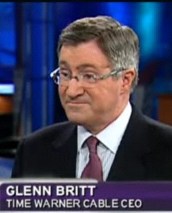
“The reason why there’s interest in these Internet video providers that is that they’re deploying technology that’s making the experience better for consumers,” Time Warner Cable CEO Glenn Britt said in an interview with MarketWatch during the National Cable & Telecommunications Association’s annual Cable Show last week.

“There’s nothing about [cable companies] that stops us from doing that. So I would say … we as an industry just need to pay attention and give consumers what they want. Then there’s no room for these other guys. I don’t mean to say that in a negative way, but it’s true.”

Britt

Of course, this is the same man that has earplugs firmly implanted to help resist another rejection of his Internet pricing schemes that Time Warner Cable customers loathed in 2009.  Britt’s desire to give “consumers what they want” just doesn’t play in this part of town while the cable company is installing software to measure and potentially meter broadband usage.

What is different in the online video spectrum is consumers have choices.  They can adopt Time Warner Cable’s glacially-slow rollout of its TV Everywhere concept, watch Hulu, use Netflix, or simply steal content providers don’t want them to watch.  For customers of Time Warner Cable facing competition from AT&T, there is potentially nowhere to run to avoid an Internet Overcharging scheme which could bring the online viewing party to a rapid conclusion when your viewing allowance is used up.

Britt says he is struggling with rights holders to provide more accessibility to online video streaming of popular shows.  He’s also thinking about how many restrictions to slap on subscribers.

MarketWatch talked with Britt and found him dealing with nagging questions about how many devices each user account should be authorized to use for viewing. “Should it be three, should it be 10? If I make [that number] too small, you’re not going to be happy as a customer,” Britt philosophized. “If I make it too big, you’re going to give the password to all of your friends, and they won’t have to buy a subscription to begin with.”

Is Netflix Driving Cord Cutting? New Evidence Suggests ‘Not Really’

Phillip Dampier June 23, 2011 Online Video Comments Off on Is Netflix Driving Cord Cutting? New Evidence Suggests ‘Not Really’

As Netflix traffic continues to grow, analysts are pondering whether Netflix is a primary driver behind consumers cord-cutting their pay television packages in favor of watching video content online.

A recent article in The New York Times claims that Netflix may be behind the recent decrease in cable television households, citing a report from the Diffusion Group, a media analyst.  The group’s study claims 32% of satellite, telephone, or cable-delivered pay television customers were planning to downgrade or cancel their packages in 2011, a giant increase from the 16% measured in 2010.

[trefis_forecast ticker=”NFLX” driver=”0532″]

Trefis, another research firm, is challenging those assertions, noting an in-depth review of the study finds only around 7% of those planning to pull the plug cited Netflix as the chief reason.

What is causing a rush to downgrade or cancel service?  Rate increases, particularly for add-on services like premium channels or extra tiers including sports and movies.  Time Warner Cable recently boosted prices for HBO to as high as $15 a month for many subscribers.  Netflix may have an impact on these consumers, deciding to drop premium services like HBO, Showtime, and Starz!  For several dollars less than what these premium channels charge, Netflix customers have unlimited access to the company’s streaming video library.

Relentless annual rate hikes have often triggered subscribers to review their packages and delete services to keep the bill stable.  Economic distress is also a widely cited factor among those completely canceling pay television.  The report does not measure how many consumers, especially younger ones, don’t ever start a pay television subscription.  These subscribers never had a cord to cut.

Time Warner Cable Installing Metering Technology, CEO Claims Company Not Sure If It Will Use It

Phillip Dampier June 17, 2011 Data Caps 22 Comments

Time Warner Cable CEO Glenn Britt says the cable company is once again testing technology to allow it to implement the same type of Internet Overcharging system consumers immediately rejected in 2009.

Speaking at the Cable Show in Chicago Thursday, Britt said the company has not yet decided whether it will actually introduce the system, but will have the technology in place to quickly implement it.

Unlike some other cable companies with a fixed bandwidth limit, once again Time Warner is considering a combination cap and tier system with fixed allowances for different levels of service.  In 2009, Time Warner Cable proposed a usage allowance of just 40-60GB per month for their Standard Service customers.  Customers seeking unlimited use service faced broadband bills as high as $150 a month.

Customers overwhelmingly rejected the pricing scheme in test markets in 2009, and political pressure only hastened the shelving of the test.  But Britt remains undeterred, telling Wall Street investors he remains a true believer in usage-based billing

Wall Street analysts told Bloomberg News they didn’t have a problem with it.  Bloomberg also quoted Netflix CFO David Wells as saying he had no objection to Internet providers covering the cost of increasing bandwidth capacity.  But Bloomberg quoted Wells speaking on a June 1 conference call, not in reaction to Britt’s specific announcement yesterday.  Further, Wells clarified his comments were directed towards network optimization and traffic shaping, not broadband usage caps.

Netflix is among the most likely online services that would expose broadband customers to potential overlimit fees, especially if Time Warner Cable brings back the same usage allowances it proposed in 2009.

Time Warner Cable Acquires NewWave Communications Systems in Tenn., Ky.

Phillip Dampier June 14, 2011 Consumer News 10 Comments

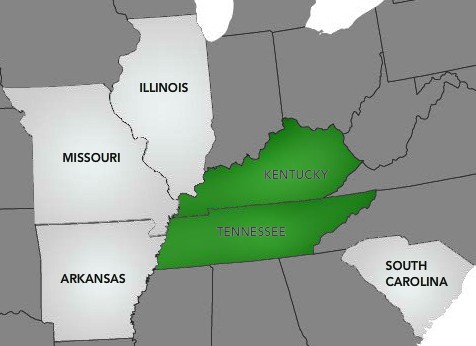
Time Warner Cable will acquire cable systems in western Tennessee and Kentucky owned by NewWave Communications for $260 million in cash, the company announced this morning.

Some 70,000 subscribers are affected by the sale, expected to close in the fourth quarter of this year.  It marks Time Warner’s first entry into the state of Tennessee, currently dominated by Comcast and Charter Cable.  In Kentucky, Time Warner already serves around 100,000 customers.

The transaction will make NewWave Communications, already a tiny cable operator, even smaller as it plans to continue serving 80,000 customers in Arkansas, Illinois, Missouri, and South Carolina and those formerly served by Avenue Broadband in Indiana and Illinois.

Time Warner’s cash deal increases speculation the company also remains interested in acquiring Insight Communications, another cable operator up for sale with systems in the same region served by NewWave.  Time Warner Cable favors large regional operations serving contiguous territories.  But if a bidding war erupts, CEO Glenn Britt has warned the company won’t pay a premium price for mergers and acquisitions.

NewWave’s subscribers have been through a lot in the last decade.  Many were originally served by aging cable systems owned and operated by Charter Cable, who sold them to NewWave with mixed results.  NewWave’s public image is tarnished to some degree by some of its vocal, disaffected customers.  The company endures a “NewWave Communications Sucks” Facebook page and blog posts like, New Wave Communications: The Worst ISP in America.  The most frequent complaints: poor service and oversold broadband slowing down in the evenings.

Competition for NewWave is primarily from the phone companies, often AT&T and Frontier Communications.

Cloud Storage Hype Meets Internet Overcharging Realities As ISPs Feel Threatened (Again)

Phillip Dampier

This week, the tech community has been buzzing over new entrants in the world of cloud computing.  Apple’s iCloud in particular has sparked enormous media coverage as the company plans to encourage customers to access all of their favorite content over their broadband connection.  Apple is also moving towards online distribution of many of its software products, including the forthcoming OS X Lion operating system, suggesting consumers can pass up traditional physical media like CD-ROMs or DVDs.

Cloud storage theoretically allows you to store your entire music, video and photo collection online for easy access from any device.  Watching the 20-somethings buzz about 100GB+ secure file lockers and the end of traditional file storage as we know it has been amusing, but these people need to get their heads out of the clouds.  Unless they become politically involved in America’s broadband debate, it is not going to happen the way they hope it will.

Tech entrepreneur?  Meet broadband provider reality check: the Internet Overcharging usage cap and “excessive use” pricing scheme.

While Steve Jobs was introducing iCloud, broadband providers and their industry friends have been ruminating over the impact all of this new traffic will have on their broadband networks.  In an homage to former AT&T CEO Ed Whitacre’s “you can’t use my pipes for free,” the drumbeat for implementing “control measures” for cloud computing and video traffic has been amplified several times over by certain providers, Wall Street analysts, and their trade press and equipment supplier lackeys.

One alarmed provider pondered the impact of iCloud in terms of their past experience with iTunes, which also spiked traffic when it was first released.  Others balk at the notion of consumers using broadband platforms to move entire libraries of content back and forth, especially on wireless networks.  The only sigh of relief detected?  Apple won’t start iCloud with video content — just music, at least at first.

The enemies list

The biggest targets — the companies that get a lot of pushback from providers for using “their networks” to earn millions for themselves are Google, Netflix, Amazon and Apple.  Each of them are rapidly moving into the online entertainment business, threatening to provoke more cable TV cord-cutting.  Netflix is now responsible for 30 percent of online traffic during primetime hours, a fact that some use as an accusation — as if Netflix should be held to account for its own success. Amazon has opened its own cloud based music storage and is also increasingly getting into online video content streaming.  Apple has a novel approach at handling its forthcoming iCloud music feature which should save hours in uploading, but the company is also moving towards online distribution of a growing proportion of its software, including the huge bug fixes and upgrades that will easily exceed a gigabyte if you own several Apple products.

Google is a frequent Washington target and honestly delivers the only truly effective corporate pushback to anti-consumer broadband pricing some providers have contemplated.  In fact, Google is putting its money where its mouth is building a gigabit network larger providers repeatedly scoff at as unnecessary, too costly, and too complicated.

While millions in venture capital funds new online innovations, only a miniscule amount of money is being spent to counter the lobbying major providers are doing in Washington to redefine the broadband revolution in their terms, complete with usage pricing that bears no relation to cost, arbitrary usage limits, and ongoing lack of true competition.

Online innovation is grand, but allowing providers to strangle it with Internet Overcharging schemes guarantees to end the party real fast.

Individually, none of the new cloud services are likely to blow out usage caps in excess of 100GB, but in combination they certainly could.  Anyone using online file backup, cloud storage of video and large music collections, uses Netflix or other online streaming services, and spends lots of time on the web will easily approach the limits some providers have established.  That doesn’t even include large software updates.  Unless you have an unlimited usage plan on the wireless side, don’t even think about using most of these services with AT&T’s 2GB monthly wireless usage cap.

Glenn Britt: The Internet is a utility which is why we can keep raising the price.

In the handful of countries with ubiquitous Internet Overcharging, little of this will pose a problem — companies won’t launch cloud computing services in markets where usage caps will effectively keep customers from using them.

That is why it is critical for some of America’s largest technology companies to get on board the fight against Internet Overcharging, and demand Washington recognize broadband as a utility service that should be wide open and usage cap free.  The evidence is right in front of you.  Time Warner Cable CEO Glenn Britt recognizes the fact broadband is an essential part of our lives today, which is why he is confident enough to keep raising the price and charging even more in the future.  It’s not about “network congestion,” “building the next generation of broadband,” or “pricing fairness.”  Stop the Cap! started at ground zero for Time Warner Cable’s 2009 version of “pricing fairness” — $150 a month for an unlimited use broadband account that likely cost major providers less than $10 a month to provide.  It’s about pure, naked profiteering, unchecked by free market competition in today’s broadband duopoly.

Unless a company like Google can vastly expand its own broadband rollouts, it is increasingly apparent to me (and many others), we may have to move towards an entirely different model for broadband in the United States — one built on the premise of the Interstate Highway System.  One advanced, publicly-owned fiber network open to all providers on which telecommunications services can travel to homes and businesses from coast to coast.

Nobody says private companies shouldn’t be able to compete, but every day more evidence arrives they will never be inclined to deliver the next generation of service that other countries around the world are starting to take for granted.  They will instead protect their current business models at all costs, even if that means throwing America’s broadband innovation revolution under the bus.

[flv width=”640″ height=”380″]http://www.phillipdampier.com/video/CNN Will iCloud Measure Up 6-7-11.flv[/flv]

CNN takes a look at what makes Apple’s iCloud service different from competitors from Google and Amazon.  (5 minutes)

[flv width=”640″ height=”380″]http://www.phillipdampier.com/video/CNN Dropbox Cloud Computing 6-8-11.flv[/flv]

CNN talks with the folks at Dropbox about their cloud file storage system.  (3 minutes)

 

Search This Site:

Contributions:

Recent Comments:

Your Account:

Stop the Cap!