

Home » telephone service » Recent Articles:

Verizon Has Only 120 Customers Willing to Use Voice Link on New Jersey’s Barrier Island

Phillip Dampier October 17, 2013 Comcast/Xfinity, Competition, Consumer News, Public Policy & Gov't, Verizon, Video, Wireless Broadband Comments Off on Verizon Has Only 120 Customers Willing to Use Voice Link on New Jersey’s Barrier Island
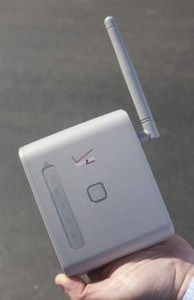
Verizon Voice Link

Verizon Voice Link

Verizon’s wireless solution for landline infrastructure damaged during last year’s Hurricane Sandy has not been a runaway success for the phone company, only attracting 120 customers on New Jersey’s barrier island.

After Hurricane Sandy damaged the telephone network on the peninsula, Verizon announced it would reinstate telephone service using Verizon Voice Link — a wireless landline replacement that works over Verizon Wireless’ network. The announcement was not well received by New Jersey residents — customers don’t want the service and after Verizon Wireless experienced a major service outage in Ocean County, N.J. in September, many don’t trust the service to be as reliable as the landlines it replaced.

Mantoloking resident Peter Flihan thinks Verizon delivered its own blow to the island, post-Sandy. Flihan has Voice Link, but after using it he says he wants his old landline back and is very unhappy with the performance of Verizon’s wireless replacement.

“They told us this was the greatest thing in the world,” Flihan told the New York Times.

But the service takes away more than it provides, argue consumer groups including the AARP. Flihan’s old landline worked during power outages, Verizon Voice Link only has two hours of backup battery talk time. Landlines reliably reach 911. Verizon is less confident about Voice Link, going out of its way to disavow any responsibility if a customer cannot reach the emergency number because of technical problems or network congestion. Data services of all kinds don’t work with Voice Link either, even the venerable old dial-up modem. Neither will fax machines, medical monitoring equipment, or home security systems.

Flihan complains Verizon’s Voice Link can’t even reliably manage the function it was designed for — making and receiving voice phone calls.

Flihan told the newspaper roughly 25 percent of the calls he makes through the landline replacement do not go through the first time he dials, or sometimes the second or third. Other times, calls are disturbed with unusual clicking sounds, static, and other voices breaking into the line.

Fire Island residents report Voice Link also misses incoming calls, refuses to ring phone lines and often sends callers straight to voice mail. Others get recordings or busy signals.
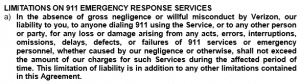
Verizon disclaims legal responsibility for failed 911 calls in its Voice Link terms and conditions.

Verizon disclaims legal responsibility for failed 911 calls in its Voice Link terms and conditions.

Verizon’s attempt to retire landlines in high cost areas has proven to be a public relations debacle for the phone company. More than 1,700 negative comments have been received by the New York Public Service Commission about Voice Link’s performance on Fire Island. Politicians also delivered repeated lashings to the phone company, claiming Verizon was abdicating its responsibilities by seeking to offer second-rate phone service.

In New Jersey, residents at least have a choice. Verizon maintains a monopoly on Fire Island, but in New Jersey it competes with Comcast, which also provides phone service.

Lee Gierczynski, a Verizon spokesman, noted Verizon’s landline business suffered even before Hurricane Sandy arrived. The FiOS-less island has left Verizon with a 25 percent market share. Verizon Voice Link’s numbers are even lower. Gierczynski admitted Verizon Voice Link has only 120 (out of 540 affected customers) signed up on the island.

While Verizon has refused to invest in an upgraded network for impacted customers, Comcast issued a press release announcing major upgrades for the New Jersey shore.

ComcastJerseyadComcast upgraded 144 miles of infrastructure supporting the hardest hit communities, reopened renovated service centers with increased staffing and extended hours, increased the number of available service technicians, and provided free access to an expanded Wi-Fi network.

“We know that Hurricane Sandy complicated life for millions of people, and many of our employees and facilities were affected by the storm,” said LeAnn Talbot, senior vice president of Comcast’s Freedom Region. “We were here for the Jersey Shore during and immediately after Sandy, we have been here to support since then and will remain as a partner tomorrow and beyond as people and communities work to rebuild.”

This summer, Comcast introduced its X1 set-top platform, rolled out a new Wireless Gateway, added a home security option, and opened thousands of additional Wi-Fi hotspots across coastal New Jersey. Customers were also given a dedicated phone number to reach Comcast regarding its rebuilding efforts.

Comcast invited Verizon customers to switch to its telephone service and noted it works fine for faxing, security systems and medical devices.
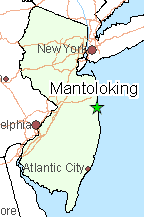
mantolokingBut Mantoloking resident Christine Wilder still isn’t happy.

“I didn’t want Voice Link,” Wilder told the Asbury Park Press last summer. Wilder signed up for Comcast, but would rather have her copper landline back.

Unfortunately for Flihan and Wilder, although Fire Island residents’ loud displeasure drowned Verizon’s plans for Voice Link in New York, those affected in New Jersey are fewer in number. To date, their criticism of Voice Link has not made Verizon uncomfortable enough to change course as they have on Fire Island and bring a FiOS fiber network solution to Mantoloking and other affected boroughs.

That face “troubles” New Jersey Rate Counsel Stefanie A. Brand.

“I am not sure why New Jersey is not getting the same level of service as New York from Verizon,” Brand told the newspaper in September. “It’s not enough to simply say there is cable in Mantoloking; therefore we don’t need to meet our obligation. Why are they not willing to do it for similarly situated customers in New Jersey?”

[flv width=”640″ height=”380″]http://www.phillipdampier.com/video/Verizon Voice Link A Reliable Alternative 10-3-13.mp4[/flv]

Verizon produced this video defending Voice Link as a reliable alternative to customers experiencing persistent problems with their landline service. (2 minutes)

Editoral Decries Time Warner Cable’s Attempt to Deregulate Phone Service in New York

Phillip Dampier October 14, 2013 Competition, Consumer News, Public Policy & Gov't Comments Off on Editoral Decries Time Warner Cable’s Attempt to Deregulate Phone Service in New York

timewarner twcEfforts by New York’s largest cable operator to deregulate telephone service in New York, potentially cutting off delinquent ratepayers’ phone service at inconvenient times, has run into opposition from an Albany newspaper.
The Times Union published an editorial last week opposing the measure, fearing it could leave some of the millions of Time Warner Cable phone customers without service on nights and weekends without any way to make a payment to prevent the disconnection.

Unlike other services that companies like Time Warner offer — such as TV, Internet, security and remote lighting and heating control — the home telephone holds special status. It has long been regarded as an essential utility, much like residential gas, water and electricity. The PSC regulates how and when a utility can cut a customer off such a critical service for failure to pay a bill on time.

For years, Time Warner maintained it was not a phone company and should not be bound by these rules. That changed earlier this year when it accepted the responsibilities and regulations that come with being a residential phone provider.

Now, though, Time Warner is petitioning the PSC to change the rules governing home phone bills.

Some of the requests appear reasonable, such as updating language about local and long-distance calling charges. But that’s not the case with Time Warner’s request to expand the hours and days when it can disconnect services for customers who have fallen behind in their bills, including their phone service.

Specifically, Time Warner wants to deal with delinquent customers on nights and weekends.

Most other utility providers can cut service for non-payment only during weekdays, when the PSC’s staff is working and available to help broker solutions and protect consumers. The PSC has the authority to make decisions on disputed bills, revise payment plan arrangements and remedy situations where continued service is medically necessary.

Late and unpaid bills are admittedly a chronic problem for cable companies. In the past year, Time Warner sent more than 1.7 million past-due notices to residential customers in the state and shut off or suspended service to nearly 600,000 households for failing to pay bills.

Time Warner calls its proposed change a convenience to its customers. It’s really a convenience for Time Warner, which wants to handle phone bills the same as other services. But this would bypass the special safeguards for phone consumers.

The Public Service Commission is still reviewing the proposal from Time Warner Cable, which is the dominant cable provider in upstate New York and parts of New York City.

Verizon Pushing Deregulation Bill Through Mass. Legislature; Ends Universal Service, Oversight

Verizon-logoA sweeping deregulation measure sponsored by Verizon Communications would end the telephone company’s obligation to provide landline service and remove state-mandated customer quality of service standards in Massachusetts.
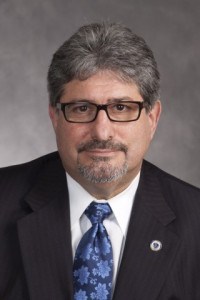

House Bill 2930, “An Act modernizing telephone regulation and encouraging economic growth,” introduced by Rep. Stephen L. DiNatale (D-Fitchburg) is succinct:

SECTION 1. Chapter 25C of the General Laws, as appearing in the 2010 Official Edition, is hereby amended by inserting after section 7 thereof the following sections.

Section 8. Notwithstanding any other general or special law to the contrary, the department shall have no jurisdiction, general supervision, regulation or control over wireless service, including mobile radio telephone service, or radio utilities.

Section 9. Notwithstanding any general or special law to the contrary, subject to the provisions of section 10 of this chapter, no provision of this chapter, Chapter 25 or Chapter 159, 8 and no regulation, order or settlement or portion thereof adopted pursuant to any such provision, shall apply to any telephone company (or a common carrier offering telephone service) in any municipality for which the company or carrier certifies to the Office of Consumer Affairs and Business Regulation that there are at least two providers offering voice telephone service to retail residential customers in that municipality using any technology, including but not limited to wireless voice service and VoIP service.

Section 10. Nothing in sections 8 or 9 of this chapter shall be construed to affect or modify:
a. the authority of the attorney general to apply and enforce chapter 93A or other consumer protection laws of general applicability;
b. the department’s authority under sections 18B and 18H of Chapter 159, concerning enhanced 911 service, and under section 15E of Chapter 166, concerning telephone relay service;
c. the rights or obligations of any carrier under 47 U.S.C. § 251 or 47 U.S.C. § 252; or
d. the department’s authority to administer the federal Lifeline and Link-up programs or the Connect America Fund.

SECTION 2. Sections 11, 12, 12A, 13, 14 and 15 of Chapter 166 are hereby repealed.

The measure was discussed at a hearing this week before the Legislature’s Energy & Telecommunications Committee. Verizon argued its company is still regulated as if it was a monopoly, with reporting requirements and customer service mandates that do not apply to its competitors in the cable or wireless industry.

DiNatale

DiNatale

“We have to answer a customer’s call within x number of seconds,” said Verizon spokesman Phil Santoro. “If we don’t, we get penalized. No other company that provides phone service has to do that. They’re all regulations that were formed when we were a monopoly, and they haven’t been changed.”

Verizon lobbyist Joe Zukowski told the Boston Business Journal Verizon is required to respond to repair calls within a 24-hour window, something not required of its biggest competitor Comcast. Verizon has to report its annual finances and various customer metrics governing response times and outages to state regulators. Verizon also has to offer landline service anywhere in its service area across most of the state, while cable companies can pick the places they wish to serve.

DiNatale regularly supports Verizon’s legislative initiatives. In 2012, he proposed a bill to amend state law to remove the authority of the Department of Telecommunications and Cable to regulate the wireless industry, deferring instead to federal regulations that industry representatives said would level the playing field.

DiNatale suggested Massachusetts could be left behind if the legislature didn’t adopt the measure. Rep. Randy Hunt, a Sandwich Republican, asked if Massachusetts had missed out on any innovations in technology because of overregulation. Zukowski suggested a Massachusetts legislature hostile to business interests would make the company think twice about expanding its 4G LTE network in the state. By November, the bill was effectively buried in a legislative maneuver and by June 2013, Verizon announced it largely completed its 4G LTE upgrade, regardless of the bill.

DiNatale’s latest bill includes last year’s wireless oversight ban as well as forbidding the Department of Telecommunications and Cable from regulating Verizon in any part of the state where at least one provider of any kind offers competitive service.

Despite DiNatale’s attempt to ban state regulation of wireless service,  Sen. Karen Spilka (D-Ashland), argued at Tuesday’s hearing for (S 1617), “The Cellphone User’s Bill of Rights,” that would require clearly published prices and service policies, monitors the quality of cell service in the state, and limits all cell contracts to 12 months.

“Many people don’t have landline phones anymore. However, as wireless subscribership increases, so do complaints about the contracts and services,” Spilka told the committee.

Zukowski suggested that rural areas will still be covered by regulation where Verizon maintains a monopoly. But the legislation eliminates regulation from any part of the state where even one competitor promises to provide service. AT&T Mobility alone would give Verizon an effective way out of regulatory oversight, because AT&T claims it already provides solid service to the majority of the state.

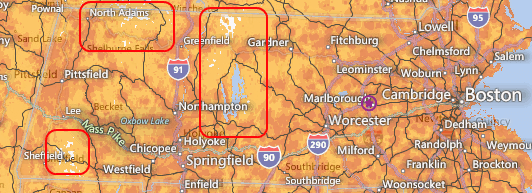
AT&T Mobility claims its competing cell service is available across virtually the entire state of Massachusetts.

AT&T Mobility claims its competing cell service is available across almost the entire state of Massachusetts. The areas boxed in red are the only significant parts of the state without claimed coverage by AT&T.

There are only about three dozen or so towns in the state with no cable voice service, and even fewer with significant sections that have no cell phone service, all in the sparsely populated rural central and western parts of the state.

Other key components of this and another bill Verizon is supporting this term:

  • Verizon would end its commitment to provide universal service in the state. Under the terms of the bill, Verizon could also justify ceasing rural landline service and offer an alternative such as Voice Link, a wireless landline replacement not subject to state oversight;
  • Verizon would not have to report finances and customer service metrics and would no longer have to meet mandated customer service standards;
  • State authority to compel reliable E911 service without any charge to the calling party and mandates regarding service for the disabled are weakened or eliminated;
  • Elimination of a requirement providing Verizon customers with 10 free directory assistance calls per month, unless the customer is certified as elderly or disabled;
  • Impose clear terms that wireless service is off-limits to state regulators.

The bill is co-sponsored by: Rep. Stephen Kulik (D-Worthington), Sen. Anthony Petruccelli (D-East Boston), Rep. Kathi-Anne Reinstein (D-Revere), and Sen. Sal DiDomenico (D-Everett).

Wireless is Verizon’s Cash Cow: $12.9 Billion in Operating Profits vs. Landlines/FiOS: $87 Million

moneyIf “follow the money” is a maxim in business, then it should come as no surprise Verizon favors the making the bulk of its investments and expansion in its enormously profitable wireless business.


Verizon Wireless earned the company $12.9 billion in operating profits during the first six months of 2013 while landlines and Verizon’s fiber optic network only delivered $87 million. That inconsistency may help explain why Verizon FiOS expansion is stalled while Verizon throws enormous sums into its 4G LTE wireless upgrade project.

The average Verizon Wireless bill is now over $150 a month. FiOS customers pay an average of over $150 a month as well, but Verizon’s costs to reach its smaller customer footprint are higher. Revenues for basic landline service are considerably lower than either wireless or fiber service.

With wireless providing a virtual ATM for Verizon Communications, the New York Times notes it is unsurprising that Verizon wants to buy out its European partner Vodafone, which owns 45% of Verizon Wireless. Once the $130 billion transaction is complete, Verizon will keep wireless profits all to itself as it continues lobbying for permission to decommission rural landlines and encourage those customers to use its vastly more profitable and almost entirely unregulated wireless network instead.

Exactly 100 years after Verizon predecessor AT&T/The Bell System voluntarily agreed to be a regulated monopoly provider of telephone service, Verizon Wireless and AT&T have successfully established unregulated wireless networks that serve most Americans with cell service and wireless data at prices that would be shocking to people 20 years ago.

No Verizon FiOS Expansion for Next Several Years; Company to Focus on Improving Profits

Verizon plans to maintain a moratorium on further expansion of its fiber to the home service except in areas where it has existing agreements to deliver service.

Verizon’s moratorium on further expansion of its fiber to the home service will continue for “the next couple of years.”

Verizon FiOS won’t be coming soon to a home near you, unless that home is inside a community with a standing agreement with the phone company.

Verizon CEO Lowell McAdam made it clear to attendees at Tuesday’s Goldman Sachs 22nd Annual Communacopia Conference his priority continues to be investing in the company’s highly profitable wireless business, while the company’s wired infrastructure is being targeted for more cost cutting, especially in areas designated to see existing copper infrastructure decommissioned. As for expanding FiOS into new communities, McAdam said he instead preferred to concentrate on improving market share and profits for the next few years in areas already getting the fiber optic service.

McAdam noted John Stratton, president of Verizon Enterprise Solutions, has been hard at work pruning Verizon’s wireline products and services targeted to business and government customers.

“I think [he] killed about 2,000 products this year, and we have taken 350 systems offline last year,” McAdam noted. “I think we are already at 250 this year. That sort of discipline gives you the ability to streamline your infrastructure.”

For residential customers, Verizon has two sets of offerings: one for customers served by FiOS fiber optics, the other for customers unlikely to see fiber upgrades indefinitely.

Inside Existing FiOS Service Areas

“We are doing some major technology shifts within FiOS to make it more efficient,” McAdam said. “We’re going to concentrate there for the next couple of years.”

McAdam’s signals to Wall Street were loud and clear: no more FiOS expansion into new communities for now.

McAdam

McAdam

Instead, Verizon will focus on improving existing service in several key areas:

  • Verizon has almost two million optical terminals that McAdam says were active at one point and are now sitting idle, suggesting FiOS has won and lost nearly two million customers since launching, either because the customer switched providers or moved away. McAdam said he wants to improve Verizon FiOS’ product set enough to attract those customers back. He noted with the terminals and cables already in place, the capital costs to win back a former customer are near zero;
  • Verizon is introducing a new terminal this fall. Verizon’s FiOS Media Server “eliminates the requirement for coax, once you get into the optical terminal in the basement or wherever in the house,” McAdam said. “That slashes the installation time, and therefore makes the product a lot more profitable for us going forward. It eliminates set-top boxes, it is all IP-based going forward.”
  • Verizon will continue to expand Verizon FiOS, particularly in New York City where it has a commitment to offer service.

Verizon FiOS has managed to build a much larger market share than its nearest neighbor, AT&T U-verse. McAdam claimed Verizon FiOS has achieved a 39 percent market share in broadband and around 34 percent on its television service so far. McAdam’s goal is to boost that to 45 percent. In areas of Texas where Verizon first introduced its FiOS fiber optic service, the company already has a penetration rate above 50 percent for broadband and 50 percent for television, demonstrating room to grow market share. AT&T’s U-verse TV penetration rate is 20.1 percent.

For Those Unserved by FiOS

4g wireless

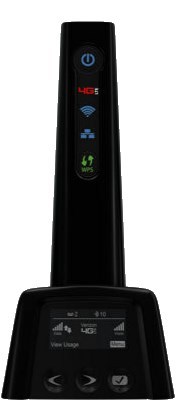
Verizon’s 4G LTE Broadband Router with Voice

Except for Fire Island, N.Y., there are no significant announcements of FiOS expansion. Instead, Verizon has focused on investing to improve its wireless 4G LTE cell networks with the hope existing landline customers will consider switching to higher-profit wireless service. An attempted trial of Verizon Voice Link, intended to be an entry-level wireless replacement of landline service, failed badly on Fire Island due to an avalanche of complaints about poor quality reception, dropped and incomplete calls, and lack of support for data.

Now Verizon is back with a new offering, its 4G LTE Broadband Router with Voice ($49.99 2-yr contract with $175 early termination fee/$199.99 month-to-month).

“Securely connect wired and wireless devices to the 4G LTE network, and connect your landline phone to make calls,” Verizon’s website says. “Combine voice and data on a Share Everything Plan for added savings.”

The device can function as both a wireless landline replacement and router for data. The unit includes three Ethernet ports and Wi-Fi to share your connection. A landline phone or cordless phone base station can be plugged in as well.

Verizon charges an extra $20 a month for Home Service Monthly Line Access on Share Everything Plans, which covers your telephone service. Customers get unlimited local, long distance, call forwarding, call waiting, three-way calling, and voice mail. 911 is available, but Verizon disclaims any responsibility if you cannot reach an operator. The device also supports TTY-TTD calling.

Verizon claims users can expect 5-12Mbps downloading and 2-5Mbps uploading on Verizon’s 4G network, assuming there is solid coverage where you use the device. Usage caps apply. A backup battery keeps the service running for up to four hours of voice calling in the event of a power outage.

McAdam admitted the thing that keeps him up most at night are regulatory issues. He particularly called out Europe, which he believes is hostile for investment. But Europeans pay considerably less for wireless service than North Americans pay, and often have more choices due to competition and regulatory oversight.

“I think the beauty of the ’96 Telecom Act was that it was such a light touch on broadband and mobile,” said McAdam. “And that is — and I sit in Europe talking to investors all the time — that is the biggest difference between the U.S. and Europe.”

To head the FCC off from pursuing any additional regulatory oversight, McAdam claims he reluctantly approved Verizon’s lawsuit against the government on Net Neutrality.

“We have had to take some positions, frankly, that we didn’t want to take,” McAdam said of the lawsuit. “It opened the door for them to get into price regulation of broadband. And I think that is not their charter, and I think it would be a mistake for the U.S. economy and certainly the telecommunications ecosystem.”

[flv width=”488″ height=”300″]http://www.phillipdampier.com/video/Verizon 4G LTE Broadband Router with Voice 9-25-13.flv[/flv]

Verizon Wireless’ latest 4G LTE router supports wireless landline service and 4G data.  (1 minute)

Search This Site:

Contributions:

Recent Comments:

Your Account:

Stop the Cap!
