Home » telephone service » Recent Articles:

Cogeco Won’t Lower Your Bill; Warns Customers Not to Be “Victims” of Landline Cutting

Phillip Dampier April 14, 2014 Canada, Cogeco, Competition, Consumer News Comments Off on Cogeco Won’t Lower Your Bill; Warns Customers Not to Be “Victims” of Landline Cutting

cogecoDespite growing competition from Bell’s fiber-to-the-neighborhood service Fibe, now expanding into many of Cogeco’s outer suburban service areas, Cogeco will not negotiate a better deal for customers, preferring to emphasize its customer service and “right-sizing” bundles of services to best meet customer needs.

As a result of higher prices, Cogeco’s earnings and profits are up for the second quarter of 2014. In the quarter profits rose to $58.5 million — up from $48.9 million during the same quarter a year ago. Revenue rose to $518.4 million from $458.5 million.

“We don’t like competing on price,” said Cogeco CEO Louis Audet said. “I’m not saying it’s zero, but we really don’t like competing on price.”

Audet

Audet

Customers have been offered sign up discounts from Cogeco’s most aggressive competitor on pricing – Bell. But when customers in parts of Ontario and Quebec call Cogeco to negotiate for a lower price, they are largely being turned down.

Audet said Cogeco instead emphasizes that customers will receive better customer service from the cable company, and customer retention specialists are trained to adjust packages to emphasize the services customers want without cutting their cost.

“It’s a right-sizing exercise,” Audet said. “Maybe the person wants a little less video, but they want higher Internet speeds.”

Cogeco isn’t winning the battle to keep its price-sensitive customers, however. The company lost 10,305 subscribers in the second quarter, nearly double the amount lost in the same quarter a year ago. Cogeco now serves 1.96 million Canadian cable television customers.

Customers are also dropping their Cogeco phone service, a decision Audet said makes them “victims” of cell phones. Cogeco permanently disconnected 6,000 landlines in the quarter, up from 5,550 a year ago. It still serves 473,000 phone customers.

The company lost almost 6,000 telephone customers in the quarter compared with additions of 5,550 in the same quarter last year. It had more than 473,000 residential phone customers left.

Despite the customer losses, rate increases more than made up for lost revenue, giving the company a nearly $10 million boost in profits during the second quarter alone.

Surprise: Some Alabama Customers Unhappy About AT&T’s Experiment Ending Landline Service

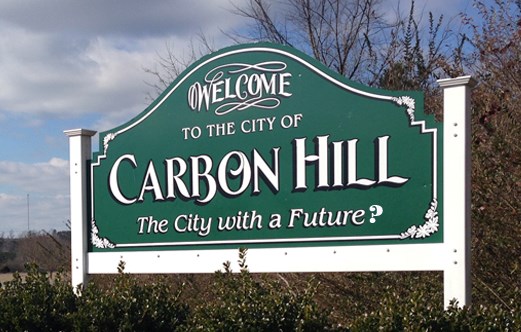
att-logo-221x300AT&T customers in Carbon Hill, Ala. received an unwelcome surprise in their mailbox recently when AT&T informed them they will be part of an experiment ending traditional landline service in favor of a Voice over IP or wireless alternative.

Affected customers are involuntary participants in what AT&T calls an “exciting opportunity for our customers and for our company,” but many residents want no part of it.

The Wall Street Journal reports Carbon Hill city clerk Janice Pendley says some people in the former mining town are not pleased.

“Some of them like their landline, and they like it just the way it is,” she says.

AT&T’s experiment will force new and existing customers to switch to its more-expensive U-verse broadband platform, use a mobile phone, or a home landline replacement that works over AT&T’s cellular network. The FCC has granted AT&T permission to impose its experimental plan to end traditional landline service in two communities where regulatory protections for landline customers are weak to non-existent — Alabama’s Carbon Hill and Delray Beach, Fla.

Carbon Hill is a small town of around 880 households in extreme western Walker County. It is the kind of rural town AT&T would likely never consider for a U-verse upgrade. AT&T embarked on a second major push to extend U-verse into more communities last year, but also indicated it would strongly advocate for a wireless replacement for its landline network in the rest of its service areas. Because Carbon Hill is an experiment, AT&T will offer U-verse to at least part of the community regardless of the usual financial Return on Investment requirements AT&T usually imposes on its U-verse expansion efforts.
carbon hillAT&T is pushing forward despite the fact it  has no idea how it will offer service to at least 4% of isolated Carbon Hill residents not scheduled to be provided U-verse and not within an AT&T wireless coverage area. There are also no guarantees customers will be able to correctly reach 911, although AT&T says the technology “supports 911 functionality.” Serious questions among consumer advocates remain about whether the replacement technology will support burglar alarms, pacemakers and even systems used by air-traffic controllers.

The difficulties service Carbon Hill relate to its rural makeup and income profile. In Delray Beach, it is all about customer demographics. Half of the city is home to residents over 65 years old — the group most likely to prefer their existing landline service. Many are likely to be unhappy about a transition to new technology that will not work in the event of power interruptions, will require the installation of new equipment, or will be tied to a wireless platform that some say reduces the intelligibility of telephone conversations and often introduces audio artifacts like echo, background noise, and dropouts.

In both cities, customers only offered wireless-based service will no longer have access to DSL or wired broadband service of any kind. The wireless alternative from AT&T comes at a high cost and a low usage allowance.

The benefits to AT&T are unquestionable, however. The company will win almost universal deregulation as a Voice over IP or wireless telephone provider. Legacy regulations on customer service requirements, pricing, and obligations to provide affordable phone service to any customer that requests it are swept away by the new technologies. Competitors are also worried AT&T will be able to walk away from regulations governing open and fair access to AT&T’s network.

ip4carbon hillThe Wall Street Journal reports:

The all-Internet protocol “transition holds many promises for consumers, but losing access to affordable voice and broadband services cannot be part of that bargain,” wrote Angie Kronenberg, general counsel of Comptel, in a letter to the FCC last month on behalf of the small-carrier trade group, several companies and public-interest groups.

AARP said it believes AT&T’s plan has “numerous problems.” The technology might not be reliable enough or fail when calling 911 in an emergency, the advocacy group for seniors told regulators in its comment letter. The FCC is reviewing hundreds of comments received in response to AT&T’s request.

EarthLink piggybacks on the “incumbents as little as economically possible” and has laid nearly 30,000 miles of fiber-optic cables throughout the U.S. to help it reach more than a million customers, says Rolla Huff, a former EarthLink chief executive. Still, the company needs access to the connections built by AT&T and Verizon into buildings.

Telecom carriers such as Windstream in Little Rock, Ark., and sellers of broadband data services like EarthLink and XO Communications LLC, of Herndon, Va., have had the right to buy last-mile access at regulated prices since the last major overhaul of federal telecom laws in 1996.

tw telecomIf AT&T ends its traditional network, those competing service providers will have to negotiate with AT&T for access at whatever price AT&T elects to charge.

A preview of what is likely to happen has already been experienced by TW Telecom, an independent firm selling phone and Internet services to businesses over more than 30,000 miles of fiber lines. But that fiber network means nothing if a customer’s last mile connection is handled by a local phone company no longer subject to regulated pricing and access rules.

In Tampa, where Verizon has deployed FiOS as an unregulated replacement for its older, regulated copper-based network, TW Telecom learned first hand what this could ultimately mean:
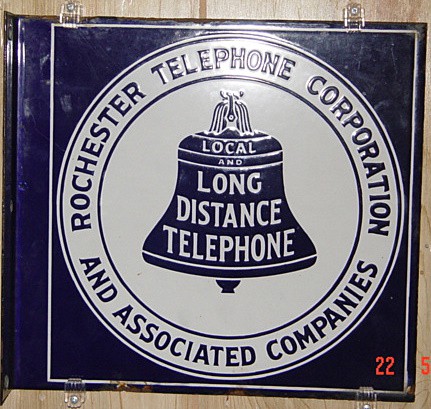
Rochester Telephone Corporation was born in 1921 after a merger between the Rochester Telephonic Exchange, a branch of the Bell Company of Buffalo and locally-owned independent Rochester Telephone Company, which was not allowed to use Bell's long distance network.

Rochester Telephone Corporation was born in 1921 after a merger between the Rochester Telephonic Exchange, a branch of the Bell Company of Buffalo and locally owned independent Rochester Telephone Company, which was not allowed to use Bell’s long distance network.

TW Telecom approached Verizon in 2012 to seek last-mile access to a Tampa, Fla., building being converted into a bank from a restaurant. Verizon had installed only FiOS at the building.

Verizon said no, telling TW Telecom to build its own connection or pay Verizon thousands of dollars to do the job. TW Telecom declined to pay and lost the customer’s business.

“When it happens, it’s devastating,” says Kristie Ince, who oversees regulatory policy at TW Telecom. Similar snarls have cost the company at least six customers since then. Other carriers say they have had similar clashes.

In Illinois, Sprint’s business phone network has run into a barricade manned by AT&T. Sprint needs AT&T to interconnect calls placed on Sprint’s network intended for AT&T’s customers. The two companies cannot agree on an asking price under the deregulation scheme so Sprint converts its Voice over IP calls to older technology still subject to regulation just so calls will successfully reach AT&T’s customers. AT&T promptly converts those calls back to Voice over IP technology as it completes them.

AT&T said it has “no duty” to connect its Internet protocol traffic with Sprint’s.

If the FCC keeps IP-based traffic deregulated, if and when the old landline network is decommissioned, AT&T will have the last word on access, potentially putting competitors out of business.

Our great-great grandparents experienced similar problems in the early days of telephone service, when high rates from the local Bell telephone subsidiary provoked local competition. But Bell companies routinely refused to handle calls placed on competitors’ networks, forcing customers to maintain a telephone line with both companies to reach every subscriber. Additionally, only Bell-owned providers had access to the long distance network – a competitive disadvantage to competing startups.

Regulatory changes, a handful of mergers and the eventual establishment of the well-regulated Bell System eventually solved problems which threaten to return if AT&T has its way.


Charter’s Rebranded “Spectrum” Service Arrives in Fort Worth; New Name, New Reputation?

charter spectrum logoCharter Communications’ latest attempt to rehabilitate its reputation with customers in Fort Worth, Tex. arrived this week in area mailboxes, as Charter reintroduced itself as “Charter Spectrum.”


Fort Worth is the first major city to get Charter’s broad-based service upgrade that began more than a year ago with a switch to all digital television service.

The newly available bandwidth no longer needed to support analog television has allowed Charter to expand its video service to more than 200 HD channels, up from fewer than 100.

Customers also start their Spectrum experience with a free broadband speed bump — from 30Mbps to 60/4Mbps (with a barely enforced monthly usage cap of 250GB), and an improved cable telephone service with nationwide calling.

Charter Spectrum's mailer is now arriving in Ft. Worth mailboxes. (Courtesy: TheTechGuru)

Charter Spectrum’s mailer is now arriving in Ft. Worth mailboxes. (Courtesy: TheTechGuru)

Charter CEO Thomas Rutledge openly admitted last year Charter had an inferior product compared against the competition. Upgrading Charter’s cable systems was designed to correct that and the company hopes its rebranding will deliver a marketplace reset, but some Charter customers remain skeptical.

“Same pig, fresh lipstick,” wrote one Charter customer in Missouri.

Others complain Charter’s upload speeds remain anemic at just 4Mbps.

Charter’s new pricing promotions were designed to simplify the shopping experience. There are now just three heavily promoted Spectrum triple play packages:

spectrum packages

A customer taking advantage of the Triple Play Gold promotion will pay a one-year promotional price of $129.97 a month. (Customers can also select individual services or build their own double-play bundle). The fine print mentions the price rises to $149.97 the second year and then reverts to an undisclosed “standard rate” after that. TV set-top boxes are required on every cable-connected television ($7 a month each – not included in the price). The Internet modem carries no additional charge. Phone taxes, fees and surcharges are also covered, but other taxes, fees, and surcharges are not.

Offers are valid for new customers only, and those who have not subscribed within the last 30 days and have no outstanding debt obligation to Charter.

[flv]http://www.phillipdampier.com/video/WLOS Asheville Charter Going Digital 11-11-13.flv[/flv]

Charter Spectrum arrives only after your local Charter system moves to all-digital television service. That happened last fall in Asheville, N.C., where customers were told they needed a digital set-top box on every television in the home. WLOS-TV covered the story back on Nov. 11, 2013. (1:44)

Denial of Service Attack on One Mass. Customer Brings Verizon FiOS to Its Knees for Many

Phillip Dampier March 24, 2014 Broadband Speed, Consumer News, Verizon 3 Comments
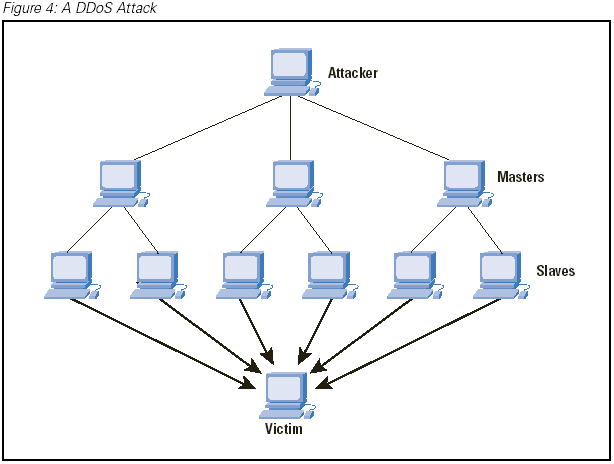
A denial of service attack often directs compromised computers to join in the attack, bringing an enormous amount of simultaneous traffic to a single, targeted user. The result is usually very slow or no Internet service.

A denial of service attack often directs compromised computers to join in the attack, bringing an enormous amount of simultaneous traffic to a single, targeted user. The result is usually very slow or no Internet service. (Image courtesy: Cisco)

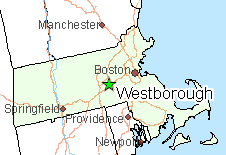
For nearly a month, Verizon FiOS customers in Westborough and Northborough, Mass. have experienced frequent slowdowns and outages of their Internet and telephone service that Verizon now admits have been traced to a denial-of-service attack on a single residential customer in Westborough.

“Someone deliberately flooded that customer with an overwhelming amount of traffic that rendered their Internet service inoperable,” Verizon spokesman Philip G. Santoro told The Telegram. “When that happened, it caused Internet service to periodically slow down for other customers in Westborough,” he wrote. “We are working to restore service to normal as soon as possible. DOS attacks are all too common today among customers of all Internet providers. It’s important to remind Internet users to keep their firewalls operating and to keep their security software current.”

When the newspaper first reached Santoro for comment, he claimed there wwere no widespread outages reported, but angry customers disagreed on the community’s Facebook page and six filed complaints with the state’s Office of Consumer Affairs and Business Regulation.

The outages have been a problem as far back as Feb. 26, growing more frequent in number since March 3. Business customers were also affected.

“It happened around 3 o’clock, every day,” said Allen Falcon, chief executive officer for Cumulus Global, a cloud computing company in Westborough. “Sometimes it was a few minutes, sometimes 45 minutes to an hour.” A few times, the interruptions occurred in the morning, just after 9 a.m., he said.

westboroughWhen the attacks began, they not only affected the company’s Internet connection, but also its business phone service.


Verizon’s first solution was to replace FiOS routers, which proved ineffective.

Customer Steve Winer from Westborough told the newspaper sending Verizon crews out with new equipment was a waste of time and money.

“I am just wondering how much time and money was wasted on this,” he wrote the newspaper in an email. “I know I spent at least a couple of hours on the phone, and others shared similar stories. But, if you add up all the shipped routers and unnecessary service calls, along with the time both of us customers and (Verizon) personnel, I am sure it really adds up, and could have been avoided if someone had simply put two and two together and posted a chronic outage which began in February.”

Verizon's wired success story

Last week, Verizon finally identified the specific customer targeted by the cyber-attack and terminated his FiOS account, which also put an end to the service-disrupting attacks.

Some customers are wondering whether Verizon has an effective plan to deal with future cyber attacks.

“It seems FiOS is very vulnerable to these attacks, which not only affects the target’s service, but that of everyone else in town,” wrote Stop the Cap! reader Steve Read, a Northborough resident. “They need a way to quickly isolate these kinds of attacks and keep them from affecting other customers’ service.”

Customers affected by the outages can contact Verizon FiOS customer service and request credit for the outages.

AT&T’s Gigabit Fiber: Spying on Your Browsing History for Targeted Ads and Discounts

who is watching

AT&T has got your number.

AT&T wants to know what you are doing on the Internet.

If you agree to share your browsing history and view targeted contextual advertising from AT&T and its partners, the company will give you a monthly discount off the price of its new GigaPower gigabit fiber network.

Now launching in Austin, AT&T GigaPower charges $99 a month for 300Mbps standard service (speeds will be raised to 1,000Mbps in 2014 at no extra cost — equipment, installation and activation fees are extra). But customers can knock $30 off the monthly price and skip the new customer fees by enrolling in AT&T’s new “Premier” package, which runs $70 a month.

GigaOm discovered some interesting language in AT&T’s fine print about its Premier service: “[The discount] is available with your agreement to participate in AT&T Internet Preferences. AT&T may use your Web browsing information, like the search terms you enter and the Web pages you visit, to provide you relevant offers and ads tailored to your interests.”

Exactly how AT&T intends to implement its contextual advertising program remains largely a mystery. Google includes contextual ads in its Gmail service, its search engine results, and in online advertising from participants in Google’s AdWords program. AT&T lacks an advertising platform as large as Google or Microsoft’s Bing, so questions are being raised about how exactly AT&T will be able to find enough places to present online ads.

GigaOm suspects AT&T might use deep packet inspection to monitor customers’ web traffic to collect browsing information for contextual ads. Others suspect AT&T will replace certain existing third-party ads found on independent websites with its own advertising. Either is likely to bring the company scrutiny, both from Internet Privacy advocates and website owners that find their advertising replaced by ads from AT&T and its partners.

AT&T’s response to GigaOm left a number of questions unanswered:

We use various methods to collect web browsing information, and we are currently reviewing the methods we may use for the Internet Preferences program. Whichever method is used, we will not collect information from secure (https) or otherwise encrypted sites, such as online banking or when a credit card is used to buy something online on a secure site. And we won’t sell your personal information to anyone, for any reason.

[…] We won’t sell your personal information. Rather, AT&T may use your personal information to direct another advertiser’s ad to you, but that advertiser would never have access to your Personal Information. For example, after you browse hotels in Miami, you may be offered discounts for rental cars, but that rental company doesn’t know who you are.

AT&T is experimenting with consumer acceptance of discounting service in return for giving up some privacy. It says it is giving customers the choice to opt out by signing up for the more expensive “standard” service.

gigapower pricing

U-verse television service is also available to customers of both packages for an extra $50 a month. Telephone service adds another $30 a month.

AT&T has started rolling out its GigaPower service in the French Place, Mueller, Zilker, and Onion Creek neighborhoods and will select future places to expand based on interest registered by local residents on AT&T’s GigaPower website.

“We’ve already received great input from thousands of Austinites eager for the fastest speeds,” said Dahna Hull, general manager of Austin’s AT&T Services, Inc. “These votes are helping us identify where the need for speed and advanced TV services is the greatest and will help guide our future GigaPower expansion plans.”

[flv]http://www.phillipdampier.com/video/KXAN Austin Internet speed race in Austin is on 12-11-13.mp4[/flv]

Options for super high-speed Internet are heating up in Austin as AT&T introduces AT&T U-verse with GigaPower this week. KXAN reports the service will initially launch with 300Mbps service in a handful of neighborhoods, but upgrade to 1,000Mbps speeds in more locations next year. (2:30)

Search This Site:

Contributions:

Recent Comments:

Your Account:

Stop the Cap!