Home » telephone service » Recent Articles:

Meanwhile, Verizon Under Investigation for Dropping the Ball on 911 Calls During Storm

Phillip Dampier February 22, 2011 Consumer News, Public Policy & Gov't, Verizon, Video Comments Off on Meanwhile, Verizon Under Investigation for Dropping the Ball on 911 Calls During Storm

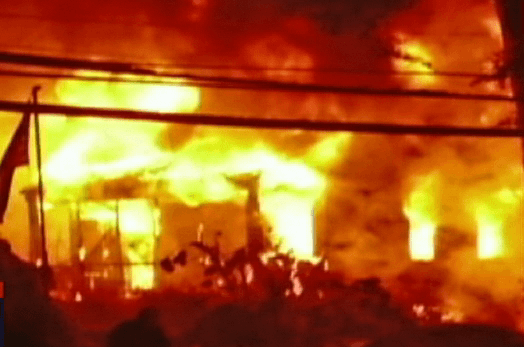
This home in Silver Spring became fully involved in fire after neighbors couldn't reach 911 and had to rescue the 94-year old resident themselves.

More than 10,000 calls to 911 during last month’s blizzard on the east coast failed to reach emergency officials over Verizon’s network according to the Federal Communications Commission.  Even worse, terrorism experts suspect the 911 failures could impact the entire nation during a major disaster, weather event, or terrorist attack.

Last month, a Silver Spring residence went up in flames and neighbors had to rescue the 94-year old owner themselves after repeated attempts to call 911 failed.

The latest and most serious incident occurred in Washington, D.C. and its suburbs Jan. 26 when a snowstorm triggered more than 10,000 calls for help that never reached emergency responders.  The blame is being laid at the feet of one company — Verizon Communications.

All 14 circuits in the Verizon network that properly route all wireless calls in Montgomery County failed and nine of 10 Verizon circuits in Prince George’s County failed over a five-hour period on the night in question. This resulted in approximately 8,300 blocked 911 calls in Montgomery County and 1,700 blocked 911 calls in Prince George’s County that evening, according to Rear Admiral Jamie Barnett, Chief of the FCC’s Public Safety and Homeland Security Bureau.

“I know that you will agree that any 911 call which is not connected can have serious consequences, but the large number of missed 911 calls on January 26 is truly alarming,” Barnett wrote Verizon. “The ability to call 911 is critical to the safety of the public. This is especially true during extreme weather events. The public rightly expects that they can use 911 to reach the appropriate first responders in an emergency. In addition to your written response, I request a meeting with appropriate representatives from Verizon within the next two weeks to discuss your resolution of this matter.”

Barnett and the FCC also expressed concerns these problems may not be an isolated incident, but could be a nightmare waiting to happen wherever Verizon provides telephone service.

Verizon blamed an equipment failure and an avalanche of calls for the problem.

“We have been addressing this issue directly with the counties involved, and will work cooperatively to address the FCC’s questions, as well,” said Harry Mitchell, a Verizon spokesman.

[flv width=”600″ height=”380″]http://www.phillipdampier.com/video/Montgomery County 911 No answer.flv[/flv]

This YouTube video shows a 911 call in Montgomery County going unanswered for nearly a minute and a half.  (2 minutes)

[flv width=”640″ height=”380″]http://www.phillipdampier.com/video/WUSA Washington 911 Service Problems 2-22-11.flv[/flv]

WUSA-TV in Washington has followed the 911 disruptions for several weeks now.  Channel 9 picks up the story starting with the fire in Silver Spring.  (6 minutes)

[flv width=”640″ height=”500″]http://www.phillipdampier.com/video/WTTG Washington 911 Service Problems 2-22-11.flv[/flv]

WTTG-TV in Washington also reports on the frustration from 911 callers as well as city and local officials annoyed with Verizon.  (6 minutes)

Windstream Reports Increased Landline Losses, But Revenues Up from Acquisitions

Phillip Dampier February 22, 2011 Rural Broadband, Windstream 1 Comment

Windstream, one of America’s largest independent phone companies, has reported lower profits in the fourth quarter, declining four percent year-over-year to $72.4 million.  Windstream’s core business continues to decline — losing another 36,000 landline customers during the quarter, as Americans continue to drop traditional telephone service.

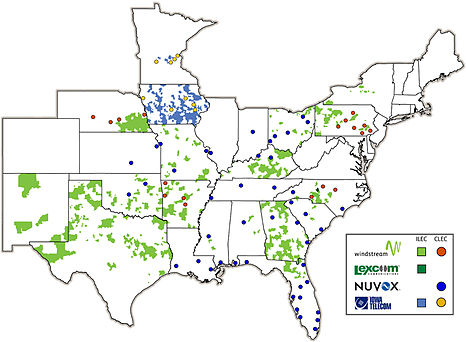
But Windstream’s ongoing acquisitions, as structured, are helping boost revenues on the company’s balance sheet.  Windstream completed four acquisitions in 2010: the phone companies Iowa Telecom, Nuvox and Q-Comm Corp, and a data center operator, Hosted Solutions.

Although boosted revenue numbers can temporarily improve a company’s share price, investors are unlikely to ignore Windstream’s ongoing decline in profits for much longer.  Windstream officials expect revenue growth for 2011 to remain flat, or potentially edge up by 3 percent. But part of that revenue growth comes from $40 million in broadband stimulus funding the company expects to receive from the Obama Administration during the year.

Windstream's 2009 announced purchase of Iowa Telecom expanded Windstream's reach.

Windstream has made inroads in expanding broadband service in its largely rural service areas.  The company added 12,000 broadband customers during the quarter, mostly for its DSL product.

Windstream’s results show a growing disparity between its residential customers and its business services unit.  While growth on the residential side has been flat to anemic at best, the company is finding better results from its business customers.  The decision to acquire a data center is part of the company’s growing strategy towards those clients.  Windstream plans to spend a considerable amount of its capital during 2011 on improving its data hosting and wireless backhaul product lines to service these customers.

“We’ve made great strides in our business channel, which now represents roughly half of Windstream’s total revenue and importantly, these revenues are growing,” said Brent Whittington, chief operating officer at Windstream.

Windstream’s acquisition plans for 2011 appear cooler than in previous years as it attempts to reduce its leveraged debt.  Most of Windstream’s growth has been attributed to its aggressive mergers and acquisitions strategy.  The company, created in 2006 from Alltel’s landline division and Valor Telecom has grown into a national player, serving nearly 3.4 million customers in 23 states.  Among its larger acquisitions — CT Communications (2007), D&E Communications (2009), and Iowa Telecom (2010).

Despite the lower profits, Windstream’s dividend payout ratio was 57 percent for the year, and the company expects to pay between 52 percent and 59 percent of earnings for 2011.

CenturyLink Invests to Reinvent Themselves: Prism IPTV/25Mbps Service Arrives

Phillip Dampier February 16, 2011 Broadband Speed, CenturyLink, Competition, Consumer News, Video Comments Off on CenturyLink Invests to Reinvent Themselves: Prism IPTV/25Mbps Service Arrives

Invest or die.  That succinctly explains the current state of the landline telephone business and the companies providing service to a decreasing number of Americans.  Some companies, like AT&T and Verizon have heavily diversified their business into wireless, fiber, IPTV and broadband.  Others, like Frontier are hoping their presence in uncompetitive rural markets will keep them in business, as long as their dividends keep stockholders happy.

CenturyLink, which is in the process of absorbing the last remaining Baby Bell — Qwest, has decided to invest in their business to stay competitive with their biggest nemesis — the cable company.  CenturyLink is still hanging on to ADSL broadband service in many rural areas, but the company sees the promise of future relevance with bonded DSL, which is delivering 25/2Mbps broadband service to an increasing number of their customers.  Where distances allow, CenturyLink is at least temporarily providing the fastest residential broadband service available in areas like southwest Florida.  They are holding their own against local cable competitors like Comcast.

Now the company is following AT&T in introducing a new IPTV service to many of its customers.  Dubbed Prism, the U-verse like service delivers a true triple play package to customers who thought they would be stuck with their local cable company or satellite dish provider for TV programming.

Prism offers more than 200 channels, a multi-room DVR capable of recording up to four shows at the same time, and an interactive program guide that doesn’t need an instruction manual to navigate.

[flv width=”640″ height=”390″]http://www.phillipdampier.com/video/Introducing CenturyLink Prism.flv[/flv]

This promotional video introduces CenturyLink’s Prism service and its television features.  (4 minutes)

Prism has been introduced in larger CenturyLink areas ranging from southern Nevada, southwestern Florida, and North Carolina, where EMBARQ used to provide telephone service.

The service works through a hybrid fiber-copper wire IPTV network.  Fiber optic cable reduces the distance data needs to travel over ordinary copper phone wires.  The less copper, the faster the potential speed.  With a 25-30Mbps broadband platform, Prism can divide up available bandwidth to support television, phone, and up to 10Mbps broadband service.  It’s all delivered over the same digital network.  While not as advanced as Verizon FiOS and other fiber to the home networks, IPTV services like Prism and U-verse are cheaper to provide, and that can mean faster deployment in areas not well served by competition.

Reaction to Prism has been generally positive among Stop the Cap! readers who have shared their stories with us.  Among the positives:

  • The interactive program guide is light years ahead of Comcast, Cox, and Time Warner Cable;
  • Broadband speeds are generally better than the original DSL service CenturyLink used to provide;
  • The picture quality is excellent where the telephone network has been upgraded the most;
  • Competitive introductory and retention offers mean consumers can pay less for service, at least initially.

But there are some problems, too:

  • Bandwidth varies depending on how far away you are from the nearest fiber node.  This affects what you can do with the service.  If you are further out, you can only watch one HD television channel at a time, and may not be able to record more than one HD channel at the same time;
  • The DVR box has issues — readers report shows disappear, don’t get recorded, or show poor results when line quality drops;
  • Broadband speeds with Prism officially max out at 10Mbps;
  • If you are watching a number of televisions at the same time, your broadband speeds could drop;
  • Variability in service quality comes largely as a result of inferior copper wire phone networks CenturyLink chose to stick with.  If your phone line is prone to static or hum, or deliver poor results when the weather is bad, Prism might not work well for you.
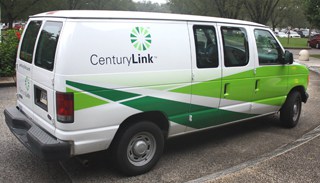
Some subscribers found they initially loved the service, but when bad weather arrived, it all fell apart.

“Our phone lines are decades old, so this comes as no surprise,” says Manny who writes from Naples, Fla.  “I was also disappointed some of the channels in HD I had with Comcast are not available from Prism.”

In parts of Raleigh, N.C., Prism just launched a few weeks ago.  But some of our readers are sticking with Time Warner Cable.

“After looking over their pricing and packages, Time Warner has more HD channels and doesn’t charge $12 a month extra for them,” writes Ralph.  “CenturyLink also only bundles 3Mbps broadband service with most of their packages, and you have to pay extra for 10Mbps service.”

Ralph thinks Road Runner from the cable company will provide a more consistent broadband experience for his family.

“There is only so much you can push through a phone line at the same time; I like the fact they are competing, but they will not be able to keep up if they rely on copper phone wiring forever,” Ralph says.

Cox faces new competition in southern Nevada

Despite some of the negatives, CenturyLink may deliver formidable competition where cable companies haven’t kept up.  Some other markets where Prism will offer service: Jefferson City, and Columbia, Mo., and La Crosse, Wis.  Cox Cable in southern Nevada is now competing with Prism, and believes it has the superior network.

“The way our system is constructed, we have services equally distributed everywhere in the valley,” Juergen Barbusca, Cox manager of communications, public and government affairs in Las Vegas said. “Everybody in our footprint can get our highest advertised speeds.”

Cable broadband is less susceptible to distance degradation that can make Prism a no-go in neighborhoods at the far end of a phone company’s central office.

Also equally distributed is the price.  Outside of new customer promotions, nobody will save any money here.  Cox and CenturyLink are both selling their respective triple-play packages of TV, Internet, and phone for exactly the same price: $143 a month.

[flv width=”480″ height=”380″]http://www.phillipdampier.com/video/KTNV Las Vegas CenturyLink Prism 2-8-11 WFTX Cape Coral CenturyLink in SW Florida 12-7-10.flv[/flv]

KTNV-TV in Las Vegas introduces viewers to CenturyLink’s Prism service and WFTX-TV in Cape Coral, Florida talks with CenturyLink about their new 25Mbps broadband service in two exceptionally company-friendly pieces from the stations’ respective news shows.  (13 minutes)

magicJack in 911 Fee Dispute in West Virginia: Will the $20/yr Phone Service Soon Cost More?

Phillip Dampier January 20, 2011 Consumer News, Public Policy & Gov't, Video 2 Comments

Kent Carper says magicJack has been stiffing Kanawha County for 911 fees the Florida-based phone company has refused to collect from its customers in West Virginia.

Carper, who serves as president of the County Commission, is taking his case to the West Virginia Public Service Commission (PSC) with the hope they’ll order the West Palm Beach-based YMax Communications, which owns the service, to start paying up.

“There’s nothing ‘magic’ about magicJack,” Carper told the Charleston Gazette. “It erodes the ability of the 911 center to pay for the services it’s being mandated to provide. MagicJack is not paying a penny, and their position is they don’t have to.”

Kanawha County currently collects a surcharge of $3.34 a month from landline and “digital phone” customers, $3 a month from those with cell phones.  If the county wins its dispute, the costs for 911 service will far outweigh the $19.95 a year magicJack charges for its own service.

Even Carper admits, “They’re practically giving away telephone service.”

Carper

It’s a high stakes battle for magicJack, because if it loses, other counties will surely follow with demands for 911 surcharges of their own.  magicJack officials argue they cannot collect the fees Kanawha County wants because of the way the product is marketed — typically through annual subscriptions.

magicJack’s lawyers also argue the company is not selling a true “voice-over-IP” (VoIP) service, comparable to Vonage, cable’s “digital phone” products, or other similar services.

The Federal Communications Commission partly defines VoIP as a single service for making and receiving phone calls over the public telephone network.  That’s a distinction that allows most Skype customers to avoid getting hit with fees and surcharges — Skype has a business firewall between their incoming and outgoing services. SkypeOut, which allows callers to connect with non-Skype customers, is a subscription service and does not support 911 calls.  SkypeIn service requires most users to dial from their computer, not a traditional phone line, unless a customer optionally rents a phone number from Skype.

The inventor of magicJack, Dan Borislow, said in legal filings with the PSC that customers are only buying a license for the device and the accompanying software — making and receiving calls are handled by two different services that customers get for free as part of the annual license:

The magicJack is a portable device that can be used by a customer anywhere in the world by plugging the device into a computer USB port, provided the computer has a broadband connection.

Upon purchasing a magicJack device, a customer receives a one year license, with the option to renew for an additional year or years, of software commonly known as a “softphone”. The software allows the magicJack device to operate.

The softphone operating software license gives the customer the option to subscribe to magicIn, which is a service offered by YMax. MagicIn permits a customer to obtain a phone number and to receive phone calls via his or her magicJack device.

The softphone license also permits a customer to subscriber to a service offered by magicJack known as magicOut. Subscription to the magicOut service allows a customer to make outgoing calls to the United States, Canada, Puerto Rico and the Virgin Islands through his or her magicJack device.

A magicJack purchaser who subscribes to magicOut or magicIn is not charged for either subscription, and the purchaser is also not billed for incoming or outgoing calls made or received through the magicJack device.

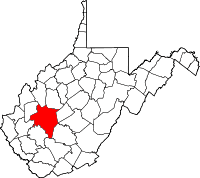
Kenawha County is West Virginia's most populous, home to Charleston, the state capital.

Billy Jack Gregg, the PSC’s former consumer advocate who was hired as a consultant by the Kanawha County Commission, thinks that’s nonsense. Gregg suspects magicJack is trying to avoid being designated as a VoIP provider because of mandated fees and surcharges that could come along for the ride.  Gregg testified few, if any magicJack customers are aware of “magicIn” or “magicOut,” and they don’t have the option of choosing one or the other anyway.

Gregg left Wal-Mart employees scratching their heads when he proved his point trying to only purchase the magicOut outgoing call service.  They had no idea what he was talking about.

Presumably, neither does the PSC which has rejected repeated attempts from magicJack and YMax to dismiss the case using those arguments.  Hearings are scheduled for March 1-2.

Carper says he has nothing personal against magicJack — he just wants the company to realize its refusal to collect and pay 911 fees affects the county emergency operations center’s ability to serve the public.

“Simply put, the failure of any provider to collect and remit fees impacts public safety and the ability of Metro 911 to serve the citizens of Kanawha County,” he said. “It erodes our ability to afford these emergency services.”

Some outside observers have zeroed in on a related matter — the very steep $3+ monthly 911 fees demanded by the county, West Virginia’s most populous and home to the state capital, Charleston.

Most 911 surcharges in the United States range between $0.35-0.50, with some larger cities across the country charging one dollar.  Some state laws prohibit fees in excess of $2 per month.

In earlier filings, magicJack’s lawyers appeared amenable to negotiating smaller payments, but not the $3+ county officials are demanding.

[flv width=”576″ height=”344″]http://www.phillipdampier.com/video/Boston Globe MagicJack Review.flv[/flv]

The Boston Globe’s video review of magicJack was more charitable than the accompanying write-up, which called its marketing “gaudy,” “sleazy,” and “crude.”  Author Hiawatha Bray also didn’t think that highly about the quality of the service he received, saying the product doesn’t inspire confidence and is not suitable as a home phone replacement.  Still, for long distance calls, a second line, or for travelers, magicJack can save you money.  (2 minutes)

Time Warner’s Telephone Tragedies Continue in NY/Mass. – 3rd Problem This Month (Get Credit!)

Phillip Dampier January 19, 2011 Consumer News, Video Comments Off on Time Warner’s Telephone Tragedies Continue in NY/Mass. – 3rd Problem This Month (Get Credit!)

If you are a Time Warner Cable “digital phone” customer living in New York or western Massachusetts, you can get a few dollars of your money back thanks to serious outages that have plagued the cable company for the past two weeks.

The worst problems occurred yesterday, when customers across the entire region couldn’t make or receive calls in many instances.

“My wife said it was like the whole system crashed,” reports Stop the Cap! reader Marcus, who lives near Syracuse.  “A lot of people here are very upset.”

Marcus reports he couldn’t even work around the outage by trying to set up call forwarding to send calls to his cell phone or another Voice Over IP provider.

“I tried to forward my Time Warner calls to a Vonage number I have and that didn’t work either,” Marcus writes.

We heard from several readers in Rochester, Albany, Syracuse, and even into western parts of Massachusetts that calling a Time Warner Cable customer from a cell phone or a landline from Verizon or Frontier was nearly impossible without getting a recording or busy signal.

Small business customers using Time Warner’s phone service were also impacted in some cases.

Lakeview Deli in Saranac Lake posted a message on its Facebook page just before noon, advising its customers to call in their lunch orders using a cell phone number because of the problems with its main phone line. Owner John Van Anden said he normally gets 30 to 40 calls around the lunch hour; he got only four on Tuesday.

“It hurt (business) quite a bit just because you can’t get phone calls from customers,” he said.

The outage, which lasted more than 12 hours, was reportedly finally fixed by the cable company last evening at around 11pm.  No explanation for the outage was given by Time Warner Cable.

This is the third major service problem for Time Warner’s phone service this month:

  1. Time Warner misdirected 911 emergency service calls to a call center in Colorado;
  2. Time Warner underestimated call volumes, leaving customers in central New York with “all circuits are busy” recordings or busy signals;
  3. Yesterday’s collapse of Time Warner’s phone network.

“Wow, this is starting to make Frontier look good again,” says our Rochester reader Kevin.  “I’ll be dropping my phone service with the cable company when my promotion ends and sticking with my Verizon cell phone.”

With all of these service outages, you know what that means — it’s time to go grab those service credits.  Customers in central New York can apply for at least a week of service credits because of the ongoing problems the company faces handling call volumes.  Everyone else in the region with “Digital Phone” service qualifies for a day’s worth of credit.  But you won’t get it unless you ask.  We’ve made asking simple, with our cut and paste process:

Stop the Cap! Presents Your Easy Service Credit Request Menu

Customers in the northeast can request one day of credit for yesterday’s phone outage.  Residents in central New York, including Syracuse — can ask for one week of credit for ongoing call congestion problems.

Sample Request You Can Cut and Paste:

I am writing to request one day service credit for the phone service outage that occurred in my area yesterday, Tuesday Jan. 18th. Please credit my account.

[Central NY Residents ONLY]: I am writing to request a credit for one week of telephone service to cover the company’s ongoing intermittent call connection problems in our area as well as yesterday’s (Jan. 18) more widespread service disruption.  I am concerned about the repeated problems Time Warner seems to be having in correctly servicing my telephone needs.  Please credit my account.

Use the Online E-Mail form, select Billing Inquiry, and send a message requesting credit.

[flv width=”480″ height=”380″]http://www.phillipdampier.com/video/WSYR Syracuse Another Phone Outage 1-18-11.flv[/flv]

WSYR-TV in Syracuse is spending plenty of time covering Time Warner’s phone outages and other problems.  Here’s the fourth report this month, covering yesterday’s widespread problem. (Warning: Loud Volume) (2 minutes)

Search This Site:

Contributions:

Recent Comments:

Your Account:

Stop the Cap!