Home » rural areas » Recent Articles:

AT&T’s Microcell Giveaway: Holding Onto (Some) Rural Customers With Mini Cell-Towers

Gertraude Hofstätter-Weiß February 9, 2011 AT&T, Competition, Consumer News, Wireless Broadband Comments Off on AT&T’s Microcell Giveaway: Holding Onto (Some) Rural Customers With Mini Cell-Towers

Here in West Virginia, cell phone reception is often by the grace of God.  The incredibly mountainous state makes “line of sight” communications a real problem when the nearest cell tower is blocked by a gigantic shale rock formation someone blasted through to build a road decades earlier.

AT&T probably still delivers the largest coverage of rural areas in the state because its towers expand beyond the major highways other carriers cover. But even with that expanded service, using a smartphone indoors is going to be a problem in many places.

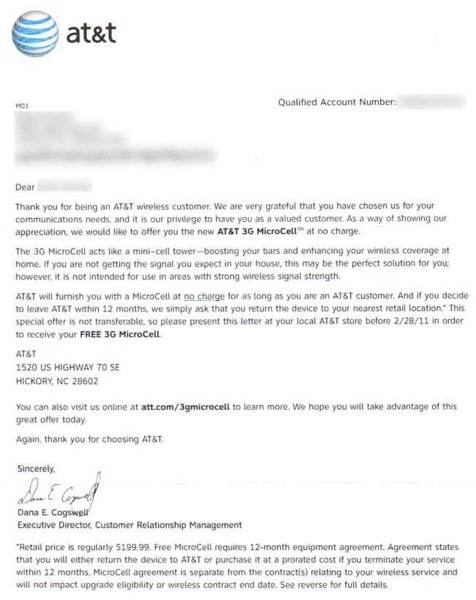
Recently, AT&T sent letters to approximately 7.5 percent of their customers in the rural areas most likely to have reception problems, offering a free “MicroCell,” which is comparable to a mini cell tower inside your home or office.  The equipment works with your existing broadband connection to expand “coverage” inside your home.  For data purposes, the MicroCell doesn’t deliver anything your personal Wi-Fi connection couldn’t, but if you rely on a cell phone, having signal bars makes all the difference if you are waiting for an important call.

A considerable number of those letters reached families in West Virginia, and that is no surprise considering the state is by far the most difficult to blanket with wireless coverage in the eastern half of the country.

A letter to AT&T customers inviting them to receive a free MicroCell

But the problem is, some families are receiving the free offers, while others are not, and that is creating reception envy.

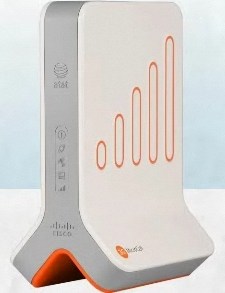
AT&T 3G MicroCell

Charlotte, who lives in Whipple, W.V., outside of Oak Hill, was visiting with her neighbor Joy last week and noticed her husband fiddling with the latest gadget on his computer desk.

“It looked odd because of the way it spread out on the bottom, so I asked Joy what in the world he was installing,” Charlotte says.

“It’s a cell tower thing AT&T gave us to get better reception,” Joy responded.

Despite the fact the two families live only a few homes apart and signed up for AT&T service with the exact same phones within weeks of each other, Charlotte was never offered AT&T’s MicroCell.

AT&T notified qualified customers with a letter containing a personal reservation code, and the offer was not transferable.

“Maybe you got it and threw it away,” Joy offered.

“No, ever since the credit card companies started changing terms on us, we open every envelope that comes into this house,” Charlotte replied.

Assuming it must be an oversight, Charlotte dropped by her local AT&T store to inquire about the offer.

“We quickly learned we were not the first family to bring up this issue with AT&T as the store manager told us he was fielding complaints from all over town about the highly-selective offer,” Charlotte said.

Even worse, there was nothing the manager could do to rectify the situation.

“His hands were as tied as my patience was tried,” Charlotte tells Stop the Cap!

“The store manager offered to sell me the MicroCell for around $100 with a rebate, but why should I pay AT&T for better reception they should already be providing?” Charlotte asks.  “It seems to me if they are giving away these things to some people in a neighborhood, they should be doing it for everyone, because we pay the same bill our neighbors do.”

The seemingly random offers of MicroCell units are not limited to West Virginia.  We’ve noticed complaints from residents in northern California, the Pacific Northwest, and northern New England from others who get reception while outdoors or on the go, but find their phones useless for making and receiving calls at home.

In most cases, irate customers seeking redress from AT&T run into a bureaucratic brick wall.

Rick McGee, commenting on Engadget’s website:

I have talked to Marketing, Technical Support, and my local store, and nobody can tell me who to contact to qualify for a MicroCell. I have been an AT&T Mobility customer for over four years, with four family plan phones and two more phones on corporate contracts. The reception at my house is usually zero, at times maybe one bar, but never enough to maintain an incoming call or make an outgoing call. I guess I am a glutton for punishment, but this is the last straw.

If AT&T does not magically send me one of the MicroCell coupons, I will total up my termination fees and determine the earliest date I am willing to dump AT&T and try another carrier. In addition to the cell phones, I have two AT&T land lines, plus an AT&T internet account, so I am likely in the top tier of residential customers. With no reception at my house, I don’t see how I would fail to qualify for a MicroCell, but AT&T has no process to help individual customers with bad reception. Everyone I talk to claims ignorance. I’ve done my part, AT&T — either step up, or I am gone.

Others find similar experiences — apologies from in-person sales staff about the corporate roadblocks even they cannot navigate around.

But every once in awhile, one does.  Casey Robinson’s neighborhood lost all AT&T cell phone service when their local cell tower was destroyed in a storm.  The replacement redirected most of its signal elsewhere, leaving them with no bars.

After arguing with corporate phone support in the AT&T store for 2 hours they told me pay the $149 [for a MicroCell] or tough luck. I responded by telling them to take my family plan +2 lines, my roommates family plan +3 lines, and our Uverse U400 package with high speed internet and shove it, we will be changing carriers immediately since I have tower data from AT&T pre and post storm to show they breached our contract.

The AT&T store rep was amazing through all of this. He apologized continuously and said if it was up to them they would give out the MicroCell as soon as we walked in the door, unfortunately their computers physically block them from comping a MicroCell. While I was very distraught on the phone with AT&T, he called his manager at home and explained the situation. She drove in to the store, again apologizing for everything we had to go through, checked us out with the MicroCell then credited our account for the full purchase price and credited a month’s service to both my line and my roommate’s line for the issues we had been having. They are the only reason we still have AT&T. Of course we wrote to their district manager and AT&T corporate applauding the employee and manager, and of course from what we’ve heard they still haven’t been acknowledged for their good work.

Some others have had recent success filing complaints with the Better Business Bureau, when executive level customer service representatives come to the rescue with a free MicroCell.

Charlotte’s family intends to deal with the MicroCell Gap in their own way — by switching to Verizon Wireless, which improved service in the Oak Hill region a few years ago while they’ve been under contract with AT&T.

“We were willing to put up with the MicroCell doing the job their own cell towers should be doing, but because they don’t care about us, we’re done with them,” Charlotte says.

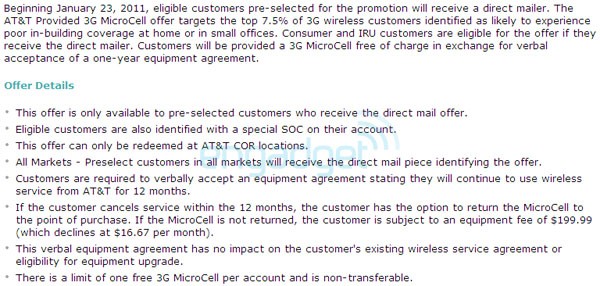
Customers accepting AT&T’s free offer must verbally commit to stay with the carrier at least 12 months or return the MicroCell when they depart.  If they don’t, AT&T will bill an equipment fee up to $199.

Engadget obtained this inside memo about the MicroCell offer.

Saginaw, Mich.: Another Wireless ISP Faces Down Usage Growth By Implementing 5GB Usage Limit

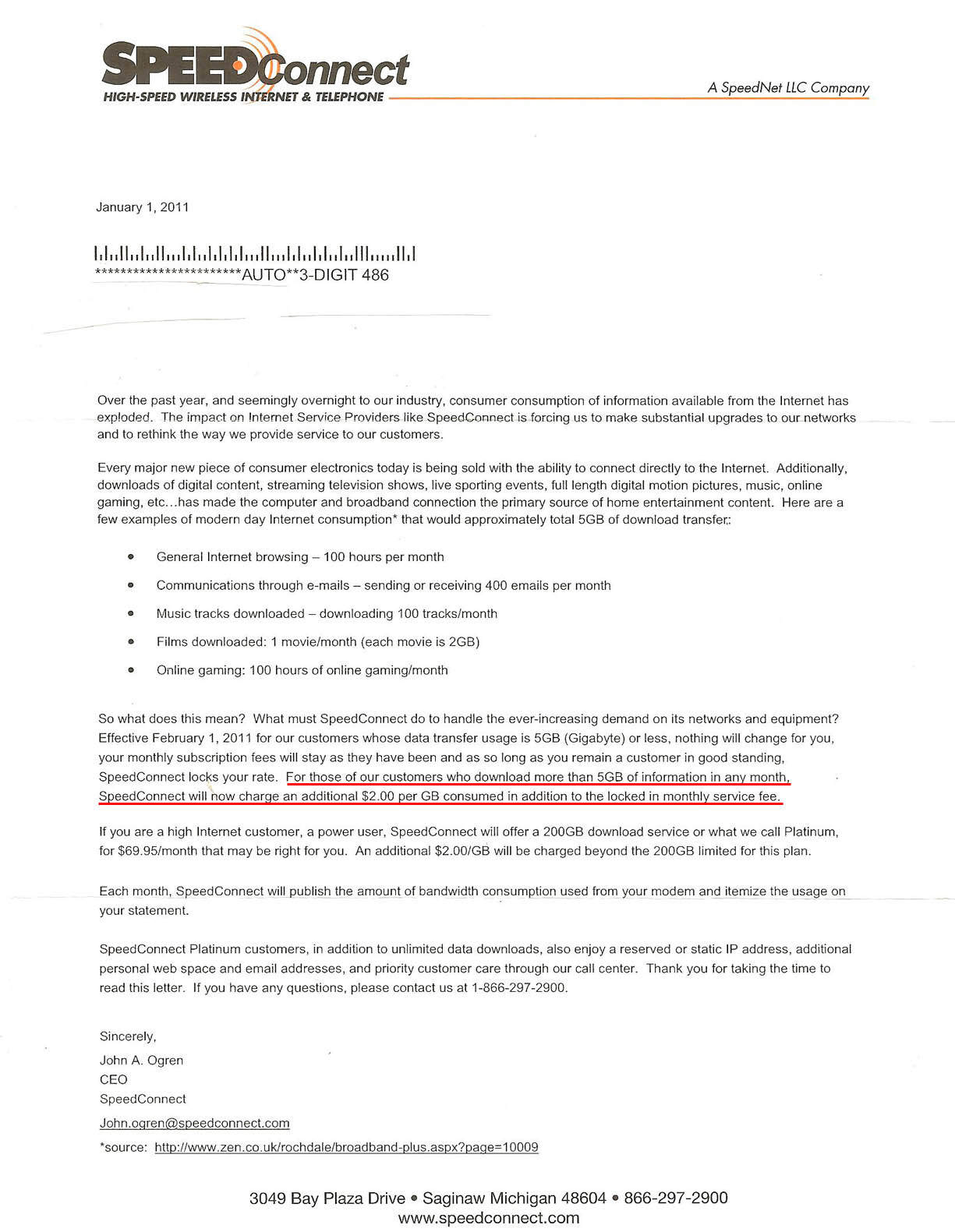
A wireless ISP (WISP) serving parts of Michigan and eastern Iowa has informed customers that due to their enthusiastic use of the Internet, the company was slapping a 5GB monthly usage limit on customers effective Feb. 1.

SpeedConnect, based in Saginaw, Mich., informed customers in a letter that those who exceed the company’s new usage limit face a penalty overlimit rate of $2.00 per gigabyte.  An alternative 200GB “Platinum” monthly usage plan, including phone service, was also announced for $69.99 per month.

That’s a steep rate increase for customers accustomed to receiving around 3Mbps download x 384Kbps upload speeds for $39.95 per month.

Too much for our reader Greg, who says he has been a SpeedConnect customer for the last decade.

“Ouch,” Greg writes.  “I’m changing ISPs over this.”

Company officials blame the usage limits on usage growth.  The company’s letter states, “[growth] is forcing us to make substantial upgrades to our networks and to rethink the way we provide service to our customers.”

Now customers will rethink using SpeedConnect for their Internet access.

SpeedConnect's letter to customers.

SpeedConnect’s attempt to collect upgrade funds from their customers, which the company admits are increasingly turning to broadband for home entertainment and information, comes at the same time the company had no trouble dipping into the kitty to buyout CommSpeed of Arizona’s 2.5GHz spectrum holdings and customers based in Eastern Iowa.

Saginaw, Mich.

AT&T DSL is one alternative.

The same CEO that signed the letter telling customers to use less of their service or pay dramatically more was thrilled about “the exciting new chapter” its merger/acquisition would open.

“The completion of this acquisition is a significant event for our customers, communities, investors, and employees,” said John A. Ogren, President and Chief Executive Officer.

Saginaw residents are not well-served by AT&T, which has left major gaps in the economically-stressed region’s broadband coverage options.  We had a hard time finding landlines in Saginaw and nearby townships pre-qualified for AT&T DSL to offer a price comparison.  After much searching, we discovered AT&T heavily markets DSL Pro ($35/$19.95 new customer promo price for one year) which delivers 3Mbps/512kbps service, or Elite ($40/$24.95 new customer promo price for one year) which offers 6Mbps/768kbps service to those who -can- get the service.

AT&T’s Pro plan delivers comparable speeds at lower prices than SpeedConnect charges, all with no usage limits.  Users seeking higher speeds can use them without fear of overlimit penalties or a $70 broadband bill using AT&T’s Elite DSL plan.

SkyWeb is the other.

Greg also notes he has another wireless option, as do many residents and business across central Michigan’s Tri City area, from SkyWeb, which delivers wireless access at speeds ranging from 3-10Mbps.  The company does not limit usage and offers new customers a month of free service.  A comparable package of services from SkyWeb at 3Mbps is priced $10 less than what SpeedConnect charges.

Wireless ISPs have unique problems trying to keep up with usage demands:

  1. Many are individually owned and operated and lack sufficient capital to invest in required upgrades to meet today’s Internet multimedia reality;
  2. Many WISPs serve rural areas where growth opportunities are often limited;
  3. A few very heavy users could create significant strains on a wireless network that is not infinitely expandable;
  4. The arrival of competition from telephone, cable, or even cell-phone wireless data plans can present a major threat to the business plans of some providers.

[flv width=”384″ height=”236″]http://www.phillipdampier.com/video/WNEM Saginaw Air Advantage Broadband Grant 9-2010.flv[/flv]

WNEM-TV covered Air Advantage, another regional WISP that won a broadband stimulus grant last fall to expand wireless access in mid-Michigan.  (2 minutes)

Handing Time Warner Cable an Indefinite Franchise In Return for Wiring Rural South Carolina Towns?

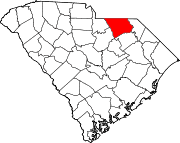
McBee, part of Chesterfield County, S.C.

Residents of McBee, S.C., have been without cable and Internet service since last November, when rural cable provider Pine Tree Cablevision closed its doors and turned the services off in scores of small communities in New Hampshire and South Carolina.  For residents of Lamar, another South Carolina community served by Pine Tree, it wasn’t much of a service to lose.  Pine Tree’s “broadband” in Lamar was limited to 50kbps, with the entire community’s Internet delivered on a single AT&T-provided T-1 line.

But even the loss of a company like Pine Tree was immediately felt by area residents and businesses, now without cable TV and Internet service.  In Lamar, December 10, 2009 will remain a day of infamy:

“I was in the middle of submitting reports to SLED (the State Law Enforcement Division) when [Pine Tree pulled the plug and the cable and broadband system] went down,” Police Chief Charles Woodle told SC Now. Woodle now goes home twice a day to check his work e-mails.

The town’s water office closed December 21st because the town clerk could not upgrade the software needed to process water bills.

In Elloree, residents and local officials found out about Pine Tree’s financial problems when channels started dropping off the cable system, followed by the complete loss of service.  In December, customers mailing payments to Pine Tree had them returned by the post office undelivered.

The now defunct Pine Tree Cablevision used to serve rural communities in New Hampshire and South Carolina.

Elloree Town Clerk Chasity Canaday told The Times and Democrat Pine Tree’s ultimate demise was a travesty.

“It shows a remarkable lack of professionalism to cut services from customers without any prior notice,” Canaday said. “For the majority of our residents, their notice that the cable service was terminated came when their televisions quit working.”

Despite claims from Pine Tree officials that new owners would take over the business they left behind, Canaday says that just isn’t true.

“It has been very, very difficult to get somebody else,” she said. “There is not a large enough customer base to entice a new company to come in. Most people have already switched to satellite.”

The newspaper noted after contacting 20 other municipalities, Canaday said most rural towns have no local cable provider and instead rely on satellite service.

Throughout rural South Carolina, tiny cable companies serving just a few hundred subscribers have come and many more have gone.

The town of Cameron lost Almega Cable about three years ago.  Other communities have said goodbye to operators like Brookridge Cable, SRW Inc., South Carolina Cable Television, Pine State Management Co., and Mid Carolina Cable.

In most cases, satellite television’s ability to deliver hundreds of digital signals it an easy choice over cable systems delivering only 2-3 dozen channels.  Because of a lack of investment to expand rural cable lineups, customer erosion has left many systems financially untenable.  One Texas cable system had just a dozen paying customers left when they called it quits.

That’s why the community of McBee is creating a lot of buzz in rural South Carolina.  They reportedly have Time Warner Cable, the nation’s second largest cable operator, in discussions to take over where Pine Tree left off, restoring cable and broadband service for a community of just 700 people.

But that service may come with a significant price — an indefinite franchise agreement that could eventually threaten the area’s local, customer-owned telephone cooperative.

Town Attorney Tony Floyd says Time Warner Cable in eager to expand into rural areas.  But the question is, will McBee concede too much just to attract a cable company?

“This is a long term contract,” he told SC Now. “If you grant a franchise, Time Warner will be able to keep competition out.”

Newly re-elected councilman Shilon Green is the biggest proponent for the deal.  He will propose an ordinance granting a franchise to the cable company at a town hall meeting to be held tomorrow.  He says Time Warner will bring better cable and broadband service to the area and introduce competition for phone service with their “digital phone” product.

McLeod

But some other council members are concerned about Time Warner Cable’s impact on the area’s local, customer-owned phone company, Sandhill Telephone Cooperative.

Councilmen A.C. “Kemp” McLeod said he’s afraid the cable company could bully the co-op out of business.

“I know Sandhill is expanding their service into the TV business, and they’ve been very good serving rural communities,” McLeod told the newspaper. “I’d like to check with them first.”

“If [Time Warner] wants to come in [and] lowball this area, they can do it, then run our small business out of business,” McLeod said. “A big company can make it look good, make it look appealing, then once they have the market and run the small guy out, then they can raise the rates. At Sandhill, we have representation.”

Rural communities are often bypassed by cable providers because they lack enough closely spaced customers to make the infrastructure costs worthwhile.  Where smaller communities do cluster most of their population inside the town limits, cable systems have been built.  Many are independently owned and operated by small providers because larger companies have shown no interest in serving areas with just a few hundred potential customers.

That has left town leaders with the prospect of offering generous incentives to attract cable operators.  In addition to franchise agreements that never expire, some communities offer significant tax breaks and other concessions to encourage cable operators to bring service to area residents.  Despite complaints from big city residents that Time Warner is hardly benevolent, its brand and reputation do mean a lot in rural areas burned by Pine Tree’s sudden demise last year.

Green hopes the cable giant will bring a level of cable service not seen before in towns like McBee.

“A little competition is good,” Green said.

Industry Front Group Upset Australia’s Fiber to the Home Network Will Force ISPs to Compete

Phillip "It's Haunting Time for AT&T, Verizon and their good friends at Digital Society" Dampier

Imagine if you lived in a country where broadband competition actually delivered real innovation and savings, overseen by a consumer protection agency that made sure providers in a barely competitive marketplace actually delivered on their “highly competitive” rhetoric.

Australia’s National Broadband Network (NBN) will deliver exactly that, with a check and balance system that makes sure advertiser claims meet reality and that “robust competition” means… robust competition.

One industry-backed front group, Digital Society, doesn’t think that idea is fair to big telecom companies (like those funding its operations), and wants none of that here in the States.

Nick Brown doesn’t object too much to Australia’s plan to deliver fiber-to-the-home connections offering 100/50Mbps service to 93 percent of residents.  He just doesn’t want the Australian government overseeing how private providers use (and how much they can charge to access) the publicly-owned network:

Internet Service Providers in Australia will be forced to compete with each other via the “Competition and Consumer Commission”.  The problem with this is that a supposedly ubiquitous commission deciding what is and what isn’t competition and fair pricing stands a fair chance of not actually playing out in any other fashion than simply being a price fixing commission.

[…]Because the NBN will only act as a wholesaler and treat all ISP retailers equally, ISP’s no longer have the ability to develop their own unique contracts that would reduce costs to consumers.  All backhaul would be priced to all ISP’s at the same rate.  So realistically no company has a significant advantage over the other.  That does potentially create a good deal of choice, but that does not necessarily ensure competition.  This would be akin to going to the grocery store and on the shelf were 5 different brands of soft drink, but every single brand tasted exactly like Coca-Cola.  You would have a lot of choice in that situation, but there would be no real competition between those 5 brands, because taste is the competitive factor.  For the Australian, this means that ISP’s will likely be forced to start bundling services to gain advantages over one another.  Something that is not always considered attractive here stateside.

NBNCo is responsible for the deployment and installation of Australia's fiber to the home network.

Brown’s bitter-tasting public-broadband philosophy is based on the inaccurate notion that incumbent private providers are just itching to deliver state-of-the-art broadband service across Australia.  If the darn federal government didn’t get in the way and steal their thunder with a nationwide fiber network, Aussies would be enjoying world class Internet access over copper phone wires and usage-limited wireless 3G networks right now.  Even worse, the Australian government that will finance the entire operation also has the temerity to set ground rules for private companies reselling access to consumers and businesses!  How dare they oversee a network bought and paid for by Australian taxpayers (he objects to the funding as well.)

Brown must also still be living in Australia if he missed the parade of American providers repricing services to push people into “triple-play bundles” whether they want them or not.  And we don’t even get the fiber to go with it.  For most Australians, they no longer care whether it’s Diet Coke, Pepsi One, Cherry Coke, or even RC Cola for that matter — as long as it arrives on a fiber network built by and for their interests (instead of Telstra’s), it’s far better than what they have now.

In reality, broadband issues hold a front-and-center position in Australian politics, and the Labor Government which supports an aggressive national broadband plan that puts America’s proposed broadband improvements to shame was -the- issue that keeps that government in power today.  Why?  Because Australia is well behind others in providing broadband access at reasonable speeds and prices.  Australian private providers maintain a nice little arrangement delivering sub-standard, near-monopoly service at some of the highest prices around, all usage-limited and speed throttled. Despite years of negotiations with big players like Telstra, the privatized phone company, broadband improvement has moved at a glacial pace (too often by their design).

The development of the National Broadband Network for Australia was driven by private provider intransigence.  Even Brown recognizes the logistics of the proposed fiber network is “very smart and very common sense” for a country like Australia, which he considers a close cousin geographically to the United States.  Brown also admits the use of fiber straight to the home “‘future proofs’ Australian networks and would allow for easier improvement in the future.”

[flv width=”640″ height=”380″]http://www.phillipdampier.com/video/ABC Radio Battle of the broadband 8-11-2010.mp4[/flv]

ABC Radio National offered a comprehensive review of the competing plans from Australia’s political parties to address broadband issues as the country drops to 50th place worldwide in broadband excellence.  (9 minutes)

While Australia ponders a fiber future, today’s broadband picture across the country is less idyllic.

The minority of Australians receiving service over cable broadband, available mostly in the largest cities, continue to face usage-limited service and higher prices than American providers.

Most Australians get their service from DSL connections offered by Telstra and third party companies leasing access to Telstra facilities.  Telstra’s network is based almost entirely on aging copper wire that cannot deliver broadband to most rural populations.  Telstra’s long term broadband plan for Australia depends on milking every last cent out of those copper wires while raking in even bigger profits from usage limited and expensive wireless data plans.  Just last month, Telstra was fined $18.5 AUS million dollars for monopolistic behavior by impeding competitive access to its telephone network.  No wonder the country had enough.

Brown labeled the Australian government’s buyout of Telstra’s copper wire network a “negative,” as if they were stuck with a pig in a poke.  That suggests Brown does not understand the actual plan, which relies on reusing existing infrastructure like poles and underground conduit to install fiber at an enormous savings — both in billions of dollars in reduced costs and deployment time.  The alternative would require the government to obtain agreements with Telstra-owned facilities to share access or construct their own facilities from the ground up.  Telstra has no incentive to spend money to upgrade their networks, much less decommission them.  Logistically, the plan cuts through enormous red tape and guarantees Australians no one will be stuck waiting decades for the eventual retirement of copper phone wiring.

Call it Fiber Optic Broadband for Copper Wire Clunkers — the government has not nationalized the phone network — it wants to buy it a fair price, from a willing seller who will be able to use the new network to deliver some of its own services.

The horror show for groups like Digital Society is the thought private companies will actually be forced to deliver the competition and real savings they routinely proclaim in press releases, but never actually deliver to consumers.  The Australian people will own the fiber playground private companies will play on, so why shouldn’t they have the benefit of oversight to make sure the game is played fairly?

Australia’s Competition & Consumer Commission is equivalent to the Consumer Product Safety Commission, the Federal Trade Commission, and a state Attorney General all rolled into one.  The ACCC is an independent statutory authority that works for consumers.  It promotes and enforces real competition and fair trade.

The ACCC’s involvement in broadband regulation includes: stopping false advertising, helping intervene and resolve disputes over access and billing issues, and being an impartial observer about broadband uptake and measuring how competition actually delivers better service and savings for consumers.

What Brown dismisses as “a price fixing commission” is in reality a consumer protection agency with enforcement teeth.  The ACCC has a solid track record.  For instance, the broadband industry in 2009 itself admitted the ACCC stopped a “race to the bottom” in wild advertising claims:

In August last year, we sat down with the CEOs of the major telecommunication providers, Telstra, Optus and Vodafone Hutchison Australia. They acknowledged that there was a problem, exacerbated by a “race to the bottom” by industry participants in their advertising practices. The CEOs showed a ready willingness to resolve the issue on an industry-wide basis.

After analysing complaints, the ACCC identified the 12 most prevalent types of potential misleading conduct made in telecommunications. Some of these included:

  • use of terms such as “free”, “unlimited”, “no exceptions”, “no exclusions” or “no catches” when this is not the case;
  • headline price offers in the form of “price per minute” for calls made using mobile phones and phone cards when there are other fees/charges which are not clearly disclosed; or
  • headline claims relating to price, data allowances, total time allowances, speeds and network coverage, where the claims cannot generally be achieved by consumers.

The three industry leaders have provided a court enforceable undertaking to review and improve advertising practices so that consumers are better informed about the telecommunications products they purchase. They have undertaken that their advertising will not make these claims in circumstances where they are likely to be misleading to consumers.

Further the majors have also agreed that they will take reasonable steps to ensure that this commitment will extend to any other players with whom they have commercial agreements which allow them to control the advertising and promotion of goods or services.

Australians are starting to receive consent forms for free installation of fiber broadband in their homes.

I can see why Digital Society, a group partly funded by telecommunications companies, would object to the ACCC stopping Big Telecom’s ill-gotten Money Party-gains.

ACCC also put a stop to promotions that tricked consumers into signing up for mobile data plans that included “free” netbooks, high value gas gift cards, or cash rebates.  The Commission discovered these “promo plans” weren’t giving away anything at all — they simply added the retail cost of the “free” item to the plans’ charges.

The ACCC received a court enforceable undertaking from Dodo Australia Proprietary Limited for the advertising of some of their mobile plans. Dodo had advertised that consumers would receive either an Asus Eee PC, a fuel card or a cash payment when they signed up to a ‘free offer’ plan.

However, cheaper mobile cap plans that did not include the ‘free’ offers were comparable in value and services. After raising these concerns with Dodo, they promptly ceased publishing the ‘free offer’ advertisement and undertook to ensure the affected customers would receive the goods for free, either by way of cash refund or by reducing the monthly charges for the ‘free offer’ plans.

That mean and nasty ACCC, ruining all of the fun for providers delivering tricks and traps for their customers.  Caveat emptor, right?

But the most ludicrous claim of all comes towards the end of Brown’s piece, when he claims the National Broadband Network will leave Australians with even higher priced, usage-capped access:

Australia traditionally has had low bandwidth caps.  Even just five years ago while most Americans were enjoying unlimited bandwidth with their broadband connections, I was living in Melbourne, Australia and was limited to a 1GB cap per month via my Telstra connection.  The likelihood of seeing 100Mb uncapped connections is highly suspect.  Australians may enjoy these speeds, but they will likely be extremely expensive with low bandwidth caps or limited to high priced premium tiers.

Brown can’t blame the private company that delivered his abysmal Internet service without his “free market knows best” philosophy falling apart.  It wasn’t the Australian government that provided him a 1GB monthly usage allowance — it was Telstra, and five years later the company is still usage-limiting Australian broadband consumers.  The National Broadband Network was designed to tackle that problem once and for all.  Brown apparently doesn’t realize the last argument private providers have used to justify usage caps — insufficient overseas capacity — is being addressed by new super-high-capacity undersea fiber cables stretching across the Pacific.  The issue of “usage cap” abatement is among the top bullet points for constructing the NBN.

Brown would be right when he suggests that Australians may enjoy faster speeds, but with low usage caps and high prices — if Telstra was the only company providing the service.  The new network will provide speeds faster than most Americans enjoy, with enormously expanded capacity.  Providers like Telstra have an incentive not to deliver the unlimited service that fiber network can deliver, as it will reduce their profits.  But since any company can access the network and compete, Telstra’s loss in market power will also erode their pricing power.  When a consumer protection mechanism is added, Telstra won’t just be answering to their shareholders’ demands for greater value.  They’ll also answer to the ACCC and the consumers who will pay for and maintain the network.

That may not add up to mega-profits for Big Telecom, but it certainly makes a whole lot of sense to consumers and small businesses who will finally be able to get 21st century broadband at a reasonable price.

Even worse for Digital Society’s friends — AT&T and Verizon — who fund the group through its connection with Arts+Labs, it might provide a blueprint for how America’s broadband future should be built.

[flv]http://www.phillipdampier.com/video/ABC TV National Broadand Network 8-15-10.flv[/flv]

ABC-TV (Australia) debated the merits of competing broadband plans from the incumbent Labor government, which supports a National Broadband Network delivering fiber to the home, versus a cheaper plan from the coalition opposition which promoted a private industry-favored initiative delivering improved broadband only to rural areas.  The Labor government initiative won the day when two rural independent members of Parliament, Rob Oakeshott and Tony Windsor announced they’d support Prime Minister Julia Gillard, giving her the 76 votes required to form a minority Labor government.  Windsor is an enthusiastic supporter of the NBN, telling Sky News “’you do it once, you do it right, you do it with fiber.”  Oakeshott said Labor’s plan to deliver real broadband for the 21st century was a major reason he backed the Labor government.  For the first time ever, fiber optic broadband was the key factor in determining who would govern a country.  (5 minutes)

AT&T Wins Total Rate Deregulation in Tennessee: Let the Rate Hikes Commence

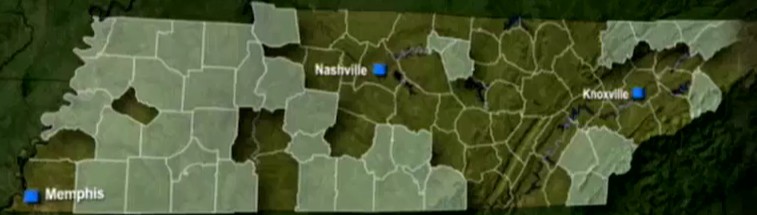
38 Tennessee counties are about to face AT&T price deregulation, something critics contend will bring rate hikes of up to 50 percent for many of the state's most rural residents.

Attention rural residents in 38 counties in Tennessee with AT&T landlines: Start saving your money because AT&T will come looking for more of it soon enough.

As a result of 2009 legislation heavily promoted by the state’s largest phone company, AT&T has easily managed to pass a “competition test” it helped devise, triggering total deregulation of basic phone rates across the state.

Although some of the legislation’s supporters are celebrating the end of rate oversight by the Tennessee Regulatory Authority (TRA), claims that competition has broken out across Tennessee may be an exaggeration.  Critics contend many residents will face relentless AT&T rate increases, especially for the elderly and those living in rural areas — typically the poorest regions of the state.

AT&T’s competition test only required the presence of a potential competitor to meet the definition of “competition.”  Unfortunately, for many residents in the 38 affected counties, that competing cable or wireless provider often can’t or won’t provide reliable service, either because cable lines bypass rural areas or cell phone service offers poor signals.  That leaves many consumers at the mercy of AT&T, who can now charge whatever they like.

It’s a key flaw many state legislators fail to recognize when accepting the phone company’s argument that deregulation will save consumers money.  Documentary evidence suggests the reverse is true, especially in areas not well covered by cable and wireless competition. Those choosing the most basic levels of service typically face the largest rate hikes as telecommunications companies try to drive customers into multi-service bundles often approaching $200 a month.

For now, the first step is to do away with oversight and AT&T wasted no time pulling out provider maps for the 38 still-regulated counties in the state and found cable and cell phone competitors in all of them.  Despite the fact those services are not available to every resident, AT&T lawyer Joelle Phillips demanded the TRA immediately end rate regulation.

Customer Advocacy Lawyer Mary Leigh White warned the TRA AT&T would follow their track record in other states where rates were deregulated and raise prices up to 50 percent. Phillips told the Authority it didn’t matter — the law AT&T helped write and lobby for was clear:

“When a statute includes one thing specifically and doesn’t refer to other things, that the statute must be read to have done that on purpose,” said Phillips.

With that argument, the TRA capitulated Monday and voted unanimously to end rate oversight.

Consumers in the state who do find major price hikes in their future can blame the deregulation bill’s chief sponsors:

  • Sen. Paul Stanley, (R-Collierville) (Resigned last August after caught in an extramarital affair with a 22-year old intern.)
  • Sen. Dewayne Bunch, (R-Cleveland)
  • Rep. Gerald McCormick, (R-Chattanooga)

[flv width=”640″ height=”380″]http://www.phillipdampier.com/video/WSMV Nashville ATT Deregulated 8-23-10.flv[/flv]

WSMV-TV in Nashville covered the end of AT&T rate oversight and the implications the change will have on Tennessee phone bills.  (2 minutes)

Search This Site:

Contributions:

Recent Comments:

Your Account:

Stop the Cap!