Home » rural areas » Recent Articles:

Congestion Pricing Myths Exposed: A Guide to the ‘Bandwidth Crisis’ at AT&T (Or Anywhere Else)

AT&T's Fairy Tales of Broadband Congestion

Just a few days after Broadband Reports broke the news AT&T was imposing an Internet Overcharging scheme on its broadband customers, evidence continues to arrive illustrating the company’s planned usage limits are more about protecting their U-verse video business than actually controlling “heavy users.”

Dave Burstein, a well-known industry analyst who has tracked the broadband universe for years was so miffed about the nonsense he was reading in the Wall Street Journal, he picked up the phone and called the AT&T spokesperson who claimed the company was overburdened by heavy users:

Mark Siegal, AT&T’s top flack, hung up the phone on me when I said his comment to the Wall Street Journal was apparently a lie. It’s prohibitively unlikely their DSL cap “is to ensure the quality of the customer experience” necessary to solve “congestion in certain points of the network and interfering with other people’s access.” I’m certain that far less than 1% of the time do AT&T DSL customers have any impact from congestion. I’m pretty confident it’s less than 1/10th of 1% and probably less than 1/100th of 1%. My sources that wireline congestion on AT&T is minimal include statements from two CTOs of the company. Cheng, now a veteran in D.C., knew the comment was misleading at best. A mantra in D.C. is “wireline may not have congestion but wireless is different.” It was Sunday and perhaps hard to factcheck, but he’ll easily confirm the problem on Monday.

AT&T has long maintained they have a more robust network and cable is the one with “bandwidth hog” problems. But Comcast’s cap was 60% higher than AT&T and Comcast has said they will raise it. AT&T has gone 13 years without caps on their DSL network because they said they didn’t need them. Traffic growth is actually down slightly (Cisco, Odlyzko) so there’s only one reason to impose caps now: their video service, U-Verse, has become a $5B business. They don’t want people to be able to cut the cord and watch all their video over the net. 150 gigabytes is 40-80 hours of U-Verse quality TV, far less than the average U-Verse user watches.

In fact, AT&T is one of America’s largest Internet Service Providers, and maintains an important role in America’s Internet backbone.  As one of the largest providers, AT&T doesn’t worry about broadband traffic like a small wireless ISP does.  Its broadband pipes from the middle-mile to their nationwide network offers near limitless capacity thanks to fiber optic technology.  In fact, AT&T’s theoretical “bottlenecks” occur in the “last mile” of the network, from the phone company’s central switching offices or its interface between a fiber connection and the plain old copper wires that work their way into your home or business.

But first, a word about costs.

Dave Burstein

We have new evidence from both Burstein and the Internet Overcharging drama unfolding in Canada that providers literally pay pennies per gigabyte of traffic.  In fact, the broadband traffic customers generate represents only 2%-5% of what we pay for broadband in both countries.  Burstein uses some of Craig Moffett’s prolific comments in the media against his own argument for Internet Overcharging.  Moffett, a Wall Street analyst, is not alone when he reports broadband margins are as high as 90%, according to official company filings.  John Hodulik from UBS joins him.

Burstein gives providers’ argued need for increased investment to keep up with demand the benefit of the doubt and is willing to suggest profit margins at a reduced 75%.  In either case, running a large broadband network is a veritable license to print money in North America.  The costs to provide the service keep dropping, and providers keep on raising prices.

Burstein was generous with Comcast when he called their 250GB usage limit imposed in 2008 “fair.”  But as Stop the Cap! has argued, Comcast — like other Internet Overchargers — has not grown the cap over time, even as their costs decline.  In fact, customers are probably lucky the country’s largest cable operator hasn’t reduced it, as providers in Canada have done repeatedly. Burstein calls on Comcast to honor their promise and raise their cap.

Burstein also notes the rest of the world enjoys lower prices, more competition, and often faster service — with providers across the board still enjoying considerable profits.

But why not here?

America’s broadband market is a monopoly or duopoly in virtually every American city.  One cable operator and one telephone company deliver service to the vast majority of American broadband users.  Wireless providers are largely owned by legacy phone companies and strictly limit usage.  Without significant competition, providers can raise prices at will and milk profits to sustain their balance sheets even as other business divisions suffer from a downturned economy or shifting cultural changes.  The “landline” is rapidly becoming a thing of the past, and cable television provided by cable and phone companies could face cord cutting from consumers watching their favorite shows over their broadband connections.

Broadband service carries up to a 90 percent profit margin

Burstein tracks the business model:

15 gigabytes/month: The average (mean) user in the U.S., per Cisco’s respected VNI survey and numerous comments from the major companies.

Going Down: Bandwidth usage growth per customer. The rate has been about 30% per year, with the rate slightly falling the last few years. The growth in average usage is actually going down slightly, per Cisco VNI and the MINTS data of Professor Andrew Odlyzko.

Going Down: Capital investment required. In 2009, AT&T cut U-Verse by 1/3rd. In 2010, Verizon cut FiOS by 2/3rds. John Stankey of AT&T has said they will cut U-Verse much further after this year. Fran Shammo of Verizon says “Wireline will continue to come down year over year.” Cablecos have been dropping capex as a % of sales and often in absolute dollars. According to a recent survey by Heavy Reading, 70% of the cable networks have been upgraded to DOCSIS 3.0 already. There’s no significant capital spending beyond that at least until mid-decade. The Columbia University CITI report to the broadband plan aggregated analysts forecast and predicted a drop in overall capital spending on broadband, particularly in wireline. The primary capital spending for wired broadband is behind us, with few significant network buildouts in the next five years or longer.

Going Up: Profit Margins. Prices for broadband have generally been going up in the U.S. since 2007 while costs drop. Comcast, Time Warner, Verizon and most others have raised their broadband prices and ARPU. They also have (modestly) raised the prices of triple play including broadband, according to Dave Barden of Bank of America. Capex is dropping pretty dramatically while other operating costs are also falling. Customer support costs have gone down as few new customers (who need more support) are added. Modems and other gear continue dropping in price. Costs down, prices up = higher profits. Both Stankey and Shammo pointed to improved margins.

AT&T DSL (left) vs. AT&T U-verse (right): Hunting season on customers of both is now open.

AT&T argues their usage caps are less about the money and more about dealing with network congestion.  But does that play out?

AT&T has a convenient argument to use, which several journalists have come to believe gives the company a track record of being victimized by “heavy users.”  Namely, their network congestion brought about by the flood of iPhone users on AT&T Mobility’s cellular network.  Even if a reporter does not understand the profound differences between a wired and wireless broadband network, they have heard about AT&T’s problems coping with their wireless traffic.

In short, the company underestimated demand from its exclusive deal with Apple for the wildly popular phone, and refused to invest adequately to mitigate overcongested cities.  Instead, it spent millions lobbying for permission to “manage” the traffic with artificially-slowed speeds, usage limits, confiscatory overlimit penalties, and even some equipment to offload wireless users onto home broadband connections (for which AT&T still deducts airtime and data usage from your wireless allowance.)  Robust Wi-Fi also tries to drive customers off of AT&T’s inadequate 3G network.

For home broadband users who will be affected by AT&T’s Internet Overcharging scheme, let’s break them into two separate categories: DSL customers who face a 150GB cap and U-verse customers who will get a 250GB allowance.

AT&T DSL is a legacy product dependent on traditional copper wire phone lines.  Available in many areas unserved by U-verse, this technology typically provides up to 6Mbps service — often slower, sometimes higher.  The distance between the phone company office and one’s home usually determines what speeds customers receive.  In rural areas, 1-3Mbps is often typical.  In some urban areas, higher speeds are sometimes possible.  DSL is not a “shared” technology like cable broadband.  Each DSL customer has their own line between their home and central office (or remote repeater).  From there, a connection from the central office to AT&T’s backbone is made over a middle mile network.

AT&T U-verse VRADs (a/k/a 'lawn refrigerators') in Houston, Tex. (Courtesy: Swapdisk)

But AT&T’s DSL customers are already constrained by the reduced speeds DSL provides them.  It is unlikely a customer with 3Mbps DSL service is going to present much of a traffic challenge to a multi-billion dollar company unless they purposely under-invest in network upgrades.

Where congestion does exist, it occurs at the central office — usually because the company inadequately provisioned a sufficiently large data pipe to handle the traffic.  Since these circuits are increasingly fiber-based, congestion issues disappear when AT&T uses technology from this century instead of the last.

AT&T argues heavy users are overburdening their DSL lines, but their prescription makes no sense.  The company says, despite the alleged traffic jam, it is more than willing to sell users additional capacity for $10 per 50GB increment.  If AT&T’s aim was to cut congestion, they would be unwilling to sell additional capacity they don’t have to customers who need it.

A usage cap on AT&T’s new U-verse platform makes even less sense and opens a political minefield.

When one pushes away the promotional and marketing glitz AT&T provides when pitching U-verse, you are left looking at just one thing — a high speed broadband connection.  AT&T’s entire platform of television, phone, and broadband all resides on that single, super-speed broadband pipeline.

AT&T has built this super fast pipe with a combination of fiber optic cables and copper phone wires.  It uses fiber, which doesn’t degrade with distance the way copper wire connections do, to reduce the amount of copper phone wiring between your home and AT&T.  With this “fiber to the neighborhood” approach, AT&T can create a robust pipeline which can accommodate multiple television channels, a phone line, and your broadband connection all running concurrently.

AT&T only seeks to limit one part of that connection, however: the broadband service you could theoretically use to bypass AT&T’s television and phone service in favor of another provider.  It’s the same platform — only the services are different.

AT&T claims network congestion is a problem for U-verse as well, which is a controversial claim to make considering AT&T designed U-verse with excess capacity that goes unused to this day.

What does AT&T’s U-verse network look like?

AT&T’s regional offices maintain watch over their U-verse network of TV, Internet, and phone services.  This portion of the network is entirely fiber-based.  From there, fiber extends to individual central offices, part of the company’s middle-mile network.  AT&T’s fiber journey typically ends at large metal cabinets strategically placed in different neighborhoods.  These “Video Ready Access Devices” (VRADs) are probably familiar to you if you live in an AT&T area.  Sometimes derided as “lawn refrigerators,” the huge metal cabinets contain the interface between the fiber optic network and the copper wire telephone lines running to your home.

It’s this “choke point” AT&T tries to claim as a point of congestion.  If enough customers use their connection at the same time, it can “overburden” the network.  But can it, really?

Early adopters of U-verse pestered AT&T engineers about the network as it was constructed and learned a lot about it.

Phil Karn has been a U-verse customer since November 2009 and has become an expert on how his U-verse service works, and importantly how it holds back a considerable amount of available bandwidth.

An AT&T engineer “tried to tell me that the network equipment was like the engine in a sports car. You don’t want to drive it at the red line all the time because that will wear it out. I don’t know if he was told to use that analogy or if he came up with it on his own, but needless to say it’s a pretty silly one. And completely inapplicable,” Karn shares on his website.

He then claimed, rather weakly, that backhaul capacity considerations from the VRAD limit how much can be offered to each individual subscriber. This argument might even have begun to hold water except for the numbers he then provided. The VRADs, he said, are connected by 10 gigabit Ethernet over fiber, and each VRAD serves upwards of 200 homes. Let’s see…10 gigabits over 200 homes is 50 megabits per home. My [U-Verse] link runs at 32.2Mbps.

The whole point is that it doesn’t really matter how fast or slow the backhaul from the VRAD may be. With modern Internet routers and priority [Quality of Service] mechanisms, there is no reason to force capacity to remain idle when a user could be using it. Not unless, of course, you’re trying to maintain the public impression that broadband capacity is really scarce and expensive.

Karn

In fact, because few Internet users fully drive their broadband connections on a continuous basis, it can be argued that continuous video streams delivered to television sets left on in the homes of U-verse customers for hours at a time present a bigger “congestion” problem for AT&T, at least at this point in their network.  But the company has no plans to limit television viewing — only their broadband Internet service.

U-verse is AT&T’s answer to slow speed DSL, and part of how the company intends to stay relevant as landline customers depart.  But the company’s business plan depends on a certain percentage of customers subscribing to their pricey television service.  Should AT&T’s broadband customers decide to stop paying for television service, watching everything online instead, that threatens a $5 billion dollar business.

Burstein predicted this scenario when he discussed it with former FCC Chairman Kevin Martin:

“In 2005, Kevin Martin discussed with me the issue of what he would do if AT&T favored U-verse. I believe he felt he would have to act, but at that point hoped competition would prevent him from facing that decision. Now AT&T’s multi-million dollar über-lobbyist Jim Cicconi has presumably told them [current FCC Chairman] Julius Genachowski is sufficiently under control he won’t do anything about this.”

In the end, many of AT&T’s arguments simply are incoherent.  If only a small handful of AT&T customers are creating such a dilemma for the company it has to inconvenience every customer with a usage limit, AT&T has a much larger problem to contend with.  Furthermore, the company’s existing acceptable use policy already includes provisions for dealing with users that create problems on their network, all without bothering everyone else.


Updated: Dollar-a-Holler Industry Lobbyist Attacks North Carolina’s Community Networks

Phillip Dampier March 14, 2011 Astroturf, Broadband Speed, Community Networks, Competition, Consumer News, Editorial & Site News, Public Policy & Gov't, Rural Broadband Comments Off on Updated: Dollar-a-Holler Industry Lobbyist Attacks North Carolina’s Community Networks

Bennett

We received word this afternoon proponents of community-0wned broadband in North Carolina were under attack by the ironically-named Innovation Policy Blog from the Information Technology & Innovation Foundation (ITIF), a thinly-disguised, industry-funded think tank.

Charges and counter-charges are flying fast and furious. Well-travelled muni broadband consultant Craig Settles says the authors are in the pockets of Time-Warner Cable, and urges people around the country to lobby NC legislators to kill the bills:

The battle is now fully joined in NC. But it’s not just their fight, and it’s not a fight solely about broadband. This fight affects everyone who believes that communities deserve the freedom to choose their own best solutions to key problems involving economic development. Communities own the problems of this terrible economy.

Philip Dampier, the supporter of former New York Congressman Eric Massa who joined the broadband policy fight when Time Warner was experimenting with metered pricing, is even more shrill than Settles.

I suppose being called “shrill” is a little better than “mean and nasty,” even if perennial industry defender and comment troll Richard “I Don’t Work for a K Street Lobbyist, But I Do” Bennett doesn’t bother to spell my name correctly.

Bennett’s read of North Carolina’s H.129 is that it’s a minor little bill that does no harm.

I don’t see what our perpetual network operator-haters are so worked up about, although I can certainly see that the network equipment vendors want more outlets for their gear; more power to them. The bills actually don’t place any restrictions at all on unserved communities (where 90% or more can’t get broadband) who want to build themselves a first-class, triple-play enabled, broadband network or anything else better than dial-up. If there weren’t such an exemption, I’d be just as riled as the people I’ve quoted.

Supporting innovation from the right kind of companies.

I suspect Bennett may have trouble seeing the facts on the issue because they are obscured by the $20,000 stipend he picked up from Time Warner Cable.  That is in addition to his regular salary provided by players with a dog in the fight.

Unfortunately for those who accidentally stumble their way into the warped world of “innovation” some of our biggest telecommunications companies have in store for us, Bennett forgets to disclose who pays him.

Our argument (the one that comes without industry money-strings attached) is explored in great detail here.

For the benefit of those who don’t want to dirty themselves wading through the ITIF’s blog, here is our response in full:

Richard and I have discussed several issues impacting the broadband community over the past two years.  He always takes the side of the industry that pays him well to serve as their mouthpiece, and I represent actual consumers and do not take a penny of industry money.

The ironically named “Innovation” blog attacks the very innovation that community broadband brings to hard-pressed communities in North Carolina who want to reinvent themselves from their tobacco and cotton-past.  The reason these networks exist is because existing companies refused to provide the service needed to accomplish this task.  Richard has no idea what these communities and ordinary North Carolina consumers are going through because his article exists merely as a “drive-by” hit piece that mischaracterizes the bill, the people that oppose it, and leaves his readers thinking he doesn’t have direct ties to a company that helped write the bill.

Gone undisclosed: Bennett accepted a $20K stipend from Time Warner Cable and does work on behalf of a K Street lobbyist.  That’s “dollar a holler” reporting.

Folks, follow the money.  If a Big Telecom company is involved, Richard reflexively adopts their position, often to the detriment of consumers.  He is also factually wrong.

1) Wilson did not “buy” their fiber to the home network, they built it.
2) Davidson and Mooresville bought a bankrupt Adelphia system that needed major upgrades.  Time Warner would have done precisely the same thing the community did, only they would pay for it with rate hikes across the state (except in Wilson which has avoided rate increases from Time Warner precisely because GreenLight is running there).
3) Salisbury has had a waiting list for signups.  Not bad for a “failure.”  EPB just finished their award-winning network in Chattanooga ahead of schedule.

The public-private partnership idea has no opposition, except among providers who won’t hear of anything they don’t own, operate, and control outright.  It is telling ongoing negotiations over Ms. Avila’s Time Warner-written bill have broken down because she still objects to language that would keep those networks in business to create those kinds of success stories.

All of the pipe dreams in this piece come from the author.  I’m not an industry consultant.  I just know a much better deal when I see one.  GreenLight, EPB, and Fibrant all deliver better service than the cable company or phone company and the money paid to them remains in those communities.  They also deliver unlimited service, an issue that now becomes more important than ever with AT&T’s attempt to launch its Internet Overcharging scheme.

The key question Bennett never asks is exactly how H.129 will improve broadband in the state, whose broadband rankings are unworthy of its potential.  Answer: it won’t.  It simply delivers protection for incumbent providers who will continue to not deliver the kind of service people want and will continue to ignore rural areas they have always ignored.  When a “small government” conservative like Marilyn Avila writes micro-management requirements for these networks right down to banning them from promoting themselves and arguing over service area boundaries (conditions Time Warner is exempted from), it tells you how far certain legislators will go on behalf of large telecom companies.

As for voter approval, it already exists in the form of elections.  I haven’t seen any “throw the bums out” movement in Tennessee or North Carolina over this issue.  In fact, the only ones out of office are the last two legislators that proposed these anti-community broadband bills.  Ty Harrell resigned in disgrace and David Hoyle left office admitting, on camera, Time Warner Cable wrote the bill he introduced.

Nice try, Richard.  Maybe if Time Warner gave you $40k, you would have spent more time coming up with legitimate arguments instead of just attacking the “music men” who can name your tune after the first predictable note.

Phillip M. Dampier
Editor, Stop the Cap!

[Update 3:42pm — We just received a carbon copy of an e-mail Rep. Marilyn Avila (R-Time Warner Cable) sent out after Bennett’s piece was published (coordinated effort, anyone?).  Amusingly, she forgot to hide the carbon copy list.  Among the recipients — two lobbyists from Time Warner Cable, the state’s top cable association lobbyist, and CenturyLink.  The most hilarious part of all — her claims Bennett’s piece represented an “independent explanation” to correct the “false record” on her anti-consumer bill.  Every resident in North Carolina should be on the phones and e-mail today telling the Finance Committee to oppose H.129, and also let them know Ms. Avila’s office is sending out distorted articles written by a K Street lobbyist who accepted a $20k stipend from Time Warner Cable, the company that most strongly supports this bill.  How “independent” is that?]

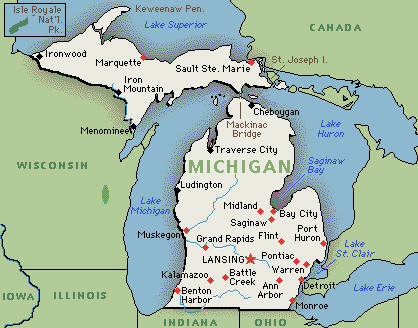
AT&T Pushing Michigan Towards Telecom ‘Reform’ That Is Bad for Consumers

AT&T stands to benefit enormously from the latest attempt to deregulate telecommunications services that could leave rural Michigan residents without a phone line, strips consumer protection and oversight rules to protect ratepayers, and wipes out the state Public Service Commission’s (PSC) traditional role of arbitrating telephone service and billing disputes.  In short, it delivers all of the benefits to AT&T and hangs up on Michigan consumers when their telephone service goes wrong.

AT&T  has found a real friend in Rep. Ken Horn (R-Frankenmuth), who introduced H.4314, a bill to overhaul Michigan’s telecommunications law.  Horn is AT&T’s top recipient of political contributions made by the company (and its employees) in the Michigan House.  He’s the third largest recipient of phone company money in the state, according to records from Project Vote Smart.  Horn’s bill delivers absolutely no discernible benefits to Michigan ratepayers.  Instead, Christmas comes early for big phone companies as Horn’s bill fulfills a wish list drawn up to eliminate decades of consumer-friendly protections:

  1. Eliminates the PSC’s annual report on telecom competition and rate fairness in Michigan;
  2. Allows AT&T to stop cooperating with the PSC in supplying information to help produce said report;
  3. Strips away the requirement that companies like AT&T keep proper records that show the costs of delivering their services to customers;
  4. Allows companies to keep secret the rates for services delivered by contract;
  5. Eliminates the requirement that companies like AT&T deliver “high quality basic local service” to all residents in the state;
  6. Expires all service quality standards established by the Commission on June 30, 2011;
  7. Allows companies to escape punishment by eliminating the PSC’s authority to issue fines, cease and desist orders, or revocation of service licenses when a company has violated state law;
  8. Requires all parties in a mediated dispute to keep the outcome secret;
  9. Eliminates state-mandated fair billing practices;
  10. Permits AT&T and other companies to sell, lease, or otherwise transfer assets and sell service to an affiliate below cost;
  11. Allows companies to discriminate in favor of an affiliated burglar and fire alarm service over a similar service offered by another provider;
  12. Eliminates the requirement that companies provide each customer a clear and simple explanation of the terms and conditions of services purchased by the customer and a statement of all fees, charges, and taxes that will be included in the customer’s monthly bill.
  13. Allows AT&T and other providers to market products and services without giving the customer a true and fair estimate of the real “out the door” price for service — after taxes, fees, and surcharges.
  14. Allows AT&T and other phone companies to discontinue service in any area provided with anything resembling a two-way telecommunications service including wireless, radio, or Voice Over IP service;
  15. Eliminates the telecommunication relay service advisory board, which ensures quality service to the hard of hearing and deaf communities;
  16. Reduces privacy guideline requirements protecting customers.

In tandem with Horn’s bill, AT&T released a congratulatory brochure reminding legislators they got the first half of their agenda enacted six years ago, now it is time for the rest of their dreams to come true.

Calling the proposed bill part of  “an innovation agenda to ‘modernize’ Michigan’s Telecommunications Act,” AT&T characterized the legislation as the ultimate red tape cutter, eliminating “a rotary phone mentality in a Smartphone, Wi-Fi world.”

Innovation, AT&T Style

But the proposed bill goes well beyond eliminating what AT&T considers outdated regulations and old phones — it could also eliminate phone service to Michigan’s most rural communities.

President Barack Obama was in Michigan last month to promote expanding broadband service, particularly in sparsely covered communities in the upper peninsula.  Large sections of Michigan remain underserved by AT&T, who does not extend DSL service into many rural areas.  Nothing in AT&T’s reform measure will bring broadband to these areas.  In fact, the bill grants AT&T permission to abandon landline service to these areas altogether, taking the prospects for DSL with it.

By winning an unrestrained playground for its products and services, for which it can charge whatever it likes — AT&T will follow Verizon’s lead and enhance service through its U-verse platform in urban and wealthy areas of the state at the expense of rural areas which are deemed unprofitable to serve.  While that’s great news for AT&T’s profit and loss statement, it hardly benefits the residents of Michigan who have helped build AT&T’s enormous network with decades of bill payments.

AT&T has a different position, of course. The phone company claims the bill will “better serve consumers” by eliminating “non-productive investments,” which really means investments in a landline network many Americans in more urban areas don’t care about anymore.  AT&T has focused much of its attention on its wireless network, which can deliver benefits to residents in Ann Arbor, Detroit, Saginaw and Grand Rapids, but is hardly a broadband replacement for Marquette or Elk Rapids — not with that 2GB monthly usage cap.  For urban dwellers, the promise of AT&T U-verse replacing AT&T DSL makes the phone company relevant in the broadband marketplace once again, but at the potential price of rural Michigan, who will never see the service in their neck of the woods.

AT&T claims their telecom reform agenda “means putting up a sign that says we are a state that gets it and will welcome and not restrain innovation,” the company says. “20th century regulations stand in the way of 21st century technology. Now is the opportunity to clear these roadblocks to investment and innovation.”

But AT&T’s policy bulldozer does far more than just sweeping away so-called “outdated” regulations.  It strips away fundamental consumer protection from unfair rate hikes, deteriorating phone service, billing errors, privacy protection, and the most basic right Americans have counted on for decades — the opportunity to purchase affordable landline service in even the most rural parts of the state.

Unfortunately, AT&T’s “innovation agenda” is deregulation at a price.  In Ohio, after similar legislation was passed, AT&T promptly raised rates on consumers last summer.  They did the same thing in California.  And Illinois.  Even U-verse, while delivering a second option for urban residents, simply does not save most subscribers money, especially after the introductory promotional rate expires.  It comes with rate hikes itself.

The Michigan Telephone Blog analyzes most of the bill’s outcomes with the same skeptical eye we have, and delivers a warning to other phone companies and businesses that could pay the price for AT&T’s version of “reform”:

If you are with a CLEC, an alarm company, or really any business that depends on telecommunications service in Michigan, you probably should have your legal department and/or your tariff guys looking at this bill.  If you belong to any type of consumer or business organization, especially one that protects senior citizens (who often hang onto the older technology, including the phone service they’ve always used) or small businesses (that often can’t move to other technologies for various reasons, particularly when they are located in less densely-populated areas), you should probably take a close look at this bill as well.

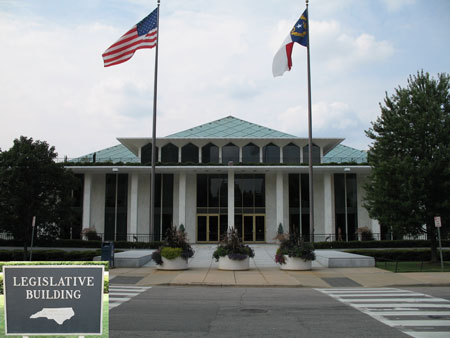
North Carolina Public Utilities Committee Hearing Audio on H129: A Voter’s Guide

North Carolina Legislature

Stop the Cap! has obtained the audio from Wednesday’s Public Utilities Committee meeting that quickly pushed through H129, Time Warner’s custom-written, anti-competition and community broadband destruction bill.

Listening to the 44 minute hearing will be disturbing to anyone who supports open government and the concept of voting for or against a complete bill, not one Rep. Marilyn Avila (R-Time Warner Cable) openly admits is going to be changed.  For her, that represents no reason to delay the bill — her good friends at Time Warner need this legislation passed today, not tomorrow or next week.

As you listen, we’ve included a voter’s guide with time-indexed comments to help draw your attention to some critical points, and some much-needed fact checking.  It will also help you identify the members of the legislature that need to stay, and those that need to go.

Our apologies for the distorted audio at times.  When a member leans into the microphone, as some clearly do, it creates significant audio distortion.  It gets worse in the last 10 minutes, so watch your volume.

North Carolina’s House Public Utilities Committee Meeting on H129 – Wednesday, March 2, 2011. (44 minutes)
You must remain on this page to hear the clip, or you can download the clip and listen later.

Your Audio Guide to The Committee Meeting

2:50 Apparently Rep. Avila gets her research straight from the cable industry that wants to destroy community broadband.  Avila is factually wrong about citizens being on the hook for “high debt” for North Carolina’s fiber networks, all of which are financed by bonds that leave bondholders at risk, not taxpayers.  The only interests Avila wants to protect are her good friends at the cable company.
3:30 Rep. Avila is dreaming if she really believes the providers that have refused to provide service thus far are going to suddenly do so if her bill passes.  These communities were ignored before and they will be ignored after.  The only difference is that her legislation will guarantee no local community can do anything to fix it.  Avila admits openly her bill will stop competition between providers.
6:00 Rep. Julia Howard is more than willing to hold meetings with those already in the business, but there is no room for actual North Carolina consumers to make their needs known.
8:50 Rep. Avila pays lip service to the ongoing problem of lack of broadband availability in large areas of the state by saying it’s unfair, but ignores the reality that if communities don’t deliver the service, nobody else will.  The red herring of a “public vote” always carries with it loads of fine print.  For example, while the industry can spend unlimited amounts on lobbying and advertising campaigns to demagogue networks, local communities are almost always banned from spending one dime to share their views with the public, or respond to the propaganda the industry sends out.  In fact, Avila’s bill bans networks from advertising their services or advocating for them.  It’s like holding a public debate, but gagging one side so they cannot speak.
12:50 John Goodman, North Carolina Chamber of Commerce presents the pre-written talking points provided by the cable industry.  As you listen, ask yourself whether Mr. Goodman is aware of the details of community broadband, or simply the information handed to him on some sheets of paper from the cable lobby.  Then ponder how many times a community provider has forced a private player out of business with so-called unfair pricing and subsidies.
17:30 Catharine Rice is one of just a handful of speakers that talk about the real-world problems of actual North Carolina citizens.  She’s concerned about them, not the bottom line of Time Warner and AT&T.  Some examples: 

  • Parents of schoolchildren have to drive their kids to a school parking lot so their children can access the school’s Wi-Fi network to complete their homework;
  • A neighborhood of more than a dozen homes can’t get decent broadband because Time Warner demanded $50,000 to wire up cable service.  Meanwhile, just a mile away, a wealthy golf community got their service without a 9 iron to their wallets.
8:30 Jack Stanley from Time Warner Cable delivers the day’s ironic moment when he congratulates his cable colleagues and friend from the Chamber for the “eloquence” of their prepared remarks. And why not, when you consider who wrote them.  His brief remarks consist mostly of empty promises to find a “fair resolution.”  This, from the people who wrote the very unfair bill.
19:30 The North Carolina League of Municipalities delivers an important fact: Community broadband networks are not created on a whim.  They are launched where communities face inadequate or non-existent broadband service.  Most of the cities launching their own services tried the public-private partnership route by approaching companies about broadband problems.  They were shown the door out.  This is why networks like Fibrant and GreenLight exist today.  Community broadband disturbs Big Telecom because it represents competition Wall Street and shareholders never expected they would have.  Anything that challenges the enormous profits cable and phone companies earn must be eliminated.
21:30 Mr. Trathen opens his remarks with a distortion, claiming cities are jumping into community broadband because they just want to compete with existing providers.  In fact, the record tells a very different story in North Carolina.  Cities and communities to this day are trying to get providers from Time Warner Cable, CenturyLink, AT&T, and even Clearwire to deliver service to their citizens and they are being turned down, or delivered DSL service at speeds that will not even qualify as true broadband under the definition established in the National Broadband Plan.  That’s a simple fact.  How many community networks are competing against Verizon FiOS or other cutting edge broadband networks?  The reality is, anemic or non-existent broadband service has been the topic of complaints in local communities across the state for years and years. 

Also, Trathen’s desire to “have a conversation” about serving unserved parts of North Carolina reminds me of the saying — talk is cheap.  Time Warner has been a part of North Carolina for years and years, and the cable company routinely bypasses any customers who do not live in a dense, populated area to this day.

Trathen’s comments that there is nothing in the law today prohibiting public-private partnerships is very true, but as residents have seen, those are far and few between.  Trathen is also flat wrong when he claims nothing in the bill prevents a city from moving into an unserved area to provide service.  In fact, Avila’s bill prohibits cities from extending service outside of their boundaries.

24:00 Rep. Paul Luebke wonders why this bill is necessary, because local governments proposing these networks are already answerable to their citizens and to an oversight committee.  Leubke correctly points out the legislation is all about letting existing telecom companies decide for the people of North Carolina when/if they will get broadband service, at what speeds, and using what technology.  With no new competition on the horizon, H129 effectively delivers all of the state’s broadband interests into the hands of a cable and phone company cartel. 

Leubke also expressed concerns that he (and others) are being asked to vote on a bill that has not been finalized yet.  Should negotiations between existing providers trying to extinguish community networks and the cities that run them fail to find a solution, the bill’s original language will guarantee financial disaster to existing community broadband services.

29:00 Rep. Alexander notes that the legislation establishes onerous conditions on community broadband networks that the private sector is completely exempt from.  Alexander notes these networks came about because communities were faced with last century broadband — the virtual equivalent of two cans with string between them.  This legislation assures those underserved communities will continue to be underserved.
32:00 Rep. Womble has serious concerns about how this bill is being rammed through the committee.  Just minutes before the hearing, Womble was handed a summary of the bill for the first time.  Womble is especially upset he is being asked by the bill sponsors to “trust us” when they say they will work out exemptions for existing providers.
37:00 Rep. Hager goes fishing and catches a number of red herrings about cities expanding their networks outside of their service areas and cross-subsidizing them with pilfered funds from city resources, “unfairly harming” their cable and phone company competitors. He presents no evidence to substantiate this claim.
38:30 Rep. Hastings falls into the trap of conflating middle-mile fiber backbone projects with delivering broadband to individual homes and businesses as he brings up the Golden Leaf Project, a very worthwhile fiber backbone, but one that will never extend to last mile homes and businesses.  Like so many middle-mile projects, this one will deliver service to institutions like schools, libraries and local government.  While all very noble, no funds are provided to directly wire service to individual homes that need broadband the most.  Private providers would have howled had this been the case.
Instead, vague promises like “private providers are interested in leasing capacity” on the network leave consumers with the hope of better days, but they should not hold their breath.  Cable operators will not deploy service in rural areas, period, and phone company DSL’s largest impediment remains distance between the central office and individual subscribers.  While Golden Leaf may prove beneficial in incrementally moving residential broadband forward, it is not going to provide service to individuals.  In fact, H129 will ensure none of these communities can tap into Golden Leaf and directly deliver service to those that continue to be broadband-disadvantaged.
40:00 Rep. Warren doesn’t like voting on a bill just to find out what it will eventually contain later on.  “It gives me chills,” he told the committee.  He also dismisses claims the bill is about a “level playing field.”  He then directs several pointed questions to Ms. Avila about the financial implications her bill will have on state finances, its bond rating, and other considerations.  She dodges all of them with non-answer answers.
43:00 In less than 30 seconds, the bill is rushed to a committee vote by a motion from Rep. Brubaker, at which point Rep. Steen cuts off discussion (despite the fact more committee members were raising their hands to speak).  A voice vote clearly delivers a majority to the NO side, but not in the eyes of the committee chair, who claims the AYES have it, the bill is reported favorably out of the committee, and the meeting is adjourned before anyone has a chance to demand a recorded vote.

The shocking conclusion of this legislative travesty is the chairman adjourning before a recorded vote can be taken.  Without it, constituents can’t identify how their member voted and hold them accountable at the next election.

[Update 3:05pm Monday — Stop the Cap! misidentified Rep. Warren as Rep. Rowan at the 40:00 mark.  We have corrected the audio log above and regret the error.]

Time Warner’s Propaganda Campaign Against North Carolina’s Community Networks

Stop the Cap! reader Jeff from Palo Alto, Calif., dropped us a line over the weekend asking about a story published last week by the Salisbury Post regarding a bill that would banish community-owned broadband providers in the state of North Carolina.  The legislation, custom-written by Big Telecom companies, could eventually spell doom for truly competitive service from community-owned providers like Fibrant, based in Salisbury.

“I got the impression that it said Salisbury was agreeing not to oppose the proposed legislation, in exchange for being exempted from it,” Jeff writes. “That seemed like a long-term victory for Time Warner. Am I missing something?”

The reporter who accepted propaganda at face value from the cable industry certainly did.

The article, “Lawmakers Eye Blocks on Fiber Optic Systems,” was replete with demonstrably false statements from both Time Warner Cable and a high-powered cable industry lobbyist less-menacingly-labeled “a lawyer for the N.C. Cable Telecommunications Association.”  (Perry Mason he isn’t.)

In fact, communities across the state continue to oppose this special interest favoritism, bought and paid for by the telecommunications industry.  But getting people acquainted with the facts is a problem when reporters don’t bother to fact-check some of the rhetoric from the cable industry, which at times leaves some with the ludicrous impression they are “the little guy.”

Rep. Marilyn Avila — The Representative for Time Warner Cable

The Post seems to suggest local officials are negotiating passage to the lifeboats before Rep. Marilyn Avila’s legislative gift to Time Warner Cable becomes the legal iceberg that sinks community broadband in the state.

In reality, city officials are pointing out they harbor no resentment towards any telecommunications company operating in the state.  In fact, they welcome them to participate by securing space on their advanced networks at competitive rates in public-private partnerships.

Unfortunately, they are up against Avila’s “bull in a china shop” bill that would cut the legs out from community-owned networks before such partnerships can become reality.  In fact, Avila’s abdication of her responsibilities to her constituents for the benefit of Time Warner Cable is even worse because it could ultimately harm the state’s credit rating and image if such networks can be run out of business at the behest of a competitor.

For a “small government conservative” to write a bill laden with regulations, rules, and taxes anathema to the “free market” is a testament to just how willing she is to abandon her principles when Big Cable comes calling.

Avila has suggested that existing community-owned networks are exempt in the current language of the bill.  That statement is patently untrue because the micro-management regulations found within it would apply to all community broadband networks, but exempt privately-owned ones.  That’s fair, right?

For mayors in communities with these networks, securing a strong exemption is part of a full-court press against this bill.  If it were to become law, keeping a pre-existing network in business becomes an important priority.

Rep. Marilyn Avila (R-Time Warner Cable)

Mayor Susan Kluttz told the Post she is hopeful state lawmakers will rewrite the bill to exempt Salisbury and other cities with networks that are up and running.

But the mayor is smart enough to also realize at least some of the people at the table do not have the city’s best interests at heart when it comes to Fibrant.

Sources tell Stop the Cap! there are several members of the General Assembly, Republicans and Democrats, who are more than a little unhappy with Avila’s attempts to ram the bill through.  Not only does the water-carrying look bad inside (and outside) of the state, it will also destroy the potential of expanding broadband service to many poorly reached parts of North Carolina.

“This bill guarantees Time Warner will hold the keys to the broadband kingdom in North Carolina for years to come,” a well-placed source told us.  “Even public-private partnerships to develop broadband in rural areas of the state are directly threatened by her bill.”

Citizens across North Carolina are calling and writing legislators in opposition, but Avila doesn’t show signs of moving away from her pro-cable bill so far.

“Empty promises are being made to some legislators that suggest if they support this bill, Time Warner will magically wire unserved areas for service,” sources tell us.  “The company that had no intention of wiring these areas over the past two decades will continue to ignore them whether this bill passes or not.”

Indeed, Time Warner Cable and other companies use a standard business calculation when determining whether or not to wire outlying communities.  If too few customers live within a square mile radius, they don’t receive cable service.  Nothing has ever changed that unless it is mandated in a formal local franchise agreement.  At AT&T’s behest a few years ago, such local franchise agreements were banished from the state.  Rural residents in places like Caswell County pay the price as large sections of the county go without broadband service.

The implications are dire:

Jobs -are- threatened by Avila’s legislation.  They belong to the those who manufacture spools of fiber and the equipment that utilizes it, the contractors who install, maintain, and service the network, and the customer support staff that deal with customers on a daily basis.

One of the strengths providers like GreenLight and Fibrant bring to their respective communities is their networks are open to all-comers.  Time Warner Cable, AT&T, and other phone companies can obtain access on both to serve their own customers — business and residential.  The impetus for building these networks was to benefit everyone.

The only adversarial players here are cable and phone companies that want to own, manage, and control everything themselves.  The companies that spent years telling communities they saw no need to enhance service now want to legislate away the chance for others to try.

“We have several Republicans who read Time Warner’s claims about this bill, then looked over the inadequate broadband landscape in their districts back home, and are coming to the conclusion this is one bad bill,” one pro-broadband lobbyist told us.  “But this is still going to be a very hard fight unless ordinary consumers make their voices heard loud and clear.”

Fact Checking

The most disturbing thing about the Post story is the complete lack of fact checking the industry’s arguments, most of which are simply flat out false.  A few examples:

Melissa Buscher, Time Warner Cable’s vice president of communications for the Carolinas claimed the city of Wilson raised pole attachment fees by 300 percent after launching GreenLight, Wilson’s community-owned network.  Buscher suggests that is an example of cross-subsidizing networks.  In her mind, mean and nasty Wilson officials jacked up the fees  just to put the cable company at a competitive disadvantage.

But the facts tell a different story.

Wilson’s pole attachment fee, unchanged since 1975 while other communities around the nation raised them year after year, was adjusted well before GreenLight opened its doors for business.

“Before 2007, Wilson’s pole fee had stayed the same since 1975,” city spokesman Brian Bowman said. “The attachment fee increase was not related to GreenLight. The old fee schedule was outdated.”

How much money are we talking about here?  The old rate was $5 per pole annually.  Today it’s $15 per pole per year.  That means Time Warner will have to pay $246,000 a year instead of $82,000 in Wilson — petty cash to a multi-billion dollar cable company.

Time Warner itself provided data nearly five years ago in a Tennessee study on pole attachment fees that proves Wilson is hardly being arbitrary and capricious.  The cable company was paying up to $13.64 per pole four years ago in North Carolina.  The Tennessee Cable Telecommunications Association has been complaining as late as last year over average pole attachment rates of $14.86 per pole in that state, adjacent to North Carolina.

The irony of a cable company that has nearly tripled its basic cable rates over the same period of time complaining about rate increases is lost on them.

Buscher also claims their new competition in Wilson and Salisbury is run by the same city governments that regulate them:

“Cities have unfair advantages,” Buscher told the Post, noting when cities get into the broadband business, they become not only a regulator for incumbent providers, but also a competitor. “If municipalities want to get into a business already offered by the private sector, we welcome the competition, but we want to level the playing field.”

The only thing Time Warner wants to level is the competition from community networks that deliver better broadband service than they offer.

In reality, thanks to industry lobbying in the 1990s, the cable industry is almost completely deregulated.  No local, state, or federal government regulates broadband — where it is offered, at what speeds and at what prices.

There is no conflict of interest on the regulatory front.

Time Warner Cable and the North Carolina Cable Telecommunications Association: Waltzing Partners in a Dance of Deception

'Those community networks are not playing fair. How can we possibly compete?'

The North Carolina Cable Telecommunications Association, which helps deliver a one-two punch for Big Cable’s agenda, delivered the next false claim:

“Fibrant and GreenLight have lower operating costs.”

In reality, Time Warner Cable’s enormous size and scope provides them with benefits and cost saving opportunities across their national footprint that neither community provider can match:

  • Volume discounts for programming, equipment, and other infrastructure;
  • The power of incumbency, which makes them the default choice for most customers who must be compelled to switch providers;
  • Access to grants and agreements like “payments in lieu of taxes” to protect cable jobs. Time Warner hardly pays “rack rates” for taxes across its entire footprint;
  • Time Warner’s construction costs were mostly incurred in the 1990s when cable systems were last rebuilt.  Suddenlink Cable CEO Jerry Kent said it best: “I think one of the things people don’t realize [relates to] the question of capital intensity and having to keep spending to keep up with capacity,” Kent said. “Those days are basically over, and you are seeing significant free cash flow generated from the cable operators as our capital expenditures continue to come down.”  That isn’t true for community networks just opening for business or still in the initial construction phase.

Frontier Communications, a private industry player, discovered all of the benefits in programming costs go to large players like Time Warner, Comcast, Verizon and AT&T when claiming they were forced to raise rates $30 a month because they could not get the same volume discounts big cable and phone companies receive.

Marcus Trathen, the lobbyist running the NCCTA, hopes his fear, uncertainty and doubt campaign will be proven correct with the passage of Avila’s bill.  As law, it assures all of the competitive advantages go to the billion dollar incumbents, and any failures will be among the community providers that compete with them:

“Cities are particularly ill-suited to competition in a technology-based industry,” Trathen said in an e-mail to the Post. “Technology changes in an instant.”

Just not for Time Warner customers in Wilson and Salisbury.  The genesis of these, and other, community-based networks come from provider intransigence to deliver the kind of broadband service consumers and businesses increasingly seek, at an affordable price.

Fibrant delivers 15/15Mbps service today in its standard broadband package.  Time Warner Cable delivers 10/1Mbps service.  When Fibrant and Greenlight were first proposed, Time Warner delivered even lower speeds.

The industry cannot have it both ways.  On the one hand, they claim community broadband is an economic failure delivering redundant service and mis-managed by government officials who do not understand the business of broadband.  On the other hand, these companies and their respective mouthpieces are literally spending tens of millions of dollars lobbying for legislation to keep these “failures” from ever getting off the ground.

As we’ve always said on Stop the Cap!, following the money always leads you to the truth.

Search This Site:

Contributions:

Recent Comments:

Your Account:

Stop the Cap!