Home » rural areas » Recent Articles:

New Zealand’s National Fiber Network Teaches Important Lessons for North American Broadband

Phillip Dampier May 30, 2011 Broadband Speed, Competition, Data Caps, Editorial & Site News, Public Policy & Gov't, Rural Broadband, Telecom New Zealand, Video Comments Off on New Zealand’s National Fiber Network Teaches Important Lessons for North American Broadband

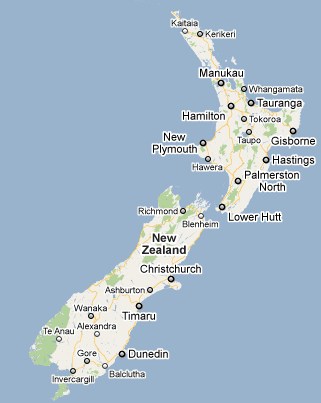
New Zealand’s forthcoming transformation to fiber-based telecommunications infrastructure has some important lessons to teach those interested in improving broadband in North America.

While Ottawa and Washington depend on the private sector to deliver 21st century broadband, other countries are recognizing private providers alone may not be able to deliver the essential networks of the 21st century, especially in smaller communities and rural areas still bypassed by even 20th century broadband.  For Korea, Japan, Australia, New Zealand, Singapore, and beyond — government and the private sector are working together to deliver advanced fiber-optic-based networks that will likely power broadband for at least the next decade or more.  More importantly, they are doing so on terms that best serve the interests of the public, not just a handful of shareholders and investment bankers.

Priority number one is getting advanced networks built.  Marketplace realities, particularly in North America, constrain private companies from taking risks on fiber networks that will take more than a few years to realize a healthy return on investment.  Without that essentially-guaranteed payback, many providers refuse to think in terms of “revolutionary” broadband, relying on incremental “evolutionary” upgrades instead.  That formula has also allowed many providers to ignore rural America, deemed too costly to wire.

In a country like New Zealand, these rules also apply, but in spades.  Not only do Kiwis face a broadband experience that resembles service offered in the U.S. a decade ago, they are also punished by a lack of international capacity.  With just one international provider delivering nearly all of New Zealand’s connectivity with the United States and beyond, prices are high and data caps are low.

Domestically, many Kiwis have traditionally had just one realistic choice for broadband service — Telecom New Zealand’s DSL technology.  Although competitors have been allowed to resell DSL service over Telecom’s network, the limitations of the technology remain a constant problem for every provider on that network.

New Zealand has decided the best way to handle these challenges is to transform the telecommunications foundation across the country, starting with a new public-private fiber broadband network.  NZ’s National Broadband Plan, dubbed “Ultra Fast Broadband,” establishes as its foundation the principle that broadband is too important to allow the country to languish waiting for private providers to step up.

Rosalie Nelson from IDC – the independent market intelligence advisory service, explores the pro’s and con’s of a nationwide fiber network for New Zealand.  But it’s a lesson not just applicable to broadband in the South Pacific.  Stop the Cap! is sharing this video seminar with our own Viewer’s Guide to help draw parallels to broadband closer to home. As an added bonus, you will come to understand different broadband technologies we regularly discuss.

[flv width=”640″ height=”380″]http://www.phillipdampier.com/video/IDC Ultra Fast Broadband.flv[/flv]

IDC analyzes New Zealand’s new Ultra Fast Broadband — National Fiber Network in this seminar with Rosalie Nelson.  It’s definitely a long view, but you will gain enormous insight into the challenges of delivering the next generation of broadband, not only in New Zealand, but in other countries around the world.  (39 minutes)

Stop the Cap! Viewer’s Guide

To help draw comparisons with broadband in the South Pacific with that in the United States and Canada, we bring you this viewer’s guide to follow as you watch.

Part One

Nelson

In part one, Nelson explores the recent history of telecommunications in New Zealand, particularly focused on Telecom New Zealand, created from the former state monopoly for landlines and data circuits.  Although the company began to open its network to competitors several years ago, the biggest transformation came in the last few years.  New Zealand experienced its own version of the Bell System breakup, only this time that transformation came from the New Zealand government, not the courts.

When complete, what was once a single company became three — one for wholesale access, namely by independent competitors reselling service over Telecom lines, retail — the public face of the company that continues to market service under the Telecom brand to consumers and businesses, and Chorus, the entity that maintains Telecom’s infrastructure.

In North America, the equivalent would be the breakup of AT&T or Bell, with competitors allowed to lease access to their respective networks at prices and terms that could not favor either parent company.

While the debate rages over whether broadband expansion came as a result of Telecom’s breakup, or in spite of it, one thing everyone agrees on: New Zealand is one of the fastest growing broadband markets in the OECD, with a growth rate of nearly 35 percent every two years.

New Zealand’s telecom market is perhaps five or more years behind the United States and Canada.  The rapid erosion of landlines for mobile or Voice Over IP service is only just starting in New Zealand.  Telecom, like many phone companies in North America, still depends on the enormous pool of revenue landline service provides.  Even as landlines decline domestically, phone companies like AT&T, Bell, Telus, Verizon, Frontier, and CenturyLink still treat this revenue as the critical foundation on which other products and services can be offered.  It will be years before this base revenue erodes to the point of irrelevance.
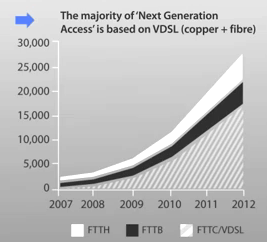
In Western Europe, VDSL has a significant head start in delivering next generation broadband. Similar to AT&T's U-verse or Bell's Fibe network, this technology delivers fiber to the neighborhood, but relies on traditional existing copper wire phone lines to reach individual subscribers.

Telecom is also highly involved in the mobile market.  Just as in North America, when we talk about industry investment in  networks, wireless is usually the largest recipient, sometimes at the expense of the landline network.

IDC, which is independently analyzing New Zealand’s forthcoming transformation to a fiber-based network, is excited about the transformational aspects of such a network, and recognizes public investment may be the only way to execute its rollout in a world where short term results and recouped investment can make all the difference between a green light and a red one among private providers.

Part Two (begins at 7:30)

In the second part of the video, Nelson succinctly explains some of the different technologies we talk about regularly on Stop the Cap!

For instance, most telephone and cable companies both use fiber cables for at least part of their network.  Telephone companies like Frontier use fiber between their headquarters, local exchanges (a/k/a central offices), and occasionally even to remote exchanges, used to reduce the amount of copper wire between your home or office and their exchange.  Many phone companies, including AT&T, use what Nelson calls “cabinets” to contain the interface between fiber and copper networks.

These are often dubbed lawn refrigerators — big four foot metal boxes installed on top of a concrete slab or attached to the side of a telephone pole.  On one end, fiber optic cable from the central office arrives.  On the other, individual copper wire lines exit, connecting to every customer up and down the street throughout the neighborhood.  With additional fiber, phone companies selling DSL Internet access can increase speeds and offer service where it was not available before.  AT&T can use a more advanced form of DSL as a platform for its U-verse service.  Bell’s Fibe service in Canada is another example of this technology in use.  CenturyLink is also deploying it for some of their service areas.

Cable companies use fiber to deliver their signals out to individual towns and parts of cities.  From there, coaxial cable travels to homes and offices, on which we receive television, telephone, and broadband service.  In large parts of Asia and Europe, cable television is much less common than it is in North America, so it’s a technology more unique to North America than to Europe or the Pacific.

Nelson also reminds us fiber is increasingly important for cell phone companies too, which use the technology to support the increasing amount of traffic that passes through cell towers.  Fiber can help keep mobile broadband speeds at a reasonable level during peak usage periods.  Where fiber isn’t available, the maximum amount of data that can travel between the cell tower back to the cell phone company’s data center can be significantly lower.

Nelson’s larger point is that there is a very real cost-benefit analysis to explore when considering whether the next generation broadband network should be 100% fiber-based, such as Verizon’s FiOS network, or a combination of fiber and more economical, already installed copper wire, such as AT&T’s U-verse.  The initial expense of providing 100% fiber, direct to the home, is greater than repurposing part of our existing landline network.  But with current technology, fiber can deliver a faster and more reliable level of service, and is future-proof.  It also requires less maintenance once installed.

Part Three (begins at 16:20)

In the third part of the video, Nelson explores the political landscape in New Zealand, and with some minor differences here and there, the gap between the telecommunications market in Canada and New Zealand is not too different.

Xtra, the ISP owned by Telecom New Zealand, remains the country's largest service provider.

While the United States broke up the Bell System in the mid-1980s, Canada still relies heavily on behemoth Bell/BCE to deliver broadband access throughout the Atlantic provinces, Quebec, and Ontario.  SaskTel and Telus deliver service to central and western Canada.  Cable companies, primarily owned by Rogers, Shaw, and Videotron deliver service in major Canadian cities and nearby suburbs.

In New Zealand, Telecom was the former state-controlled monopoly telephone company.  In recent years, that monopoly has been broken up, but broadband still relies heavily on Telecom’s landline network to deliver Internet access, primarily by DSL.  In the past, Telecom was -the- Internet Service Provider.  But now the company must sell access to their last mile network to all-comers at a regulated wholesale access rate.  Canadians will recognize this kind of wholesale access policy — Bell has one for independent service providers to this day.

In the United States, things are a bit different.  While there are instances of competitors providing DSL through landlines owned by familiar phone companies like AT&T, Verizon, CenturyLink, Frontier, and Windstream, very few customers know about them.  Instead, cable television is the more familiar competitor, and the two players regularly beat each other up in marketing campaigns.  If you ask an ordinary American consumer what companies sell broadband service, they will typically answer with the name of the telephone company and the cable company, if one serves their area.  They are unlikely to answer Earthlink, which sells service over some telephone company and cable lines.

Some of Nelson’s anaysis about the changes in policy relating to the Ultra Fast Broadband network are no longer in effect with last week’s decision to abandon the “regulatory holiday” concept.  The government’s original fiber network proposal has been modified repeatedly to fit into the business realities of the New Zealand ISP market.  Some examples include recognizing the value and importance of the existing copper wire network, which will remain relevant in some rural areas not scheduled for wireless or fiber access — and will of course also be in operation as the fiber network is built.  The government is also trying to promote private investment, and under pressure from large telecom companies, the government in power is looking for ways to assure investors of a return on their investment.  Critics have charged the government leaned too far towards providers in effectively handing them at least eight years of monopoly service under a “regulatory holiday,” without oversight by the all-important Commerce Commission.  A revised proposal seeks to guarantee investors a certain level of return, even if prices drop in the future, but retains regulatory oversight.

Big Phone Companies...

This policy is unique to New Zealand, and has not been tried in North America.  Canada’s national broadband plan is long overdue and the one in the United States relies on some government stimulus money to incrementally expand broadband in unprofitable rural areas, but relies mostly on private providers for the bulk of the expansion.  The Federal Communications Commission is exploring revamping its rural subsidy currently charged to every telephone line in the United States with the hope of diverting money to broadband development in rural areas.  Private providers are expected to upgrade their networks through private investment for most of the rest.

New Zealand is proposing a totally new way of delivering broadband service with the establishment of an independent company responsible for the fiber network — a company not affiliated with any Internet Service Provider.  That would make Telecom New Zealand no more or less important than any independent provider.  Each ISP will succeed or fail based on price and value-added services, because the basic network experience is likely to be the same regardless of the provider selected.  Some may deliver speed boosting features or sell content to customers.  Others may deliver cheaper, slower speed plans for budget-minded customers.  Some might even bundle free tablets or computers in return for fixed-length contracts.

But Nelson explains there is a risk.  Once a fiber network is in place, it effectively becomes a utility, and it may or may not be able to earn sufficient revenue to embark on innovative new technologies that venture capital might otherwise afford.  Because of market dynamics, for the same reason very few North Americans cities have more than one cable and one phone company, investors are unlikely to pour money into a competing technology if a fiber network is dominant.

...Often Think and Act Alike...

For a legacy phone company like Telecom, past regulatory requirements are also under review at the request of the telephone company.  Telecom argues if a national fiber network is to be established, Telecom should be freed of its regulated responsibility to continue investing in its copper network, and the facilities used to support it.

This is similar to arguments AT&T and other phone companies have been making in their efforts to secure deregulation at the state level, for but different reasons.  AT&T, as an example, argues that their aging copper wire network and its upkeep is a responsibility it agreed to in a different era, when landline service was ubiquitous and virtually everyone had a traditional phone line.  Phone companies argue that as landline disconnections accelerate, the regulatory responsibilities assigned to it are no longer fair, and requires the company to continue investing capital in a network fewer and fewer customers are using.  They argue investments would be more appropriately spent building next generation broadband and wireless networks.

AT&T might have a point, except for the collateral damage impacting rural customers, which AT&T may decide to abandon for the same reasons the company uses when it won’t provide broadband in rural areas — return on investment considerations.  Those investments AT&T seeks to make would disproportionately benefit urban customers, at the expense of rural ones.

Part Four (begins at 29:15)

In the fourth part, Nelson explores the impact of the fiber project on Telecom, which is considering restructuring itself to compete under the new broadband model.

Nelson argues the company’s revenues are expected to be flat in the near future and predicts Telecom will be forced to begin a cost-cutting program, simplify its business, and target growth areas.  Nelson ignores the most common strategies providers have used in this arena, however.  In addition to job cuts, the other common way to increase revenue is to raise prices. Chorus, which administers Telecom’s broadband network, is the only real money maker inside Telecom these days, and that comes from broadband demand.

...Even When They Are Thousands of Miles Apart.

Nelson, like investors, opposes anything resembling a price war in New Zealand, one that could come as copper-based DSL providers slash prices to remain competitive with service on the much faster (but likely more expensive) fiber network.  She sees such competition as a “war of attrition” where shareholder value is lost, along with incentives for further private investment.

Nelson’s final question ponders whether Telecom, still a dominant player in the New Zealand market, has the ability to change and adapt fast enough to the country’s fiber network.

Conversely, we wonder if Telecom will attempt to throw up roadblocks in an effort to curtail the new network as a defense strategy against those required changes to its business model.

We also wonder how much return on investment will be sufficient for investors.  For some, anything short of “the sky is the limit” may fuel investment of a different kind — into special interest campaigns and lobbying to ensure there is no limit on the money they can earn from a network that could have a monopoly position in the marketplace.


 

Cable Lobby Pays for Research Report That Miraculously Agrees With Them on Rural Broadband Reforms

A research report sponsored by the National Cable & Telecommunications Association, the nation’s largest cable lobbying group, has concluded that millions of broadband stimulus dollars are being wasted by the government on broadband projects that will ultimately serve people who supposedly already enjoy a panoply of broadband choice.

Navigant Economics, a “research group” that produces reports for its paying clients inside industry, government, and law firms, produced this one at the behest of a cable industry concerned that broadband stimulus funding will build competing broadband providers that could force better service and lower prices for consumers.

  • More than 85 percent of households in the three project areas are already passed by existing cable broadband, DSL, and/or fixed wireless broadband providers. In one of the project areas, more than 98 percent of households are already passed by at least one of these modalities.
  • In part because a large proportion of project funds are being used to provide duplicative service, the cost per incremental (unserved) household passed is extremely high. When existing mobile wireless broadband coverage is taken into account, the $231.7 million in RUS funding across the three projects will provide service to just 452 households that currently lack broadband service.

Navigant’s report tries to prove its contention by analyzing three broadband projects that seek funding from the federal government.  Northeastern Minnesota, northwestern Kansas, and southwestern Montana were selected for Navigant’s analysis, and unsurprisingly the researcher found the broadband unavailability problem overblown.

The evidence demonstrates that broadband service is already widely available in each of the three proposed service areas. Thus, a large proportion of each award goes to subsidize broadband deployment to households and regions where it is already available, and the taxpayer cost per unserved household is significantly higher than the taxpayer cost per household passed.

The cable industry funds research reports that oppose fiber broadband stimulus projects.

But Navigant’s findings take liberties with what defines appropriate broadband service in the 21st century.

First, Navigant argues that wireless mobile broadband is suitable to meet the definition of broadband service, despite the fact most rural areas face 3G broadband speeds that, in real terms, are below the current definition of “broadband” (a stable 768kbps or better — although the FCC supports redefining broadband to speeds at or above 3-4Mbps).  As any 3G user knows, cell site congestion, signal quality, and environmental factors can quickly reduce 3G speeds to less than 500kbps.  When was the last time your 3G wireless provider delivered 768kbps or better on a consistent basis?

Navigant also ignores the ongoing march by providers to establish tiny usage caps for wireless broadband.  With most declaring anything greater than 5GB “abusive use,” and some limiting use to less than half that amount, a real question can be raised about whether mobile broadband, even at future 4G speeds, can provide a suitable home broadband replacement.

Second, Navigant’s list of available providers assumes facts not necessarily in evidence.  For example, in Lake County, Minnesota, Navigant assumes DSL availability based on a formula that assumes the service will be available anywhere within a certain radius of the phone company’s central office.  But as our own readers have testified, companies like Qwest, Frontier, and AT&T do not necessarily provide DSL in every central office or within the radius Navigant assumes it should be available.  One Stop the Cap! reader in the area has fought Frontier Communications for more than a year to obtain DSL service, and he lives blocks from the local central office.  It is simply not available in his neighborhood.  AT&T customers have encountered similar problems because the company has deemed parts of its service area unprofitable to provide saturation DSL service.  While some multi-dwelling units can obtain 3Mbps DSL, individual homes nearby cannot.

Navigant never visited the impacted communities to inquire whether service was actually available.  Instead, it relied on this definition to assume availability:

DSL boundaries were estimated as follows: Based on the location of the dominant central office of each wirecenter, a 12,000 foot radius was generated. This radius was then truncated as necessary to encompass only the servicing wirecenter. The assumption that DSL is capable of serving areas within 12,000 is based on analysis conducted by the Omnibus Broadband Initiative for the National Broadband Plan.

Frontier advertises up to 10Mbps DSL in our neighborhood, but in reality can actually only offer speeds of 3.1Mbps in a suburb less than one mile from the Rochester, N.Y. city line.  In more rural areas, customers are lucky to get service at all.

Cable broadband boundaries were estimated based on information obtained from an industry factbook, which gathered provider-supplied general coverage information and extrapolated availability from that.  But, as we’ve reported on numerous occasions, provider-supplied coverage data has proven suspect.  We’ve found repeated instances when advertised service proved unavailable, especially in rural areas where individual homes do not meet the minimum density required to provide service.

We’ve argued repeatedly for independent broadband mapping that relies on actual on-the-ground data, if only to end the kind of generalizations legislators rely on regarding broadband service.  But if the cable industry can argue away the broadband problem with empty claims service is available even in places where it is not (or woefully inadequate), relying on voluntary data serves the industry well, even if it shortchanges rural consumers who are told they have broadband choices that do not actually exist.

Navigant’s report seeks to apply the brakes to broadband improvement programs that can deliver consistent coverage and 21st century broadband speeds that other carriers simply don’t provide or don’t offer throughout the proposed service areas.  The cable industry doesn’t welcome the competition, especially in areas stuck with lesser-quality service from low-rated providers.

Call to Action North Carolina: Last Day to Call Gov. Purdue’s Office to Stop H.129

Gov. Purdue

If North Carolina Gov. Bev Purdue does not veto H.129, the cable industry-written bill to throw up roadblocks for community broadband, it will automatically become law at midnight tonight.

We need every North Carolinian on the phone this afternoon, even if you called her office before. Let the governor know that you expect her to veto this anti-consumer, anti-jobs, anti-development bill that will keep broadband out of rural areas and competition at bay.  Let them know you cannot be fooled: doing nothing is the same as signing it into law as far as you are concerned.

The Governor’s Phone Number: +1 919 733 2391

The open source community has joined the fight.  Community Broadband Networks shares the open letter sent to the governor, published on Rootstrikers.org, a community dedicated to fighting all the corruption in politics that allows massive companies like Time Warner Cable to buy legislation:

Dear Governor Perdue,

We are strong supporters of your leadership and your campaign, and we would like to be heard on the important issue of community broadband. I know you are not afraid to use your veto pen, and so I ask you to veto H129, a bill that will take the future away from North Carolina and put it into the pockets of cable company monopolists.

On Sunday May 15th you may have read about our latest investment in North Carolina, Manifold Recording. This was the feature story in the Arts & Living section, and the top right-hand text box on the front page. One of the most difficult and expensive line-items in this multi-million dollar project was securing a broadband link to the site in rural Chatham County. I spent more than two years begging Time Warner to sell me a service that costs 50x more than it should, and that’s after I agreed to pay 100% of the installation costs for more than a mile of fiber. As part of a revised Conditional Use Permit (approved last night), I presented to the Commissioners and the Planning Board of Chatham County data on the economic investment I made, and the fact that according to the statistics from the Rural Broadband Coalition, that such an investment was worth about $300,000 to the 100+ neighbors who live along the new fiber link that I paid for.

Such heroics should not be necessary, nor should they be so costly.

I spent 10 years in Silicon Valley, and I know how quick they are to adopt new technologies that help people start and grow businesses. Manifold Recording would have remained a pipe-dream without broadband. But not everybody can afford to pay $1000/month for the slowest class of fiber broadband. Community broadband initiatives reach more people faster, at lower costs, leading to better economic development. Take it from me: had I been able to spend the time and money on community broadband that I spent in my commercial negotiations, there would be more jobs in Chatham County today.

For more information, which I strongly encourage you to have someone on staff research, please review https://www.rootstrikers.org/#!/story/community-broadband/. There, you will see that “as goes North Carolina, so goes the nation.” We cannot afford to ruin either our own prospects for an economic recovery led by new technologies and new business nor the prospects for an America recovery.

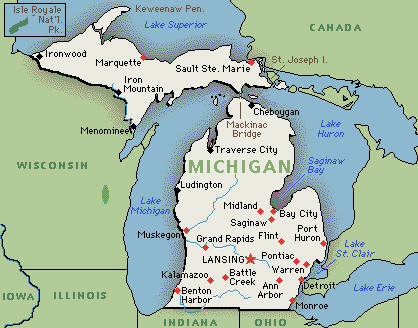
Michigan Residents Protest Deregulation Bill That Could End Landlines; “Get a Cell Phone,” Says AT&T

When Stop the Cap! reader Nancy learned earlier this year AT&T was pushing yet another deregulation bill in the Michigan legislature allowing the company to abandon landline service if and when it chooses, she called AT&T and her state representatives to protest.

“When I called AT&T, the representative literally told me if the company ever did decide to stop offering basic phone service in Michigan, I should just ‘get a cell phone,'” Nancy reports.  “Naturally they tried to sell me one of theirs and I replied I was not likely to be loyal to a company that was willing to abandon me and hundreds of thousands of other rural customers.”

As in Wisconsin, AT&T’s lobbying efforts follow the same basic playbook: use friendly legislators and dollar-a-holler groups financed in part by AT&T to push deregulation as “improving competition” and making the state “business friendly.”  But as Nancy learned from experiences in Wisconsin, those are empty promises when rates go up.

“These same people pushed to deregulate cable in Wisconsin so they could offer AT&T’s cable TV service, promising lower prices if we had AT&T competing against Time Warner Cable,” Nancy remembers.  “Time Warner and AT&T raised their rates for both services, instead.”

Nancy has a good memory.  So do we.  Yet again, AT&T’s chief Astroturfer is Thad Nation, this time under the name of the Midwest Consumers for Choice and Competition.  While consumers get ignored, Nation gets time to testify before the House Energy and Technology Committee.

Nation, who runs a lobbying firm, told legislators companies like AT&T should not have to invest in old copper-lines that consumers don’t care about.  He claims it prevents AT&T and other companies from investing in broadband and wireless.

The only thing missing from this group are actual consumers. Instead, their "partners" include: AT&T, groups funded by AT&T, and several chapters of the Chamber of Commerce.

In reality, legislation pushed by AT&T will allow them and other phone companies to abandon providing even basic landline service in the rural areas they no longer care about. There is no evidence (and no regulation) AT&T will invest in either broadband or improved wireless service in rural areas where the company is unlikely to quickly recoup its investment.

Our friends at the Michigan Telephone Blog pointed us to a piece in the Huron Daily Tribune, a newspaper at ground zero for rural Michigan’s potential loss of landline service should the deregulation bill pass.

Located in Michigan’s “thumb” — the northeastern part of the state separated by Saginaw Bay, Tribune reporters drilled down into the implications for the loss of traditional landline service in this largely-rural area of Michigan.

Huron County Commissioner John Bodis, who chairs the Legislative Committee, said he’s aware of the bill and foresees some issues with it, particularly in regard to the provision allowing phone companies to discontinue landline service in an area where Voice over Internet Protocol (VoIP) or cell phone service is available.

“If it’s not mandated, they’re not going to do it,” he said. “So, I’m hoping the Senate version will tweak that a little bit and hold their feet to the fire, but I don’t know.”

In its May Capitol Currents, the Michigan Township Association reported its concerns center around residents losing their land-line phone services when other options are not adequate (i.e. poor cell phone coverage because of hills, trees, etc.).

In written testimony to the House Energy and Technology Committee, Brian Groom, president of the International Brotherhood of Electrical Workers, Local 1106, stated over the past decade, the Michigan Legislature has gradually removed telecommunications providers from the oversight of the MPSC, and HB 4314 would complete that process by eliminating the last vestige of regulation — the Primary Basic Local Exchange Service.

“This service, as currently mandated in state statute, requires residential service providers to offer — at the very least — a basic calling plan to customers in their service territory,” Groom stated. “In 2005, when (M)PSC regulation of larger calling plans was eliminated, proponents argued that the public would continue to be protected by the existence of a Primary Basic Local Exchange Service requirement.”

“This means telecommunication companies providing basic local exchange or toll service will be able to discontinue or deny service to any customer who has access to ‘a comparable voice service.’ Nothing in the bill ensures that such service would be affordable, reliable or of a minimum quality,” Grooms continued. “For customers living in remote areas which are of a higher cost to serve via landlines, this legislation could result in them having to depend on higher cost and less reliable forms of telecommunication services. This bill would create a telecommunications environment where large areas of the state have no access at all to traditional landline telephone service.”

AT&T told Stop the Cap! reader Nancy even if the company disconnected the landlines of rural Michigan, those customers could always buy cell phones instead.

“That means people like me and my friends in places like Bad Axe, Elmwood, and Minden City — communities few people outside of Michigan would have heard of, get disconnected because they are too rural to get much attention from these companies,” Nancy says.

Frontier Communications, which provides service in some areas of the state, claims monopolies don’t exist in the phone business:

In written testimony, Bob Stewart, Frontier Communications state director of governmental affairs for Michigan and Indiana, indicated the current atmosphere is no conducive toward monopolies.

“The telecommunications industry in Michigan has moved to a highly competitive environment where monopoly powers even in rural areas do not exist,” he stated. “Unneeded and outdated regulations in the Michigan Telecommunications Act are cleaned up by HB 4314. Michigan needs to celebrate the success of the MTA by declaring victory; not over regulating simply for the sake of regulation.”

But many rural Michigan residents far from cable television and strong signal cell phone service would beg to differ.

“The further inland you head on the ‘thumb,’ the worse things get,” Nancy reports.  “Much of this is farm country and they can’t even get DSL service, and cell reception might be barely adequate outside, but walk inside and your signal is gone.”

Despite consumers like Nancy getting upset when they learn the long term implications of these bills, without a public outcry it is easy for legislators to vote with AT&T.  In the House, HB 4314 passed 102-6.  The six standouts that stood up for consumers?

Reps. Vicki Barnett (D-Farmington Hills, Jeff Irwin (D-Ann Arbor), Steven Lindberg (D-Marquette), Lesia Liss (D-Warren), Edward McBroom (R-Vulcan) and Phil Potvin (R-Cadillac).

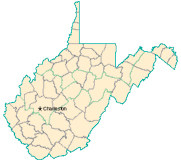
West Virginia Upset With Current State of Broadband; Companies Losing Business Over Lack of Service

At least 41 percent of West Virginian economic development professionals responding in a new survey rate their area’s existing broadband service as “not very good,” a result that could have profound implications for high tech economic development in the state because of poor quality business broadband service.

Some of the results of the survey, conducted by Internet Service Provider Citynet:

  • 77% said government involvement in steering broadband policy was “very important.”
  • 78% believe modern, reasonably priced broadband Internet infrastructure is “extremely important” or “very important” in competing against other locations for jobs.
  • On a 10-point scale, broadband Internet infrastructure (8.56) rates as slightly more important than road improvements (8.26) and water infrastructure (8.26).

“Seventy-eight percent of respondents say it has been their experience that businesses considering locating in their areas place high priority on access to affordable, high-speed Internet when evaluating site selections,” said Jim Martin, president and chief executive officer of Citynet. “And 66 percent say cost and capacity of broadband service are factors more than half of the time when discussing new business prospects.”

Some participants in the survey said they are losing business prospects in part due to the lack of broadband capacity, its speed or cost. Most of the professionals said they were “very familiar” or “somewhat familiar” with broadband expansion programs, such as middle-mile infrastructure, being implemented in adjoining states.

In West Virginia, most broadband expansion is being done by “last-mile” service provider Frontier Communications, which took over most of the state’s landlines from Verizon.  For most homes and businesses outside of areas where cable companies compete, Frontier provides DSL broadband service ranging from 1-3Mbps in smaller communities, perhaps 7Mbps or slightly better in larger cities.

West Virginia has proved to be one of the least impressive states for broadband owing to its terrain and large number of rural communities, providing few incentives for robust competition.  That has meant slow speed service at high prices.

Survey respondents were less than impressed:

  • “I have a project pending [and] will probably lose it based on costs of broadband.”
  • “The lack of high speed service in the rural areas totally extinguishes the possibility of new small business start-ups.”
  • “Prospects don’t look here because of the lack of high speed, affordable, reliable broadband…. Current speeds of up to 3 mb while may be suitable for residential use are not suitable for business.”
  • “Not only do too many areas still not have broadband, but too many places where people live do not have it and that affects the quality of life issue when attracting a prospect to live, work and play in WV.”
  • “We were looking at a possible location of a data center and the lack of affordable, large capacity broadband was a deciding factor in them not locating in WV.”
  • “We need the middle-mile and trunk-line services in West Virginia to remain competitive for many of today’s industries. What good is it if we get high-speed to every place in West Virginia, when we can only reach each other and do not have the facilities to get out of the state and into the major lines?”
  • “[We] lost a company that looked at an existing building located in an area that doesn’t have high-speed access. They ended up locating in another area.”
  • “You are not in the game without it.”
  • “What are we waiting for?”

Citynet has a dog in this fight.  Martin has tangled with Frontier Communications in the past year over broadband stimulus funding and where taxpayer dollars are being spent in the state.  While Frontier has touted “fiber projects” in West Virginia, those are primarily directed at increasing capacity for Frontier’s middle-mile network between its telephone exchanges, in hopes of expanding DSL further out into rural areas.  The company is also trying to address congestion issues that have grown since buying out Verizon’s landline-based broadband business.

Martin has criticized state officials for supporting Frontier’s efforts because the company will end up owning and controlling the network built, in part, from taxpayer dollars.

Stop the Cap! hears regularly from ordinary consumers in the state who are dissatisfied with their broadband choices, especially when they come from just a single provider — Frontier.  Slow speeds, poor service, and repeated service outages have been documented here and by the state’s local media.  Some outages are attributable to Verizon’s poor quality infrastructure (now owned by Frontier), others to Frontier’s unwillingness to replace that infrastructure — instead choosing to repair it, even if further outages occur later.

Search This Site:

Contributions:

Recent Comments:

Your Account:

Stop the Cap!