Home » rate increases » Recent Articles:

Charter Begins “Sweeping” Old Time Warner Cable Customers Into Spectrum Packages, Higher Fees

Phillip Dampier May 17, 2017 Charter Spectrum, Competition, Consumer News 3 Comments

The cable operator has begun “sweeping” accounts looking for customers it deems to have paid too little for too long or who are getting grandfathered cable channels the company feels they are no longer entitled to receive.

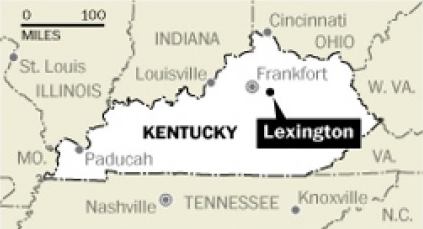
One of the first cities to be hit with Charter CEO Thomas Rutledge’s ‘account sweeps for more cash’ initiative is Lexington, Ky., where longtime customers are discovering their cable service is missing more than a dozen channels with no warning or explanation.

Daniel Fitzgerald discovered many of his cable channels were gone, replaced with a message that his subscription no longer included the cable channels that had been a part of his Standard cable package for years.

“I thought, ‘What the hell? I just paid the cable bill,’” Fitzgerald told the Herald-Leader last week at his tiny Lexington apartment he shares with his disabled 16-year-old son.

It turns out he wasn’t paying enough to satisfy Charter Communications.

A Spectrum representative told Fitzgerald that he hadn’t been paying Time Warner enough for the standard cable package. If he wanted those channels back, his monthly bill for cable and internet would jump $36 a month, from $103 to $139, effective immediately. No new channels, no new features, just a new much higher bill. To add insult to injury, the representative didn’t much care for the cable box Time Warner Cable provided him several years earlier and demanded its replacement, for a $24 service fee to send a technician out to check his service and replace his equipment.

When Fitzgerald attempted to negotiate with the cable company that claims it’s a “new day” for how cable companies treat their customers, the representative promptly cut him off.

‘This is Spectrum’s deal, take it or leave it,’ he was told.

“It was bull crap,” Fitzgerald said. “They don’t give us any notice, they just spring it on us in the middle of the month. And then they tell us we’re getting an ‘upgrade.’ This isn’t an upgrade, it’s the same channels we already had!”

Fitzgerald was not the only customer affected with Charter’s “surprise ‘upgrade,'” according to Lexington city officials, whose phones have rung off the hook about cable channels being held ransom for steep rate increases.

City officials who called on Spectrum to explain themselves eventually heard back from the cable company in a terse e-mail claiming Charter has begun performing “sweeps of customer accounts” looking for customers who have got too good of a deal from the cable company. Those customers are then summarily “repackaged” with no warning. Charter was busy “repackaging” a lot of Fitzgerald’s neighbors in his Alexandria Drive apartment building as well.
Rutledge told Wall Street investors this quarter it was all a part of Charter’s commitment to “move prices in the right direction.”

At Ximena McCollum’s home in Lexington, Charter cut off the NCAA men’s basketball tournament in-progress. When McCollum called Spectrum, she was informed she was “repackaged” as well, and could get her basketball game back for the right price: $45 more every month.

The customer service representative told her the channels she claimed she was getting were no longer part of her subscription.

“So if I had been getting them, I shouldn’t have been getting them,” McCollum said last week. “I told her that I’ve lived in this house for seven years. I’ve always had the same channels. She kept insisting that I wasn’t supposed to be getting these channels unless I paid them some ridiculous price. You could tell that she was confused and reading from some sort of script they had given her. Finally, I said, ‘Just cancel my subscription. I cut the cord.”

The Herald-Leader reported the “repackaging” comes down to one issue: money. Charter wants more, a lot more in some cases.

Rutledge has repeatedly claimed Time Warner Cable was effectively giving away the store and kowtowing to appease customers with lower rates when they complained about their cable bill. As far as Rutledge is concerned, the iron hand of discipline for former Time Warner customers is long overdue.

Rutledge promised he will force higher cable prices this spring as the company starts driving customers out of the Time Warner Cable packages into more expensive Spectrum packages. The company does that by allowing bundled discounts and promotions to expire on existing Time Warner packages, which results in sometimes-shocking rate increases of $50 or more per month. When customers call to complain, they are pushed towards slimmed-down Spectrum TV packages that cost slightly more than what customers used to pay and include more than a dozen fewer cable channels.

No one is exempt from being herded into Spectrum’s vision for the future. Even some of the city government’s office televisions have gone dark after “repackaging.”

Mossotti

City councilwoman Jennifer Mossotti got the Spectrum treatment as well, told if she wanted to keep her cable service, she needed to pay $21.50 more a month. Mossotti assumed she could whittle that amount down by dropping her Time Warner Cable phone service, but Spectrum told her that would cost her even more because it would break up her triple play bundle, resulting in an even bigger rate hike.

Lexington officials claim they feel held hostage by Charter and the ransom the city and its citizens have to pay doesn’t get them better service, just the same service they used to have for more money.

“It’s frustrating to the Nth degree. People are calling our offices daily about this,” Mossotti told the newspaper. “We felt like we at least had a little leverage with Time Warner. You could talk to them and usually you could work something out. With Spectrum, everything falls on deaf ears.”

In the face of the public relations disaster this is causing Charter in Kentucky, company representatives are trying to shift the blame on to customers, claiming they have been freeloading channels that have been part of legacy cable packages from years earlier that were either grandfathered or long forgotten, and Charter is simply tidying up.

For example, a local man who lives on Social Security benefits and who received the same cable lineup for 20 years “has only been paying for the Starter TV package,” Jason Keller, Charter’s senior director of government affairs, told city officials in an April 10 email. “The most recent sweep of customer accounts is what knocked out the channels, since he wasn’t paying for them. However, we’ve now repackaged him into a new service offering that has restored the channels and provides him with a new HD box.”

Keller did not respond to calls from the Herald-Leader asking how many Lexington customers now face higher cable prices.

In a prepared statement, Charter spokesman Michael Pedelty wrote: “Time Warner Cable was providing some programming inadvertently to a small number of customers whose packages didn’t include them. We want our customers to have the best quality and most reliable video experience. Earlier this year, we started a network project that adds an element of security and ensures individual channels are encrypted and available exclusively to those who subscribe to them.”

A few Lexington area residents told Stop the Cap! they felt abused by the entire process.

Barbara Montgomery, a subscriber of Charter (and two of its predecessors) claims she faced a higher bill after many of her channels disappeared a few weeks ago.

“We were ‘repackaged’ and told it would cost us $34 to get channels back,” Montgomery told us. “The [Charter] guy literally told us ‘tough luck, honey!'”

Edgar, who withheld his last name, reported that a Charter representative came close to accusing him of being a cable thief for getting channels he was not supposed to receive.

“I had this cable package for 27 years, no less and no more, and the last two companies – Insight and Time Warner Cable – let me keep paying for it year after year and I never saw any reason to change it,” he told us. “But Charter did, and on their own. One day the channels were there, the next day they were not. They tell you it’s too bad but that is way things are with Spectrum and they keep telling me their internet service is better, but I am 92 years old and don’t even have a computer.”

The experience of customers in Lexington may explain why tens of thousands of former Time Warner Cable customers are dropping Spectrum like a hot rock when the rate increase hits. For Rutledge, who was rewarded with a $98.5 million pay package in 2016, charging current customers a lot more for cable service more than makes up for the former subscribers they manage to drive off. For him, customers either get with the Spectrum program or they can go somewhere else, if there is somewhere else for customers to go.
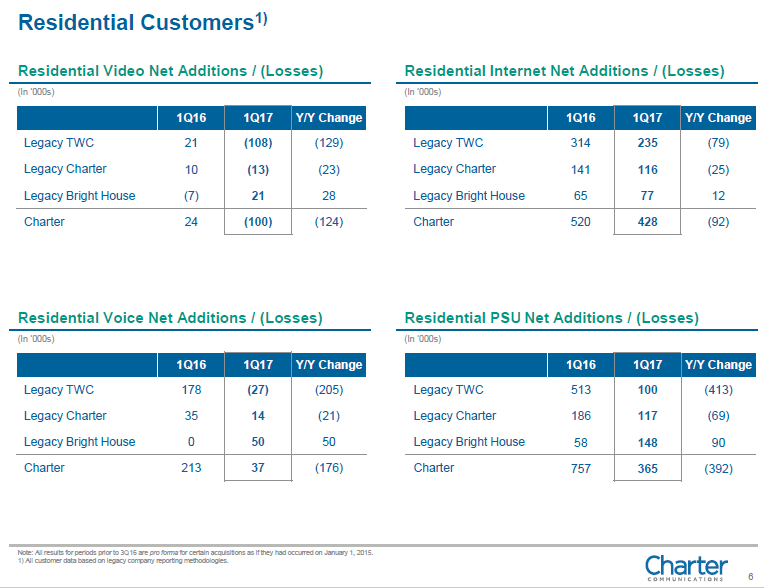
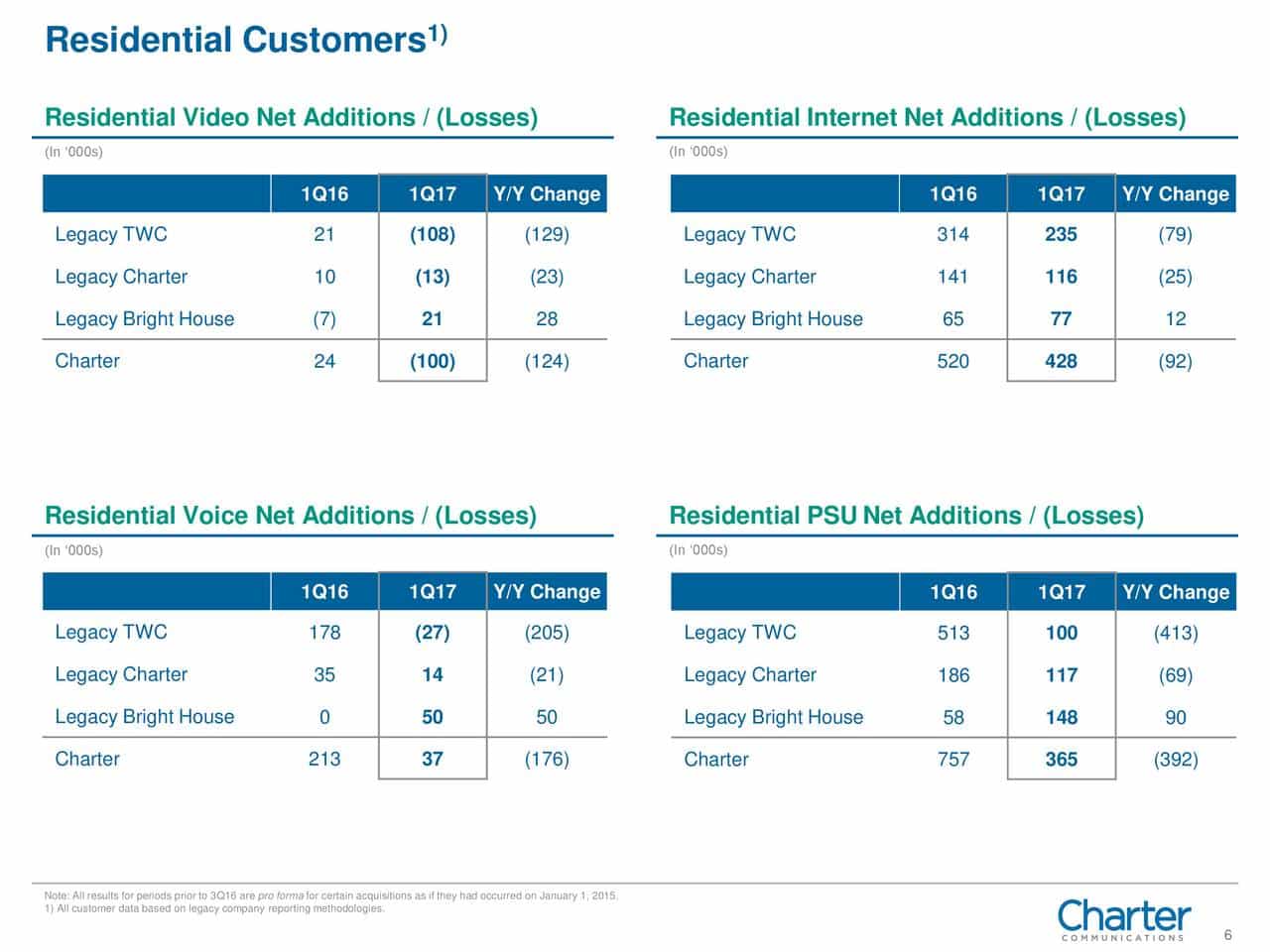
From: Charter Communications’ 1Q 2017 investor presentation

Those experiencing the Spectrum Treatment are switching to AT&T U-verse, although AT&T is trying very hard to get them to sign up for DirecTV instead.

Montgomery tells us AT&T really doesn’t want their cable business, but they will sell her an expensive cell phone or satellite TV.

“AT&T is a happy hog making a lot of money in the cell phone business, but they sure don’t want to spend much on giving me TV service, and told me I’d be happier with satellite TV,” she said. “If I wanted satellite TV, I would have called DirecTV or Dish myself.”

The other option for parts of Lexington is Windstream’s Kinetic TV, a fiber to the neighborhood service available in some Windstream service areas. But Kinetic TV is getting mixed reviews from customers who have the service, and for those that want broadband, Kinetic speeds don’t cut it for many.

While Rutledge figures out how to spend his eye-popping compensation package, those on fixed incomes like Fitzgerald who live on less than $1,000 a month are trying to figure out where they will get the extra money to pay Charter.

Fitzgerald was giving the cable company $103 a month for standard cable television with no premiums and internet service. Now Spectrum wants 35% more for the same service he used to get.

A nearby neighbor told Fitzgerald and the newspaper their Spectrum bill went up $18 a month.

“A five dollar increase, OK, fine, I guess I could deal with that,” the neighbor said. “But twenty bucks just because a new company comes in? This is felonious. What am I gonna do, tell Social Security that I need $20 more every month because Spectrum wants it? It doesn’t work that way.”

“There ain’t much you can do about it, though,” Fitzgerald told the neighbor. “They’re the cable company.”


Consolidation: Sinclair Broadcasting Acquires 42 Tribune TV Stations in $3.9 Billion Deal

Phillip Dampier May 15, 2017 Competition, Editorial & Site News, Public Policy & Gov't Comments Off on Consolidation: Sinclair Broadcasting Acquires 42 Tribune TV Stations in $3.9 Billion Deal

In one of the largest media consolidation acquisitions in history, Sinclair Broadcast Group has agreed to buy Tribune Media and its 42 TV stations in a $3.9 billion deal.

The transaction, expected to win easy approval by the Republican-dominated Federal Communications Commission, will virtually guarantee cable and satellite TV subscribers will pay significantly higher prices to watch Sinclair’s local television stations covering more than 70% of the United States.

Sinclair helped lay the foundation for winning approval of the transaction in GOP-dominated D.C. by hiring former Trump spokesman Boris Epshteyn as Sinclair’s chief political analyst, and Sinclair executives mandate that many of its owned stations air pro-Trump conservative political content labeled as “news stories” as part of local newscasts.

Sinclair’s conservative leanings and accusations of hypocrisy are nothing new for the station group, which has been mired in controversy for more than two decades. The “family values” image that Sinclair purports to have in its political commentaries and corporate image ran headlong into the 1996 arrest of its former CEO David Smith, who used the company Mercedes to pick up hookers in Baltimore. He was convicted of a misdemeanor sex offense. Smith cut a deal with a Maryland state’s attorney that would allow him to avoid picking up trash on the highway or cleaning community-owned pools by having his reporters air stories about Baltimore’s drug court instead.

LuAnne Canipe, a reporter who worked on air at Sinclair’s flagship station, WBFF in Baltimore, from 1994 to 1998, told Salon in 2004 she took a phone call one day about the disposition of Smith’s arrest.

“A Baltimore judge called me up,” she recalls. “He wasn’t handling the case, but he called to tell me about the arrangement and asked me if I knew about it. The judge was outraged. He said, ‘How can employees do community service for their boss?’”

To this day, Smith remains the chairman of Sinclair Broadcast Group, although he relinquished the CEO position last fall.

Canipe said the sexual shenanigans at Sinclair didn’t stop with the CEO either.

“Let’s just say the arrest of the CEO was part of a sexual atmosphere that trickled down to different levels in the company,” Canipe remembered. “There was an improper work environment. I think that because of what he did there was a feeling that everything was fair game.”

Before leaving Sinclair in 1998, she said she once complained to management about another Sinclair employee, who had engaged in audible phone sex inside a station conference room, but that no action was taken against the employee. Canipe passed away in 2016 after battling cancer.

Sinclair stations were required to air political commentary during local newscasts that favored the Bush Administration.

By 2004, the majority of Sinclair’s then-62 stations were living with corporate interference in the local newsroom. Sinclair mandates that most of their owned stations air corporate-produced political segments that are routinely called “to the [political] right of Fox News” by detractors. That year, many local newsrooms at Sinclair stations bristled over the mandatory airing of a daily televised commentary called The Point, hosted by Mark Hyman, then Sinclair’s vice president for corporate relations. The Point could be compared as Sean Hannity’s talking points delivered with the bombastic panache of Bill O’Reilly. As the 2004 election neared, Hyman’s push for George W. Bush’s re-election went into overdrive. Hyman was a fierce advocate for the Bush Administration’s intervention in Iraq and referred to the French critics of President Bush’s war strategy as “cheese-eating surrender monkeys.”

While Hyman force-fed conservative political commentaries to Sinclair stations, he did not extend that same right to others, banning Sinclair’s ABC-affiliated stations from airing an edition of Nightline that showed host Ted Koppel reading the names of U.S. troops killed in Iraq, claiming the idea was inappropriate and “motivated by a political agenda.” Concerns about political agendas were short-lived, however, because Hyman later mandated that 40 of Sinclair’s 62 stations air “Stolen Honor,” a much-criticized and highly controversial political documentary attacking Democratic presidential candidate Sen. John Kerry’s war record. The stations aired a revised version of the documentary days before the 2004 presidential election.

When management at some of Sinclair’s local stations balked at the required airing, Hyman accused them of “acting like Holocaust deniers.”

Just prior to the 2012 election, WSYX was forced to air a Sinclair-produced “special” pre-empting ABC’s 6:30pm national news and Nightline that heavily criticized President Obama, then up for re-election, and accused him of lying about the attack on the American consulate in Benghazi, Libya. The special also pre-empted programming on other Sinclair stations, including WPEC in West Palm Beach.

The implied quid pro quo with the Bush Administration was particularly important for Sinclair as it continued acquiring TV stations, a process that required the approval of the then-Republican controlled FCC. A 2004 Salon article quoted journalist Paul Alexander, who produced a widely acclaimed documentary about Kerry as “insulting to the news-gathering process. That’s not how you gather news; that’s how you blackmail people.”

But news gathering was never the point, according to former Sinclair reporter Canipe. “David Smith doesn’t care about journalism,” she said.

Smith doubled-down on his cozy relationship with the Bush Administration by allowing conservative commentator Armstrong Williams to produce unfettered extended media segments for Sinclair stations. What Smith claims he did not know was that Williams accepted a $240,000 payoff from Bush officials to promote the Administration’s education agenda in the media. Williams brazenly interviewed then Education Secretary Rod Paige, the same man who authorized Williams’ payoff.

The result of the interview, according to the 2005 Rolling Stone piece:

Even before the payoffs became public, the news staff at Sinclair was horrified. The producer who edited the interview Williams did with Paige calls it “the worst piece of TV I’ve ever been associated with. You’ve seen softballs from Larry King? Well, this was softer. I told my boss it didn’t even deserve to be broadcast, but they kept pushing me to put more of it on tape. In retrospect, it was so clearly propaganda.”

When things became politically difficult for the president during the second term of the Bush Administration, Sinclair again came to the rescue, forcing its stations to air headquarter-produced news stories highlighting “good news” about the war in Iraq. Sinclair executives also demanded each of its 62 stations air a pledge of support for President Bush.

Rolling Stone:

But within the company, current and former employees have long known that there is a fine line between ideology and coercion. Jon Leiberman, once Sinclair’s Washington bureau chief, says Smith and other executives were intent on airing “propaganda meant to sway the election.” An ex-producer says he was ordered not to report “any bad news out of Iraq — no dead servicemen, no reports on how much we’re spending, nothing.” And a producer Sinclair sent to Iraq to report on the war calls the resulting coverage “pro-Bush.”

“You weren’t reporting news,” says the producer, who spoke on the condition of anonymity. “You were reporting a political agenda that came down to you from the top of the food chain.”

At the time, Smith told visitors to his Baltimore headquarters: “There are two companies doing truly balanced news today: Sinclair and Fox.”

During the most recent election cycle, Sinclair executives made sure audiences knew where they stood, urging voters to reject Hillary Clinton, as the New York Times reported, “because the Democratic Party was historically pro-slavery.”

More recently, Sinclair has defended the Trump Administration, with orders from Sinclair HQ to stations to dig up information about an online ad that seemed to recruit paid protesters for President Trump’s inauguration in January. Various right-wing groups used the ad as evidence of organized efforts to harass the incoming administration. The ad was later determined to be a hoax, wasting reporters’ time.

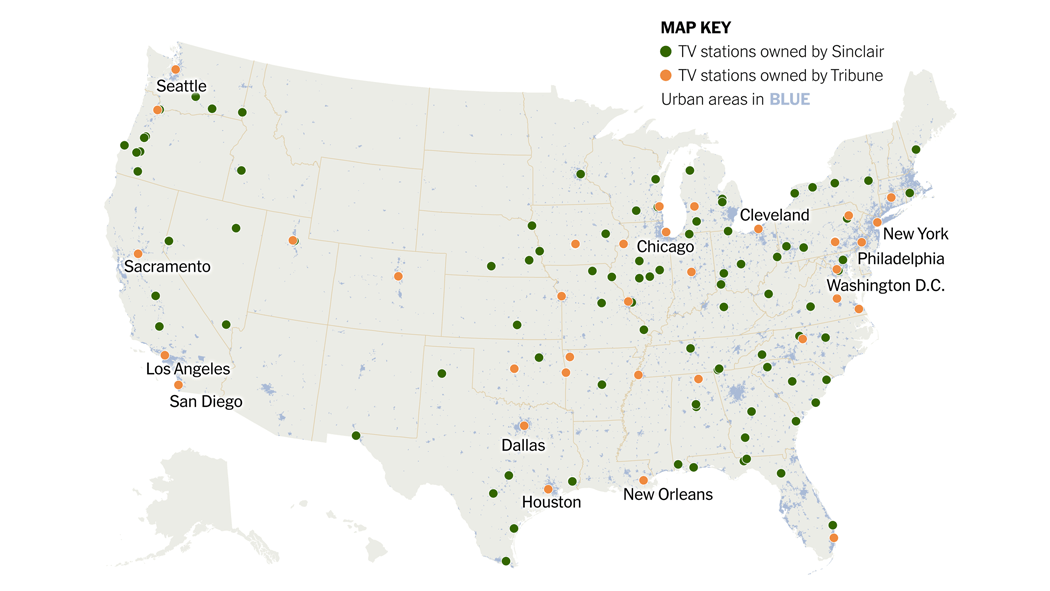
The national map of Sinclair and Tribune Media’s reach. (Image: New York Times)

The interference in local newsgathering by Sinclair executives has become so pervasive, its station in Seattle – KOMO, has been rebelling by burying mandated stories surrounding commercial breaks, when viewers are most likely to tune them out. But there is little else the station can do, and like with other acquisitions Sinclair has completed, there are fewer news staffers at KOMO to protest. Standard procedure at Sinclair after an acquisition to is dramatically cut back on employees and offer more stories and content produced at Sinclair’s headquarters or at other Sinclair-owned stations.

Sinclair’s latest target — Tribune Media, owns stations familiar to most cable and satellite subscribers around the country. Among the stations in Tribune’s portfolio — WPIX-New York, WPHL-Philadelphia, WGN-TV/WGN America-Chicago, KDVR/KWGN-Denver, and KTLA-Los Angeles.

“It’s an incredible amount of power in one company’s hands,” said Craig Aaron, president of Free Press.

Tribune Media owns some of the largest local TV stations in the country.

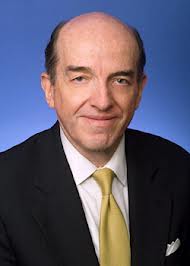
Former FCC commissioner Michael Copps doesn’t much like the deal either, noting it is “another blow to the diversity of journalism that we should have. It’s symptomatic of what is happening in this market, which is fewer and fewer organizations controlling more and more of the information on which our democracy rests.”

Copps

With all the recent turmoil at Fox News Channel, including the cancellation of Bill O’Reilly’s show, Sinclair could use its Tribune Media acquisition to launch a new conservative national news and opinion network that could rival Fox. WGN America, which no longer has anything to do with WGN-TV — a former “superstation”, could dump the current reruns it airs and be repurposed as a new home for exiled conservative commentators like O’Reilly.

Regardless of your political persuasion, you will likely be paying a lot more for Sinclair TV stations on the cable or satellite dial. Sinclair is among the most aggressive station owners boosting prices for carriage agreements. Cable operators will continue to pass most, if not all of these fees on to subscribers in the form of higher rates or through “Broadcast TV” surcharges that are rarely mentioned by cable companies in their advertised rates.

In Utah, cable operators are already very familiar with Sinclair’s retransmission rate increases. The revenue has grown so significant, some station owner groups are buying up small independent TV stations just to cash in on the growing revenue they get from cable systems and subscribers.

CentraCom, a cable operator in Utah, reports it now pays over $10 as month for local stations, per subscriber, double what it paid in 2008, and they are prepared to see rates much higher than that in the future. Sinclair will also be motivated to force bundle its cable network Tennis Channel with its local stations when it negotiates with cable companies, whether they want the tennis network or not.

Charter Blames Departing Time Warner Cable Customers for Customer Losses

Phillip Dampier May 2, 2017 Charter Spectrum, Competition, Consumer News 6 Comments

Buh, bye Charter!

Despite happy talk from Charter Communications about a “new day” with Spectrum packages and pricing, some former Time Warner Cable customers are voting with their feet and canceling service when their promotional pricing packages end and rates have nowhere to go but up.

More than 100,000 video customers left Charter during the first quarter of 2017, the majority former TWC customers facing repricing and package changes as their bundle pricing and promotions expired. At that point, rates spike dramatically and customers have to choose a Spectrum package many don’t like or leave.

With only 17% of Time Warner Cable and Bright House Networks customers nationwide having switched to Spectrum plans and pricing, Charter has a long way to go and a lot of customers to lose because of the company’s unwillingness to negotiate.

“As we’ve implemented consistent retention policies nationwide, we’re managing through higher churn at TWC in the short term,” noted Charter’s chief financial officer Christopher Winfrey. “As we migrate and replace the legacy base through a disciplined approach, legacy TWC churn will improve.”

In plain English, Charter has dramatically curtailed promotional customer retention offers and has refused to negotiate with customers that have been on promotional packages for years. Hardest hit are Time Warner Cable customers, and Charter is willing to let them walk instead of extending lower prices.

“The TWC churn, somebody was given a $10 unlimited video basic package, where can you move them?” asked Winfrey. “And they have an exploding offer. It was promotional offer. Where can you move them that’s a satisfactory place relative to what they were given before.”

This Dexter, Mich. Charter customer delivers a “thumbs-down” to the company’s “terrible service.”

CEO Thomas Rutledge has been harshly critical of Time Warner Cable’s penchant to reach for promotional pricing to keep customers happy. He has instituted “discipline” to get customers away from the idea they can get a lower cable bill just by asking. Rutledge understands most of his customers don’t have a great alternative and are effectively captive to limited competitive options. For Rutledge, by taking away discounted options, customers can be retrained to accept higher prices as a fact of life.

So far, many former Time Warner Cable customers are not willing to be led to a higher bill and as their legacy promotions expire, families are having conversations about dropping service(s) as a result of price and Charter’s intransigence about lowering it.

First quarter results show the first, and widely expected victim of Charter’s “repricing” is Time Warner Cable’s home phone product, which has been offered in bundles for $9.99 a month over at least the last four years. Charter discontinued Time Warner Cable’s popular international calling feature which offered free calling to the European Union, parts of Latin America and Asia. It also raised the promotional price to $19.99 a month, and now limits free long distance calling to the U.S., Canada, Mexico, Puerto Rico, Guam, U.S. Virgin Islands, and the Northern Marianas.

As customers transition to Spectrum plans, they are leaving their voice lines largely behind as a result. During the first quarter of 2017, Charter only picked up 37,000 new Spectrum phone customers signing up for a Spectrum package versus 213,000 last year. Price was the only factor mentioned for the decline.

Decisions about cord-cutting are also being made at many former Time Warner Cable and Bright House Networks homes when Spectrum’s new cable television offer is presented to customers. Cindy Sims of Apopka, Fla., summed it up this way: “They are raising prices and doing nothing different.”

Customers with limited budgets or fixed incomes are being priced out of Spectrum.

Sims is former Bright House Networks customer who saw her bill jump from $150 to $175 a month after Charter Communications took over. Since she is a “new customer” of Charter Communications, she hoped to get an introductory offer from the company but Charter no longer considers its acquired customers “new customers,” so she was forced into Spectrum’s regular pricing, which is higher than what she paid before. She is not alone. Charter executives admit customer cancellation/retention call center contacts from former Time Warner Cable customers are 50-60% higher than those of legacy Charter customers that have been with the company for several years.

The last straw for many is the fact customers often find they have to upgrade to the most expensive TV package to keep the channels they had before.

“They are kicking the old customers in the butt,” she added, noting that some Charter representatives handling customers threatening to leave have gotten downright nasty and rude on the phone.

Given no good alternative, some customers decide the time is right to cut cable-TV for good, and TWC’s video net loss was 129,000 worse than last year. The company claims over 90% of the losses were from budget-priced, limited-basic TV disconnects. Charter prefers to sell customers large bundles of channels for considerably more, while Time Warner Cable offered local channels and a small selection of cable networks for as little as $10 a month to certain internet-only customers.

The customer losses are expected to continue for up to a year as the other 83% of customers still on a legacy Time Warner Cable or Bright House Networks package see their prices jump as promotions end. For now, Charter won’t force customers to move to a Spectrum package, but by refusing to negotiate lower prices for legacy packages, the rate increases that happen after regular rates return are enough to push many customers to make a decision to switch or cancel service.

How much of a rate jump? Consider one Time Warner Cable triple-play package with Whole House DVR service, phone and 50/5Mbps internet access reset from $129 a month to $180 after the year-long promotion expired. A comparable package from Spectrum is still $30-40 higher than what Time Warner Cable used to charge.

The impact of the transition to Charter’s Spectrum plans and pricing is also dragging down growth of its internet service. Customers signed up for less expensive and slower tiers with Time Warner Cable are being priced out of the market by Charter’s single-advertised offer – 60 or 100Mbps for approximately $65 a month ($45 for new customers), depending on the area. Higher speed tiers are available if customers call in, if only to give them the bad news a $199 upgrade fee typically also applies.

As a result, residential internet growth among customers signing up for a Spectrum plan was 428,000 during the quarter versus 520,000 last year.

Despite the concerning numbers, Rutledge declared victory and claimed Charter would continue full-speed ahead.

“As we near the first anniversary of the close of our transformative transactions in May of last year, the execution of our integration and operating plan remains on track,” Rutledge said in a statement. “We have now launched our Spectrum pricing and packaging to nearly all of the homes we pass in our new footprint. We are already seeing the benefits of our customer-focused strategy in those markets, including greater connect volumes and the sales of higher quality products, all of which will lead to higher customer satisfaction, lower churn, and faster customer and financial growth in future quarters.”

Wall Street Analyst: Cable Monopoly Will Double Your Broadband Bill

Thought paying $65 a month for broadband service is too much? Just wait a few years when one Wall Street analyst predicts you will be paying twice that rate for internet access, all because the cable industry is gradually achieving a high-speed broadband monopoly.

Jonathan Chaplin, New Street Research analyst, predicts as a result of cord-cutting and the retreat of phone companies from offering high-speed internet service competition, the cable industry will win as much as 72.2% of the broadband market by the year 2020. With it, they also win the power to raise prices both fast and furiously.

In a note to investors, Chapin wrote the number of Americans left to sign up for broadband service for the first time has dwindled, and most of the rest of new customer additions will come at the expense of phone companies, especially those still selling nothing better than DSL.

“Our long-term penetration forecast is predicated on cable increasing its market share, given a strong network advantage in 70% of the country (this assumes that telco fiber deployment increases from 16% of the country today to close to 30% five years from now),” Chaplin wrote.

Cable companies already control 65% of the U.S. broadband market as of late last year. Chaplin points out large cable operators have largely given up on slapping usage caps and usage pricing on broadband service to replace revenue lost from TV cord-cutting, so now they are likely going to raise general broadband pricing on everyone.

“Comcast and Charter have given up on usage-based pricing for now; however, we expect them to continue annual price increases,” Chaplin said. “As the primary source of value to households shifts increasingly from pay-TV to broadband, we would expect the cable companies to reflect more of the annual rate increases they push through on their bundles to be reflected in broadband than in the past. Interestingly, Comcast is now pricing standalone broadband at $85 for their flagship product, which is a $20 premium to the rack rate bundled price.”

Chaplin himself regularly cheerleads cable operators to do exactly as he predicts: raise prices. Back in late 2015, Chaplin pestered then CEO Robert Marcus of Time Warner Cable about why TWC was avoiding data caps, and in June of that year, Chaplin sent a note to investors claiming broadband was too cheap.

“Our analysis suggests that broadband as a product is underpriced,” Chaplin wrote. new street research“Our work suggests that cable companies have room to take up broadband pricing significantly and we believe regulators should not oppose the re-pricing (it is good for competition & investment).”

“The companies will undoubtedly have to take pay-TV pricing down to help ‘fund’ the price increase for broadband, but this is a good thing for the business,” Chaplin added. “Post re-pricing, [online video] competition would cease to be a threat and the companies would grow revenue and free cash flow at a far faster rate than they would otherwise.”

Charter/Spectrum Arrives in Northeast/Mid-Atlantic Region, Big Rate Hikes Sure to Follow

Phillip Dampier March 14, 2017 Charter Spectrum, Consumer News, Video 9 Comments

The last remaining parts of the country formerly served by Time Warner Cable are rebranding as Charter/Spectrum today, with the introduction of new service plans in upstate New York, western Massachusetts, Maine, and parts of the Carolinas.

“Redefining what a cable company can be,” as Charter Communications promotes to its customers, is a tall order for a cable company that is often loathed by its customers. Our readers have reached out to us all day to suggest, at least so far, Spectrum is the same old cable company, just with a new name.

“If I switch away from my Time Warner Cable plan to adopt a Spectrum plan, my bill will increase $40 a month,” complained Rochester, N.Y. resident June Patterson. “Even the customer service person I talked to said it would be crazy for me to switch plans.”

A customer in Albany, N.Y., reported their bill would increase by $30 a month. Another in Silver Creek, N.Y., claimed a $40 rate rise by switching to a Charter/Spectrum plan.

“I pay $92.06 now for Starter TV and Ultimate Internet in the Ithaca area,” shared another customer on DSL Reports. “After going through two operators, the second one is telling me my price will go up to $125.”

That’s a rate increase of $32.94 a month — $395.28 more a year.

Customers are encountering new plans for television service, but many areas only receive one advertised broadband speed option: 60Mbps. In fact, most areas can also buy 100Mbps service, but it’s very expensive at around $100 a month with a $200 setup fee. Customers have to call to change plans to get either speed. Some customers in former Time Warner Cable Maxx areas have better luck getting the setup fee waived than those living in areas Time Warner Cable never had a chance to upgrade.

In Idaho, The Spokesman Review’s D.F. Oliveria reports Charter/Spectrum is even worse than what Time Warner Cable offered before:

Our new internet service provider, Spectrum (Charter Communications), the company that “merged” with Time Warner’s local cable, has come under increasing fire lately. Many consumers have been calling me about poor customer service, very slow and/or inconsistent internet speeds, higher monthly prices and no printed material available to consumers regarding offerings.

“Since the merger, my bill went up $20 a month and speeds have slowed significantly,” shared ‘Nic’ in northern Idaho. “It’s ridiculous.”

WFTS in Tampa reports former Bright House customers can expect steep rate increases from Charter/Spectrum. (3:21)

In former Bright House territory in Florida, customers saw bills skyrocket by as much as $182 a month, resulting in monthly charges of an unprecedented $305 a month. Charter Communications refused to deal with the affected customers until WFTS-TV’s “Action News” consumer reporter Jackie Callaway intervened and finally got the company to admit the bills were too high by mistake:

Bright House customers Ivan and Linda Sordo say the rate hike hit without warning. The Sordo’s typical bill of $141 shot up to $305 overnight and without warning. And Lillian Rehrig’s normally $123 bill more than doubled to $305. Rehrig says calls to Spectrum got her a partial reduction but no real relief. Her next Spectrum statement came in $120 higher than her old Bright House bill.

What happened in these two cases turned out to be a billing error, an error Spectrum’s owner Charter Communications corrected after we started asking questions.

“When you started speaking with them is only when I got anyone to respond.”

It isn’t known how many other Tampa area customers were also overbilled or if Charter was working to identify and refund those who did not pursue a complaint with a local television newscast.

Charter Communications did tell WFTS-TV the majority of the one million former Bright House customers in the area now being served by Charter/Spectrum will face rate increases of $20-30 a month on average as their current package with Bright House expires. Those customers switching from a grandfathered Bright House or Time Warner Cable package will also automatically lose any promotion those packages were receiving.

In North Carolina, Time Warner Cable is gone and apparently so are some customers’ $300 rebate cards. Time Warner Cable had a long history of customer complaints about its rebate programs, but Charter Communications isn’t too interested in helping customers meet the terms of those rebates and intervene when something goes wrong.

A Steele Creek couple told WSOC-TV Time Warner rejected their rebate after they configured autopay on their Spectrum account with the help of a Charter customer service agent. Despite repeated assurances from customer service, the transition to autopay did not take effect quickly enough and they missed a payment, which canceled their rebate eligibility. Countless hours of negotiations with Charter’s customer service representatives got the couple nowhere. But the promise of bad publicity on the local evening news made the difference, and a $300 gift card was promptly mailed to them. Many other customers simply give up.

WSOC in Charlotte covers the case of the missing Time Warner Cable gift card. Customer service was no help. (1:54)

In Southern California, Spectrum is busy raising rates as well. Hannah Kuhn (76) of Simi Valley saw her bill jump $46 a month after Spectrum took over from Time Warner Cable last fall. Nobody would offer an explanation and in return for her complaints, they evidently shut the grandmother’s cable service off. Most Time Warner Cable customers are enrolled in some type of bundled service promotion. As those promotions expire, Spectrum raises rates to the regular price it intends to charge customers going forward, ending Time Warner Cable’s practice of lowering rates when customers complain.

Most customers with a popular bundled service package rate combining broadband, phone, and television could see their rates rise between $250-360 a year.

Former Time Warner Cable customers across the northeast and mid-Atlantic woke up this morning to incessant advertising like this promoting a “new day” for cable service, courtesy of Charter/Spectrum. (:60)

Search This Site:

Contributions:

Recent Comments:

Your Account:

Stop the Cap!