

Home » rate increases » Recent Articles:

Renting? You May Lose “Free” Spectrum Cable TV Over Contract Disputes

Phillip Dampier March 28, 2018 Charter Spectrum, Competition, Consumer News, Video 6 Comments

No TV for you until you sign here.

Charter Communications is asking owners of apartment complexes, nursing homes, independent living/assisted care residences, and hotel and motel owners to sign new agreements allowing Spectrum to lock owners into a 10-year contract that includes a provision allowing retroactive rate increases and a requirement to turn over personal information on every resident to the cable company.

A number of apartment complexes bundle “free cable TV” into the lease as a selling point for renters. Others pay a discounted rate that is part of a resident’s monthly rent payment or service fee. These agreements are part of the murky world of “bulk service contracts” for cable service, and disputes between a property owner and Spectrum can cause the loss of cable service for every resident without warning.

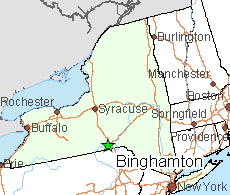
Most of the disputes involve apartment complexes, assisted-living facilities, and hotels/motels formerly served by Time Warner Cable. Most are still under relatively short-term contracts with Time Warner Cable, which was acquired in 2016 by Charter Communications. Good Shepherd Fairview Nursing Home in Binghamton, N.Y. and Good Shepherd Communities, a senior living center in Endwell, N.Y., are good examples.

Mike Keenan has been involved in long-term senior care for 30 years, and over that time he has negotiated hundreds of contracts. But as WICZ in Binghamton reports, nothing prepared him for dealing with Spectrum and Charter Communications.

Good Shepherd Village is a senior living center in Endwell, N.Y.

Charter is using its ongoing digital conversion program as a tool to force “bulk contract” holders to sign new agreements with Charter Communications, often replacing still-valid contracts with Time Warner Cable. Many are not happy about the new terms Charter is offering, particularly one that locks them in with Spectrum service for the next decade and another that allows the cable company to raise rates retroactively.

Those unwilling to sign new contracts have been threatened with service being shut off, usually as digital conversion and TV signal encryption reaches their area, which requires new equipment to keep watching. Those complex owners that still refuse to sign are required to share each tenant’s personal details and address with the cable company.

“Spectrum had taken the position that even though we had a contract in force until December 2018 that we needed to sign a new contract immediately,” said Keenan, president and CEO of Good Shepherd Communities. “If not, they threatened that we would lose service at our Good Shepherd Fairview in Binghamton location and our Good Shepherd Villages at our Endwell location.”

Charter was true to its word. Efforts to negotiate obtaining digital adapters or set-top boxes under the old Time Warner Cable contract failed and with no warning, all 161 nursing home residents at Good Shepherd Fairview lost their cable television on Feb. 27. Two weeks later, 264 residents at Good Shepherd Village — the senior living center — also lost their television and internet service.
The loss was devastating to residents, especially at the nursing home.

“Many of the residents are frail, some of them may be bedridden and their TV means everything to them,” Keenan said.

Keenan’s contract with Time Warner Cable was still valid, and its terms made it clear as long as Good Shepherd kept their payments current, they were owed service that Charter ultimately took away from hundreds of residents.

Apartment complex owners around the country are reviewing new contracts from Charter Communications and many are dropping “free cable TV” after decades of offering the service as an amenity included in the rent. Many who are ending their contracts believe a growing number of tenants neither need or want traditional cable service.

The deal-breaker for many is Charter’s insistence on offering a bulk discount only if the entire building signs up for service, which means owners will have to pay out-of-pocket for Spectrum service in vacant units or in apartments where the tenant has service with another provider.

WICZ in Binghamton, N.Y. reports Charter Communications used nursing home residents as pawns to force the hand of a nursing home manager to sign a new Spectrum contract, even though the current one with Time Warner Cable has not expired. (3:11)

Keenan

“Let’s say you’re paying for Spectrum” – the brand name for Charter’s service – “for 100 percent of the units,” attorney Tara Snow, a partner at Novitt, Sahr & Snow, told Habitat. “You may have 90 or 95 percent of the apartments signing up, but you always have some units that don’t.”

That leaves someone on the hook, either tenants or the property owner, to pay for cable service that nobody is watching. Under Time Warner Cable just a few years ago, the cable company would pay a co-op, condo association, or apartment owner an upfront cash bonus and ongoing “revenue-share fees” for getting a majority of residents — but not all — to sign up for service. It also allowed the company to market holdouts door to door.

No such luck with Charter, which wants to be paid for every unit no matter who is at home. For property owners staying loyal to Spectrum, some are absorbing the extra costs while others pass them on to tenants as part of their rent or monthly maintenance/service surcharges. A few are trying cost sharing arrangements that divide up the total bill equally among all tenants. But as younger renters move in and increasingly show no interest in cable television, the dwindling number who have cable are paying more and more to cover those that don’t.

“People are cord-cutting,” says Brian Scally, vice president of Garthchester Realty, a management firm. “Most people who still want cable want to select their own cable/internet/telephone provider.”

Of the 64 properties he manages, Scally told Habitat fewer than a dozen have signed up for a bulk rate, and those deals were signed years ago.

“I haven’t brought anybody new to bulk rate,” he says.

The other deal breaker for many is Spectrum’s 10-year contract, which locks owners in with a cable company a lot of tenants despise.

As a result, a growing number of apartment complexes and condos are terminating their bulk cable contracts as they expire, and have no intention of renewing under Charter’s draconian terms. Affected tenants are informed the “free” cable television they were receiving is ending and they should make individual arrangements with Spectrum to maintain service going forward.

Hotel and motel owners are also finding fault with Charter Communications, and some are taking their disputes to the Federal Communications Commission.

Yvonne Peach, who owns the Historic Coronado Motor Hotel in Yuma, Ariz., says dealing with Charter has been a nightmare since the merger.

After Charter converted commercial Time Warner Cable and Bright House customers to Spectrum plans and pricing, she lost service to all of her motel rooms for more than a week.

Historic Coronado Motor Hotel – Yuma, Ariz. (Image courtesy of owner)

“When they did the change over we didn’t have any cable TV in the hotel for 12 days,” Peach told KYMA-TV.

Spectrum advised her best solution would be to install leased set-top boxes in the hotel’s 126 rooms, a solution she claims caused even more problems. It seems Spectrum’s equipment doesn’t appreciate Yuma’s southwest Arizona heat, and the boxes regularly fail when air conditioning is switched off in unoccupied rooms.

“We’ve had over 100 of them replaced probably in the last I don’t how many months,” she said. “It’s a box that if the room isn’t rented every night it becomes deactivated.”

Those paying to stay in the motel are not happy to reach their rooms and find the television isn’t working either.

“We’ve lost thousands of dollars with people that would move out because of no TV in their room,” Peach said. “It comes and it will say dial an 800 number or something. But you know the guest. They are paying a certain amount for the room and they’re not going to call.”

KYMA-TV in Yuma, Ariz. reports Charter told this hotel owner her cable boxes were not working because they are not being kept air-conditioned. (2:29)

Spectrum ignores her complaints, she claims, transferring her from call center to call center in search of a solution. She finally took her complaint to the FCC, something she does not think should be required after paying the company $1,600 a month for cable television.

In response, Spectrum blamed the lack of air conditioning for its box failures, in addition to the “relocation of the digital adapters by hotel staff, which are dedicated to a particular room on the account.”

In other words, if you move equipment between hotel rooms, Spectrum claims that equipment will deauthorize. Spectrum effectively wants motel guests placed in rooms where their cable equipment is still functioning, preferably where air conditioning is left running.

“If you’ve been driving all day and you get in your pajamas and you’re ready for bed and you’re watching TV and the TV doesn’t work, do you want to move to another room without complaining? No, nobody does,” said Peach.

In upstate New York, heat isn’t a significant problem, but having a bulk account representative in Rochester, 2.5 hours away by car from Binghamton is. The representative did not understand Binghamton and Endwell are two different communities about seven miles apart.

“This whole thing could have been avoided,” Keenan said. He called the New York Public Service Commission to complain and within a day multiple Spectrum trucks arrived loaded with set-top boxes — one per residence, potentially finally resolving the dispute, but not the bad feelings that emerged as a result.

“Time Warner Cable was saying ‘we need our customers,’” Keenan said. “The experience I have had with Spectrum is Spectrum is saying ‘you need me.’”

WICZ-TV follows up the next day with this report explaining why it is important to stay wary of cable companies offering long contracts. (1:09)


Cablevision, Suddenlink Will Bail Out Altice’s Struggling European Business

Phillip Dampier January 11, 2018 Altice USA, Cablevision (see Altice USA), Competition, Consumer News, Suddenlink (see Altice USA) Comments Off on Cablevision, Suddenlink Will Bail Out Altice’s Struggling European Business

Altice’s American cable companies will help bail out the parent company’s struggling French operations.

Cablevision and Suddenlink are coming to the rescue of their parent company Altice in a deal that will transfer $1.5 billion from the two American cable operators to help bail out its struggling European operation, according to the Wall Street Journal.

Founding shareholder Patrick Drahi is splitting his U.S. cable operations away from Altice NV, spinning them off into a new publicly traded company known as Altice USA. But Drahi has also ordered the new U.S. company to pay a one time $1.5 billion dividend, most of which will end up in the bank account of Altice NV to help the parent company reduce its leveraged debts that have been largely responsible for its falling stock price.

While Cablevision and Suddenlink customers can look forward to additional rate increases, shareholders of Altice USA are being enticed to invest with sweeteners including an unexpected dividend payout and a sudden decision by Drahi to forego his usual management fee charged to companies he acquires to acquaint them with the “Altice Way” of doing business. That fee can amount to an initial $30 million payment plus an ongoing percentage (usually 2-3%) of a Drahi-acquired company’s future revenue.

Altice USA believes it can afford the bailout thanks to President Donald Trump’s tax cuts. In addition to using $2 billion of anticipated savings to pay for share buybacks, Altice USA hopes to quickly recoup an additional $1.5 billion from reduced taxes and revenue increases it will earn from customer rate hikes and new broadband customers.

Altice NV, soon to be renamed Altice Europe, was a veritable disaster financially — called the “worst large-cap performer in Europe” in 2017. At the center of Altice’s European operations remains the dismally performing SFR-Numericable, the French wireless and cable company. After Drahi acquired the company, he slashed costs and investments and threatened to lay off one-third of its workforce. Service deteriorated and customers canceled in droves. Investors starting selling their Altice shares around Halloween of 2017, after watching Mr. Drahi pile on unprecedented debt and become convinced Drahi’s highly leveraged company could not succeed.

The Wall Street Journal cautioned potential investors in Altice USA that the new venture will gladly take your money, but give shareholders almost no say in how it will be governed. Drahi has engineered his continued dominance of the new entity with control of at least 51% of voting rights.

Wall Street analysts are largely positive about the deal, noting Altice USA won’t be attached to Altice’s European money troubles and the company will have the ability to extract revenue from its customers with ongoing rate increases.

Dish and DirecTV Join the 2018 Rate Hike Parade

Phillip Dampier December 28, 2017 Competition, Consumer News, DirecTV, Dish Network 1 Comment

Satellite dish customers relying on Dish Networks or DirecTV for cable programming will need to open their wallets wider in 2018 to cover rate increases at both providers.

Dish

“On behalf of all of us at Dish, thank you for your business. You have asked us to be honest and upfront with changes to your account, and that is why we are writing you,” the satellite company wrote on its website.

Effective Jan. 16, 2018, broad rate hikes of about $3 a month for cable networks and $2 a month for local channels will take effect. Dish’s “Smart Pack” will increase by 7% to $44.99 a month, America’s Top 200 rises 6% to $89.99 and America’s Everything gets a 3.4% boost to $149.99 a month. Customers on a promotion will not see the rate hike until their offer expires.

The biggest rate increase by percentage applies to local stations, where most will see a 20% rate hike from $10 to $12 a month.

Dish has published its 2018 rate card on its website, detailing the price hikes.

Package Core Programming Local Channels Total
Welcome Pack $22.99 Included $22.99
Smart Pack $32.99 $12.00 $44.99
DISH America $47.99 $12.00 $59.99
America’s Top 120 $62.99 $12.00 $74.99
America’s Top 120 Plus $67.99 $12.00 $79.99
America’s Top 200 $77.99 $12.00 $89.99
America’s Top 250 $87.99 $12.00 $99.99
America’s Everything Pack $137.99 $12.00 $149.99

Spanish/Latino Packages

Package Core Programming Local Channels Total
DishLATINO Basico $34.99 Included $34.99
DishLATINO Clásico $37.99 $12.00 $49.99
DishLATINO Plus $44.99 $12.00 $56.99
DishLATINO Dos $62.99 $12.00 $74.99
DishLATINO Max $74.99 $12.00 $86.99

Channel Packs

Package Price
Locals Pack $12.00
National Action Pack $12.00
Regional Action Pack $12.00
News Pack $10.00
Kids Pack $10.00
Latino Bonus $10.00
Variety Pack $6.00
Heartland Pack $6.00
SiriusXM Pack $6.00
Outdoor Pack $4.00

DirecTV

DirecTV rates will rise effective Jan. 21, 2018 according to its website. The increase is blamed on programming costs. Customers on a promotion will not see the rate increase until that promotion expires. But AT&T, which owns DirecTV, also warns customers if they change their current base package, their promotion will end immediately and the new, higher rates apply.

DIRECTV Packages Monthly Price Increase
Minimum Service
FAMILY
$0
SELECT
SELECT CLASSIC
SELECT CHOICE
$2
ENTERTAINMENT
ENTERTAINMENT CLASSIC
$3
CHOICE
TOTAL CHOICE
$4
TOTAL CHOICE LIMITED $4.50
TOTAL CHOICE Mobile
CHOICE XTRA CLASSIC
$5
PREFERRED XTRA
XTRA
$7
ULTIMATE
PREMIER
$8
DIRECTV Español Monthly Price Increase
ChineseDirect Plus $0
BASIC CHOICE
BASIC
$1
MAS LATINO
OPTIMO MAS
PREFERRED CHOICE
MAS MEXICO
BASICO
OPCION ESPECIAL
$2
FAMILIAR
OPCION EXTRA ESPECIAL
$3
OPCION ULTRA ESPECIAL $4
MAS ULTRA
MAS ULTRA ORIGINAL
FAMILIAR ULTRA
$5
LO MAXIMO
OPCION PREMIER
 $8

Regional Sports Network and Outdoor Channel pricing adjustments for DIRECTV

Service Monthly price increase
Regional Sports Network Tier 1 $0.00
Regional Sports Network Tier 2 $0.70
Regional Sports Network Tier 3 $0.81
Regional Sports Network Tier 4 $0.20
Regional Sports Network Tier 5 $1.00
Outdoor Channel $1.49

Charter’s “Merger Benefit” for 2018: Sweeping Rate Hikes for Ex-Time Warner, Bright House Customers

Phillip Dampier December 27, 2017 Charter Spectrum, Competition, Consumer News 7 Comments

Charter Communications cable TV customers will soon see sweeping rate increases on their cable bills as the cable company announces its 2018 “rate adjustments” that will begin to take effect as early as next month in some markets.

For many customers, it is the second substantial rate increase in a year. Among the most notable are a dramatic hike in equipment rental costs and surcharges.

As Charter Communications took control of Time Warner Cable and Bright House Networks and introduced Spectrum packages and pricing in 2016 and 2017, company spokesman Justin Venech promised that Spectrum packages were “a better value” for customers, in part because equipment rental fees were substantially lower. But the gap between what Time Warner Cable charged in early 2016 and what Spectrum customers will pay in 2018 is quickly narrowing.

In early 2017, a Spectrum set-top box was priced at $4.99 a month. In mid-2017, the company raised the price to $5.99 a month and starting next month, that rental price is increasing to $6.99 a month per box. Other equipment is getting more costly as well. Time Warner Cable introduced digital transport adapters (DTAs) for secondary analog television sets at $0.99 a month. In 2018, that equipment will cost $4.99 a month. DVR service also increases $1 to $12.99 a month.

Spectrum’s original bundled TV, phone and internet packages — Select, Silver, and Gold were priced at $109.94, $129.94, and $149 a month respectively in 2016, according to the Orange County Register. Los Angeles was among the first markets in the country to obtain new Spectrum packages and pricing in the fall of 2016. Just 15 months later, customers can now expect to pay rates starting at $139.99 for Select, $159.99 for Silver, and $179.99 for Gold.

The company’s hated Broadcast TV Surcharge, which applies to all promotional and regular-priced television packages is also being hiked from $7.50 a month to $8.85.

Among the first markets to see the 2018 rate hike is Lexington, Ky.,  which has had a year-long running battle with Charter Communications.

The mayor is not happy.

“I’m outraged,” Lexington Mayor Jim Gray told the Lexington Herald-Leader. “This is the second rate hike for Spectrum’s cable subscribers in a single year. And considering Spectrum’s record of poor customer service, it just confirms my decision to bring competition and more options to Lexington for cable TV services along with high-speed internet.”

Lexington residents will soon have a third option for cable service in addition to Spectrum, AT&T or CenturyLink: MetroNet — which promises to wire the city with fiber to the home service over the next 3-4 years.

Prices for internet and phone service are unchanged for now, but Charter has often announced rate hikes for those services later in the year, so do not expect rates to remain unchanged throughout 2018.

Spectrum 2018 Cable TV Rate Increases

  • Limited Basic TV service: Current price: $15 New Price: $20
  • Expanded Basic TV service: Current price: $54.99 New Price: $49.99
  • Spectrum Receiver: Current price: $5.99 New Price: $6.99
  • Broadcast TV Surcharge: Current price: $7.50 New Price: $8.85
  • DTA: Current price: $4.00 New Price: $4.99
  • Single DVR Service: Current price: $11.99 New Price: $12.99
  • Sports Pass: Current price: $10.00 New Price: $12.00
  • Movie Pass: Current price: $10.00 New Price: $12.00
  • Triple Play Select: Current price: $129.99 New Price: $139.99
  • Triple Play Silver: Current price: $149.99 New price: $159.99
  • Triple Play Gold: Current price: $169.99 New Price: $179.99

Happy Holidays 2018 Rate Hike from Cox

Phillip Dampier December 13, 2017 Consumer News, Cox 1 Comment

Cox Communications, which spent much of 2017 implementing data caps and overlimit fees on its broadband customers, is back for more with plans for sweeping rate increases that take effect Jan. 7, 2018.

According to a bill notification received by a DSL Reports reader, a long list of video packages will increase from $1-5 a month, with lower amounts for slimmed down TV packages and higher increases for Contour TV packages. Cox will collect even more from a big boost to its Broadcast TV Surcharge, rising from $4 a month to $7.50. Only one channel — Playboy — will see a significant rate cut (from $19.95 to $15.99).

Cox TV Package Rate Increases (effective Jan. 7, 2018)

Flex Watch will change from $40.00 to $41.00.
TV Economy will change from $34.99 to $38.00.
TV Essential will change from $75.99 to $79.99.
Contour TV will change from $79.99 to $84.99.
Contour TV Ultimate will change from $161.99 to 166.99.
Contour TV Preferred will change from $91.99 to $96.99.
Contour TV Premier will change from $105.99 to $108.99.
Advanced TV Ultimate will change from $158.99 to $161.99.
Advanced TV Ultimate with 4 Premiums will change from $167.99 to $170.99.
Advanced TV Ultimate with 4 Premiums and Record 6 DVR will change from $165.99 to $168.99.
Paquete Latino will change from $35.00 to $36.00.
El Mix will change from $52.49 to $53.49.
Super Mix will change from $89.99 to $94.99.
Flex Watch Latino will change from $13.51 to $14.51.
TV Economy Latino will change from $44.99 to $48.00.
Contour TV Latino will change from $89.99 to $94.99.
Contour TV Latino Preferred will change from $101.99 to $106.99.
Contour TV Latino Ultimate will change from $175.99 to $178.99.
Entertainment Package with 3 Premiums will change from $138.24 to $143.24.
Entertainment Package with 4 Premiums will change from $149.74 to $154.74.
CableCARD will change from $2.00 to $2.99.
Playboy will change from $19.95 to $15.99.
The Broadcast Surcharge will change from $4.00 to $7.50.

Substantial rate hikes are also forthcoming for Cox’s internet packages, rising $2-4 a month when bundled with at least one other service.

Cox High Speed Internet Rate Increases

Starter will change from $34.99 to $36.99.
Essential will change from $52.99 to $55.99.
Preferred will change from $67.99 to $71.99.
Preferred 100 will change from $72.99 to $76.99.
Premier will change from $79.99 to $82.99.

Cox is also risking losing customers for its digital phone service, which often gets targeted for cancellation when there are sweeping rate hikes. Cox seemed undeterred, boosting some basic plan prices while dropping others.

Cox Digital Telephone Rate Increases

Starter will change from $13.99 to $14.99.
Economy will change from $18.50 to $18.39.
Starter Lifeline will change from $10.99 to $11.74.
Essential Lifeline will change from $21.99 to $21.74.
Premier Lifeline will change from $31.99 to $31.74.
An Additional Telephone Line will change from $13.99 to $14.99.
The FCC Access Fee will change from $7.10 to $6.00.
The Cost Recovery Fee will change from $1.49 to $1.60.
Toll Restriction will change from $1.49 to $1.60.

A Cox spokesperson said the rate increases were to cover increased programming expenses, as well as recovering some of the investments Cox has made to improve its equipment and broadband service. Customers on a promotional rate plan are unaffected by the rate increases until their current promotion expires.

Search This Site:

Contributions:

Recent Comments:

Your Account:

Stop the Cap!