Home » rate increases » Recent Articles:

Frontier-Verizon Deal Wins Approval in Oregon; Consumer Protections Part of Deal to Gain Approval

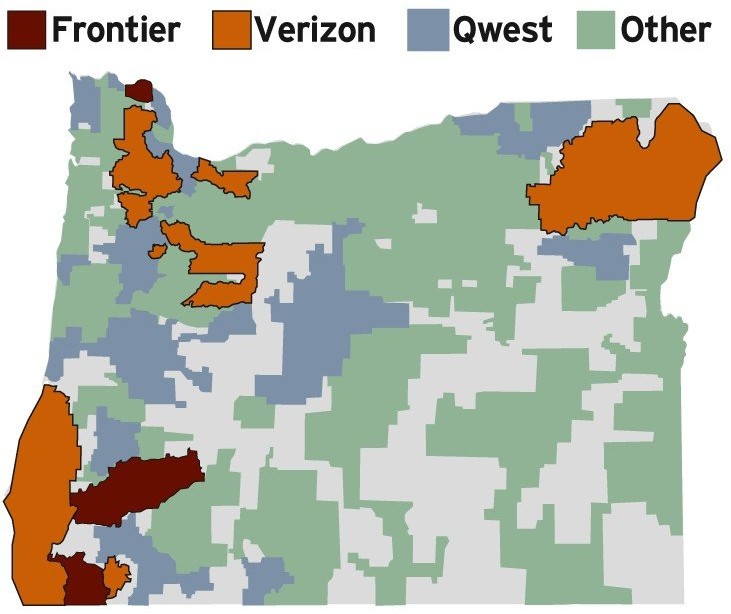
Oregon's telephone company service areas

Frontier Communications has won approval to assume control of telephone lines serving 310,000 Oregonians.

The Oregon Public Utilities Commission Friday unanimously approved the transfer of service from Verizon to Frontier as part of a 14-state transaction.

“First and foremost we want to ensure that customers are not harmed by this transaction.  That’s why we are requiring more than 50 conditions, all aimed at making sure customers are not harmed by this sale,” Chairman Lee Beyer said. “In addition, we are requiring Frontier Communications to spend $25 million on expanding high-speed internet access to its Oregon customers by July 2013.”

In return for approval, Frontier agreed to PUC demands for customer service protections:

  • A commitment that Frontier spend at least $25 million to expand high-speed broadband in Oregon by July 2013;
  • No changes in “commission-regulated” retail service plans for at least three years;
  • Costs of the transition must not be paid by customers in the form of rate increases;
  • 90-day window to change long distance carrier without any fees;
  • An independent audit, paid for by Verizon, to ensure Frontier can handle service for those customers affected by the deal;
  • An opt-out provision letting Oregon’s FiOS subscribers terminate their contracts without penalty if Frontier reduces Internet speeds or drops any of its television channels.

What is missing from Oregon’s agreement?

  • A prohibition of Internet Overcharging schemes like Frontier’s 5 gigabyte “acceptable use” policy that potentially limits customer’s broadband use.  Expanded broadband that customers can only use for basic web browsing and e-mail, without fear of exceeding the limit, indefinitely punishes rural Oregonians with no broadband alternatives;
  • A specific definition of what constitutes “broadband” speeds.  Frontier can continue to deliver the 1-3 Mbps it routinely provides to its less urban service areas.  While better than nothing, Oregon regulators could have used the deal as leverage to win 21st century broadband speeds from Frontier, not yesterday’s ‘barely broadband;’
  • Fines and penalties that will punish a provider that does not invest appropriately in high service standards to provide quality service, and a trigger to permit automatic cancellation of operating certificates should Frontier go bankrupt.

Too many of these deals offer upsides for Wall Street and little benefit to consumers, especially those dependent on their landline phone company for basic communications services.  By forcing requirements that prove costly for a provider to renege on, investors will understand their gains will only happen when they are assured Frontier is doing right by their customers, as well as their shareholders.

Oregon is the sixth state to approve the sale.

Frontier currently serves only 12,000 customers in the state, mostly in southwest Oregon, including the communities of Azalea, Canyonville, Cave Junction, Days Creek, Glendale, Myrtle Creek, O’Brien, Riddle, Selma, and Wolf Creek.

The company’s new customers will come mostly from Washington County, east Multnomah County, and from several pockets of customers in the northwestern part of the state.  Oregon’s largest telephone provider is Qwest Communications, but the state has numerous smaller independent providers as well.

Mark Cuban Still Confused About Internet Overcharging Schemes & Online Video

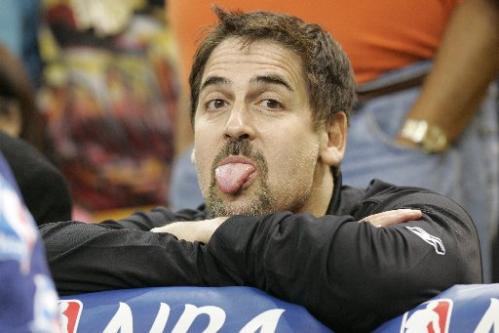
Mark Cuban

Mark Cuban has once again entered the debate over online video, Internet Overcharging schemes, and giant corporate mergers… and mangled it.

Cuban, who owns HD Net as well as the Dallas Mavericks basketball team, occasionally presents cable industry talking points on his blog, but quickly gets into trouble when he strays from them.

This time, Cuban is annoyed with Sen. Al Franken (D-Minnesota) over remarks the senator made about the proposed Comcast-NBC merger.  Cuban seized on comments by Franken that Comcast should put all of its television programming online.  Doing that, Cuban insists, would lead to higher prices for broadband and usage caps on it.

Where has Cuban been?  I realize the man is too wealthy to worry about the relentless rate increases Comcast and other companies force on consumers every year, but he also forgot Comcast already has a usage cap on its service, even before the feared video tidal wave arrives.

I get that no one really cares if Comcast has to spend money on capital improvements to add bandwidth to the home.  They should. Its pretty damn stupid to push consumption in a direction that will raise internet rates  to receive the same content for which there is already a phenomenal digital network in place to deliver that content.

Think about it for a minute Senator Franken. Comcast, and every large TV Provider has a digital network in place that can and does deliver gigabits of tv content perfectly,  every second of every day, to any TV set in any  home that is connected to their network. It works. Well.  What you are asking Sen Franken, is that Comcast duplicate the delivery of theirs and NBCUniversals shows on a network, the internet,  that is not, and has never been designed to handle the delivery of huge volumes of video and tv shows.

Cuban should be arguing that point with the cable industry.  TV Everywhere, the online video platform that will offer consumers access to “hundreds of TV shows and cable programming,” is their invention.  If Cuban’s fears are correct, why would the nation’s largest cable operators launch such an ambitious online video platform?

Cuban has bought into industry propaganda justifying usage caps.  There is always an excuse for rationing broadband service to boost profits.  First it was file sharing, now it’s online video causing the “serious problem” of customers using broadband service for more than just e-mail and web browsing.  Their solution – monetize it.  Usage caps and usage based billing are about preserving high profits, not protecting or increasing network capacity.  TV Everywhere proves that.

Franken does not advocate usage caps, as Cuban suggests.  The senator simply wants to be certain Comcast cannot act as a gatekeeper, determining who gets access to Comcast-NBC programming, and who does not.

Cuban should be welcome to such measures as a victim of Gatekeeper Abuse himself.  Mark, how many subscribers did you lose nationwide when Time Warner Cable unilaterally pulled the plug on your channels?

Wisconsin Deregulation Follies: AT&T Wants State to Make the Same Mistake All Over Again

Fool me once... can't get fooled again!

After astroturfing their way to a statewide video franchising bill in 2007 that made AT&T millions and saved consumers nothing, the company is back again looking for more legislative goodies from the Wisconsin legislature.

This time, they want near-total deregulation of their landline telephone business.  The reason?  Their overpriced, uninspired service has caused 50 percent of their customers to disconnect, preferring to rely on cable “digital phone” products, cell phones, or Voice Over IP services like MagicJack or Vonage.  AT&T has succeeded in driving away so many of their customers, the company is left with just 675,000 landlines in the entire state.

The answer?  Deregulation!

Of course, no regulation prevents AT&T from investing in Wisconsin to win back their former customers with better service at lower prices.

AT&T apparently feels it can’t compete tied down with state consumer protection rules and those ‘oversight pests’ that make sure the company lives up to appropriate service standards.

This time, like last time, your legislative cruise director is Sen. Jeff Plale (D-South Milwaukee), a chief sponsor of Senate Bill 469, along with most of the Republican party in the state legislature.  Plale’s a special case in point — a very grateful recipient of AT&T campaign cash, and he’s no stranger to the phone giant.  In 2007, Plale accepted $1,000, the maximum allowed, from AT&T just a week before introducing the aforementioned statewide video franchising bill.  But the check from AT&T’s PAC is always just the start of the Money Party, because AT&T executives and their spouses also joined the conga line of campaign contributions on their own, spreading around money to Republican and Democratic legislators and the governor.

“It [was] impossible [in 2007] to not see the connection” between AT&T’s campaign cash and its push for the deregulation bill, Mike McCabe, executive director of the non-profit Wisconsin Democracy Campaign, which monitors campaign donations, told the Milwaukee Journal-Sentinel.

AT&T’s campaign gifts starting in 2007 were also unusual because company officials had not been “particularly active” givers prior to the video franchising bill, McCabe said. “The giving is targeted.”

It still is.

The Big Money Blog, covering the atrocities committed by Wisconsin legislators hungry for campaign cash, reports that those who played along with AT&T got rewarded handsomely with contributions.  Those who voted no had their contribution checks reduced or cut out altogether.

Of course Plale can’t see the connection, probably because all that money is blocking his view.  He told the newspaper he had no idea why AT&T would max out their contribution to his campaign, despite only getting a fraction of that amount prior to the introduction of the video franchise bill.

Who does he think he’s kidding?

He’s got plenty of nerve to be back asking for more “legislative relief” just a few weeks after the verdict is in for the video franchising “competition” bill that was supposed to save Wisconsin consumers money.  It didn’t.  In fact, the rate increases just kept on coming.  While I’m sure that provided financial relief to AT&T, consumers gained little, if anything.

The reaction among the elected officials who promised all those savings?  Mild surprise and disappointment — a veritable ‘shucky darn’ and shrug of the shoulders.

The Milwaukee Journal-Sentinel reports consumer groups are outraged.

They worried that less regulation could lead to less investment in the companies’ infrastructure.

That’s critical, said Charlie Higley, executive director of the Citizens Utility Board, because competitors of AT&T and other local phone companies often rent portions of the network and sell their own services over it.

He said freer oversight would allow local phone companies to hide financial information and “evade appropriate regulation.”

Union representatives also were critical of the legislation, saying that deregulation steadily has driven down employment in the industry.

Despite that, Plale and most of the Republicans are in for a penny, in for a pound with AT&T.

Professor of telecommunications at the University of Wisconsin Barry Orton looked through the notes on how the bill was drafted and discovered all of the requests and language came from telecommunications industries.  There was absolutely zero consumer input in the bill.

Color me surprised.  We’ve watched telecommunications companies in North Carolina custom-write legislation and find elected officials more than happy to get such legislation introduced, especially when campaign contributions smooth the way.  In Kansas, negotiations between legislators and company officials appear to have been conducted in secret, with charges from consumer groups that legislators withheld meeting notes.

Despite the evidence these AT&T-sponsored bills don’t help consumers, Plale carries on.  He argues the bill is needed because telecommunications services are evolving too fast to ‘shackle companies with outdated regulations.’

Back for a second helping from the Wisconsin Legislative Buffet

“The 1930s models have outlived its usefulness,” he said.

Perhaps his constituents will think the same about him after their phone bills go up as quickly as their cable bills.

If the legislation doesn’t work out for you, Plale suggests you simply “switch providers.”  “[Customers] can switch to Verizon, or Sprint or Time Warner,” he said after a recent hearing on the measure. “It’s really not an issue anymore.”

Really?  What about the tens of thousands of rural Wisconsin residents that depend on AT&T for telephone and broadband service?  They don’t enjoy good reception from cell phone providers and cable television is an idea that will never come to their rural neighborhoods.  Plale can afford to pay the premium prices cell phone companies charge (AT&T should just give him a free phone).  Many cash-strapped consumers in his state cannot.

Unfortunately for rural Wisconsin, their only choice will likely be AT&T for some time to come.  For those consumers stuck with one choice, it’s not comforting to know Plale’s bill makes sure the state government can’t intervene when your phone line goes out, your bill is wrong, or you can’t get service installed.

Orton warns passing AT&T’s deregulation bill will leave the phone company essentially unregulated.  He told the Badger Herald phone companies would be less accountable under the bill, leaving the state ill-equipped to be sure all rural areas of the state were provided with adequate service.

“The phone companies argue that because of competition, they shouldn’t have regulation anymore,” Orton told the newspaper. “[They also argue] if consumers don’t like their service, they can go to another provider. But the problem is that in some places there aren’t any more providers.”

You really couldn’t do worse as a legislator than to openly admit your hand is wide open to receive AT&T campaign contributions while you advocate against the best interests of your own constituents.  It doesn’t get more shameful than that.

If you live in Wisconsin, get on the phone with your representatives in the State Assembly and Senate and tell them in no uncertain terms you oppose the giveaway deregulation bill for AT&T.  Let them know you’re watching their vote closely, particularly after the 2007 statewide video franchise bill debacle made sure you were left with less money in your wallet than before they passed it.


Must Fee TV: Broadcaster Consent Fees Will Turn ‘Free TV’ Into ‘Fee TV’ For Cable Subscribers

Phillip Dampier January 4, 2010 Mediacom, Video 1 Comment

Americans can look forward to additional rate increases in their monthly cable bills on top of the usual annual rate increases already underway as broadcast stations demand, and get, cash in return for cable carriage.

Just a few days after Time Warner Cable and Bright House Networks concluded their precedent-setting agreement in principle with News Corporation’s Fox network, other networks and television stations owners are lining up to get their piece of the action.

The cable operators’ agreement to pay an estimated 50-60 cents per month per subscriber for the right to put Fox-owned local broadcast stations on the cable dial will likely be used as the starting point for negotiations between other cable operators like Comcast, Cox, Cablevision, and Charter when their agreements with stations and broadcast networks come up for renewal.  If every major broadcast network and station owner gets the same 50-60 cents per month, or more, those costs will certainly be passed on to subscribers.  That’s just the beginning says David Joyce, media analyst for Miller Tabak , a Wall Street trading firm.  Joyce believes annual increases demanded by networks could easily be in the 7-8 percent range.  Bloomberg News predicts that could add up to more than $5 billion dollars a year.

[flv width=”640″ height=”500″]http://www.phillipdampier.com/video/Bloomberg Retransmission Consent Will Force Cable Bills Higher 1-4-10.flv[/flv]

Bloomberg News interviews David Joyce, a media analyst who predicts annual 7-8% increases for retransmission consent. (3 minutes)

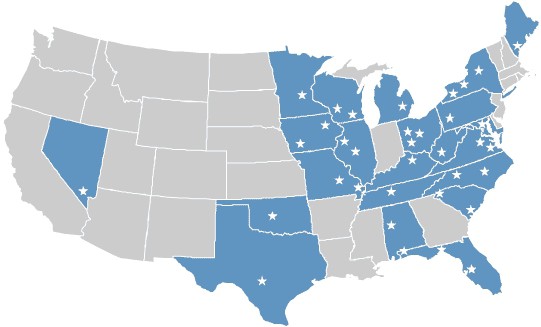
Sinclair owns stations in these communities

There is nothing new about these kinds of disputes — just the sums involved.

Sinclair Broadcast Group owns television stations serving nearly 22% of the United States (mostly Fox affiliates), and has contentious negotiations for retransmission consent agreements with Mediacom, a cable operator serving mostly smaller cities in the midwest and south.

The two companies just agreed to an eight day extension of their negotiations over a new agreement to replace the one that expired December 31st.

“We just decided we wanted to avoid, with such important events coming up, the disruption that it would cause customers,” Sinclair General Counsel Barry Faber said. “I don’t expect there will be a further extension. We recognize we’re giving up, perhaps, a small amount of (negotiating) leverage, but we don’t think it’s very much. Our channels are worth so much more than we are asking for.”

Sinclair has been willing to force its stations off Mediacom cable systems in the past to prove its point.  But another experience with angry sports fans upset over the interruption of Fox programming was apparently sufficient to give negotiations another week.

[flv width=”640″ height=”500″]http://www.phillipdampier.com/video/Bloomberg Murdoch Bullies His Way to Agreement 1-4-10.flv[/flv]

Bloomberg News explains how Rupert Murdoch bullied his way into an agreement with Time Warner Cable and Bright House Networks that could change the landscape of broadcast television forever.  (4 minutes)

[flv width=”640″ height=”500″]http://www.phillipdampier.com/video/Bloomberg Sports a Major Factor of Cable Dispute 1-4-10.flv[/flv]

The ‘Holy Grail’ of cable programming essentially boils down to silly ball games.  Sports programming is one of cable’s biggest expenses, yet few would dare to alienate sports fans, as this Bloomberg report explores.  (2 minutes)

Search This Site:

Contributions:

Recent Comments:

Your Account:

Stop the Cap!